# Unlawful Guatemalan Military Flight Reignites Long-Simmering Border Tensions Between Belize and Guatemala Ahead of ICJ Hearings
Published: September 28, 2026
A decades-long territorial dispute between neighboring Central American nations Belize and Guatemala has flared into a new international confrontation after Belize accused Guatemala of sending an unauthorized military aircraft into its sovereign airspace — an incident that has already reshaped the diplomatic landscape ahead of a landmark International Court of Justice (ICJ) ruling scheduled for 2027.
The incident unfolded on September 25, when a Guatemalan military Pilatus PC-12 NG aircraft entered Belizean airspace without prior authorization or clearance. According to Belizean officials, the aircraft disabled its transponder mid-flight, causing its radar signal to vanish while it traversed airspace near popular coastal areas Caye Caulker and Lighthouse Reef, before exiting Belizean territory without any explanation from Guatemalan authorities.
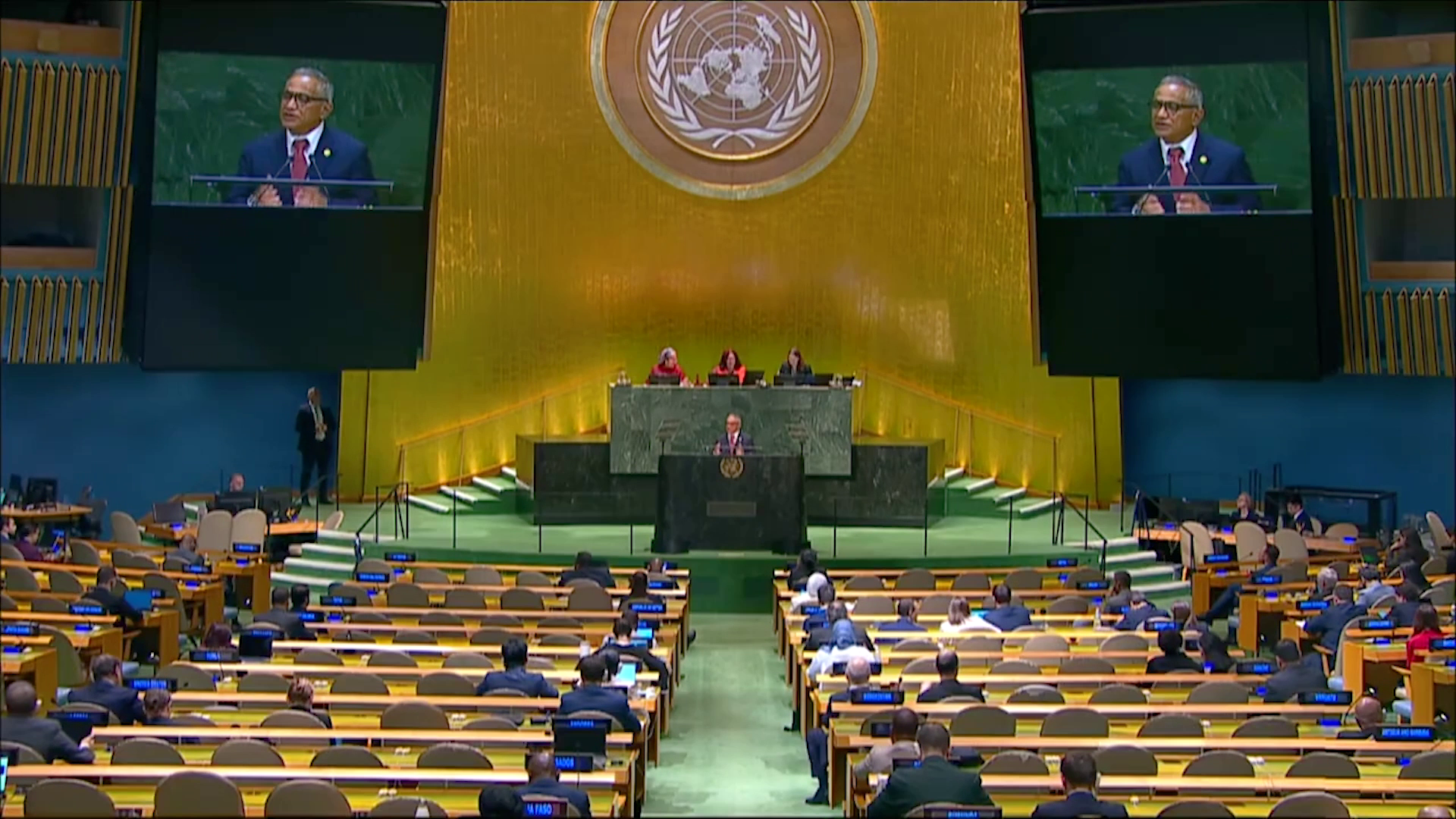
Less than 48 hours after the incursion, Belizean Prime Minister John Briceño brought the accusation directly to the United Nations General Assembly, framing the incident as more than an isolated violation of international aviation rules. In his formal address, Briceño emphasized that the unauthorized flight is part of a broader pattern of provocative actions by Guatemala along the contested Sarstoon River border, where Guatemalan state vessels and personnel have repeatedly operated in what Belize recognizes as its territorial waters.
“This incursion is not an isolated one. It forms part of a continuing pattern in which Guatemalan state vessels and personnel operate unlawfully in Belizean territorial waters of the Sarstoon River, which forms part of Belize’s border with Guatemala, in defiance of obligations binding on both parties to refrain from any action capable of aggravating or extending the dispute presently before the International Court of Justice,” Briceño told the assembly.
The Prime Minister warned that the escalating provocative actions threaten to undermine the authority of the ICJ ahead of oral hearings scheduled to begin in February 2027, and erode ongoing efforts to reach a peaceful, binding resolution to the territorial conflict that has divided the two nations for more than a century. He called on Guatemala to immediately end all cross-border incursions across air, land and sea, comply fully with its obligations under the UN Charter, the Chicago Convention on International Civil Aviation, and Organization of American States (OAS) confidence-building agreements, and respect the integrity of the upcoming ICJ judicial process. Briceño also requested increased monitoring from both the UN and OAS to prevent any member state from using military intimidation to sway judicial proceedings.
In a swift rebuttal delivered from the UN floor, Guatemala categorically denied the entire allegation. Paola Andrea Morris Garrido, an advisor with Guatemala’s Permanent Mission to the UN, rejected the accusation outright, stating “This flight never happened. At all times, Guatemala has respected its obligations on the basis of the UN Charter, including Article two, paragraph four.”
Guatemala has called on the OAS’s local border office to launch a formal investigation into what it calls a “supposed incident,” and has accused Briceño of deliberately spreading misinformation to influence public opinion ahead of the ICJ hearings. Garrido further countered that Belize’s decision to raise the issue at the UN General Assembly is itself a violation of the 2005 confidence-building agreement between the two nations, arguing that the UN body is not the proper forum for disputes already pending before the ICJ. To date, the Guatemalan government has not released any official records or details addressing the flight to refute or confirm Belize’s claims.
This latest confrontation follows a string of rising tensions along the Sarstoon River border in recent months, as both nations prepare for the ICJ’s binding ruling. Briceño reaffirmed Belize’s full confidence in the judicial process, stating the country expects a final ruling that will establish internationally recognized, secure borders between the two states. In his broader address to the General Assembly, the Prime Minister also highlighted priorities for small developing nations, including climate change action, reparatory justice, and greater global representation for small states, while voicing support for international action on issues including the crises in Haiti, the situations in Cuba and Palestine, and cross-strait relations involving Taiwan.
News Five’s Britney Gordon contributed to this report from the field.