标签: Belize

伯利兹

  • Cluck, Cluck… Pay Up: Chicken Prices Rise

    Cluck, Cluck… Pay Up: Chicken Prices Rise

    Starting Saturday, July 6 2026, consumers across Belize are facing higher price tags for one of the country’s most popular protein sources: chicken. The Belize Poultry Association, the leading industry body representing local poultry producers, has formally enacted a market-wide price adjustment prompted by sustained increases in core production expenses that have squeezed producer margins for months.

    Under the new pricing structure, the cost of whole chicken will rise by 12 cents per pound, a change that went into effect immediately the day the announcement was released. Industry representatives explained that the adjustment is a direct response to escalating costs across every major input category for poultry farming. Key drivers include sharp upticks in the market prices of critical feed grains — corn and soybeans, which make up the bulk of chicken feed rations — as well as higher fuel costs for farm operations and transportation, and increased prices for specialized poultry premixes, the nutrient-dense additives required for healthy flock growth.

    The price increases will not be limited to whole chicken, either. The association confirmed that all other poultry-based products will see corresponding price adjustments, with the size of the increase varying depending on the specific cut of meat or level of processing applied to the product. For example, pre-packaged cut chicken breasts, marinated processed portions, and specialty poultry products may see different percentage increases compared to whole bird offerings.

    In a statement released alongside the pricing announcement, the Belize Poultry Association emphasized that the price hike was an unavoidable step to keep the local industry operational. Continued rising input costs had created unsustainable pressure on producers, the group noted, making the adjustment necessary to offset ongoing cost growth and maintain consistent supply of local poultry to Belizean consumers. The organization also closed its statement by thanking the Belizean public for its continued patronage and support of the domestic poultry sector, which is a core part of the country’s local food supply chain.


  • ‘Justice for David & Daniel’: San Pedro Rallies for Justice

    ‘Justice for David & Daniel’: San Pedro Rallies for Justice

    One week after a brutal double fatal shooting shook the small coastal community of San Pedro, Belize, dozens of local residents took to public streets again on Sunday to push for accountability and answers in the killing of local businessman David David Harmouch and security guard Daniel Jones.

    The two men were killed on June 28 when four armed suspects stormed Island Supermarket, where Harmouch’s family members also work and shop. Investigative records confirm that two additional members of the Harmouch family suffered non-fatal injuries during the attack, before the four gunmen fled the scene undetected immediately after the shooting.

    Sunday’s demonstration marked the second public call for action from the community in as many weeks. Protesters traversed the main thoroughfares of Ambergris Caye, a popular tourist and residential island that is home to San Pedro, holding hand-painted banners emblazoned with the slogan “Justice for David & Daniel”. Many participants carried printed photographs of Harmouch to honor the life of the local business leader.

    The first protest, held outside the San Pedro Police Station exactly one week before Sunday’s march, was organized by leaders of Belize’s Lebanese community, to which the Harmouch family belongs. At that demonstration, participants publicly criticized local law enforcement for what they described as a failure to pre-empt violent crime in the area, a grievance that has continued to fuel community unrest.

    As of Sunday, local police authorities confirmed their investigation into the mass shooting remains active, and several persons of interest have been taken into custody for questioning. To date, however, no formal charges have been filed against any individual in connection with the killings, leaving the community still waiting for concrete action from the justice system.

  • NEAB Calls for Stronger Anti-Corruption Measures

    NEAB Calls for Stronger Anti-Corruption Measures

    In the wake of fresh allegations of widespread financial mismanagement within Belize’s Ministries of Home Affairs and Defence, one of the nation’s prominent civil society organizations is pressing the Briceño administration to enact far bolder anti-corruption measures to address systemic gaps in public governance.

    The National Evangelical Association of Belize (NEAB) has publicly acknowledged the government’s early steps to respond to the scandal. These actions include launching a formal probe into irregular payments processed through the Smart Stream financial platform, granting paid leave to sitting ministers Oscar Mira and Florencio Marin Jr., appointing Minister Espat to take over interim oversight of the impacted ministries, and suspending the finance officer implicated in facilitating the unapproved transactions.

    Despite this initial action, NEAB leaders argue that incremental moves are not enough to repair the eroded trust between the Belizean public and their government. The organization has laid out a clear, multi-point policy demand addressed directly to Prime Minister John Briceño: first, guarantee that the ongoing investigation into the scandal is conducted thoroughly and remains entirely free from political interference; second, revise the nation’s existing Finance and Audit Act to close long-standing regulatory loopholes that have enabled improper financial activity; third, move forward with full, nationwide implementation of the United Nations Convention Against Corruption (UNCAC); fourth, pass long-awaited legislation to protect whistleblowers and reform national campaign finance rules; and finally, appoint a fully empowered new Ombudsman that can exercise all the constitutional oversight responsibilities granted to the office.

    NEAB officials emphasized that the recent allegations surrounding the “Mira Millions” controversy have laid bare critical structural weaknesses in Belize’s current financial oversight framework. The association stressed that urgent, immediate regulatory reform is non-negotiable to build stronger accountability mechanisms and drive down systemic corruption across all levels of government.

    This call for reform follows a similar push from Belize’s leading business advocacy group just one week prior. The Belize Chamber of Commerce and Industry (BCCI) submitted a 10-point reform proposal to Prime Minister Briceño, calling for comprehensive overhauls to the government’s public financial management systems in response to the procurement irregularities at the heart of the current scandal. Among the BCCI’s key recommendations are upgrades to the core SmartStream accounting platform, the implementation of more robust automated controls to flag irregular payments before they are processed, stronger independent audit protocols, and tighter, more consistent oversight of all public sector spending.

    For his part, Prime Minister Briceño has already signaled that the national cabinet will soon review a new centralized electronic procurement system, developed with technical and financial support from the Inter-American Development Bank. The Prime Minister noted that the new system is designed to boost transparency and accountability for every government procurement transaction across all departments, addressing one of the core vulnerabilities exposed by the ongoing scandal.

  • A Solar-Powered Water System?

    A Solar-Powered Water System?

    For years, residents of Pomona Village in Belize’s Stann Creek District and surrounding communities have faced crippling water shortages during the annual dry season, a persistent public health and livelihood challenge that disrupted daily life and limited local development. On Saturday, that long-running issue moved one step closer to permanent resolution, as Belize’s Ministry of Rural Transformation officially inaugurated an expanded, off-grid solar-powered water system built exclusively to address seasonal water scarcity.

    The upgraded project, backed by private sponsor RF&G Insurance Ltd., delivers far more than just a renewable energy source for water pumping. It adds a robust 40,000-litre ground-level storage reservoir, purpose-built pump house, and a backup diesel generator that guarantees uninterrupted water access even during extended grid outages or periods of low sunlight. The new infrastructure works in tandem with Pomona Village’s aging existing water network, which has for decades failed to meet rising demand from local households when rainfall slows to a stop in the dry months.

    Beyond the core construction work, the initiative also equipped Pomona’s local water management board with a full stock of new pipes, fittings, and essential plumbing materials to support future network expansion as the village’s population grows. In an official statement following the commissioning, the Ministry of Rural Transformation highlighted that the integrated system cuts operational pressure on the old network, locking in a consistent, dependable water supply for residential users even at the height of the dry season.

    Officials added that the additional materials and upgraded infrastructure do more than solve an immediate shortage: they empower the local water board to take long-term control of the village’s water resources, supporting planned growth and sustainable development for the community for years to come.

  • CARICOM Leaders Gather in St Lucia for Regional Summit Amid Secretary-General Dispute

    CARICOM Leaders Gather in St Lucia for Regional Summit Amid Secretary-General Dispute

    As the clock struck down on July 5, 2026, top political leaders from across the Caribbean Community (CARICOM) touched down in St. Lucia to kick off four days of high-stakes dialogue at the organization’s 51st Regular Meeting of the Conference of Heads of Government. This year’s gathering, which opened its doors on Sunday, brings together chief executives from all 15 CARICOM member states, with a packed agenda focused on tackling the region’s most urgent, long-running challenges.

    Among the core priorities on the summit’s schedule are ambitious climate change adaptation and mitigation action, strengthening regional food and nutrition sovereignty and security, accelerating cross-border digital transformation, deepening integration of the CARICOM Single Market and Economy (CSME), and charting a path forward to resolve the persistent political and humanitarian crisis unfolding in Haiti.

    To mark the start of the new summit cycle, St. Lucia Prime Minister Philip J. Pierre has taken over the rotating CARICOM chairmanship for the next six months, and will serve as the presiding officer for all formal meetings and negotiations over the course of the gathering.

    Despite the broad alignment among member states on most key agenda items, the entire summit is expected to be overshadowed by a growing public dispute over the reappointment of CARICOM Secretary-General Dr. Carla Barnett, a Belizean-born economist. The controversy stems from a decision reached earlier this year: during a February special summit held in St. Kitts and Nevis, all member states issued a unanimous agreement to extend Barnett’s tenure for an additional five-year term. However, new Trinidad and Tobago Prime Minister Kamla Persad-Bissessar has publicly stated that her administration does not recognize the February extension decision, and confirmed she intends to formally raise the issue for debate during the St. Lucia summit.

    Even with this high-profile disagreement hanging over the gathering, multiple senior regional leaders have privately and publicly downplayed concerns that the dispute will derail progress on the summit’s core policy agenda. Many have expressed confidence that delegates will be able to set the controversy aside to advance shared priorities that impact millions of people across the Caribbean.

    The summit’s formal opening ceremony featured a diverse lineup of speakers, including new chairman Pierre, outgoing CARICOM chairman and St. Kitts and Nevis Prime Minister Dr. Terrance Drew, Secretary-General Barnett herself, and youth representative Rahym Augustin-Joseph, a Commonwealth Caribbean Rhodes Scholar, bringing a young generation’s perspective to the opening of the regional talks.

  • Police Minister Visits Seine Bight Police Station, Promises Better Conditions for Officers

    Police Minister Visits Seine Bight Police Station, Promises Better Conditions for Officers

    Weeks after stepping into his interim role at Belize’s Ministry of Home Affairs, Acting Minister Julius Espat has launched an island-wide tour of local police facilities, launching a first-hand listening campaign to address frontline officers’ unmet needs and upgrade substandard working conditions across the country’s law enforcement formations.

    His first stop on this outreach tour was the Seine Bight Police Sub-Formation, where senior leadership including Inspector Anibal Castellanos, on-duty station staff, and members of the morning shift relief team greeted the minister on his arrival.

    Official statements from the Belize Police Department confirmed that the core goal of the facility visit was to cut through bureaucratic red tape and connect directly with rank-and-file officers. Espat emphasized that the tour would allow his team to document on-the-ground challenges, prioritize officer welfare initiatives, and streamline day-to-day station operations.

    During a closed working meeting with station leadership, Inspector Castellanos laid out a list of pressing operational needs for the Seine Bight outpost. Top among the requests was expanded office space to accommodate two critical specialized units: the Gender-Based Violence Response and Investigation Unit, and the district Quick Response Team. Attendees also raised a series of additional operational pain points that have hampered service delivery for the local community.

    While Espat openly acknowledged that facility upgrades and systemic improvements will not happen overnight, he committed to moving forward with priorities identified by officers and pledged to use his authority to secure the resources needed to deliver tangible improvements to the working environment.

    This outreach tour comes against a backdrop of recent cabinet reshuffle tied to an ongoing government audit. Espat was appointed to the acting post just three weeks ago, after former Home Affairs Minister Oscar Mira requested a temporary leave of absence from cabinet. The leave coincides with a three-month audit ordered by the Auditor General, which is reviewing public procurement processes from Mira’s tenure at the Ministry of Defence. The audit was launched after local media outlets published reports raising questions about public contracts awarded to businesses linked to Mira’s family members.

    Prime Minister John Briceño defended the appointment of Espat as acting minister, noting that the interim leadership change was a necessary step to preserve public trust in government institutions and ensure national security programs continue to operate without interruption throughout the audit process. For his part, Mira has repeatedly denied any wrongdoing and claims he had no involvement in the procurement decisions currently under review.

  • Belize Takes Regional Digital Leadership, Sets Sights on Cybersecurity and AI

    Belize Takes Regional Digital Leadership, Sets Sights on Cybersecurity and AI

    Starting July 2026, Belize has stepped into a pivotal regional leadership role, taking the pro tempore presidency of the Ad Hoc Group for the Central American Integration System Regional Digital Strategy (ERDI) for the next six months. The transition, which handed the rotating leadership from the Dominican Republic to Belize, was formally confirmed by the country’s Ministry of E-Governance, with Acting Director John Robateau tapped to helm the cross-border digital body.

    This appointment places Belize at the center of coordinated digital transformation efforts across the Central American bloc and the Dominican Republic, with three core priorities guiding its tenure. The first and most urgent focus is shoring up regional cybersecurity defenses, aiming to better safeguard critical national infrastructure and everyday digital users from growing cyber threats. Second, Belize will work to streamline regional digital interoperability by advancing cross-border recognition of electronic signatures, a reform that is expected to cut red tape for cross-border trade and simplify cross-national government services for residents and businesses alike. Third, the country will push for the development of ethical, contextually tailored artificial intelligence solutions built specifically to address the unique development challenges facing the Central American region.

    Robateau emphasized that digital transformation is far more than a technical upgrade for the region—it is a foundational policy tool that can help Central American and Dominican institutions tackle pressing challenges across security, governance, and economic development. For Belize, technology policy is not an isolated technical issue, but a core public policy priority centered on lifting quality of life and expanding economic opportunities for all residents across the region, he noted.

    To deliver on these priorities, the Belizean government has outlined plans to collaborate closely with all member states of the Central American Integration System (SICA), along with global development partners, the regional private sector, and civil society organizations. The overarching goal of this collaborative approach is to deepen digital integration across the region, strengthen collective economic competitiveness, and build a more inclusive, secure digital ecosystem that benefits all stakeholders.

  • Vatican Casts Out Traditionalist Catholic Sect in Rare Mass Excommunication

    Vatican Casts Out Traditionalist Catholic Sect in Rare Mass Excommunication

    In an unprecedented disciplinary action unseen in modern Catholic history for decades, the Holy See has levied the severe penalty of excommunication against all leading bishops of the traditionalist Society of Saint Pius X (SSPX), while issuing a clear warning that committed followers who maintain loyalty to the breakaway sect face the same exclusion from full communion with the Roman Catholic Church. This sweeping crackdown marks one of the Vatican’s hardest responses to a schismatic movement in more than a century.

    The extraordinary measure was triggered just 24 hours after SSPX leadership openly defied an explicit ban from Pope Leo XIV, moving forward with the consecration of four new bishops without the required papal approval. Vatican officials frame this unilateral act as a deliberate step that pushed the Society further into formal schism from the global Catholic Church.

    In an official decree released Thursday, the Vatican confirmed that all six currently serving SSPX bishops are now officially excommunicated. The ruling goes further than past disciplinary actions, extending the penalty to lay SSPX supporters who formally align themselves with the organization and uphold its contested doctrinal positions, classifying these committed members as schismatics subject to excommunication.

    Vatican spokespersons later moved to clarify the scope of the decree, stressing that not every individual who attends Mass at an SSPX parish will automatically face excommunication. Instead, the penalty is restricted to those who regularly participate in the Society’s communal religious activities and openly endorse its rejection of mainstream Catholic doctrine.

    Founded in 1970 as a direct opposition to the widespread liturgical and theological reforms of the Second Vatican Council, the SSPX has rejected nearly all of the changes that reshaped modern Catholic worship over the past 50 years. To this day, the group exclusively celebrates the Tridentine Mass in Latin, with priests oriented toward the altar during liturgy and Holy Communion distributed only on the tongue to kneeling worshippers.

    Current estimates place the SSPX’s global following at roughly 600,000 people, with the largest concentrations of members in the United States, France, and the United Kingdom. The Vatican has long held that priests ordained through the SSPX administer sacraments illegally, and that confessions heard and marriages officiated by SSPX clergy hold no validity under official Catholic canon law.

    Excommunication is one of the most severe penalties the Catholic Church can impose, functionally cutting an individual off from full communion with the Church and barring them from receiving any of the Church’s sacraments, including confession, matrimony, and Holy Communion.

    Thursday’s decree marks the final collapse of years of diplomatic and theological efforts to reconcile the traditionalist movement with the Vatican. Previous excommunications levied against SSPX bishops in the 1980s were eventually lifted in a gesture of goodwill aimed at reconciliation, but the Vatican’s latest action is far broader and stricter, extending exclusion beyond the group’s leadership to any committed lay followers who remain aligned with the SSPX.

    Even in the wake of this harsh crackdown, many SSPX members remain defiant, arguing that it is the Vatican, not their traditionalist movement, that has abandoned authentic core Catholic teaching. This public pushback underscores a theological and ecclesial divide between the two sides that now appears deeper and more unbridgeable than at any point in the last 50 years.

  • Defense Ministry Paid J&J Imports $1.1M Through Repeated Small Invoices

    Defense Ministry Paid J&J Imports $1.1M Through Repeated Small Invoices

    A growing corruption scandal tied to Belize’s Ministry of Defense has expanded with new revelations of more than $1.1 million in improper payments to a private import firm, all routed through a pattern of small, under-the-threshold invoices designed to evade oversight. The latest findings, pulled from 163 leaked internal Smart Stream financial documents reviewed by News Five, show that between 2022 and 2025, J&J Imports collected the seven-figure sum from defense department coffers, with nearly all payments individually capped below the $10,000 reporting threshold that triggers stricter approval protocols.

    This exposure follows earlier disclosures of multi-million dollar questionable payouts to connected firms, including more than $9 million directed to businesses linked to the Mira family and $1.7 million earned by Kukulcan Company Limited, which has alleged ties to Belize’s Minister of National Defense Florencio Marin. Of that total, $1.4 million came directly from the defense ministry via the same small-invoice practice, leading investigators and journalists to suspect a coordinated scheme to avoid public scrutiny.

    Additional documents name Enrique Javier Requena, the publicly confirmed owner of J&J Imports, as having received more than $275,000 in separate payments between 2021 and 2022, again through repeated sub-$10,000 invoices. On a single day in July 2022 alone, for example, the Ministry of Defense disbursed a combined total of more than $109,000: $16,287.27 to J&J Imports across three small invoices, and $93,061.59 to Requena across 13 separate small invoices. Records also show a $10,000 payment from the Office of the Prime Minister to Requena in December 2021.

    Public scrutiny has now turned to potential political connections: Requena is a second cousin to Ramon “Monchie” Cervantes, the People’s United Party (PUP) Area Representative for Orange Walk North. When contacted by reporters this week, Cervantes confirmed his family relationship to Requena but denied any involvement in securing the defense ministry contracts or payments. “No, not at all, I had nothing to do with it,” Cervantes told reporters, distancing himself from the expanding controversy.

    As questions mount over who authorized these repeated small payments and what role political connections played in awarding the contracts, Prime Minister John Briceño has pledged full accountability. Briceño noted that his administration campaigned on a promise of cleaner governance, and has already ordered a full independent audit of defense ministry finances led by the Auditor General. “We made a promise that we are going to be different and as Prime Minister I think it was my responsibility to act quickly. I did not try to hide anything or push it aside,” Briceño said. “Once that came to my attention, I had to act and both former ministers are people I know over years, but we have a compact with the Belizean people that we will be different.”

    The audit is scheduled to take 90 days to complete, with Briceño confirming that any individual found to have engaged in misconduct — whether public servant or elected politician — will face consequences. “The Auditor General is starting to compile all information. The CEO, CEO Usher has assured me that they are complying to the full extent and the auditor general will do a full investigation and if there was any wrong doing, be it public officers or politicians, they will have to answer,” the prime minister added.

  • Monchi Breaks Silence on J&J Imports and Smart Stream Suspensions

    Monchi Breaks Silence on J&J Imports and Smart Stream Suspensions

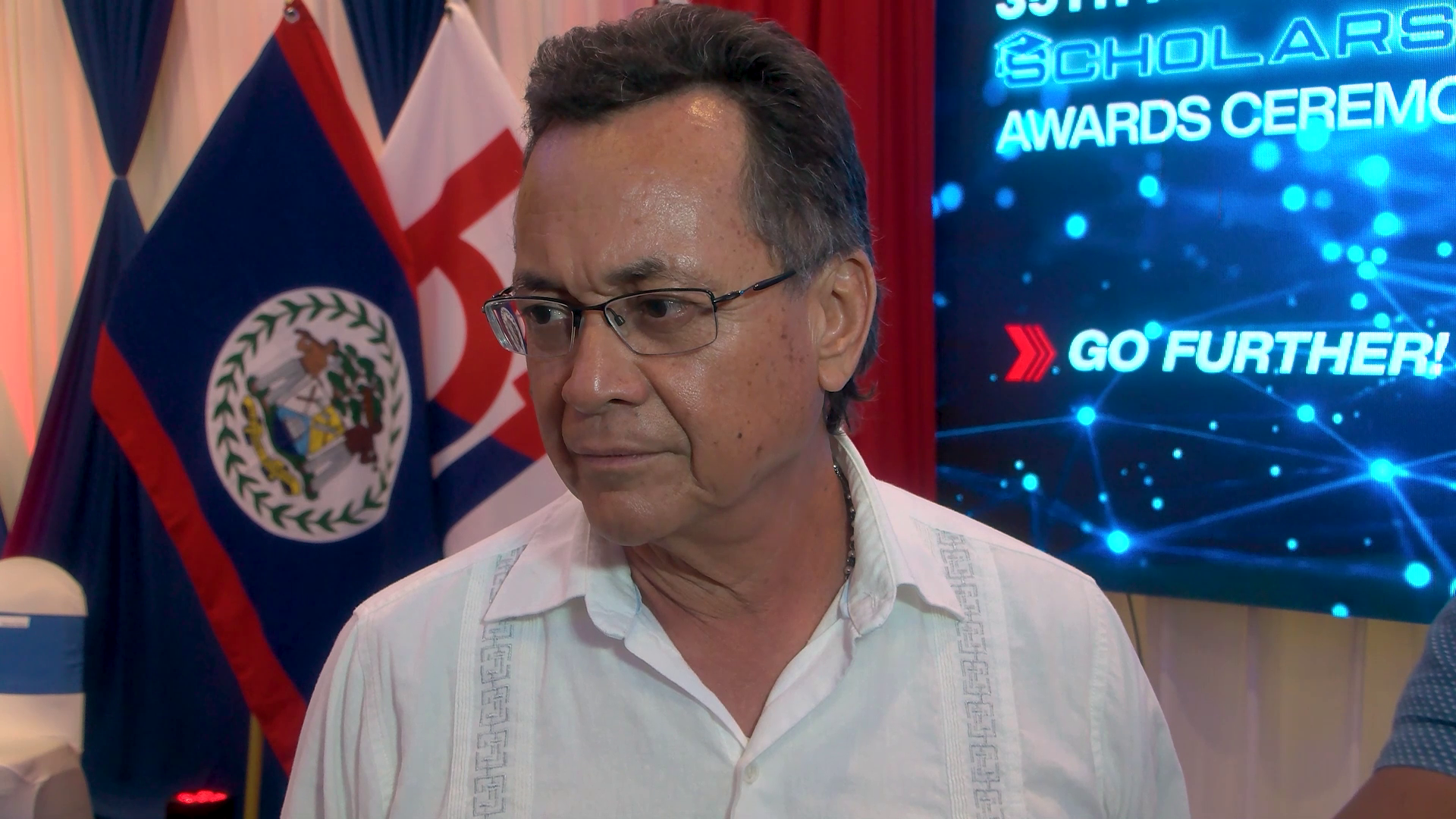
    On July 3, 2026, Belizean area representative for Orange Walk North Ramon “Monchi” Cervantes has publicly addressed growing public and political scrutiny surrounding his alleged ties to J&J Imports, a local firm currently under investigation over questionable payment arrangements with the Ministry of Defense. The long-serving politician pushed back hard against any claims of involvement, denying any formal or informal connection to the import company despite its registration being held by members of his extended family, the Requena.

    The controversy has already spilled over into the broader Smart Stream public procurement scandal, which has seen multiple sitting colleagues of Cervantes placed on administrative leave, including senior cabinet member Florencio Marin Junior—one of Cervantes’ closest political allies in the northern region of the country. When reporters pressed Cervantes for his reaction to Marin Junior’s decision to step down from his cabinet post pending the investigation, the lawmaker clarified that the move was entirely Marin’s personal choice, noting he had not spoken with his ally about the decision and would respect whatever path Marin chose to take.

    In a series of questions from local political reporters, Cervantes refuted every allegation of improper influence tied to the company. When asked whether J&J Imports had ever provided pantry or grocery aid packages to his Orange Walk North constituency, Cervantes flatly denied the claim. He also rejected suggestions that he had lobbied senior minister Marin to help J&J Imports secure a favorable public supply contract, telling reporters he never held any such conversation. When pressed on whether the company was specifically created by his relatives to win lucrative Belize Defense Force (BDF) supply contracts, Cervantes said he had no knowledge of the company’s founding purpose.

    Most recently, unconfirmed reports have circulated that Cervantes was once considered a top candidate to take over the national defense portfolio, but that the prime minister ultimately ruled out the appointment because of his familial connection to J&J Imports, a major current supplier to the BDF. Cervantes dismissed any insight into the appointment process, repeating once more that he holds no connection to the import firm at all.

    This report is adapted from a verbatim transcript of a local evening television newscast that conducted the on-the-ground interview with Cervantes this week.