标签: Belize

伯利兹

  • GOB Launches $10 Million Solar Water Project in Four Villages

    GOB Launches $10 Million Solar Water Project in Four Villages

    In a major push to address long-standing rural water insecurity, the Government of Belize officially launched a $10 million sustainable infrastructure project this Friday that will deploy solar-powered water systems to households across four underserved communities in Toledo and Corozal Districts.

    Named the Securing Water Resources through Solar Energy and Innovative Adaptive Management (SEAM) initiative, the entire project receives full financing from the global Adaptation Fund, an international body dedicated to supporting climate adaptation actions in developing nations. The project targets four communities where consistent, clean access to potable water has remained an unmet need for years: three rural settlements in the southern Toledo District — Boom Creek, Dolores, and Otoxha — and one northern community, Copper Bank, located in Corozal District.

    Over the five-year implementation timeline, project officials estimate more than 1,800 local residents will gain direct, reliable access to improved water services through the new solar-powered infrastructure. Unlike traditional electric water systems that rely on costly, carbon-intensive grid power, the SEAM project’s solar design aligns with global climate adaptation goals, cutting operational costs while delivering long-term sustainable water access for vulnerable rural populations.

    The SEAM project first received formal approval in 2025 during the Adaptation Fund’s 45th Board Meeting held in Bonn, Germany. From its earliest planning stages, the initiative has been framed as a replicable pilot model: if successful, policymakers plan to scale the solar water model to dozens of other rural communities across Belize that grapple with identical water security challenges, many worsened by climate change-driven drought and shifting rainfall patterns.

    Oversight of the SEAM project will be managed by the Protected Areas Conservation Trust (PACT), while the country’s Ministry of Rural Transformation will lead on-the-ground implementation. Notably, preliminary construction and preparation work has already gotten underway in several of the target villages, marking an early milestone for the initiative that comes just one year after its formal approval.

  • Can Russia Help End the Iran Conflict?

    Can Russia Help End the Iran Conflict?

    On April 27, 2026, a high-stakes diplomatic meeting between Iranian Foreign Minister Abbas Araghchi and Russian President Vladimir Putin unfolded in St. Petersburg, bringing a new layer of regional dynamics to the escalating long-running conflict between Iran and the United States. Photographs published on Araghchi’s official Telegram channel captured a formal, cordial handshake between the two top diplomats alongside senior delegations from both nations, setting a cooperative tone for the discussions.

    In remarks carried by Russian state television, Araghchi framed the longstanding connection between Moscow and Tehran as a robust strategic partnership, one that both sides are committed to expanding in the coming months. Speaking to journalists after the closed-door talks, the Iranian foreign minister emphasized that his country has maintained a firm stance against pressure from what he called the world’s greatest superpower – the United States. He went on to assert that Washington has failed to secure any of its core policy objectives through its campaign of pressure on Iran, a remark that underscored Tehran’s continued defiance.

    Russian Foreign Minister Sergei Lavrov later characterized the bilateral talks as productive, confirming that the in-depth discussions ran for approximately 90 minutes. Long before the face-to-face meeting, Kremlin spokesperson Dmitry Peskov had already publicly announced that Russia stands prepared to take on the role of mediator in future peace negotiations aimed at de-escalating the ongoing Iran conflict. This announcement positions Russia as a key potential broker in a standoff that has gripped global security for decades, as Moscow seeks to expand its diplomatic influence in the Middle East while deepening its economic and security ties with Tehran.

    The meeting comes at a time of heightened friction across the Middle East, with U.S.-Iran tensions remaining at near-crisis levels after years of stalled negotiations over Iran’s nuclear program and regional military activities. By deepening bilateral cooperation and offering mediation, Russia is moving to solidify its role as a central player in Middle East peace processes, countering U.S. influence in the region while supporting its key ally Tehran.

  • Suspected Measles Case Detected in Toledo

    Suspected Measles Case Detected in Toledo

    Public health authorities in the Toledo District have confirmed the detection of a suspected measles case, triggering an immediate coordinated response to stop potential spread of the highly contagious virus, according to an official announcement from the local Ministry of Health and Wellness.

    The patient in question is a 19-year-old individual who recently returned from travel to Guatemala, a country currently grappling with a large, sustained measles outbreak that has already been linked to more than 5,000 confirmed cases since the end of 2025. The preliminary diagnosis of the suspected case was completed on April 24, 2026, and public health protocols were activated within hours of the result.

    To mitigate the risk of secondary transmission, health officials have implemented strict isolation protocols for the affected patient and ordered mandatory quarantine for all identified close contacts of the individual. In addition to these control measures, specialized health response teams have already launched two key containment initiatives: a targeted ring vaccination campaign for anyone potentially exposed to the virus, and expanded community outreach programs to educate local residents on measles symptoms and prevention strategies.

    The detection of the imported suspected case has amplified existing concerns about cross-border spread of the virus, given the ongoing widespread transmission in neighboring Guatemala. In a public advisory, the Ministry of Health and Wellness has renewed its urgent call for all community members to check their vaccination status and ensure they are fully protected against measles. Authorities emphasized that while measles is one of the most contagious viral diseases that can spread through respiratory droplets, it is entirely preventable through safe, effective vaccination.

    As of April 27, 2026, public health agencies say they remain at a high level of alert, with ongoing active monitoring of the situation to quickly identify any additional cases and stop transmission chains before they can escalate into a larger local outbreak.

  • Bus Strike Paralyzes Commute

    Bus Strike Paralyzes Commute

    On the morning of April 27, 2026, thousands of daily commuters across northern Belize woke up to widespread travel chaos after the Belize Bus Association (BBA) launched a planned strike over a long-running unresolved fuel subsidy disagreement with the national government.

    The industrial action, which the BBA had threatened weeks prior, came to fruition after negotiations between the group and state authorities failed to produce a mutually acceptable agreement. According to BBA representatives, the latest subsidy proposal put forward by the government failed to cover critical high-demand routes, most notably frequent intercity services connecting to Belize City, the country’s largest urban center. The association pinned full responsibility for the breakdown of talks on Belize’s Ministry of Transport, accusing the department of ignoring the pressing cost burdens facing private bus operators.

    As the strike got underway, participating operators escalated their demonstration by blocking the major Toll Bridge crossing in Orange Walk Town, a key transport artery connecting northern districts to the rest of the country. The blockade brought motor vehicle and pedestrian traffic to a complete standstill, leaving hundreds of workers, students, and residents stranded for hours as they attempted to reach their daily destinations. Local authorities finally cleared the blockage from the bridge structure shortly after 8:30 a.m. that same morning.

    In an official statement responding to the crisis, Prime Minister John Briceño acknowledged the severe disruption the strike had inflicted on everyday Belizeans, while tracing the root of the conflict to skyrocketing global crude oil prices that have driven up operational costs for transport providers across the country. “We recognize that there is a crisis… the price of fuel has been going up dramatically,” Briceño noted, adding that government negotiating teams had worked through the entire preceding weekend to craft a compromise proposal that would address operators’ concerns without placing undue burden on passengers.

    Under the framework the government put forward, subsidies would be extended to cover all inter-village, inter-town and intercity bus routes, paired with a controlled, modest increase in passenger fares to help operators offset remaining costs. Briceño emphasized that finding a balanced solution was critical to protecting both sides: “We have to find a balance. Operators are struggling with higher costs, but passengers also cannot absorb steep fare hikes.”

    The Prime Minister confirmed that immediate de-escalation efforts were already underway to end the standoff, including appointing a dedicated government negotiator to resume talks with BBA leadership. He reiterated that the immediate priority was reopening key transport infrastructure to restore normal movement for the public, noting that he had already received official confirmation that the Toll Bridge blockade had been removed. Negotiations between BBA representatives and the government are scheduled to continue the same day in the capital city of Belmopan, as both parties work toward a lasting resolution to the dispute.

  • UNICEF Raises Red Flag Over High Child Abuse Cases in Belize

    UNICEF Raises Red Flag Over High Child Abuse Cases in Belize

    In a stark public warning released in late April 2026, UNICEF has declared grave concern over a sharp uptick in disturbing child-related violence and abuse incidents across Belize over the preceding 30 days. The documented cases uncovered in this period range from missing teenage minors and the deaths of abused children, to the spread of non-consensual abuse content across digital platforms, and repeated accounts of sexual exploitation committed by individuals the child victims know and trust.

    In an official statement, the United Nations children’s agency emphasized that these repeated, high-profile incidents expose a deeply alarming reality: far too many young people in Belize are suffering harm in the very environments that are supposed to guarantee their safety. Sajid Ali, UNICEF’s top representative for Belize, stressed that violence against children constitutes a severe violation of fundamental human rights, and that this abuse must never be normalized or dismissed under any circumstances. He reiterated a critical message that children hold no blame for the harm inflicted on them, and that the full responsibility to act promptly and prioritize children’s well-being rests entirely with adults.

    UNICEF has also drawn attention to an underreported hidden crisis: while a small number of high-profile cases have gained national traction after being circulated on social media, a vast majority of abuse incidents are never brought to public attention or formally reported to authorities. Findings from the most recent seventh round of the Multiple Indicator Survey (MICS7) back this assessment, confirming that violence against children most frequently occurs in familiar settings — within homes, schools and local communities — perpetrated by people the victims already know and rely on.

    Moving beyond awareness-raising, UNICEF has partnered with Belize’s National Commission for Families and Children to roll out the Blue Teddy Bear Campaign, a community-focused initiative designed to equip local residents with the knowledge to identify warning signs of abuse and report suspected cases to relevant authorities. The agency notes that child protection is not a responsibility that falls exclusively to government agencies or law enforcement; every adult in Belize has a role to play in keeping young people safe.

    Looking forward, UNICEF says it will maintain close collaboration with the Government of Belize to strengthen the country’s national child protection framework, advance urgently needed legislative reforms, and ensure that adults tasked with safeguarding children are held fully accountable for failures to act. Even as it works to upgrade formal systems, the agency stresses that institutional changes alone cannot end the crisis. Sustainable, meaningful change to protect Belize’s children must start with shifting norms and practices at the community level.

  • NBC Says It Does Not Charge 19 Cents Per Mile

    NBC Says It Does Not Charge 19 Cents Per Mile

    A public disagreement over bus pricing has erupted between the Belize Bus Association (BBA) and the Belizean government, centered on a widely circulated claim that the state-owned National Bus Company (NBC) charges a uniform 19 cents per mile for all routes. Government officials have pushed back hard against this assertion, labeling the figure entirely inaccurate and misleading, as negotiations over bus operator relief amid soaring fuel costs enter a new phase.

    Speaking at a Saturday press briefing, Minister of Transport Louis Zabaneh clarified that NBC does not operate under a single flat-rate pricing structure. Instead, per-mile fares vary significantly based on the characteristics of each specific route, with actual average rates coming in substantially lower than the 19-cent figure cited by the BBA. On southern routes run by NBC, for example, average per-mile costs fall between 11 and 13 cents, while western route averages range from 16 to 17 cents per mile.

    Chester Williams, Chief Executive Officer of the Ministry of Transport, backed up this clarification with concrete on-the-route examples to illustrate the discrepancy. Williams noted that a full one-way trip from Punta Gorda to Belize City, a journey of roughly 210 miles, carries a total ticket price of approximately $27. When calculated per mile, that works out to just 13 cents per mile. Similarly, a 105-mile trip from Dangriga to Belize City costs around $12, averaging out to 11 cents per mile. “For the BBA to be putting out statements that NBC is charging 19 cents per mile is totally untrue,” Williams emphasized.

    The inaccurate 19-cent claim has served as the core of the BBA’s push for industry-wide fare adjustments. The association has argued that its member operators should be allowed to align their pricing with what they claim NBC charges, to offset soaring operating costs. But government officials explain that this cross-sector comparison is fundamentally misleading, because fare structures are shaped by route-specific conditions that differ sharply between the BBA’s primary service areas and NBC’s operating regions.

    NBC’s core operational footprint is concentrated in Belize’s southern and western regions, where routes are typically longer. Longer routes naturally translate to lower average per-mile costs, even with total ticket prices factored in. By contrast, the majority of BBA-operated routes are located in northern Belize, where shorter route lengths and different operating dynamics lead to higher inherent per-mile costs. Officials added that these variable pricing differences stem from multiple tangible factors: overall route length, the number of scheduled stops along a route, and variable operating costs unique to each area, rather than a one-size-fits-all national pricing scheme for bus services.

    The current dispute comes after weeks of closed-door negotiations between the BBA and the Belizean government, sparked by rising global fuel prices that have driven up operating costs for all domestic bus operators. Initially, the BBA put forward three separate requests for regulatory and financial relief: full tax exemptions on fuel and bus replacement parts, direct government subsidies to offset increased fuel costs, or permission to adjust fares up to a uniform 19 cents per mile across the board.

    In a sudden policy shift following the BBA’s claims about NBC pricing, Zabaneh announced that the government would abandon plans for any fare increase for consumers. “Since the BBA is saying they don’t wish for the rates, and that they reject the rates, then we will remove the rates,” Zabaneh stated. “No increase in rates to our people. Instead, the Prime Minister has agreed we will work on a subsidy for the BBA.”

    All details of the planned subsidy package for BBA member operators are set to be unveiled by Prime Minister John Briceño in an official announcement scheduled for Monday.

  • Gunman Storms White House Correspondent’s Dinner, Trump Evacuated

    Gunman Storms White House Correspondent’s Dinner, Trump Evacuated

    On the night of April 26, 2026, a violent security breach disrupted the annual White House Correspondents’ Association dinner at a Washington, D.C. hotel, forcing an emergency evacuation of U.S. President Donald Trump and other senior officials in attendance.

    According to official law enforcement briefings, the armed suspect pushed past a Secret Service checkpoint stationed in the hotel’s main lobby, entering the venue with a cache of weapons including a shotgun, a handgun, and multiple edged weapons. Responding Secret Service officers immediately engaged the intruder, triggering a physical confrontation that ended with the suspect being tackled and taken into custody.

    Washington, D.C. Police Chief Jeffery Carroll confirmed that officers exchanged gunfire with the suspect during the confrontation, but the intruder emerged unwounded before being subdued. “They successfully tackled him to the ground and secured him with handcuffs before any additional harm could be done,” Carroll stated in a press update following the incident.

    The attack left one Secret Service agent injured, who was quickly transported to a local medical facility for treatment. As of the latest update, there have been no reports of additional casualties among attendees, staff, or law enforcement personnel.

    Trump first addressed the unfolding incident via his Truth Social platform, where he commended law enforcement officers for their rapid, courageous response to the breach and initially suggested the dinner could proceed as planned. In a subsequent post, however, the president clarified that security officials had requested he and other attendees evacuate the hotel property, and announced that the high-profile annual event would be rescheduled within a 30-day window.

  • Young Man Charged with Murder

    Young Man Charged with Murder

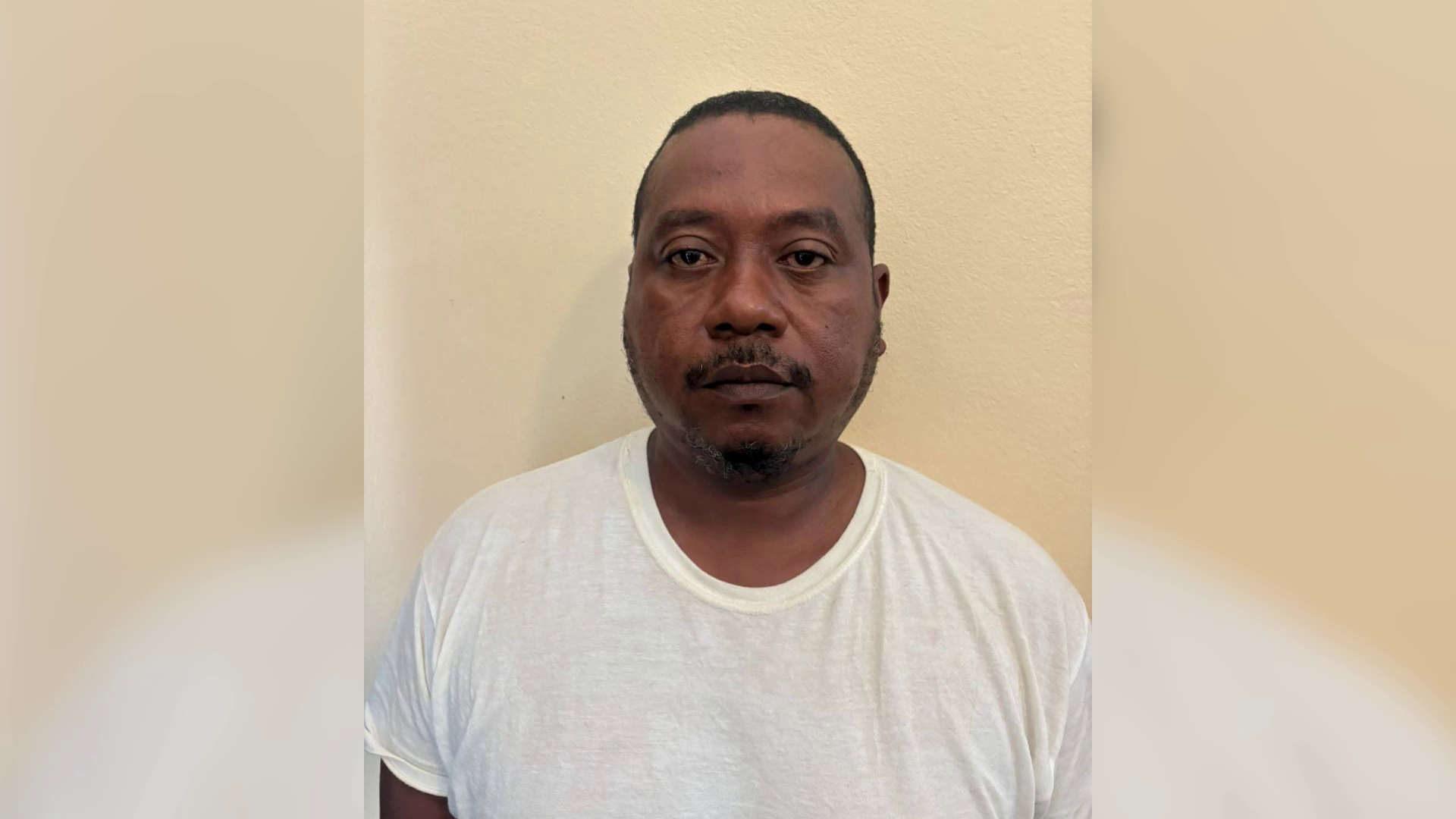
    Nearly a week of investigative work has led Belizean law enforcement to an arrest in the killing of 19-year-old Jamir Cambranes, whose body was discovered on Boom/Hattieville Road earlier this month. On Thursday, officials charged 19-year-old Kenrick Lindbergh Robinson, a Belize City-based construction worker, with Cambranes’ murder, closing the first major phase of the case that has added to growing community anxiety over a string of recent youth killings in the area.

    The timeline of Cambranes’ disappearance began on the night of Tuesday, April 21, when he left his Euphrates Avenue residence on his bicycle to meet two unknown associates who were traveling in a silver Chevy Equinox, according to family accounts. In a move his uncle later noted was unusual for the 19-year-old, Cambranes shared his real-time location with his girlfriend before losing contact. For hours, repeated calls and text messages to Cambranes went unanswered, and when his girlfriend observed that his location had not changed for an extended period, she alerted his brother, who immediately mounted a search on his motorcycle. It was that search that led to the grim discovery of Cambranes’ body.

    Cambranes’ killing is the latest in a disturbing pattern of disappearances and deaths of young men that have shaken the Belize City community in recent weeks, leaving residents on edge and calling for greater public safety action to curb the rising violence targeting local youth.

  • Stolen Hilux Recovered After Police Chase

    Stolen Hilux Recovered After Police Chase

    In an early morning law enforcement operation on April 25, 2026, Belize police recovered a stolen Toyota Hilux that had been taken from the Football Federation of Belize’s compound in Belmopan City, ending a high-speed pursuit near Calla Creek Village in Cayo District.

    The operation unfolded shortly before 4 a.m., when members of the San Ignacio Special Operation Team were conducting routine mobile patrols and received an official alert about the missing vehicle. Acting quickly on the tip, the team traveled to the Bullet Tree Falls police substation, where they linked up with officers from the Mobile Interdiction Unit to expand their search along the Santa Rosa Road corridor.

    As the combined patrol scanned the route, officers spotted the unreported stolen vehicle traveling toward them. They gave standard traffic signals to order the driver to pull over, but instead of complying with the law enforcement instruction, the driver immediately accelerated and attempted to evade capture.

    Simultaneously, patrol officers noticed a male suspect sitting on a parked motorcycle along the side of the road close to the encounter. That individual was taken into custody without incident right away, while officers initiated a formal pursuit of the fleeing truck in the direction of Calla Creek Village.

    The chase finally concluded at a small hammock bridge within the village limits, where law enforcement found the abandoned Hilux. A preliminary on-site inspection revealed that the vehicle’s ignition key had been left inside, and a valid Belizean driver’s license was discovered on the floorboard near the driver’s seat.

    After the recovery, the stolen vehicle underwent forensic processing and evidence photography at the scene before it was transported to the San Ignacio Police Station, where it is currently being held in police impound as the investigation into the theft continues.

  • Bus Association Threatens Nationwide Shutdown Over New Fares

    Bus Association Threatens Nationwide Shutdown Over New Fares

    Belize is bracing for a total disruption of national bus services starting as early as next week, after a bitter dispute between the government and the Belize Bus Association (BBA) boiled over into a public standoff over controversial newly announced fare adjustments.

    The confrontation was triggered by the government’s recent publication of updated bus fare rates scheduled to enter into force on Monday. In a sharply critical press statement released Thursday, the BBA rejected the new pricing structure outright, saying that bus operators across the country were never consulted on the changes, never gave their approval, and will not comply with the unilaterally implemented rates.

    The core of the industry body’s anger centers on the government’s process for setting the new fares. According to the BBA, the Ministry of Transportation developed the new pricing using an internal, closed-door calculation formula that excluded any meaningful input from private bus operators. The resulting rates, the association argues, are set at levels that place an unbearable financial burden on daily commuters who rely on buses for work, school, and essential travel.

    The association also levied direct criticism against the state-owned National Bus Company, accusing the public entity of acting solely as a mouthpiece for government policy. The BBA claims this dynamic creates an inherent, unacceptable conflict of interest that skews the entire process of setting fares, shaping regulation, and communicating with the public about the dispute.

    BBA leaders emphasized that they attempted to avoid this crisis through months of negotiation, putting forward a series of compromise proposals designed to ease cost pressures on operators without shifting the burden to passengers. Those proposals included eliminating the Goods and Services Tax (GST) on essential operating inputs and providing targeted government subsidies to help offset rising costs for operators. According to the association, all of their suggested solutions were rejected out of hand by government negotiators.

    “The government has consistently moved the goalposts throughout our ongoing talks, and now they are attempting to rewrite the narrative to paint the BBA as the cause of this crisis,” the association’s statement read.

    After what the BBA describes as months of bad faith negotiations, the association’s membership has voted unanimously to take collective action. Its demand to the government is clear: authorities must immediately implement a fuel subsidy that caps the price operators pay for diesel at $9.50 per gallon, matching the rate that was in place before the current global fuel crisis drove costs sharply upward.

    If the government fails to issue a formal commitment to meet this demand by the end of Sunday, April 26, all BBA member services will cease operation across the country starting Monday morning. The association framed the standoff as a critical make-or-break moment for the industry and for the livelihoods of both operators and commuters, calling on members of the public to stand with them in opposing the government’s imposed fare increases.

    As of Thursday evening, the government has not issued any public response to the BBA’s ultimatum, leaving commuters, businesses, and policymakers across Belize waiting to see if a last-minute deal can be reached to avoid the widespread shutdown.