标签: Belize

伯利兹

  • Defense Procurement: Fair Play or Favoritism?

    Defense Procurement: Fair Play or Favoritism?

    A brewing political controversy over government defense procurement has sparked allegations of favoritism and insider dealing in the current administration, with a leading union leader calling for a full, transparent audit to uncover potential wrongdoing.

    The scandal centers on a key observation: a substantial number of private businesses that have recently secured lucrative defense contracts from the Ministry of Defense were only incorporated after the Briceño administration took office. Dean Flowers, president of the Public Service Union (PSU), argues that this coincidental timing is no accident, and instead points to a systemic pattern that advantages well-connected new entrants at the expense of fair competition.

    In comments delivered to local media, Flowers laid out the core of his accusation, urging the public to scrutinize the founding dates of contract-winning firms and examine whether transactions involve politically connected related parties. “Create a company, submit a bid and we will ensure you get a bid or part of a bid,” Flowers said, outlining the alleged scheme that he says relies on advance insider knowledge of upcoming government procurement needs.

    Flowers has raised questions about opaque government contracting practices since he assumed leadership of the PSU in 2021, repeatedly calling attention to what he claims is the emergence of a new class of politically connected wealthy individuals benefiting from public spending, particularly in the pharmaceutical sector. He went on to argue that most of the companies founded after the administration took office would be unable to survive commercially without exclusive access to government contracts, given their explicit founding purpose to capitalize on political connections.

    To date, no concrete, tangible evidence has been made public to confirm Flowers’ claims of insider dealing and favoritism. Despite this lack of proof, Flowers is pushing for procurement investigators to include the timing of company incorporations as a core line of inquiry in the ongoing official audit of the defense ministry’s contracting activities.

    This report is adapted from a transcribed broadcast of a local evening newscast, with localized Kriol language statements preserved using standardized spelling conventions.

  • Suspect Detained After Deadly Cane Field Attack in San Lazaro

    Suspect Detained After Deadly Cane Field Attack in San Lazaro

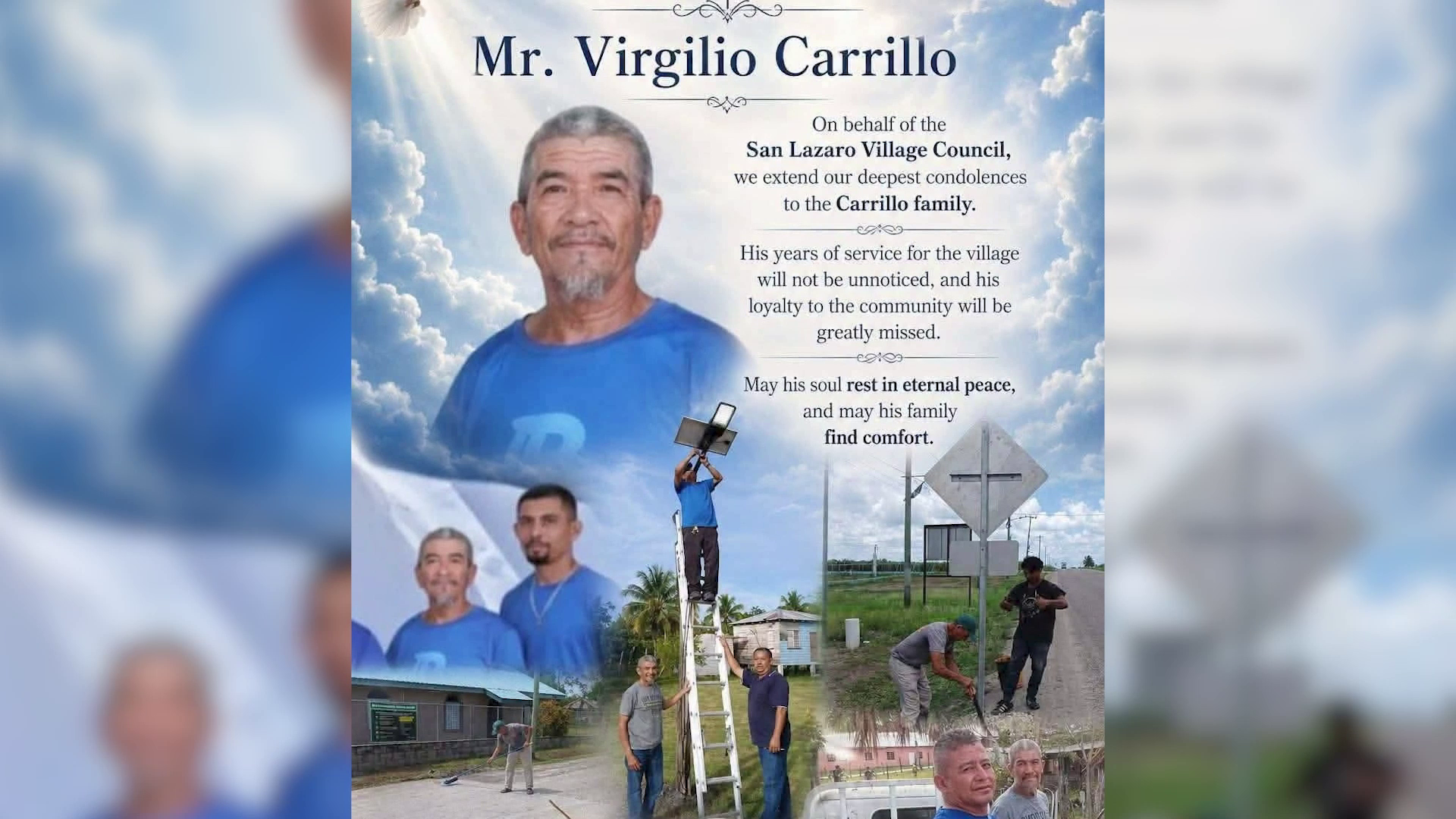
    The tight-knit agricultural community of San Lazaro remains in a state of profound shock and grief following a brutal, unprovoked attack that claimed the life of a long-time local resident earlier this week. Seventy-eight-year-old Virginio Carillo, a widely respected hardworking farmer and active community volunteer, was fatally hacked to death in an ambush that unfolded as he commuted along a rural road bordering a local sugar cane field early Monday morning.

    According to official law enforcement statements, the attacker lay in wait in dense roadside vegetation before emerging to launch the sudden, deadly assault against Carillo as he rode his bicycle along the route. In a swift development that has brought a small measure of closure to the shaken village, authorities announced that a suspect has been taken into police custody just 24 hours after the incident. As of the latest update, however, formal charges have not yet been filed against the detainee, and investigators have not released details on a possible motive for the killing.

    Carillo’s sudden, violent death has rippled across the small community, where residents remember him as a dedicated, dependable neighbor who contributed regularly to local initiatives. Local government leaders and public officials have issued formal statements of condolence to Carillo’s family and friends, matching the outpouring of sympathy shared by village residents in the days since the attack.

    This report is adapted from a televised evening news broadcast, with original Kriol language commentary transcribed using a standardized spelling system for online publication.

  • High Court Acquits Andre Arthurs in Fatal Belize City Shooting

    High Court Acquits Andre Arthurs in Fatal Belize City Shooting

    On July 14, 2026, a pivotal ruling in Belize cleared a local man of murder charges stemming from a high-profile 2025 fatal shooting in the heart of Belize City. Twenty-eight-year-old Andre Arthurs, a construction worker based in the Faber’s Road neighborhood, walked free from the High Court Wednesday after Justice Nigel Pilgrim threw out the prosecution’s case over critical gaps in evidence and unreliable witness identification.

    The case centered on the March 2025 shooting death of 33-year-old Mark Usher Jr., who was killed at the intersection of Jabiru Street and Faber’s Road. Prosecutors from the Crown had alleged Arthurs was the gunman who carried out the daytime attack, arguing their entire case on the testimony of a single witness: Interdiction Police Officer Lawrence Martinez.

    Martinez told investigators he had witnessed a man matching Arthurs’ general description, wearing a blue shirt and riding a bicycle, flee the scene moments after the gunfire rang out. Weeks later, Martinez picked Arthurs out of a police group identification procedure. But Justice Pilgrim’s ruling laid bare fundamental flaws in that identification process. The judge noted there was no documentation or confirmation that the other participants in the identification line-up shared similar physical characteristics with Arthurs — including matching height, skin tone, age range, and general appearance. Without that consistency, the court ruled the identification could not be considered reliable, even though Martinez himself appeared to be a credible witness on the stand.

    Beyond the flawed identification, the prosecution failed to produce any physical evidence linking Arthurs to the shooting. Investigators never tested Arthurs’ hands for gunshot residue, did not recover the murder weapon, never obtained a warrant to search for the alleged blue shirt the suspect was reported to wear, and could not account for the abandoned bicycle the shooter supposedly left behind. No DNA evidence connecting Arthurs to the crime was presented to the court at any point during the trial.

    In his statement to the court, Arthurs forcefully denied any involvement in Usher’s killing. He told the justice he was at his home hosting a barbecue with friends at the exact time the shooting occurred, providing an unchallenged alibi that the prosecution could not disprove.

    Following the not guilty verdict, Arthurs was released from custody immediately, with his waiting relatives greeting him outside the courtroom. Usher’s mother, who had attended the trial to observe the verdict, left the courthouse shortly after Justice Pilgrim announced the ruling. Arthurs was represented throughout the proceeding by defense attorney Simeon Sampson, who successfully argued that the prosecution had failed to meet its burden of proving guilt beyond a reasonable doubt.

  • Yellowman May Face Consequences for Obstruction

    Yellowman May Face Consequences for Obstruction

    On a routine working trip to cover an unrelated story in Mesopotamia, a reporting team from News Five stumbled across an unfolding public dispute centered on voter registration activities, that could now land a local opposition party operative in legal trouble.

    The confrontation broke out Tuesday at the intersection of Iguana and Bocotora Streets, when a registration officer from Belize’s Elections and Boundaries Department arrived to update voter rolls. Brian “Yellowman” Audinette, a long-time operative for the United Democratic Party (UDP), stepped in to block the process, claiming that the individuals attempting to register did not actually reside at the address in question.

    “That noh fi happen. That noh wah happen under my watch,” Audinette told reporters on scene, asserting that he was acting to prevent what he calls illegal voter registration – an offense that carries penalties including fines and even jail time under Belizean electoral law. “Unu noh wa register nobody ya like that. Unu noh wah come with no illegal registration ya.”

    But Chief Elections Officer Josephine Tamai clarified that while Audinette had every right to challenge questionable registrations, he chose the wrong approach. Belize’s Representation of the People Act lays out a clear, formal process for voters to raise objections to any entry on the voter rolls, Tamai explained. To file a formal challenge, an elector must submit a written notice of objection on the official Form 14A, outlining clear grounds for their challenge, by the 25th day of the month in which the registration takes place. Once a challenge is submitted correctly, a revision court overseen by a sitting magistrate will be convened before the end of the month to hear evidence, review the case, and issue a binding ruling on whether the voter’s name stays on the list or is removed.

    Instead of following this formal legal process, Tamai noted, Audinette chose to interfere directly with the registration officer’s official duties, an act that itself violates electoral regulations. The Elections and Boundaries Department is treating the incident with significant seriousness, Tamai emphasized, stressing that no private citizen is permitted to obstruct public officials as they carry out their legally mandated election work. “Any person who wishes to object must follow the process for objections as the process is clearly written in the Representation Of the People’s Act and action will be taken against anyone who interferes or obstruct officers from carrying out their duties,” Tamai said.

    Many independent political observers in the country note that this incident is not an isolated case tied to one party, pointing out that operatives from both major political parties in Belize have a long history of attempting to block voter registrations in competitive constituencies through extra-legal means. They argue that any enforcement action taken against Audinette should prompt a broader review of such tactics across all political groups, to ensure all parties are held equally accountable for violations of electoral law. This report was prepared by Shane Williams for News Five.

  • Months of Delays, But Where’s the Progress in River Valley?

    Months of Delays, But Where’s the Progress in River Valley?

    In the Belize River Valley, months of persistent traffic congestion around two aging bridges has left local commuters and travelers growing increasingly frustrated, even as project managers defend the slow pace of the long-awaited rehabilitation work. The multi-million upgrade targeting the Sebastian Bridge and Bermudian Landing Bridge kicked off in March 2026, and is slated to run for an 18-month timeline that officials say is strictly being adhered to, despite what appears to be minimal visible progress to outside observers.

    Local drivers have grown weary of navigating the narrow, intermittent traffic bottlenecks that have been a daily reality since construction began. Many have taken to public criticism of the project, questioning why upgrades that seem simple to the casual observer have dragged on with few noticeable changes to the structures that have served the region for decades with little to no regular maintenance.

    Evondale Moody, chief engineer for Belize’s Ministry of Infrastructure Development and Housing (MIDH), explained that the work’s complexity is far greater than it appears from the roadside. The project is being carried out by Cayo Steel, contracted by the government to deliver comprehensive structural overhauls that will extend the service life of both critical river crossings for decades to come. To maintain at least partial access for local residents and tourism operations throughout the build, the contractor is working on one half of each bridge at a time. This phased approach requires crews to completely remove one lane’s structural components, conduct full sandblasting to remove corrosion and wear, perform preventative maintenance, apply new protective coatings, then reassemble each section before shifting work to the other side of the span.

    “These structures have stood for a very long time with almost no upkeep,” Moody noted, adding that the government launched the initiative to reverse decades of deferred maintenance and bring the bridges up to modern safety standards. He also acknowledged that the construction zone disrupts access to dozens of rural villages and popular tourism destinations scattered throughout the Belize River Valley. MIDH has deployed on-site liaisons to communicate directly with local communities about the scope and timeline of the work, and Moody asked for the public’s continued patience as crews work through the detailed, labor-intensive process.

    Moody emphasized that the ministry is advancing the project as efficiently as possible given its current available budget and resources, reaffirming that it remains aligned with the original 18-month construction schedule. This report is a transcript of an evening television newscast originally published online.

  • New Marine Monitoring Stations Strengthen Coastal Safety

    New Marine Monitoring Stations Strengthen Coastal Safety

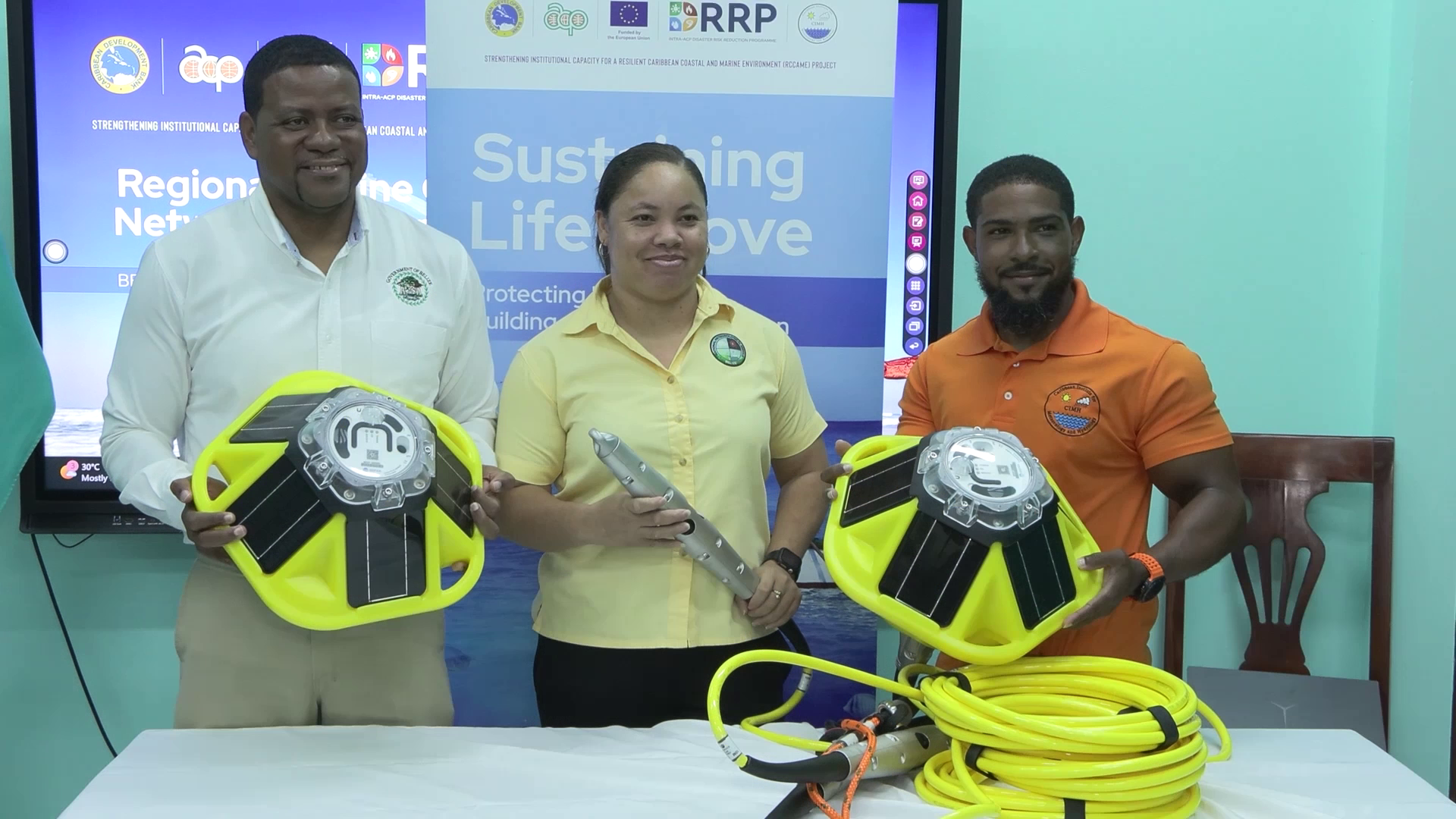
    Belize is set to dramatically upgrade its ocean and coastal monitoring capabilities following the handover of three cutting-edge marine monitoring stations, a donation that will fill a long-standing data gap for the Central American nation’s vulnerable coastal communities.

    The new infrastructure, which carries a total value of $66,000, was provided by the Caribbean Institute for Meteorology and Hydrology (CIMH), with project financing sourced from the European Union and channeled through the Caribbean Development Bank. It forms part of a broader regional initiative called Strengthening Institutional Capacity for a Resilient Caribbean Coastal and Marine Environment, a multi-component program that also covers air quality management, advanced climate prediction modeling, climate and public health linkages, cross-institutional knowledge exchange, and improved natural hazard forecasting.

    For years, Belize’s National Meteorological Service has operated an extensive network of weather tracking infrastructure across its mainland, with a small number of existing offshore stations limited to the Cayes region. However, these older installations only collect data on atmospheric conditions such as air pressure, temperature, and wind speed, leaving a critical gap in continuous monitoring of ocean-specific variables that shape weather patterns and coastal risk. Ronald Gordon, Belize’s Chief Meteorologist, explained that the new stations will close this gap, expanding the country’s capacity to issue timely early warnings and build long-term resilience for populations that live and work along Belize’s extensive coastline.

    CIMH mission lead Courtney Forde noted that the addition of these monitoring buoys marks a key milestone for improving hurricane forecasting across the entire Caribbean region. By gathering consistent, on-site ocean data, scientists can refine climate and weather models, leading to more accurate predictions of storm intensity and trajectory that benefit not just Belize but neighboring island nations as well.

    Belize’s meteorological service has identified three priority locations for installing the new stations: Glover’s Reef, English Caye, and the Southern Turneffe Atoll, all ecologically and economically critical marine areas that are particularly exposed to coastal hazards. As part of the handover process, technical training on equipment installation and operation was provided to representatives from key local stakeholders, including the Belize Port Authority, the Turneffe Atoll Marine Reserve management team, and the national Fisheries Department.

    Senior Climatologist Shanea Young noted that demand for improved marine data has been growing among local sectors for years. Organizations ranging from port regulators to marine conservation groups have long depended on generalized forecasts and satellite data, but the new stations will deliver high-resolution, on-the-ground observations of sea surface temperature and other key ocean variables that have not been available locally before. This will not only strengthen national early warning systems for extreme weather but also improve the quality of weather, ocean, and climate information provided to all end-users across the country.

    Each of the three stations is equipped with solar-powered, satellite-connected weather buoys, alongside purpose-built floats, moorings, anchors, and an integrated suite of specialized sensors. The technology allows for continuous, 24/7 monitoring of a wide range of both marine and atmospheric conditions, including wave height and activity, sea surface temperatures, wind patterns, and atmospheric pressure. The real-time data collected will be used to strengthen disaster preparedness, improve forecasting accuracy, and support long-term monitoring and protection of Belize’s ecologically rich coastal and marine environments.

  • Caribbean Shores Fishing Camp Inspires Future Conservationists

    Caribbean Shores Fishing Camp Inspires Future Conservationists

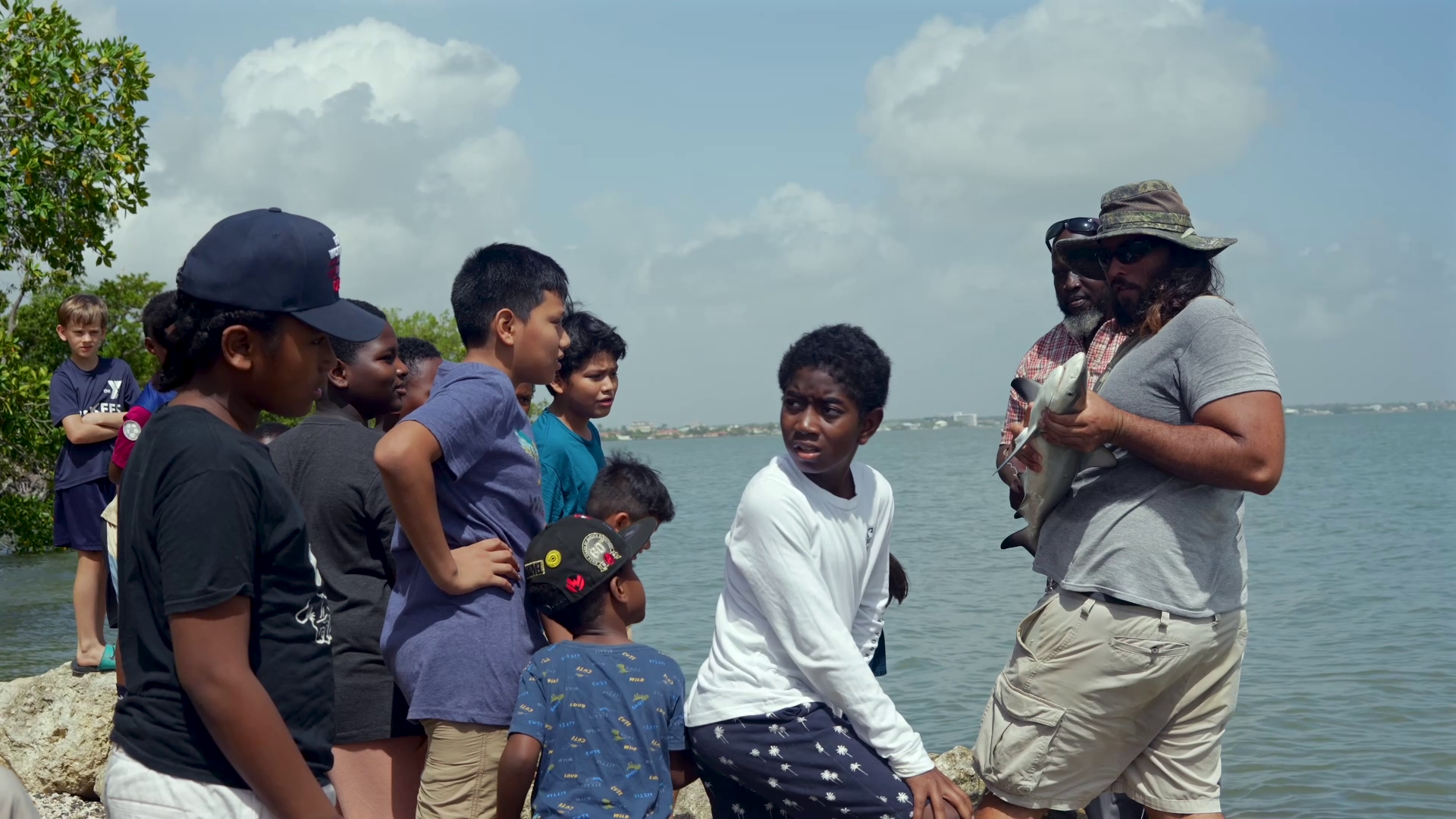
    As summer 2026 unfolds along Belize’s sun-drenched Caribbean coastline, a new initiative is turning young screen users into budding environmental stewards. More than 30 children aged 6 to 12 from the Caribbean Shores constituency are swapping hours of digital device time for hands-on learning at the week-long Caribbean Shores Fishing Camp, hosted at Dolphin Park.

    Sponsored by Kareem Musa, the Area Representative for Caribbean Shores, the camp is far more than a recreational diversion for school-aged children on summer break. Blending practical fishing instruction with core marine conservation education, the program is designed to foster lasting connections between local youth and the ecologically rich coastal ecosystems that define their community.

    Leading the hands-on instruction is veteran fishing instructor John Clayton Burks, who frames fishing as a gateway to deeper environmental appreciation. “The main goal of my class is to teach them a better appreciation of the environment we have here,” Burks explained. “You know, part of the best way to experience the environment is to go out and enjoy it, and fishing is one of the best ways to do it.”

    Instruction runs from foundational fishing skills to conservation-focused best practices: campers learn step-by-step how to prepare tackle, hook bait, cast lines, and throw casting nets. A core educational component centers on identifying protected and undersized marine species that should not be harvested, with guided training on how to safely free these animals from fishing gear and release them back into their natural habitat unharmed.

    For Musa, the camp is a personal initiative rooted in his own childhood growing up along Caribbean Shores’ coastline, which stretches from Buttonwood Bay to BTL Park. “Growing up in Caribbean Shores, I can safely say that that [fishing] was one of the greatest memories that I had as a young boy,” he shared on the camp’s opening day. “It truly is a wonderful experience, and the kids are already having a great time this morning.”

    Organizers say beyond building practical skills and creating core summer memories, the initiative aims to instill long-lasting environmental values. By engaging children with the ocean in a tangible, meaningful way, the camp hopes to inspire a new generation of conservationists committed to protecting Belize’s valuable marine ecosystems for decades to come.

  • Witness Details Moments Behind Controversial Jaguar Cub Incident

    Witness Details Moments Behind Controversial Jaguar Cub Incident

    In a rare firsthand account of a recently sparked controversy centered on human-wildlife interaction in Belize’s Mountain Pine Ridge reserve, a witness who accompanied the Stoll brothers during the jaguar cub encounter has opened up about the unplanned incident, shedding new light on what unfolded in the field.

    Leslie Penner, who was part of the birdwatching outing on that day, told local outlet News Five that the group first spotted an adult jaguar and its young cub lingering close to their parked vehicle. As the encounter unfolded, one of the Stoll brothers made the fateful decision to reach out and touch the cub – a move Penner has publicly labeled as both unnecessary and reckless. He emphasized that the impulsive action carried unnecessary risks, including the potential to ignite long-term human-wildlife conflict that threatens both animal populations and local conservation efforts.

    Despite his sharp criticism of the action, Penner was quick to push back against narratives that frame the brothers as intentional violators of wildlife protection norms. He pointed to the Stoll brothers’ decades-long track record of conservation work across Belize, arguing that the pair had no malicious intent behind the encounter. In his view, any public conversation about the incident must also acknowledge the substantial contributions the brothers have made to protecting Belize’s unique ecosystems and endangered wildlife. Penner doubled down on this position, noting that Belize’s natural landscapes are in far better condition today because of the Stoll brothers’ work than they would be without their decades of advocacy and on-the-ground conservation.

    Dr. Celso Poot, managing director of the Belize Zoo, shared expert perspective on why interacting with young wild big cats is strongly discouraged. While Poot noted that widespread fears of the mother jaguar abandoning her cub after human contact are unlikely to come to pass, he stressed that the interaction inflicts significant unneeded stress on the young animal and its mother. Drawing on generations of traditional ecological knowledge and decades of professional experience working with captive-bred big cats, Poot explained that even accredited zoological facilities that specialize in jaguar breeding avoid direct human contact with newborn cubs. Instead, facilities rely on remote camera monitoring to track cub health and development, only allowing public viewing once the mother jaguar has determined the environment is safe and brings her cubs out on her own. Direct handling, he emphasized, is never a recommended practice for either inexperienced visitors or seasoned conservationists.

    The incident has sparked renewed debate across Belize about responsible wildlife viewing practices, even as it has highlighted the complicated nature of judging missteps against a backdrop of long-standing conservation contributions.

  • Belizean Music Icon Kendoyll Simpson Dies After Cancer Battle

    Belizean Music Icon Kendoyll Simpson Dies After Cancer Battle

    The small but vibrant Central American nation of Belize is in mourning this week as its music community says goodbye to one of its most influential creators: award-winning producer and musician Kendoyll Simpson, known professionally to fans and collaborators as KSBEATS. After a 24-month battle with cancer, Simpson died on Sunday, July 12 2026, bringing an end to a career that spanned more than 20 years and reshaped the modern sound of Belizean music.

    Simpson’s journey into music began more than three decades ago, when his mother taught him to play the drums as a young child. His sister, Tiffany Simpson, recalled in an interview that even as a young boy, Simpson’s passion for rhythm was undeniable – too big for his small frame, even, as he would sit playing for church congregations, his feet unable to reach the bass drum pedal. From those early church performances, Simpson built a multi-faceted career that extended far beyond performance.

    As a producer, audio engineer, marketer, and industry strategist, Simpson wore many hats. He specialized in mixing and mastering, a technical craft he once compared to applied physics, and also supported emerging Belizean artists by developing social media marketing strategies to help their work gain traction on platforms like YouTube. His discography crosses nearly every popular genre in the Caribbean and Central America, and he collaborated with a who’s who of regional talent, including beloved Belizean artists Melonie Gillett, Ernestine Carballo, T.R. Shyne and Jackie Castillo, as well as Caribbean icon Oscar B, who passed away shortly before Simpson.

    Tiffany Simpson remembered her brother as a driven, endlessly perfectionist creator who never settled for good enough. He was a quiet, reserved person off-stage, but came alive when performing and producing, bringing a one-of-a-kind sonic flavor to every project he touched. His impact stretches far beyond Belize’s borders, cementing his status as a globally recognized talent who put Belizean music on the regional map.

    Remarkably, Simpson continued working in his studio through the most difficult stages of his cancer treatment, remaining active until his body could no longer keep up. Earlier this year, he contributed to a track that went on to win the prestigious Soca Monarch competition. He is survived by his 10-year-old daughter, leaving behind a musical legacy that will shape Belizean music for generations to come.

  • Belize Eyes Gold in Central American Men’s Final Four Tournament

    Belize Eyes Gold in Central American Men’s Final Four Tournament

    As the Central American Men’s Final Four Volleyball Tournament enters its decisive final stages in San José, Costa Rica, Belize’s national squad has positioned itself as a top contender for the gold medal, building on a strong run of early results and widespread domestic support.

    After two opening matches, the Belizean team holds an unblemished record, pushing it one step closer to the title it narrowly missed last year. The team’s first contest against host nation Costa Rica delivered a tense, five-set thriller: Belize dropped sets two and three after taking the opening game, battled back to win the fourth, and closed out the match with a hard-earned victory in the deciding fifth set. Just one day later, the squad found its competitive rhythm, sweeping Nicaragua in straight sets to extend its win streak.

    In an on-site interview, team captain Elton Anderson attributed the early success to months of rigorous off-season preparation and unwavering trust in the coaching staff’s strategic game plan. “Back home in Belize, we put in endless hours of gym work and on-court training designed by our coaches,” Anderson explained. “Against Costa Rica, it was a real nail-biter, but we stuck to the plan and pulled through. By the time we faced Nicaragua, we’d found our groove, the guys executed perfectly, and we walked away with a clean sweep.”

    Morale across the squad remains high, even as players stay focused on the remaining matches against Panama and the upcoming championship showdown. Anderson emphasized that the team is still hungry to finish the job, building on last year’s silver medal finish to bring home Belize’s first regional tournament title. “We’re incredibly proud of how far we’ve come, and the whole team is on a real high right now,” he said. “But we know the job isn’t finished yet – we’ve only got one foot in the door, and we still have critical matches ahead of us.”

    Anderson also highlighted the outpouring of support from fans back home, which has given the team an extra boost throughout the tournament. “We get messages flooding in on Facebook, Instagram, and WhatsApp before and after every game, all full of positive energy,” he said. “Our families are right behind us, and we know the entire country is rooting for us. That support pushes us to work harder, and we’re determined to bring back the gold to put Belize firmly on the regional volleyball map.”

    With the tournament winding down, all eyes are on Belize as it competes for the top prize in the regional competition.