标签: Belize

伯利兹

  • Men Face Charges After Touching Wild Jaguar Cub in Mountain Pine Ridge

    Men Face Charges After Touching Wild Jaguar Cub in Mountain Pine Ridge

    A viral social media video showing a group of tourists illegally approaching and touching a wild jaguar cub in Belize has sparked criminal proceedings and reignited calls for stricter wildlife protection enforcement across the Central American nation.

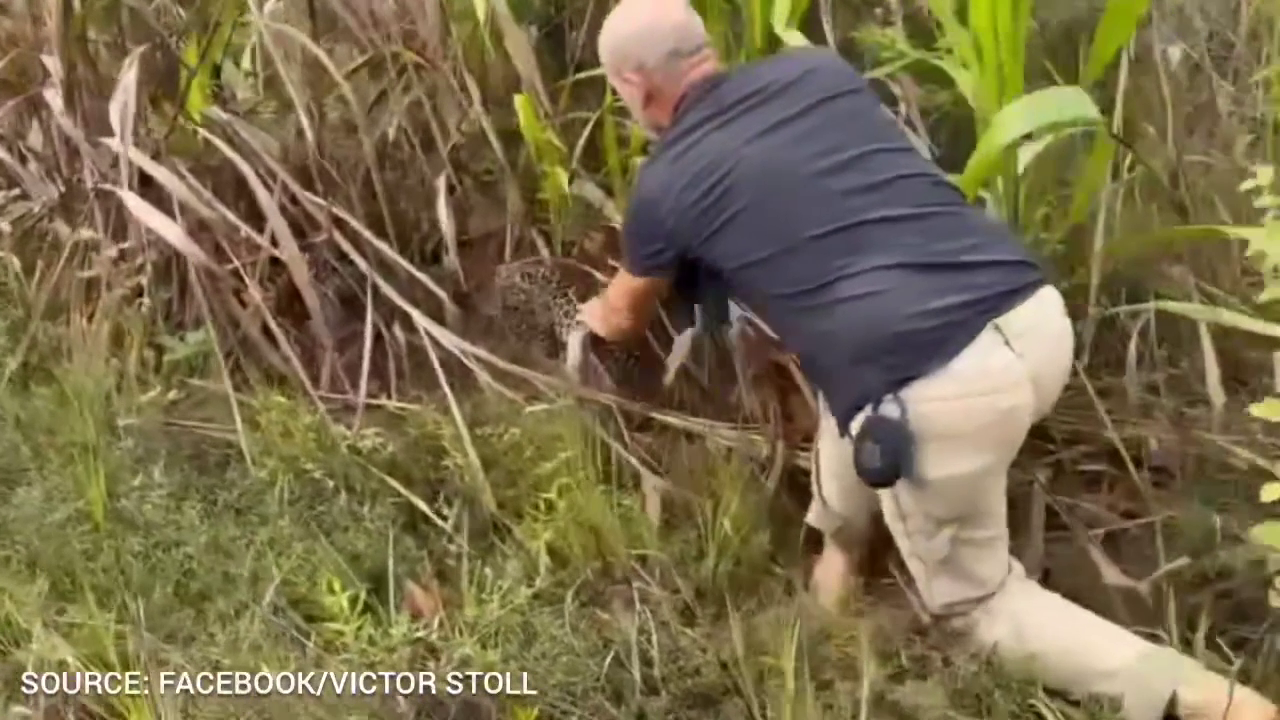
    The footage, recorded in the protected Mountain Pine Ridge Forest Reserve, captures one man reaching out to pet the young jaguar, while another member of the group suggests lifting the cub into their arms. The interaction took place mere meters from the cub’s mother, putting both the humans and the vulnerable big cat family at severe risk.

    What the group reportedly framed as a casual, memorable wildlife encounter has drawn widespread condemnation from conservation biologists, who warn that disturbing apex predators in their natural habitat can alter their behavior, break maternal bonds, and increase the likelihood of aggressive encounters with humans later in the cub’s life. The Belize Forest Department has launched a full investigation into the incident, working alongside national immigration authorities to identify the individuals involved by cross-referencing border entry and exit records. The department lacks the authority to issue formal travel alerts, so it has partnered with immigration to track the group’s movements.

    In an official interview, Belize Forest Officer Victoria Chi outlined the specific charges the department intends to file against the men. “We are planning to charge them under the Wildlife Protection Act under Section 3A and C,” Chi explained. “Section 3A prohibits hunting any species listed on the act’s protected schedule. Jaguars, along with four other native wild cat species, are explicitly included in this schedule. Crucially, hunting under the law does not only refer to killing animals with firearms — it also covers any act that molests, harasses, or interferes with wild animals in their natural habitat, which clearly matches the group’s actions here.”

    Chi added that Section 3C of the act reinforces these charges, as it explicitly bans any interference with immature wildlife, a criterion that is undeniably met by the interaction with the jaguar cub.

    However, the case has also exposed a critical gap in Belize’s existing wildlife protection legislation: the current law, enacted in 1981, only allows for a maximum fine of $500 per violation. For the two men involved, this would bring the total combined fine to just $1000, a penalty Chi acknowledged many members of the public will see as far too lenient to deter future incidents.

    That gap is set to close in the near future: a full revision of the Wildlife Protection Act has already received cabinet approval, and once the updated legislation takes effect, fines for protected wildlife interference will start at $30,000, creating a far stronger deterrent for irresponsible wildlife tourism. Until the revised law comes into force, authorities say they are limited to pursuing the lower penalties outlined in the 1981 legislation.

    The Belize Forest Department is using the high-profile incident as a urgent public reminder: the country’s iconic native wildlife, including its vulnerable jaguar population, must be observed from a safe distance, rather than disturbed for viral social media content. Irresponsible interactions not only break national law but also put both humans and wildlife in unnecessary danger.


  • Empowering Communities Through Wildlife Education Programs

    Empowering Communities Through Wildlife Education Programs

    In a major step forward for community-centered conservation in Belize, the Belize Wildlife and Referral Clinic has inaugurated a brand-new Wildlife and One Health Education Lab, expanding the organization’s mission far beyond its core work of rescuing and treating injured wild animals. Scheduled to open its doors for programming in July 2026, the on-site facility will host a full suite of training sessions, hands-on workshops, and professional certification programs accessible to a diverse range of participants, from law enforcement officers and national tourism tour guides to school groups, local youth, and entire community organizations.

    Clinic leadership emphasizes that targeted, accessible education is the most effective long-term strategy for reducing the frequency of human-wildlife conflict — the leading cause of injured animals arriving at the clinic for care each year. Beyond its immediate conservation impact, the new education lab also represents a critical intermediate milestone toward the organization’s long-term ambition: constructing a fully operational, comprehensive wildlife hospital and rehabilitation center on the clinic’s existing property.

    “We officially celebrated the inauguration for our Wildlife and One Health Education Lab, and it’s an exciting new step because it will allow us to provide more education and outreach in our own building here,” explained Dr. Isabelle Paquet-Durand, director of the Belize Wildlife and Referral Clinic. The organization has operated mobile community outreach programming for nearly eight years, traveling across the entire country to deliver conservation workshops to remote and local groups. The new permanent classroom facility eliminates the logistical barriers of cross-country travel, allowing the clinic to welcome participants directly to its base for structured learning.

    As Dr. Paquet-Durand noted, the vast majority of wild animals admitted to the clinic arrive after suffering harm from negative interactions with humans. That reality makes conservation education not just an ancillary activity, but the organization’s most impactful core work. “Therefore, this building is very exciting to us to be officially open,” she added.

    The clinic’s capacity building and outreach work first launched in 2018, with an initial focus on training enforcement officials. Early programs worked closely with police officers, the Belize Defense Force, and partner non-governmental organizations to build expertise in wildlife protection and conflict mitigation. Over time, the initiative expanded to reach new stakeholder groups: tour guides, who work on the front lines of tourism and interact with wildlife daily, became a key training focus, followed by youth programs including outreach to local scout groups that bring younger generations into conservation work.

    This month, the clinic launched an expanded program made possible by a new grant from the Protected Areas Conservation Trust. The funding has allowed the organization to add two new wildlife fellows to its team, who will complete a full 12-month immersive training program with the clinic. This extension of programming builds on the clinic’s existing range of offerings, which previously spanned short two-day intensive trainings and now includes long-term capacity building for emerging conservation professionals.

    For the Belize Wildlife and Referral Clinic, the opening of the education lab moves the organization one step closer to its end goal: a full-service wildlife hospital and rehabilitation center that will provide advanced care for injured and endangered species across Belize while serving as a national hub for conservation education.

  • Belizean Musicians Prepare Tribute for Kendoyll Simpson

    Belizean Musicians Prepare Tribute for Kendoyll Simpson

    July 15, 2026 — Belize’s tight-knit music community is navigating a dual moment of grief and gratitude this week, following the passing of beloved local producer and artist Kendoyll Simpson, widely known by his professional moniker KSBEATS. After a two-year courageous fight against cancer, Simpson left the world on Sunday, leaving behind an indelible mark on Belize’s cultural and musical landscape that peers, protégés, and fans are already working to honor permanently. The National Institute of Culture and History has partnered with Simpson’s family and close friends to organize a meaningful tribute that celebrates his life, creative vision, and far-reaching contributions to the Belizean sound.

    Over a career spanning more than two decades, Simpson worked largely behind the scenes, crafting countless tracks that became the soundtrack to ordinary and extraordinary moments across Belize. Whether refining tracks in a small recording studio, performing live on local stages, or mentoring the next generation of Belizean creative talent, KSBEATS built a reputation for uncompromising dedication to quality paired with a generous, encouraging spirit that lifted up everyone he worked with. His passing has left a gaping hole in the local music ecosystem, felt most deeply by those who shared a stage and a life with him.

    Horace Bryce, Simpson’s oldest friend, recalled their decades-long creative bond that began in their childhood church days, where both cut their teeth as musicians on the congregation’s praise team. “We started our musical journey in church where we were on the praise team. We were musicians, you know, Kendoyll playing the drums, I’m singing or playing the bass. I helped out Kendoyll with the drums when he was little, you know, when his foot couldn’t even touch the pedal. He had a smile to die for. I mean, everything that he did, he was smiling. He plays the drums, he was smiling. Whatever instrument he was on, he was smiling. Even when we hung out talking, he was smiling. So I will miss his smile. I will miss him always teasing me, you know, and stuff like that,” Bryce shared.

    Renowned Belizean vocalist Jackie Castillo collaborated with Simpson for nearly 20 years as a fellow member of the popular Center Stage Band, and remembered his gentle but firm commitment to bringing out the best in every artist he worked with. “Whenever you would be off-key, Kenny would be like, ‘You no hit the note. You need to hit the note.’ I always see that in my mind since I’ve been thinking about him. He would tell you quietly and sweet that you are not hitting the note properly, and he will insist that you hit the note. So he brought a lot of my best qualities and my best vocals in my recordings, because he ensured that it was top quality. I will always remember and appreciate him for that,” Castillo said.

    That unwavering dedication to excellence ran through every project Simpson touched, from local pop to roots genres that crossed both genre and national borders. He worked with many of Belize’s biggest mainstream music names, including acclaimed artist Melonie Gillett, who recorded more than 30 tracks with the producer. “I want people to remember him as a musical genius, that’s for sure, and a pioneer in the Belizean music industry. Innovative and so smart, talented, and always, always willing to help. I was going through some of our messages and trying to piece everything together because all of this just makes no sense to me, you know, that he’s gone,” Gillett reflected.

    Though Simpson’s live drumming has fallen silent, the body of work he leaves behind ensures his creative spirit will continue to resonate through Belize’s recording studios, local concert stages, and personal playlists for generations to come. This report was prepared by Shane Williams for News Five.

  • KTV The Remix Heats Up with Reggae and Caribbean Night

    KTV The Remix Heats Up with Reggae and Caribbean Night

    On the eve of July 14, 2026, the popular singing competition KTV The Remix brought its second week of competition to the iconic Bliss venue, and organizers shook up the competition with a vibrant theme: Reggae and Caribbean Night. What was set to be another standard week of performances quickly evolved into a lively, culturally rich celebration of Caribbean musical heritage, turning the venue’s stage into a colorful hub of island rhythm and soul.

    Ten remaining contestants took on the challenge of the night, which carried two layers of difficulty. First, each participant was required to deliver a performance rooted in the distinct stylings of reggae and Caribbean music, pushing many vocalists outside their comfort zones to adapt to the genre’s characteristic off-beat cadence and storytelling lyricism. Second, the competition introduced an unexpected twist: it was also duet night, requiring contestants to pair up and collaborate on joint performances that tested not just their individual vocal talent, but their ability to work as a cohesive team on stage.

    Many of these collaborative duet sets ended up becoming the most talked-about and memorable moments of the entire evening, with surprising on-stage chemistry turning in standout renditions of classic Caribbean hits. As the competition progresses, the race for the $10,000 grand prize is already growing more intense with each elimination round. Contestants are under growing pressure to demonstrate range in their vocal abilities and command over the stage, as every performance now carries higher stakes for securing a spot in the next round of the competition. Local entertainment correspondent Britney Gordon has prepared full highlights of the night’s performances, which will be included in the full televised and online broadcast of the newscast. This article is a direct transcript of an evening television news segment, with Kriol language portions transcribed using a standardized spelling system for accessibility. Readers can access the full newscast via the link included in the original report.

  • Power Cuts Again? BEL’s Backup Plan is Controlled Blackouts

    Power Cuts Again? BEL’s Backup Plan is Controlled Blackouts

    Residents across Belize are bracing for potential scheduled power disruptions this summer, as the nation’s main electricity provider prepares contingency measures to stabilize the national grid amid looming supply shortfalls from Mexico.

    Belize Electricity Limited (BEL) announced this week that controlled, timed power outages will be implemented as a last-resort precaution if Mexico’s state-owned national utility Comisión Federal de Electricidad (CFE) follows through on its warning of reduced electricity exports to Belize. CFE has notified BEL that growing domestic energy demand across Mexico’s own power network will leave it with less capacity to supply power to neighboring Belize, creating an expected gap in Belize’s available electricity supply starting as early as this month.

    To prevent a widespread, unplanned total grid collapse that would leave millions without power for far longer, BEL says controlled rolling load shedding will be carried out between 6:00 p.m. and midnight, when domestic energy demand in Belize peaks. The planned outages are expected to impact residential and commercial areas across six districts: Orange Walk, Corozal, Belize, Cayo, Stann Creek and Toledo.

    The looming supply gap comes as BEL works to accelerate long-term efforts to cut Belize’s reliance on imported power. The utility has already opened negotiations with three major independent domestic power producers — BABCO, Belcogen and Santander — to ramp up local generation capacity in the immediate term. For the longer term, BEL is advancing plans to expand grid-connected solar energy generation across the country, which will further reduce dependence on cross-border imports.

    In a June 3 interview with local outlet News 5, BEL Executive Chairman Lynn Young outlined the company’s emergency stopgap measure: the deployment of a 20-megawatt temporary generating unit near Mile Eight on the George Price Highway. “We are renting about twenty megawatts of generation that we are putting in place… so that in the event CFE cannot supply, we can meet it,” Young explained in the interview.

    Originally, the emergency generation unit was scheduled to arrive in Belize this month. However, global shipping disruptions tied to ongoing international armed conflict have delayed delivery, pushing the expected arrival of the unit to between mid- and late-August. Until the unit is installed and operational, BEL confirms that controlled rolling blackouts will remain the primary contingency to keep the entire national grid stable if CFE cuts export volumes.

  • Flood Warning Remains in Effect as Tropical Wave Brings More Heavy Rain

    Flood Warning Remains in Effect as Tropical Wave Brings More Heavy Rain

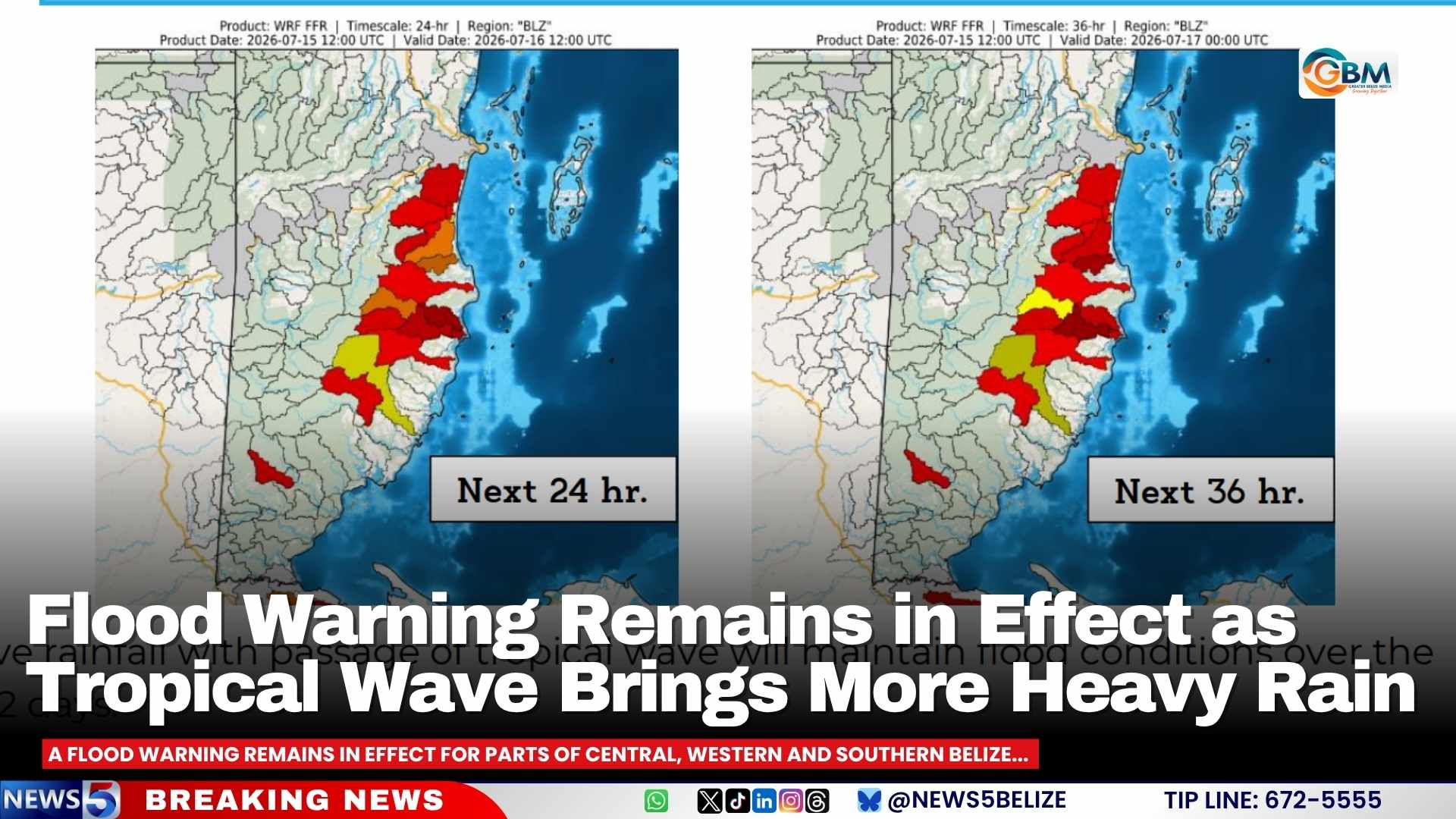
    As of July 15, 2026, a continuous flood warning remains active across multiple regions of Belize, as meteorological and emergency authorities prepare for a new round of intense rainfall expected to exacerbate already dangerous flood conditions over the coming two days.

    The unstable weather pattern driving this ongoing risk is a passing tropical wave, which has already dumped large volumes of rain across the country. Forecasters confirm that excessive precipitation tied to this system will sustain existing flood conditions throughout central, western and southern swathes of Belize for the next 24 to 48 hours.

    The warning specifically targets Regions 9, 11 and 13, with the highest level of concern focused on small communities sited along the eastern slopes of the Maya Mountains. In these areas, rapid, unpredictable flash flooding remains a major threat to public safety. Emergency management officials have issued a formal advisory urging all local residents to keep close track of updated weather bulletins, avoid unnecessary travel in high-risk zones, and remain prepared to evacuate at short notice if conditions deteriorate.

    Hydrology teams across the country are conducting continuous monitoring of river and lagoon levels to track changes in real time. As of the latest update, the Sibun River at Freetown Sibun is still sitting at official flood stage, with water levels only marginally lower than the record levels recorded during Hurricane Mitch, one of the most destructive storms to hit the region in modern history. The Belize River has shown signs of gradual improvement, with water receding at the More Tomorrow and Double Run monitoring points, while Crooked Tree Lagoon remains below normal water levels. Both the Sittee and Temash Rivers are seeing falling water levels, though the Temash River still holds levels well above the seasonal average.

    In southern Belize, the Sarstoon River continues to run higher than normal. The Moho River remains above average at the Jordan monitoring station, and is only slightly below normal at Blue Creek South, while Gales Point Lagoon also holds above-average water levels. Most other major water bodies across the country, including the Rio Hondo, Mopan, Macal, Monkey, Deep and Rio Grande rivers, are currently at or below normal seasonal levels. The New River is an exception, with water levels ranging from below to above normal across different stretches of its course, depending on location.

  • Still Calypso’s Queen at 86. Calypso Rose Crowned Queen of the Road

    Still Calypso’s Queen at 86. Calypso Rose Crowned Queen of the Road

    On a sunlit July weekend in 2026, decades of Caribbean cultural legacy took center stage at Lincoln Center’s Josie Robertson Plaza, where 86-year-old Calypso Rose, the Trinidad and Tobago-born queen of calypso, received one of the highest honors of her decades-long career: the title Queen of the Road, during the Caribbean Cultural Center African Diaspora Institute’s (CCCADI) golden anniversary Afri-Carnaval celebration.

    More than 42 years have passed since Rose first graced the stage of New York’s Caribbean Carnival in 1984, marking the start of her long-running connection with CCCADI. This weekend’s appearance marked her third collaboration with the organization, following performances in 1984 and 1994 — a full-circle moment that brought decades of cultural history to life for attendees.

    Though mobility challenges required Rose to perform from a wheelchair, her legendary commanding voice and magnetic stage presence remained entirely undimmed. She captivated the gathered crowd of thousands, drawing cheers and tears with performances that blended decades of artistic craft with the unyielding joy that has defined her public persona.

    Joining her on stage was soca superstar Machel Montano, whose own artistic journey has been intertwined with Rose’s for more than 40 years. Montano first shared a bill with Rose as a 10-year-old rising performer back in 1984; for this anniversary tribute, he joined her for a 15-minute joint set before launching into a crowd-pleasing solo performance of his hit track *Pardy*.

    In an interview with local broadcaster CNC3 after accepting her honor, Rose spoke openly about the emotion of the moment, saying: “I feel very great to do that. Because this is something that I have been doing for years. And to know that at this same facility I’ve performed here twice. Twice before, years ago, and now for the third time, I am back to receive an award. I feel very happy and glad to see that they still remember Calypso Rose to come and see her in person at age 86. I am so happy and glad for them. May the good Lord bless them and keep them strong.”

    The tribute to Rose was far more than a celebration of one artist’s career: it was a recognition of the enduring impact of her work, which has carried Caribbean cultural traditions across borders and through generations, introducing the sound and spirit of calypso to audiences across the globe. For attendees and fellow artists alike, the moment reaffirmed Rose’s status as not just a musical legend, but an enduring cultural ambassador for the Caribbean.

  • PACT, APAMO Sign Three-Year Agreement to Strengthen Protected Areas

    PACT, APAMO Sign Three-Year Agreement to Strengthen Protected Areas

    On July 15, 2026, two leading conservation organizations in Belize have reinforced their shared commitment to preserving the country’s ecologically critical protected lands and waters through a new three-year strategic partnership. The Protected Areas Conservation Trust (PACT) and the Association of Protected Areas Management Organisations (APAMO) have signed an updated agreement that formalizes their collaborative work to elevate conservation outcomes across Belize’s network of protected spaces.

    Under the terms of the new deal, PACT will continue to provide sustained financial backing to APAMO, with a core focus on boosting the latter’s organizational capacity and expanding outreach to the community-based and non-governmental groups that serve as co-managers for the majority of Belize’s protected areas. These local co-managing groups play an indispensable role in on-the-ground conservation, making targeted investment in their operations a key pillar of the new agreement.

    The partnership identifies five clear priority areas to guide its work over the next three years. These priorities include enhancing institutional governance structures for collaborative management, upgrading the overall quality of protected areas administration and conservation practices, developing diversified funding streams for long-term conservation work, expanding public education and advocacy campaigns to build broader community support for protection efforts, and securing APAMO’s long-term financial stability as an organization.

    In the first year of implementation, the two organizations will prioritize foundational work to set the partnership up for success. Key early activities include strengthening internal governance and daily operations at APAMO, developing a comprehensive sustainable financing strategy for the organization, expanding technical and administrative support services through the APAMO Central Resource Centre, and ramping up public engagement initiatives to raise awareness of the importance of protected areas conservation.

    Notably, this new three-year agreement dovetails with a recent Memorandum of Understanding signed between APAMO and Belize’s National Biodiversity Office. The alignment of the two agreements creates a unified framework that advances national-scale biodiversity conservation goals and improves the overall effectiveness of Belize’s entire National Protected Areas System, bringing together institutional funding, organizational expertise, and government coordination to protect the country’s unique natural heritage.

  • Auditor General Digs Into Defence Ministry Spending Back to 2015; The Office Barely Has the Power to Do It

    Auditor General Digs Into Defence Ministry Spending Back to 2015; The Office Barely Has the Power to Do It

    In one of the most high-stakes inquiries in its institutional history, Belize’s Office of the Auditor General has launched a sweeping audit of the Ministry of Defence, driven by growing public and official claims of corruption. The probe, which will trace spending decisions all the way back to 2015, has already sparked intense debate over the office’s limited resources, questioned independence, and ability to enforce accountability for public funds.

    The investigation was set in motion after senior government officials noticed a suspicious pattern: hundreds of repeated transactions, all valued just below the ten-thousand-dollar threshold that triggers enhanced financial oversight. Belize Prime Minister John Briceno confirmed that the red flags prompted him to reach out to the financial secretary and order the Auditor General to examine the irregular activity.

    In a surprise announcement two weekends prior to the report, Briceno expanded the scope of the audit far beyond the transactions of his current administration, ordering investigators to include spending from 2015 onward to uncover any potential misconduct linked to previous officeholders, including former politician John Saldivar.

    This extension of the timeline has cast doubt on whether the office can complete the full investigation within the initial three-month deadline. Opposition Leader Tracy Panton has joined growing calls for a far more extensive, independent review, arguing that the problems plaguing public spending are not isolated to the defence portfolio. Panton contends that the issues are systemic across government agencies, requiring a full forensic audit rather than a limited probe.

    Established under Belize’s constitution, the Auditor General’s role is appointed by the governor general, and the Finance and Audit Reform Act is supposed to protect the office from political interference. In practice, however, the institution’s independence has faced widespread public criticism. Dean Flowers, president of Belize’s Public Service Union, recently claimed that all oversight bodies, including the Auditor General’s office, are influenced by political interests. Flowers alleged that appointees to these roles prioritize personal and partisan gain over the national good, collecting salaries while upholding a corrupt status quo.

    On paper, the Finance and Audit Reform Act grants the Auditor General broad investigative powers: the right to summon public officials for questioning, search any government-held documents or records, and access financial data with almost no restrictions. In reality, the office has consistently faced obstruction from the executive branch. Auditor General Maria Rodriguez outlined these challenges in a May 13 interview, explaining that executive branch officials often refuse to meet with her staff or respond to requests, and the office has no formal avenue to compel compliance. Rodriguez emphasized that executive branch representatives must be required to cooperate with the office’s inquiries, separate from parliamentary oversight processes.

    Compounding these structural challenges is the office’s severely constrained budget. Despite being tasked with scrutinizing billions of dollars in annual public expenditure, the Auditor General’s office operates on an annual budget of just over three million dollars, ranking it among the smallest and lowest-funded government entities in Belize’s national budget.

    Prime Minister Briceno has pushed back against concerns about stalled progress, insisting that the current administration is fully cooperating with the probe. Briceno confirmed that auditors have begun compiling requested documentation, and that Ministry of Defence CEO Usher has given assurances of full cooperation. The Prime Minister added that the investigation will proceed without exemptions, and any public official or politician found to have engaged in misconduct will be held accountable for their actions.

  • Messi’s ‘Lucky’ Referee to Take Charge of England vs Argentina Semi-Final

    Messi’s ‘Lucky’ Referee to Take Charge of England vs Argentina Semi-Final

    As the 2026 FIFA World Cup enters its final knockout stage, the announcement of Ismail Elfath, an American match official, as the head referee for the highly anticipated semi-final clash between England and defending champion Argentina has ignited widespread discussion across social media and fan communities.

    The confirmation of Elfath’s appointment came on Tuesday, just one day ahead of Wednesday’s winner-takes-all showdown, where England will fight to secure their first spot in the World Cup final since their historic 1966 victory, while Argentina looks to book back-to-back final appearances to defend their 2022 title.

    What has drawn the most attention and stirred controversy is the long-running unique connection between Elfath and Argentine captain Lionel Messi: the global football icon holds an unblemished win record in every match Elfath has officiated since Messi joined Major League Soccer side Inter Miami in 2023. Across four MLS and Leagues Cup matches featuring Messi, the Argentine star lifted the trophy in every encounter, including the 2023 Leagues Cup final, where Messi’s match-winning performance guided Inter Miami to a penalty shootout victory over Nashville SC. Beyond club fixtures, Elfath also served as the fourth official for the 2022 Qatar World Cup final, where Argentina claimed their third world title against France – a detail that has further fuelled fan speculation.

    Some fans have taken to online platforms to question whether the appointment means Argentina will receive favourable officiating in the high-stakes semi-final, suggesting the four-time win streak with Elfath in charge is more than coincidental and hinting at potential unbalanced treatment throughout the 2026 tournament. FIFA has quickly pushed back against these claims, issuing a formal denial of any bias or external interference in the referee selection process.

    Elfath, who was born in Morocco and represents the United States Soccer Federation on the international stage, has already officiated three group-stage and knockout round matches during this 2026 World Cup: Japan’s draw against the Netherlands, Spain’s win over Uruguay, and Norway’s victory against Brazil. The match official is widely known for his strict enforcement of the laws of the game, having handed out numerous yellow cards and multiple red cards through the tournament so far. This is not the first time his work has drawn controversy, either: after Spain’s win over Uruguay, Spanish sports media openly criticized Elfath’s in-match decision-making.

    For the upcoming semi-final, Elfath will be supported by two American assistant referees, Corey Parker and Kyle Atkins, while Italy’s Maurizio Mariani will take on the role of fourth official. As both sides complete their final preparations ahead of kickoff, the debate over the referee appointment has only added an extra layer of intrigue to one of the most highly anticipated World Cup semi-finals in recent memory.