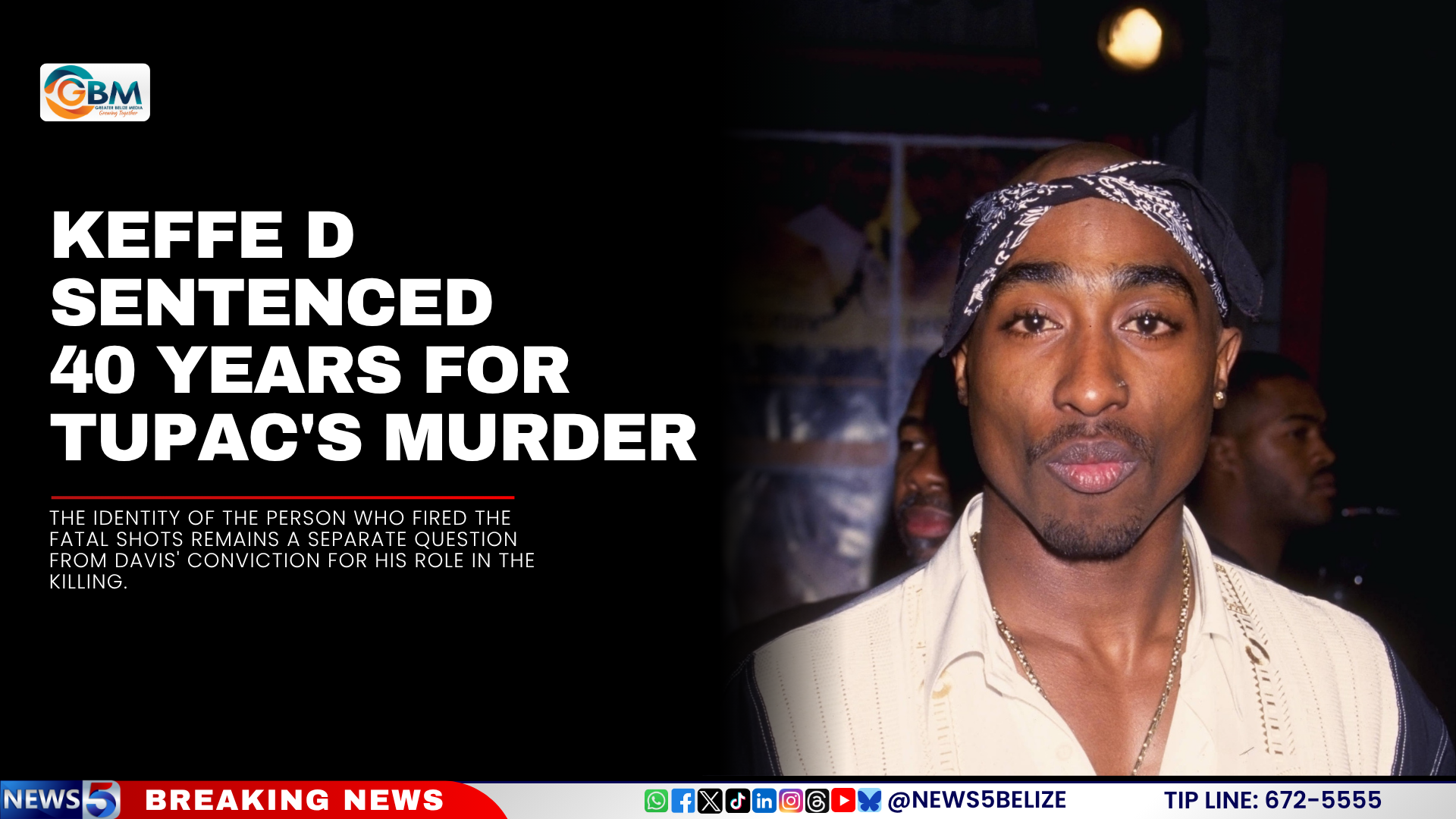
Nearly 30 years after one of the most high-profile killings in modern music history, a Las Vegas court has handed down a historic sentence to Duane “Keffe D” Davis, who received 40 years to life in prison for his role in the 1996 murder of legendary rapper Tupac Shakur. The 63-year-old defendant received his sentence on Tuesday, October 13, 2026, just months after a jury delivered a guilty verdict on charges of first-degree murder with a deadly weapon. District Judge Carli Kierny ruled that Davis must serve two consecutive 20-year-to-life terms, closing one chapter of a case that has remained a source of public fascination for decades.
Prosecutors laid out a clear narrative during the trial that Davis acted as the mastermind behind the fatal drive-by shooting, even though he did not pull the trigger that killed the 25-year-old hip-hop star. According to the prosecution’s account, the attack was pre-planned retaliation for a violent confrontation that unfolded just hours before the shooting, following a high-profile Mike Tyson boxing match at a Las Vegas arena. During that altercation, Tupac and his entourage attacked Orlando Anderson, Davis’s nephew, making the killing a response to that public humiliation.
The timeline of the crime has remained well-documented over the years: Tupac was shot on September 7, 1996, while he was a passenger in a car driven by Death Row Records co-founder Suge Knight as the pair left the boxing match. The rapper succumbed to his injuries six days later, on September 13, 1996, sending shockwaves through the global music industry and leaving a decades-long unresolved mystery around his death.
A key pillar of the prosecution’s case against Davis was his own public comments about the shooting. Over the years, Davis openly discussed his involvement in the plot in multiple public settings, and even laid out his account of the crime in a 2019 memoir he authored. Davis’s defense team pushed back hard against the case, arguing that the defendant had repeatedly exaggerated his role in the killing for notoriety, and questioned both the reliability of his statements and the conduct of the decades-long investigation into Tupac’s death.
During the emotional sentencing hearing on Tuesday, members of Tupac Shakur’s family addressed the court directly to describe the irreversible damage his murder has inflicted on their loved ones over 30 years. “The loss of Tupac, for a long time, crippled my family,” said Sekyiwa Shakur, the rapper’s sister. Maurice Shakur, Tupac’s brother, also spoke during the hearing, urging Judge Kierny to hand down the maximum possible sentence allowed under law. The conviction of Davis for his role in the conspiracy does not resolve the question of who fired the fatal shots that killed Tupac, a detail that remains an open line of inquiry separate from this case.