标签: Belize

伯利兹

  • Henry Charles Calls for Compliance with Integrity Commission Filings

    Henry Charles Calls for Compliance with Integrity Commission Filings

    The conversation around transparency in Belize’s public administration has reignited in recent days, after Infrastructure Minister Julius Espat publicly shared his 14th annual declaration to the country’s Integrity Commission via social media. The post has sparked renewed scrutiny: if one senior elected official is consistently meeting his disclosure obligations, are all other public office holders doing the same?

    During an interview with local journalist Shane Williams on April 16, 2026, Henry Charles Usher — Belize’s Minister of Public Service and Disaster Risk Management, and the Area Representative for Fort George — addressed growing questions about compliance across all levels of government. When asked first if he had met his own disclosure requirements for the current year, Usher confirmed he had filed all required documentation on or ahead of the mandatory March 1 deadline, noting he did not need to request an extension, a practice some officials have relied on in past years.

    Williams’ questioning turned next to the broader system of accountability, asking whether Usher believes the Integrity Commission has sufficient enforcement power to compel non-compliant officials to submit their required disclosures. The question also covered requirements for lower-tier elected officials, including municipal councilors, who are also bound by the same disclosure rules.

    Usher clarified that the mandate does not extend to village councilors, but does require filings from all town and city councilors, national elected representatives, sitting senators, and even the immediate family members of senior officials — a requirement Usher highlighted by noting he must submit a separate disclosure for his wife. He emphasized that the core legislative framework to hold public officials accountable is already in place, framing annual disclosures as a foundational pillar of good governance for all elected leaders.

    While the law outlines the requirement for on-time annual filings, Usher acknowledged that a number of public officials have failed to meet deadlines in previous years, often requesting extensions to complete their submissions. Moving forward, the senior minister called for universal adherence to the existing regulations, urging all public officials that fall under the mandate to submit their required declarations by the annual deadline to preserve public trust in government.

    This report is adapted from a transcribed segment of an evening television news broadcast, originally published online shortly after airing.

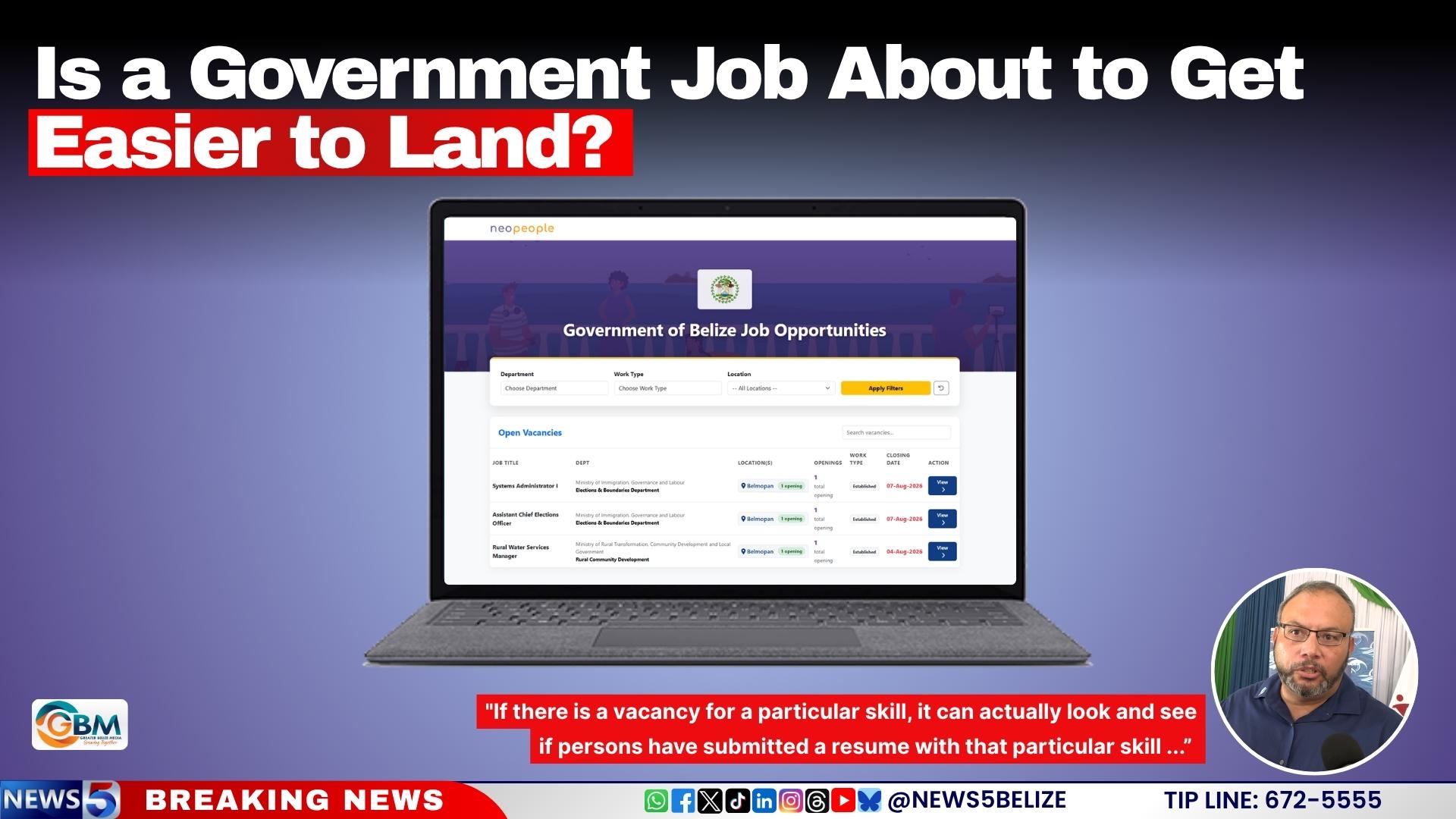
  • Government Outsources HR Tasks to NeoPeople

    Government Outsources HR Tasks to NeoPeople

    A government-led public service modernization initiative has triggered unexpected debate, centered not on whether the reform will boost administrative efficiency, but on whether sensitive employee data will remain secure after the decision to outsource core human resources tasks to private firm NeoPeople. The project, announced publicly on April 16, 2026, involves moving thousands of confidential personnel records from physical storage facilities to centralized digital systems, a shift that has left thousands of public servants raising urgent questions about access controls and data protection.

    Public Service Minister Henry Charles Usher, who also holds the portfolio for Disaster Risk Management, moved quickly to address growing anxiety among government employees, laying out the rationale for the overhaul and detailing the safeguards the administration has put in place to guard personal information.

    Usher acknowledged that worries over the security of personnel records, performance evaluations and confidential personal files are not new, even under the old system. For years, many government agencies have lacked sufficient on-site storage space for physical records, forcing departments to store sensitive paper files in off-site commercial storage containers, a practice that carried its own set of confidentiality risks. The digitization and outsourcing process, he emphasized, is a core component of the government’s broader push to modernize the underperforming public service.

    “Regardless of whether data management is handled in-house by the Central Information Technology Office (CITO) or outsourced to a third-party provider like NeoPeople, maintaining the confidentiality of public servants’ personal information remains our top priority,” Usher stressed. He added that the government conducted extensive due diligence on NeoPeople before awarding the contract, verifying that the firm has the infrastructure and expertise to secure sensitive government data, and that the administration is confident in the company’s capacity to protect the records.

    Usher also acknowledged the persistent threat of cyberattacks, noting that even major private sector organizations face constant attempted breaches. “Telecom provider BTL previously reported that they block thousands of attempted hacking incidents every day, and the same is true for banks, financial institutions and the Social Security Board,” he said. “We have implemented robust firewalls and ongoing security monitoring, and we will continuously update our protections to ensure they remain at the highest possible standard to guard against emerging threats.”

    This report is a transcribed excerpt from an evening television newscast, with all statements reproduced accurately for online publication.

  • Work Begins on Belize’s Youth Development Policy

    Work Begins on Belize’s Youth Development Policy

    Nearly three years from now, in 2026, Belize has officially launched the development process of a refreshed National Youth Development Policy and Strategy, a framework designed to more accurately align with the evolving daily realities, long-term aspirations, and pressing challenges that shape the lives of the country’s young population.

    To kick off this multi-stage policy drafting process, 17 stakeholders drawn from four key groups — government bodies, domestic civil society organizations, grassroots youth collectives, and international cooperating partners — gathered in Belize City for the first ever Youth Policy Round Table. This round table has been tasked with guiding and overseeing every step of the policy development effort to ensure accountability and inclusive direction.

    The entire initiative is being led by Belize’s Ministry of Tourism, Youth, Sports and Diaspora Relations, with Nicole Usher-Solano, the Chief Executive Officer of the ministry, serving as chair of the inaugural round table. To ground the policy in rigorous, context-specific research, the ministry has contracted the University of Belize’s Policy Research Institute (BELPRI) to coordinate all drafting work, with technical and financial backing from the United Nations Children’s Fund (UNICEF).

    A research team led by BELPRI Executive Director Dr. Dylan Vernon will carry out a full suite of outreach and data collection activities: from comprehensive background research and national public surveys to one-on-one stakeholder interviews and regional consultation workshops across every district of Belize. The core purpose of this broad engagement strategy is to ensure that the perspectives, needs and priorities of young Belizeans directly shape the final policy framework, rather than the document being designed exclusively by adult policymakers in closed sessions.

    Organizers behind the initiative have emphasized that the end goal is not a superficial, ceremonial policy document. Instead, they aim to deliver a practical, forward-looking roadmap that expands accessible opportunities for Belizean young people to pursue education, build meaningful careers, take on leadership roles in their communities, and contribute tangibly to the country’s long-term national development goals.

  • Hurricane Hunters Visit Belize 46 Days Before Season

    Hurricane Hunters Visit Belize 46 Days Before Season

    Forty-six days before the 2026 Atlantic hurricane season officially kicks off, a unique piece of storm-tracking infrastructure has arrived in Belize as a key stop on the annual Caribbean Hurricane Awareness Tour: the Hurricane Hunters, the specialized flying crews that collect irreplaceable inside-storm data for forecasters across the globe. The rare on-the-ground visit gives Belizean officials, students and ordinary residents an up-close look at the high-stakes work that saves thousands of lives every year, coming at a critical time as the low-lying coastal nation prepares for another year of storm risk in the Atlantic hurricane belt.

    Unlike standard commercial or research aircraft, the Hurricane Hunters’ planes are purpose-built to do what most pilots would avoid at all costs: fly directly into the center of developing and mature hurricanes to gather real-time atmospheric data that satellite technology simply cannot capture. This data is sent directly to the U.S. National Hurricane Center, which partners with local meteorological services across the Caribbean and Central America to generate accurate storm forecasts.

    Jordan Mentzer, a pilot with the Hurricane Hunters, joked that people often call the crew crazy for choosing to fly into deadly storms, but decades of institutional knowledge have turned the risky mission into a carefully regulated, safe operation. “We’ve been doing this for a long time, so guys and gals before me have taught us how to operate as safely as possible, what to avoid, and how to navigate even the most powerful systems,” Mentzer explained. Missions can stretch more than 12 hours, with crews patrolling storms from the Gulf of Mexico to the central Caribbean, regions that regularly bring storm impacts to Belize.

    Robbie Berg, a warning coordination meteorologist with the National Hurricane Center, compared the difference between satellite data and Hurricane Hunter data to judging a steak by its grill marks versus cutting into it to check its doneness. “Satellites can show us the outside of a storm, but we can’t know what’s happening in the core until the Hurricane Hunters cut right into it,” Berg explained. That inside data on air pressure, wind speed, and storm structure feeds into advanced computer forecasting models, allowing forecasters to predict a storm’s path, intensity and size with far greater accuracy over the critical five-day forecast window. The National Hurricane Center coordinates closely with Belize’s meteorological service to issue timely watches and warnings for the country and other Caribbean nations, a process that depends entirely on the data collected by these flights.

    Ronald Gordon, Belize’s chief meteorologist, emphasized just how critical this data is for the nation, which sits squarely in the path of most Atlantic hurricanes that form each year. “The data these crews collect goes straight into our complex computer models, helping us better predict how a hurricane will strengthen and where it will go,” Gordon said. He also used the visit as an opportunity to remind Belize residents that the 2026 hurricane season is just weeks away, and public preparedness should already be underway.

    Beyond improving forecasting and public awareness, the visit carries a second, equally important goal: inspiring the next generation of Belizean STEM professionals. The Caribbean Hurricane Awareness Tour only stops at three countries this year, making Belize’s inclusion a rare honor, according to Minister of Public Service and Disaster Risk Management Henry Charles Usher. “They came from Honduras before this, and they will head to Puerto Rico after,” Usher noted. “This is really about inspiring young Belizeans to pursue careers as scientists, pilots, meteorologists and engineers — that’s exactly what we need moving forward.”

    Local organizers opened tour sign-ups publicly via social media to avoid bias, allowing schools across the country to reserve time slots to visit the aircraft. Dozens of students have already toured the one-of-a-kind flying laboratory, getting a first-hand look at the technology that powers life-saving storm forecasts, and more groups are scheduled to visit throughout the day. Local officials hope the experience sparks long-term interest in meteorology, atmospheric science and aviation among Belize’s youth, building a local workforce that can continue to lead storm preparedness and forecasting for decades to come.

    As the countdown to hurricane season continues, the Hurricane Hunters’ visit serves as a reminder that accurate forecasting and early preparation are the most powerful tools to reduce hurricane risk. Thanks to the work of these brave crews, Belize enters the 2026 season better prepared and more informed than ever before.

  • BIFF Launches Search for Belizean Screenwriting Talent

    BIFF Launches Search for Belizean Screenwriting Talent

    Scheduled for launch in 2026, the Belize International Film Festival (BIFF) has opened an exciting new search to uncover hidden screenwriting talent from the Belizean community, both within the country and among diaspora creators around the globe. The initiative aims to elevate authentic Belizean storytelling that centers the nation’s one-of-a-kind landscapes, rich cultural heritage, and diverse local voices that have long defined life across the country.

    Unlike generic screenwriting competitions that accept all story themes and origins, this search specifically calls for short screenplays rooted in Belizean experience. Creators are invited to craft narratives set against any of the nation’s iconic backdrops – from the rolling, forested slopes of Sleeping Giant near The Banks Resort to the sun-warmed, palm-lined coasts of Jaguar Reef in the seaside village of Hopkins. BIFF organizers emphasize they are open to all genres and bold, original creative visions, encouraging storytellers to take risks and share perspectives that have not often been centered in mainstream film.

    Beyond the opportunity to showcase Belizean creativity to a global audience, the competition comes with tangible rewards to help creators turn their written ideas into finished screen projects. The grand prize winner will receive an immediate cash award of $500 USD, with an additional option for a $500 USD film rights buyout that puts further financial support in the creator’s pocket. As an extra perk to support production, the winner will also receive a complimentary one-night stay at a local resort during their film shoot, removing a small but meaningful barrier for creators working to bring their stories to life on screen.

    This search marks BIFF’s ongoing commitment to nurturing emerging local creative talent and building a sustainable, homegrown film industry in Belize. By investing directly in screenwriters – the foundational creators of any film project – the festival aims to build a pipeline of original Belizean stories that can reach audiences far beyond the nation’s borders.

  • Medical Mission Wraps Up After Serving Hundreds of Belizeans

    Medical Mission Wraps Up After Serving Hundreds of Belizeans

    A four-day free community medical outreach organized by the Seventh-day Adventist Church drew to a close this week in Belize City, after delivering no-cost care to more than 1,300 low-access and underserved Belizean residents, organizers confirmed in closing remarks.

    The initiative, which launched earlier that week at the Belize City Center, brought a team of fully board-certified medical specialists from the United States and other global regions to provide complimentary consultations and care to local residents who often face barriers to accessing high-quality healthcare. Unlike temporary volunteer missions that rely on trainee providers, every clinician participating in this outreach is a practicing, experienced specialist committed to donating their time and covering all personal travel expenses to support the community, church leadership noted.

    Patient turnout far exceeded initial expectations, growing steadily across the event’s four-day run. Dr. Zoraida Powell, health ministry assistant for the Belize Union Seventh-day Adventist, shared that patient numbers climbed from 230 on the first day, to 350 on the second, and reached 420 on the third day. By the final day of the outreach, lead organizers estimated the total number of people served across all services surpassed 1,300.

    For local Belize City residents who accessed care, the impact of the mission was immediately clear. Evonne Longsworth, a Belize City resident and a member of the Adventist community, expressed her surprise and joy at the large turnout for the event, noting that she had long valued the church’s focus on public health messaging. “I know they have a good health message, I am an Adventist. I am so happy they came to Belize and I am amazed by the amount of people that turned out,” Longsworth said. Fellow resident Edward Belizaire echoed that positive feedback, describing the outdoor community-focused care model as unlike any medical outreach he had experienced before.

    Dr. Roger Chene, director of the Amazing Facts Medical Clinic, emphasized that the event was a collaborative success, bringing together the visiting medical team, local public health authorities, and the national Adventist church to serve the community. “Everyone is very excited about the experience here. They had the opportunity to see over one thousand three hundred patients throughout the four days. So it has been a true blessing to be here. The patients are very happy to be here. They are thankful about the services they have received, working with the team, the local ministry of health and the local Seventh-day Adventist,” Chene said.

    Dr. Al Powell, president of the Seventh-day Adventist Church Belize, highlighted the quality of care delivered, stressing that all participating providers are active, board-certified specialists who manage clinical cases daily in their home practices. “We are providing top quality medical doctors, specialist in all the areas. These are board certified in the U.S. and throughout where they serve. So we bring in quality persons that manage this stuff on a daily basis. They are no interns here. They are all persons that are committed and sacrificing time and energy and they are paying their expenses to come on this exploit to build up Belize,” Powell explained.

    Looking ahead, the Seventh-day Adventist Church in Belize has announced plans to turn this successful outreach into a recurring annual event, expanding access to free high-quality care for Belizean residents into the future.

  • Bus Strike Averted?

    Bus Strike Averted?

    A threatened total shutdown of bus services across Belize scheduled for this coming Monday will not go ahead as planned, at least temporarily, following a negotiating session held earlier this morning between leaders of the Belize Bus Association (BBA) and senior officials from the country’s Ministry of Transport. The last-minute negotiations have averted immediate disruption to commuters, freight services and daily economic activity across the nation, but the fundamental disagreement that pushed private bus operators to plan industrial action remains unresolved, pending a final decision from Belize’s Cabinet and Transport Minister Dr Luis Zabaneh.

    In an exclusive interview with News 5 immediately after the meeting concluded, BBA President Phillip Jones confirmed that while hours of discussion were held between the two sides, no agreement was reached. The core sticking point centers on a longstanding demand from private bus operators for a rate adjustment that would align their pricing with that of the state-run National Bus Company. Currently, private operators face a five-cent-per-mile gap in allowed rates that they argue has created an unsustainable financial strain, threatening the long-term survival of many small, independent private bus operations across the country.

    Prior to this week’s negotiations, Belize’s government had publicly stated that the operators’ demand for rate alignment was “off the table”, a position that left private operators with no option but to threaten a full service shutdown. Despite the lack of a final resolution, Jones confirmed that private bus operators have agreed to continue running all scheduled services on Monday and Tuesday in a show of good faith, while Cabinet deliberates on the request. Operators are now waiting in expectation of an official response from the government body following its upcoming scheduled meeting, with the threat of a strike still looming if their demands are rejected.

  • SSB Consults Public on Proposed Contribution Changes

    SSB Consults Public on Proposed Contribution Changes

    Nearly four and a half decades after Belize’s social security system was first established, the Social Security Board (SSB) is moving forward with sweeping proposed updates to the program’s contribution structure, and is gathering public input through a months-long series of national consultations. The most recent consultation session was hosted on the afternoon of April 16, 2026 at the Grand Resort and Residences in Belize City, marking one stop on a 12-meeting tour that has already brought discussions from the northern district of Corozal all the way south to Dangriga. The full consultation process is scheduled to conclude at the end of April, with three remaining public sessions planned for San Pedro on April 21, Punta Gorda on April 28, and Placencia on April 30.

    At the core of the discussions are three key proposed revisions to the current contribution framework: updating the methodology used to calculate worker and employer contributions, adjusting the division of contribution responsibilities between employees and employers, and revisiting the minimum and maximum wage thresholds that determine how much contributors pay into the system. SSB Chief Executive Officer Jerome Palma emphasized that the reform effort comes as the 1981-originated framework has become outdated to match 2026’s economic and labor landscape. “A scheme that was developed in 1981, for a time and a condition that was appropriate in 1981, may need some reform in 2026 and moving forward,” Palma stated during the meeting. “In 1981, there were no call centres. The investment market was distinctly different. Technology has moved forward.”

    One of the most pressing indicators of the current system’s obsolescence is the existing maximum weekly contribution cap of BZ$520, which Palma confirmed 25 to 30 percent of all contributors already reach annually. This figure signals that the cap has not been adjusted to keep pace with wage growth across Belize, leaving the system with uncollected revenue that could support long-term program stability.

    Throughout the Belize City consultation, participants raised a range of targeted concerns and feedback to inform the board’s final policy decision. One attendee pushed back against the current practice of calculating contributions based on gross rather than net salary, pointing out that mandatory income taxes and other pre-paycheck deductions often reduce take-home pay by as much as 50 percent. “We don’t live on our gross salary,” the participant said. “By the time I actually get money in my pocket, it’s half of what it says on the payslip… When you are considering the split, please consider how heavily taxed we are.”

    Another participant focused on equity for low-wage workers, highlighting disproportionate gaps between contribution bands across different income levels and calling for transparent, fair adjustments that do not place undue burden on lower-income contributors while neglecting higher earnings brackets. “That’s a big jump for workers at the lower end,” the participant said. “You have to be fair and transparent. You can’t look at the lower bands and not look at the higher bands.”

    Palma responded directly to these concerns, reassuring attendees that the board has prioritized protecting the roughly 6,000 contributors currently in the lowest income band. He confirmed that the board intends to retain the existing split of contribution responsibilities, which requires employers to cover a higher share of contributions than employees, with this structure remaining especially intact for lower-wage bands. “It’s very important for us to have this split very similar to what it is at the moment, where the employer actually pays and contributes at a higher rate than the employee, especially at the lower bands,” he explained.

  • Wait, Somone’s Job is Actually Flying into Hurricanes?

    Wait, Somone’s Job is Actually Flying into Hurricanes?

    Against the backdrop of annual Atlantic hurricane season preparations, a unique team of daredevil aviation specialists known as the Hurricane Hunters has touched down in Belize, bringing one-of-a-kind storm-tracking aircraft as a key stop on the 2026 Caribbean Hurricane Awareness Tour.

    Jordan Mentzer, an experienced pilot with the Hurricane Hunters, explained that the tour blends three core goals: raising public knowledge of hurricane risks, strengthening regional preparedness, and engaging local stakeholders while opening the specialized aircraft to public tours. For the teams that regularly fly directly into the core of active hurricanes, the outreach mission is just as important as the data collection work they carry out during storm season.

    Unlike satellite observation, which can only track storm systems from space, these reinforced aircraft fly directly into the heart of hurricanes to gather hard-to-access atmospheric measurements that satellites cannot capture. The real-time data they collect is fed directly into forecasting models used by every national meteorological service across the Caribbean, helping forecasters refine predictions of storm track, strength and landfall timing.

    Having flown these dangerous missions for decades, Mentzer noted that the team has built up decades of knowledge to operate as safely as possible in the extreme conditions of a hurricane. “We have learned which maneuvers work, what hazards to avoid, and how to navigate storm systems with the highest possible level of safety we can achieve,” he said.

    Robbie Berg, a warning coordinator meteorologist at the U.S. National Hurricane Center, emphasized that the in-storm data collected by the Hurricane Hunters is irreplaceable for life-saving forecasting. “Having these aircraft is absolutely critical to our work,” Berg explained. “They deliver observations directly from the center of the storm, so we can pin down exactly how strong the hurricane is, where it is positioned, and what its central barometric pressure is. That detail is what allows us to produce far more accurate forecasts that help communities prepare and evacuate on time.”

    During the Belize stop, local government officials and dozens of students got a rare, close-up look inside the converted aircraft, which doubles as a flying atmospheric research laboratory. Henry Charles Usher, Belize’s Minister of Public Service and Disaster Risk Management, highlighted that including Belize in this year’s tour carries long-term meaning beyond immediate preparedness. He noted that initiatives like this can spark interest in STEM and emergency management careers, helping cultivate “the next generation of Belizean scientists, pilots, meteorologists, and engineers” who will lead the country’s climate and disaster resilience efforts in the coming decades.

    Local outlet News Five has announced it will air a full, in-depth walkthrough of the Hurricane Hunters’ aircraft during its 6 p.m. newscast tonight, inviting audiences to tune in for a closer look at the unique mission.

  • Prescription Rules for Contraceptives Raise Access Concerns

    Prescription Rules for Contraceptives Raise Access Concerns

    Belize is facing a growing public debate over a new phased prescription mandate for general medicines, a policy that has placed oral contraceptive access at the center of tensions between health regulators and labor advocates.

    Announced on April 15 in a three-page official statement, the Pharmacists Association of Belize (PAB) confirmed it had reached an agreement with the country’s Ministry of Health and Wellness (MOHW) to roll out mandatory prescription checks for all general prescription medications over a 12-month transition period. Under the terms of the gradual rollout, current oral contraceptive users with valid existing prescriptions will face no immediate disruption to their access, allowing for continuity of care as the policy is implemented.

    The framework maintains clear limits on pharmacists’ scope of practice: pharmacy professionals are barred from initiating new contraceptive therapy for first-time users, and can only continue refilling prescriptions for patients who have previously obtained the medication through a licensed medical provider. All new patients seeking oral contraceptives are required to first complete a consultation with an authorized prescriber. The PAB emphasized that the transitional arrangement does not expand pharmacists’ clinical authority, nor does it allow pharmacy staff to take on the role of a licensed physician in prescribing or managing contraceptive care.

    The policy has drawn sharp pushback from Belize’s largest labor body, the National Trade Union Congress of Belize (NTUCB), which warns that the new requirements will create crippling barriers for women seeking timely, affordable birth control. The organization argues that three interconnected systemic flaws in Belize’s health landscape will undermine access: a persistent shortage of available gynecological services across the country, out-of-pocket costs for mandatory consultations that many low-income women cannot afford, and the burden on working women of taking unpaid time off work to attend required medical appointments. These barriers, the NTUCB says, will ultimately reduce access to contraception and delay critical reproductive care for many.

    Beyond blocking access for individual women, the NTUCB has labeled the policy a major regression for women’s reproductive rights and autonomy, calling on national policymakers to revise the framework to guarantee equitable access to reproductive health services. The group also raised urgent concerns about the policy’s impact on Belize’s already overstretched public health system: directing hundreds of new patients to public clinics and hospitals for routine contraceptive consultations will add unplanned strain to facilities already operating at capacity with high patient volumes, potentially disrupting care delivery for other unrelated medical needs.

    In response, health regulators have defended the prescription requirement as a critical patient safety measure. Authorities note that hormonal contraceptives carry well-documented health risks that require proper medical oversight before use, and mandatory pre-prescription consultations also create opportunities for providers to conduct broader preventive health screenings for patients. The PAB adds that the 12-month phased rollout is designed to give the public time to adjust to the new rules while bringing enforcement in line with existing national pharmaceutical regulations. During the transition period, pharmacists will also be allowed to continue refilling other chronic disease medications for established patients, as long as proper prescription documentation is maintained.

    Moving forward, the PAB confirmed that a standardized Oral Contraceptive Dispensing Protocol has been submitted to the MOHW for review, opening the door to potential future adjustments to the policy as stakeholders work through implementation challenges. The MOHW has also launched a full public review of Belize’s current list of over-the-counter medications, signaling that the contraceptive policy change is part of a broader reassessment of national pharmaceutical regulation and drug access across the country.