标签: Belize

伯利兹

  • BBA Tells GOB: “Level the Playing Field”

    BBA Tells GOB: “Level the Playing Field”

    As key closed-door negotiations with Belize’s Department of Transport got underway on Wednesday, the Belize Bus Association (BBA) has doubled down on its ultimatum: unless the government addresses longstanding inequalities in industry compensation, private bus operators across the country will suspend all service starting this coming Monday.

    In a press statement ahead of the talks, BBA President Phillip Jones painted a grim picture of the current financial strain facing private operators, saying most firms are “running on fumes” after months of absorbing skyrocketing fuel costs that have turned every route into a losing proposition. “These operators have continued to sustain loss after loss,” Jones emphasized, noting that a planned shutdown scheduled for the previous Monday was called off only to give the association one last chance to appeal directly to Transport Minister Dr Louis Zabaneh.

    Jones stressed that industrial action is not the desired outcome for any of the association’s members, but mounting financial pressure has left operators with no other options if their demands are not met. “My members are far more serious than me… this is the last thing they want to do to the commuters who rely on our services every day,” he added.

    At the heart of the conflict is a 5-cent per mile disparity in public mileage compensation between private operators and the state-owned National Bus Company (NBC). Currently, private firms receive just $0.14 per mile for their routes, while the NBC collects $0.19 per mile for the same type of service. The BBA’s core demand is straightforward: level the playing field by standardizing the rate across all public bus operators.

    Jones argued the request is entirely reasonable, saying “Let the operators get the same fare that the NBC is receiving; it’s 19 cents for them. So why can’t it be 19 cents for us too? If we don’t come to a positive resolution on the request that we had asked, then transportation won’t be able to be provided by the operators on Monday coming.”

    Compounding the dispute are additional grievances from private operators, who allege widespread victimization by authorities. The association claims that private buses are routinely locked out of official bus terminals, forcing drivers to load passengers on public sidewalks in unsafe and inconvenient conditions.

    The government has already signaled it is unwilling to meet the BBA’s rate demand. Earlier this week, Minister Zabaneh told local outlet News 5 that the requested rate adjustment is “off the table.”

    Only eight of the BBA’s more than a dozen member operators were permitted to attend the closed-door negotiations, which also included Transport CEO Chester Williams. As of Thursday morning, no details have emerged on progress or outcomes from the talks, leaving thousands of daily commuters across Belize bracing for widespread disruption to public transit starting Monday.

  • Russia Launches Massive Drone and Missile Strike on Ukraine, Killing 18

    Russia Launches Massive Drone and Missile Strike on Ukraine, Killing 18

    Just days after a limited 32-hour Orthodox Easter ceasefire initiated by Moscow, Russia has unleashed one of the most extensive combined drone and missile assaults on Ukrainian territory in 2026, leaving at least 18 people dead — including one child — and wounding more than 100 others across multiple regions, Ukrainian national and local authorities confirmed to CNN on Thursday.

    According to reports from Ukraine’s State Emergency Service and local administrative bodies, the 118 recorded injuries came as Russian projectiles destroyed and damaged dozens of civilian residential buildings, igniting large blazes in communities across the country. The Ukrainian Air Force documented that over the 24-hour period ending early Thursday morning, Russian forces launched a staggering 659 unmanned aerial drones alongside 44 conventional and ballistic missiles. The assault was carried out in sequential waves, with strikes hitting major Ukrainian population centers including the capital Kyiv, Kharkiv in the northeast, the southern Black Sea port of Odesit, central Dnipro, and southeastern Zaporizhzhia.

    Ukrainian Foreign Minister Andrii Sybiha characterized the large-scale attack as a deliberate act of terrorism against civilian populations. He noted that the assault deployed nearly 700 aerial assets alongside dozens of ballistic and cruise missiles, with civilian infrastructure and residential areas serving as the primary targets, in an official post published to the social platform X. Sybiha also classified the attack as a clear war crime, stressing that all individuals responsible for planning and carrying out the assault must be held legally accountable for their actions.

    In Kyiv, the assault claimed four lives, among them a 12-year-old boy whose remains were recovered from the rubble of a fully collapsed residential building. The State Emergency Service recorded at least 48 injuries in the capital alone. A chief executive of a local Kyiv construction firm confirmed that one strike detonated within close proximity of an under-construction residential complex, wounding six on-site workers, two of whom remain in critical condition and were undergoing emergency surgery as of Thursday.

    Regional casualty reports confirm three fatalities and 34 injuries in the central Ukrainian city of Dnipro, while at least one civilian was killed in the southeastern Zaporizhzhia region. Ukrainian President Volodymyr Zelensky issued a formal condemnation of the attack in the hours after the barrage, accusing the Kremlin of doubling down on its commitment to full-scale war. He emphasized that the unprovoked overnight assault on civilian targets proves Moscow does not qualify for any easing of the international sanctions imposed over its full-scale invasion of Ukraine, and confirmed reports of fatalities in Odesa, Kyiv and Dnipro.

    The attack marks a rapid end to the temporary ceasefire that Putin announced ahead of Orthodox Easter, a 32-hour pause in hostilities that came in response to an earlier proposal for a holiday ceasefire put forward by Zelensky.

  • Landowners Call Out Government After Indian Creek Chaos

    Landowners Call Out Government After Indian Creek Chaos

    In the wake of the safe return of Indian Creek Alcalde Marcos Canti, a prominent Belizean landowners’ organization is turning its focus from relief to accountability, placing firm blame on both the national government and several activist groups for the chaos that unfolded during Canti’s disappearance.

    Toledo Private and Lease Landowners Limited (TPLL) laid out its scathing assessment in an official public statement released on April 15, 2026, outlining a cascade of failures that turned a local incident into a volatile regional crisis. The group confirmed that while the community is relieved Canti has returned unharmed, the disorder that spread during his disappearance has exposed deep-rooted problems that cannot be ignored. According to TPLL, unregulated misinformation, widespread fear-mongering, and targeted intimidation campaigns spiraled out of control during the incident, creating unnecessary tension that put multiple community leaders at risk.

    The organization issued a strong condemnation of the threats and harassment directed at Canti, his immediate family, the village’s second alcalde, and other local community representatives. Beyond threats to community leaders, TPLL also sharply criticized the Belizean Police Service’s initial response to the disappearance. The group revealed that local police units based in Punta Gorda were severely under-resourced, lacking both sufficient personnel and operational vehicles to respond to the unfolding emergency. This gap forced regional police commanders to launch a frantic scramble to deploy backup officers from neighboring districts, delaying critical response efforts.

    TPLL did not limit its criticism to state authorities. The group also called out several prominent local organizations—including the Toledo Alcalde Association, Maya Leaders Alliance, and Julian Cho Society—accusing individuals tied to these groups of exploiting the incident to stoke public panic. Through media interviews and posts on social media platforms, TPLL claims these actors inflamed existing community tensions, turning an already volatile situation far worse. Beyond the local harm, the landowners’ group argues that these actions have caused lasting damage to Belize’s reputation on the international stage.

    At the core of TPLL’s statement is a direct rebuke of the Government of Belize’s handling of long-running land disputes in the region. The organization argues that ongoing conflicts between Maya land rights claims and private property interests persist specifically because the state has failed to fully implement the Caribbean Court of Justice (CCJ) Consent Order, a landmark legal agreement meant to resolve these tensions. While TPLL called out activist groups for their role in the recent chaos, it stressed that ultimate responsibility for unresolved land disputes rests with the national government, not non-governmental organizations.

    In closing, TPLL issued an urgent call to Belize’s national leaders: move quickly to restore lasting calm to the southern region, uphold the principles of the rule of law, and take decisive action to address gaps in land policy before simmering tensions erupt into another full-blown crisis.

  • Indian Creek’s Deputy Alcalde Points to Leadership Breakdown

    Indian Creek’s Deputy Alcalde Points to Leadership Breakdown

    Dated April 15, 2026, deep internal divisions within the leadership of Indian Creek Village have come to light, with top local officials pointing to a complete breakdown in collaborative governance as the root of community unrest.

    In an on-the-record interview, Deputy Alcalde Manuel Ack laid bare the power struggle that has paralyzed local decision-making and stoked social friction. Ack emphasized that he remains fully aligned with the village council, which has delivered tangible progress for residents in recent months—including upgrades to critical infrastructure such as drainage culverts, local streets, community burial grounds, school yards, and a public football field. These development projects, he noted, reflect the council’s commitment to improving quality of life across the village.

    But Ack argued that this forward momentum has been undermined by the First Alcalde, who has refused to coordinate with the elected council and his deputy since taking office. From the start of the current term, Ack said, the top local leader made clear he rejected the council’s development agenda and insisted on holding unilateral control over all village affairs.

    This refusal to compromise has created a crippling political stalemate that has split the community along factional lines, even as leaders and residents breathed a collective sigh of relief over the safe recovery of Marcus Canti, a local figure at the center of recent tensions. Ack warned that this temporary relief will not resolve underlying rifts. Without a shift toward open cooperation and a willingness to compromise from all sides, he cautioned, community tensions will only escalate in the coming weeks and months.

    The current unrest comes alongside an ongoing official investigation tied to a submitted audio recording that has become a key piece of evidence in the case. Former village councilor Santiago Pop is calling on law enforcement and regulatory authorities to conduct a full, transparent probe into the recording, including rigorous verification of its authenticity. Pop raised pointed questions about the credibility of the evidence, noting that while Canti has been found unharmed, the recording has already been used to level accusations against local leaders including himself. He argued that a full investigation is critical to clearing up ambiguities and ensuring justice for all parties involved.

    Meanwhile, Domingo Choc, chairman of the Indian Creek Village Council, has issued a public appeal for calm across the community. Choc stressed that as council chair, he has consistently discouraged any acts of violence or retaliation, and has urged all council members to pursue constructive, positive solutions to the current impasse. He flatly denied any involvement by himself or his family in any actions that would undermine community peace or damage the reputations of other residents. Choc reiterated that the council’s core priorities remain advancing inclusive development and restoring unity across Indian Creek, calling on all community factions to set aside their differences and work together toward shared goals.

    Local media outlet News Five has confirmed it will continue providing ongoing coverage of the investigation and evolving political situation in the village as new details emerge.

  • Leaked Documents Raise New Questions Over BEL Severance Payments

    Leaked Documents Raise New Questions Over BEL Severance Payments

    A brewing conflict over unpaid severance at Belize Electricity Limited (BEL) has escalated dramatically after leaked internal documents confirmed what frontline and former workers have alleged for decades: senior executives received generous exit payouts while rank-and-file staff were denied the benefits they were owed. The disclosure, shared with local outlet News Five, has reinvigorated protests from retired and ailing former employees, who have long accused the state-linked utility of institutional favoritism toward top management.

    The documents, which detail exit arrangements for three high-ranking BEL leaders who departed between 2007 and 2015, paint a clear picture of unequal treatment. In June 2011, Joseph Sukhnandan, then Vice President of Engineering and Energy Supply, walked away with a total severance package exceeding $156,000 Belize dollars upon his retirement. Felix Murrin, former Vice President of Customer Care and Operations, secured board approval for an exit deal in November 2007 that included payout for 209 unused vacation days and a 33,000 Canadian dollar gratuity. When Rolando Santos, Senior Manager for System Planning and Engineering, left the firm in September 2015, his package included full severance payouts aligned with the Belize Labour Act, in addition to supplementary benefits under the company’s pension plan.

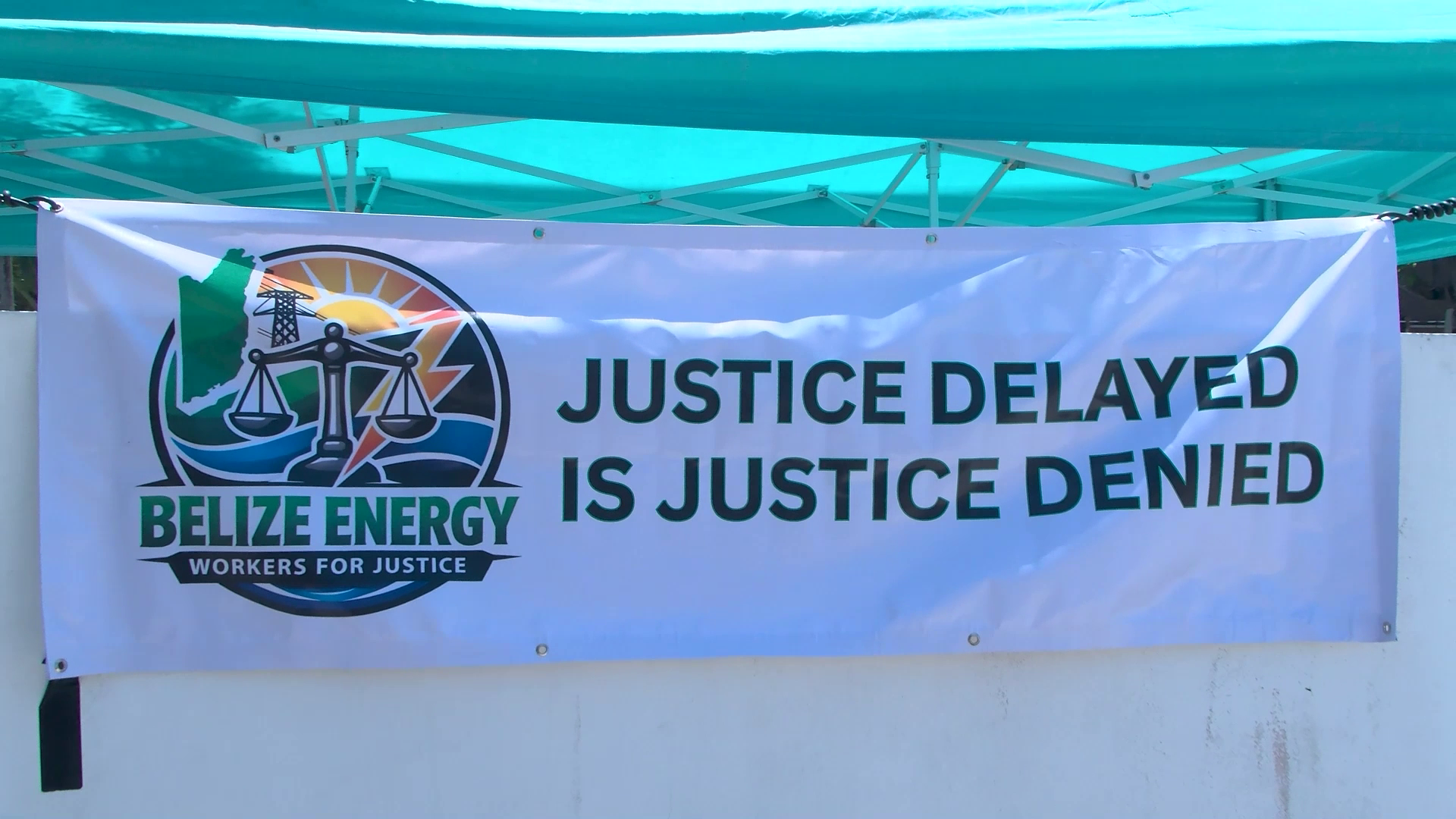
    These documented payouts come as hundreds of lower-tier and retired former employees have staged public protests, demanding the severance they say BEL has refused to pay them for decades. Organizers with the Belize Energy Workers for Justice (BEWJ), the group that pushed for transparency around the payments, say the leak validates long-held suspicions that the company has applied its own employment rules unevenly.

    Dorla Staine, a BEWJ organizer, told News Five the unfair practice dates back more than a quarter century. When workers demanded their earned severance in 1999 ahead of a company restructuring, Staine said management rejected their request and instead imposed a new pension structure — while quietly approving large severance payouts for top executives behind closed doors. “We knew this was happening. It stank then, and it stinks now,” Staine said of the double standard. Fellow BEWJ organizer Shawn Nicholas added that workers have long suspected leadership prioritized their own benefits over the entitlements of rank-and-file staff, and the leaked documents confirm that bias.

    BEL has thus far declined to respond to repeated requests for comment on the leaked documents. In previous public statements, the company has maintained that its current severance and pension structures comply with a 2025 ruling from the Caribbean Court of Justice on similar employee severance claims against Belize Telemedia Limited (BTL), arguing BEL’s pension framework meets all legal requirements. Legal opinions obtained by BEL from two prominent Belizean law firms, Barrow and Company and Balderamos and Arthurs, back that position.

    Barrow and Company’s legal analysis notes that a variation agreement signed between BEL and its union established that all severance would be processed through the company pension plan, though the firm advised BEL to clarify its contractual wording to eliminate ambiguity around employee entitlements. Balderamos and Arthurs agreed that BEL’s pension structure is legally distinct from BTL’s and satisfies the CCJ’s 2025 judgment, but also recommended that the company add clearer breakdowns of employer pension contributions, severance entitlements and any balance discrepancies in all future exit correspondence.

    Even with legal backing for BEL’s overall policy structure, the unexplained disparity between executive exit packages and denied worker claims has left unresolved questions that continue to fuel worker outrage. For protesting employees, many of whom are elderly or living with chronic illness and have walked picket lines under extreme heat to demand their owed pay, the leak only deepens the injustice of the company’s practices. As of April 15, 2026, BEL has yet to issue a public explanation for the unequal payouts, leaving the dispute at an impasse between workers and utility leadership.

  • No Relief, No Choice: Bus Services May Halt on April 20th

    No Relief, No Choice: Bus Services May Halt on April 20th

    A looming crisis threatens public transportation across Belize, as the nation’s bus operators have issued an urgent warning that a complete nationwide suspension of services will begin on April 20 if the government fails to intervene immediately to address skyrocketing operational costs. The Belize Bus Association (BBA), which represents the majority of bus operators across the country, says the industry has been pushed to an irreversible breaking point by sustained increases in fuel prices that have drained already razor-thin profit margins.

    In late March, the BBA submitted a formal letter to the Minister of Belize’s Department of Transport outlining a series of targeted policy proposals designed to stabilize the industry and keep public transit running for ordinary commuters. The association’s requests were straightforward: temporary tax exemptions for fuel and bus replacement parts, direct targeted government subsidies to offset rising fuel costs, and permission to adjust passenger fares to reflect increased operating expenses. Each proposal was framed as a viable solution to prevent a total shutdown, but according to the BBA, the central government has responded that it cannot implement any of the requested measures at this time.

    The BBA explains that the current crisis has been years in the making. Bus operators have long operated on extremely narrow profit margins, absorbing incremental cost increases over time to keep fares affordable for working commuters. That breaking point has now been crossed, the association says, as recent global fuel price spikes have pushed operating costs to levels that are no longer financially sustainable. Without urgent policy changes or last-minute intervention from the government, the BBA confirms that all member operators will be forced to halt services starting Monday, April 20.

    The association is making a final plea for immediate emergency talks with the Minister of Transport, emphasizing that a full shutdown would have cascading negative impacts across the country. Millions of daily commuters who rely on public bus transit to get to work, school, and essential services would be stranded without alternative transportation options. Beyond commuter disruption, the shutdown would also threaten the livelihoods of hundreds of bus operators, drivers, maintenance workers, and other industry employees whose incomes depend on the continued operation of bus services.

    The BBA says it remains fully open to collaborative negotiations with the government to reach a last-minute resolution, but stresses that time is running out. Only swift, decisive action from national officials can prevent widespread disruption to Belize’s public transportation network that would touch communities in every corner of the country.

  • Immigration Officer Lawyers Up After Administrative Leave

    Immigration Officer Lawyers Up After Administrative Leave

    A simmering internal conflict within Belize’s Immigration Department is on track to become a high-stakes legal battle, after an immigration officer placed on administrative leave over alleged participation in a coordinated border sickout has retained legal counsel to challenge the government’s disciplinary process. Last week, a coordinated work stoppage dubbed a “sickout” at the country’s western border disrupted border operations, prompting government officials to launch disciplinary action against eight officers suspected of organizing the protest under the guise of simultaneous medical leave. All eight officers have been placed on administrative leave pending an internal investigation into claims they intentionally sabotaged border operations to stage a protest. But for one of those officers, the government’s pre-emptive action has sparked a fierce legal pushback.

    Norman Rodriguez, the attorney representing immigration officer Anne Marie Smith, argues that his client is being unfairly targeted before any formal investigation has been completed. Rodriguez told reporters that Smith was already on approved, doctor-ordered medical leave from March 30 to April 1 for a longstanding chronic health condition, and submitted an official medical certificate to her port commander before her leave began. Smith returned to work as scheduled after her leave ended, only to be served with two formal disciplinary notices. The first, issued under Section 144 of the Republic Service Regulations, placed her on administrative leave over allegations of professional misconduct and breach of personal integrity. The second, dated April 7, formally notified her that she would face an official investigation into the same claims.

    The core of the government’s allegation against the eight officers rests on the timing of their leave: all eight submitted medical certificates for roughly the same window, and all returned to work around the same date, leading officials to conclude the overlapping leave was a coordinated attempt to disrupt western border operations. Rodriguez, however, says the government’s narrative falls apart under scrutiny, emphasizing that Smith’s leave was entirely legitimate and supported by verifiable medical documentation that confirms her illness was not fabricated as a cover for protest activity.

    “Before you level an accusation of sabotage against a public servant, you are obligated to conduct a full, fair investigation first, not impose punitive action before any facts have been verified,” Rodriguez said, noting that disciplinary action was initiated before the probe even began. While Smith and the other seven officers have been allowed to return to their posts during the ongoing investigation, their names remain tied to the sabotage allegations, damage that cannot be undone even if the investigation ultimately clears them, he added.

    When pressed on claims that Smith exploited her pre-existing health condition to participate in coordinated strike action alongside the seven other officers, Rodriguez dismissed the argument as flimsy and legally untenable. He confirmed that the Public Service Union has offered support to the officers, but said Smith is prepared to take her case to court to clear her name if the internal grievance process does not resolve the issue fairly. If the dispute proceeds to litigation, the government’s entire disciplinary process will face formal judicial review, and Smith will seek monetary damages for the reputational harm she has already suffered, Rodriguez explained.

    The outcome of this legal challenge carries broad implications for public servants across Belize, setting a potential precedent for how disciplinary actions against government employees are conducted, and what recourse workers have when they believe due process has been violated.

  • Pharmacists, Ministry of Health Agree on Prescription Rollout

    Pharmacists, Ministry of Health Agree on Prescription Rollout

    Starting in 2026, Belize will implement a long-planned update to the nation’s prescription drug regulations, developed through close collaboration between the Pharmacists Association of Belize and the country’s Ministry of Health. With public anxiety growing over potential access disruptions to essential medications, particularly for patients managing long-term chronic conditions, industry representatives have moved quickly to clarify that the reform is focused on patient safety, not limiting access to care.

    The two governing bodies have agreed to a 12-month phased rollout of the updated rules, a transition period designed to gradually shift Belize’s healthcare culture toward greater medical accountability and routine health monitoring. Speaking on behalf of the association, Public Relations Officer Beverly Coleman explained that while formal prescription requirements have existed in national law for decades, widespread non-compliance and a lack of routine patient follow-up care created the need for a gradual transition. Many patients in Belize have long become accustomed to refilling long-term medications without regular check-ins with physicians or routine lab work to monitor how medications are affecting their health, she noted.

    “Any substance we put into our bodies — from over-the-counter pain relievers like Tylenol to herbal supplements — carries potential impacts that need medical oversight,” Coleman explained during an interview following the announcement. During the 12-month transition, pharmacists will be permitted to dispense limited one-month supplies of medication to give patients time to schedule required check-ups and get formal prescriptions from their doctors. Coleman emphasized the transition is not an unregulated free-for-all, but a structured opportunity for all stakeholders — doctors, pharmacists and patients — to adjust to the new safety standards.

    As the rollout approaches, however, concerns have emerged about strain on Belize’s already stretched healthcare system. Officials project that a surge of patients will flood primary care clinics to obtain required new prescriptions, raising questions about how gaps in care can be addressed, particularly in rural and geographically isolated underserved regions of the country. Discussion has turned to whether expanding prescribing authority to pharmacists could help ease the added pressure on clinics.

    Currently, Belizean law strictly limits pharmacists’ scope of practice: pharmacists are only permitted to dispense medications written by licensed physicians, and are tasked with flagging potential issues such as dangerous drug interactions or incorrect dosages to prescribing clinicians. Coleman confirmed that expanding this scope to allow limited prescribing by pharmacists for simple or stable chronic conditions is a topic that will be negotiated with the Ministry of Health in the coming months, given Belize’s unique geographic context where many remote communities lack consistent access to physicians.

    “Medicine is a constantly evolving field, and pharmacists must stay updated on the latest research to properly educate and counsel our patients,” Coleman added. She noted that any change to professional scope will require careful legislative negotiation and alignment with public health needs, to ensure patient safety remains the core priority as the system adapts.

  • Attempted Murder Charge for Akeem Ferguson After Brutal Ladyville Attack

    Attempted Murder Charge for Akeem Ferguson After Brutal Ladyville Attack

    A brutal weekend violent attack in the Belizean community of Ladyville has left one man clinging to life in hospital and another behind bars facing charges of attempted murder. Thirty-year-old local resident Akeem Ferguson was arraigned before the Belize City Magistrate’s Court this week, after being taken into custody hours following the assault on 42-year-old Lionel Nigel Logan.

    According to official reports from Belizean law enforcement, the violent confrontation unfolded on the evening of Saturday 11 April 2026 on Henry Street in Ladyville, just blocks from the Perez Road intersection. Investigators confirmed that Logan was first stabbed in the lower back by his attacker before being shot at close range. Bystanders alerted emergency services immediately after the incident, and Logan was rushed by ambulance to the country’s main public healthcare facility, the Karl Heusner Memorial Hospital (KHMH), where he remains in critical condition as of the court hearing.

    Crucially, law enforcement officials confirmed that Logan was able to identify Ferguson as his attacker both at the scene of the incident and again in a formal recorded statement taken by investigators while he received emergency care. Acting on this identification, police launched an immediate manhunt, released a public wanted notice to the community, and successfully took Ferguson into custody on the same night the attack occurred. When questioned by detectives about the incident, Ferguson formally denied all allegations that he shot Logan, according to police records.

    Ferguson made his first court appearance on 15 April 2026, arriving at the courthouse under heavy police escort shortly after 9 a.m. local time. He appeared before the court without legal representation, and entered no formal plea during the brief arraignment hearing. The three charges brought against Ferguson include the most severe count of attempted murder, alongside additional charges related to the illegal possession of a firearm and grievous bodily harm. Citing the severity of the charges and the ongoing risk to public safety, Senior Magistrate rejected Ferguson’s application for pre-trial bail and ordered him remanded into custody at Belize Central Prison, where he will remain held until his next court hearing scheduled for 15 June 2026.

    Investigators from the Belize Police Department’s Criminal Investigations Branch are continuing to work through evidence to establish a clear motive for the attack, as they build their case ahead of trial. The investigation remains active, with authorities working to confirm what led to the violent confrontation as Logan continues to fight for his life in hospital care.

  • Convicted BDF Soldier, Police Officer Move to Appeal Prison Sentences

    Convicted BDF Soldier, Police Officer Move to Appeal Prison Sentences

    Five years after the controversial 2021 fatal shooting of Belize Defense Force (BDF) soldier Jessie Escobar in Santa Familia, two convicted law enforcement officials implicated in a cover-up of the incident have launched a bid to reduce their prison sentences.

    BDF Private Ramon Alberto Alcoser and Police Corporal Juan Carlos Morales appeared before High Court Justice Derick Sylvester on April 15, 2026, where the judge scheduled their full appeal hearing for April 27. Up until the hearing convenes, both men will remain in custody at Belize Central Prison.

    The pair were originally convicted and sentenced last December by a magistrate court, after findings that they deliberately falsified information and omitted critical details from their official statements regarding Escobar’s killing. Their accounts of the shooting were ultimately disproven by independent surveillance footage that directly contradicted their testimony. Under the original sentencing order, Alcoser is currently serving a 14-month prison term, while Morales is serving a 23-month sentence.

    During the April 15 procedural hearing, Morales notified the court that he will be represented by private defense attorney Alifah Elrington for the appeal, while the court has appointed attorney Oscar Selgado to serve as Alcoser’s legal counsel. Notably, Director of Public Prosecutions Cheryl-Lynn Vidal will personally lead the prosecution’s argument in the appeal, a move that underscores the high priority and significance the prosecution assigns to this high-profile case.

    The appeal puts the original conviction and sentencing in the hands of the High Court, which will now rule on whether the original prison terms will be upheld, or if the two convicted law enforcement officers will receive a reduction of their sentences. The case has remained a focal point of public attention across Belize since Escobar’s killing in 2021, with observers across the country closely tracking every development in the legal process.