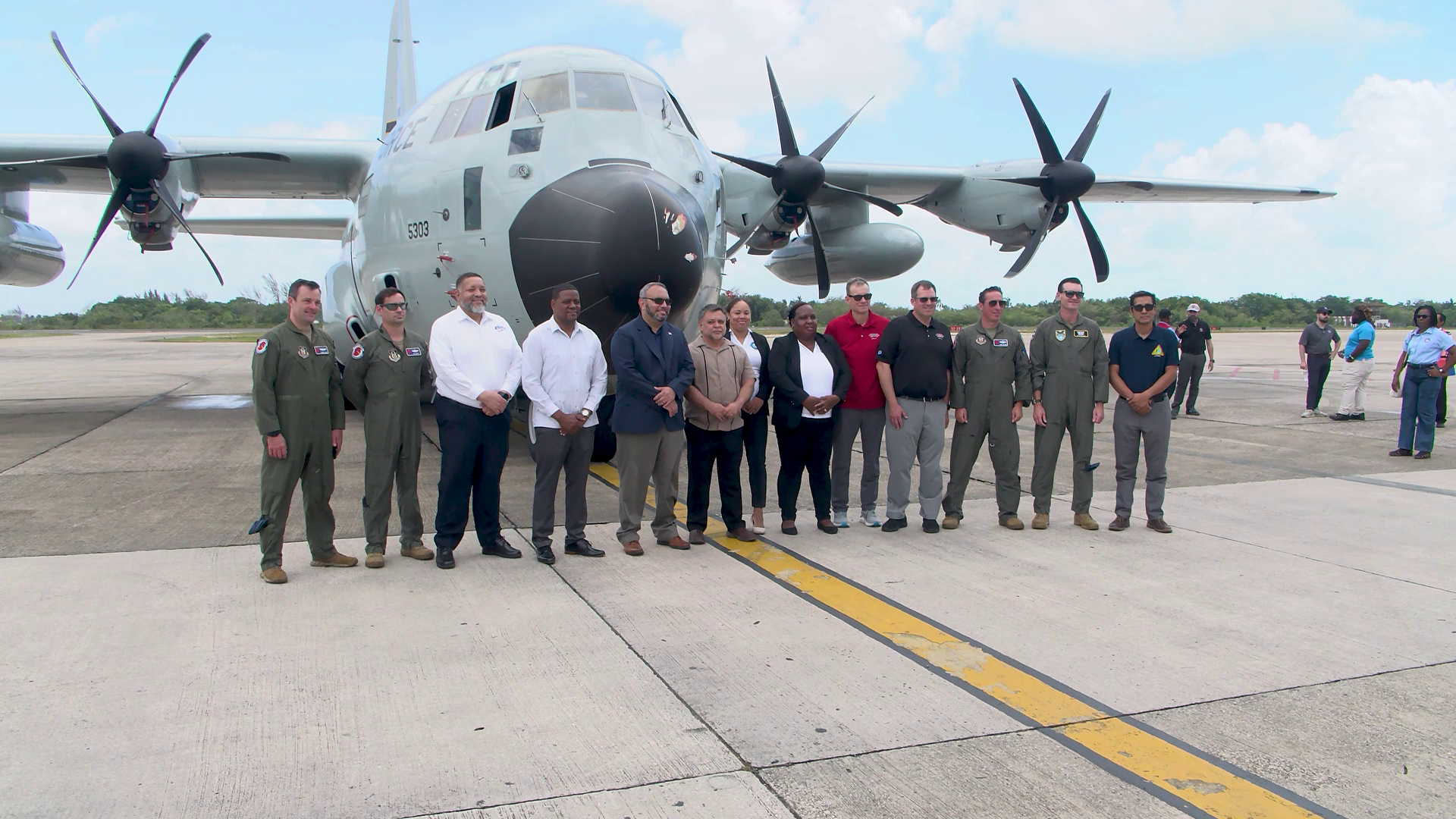
Forty-six days before the 2026 Atlantic hurricane season officially kicks off, a unique piece of storm-tracking infrastructure has arrived in Belize as a key stop on the annual Caribbean Hurricane Awareness Tour: the Hurricane Hunters, the specialized flying crews that collect irreplaceable inside-storm data for forecasters across the globe. The rare on-the-ground visit gives Belizean officials, students and ordinary residents an up-close look at the high-stakes work that saves thousands of lives every year, coming at a critical time as the low-lying coastal nation prepares for another year of storm risk in the Atlantic hurricane belt.
Unlike standard commercial or research aircraft, the Hurricane Hunters’ planes are purpose-built to do what most pilots would avoid at all costs: fly directly into the center of developing and mature hurricanes to gather real-time atmospheric data that satellite technology simply cannot capture. This data is sent directly to the U.S. National Hurricane Center, which partners with local meteorological services across the Caribbean and Central America to generate accurate storm forecasts.
Jordan Mentzer, a pilot with the Hurricane Hunters, joked that people often call the crew crazy for choosing to fly into deadly storms, but decades of institutional knowledge have turned the risky mission into a carefully regulated, safe operation. “We’ve been doing this for a long time, so guys and gals before me have taught us how to operate as safely as possible, what to avoid, and how to navigate even the most powerful systems,” Mentzer explained. Missions can stretch more than 12 hours, with crews patrolling storms from the Gulf of Mexico to the central Caribbean, regions that regularly bring storm impacts to Belize.
Robbie Berg, a warning coordination meteorologist with the National Hurricane Center, compared the difference between satellite data and Hurricane Hunter data to judging a steak by its grill marks versus cutting into it to check its doneness. “Satellites can show us the outside of a storm, but we can’t know what’s happening in the core until the Hurricane Hunters cut right into it,” Berg explained. That inside data on air pressure, wind speed, and storm structure feeds into advanced computer forecasting models, allowing forecasters to predict a storm’s path, intensity and size with far greater accuracy over the critical five-day forecast window. The National Hurricane Center coordinates closely with Belize’s meteorological service to issue timely watches and warnings for the country and other Caribbean nations, a process that depends entirely on the data collected by these flights.
Ronald Gordon, Belize’s chief meteorologist, emphasized just how critical this data is for the nation, which sits squarely in the path of most Atlantic hurricanes that form each year. “The data these crews collect goes straight into our complex computer models, helping us better predict how a hurricane will strengthen and where it will go,” Gordon said. He also used the visit as an opportunity to remind Belize residents that the 2026 hurricane season is just weeks away, and public preparedness should already be underway.
Beyond improving forecasting and public awareness, the visit carries a second, equally important goal: inspiring the next generation of Belizean STEM professionals. The Caribbean Hurricane Awareness Tour only stops at three countries this year, making Belize’s inclusion a rare honor, according to Minister of Public Service and Disaster Risk Management Henry Charles Usher. “They came from Honduras before this, and they will head to Puerto Rico after,” Usher noted. “This is really about inspiring young Belizeans to pursue careers as scientists, pilots, meteorologists and engineers — that’s exactly what we need moving forward.”
Local organizers opened tour sign-ups publicly via social media to avoid bias, allowing schools across the country to reserve time slots to visit the aircraft. Dozens of students have already toured the one-of-a-kind flying laboratory, getting a first-hand look at the technology that powers life-saving storm forecasts, and more groups are scheduled to visit throughout the day. Local officials hope the experience sparks long-term interest in meteorology, atmospheric science and aviation among Belize’s youth, building a local workforce that can continue to lead storm preparedness and forecasting for decades to come.
As the countdown to hurricane season continues, the Hurricane Hunters’ visit serves as a reminder that accurate forecasting and early preparation are the most powerful tools to reduce hurricane risk. Thanks to the work of these brave crews, Belize enters the 2026 season better prepared and more informed than ever before.