
A 29-year-old serving Belize Police Constable, Dexter Diego, has been taken into custody to await sentencing after entering guilty pleas to four separate charges of unlawful sexual intercourse with an underage victim. Court documents confirm the victim was just 13 years old when the first abuse occurred, and had turned 14 by the time the three subsequent offenses were committed. Diego’s guilty plea was formally submitted before High Court Justice Nigel Pilgrim on a Monday, with the entire hearing concluding in under an hour, and the defendant represented by defense attorney Hurl Hamilton. Per the agreed statement of facts presented to the court, Diego was a trusted family friend of the victim. He first formed a connection with the minor in 2022, and over roughly 10 months, the pair developed a hidden relationship that the victim’s mother had no knowledge of. All of the offenses took place while Diego was actively employed in his role as a police constable, a position that put him in a position of public trust. The first abusive incident occurred sometime between December 31, 2022 and February 1, 2023, when the victim was working as a babysitter for family members. The next two offenses followed between February and March 2023, while the fourth and final charge dates back to March 2026, when the offense was committed while Diego was wearing his official police uniform. Justice Pilgrim has opted to defer the sentencing hearing until September 8, 2026, and has ordered three key pre-sentencing reports to inform his ruling: a full Prison Report to assess correctional placement considerations, a Social Inquiry Report to contextualize the offense and the defendant’s background, and a Victim Impact Statement to document the harm inflicted on the underage victim.
标签: Belize
伯利兹
-
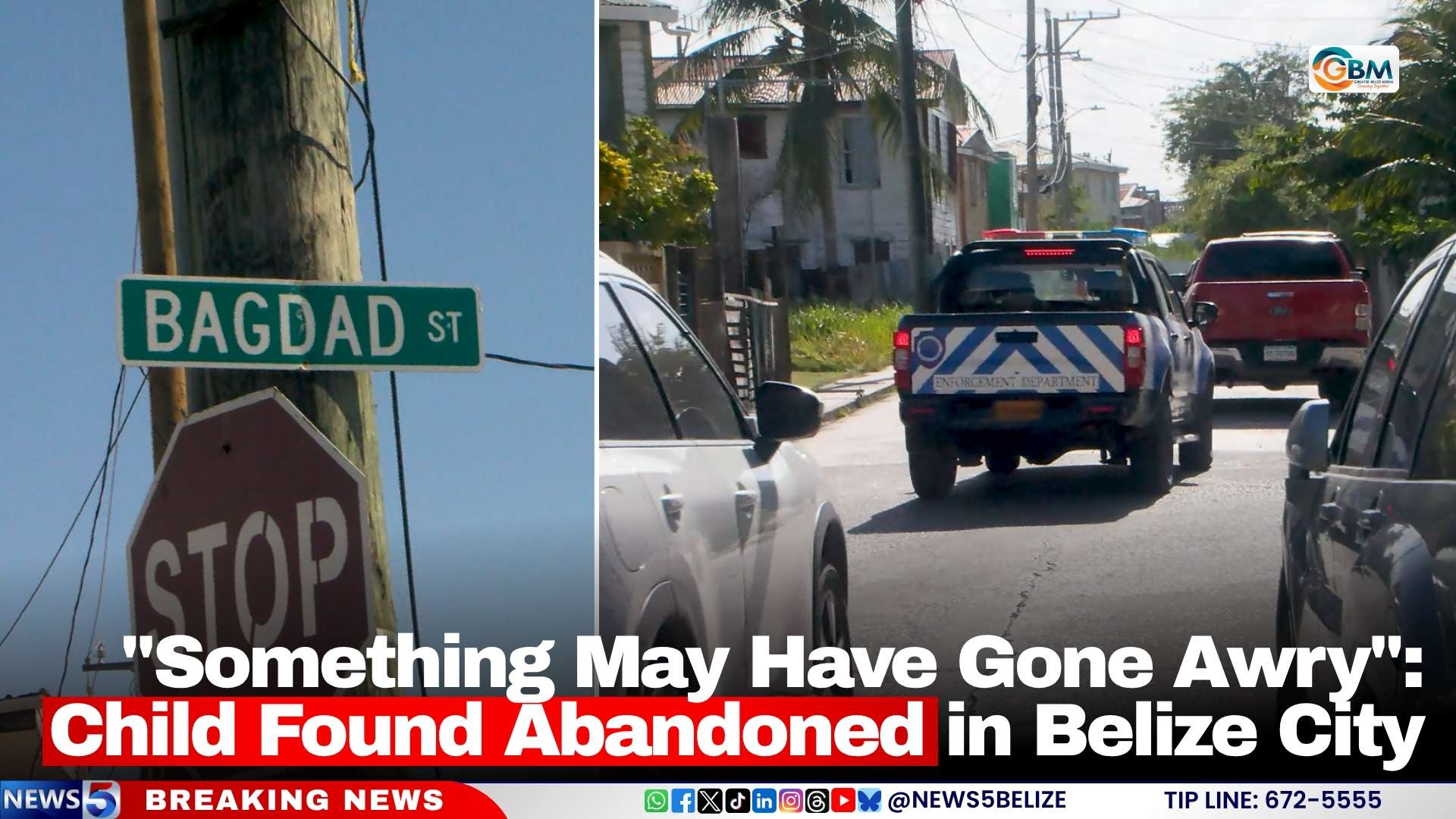
“Something May Have Gone Awry”: Child Found Abandoned in Belize City
On a Sunday night in late July 2026, a routine emergency response to a small residential fire in Belize City led local police to uncover a heartbreaking case of child abandonment on Bagdad Street. What began as a call to extinguish a blaze in a neighborhood stairwell ended with a young child placed in the protective care of Belize’s Human Services department, after the fire incident inadvertently exposed the child’s unacknowledged presence in the area.
Senior Superintendent Stacy Smith detailed the sequence of unexpected discoveries that unfolded after first responders arrived at the scene. As crews worked to put out the flames, a local resident found a discarded birth certificate near the site of the fire. The document bore a name that struck a chord with another woman living in the neighborhood: she recognized it as the first name of a woman who had stopped by her home earlier that same day with a young child in tow.
According to Smith’s account, the unnamed mother had asked the local resident for a small favor during her visit: to help her call a taxi while she attended to an urgent matter. While the pair waited for the ride to arrive, the child drifted off to sleep, and the mother asked to leave the sleeping toddler inside the resident’s home temporarily. She left the property to handle her business, and never came back for her child.
“It was only when that incident happened that she [the local resident] realised that something may have gone awry,” Smith explained to reporters. Once authorities connected the dots between the found birth certificate and the unclaimed child, they launched an immediate investigation to track down the mother. Investigators have since successfully located the woman, though no formal charges or public statements have been released from her side as of yet.
Moving forward, Smith noted that officials will conduct a formal welfare consultation and assessment to unpack the circumstances that led the mother to leave her child behind. “We need to see what exactly went wrong that caused the mother to take that course of action that she took,” Smith added. Authorities have not yet released details on the cause of the stairwell fire that sparked the discovery, but have confirmed that no individuals suffered injuries in the blaze.
The story has circulated widely across social media since news broke, drawing an outpouring of sympathy from online users. Many commentators have pushed back against immediate judgment of the mother, suggesting she may have faced overwhelming crisis that left her with no other perceived options. One social media user wrote, “She might be having a meltdown and struggling to deal with everything life keeps throwing her way.”
As the investigation continues, child welfare officials are focused on ensuring the abandoned child receives consistent care and support while authorities work to resolve the case long-term.
-

Who’s Eating All That Meat?
A procurement scandal is unfolding in Belize after leaked tender documents revealed dramatic pricing discrepancies in food contracts awarded to private suppliers for the Belize Defense Force (BDF) during the 2023-2024 fiscal year, prompting a formal investigation into potential waste of taxpayer funds. The documents, which detail hundreds of thousands of dollars in public spending on meat, seafood and staple goods for BDF kitchens, show that multiple suppliers charged prices far above the national average tracked by the country’s official statistical agency, leaving public officials and observers questioning the transparency and value of the government’s defense spending.
Cabinet Minister Kareem Musa confirmed that the inconsistent pricing uncovered in the leaked records is the core focus of the ongoing inquiry, noting that government procurement should prioritize the lowest available cost for comparable goods while publishing all contracts for full public transparency. “So if the Miras are offering the same vegetables at a lower cost than say, Save U and or Brodies, then we should go the Miras, but at the end of the day it should be published for transparency purposes,” Musa told reporters.
The Statistical Institute of Belize (SIB), which publishes monthly national consumer price benchmarks via its consumer price index survey, provides an independent standard to compare government purchase prices against average market rates. Jacqueline Sabal, manager of SIB’s Economic Statistics Department, explained in June that the agency collects price data from retailers across the country every month to build an accurate picture of prevailing consumer costs.
When SIB’s 2023-2024 price data is compared to the actual rates paid by the Ministry of Defense, the gap between market averages and government spending is impossible to overlook. For chicken breast, the highest national average price recorded between 2023 and 2024 was $4.73 per pound in April 2024. But leaked records show the Ministry of Defense paid J&J Imports $7.76 per pound for the same product – a $3 markup per pound over the peak national average.
At that inflated rate, the ministry spent $7,760 per month, or more than $93,120 annually, on chicken breast from J&J Imports alone. If the ministry had purchased chicken breast at a rate close to the national average of roughly $5 per pound, it would have saved an estimated $33,000 per year on just this single item. A second supplier, Kukulcan, charged $5.50 per pound for chicken breast – closer to the national average but still above market rates, costing the ministry $4,801.50 per month. Combined, annual spending on chicken breast from the two suppliers exceeded $150,000.
Fish fillet represented another major line item with extreme markups. Kukulcan charged the Ministry of Defense $23 per pound for fish fillet, adding up to $23,000 per month or $276,000 per year. J&J Imports charged a slightly lower $20.71 per pound, costing the government just over $30,000 monthly for this product alone.
Premium seafood items pushed total public spending even higher. Annual spending on lobster from J&J Imports reached $24,402, while combined annual shrimp purchases from the two major suppliers totaled $177,420. Baby back ribs cost the ministry an additional $19,260 over the fiscal year, priced between $14 and $15 per pound. Ground steak, supplied by J&J Imports, Kukulcan and one smaller vendor, added $157,500 to annual defense food costs.
When adding up spending on just seven core items – chicken breast, whole chicken, fish fillet, lobster, shrimp, baby back ribs and ground steak – the Ministry of Defense’s annual food expenditure for BDF comes out to nearly $600,000. This total does not include additional spending on beef steak and ground chicken purchased during the same period, meaning the actual total annual food budget for the defense force is substantially higher than the half-million-dollar figure compiled from the leaked documents.
The markup-riddled procurement contracts have reignited debates over public spending accountability in Belize, with critics calling for sweeping procurement reform to enforce transparent, competitive pricing that protects taxpayer dollars. As the investigation continues, the central question remains unanswered: did Belize’s Ministry of Defense secure fair value for public funds, or did it systematically overpay connected suppliers to keep BDF kitchens stocked?
-

Who Makes Sure Your Medicine Is Safe? Belize Just Took a Major Step
For consumers everywhere, the question of medication safety is foundational to public health: every time a patient picks up a prescription or purchases over-the-counter treatment, they rely on rigorous regulatory systems to vet for unexpected side effects, manufacturing quality flaws, and dangerous counterfeit products. In a landmark step for both national public health and global drug safety cooperation, the Central American nation of Belize has now secured full membership in the World Health Organization’s (WHO) Programme for International Drug Monitoring (PIDM), cementing years of progress in strengthening its national pharmacovigilance infrastructure.
The new full membership status grants Belize direct access to submit local medication safety reports to VigiBase, the WHO’s comprehensive global database that tracks adverse drug events and safety concerns from across the world. Belize’s Ministry of Health and Wellness emphasized that this international recognition validates the substantial work the country has put into building a robust national system for monitoring medication safety and responding quickly to public health risks tied to pharmaceutical products.
The Pan American Health Organization (PAHO), which has provided ongoing technical and institutional support to Belize’s pharmacovigilance efforts over the past several years, noted that full membership in the PIDM reflects Belize’s expanded capacity to carry out core public health functions: detecting potential adverse reactions, assessing risks, understanding emerging safety issues, and preventing harm from problematic medications. Beyond national benefits, PAHO highlighted that Belize’s full membership means the country will now contribute its own local data and on-the-ground expertise to the global drug safety network coordinated by the WHO, strengthening collective global protections.
Belize’s journey to full membership began back in 2020, when it first joined the PIDM as an associate member. In the years since that initial association, the country has undertaken targeted upgrades to its regulatory infrastructure: it has expanded the capacity of its national Drug Inspectorate Unit, improved post-market surveillance protocols to catch safety issues that emerge after a drug reaches consumers, broadened the network for reporting adverse medication events, and integrated its national reporting systems with the WHO’s global safety database.
According to Belize’s Ministry of Health and Wellness, the upgraded full membership status will transform the country’s ability to both contribute to and benefit from global drug safety efforts. Moving forward, Belize will be able to participate more actively in international monitoring work, while also gaining immediate access to the latest global safety data to inform local regulatory decisions and better protect patients across the country. PAHO echoed this assessment, noting that full membership will give Belize access to cutting-edge international safety analyses while allowing the nation to contribute to early detection of emerging drug safety risks at the global level, creating a win-win outcome for both national and global public health.
-

Several Feared Dead, Many Trapped After Powerful Earthquake Strikes Southern Japan
On July 28, 2026, a powerful 6.8-magnitude seismic event rocked southern Japan’s Kumamoto Prefecture, triggering widespread destruction that has left several people feared dead, dozens injured, and an uncertain number of individuals trapped inside a partially collapsed regional shopping center.
The structural failure occurred at Aeon Mall Kumamoto, one of the prefecture’s busiest retail hubs, where search-and-rescue teams have been deployed in urgent operations to locate and extract surviving people trapped beneath rubble. Local disaster management authorities confirmed that 20 to 30 mall employees have not yet been contacted, while the full scope of missing customers remains unclear as officials work to cross-check visitor logs and witness accounts.
Japan’s national public broadcaster NHK documented that over 50 people affected by the quake have already received emergency medical care at a single local hospital. A small number of passengers traveling on a high-speed rail route through the region also sustained injuries during the shaking. Local police, speaking to regional media outlets, have confirmed that multiple fatalities have been recovered from the collapsed shopping mall, though government officials have not published an official, confirmed death toll as of Tuesday.
Beyond the mall collapse, the earthquake caused extensive damage across Kumamoto Prefecture: a key highway bridge sustained structural damage, all regional passenger rail services were suspended for safety inspections, Kumamoto Airport was forced to halt all operations temporarily, and the iconic, historic Kumamoto Castle suffered additional damage. The landmark had been undergoing years of reconstruction after being heavily damaged in the devastating 2016 Kumamoto earthquakes that killed over 50 people.
Emergency response officials are currently investigating unconfirmed reports that a gas leak sparked by the seismic shaking caused an explosion at the shopping mall, but no definitive conclusions about any secondary triggers of the collapse have been released. The Japan Meteorological Agency has issued a formal public warning urging all residents of southern Kumamoto to remain on high alert for powerful aftershocks and rain-triggered landslides over the next seven days, as intensive rescue operations continue across the affected region.
-

Twin Brothers Shot Day Before Mother’s Birthday, One Dead
On a quiet Saturday evening in late July 2026, what was supposed to be a joyous weekend of preparation for a mother’s birthday turned into an unspeakable tragedy in the small community of Unitedville, Cayo District. Twin brothers Denvoy and Delroy Bartley had traveled into the village to help arrange festivities for their mother’s big day, but their plans were violently cut short when an unidentified gunman stepped out of nearby thick brush and opened fire on the group. By the time first responders arrived on scene, 25-year-old Denvoy Bartley was pronounced dead from his gunshot wounds, while his twin brother Delroy was rushed to a local medical facility with non-life-threatening injuries and remains in stable condition as he recovers.
Within days of the ambush, law enforcement announced a breakthrough in the case: 20-year-old Kevan Anthony Alford, a local construction worker based in Unitedville, has been formally arrested and charged in connection with the attack. Alford faces a slate of criminal charges that include murder, attempted murder, use of deadly force, and unlawful wounding for the attack on the Bartley brothers. He also faces an additional charge of attempted murder linked to a separate victim, Albert Bennett, connected to the same incident.
Assistant Superintendent of Police Stacy Smith detailed the timeline of the investigation in an official statement, noting that officers received the first report of gunfire just after 8:30 p.m. on July 25. Initial investigative findings confirm that the two brothers were standing with another man in front of a local residence when the shooter emerged from the surrounding foliage to open fire. Investigators say the suspected motive for the ambush ties back to a long-running dispute related to drug activity in the area.
The tragedy has shaken residents of the tight-knit Unitedville community, many of whom knew the Bartley brothers well. A close neighbor and family friend, who asked to speak on background, recalled the brothers’ final visit just hours before the shooting. She shared that the pair had spent the day socializing with local residents, arranging for a birthday cake and catered chicken for their mother’s celebration, and interacting with neighbors like they always did. She noted that the twins were regular visitors to the village, coming often to check on their ailing mother, and were considered part of the extended community by many long-time residents. “We never thought this would be the last time we saw him,” she shared of Denvoy, recalling a casual interaction just hours before the attack that still feels surreal to her.
This is not the first time Denvoy Bartley has been linked to violent criminal activity: court records show he was charged with the 2023 murder of 24-year-old Lionel Lee Budna, but the case against him was dismissed in 2024 after prosecutors entered a nolle prosequi, leaving him acquitted of all charges.
In the wake of the shooting, Belizean law enforcement has stepped up its presence in Unitedville to address community concerns over rising violent crime. Smith confirmed that the department has deployed tactical teams to carry out targeted strategic operations in the area, and recent efforts have already led to major seizures: just prior to the Bartley shooting, officers intercepted a vehicle of interest and recovered two illegal firearms from the vehicle. Smith added that investigators have also worked closely with community members who have pushed back against violent criminal activity in their neighborhood, and new investigative technology has played a key role in moving the case against Alford forward quickly.
For the Bartley family, what was meant to be a weekend of celebration has now become a time of mourning. The family is now making funeral arrangements for Denvoy, rather than gathering to honor his mother’s birthday, leaving the small community of Unitedville reeling from the senseless violence that has cut a young life short.
-

Fleeing Suspects Open Fire om GI3 Personnel During Police Chase
On July 23, a routine traffic intercept attempt by specialized law enforcement officers in St. Martin’s de Porres escalated into a dangerous high-speed pursuit that ended in a violent crash and an exchange of gunfire between fleeing suspects and police. As of July 27, authorities remain on the hunt for the three individuals who managed to escape the scene, though lead investigators say they have made significant headway in the case.
According to ASP Stacy Smith, a staff officer leading the investigative effort, the incident began when members of the GI3 Unit attempted to pull over a vehicle connected to an ongoing investigation. Rather than comply with the officers’ order to stop, the driver accelerated away, triggering a fast-paced chase through the area. The pursuit reached its climax when the suspect vehicle lost control and crashed into a public lamppost, forcing all three occupants to flee on foot.
As the front-seat passenger exited the wrecked vehicle, the individual pulled a firearm and opened fire on the responding GI3 officers, Smith confirmed. Law enforcement returned fire in response, but all three suspects were still able to slip away from the scene before additional backup could arrive to secure the perimeter. No officers or bystanders were reported injured in the exchange of gunfire or the preceding crash, a outcome that police have called fortunate given the intensity of the incident.
The abandoned suspect vehicle has since been impounded by authorities for forensic processing, and Smith noted that investigative teams have made “great strides” in piecing together details of the incident and identifying the fleeing suspects. This report is adapted from a transcript of an evening television newscast covering the breaking incident.
-

Bella Vista Woman Killed in Fiery Motorcycle Crash on TV Ramos Highway
A fatal traffic collision on the Thomas Vincent Ramos Highway has claimed the life of a Bella Vista Village resident, leaving law enforcement officials to piece together the exact sequence of events that led to the Saturday afternoon crash. According to official reports released by police, 39-year-old Tatiana Alvarado died at the scene of the incident, which unfolded just after 4:30 p.m. on July 25, 2026 near mile marker 44, close to the Independence Cutoff.
Alvarado was operating a motorcycle traveling toward the city of Punta Gorda when the collision occurred, with a Ford Escape SUV traveling directly behind her at the time of the incident. Initial investigative findings outline a disputed sequence of events: the driver of the Ford Escape was in the process of attempting to overtake Alvarado’s motorcycle when Alvarado reportedly made an abrupt left turn across the path of the SUV. The impact between the two vehicles immediately sparked a fire that fully engulfed Alvarado’s motorcycle by the time first responders and law enforcement arrived at the crash site.
As part of the active ongoing probe into the crash, Belizean police have issued a formal notice of intended prosecution, a standard procedural step for fatal traffic investigations. Authorities have not yet confirmed whether the driver of the Ford Escape was operating the vehicle under the influence of alcohol or drugs at the time of the collision. Investigators did note that the driver has remained fully cooperative with all requests from law enforcement throughout the inquiry, which is still ongoing as officials work to confirm all contributing factors to the fatal crash.
This report is adapted from a transcript of a televised evening newscast, originally published online.
-

Crash Near Belize/Mexico Border Turns Fatal for Mexican National
A fatal traffic collision near the Belize-Mexico border has left a 31-year-old Mexican national dead, with law enforcement currently working to unpack the exact sequence of events that led to the crash. The victim has been identified as Nidia Galdamez Hernandez, who was operating a motorcycle en route to the Mexican border when the incident unfolded just after 9:40 p.m. local time on Sunday, July 26, 2026.
According to Assistant Superintendent of Police Stacy Smith, a staff officer leading elements of the investigation, Hernandez was traveling toward the border, with a green Chevrolet following closely behind her motorcycle. Preliminary investigative findings indicate that Hernandez moved into the oncoming traffic lane, where her motorcycle collided head-on with a Dodge Altiture traveling in the opposite direction. The impact of the collision left Hernandez with fatal injuries that she could not survive.
As part of the ongoing inquiry into the crash, law enforcement has collected urine samples from both the driver of the Dodge Altitude and the driver of the green Chevrolet that was following Hernandez. Toxicology analysis of these samples will help investigators determine whether alcohol, drugs, or other impairing substances contributed to the collision.
Police have officially issued notices of intended prosecution as the investigation progresses, but no formal charges have been filed against any party connected to the incident as of the latest update. Investigators continue to piece together witness statements and physical evidence from the crash site to confirm the root cause of the deadly crash.
-

Would-Be Burglars Target Atlantic Bank ATM in Ladyville
In a botched attempted burglary at an Atlantic Bank ATM located in the Belizean community of Ladyville, the perpetrators were forced to abandon their operation before they could successfully steal any funds, law enforcement officials have confirmed. The incident was first flagged last Thursday, July 23, 2026, when a member of the public spotted out-of-the-ordinary activity at the branch ATM site and immediately placed a call to local police to alert authorities of the suspicious behavior.
By the time uniformed officers and investigative teams arrived at the bank location to respond to the report, the would-be burglars had already fled the area to avoid apprehension. This left law enforcement with the task of unpacking exactly how much progress the group had made in their attempt and identifying who was responsible for the intrusion.
Assistant Superintendent of Police Stacy Smith, a staff officer with the department, shared new details about the ongoing investigation in a press briefing. “I can confirm that on Thursday 23rd July, investigators were called out to the Atlantic Bank Ladyville Branch as there was information that a burglary occurred,” Smith stated. Following a full walkthrough and inspection of the building and ATM kiosk, investigators confirmed that no significant assets or funds were taken from the site.
When asked whether the intruders caused damage to the property during their attempt, Smith confirmed that structural damage was sustained in order for the group to gain access to the secured ATM area. However, Smith declined to share specific details on the method the would-be burglars used to break into the location, citing the ongoing active investigation.
Scenes of Crime unit specialists have already processed the site for forensic evidence, successfully lifting multiple latent fingerprints from the area. Investigators are hopeful that this forensic evidence will help them piece together a full timeline of the incident and identify the perpetrators behind the attempted break-in. As of July 27, 2026, the police investigation into the attempted burglary remains open and active, with authorities continuing to pursue leads in the case.