标签: Belize

伯利兹

  • BYM Unveils Community Mural

    BYM Unveils Community Mural

    In a landmark community initiative led by young people, the Belize Youth Movement (BYM) has celebrated the completion of a large public mural installed at the entry to Trial Farm Village along Otro Benque Road, a high-traffic corridor that serves as the main gateway to the area. The project, which wrapped up on April 15, 2026, is far more than a decorative addition to the neighborhood—organizers frame it as a lasting statement of community identity and intergenerational connection.

    “Today we did not just finish a mural, we left a mark on our community,” BYM representative Glenn Tillett shared in an interview with local outlet News Five. The choice of location was deliberate, Tillett explained, to ensure the artwork becomes a constant, accessible reminder for all village residents and visitors. “We chose a space people pass every day. We placed it there intentionally so it can serve as a daily reminder of who we are and where we’re going if we come together as a community.”

    At its core, the mural carries layered, intentional meaning centered on intergenerational legacy. It is designed to symbolize a bridge between Belize’s past community leaders and the rising generation of young people that now carries the mantle of service and leadership. The artwork honors the contributions of earlier generations that built the community, while making clear that the responsibility to guide growth and collective progress now rests with today’s youth. In addition to its core thematic design, the phrase “Always do your best” is painted directly onto the mural, serving as an enduring motivational message to local young people to pursue positive action.

    Unlike top-down public art projects, this mural was developed through fully collaborative design work, with substantial input from the young people who make up BYM’s membership. Tillett emphasized that the project centered youth voices at every stage: “The design came through our group’s collaboration, especially with the young people involved. We came together and listened to their voice and welcomed their input.”

    In the first days since the mural’s unveiling, local feedback has been overwhelmingly encouraging. Residents have embraced the initiative, connecting with the work because they can see the genuine positive intent and collective effort the Belize Youth Movement invested into the project. Already, community members have offered constructive suggestions to improve the artwork’s accessibility and visibility, with a popular proposal to add colored accent lighting that will make the mural visible and impactful after dark. Organizers note that this is a suggestion they will actively consider for future upgrades to the installation.

    As the project enters its next phase, BYM is calling on the entire Trial Farm Village community to take ownership of the mural, committing to long-term care and protection of the public artwork. “It represents our identity and our direction,” Tillett noted of the importance of community stewardship.

    For the Belize Youth Movement, this completed mural is not the end of their work in the area—it is only the first step in a broader agenda of youth-led community action. Tillett framed the project as a proof of concept for what young people can achieve when they move beyond discussion to tangible, heartfelt action. “This is what happens when we stop talking and actually do something positive. This is what happens when you do things from the heart. This is what happens when the youths lead and get things done. This is only the beginning,” he said.

  • Hurricane Hunter Plane Set to Land in Belize

    Hurricane Hunter Plane Set to Land in Belize

    A highly specialized U.S. Air Force weather reconnaissance aircraft, operated by the renowned 53rd Weather Reconnaissance Squadron better known as the Hurricane Hunters, is scheduled to touch down on Belizean soil this week for a rare public-facing exhibition. While the Hurricane Hunters’ work is usually only in the spotlight during active Atlantic hurricane seasons, this visit offers a unique opportunity for local educational and community groups to engage with the technology that saves countless lives each year.

    The event is being coordinated by the Belize Meteorological Service, which has arranged guided tours for pre-registered schools and organized community groups. In a public statement, Ronald Gordon, Belize’s Chief Meteorologist, clarified that the exhibition is not an open, drop-in event for the general public. Unlike typical public airport open houses, access is restricted exclusively to groups that have secured pre-booked slots, which were advertised and promoted through the meteorological service’s official social media channels. Gordon confirmed that multiple schools and a small number of independent community organizations have successfully reserved time slots to tour the aircraft. The on-site exhibition will run from 10:30 a.m. to 3:30 p.m. on Thursday at Belize’s Phillip Goldson International Airport.

    During the tour, attendees will get an up-close look at the cutting-edge instrumentation aboard the Hurricane Hunter plane, and learn how the crew collects life-saving atmospheric and oceanic data to improve hurricane track and intensity forecasts during extreme weather events. For many Belizeans, who live on the frontline of Atlantic hurricane risk each season, the event offers an unprecedented chance to understand the behind-the-scenes work that goes into protecting coastal communities from tropical storm hazards.

  • “My Client Was Genuinely Ill,” Says Immigration Officer’s Attorney

    “My Client Was Genuinely Ill,” Says Immigration Officer’s Attorney

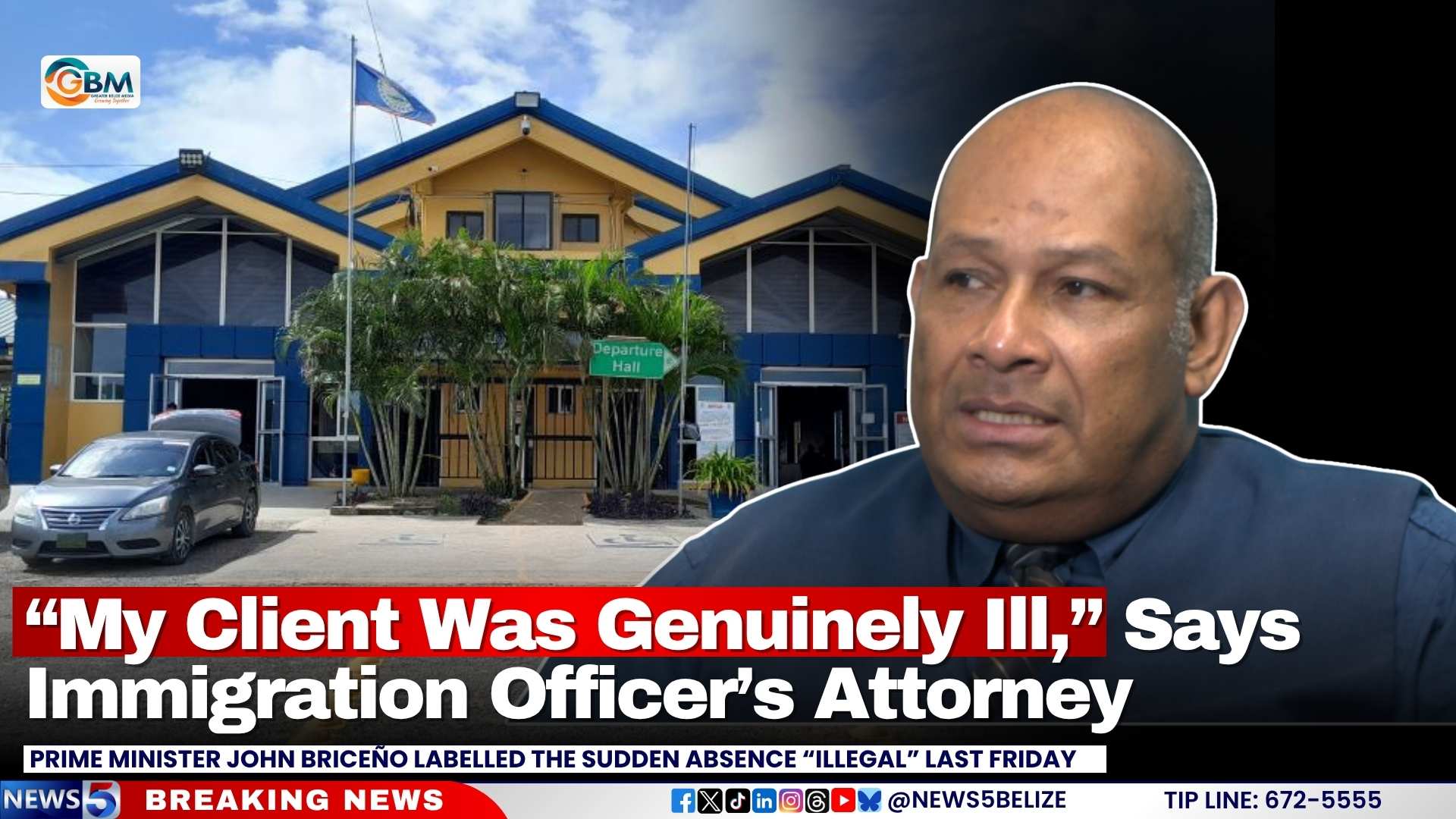
    A growing legal conflict has emerged following the placement of multiple western border immigration officers on administrative leave in late March 2026, centered on allegations of a coordinated work stoppage disguised as legitimate sick leave ahead of the Easter long weekend. At the heart of the dispute is Ann Marie Smith, one of the officers placed on leave, who is being represented by defense attorney Norman Rodriguez. Rodriguez has launched a scathing critique of the Ministry of Immigration’s handling of the case, accusing the agency of violating basic procedural fairness by imposing disciplinary action before completing a formal investigation.

    After Smith and her colleagues submitted official medical certificates to justify their absences, the Ministry moved to place them on administrative leave under Section 144 of the country’s Public Service Regulations. In official notice letters sent to Smith, the agency cited professional misconduct, claiming she failed to uphold the high standards of personal integrity required of her role as an immigration officer. The Ministry has publicly stated that the synchronized timing of the absences – all officers requesting leave for roughly the same window and all scheduling the same return date – during a peak Easter travel period at one of the country’s busiest border crossings is far too unusual to be coincidental. Officials allege the sick leave was a deliberate coordinated action intended to sabotage border operations.

    Prime Minister John Briceño publicly backed the Ministry’s position last Friday, calling the mass absence “illegal.” Briceño argued that the odds of multiple officers falling ill and returning to work on the exact same timeline are statistically implausible, insisting there must be an organized motive behind the work stoppage.

    But Rodriguez has pushed back aggressively against every element of the government’s narrative. He emphasized that Smith’s leave was explicitly ordered by her treating physician, and that her patient records confirm she has pre-existing documented health conditions that required the time off, including a prior hospitalization for related issues. He stressed that the Ministry has not produced any concrete evidence to support its misconduct allegations, despite its repeated claims of a coordinated “sick-out.”

    Rodriguez outlined that basic principles of natural justice require agencies to formally bring allegations against public employees, grant them an opportunity to respond to the claims, and conduct a full, impartial investigation before imposing punitive action such as administrative leave. He said the Ministry completely skipped this critical step, choosing to penalize the officers first and investigate second – a process failure he says is unacceptable. He also rejected the Ministry’s framing of administrative leave as a routine procedural step, noting that even routine processes are required to uphold fair process for public servants. Dismissing claims that the sick leave was a cover for coordinated strike action as baseless, Rodriguez reiterated that his client’s illness is completely genuine and fully documented.

    For its part, the Ministry of Immigration has stood by its actions, confirming that the officers remain under active investigation as it continues to probe the highly abnormal pattern of sick leave requests during the busy peak travel period. The ongoing legal row has drawn attention to procedural standards for public sector discipline and the handling of alleged organized work actions among border security staff.

  • GOB Wants Your Say on ‘National ID’ Plan

    GOB Wants Your Say on ‘National ID’ Plan

    In a move to co-design a critical national digital infrastructure project, the Government of Belize has opened the floor for public input on its upcoming unified National ID system, with formal public consultation sessions set to kick off next month. Scheduled to be held in two major population centers, the first session will take place in Orange Walk on April 23, followed by a second gathering in Belize City the next day, April 24.

    Tremett Perriott, Change Management Manager at Belize’s Ministry of E-Governance, emphasized that the success of the initiative depends on active participation from ordinary Belizeans. He noted that government teams do not claim to have all the solutions for building a functional, accessible national identification framework, and that external perspectives from community members can uncover gaps that planners have not yet considered. “We don’t have all the answers, and our hopes are that people will give us something other than what we are thinking, they can help us make the system better,” Perriott stated in an address outlining the consultation goals.

    The core purpose of the new National ID is to replace Belize’s current fragmented identification ecosystem, where multiple separate government agencies operate disconnected ID systems that rely heavily on manual, paper-based record-keeping. Instead of eliminating existing official records, the unified system will consolidate all a citizen’s official verification credentials into a single, interoperable document. Perriott clarified that while physical copies of existing ID cards may no longer be required for everyday use, the underlying official records will still be maintained in relevant government digital systems.

    Since the proposal was made public, the plan has drawn mixed responses from the Belizean public, with a significant number of residents voicing concerns over potential privacy risks and unregulated use of personal biometric and identification data collected under the program. Perriott confirmed that these public worries are the central focus of the upcoming consultation process, and has encouraged all residents with questions or criticisms to attend the sessions to share their views. “Come out and ask those hard questions. We need it,” he added, framing public scrutiny as a key step to refining the plan before it is rolled out to the general public.

  • One of the World’s Biggest News Broadcasters to Cut 2,000 Jobs

    One of the World’s Biggest News Broadcasters to Cut 2,000 Jobs

    One of the world’s most iconic and widely trusted public service broadcasters, the British Broadcasting Corporation (BBC), has announced plans to slash up to 2,000 roles in what marks the company’s most sweeping workforce reduction in over 10 years.

    The restructuring plan was formally communicated to all employees during a company-wide all-hands meeting held Wednesday. The proposed cuts would eliminate approximately 10% of the BBC’s current 21,500-person global workforce, a move driven by intensifying financial strains that have plagued the public broadcaster in recent years.

    The announcement comes just weeks ahead of a key leadership transition, when former Google executive Matt Brittin is set to take the reins as the BBC’s new Director General next month. Outgoing Director General Tim Davie first signaled the need for aggressive cost-cutting months ago, noting that the broadcaster would need to trim 10% of its annual £6 billion operating expenditure over the next three years to remain financially sustainable.

    Interim Director General Rhodri Talfan Davies clarified the scale of the challenge for staff in his address, explaining that the BBC must find an extra £500 million in cost savings by 2028 to close its growing funding gap. Davies cited three core factors widening the mismatch between the broadcaster’s income and outgoing expenses: skyrocketing production costs across linear and digital content, stagnant pressure on licence fee revenue—the BBC’s primary source of public funding—and ongoing global economic volatility that has further stretched operational budgets.

    Union leaders representing BBC staff have already pushed back sharply against the plan, warning that the thousands of job losses will be devastating for affected workers and could ultimately erode the BBC’s capacity to fulfill its core public service mission of providing independent, accessible news and content to audiences across the United Kingdom and around the world.

  • Oral Contraceptives Open Only for Existing Users

    Oral Contraceptives Open Only for Existing Users

    In a coordinated policy update aimed at strengthening pharmaceutical regulation across the country, the Pharmacists Association of Belize (PAB) and the nation’s Ministry of Health and Wellness have finalized an agreement to implement a 12-month phased transition for new mandatory prescription requirements covering most prescription medications. The framework was agreed upon during a stakeholder gathering held April 13 at Belize’s Western Regional Hospital, bringing together public health officials and pharmacy leaders to address gaps in current dispensing practices.

    Under the transition terms, pharmacists will retain limited permission to continue supplying chronic disease medications — including those used to manage diabetes and hypertension — to established patients even if their existing prescriptions have expired. All such dispensing transactions, however, must be formally recorded in an official prescription register to maintain full regulatory transparency and patient care tracking.

    This gradual rollout applies exclusively to medications used to treat non-communicable chronic conditions. Strict, no-exception prescription mandates already in place for antibiotics and controlled substances will remain unchanged, with regulators retaining their current tight oversight of these high-risk drug classes to curb overuse and misuse.

    One notable restriction that will remain in effect through the transition period applies to oral contraceptives: the medication will only be dispensed to continuing users who already hold a prior prescription. Pharmacists are prohibited from initiating new contraceptive therapy for first-time users under the current rules. PAB has submitted a formal standardized dispensing protocol for oral contraceptives to the Ministry of Health and Wellness, which is currently undergoing official review.

    In a related move, the Ministry has reopened the public list of over-the-counter (OTC) medications for a full regulatory revision. PAB has been tasked with developing evidence-based recommendations for updates to the OTC list, with all proposals required to align with established international pharmaceutical safety standards.

    Both regulatory and industry stakeholders emphasize that the 12-month transition period is designed to give the general public sufficient time to adapt to the new requirements, rather than creating new access privileges for medications. To support public understanding of the changes, a joint public education campaign is already in planning stages. The campaign will include educational content focused on medication safety distributed via video, as well as targeted outreach efforts to reach rural communities that may face greater barriers to accessing new information and care.

    Jada Parchue, president of the Pharmacists Association of Belize, highlighted the balanced approach of the new policy in a statement following the agreement. “The twelve-month transition protects patient continuity of care while the public is sensitised on the prescription requirements,” Parchue explained.

  • Below-Normal Hurricane Season? El Niño May Change That, Here’s Why

    Below-Normal Hurricane Season? El Niño May Change That, Here’s Why

    As the 2026 Atlantic hurricane season approaches, Belize’s National Meteorological Service (NMS) has released an early projection calling for slightly below-normal storm activity across the region — but forecasters are sounding a clear note of caution, warning that a developing moderate-to-strong El Niño event, with a non-negligible chance of a rare “super El Niño”, could upend expectations and leave communities vulnerable to unexpected extreme weather.

    The World Meteorological Organization (WMO) confirms that global forecast models put the probability of El Niño developing in the coming months at over 60%. What is more, current climate data suggests roughly a one-in-four chance that this event will strengthen into a super El Niño, one of the most powerful classifications of this natural climate phenomenon.

    To contextualize the risk, El Niño is a cyclical global climate pattern driven by abnormal warming of surface waters across the central and eastern Pacific Ocean. This shift in ocean temperatures disrupts large-scale atmospheric wind patterns and jet stream trajectories, triggering far-reaching shifts in rainfall and temperature distributions across every continent. The phenomenon can bring crippling drought to some regions while sparking catastrophic flooding in others, and major El Niño events have been repeatedly tied to record-breaking global heatwaves, widespread crop failures, systemic water shortages, and unprecedented swings in extreme weather.

    For Belize and the broader Caribbean basin, El Niño’s characteristic impact actually works to suppress hurricane formation in most cases. NMS chief meteorologist Ronald Gordon explained that the pattern typically generates increased vertical wind shear across the Atlantic, a atmospheric condition that tears apart developing storm systems and prevents them from intensifying into full hurricanes. That dynamic is the core reason behind the NMS’s early projection of a slightly slower-than-average 2026 hurricane season.

    However, Gordon emphasized that this lower baseline risk does not eliminate the threat entirely — and he urged Belizean residents to avoid complacency in the face of the forecast. “As we always say, ‘Don’t study those numbers, because just one hurricane could impact us and be very bad,’” Gordon noted. “So, again, reminding citizens to be alert, be aware, and be prepared.”

    History bears out this warning: even in the quietest hurricane seasons, individual storms can rapidly intensify as they move across warm Atlantic waters, leaving coastal communities with little time to prepare and often causing catastrophic damage.

    What makes this year’s forecast particularly tense for climate scientists is the confluence of factors that could push the approaching El Niño into super strength. Current ocean temperature readings and long-term climate trends are aligning in a pattern that favors extreme strengthening. When combined with decades of human-caused global warming that has already raised baseline ocean and atmospheric temperatures, a super El Niño could shatter existing global heat records and exacerbate extreme weather events across the globe far beyond Belize’s borders.

    For local officials in Belize, the key takeaway from this mixed forecast is a simple one: preparation matters more than prediction. Seasonal projections can shift dramatically as new climate data emerges, and even a suppressed hurricane season driven by El Niño still carries significant risk for coastal, low-lying nations like Belize.

  • Officials From Central Africa Come to Belize to Exchange Ideas

    Officials From Central Africa Come to Belize to Exchange Ideas

    In a collaborative effort to advance marine conservation and sustainable blue economic development, Belize opened its doors this Tuesday to a nine-member delegation of officials and project partners from Gabon, a small Central African nation bordering the Atlantic Ocean. The visit, centered on sharing expertise around nature and blue finance mechanisms, is organized jointly by The Nature Conservancy and the government of Belize under the framework of the newly launched Nature Bonds Knowledge Exchange initiative.

    The core focus of this cross-continental exchange is to disseminate actionable, on-the-ground lessons drawn from Belize’s groundbreaking work in ocean debt-for-conservation swaps, a policy tool that has drawn global attention for its ability to tie debt restructuring to environmental protection commitments. Over the first day of talks, participants dived into critical operational details of these deals, including the architecture of fund management, cross-ministerial coordination frameworks, and strategies for aligning conservation goals with high-priority blue economy sectors—specifically sustainable commercial fishing and nature-based tourism.

    In addition to debt swap insights, Belize’s delegation also showcased its innovative pilot initiative for electronic fishing vessel monitoring, a technology-driven solution designed to curb illegal, unreported, and unregulated fishing and protect vulnerable marine ecosystems. For their part, Gabonese representatives shared an overview of their national marine governance structure, as well as the unique ecological and socioeconomic challenges their country faces as it works to expand blue conservation finance.

    For the remainder of the week, the Gabonese delegation will hold closed-door working sessions with a broad range of Belizean stakeholders, including federal government agencies, local non-governmental conservation organizations, and other key partners that have been involved in implementing Belize’s blue bond and debt swap commitments. The exchange is expected to lay the groundwork for future cross-regional collaboration on ocean conservation, as both nations work to balance environmental protection with inclusive economic growth for coastal communities.

  • Trump Says He’s “Permanently Opening” the Strait of Hormuz for China

    Trump Says He’s “Permanently Opening” the Strait of Hormuz for China

    In a provocative series of statements posted to his Truth Social platform on April 15, 2026, U.S. President Donald Trump announced he is “permanently opening” the Strait of Hormuz for China, adding that Beijing has expressed strong approval of the move and agreed to halt arms shipments to Iran in what he framed as a reciprocal arrangement.

    “China is very happy that I am permanently opening the Strait of Hormuz. I am doing it for them, also – And the World. This situation will never happen again,” Trump wrote in his post. He went on to claim he expects a warm reception on his upcoming trip to Beijing in May, including what he called a “big, fat hug” from Chinese President Xi Jinping.

    Trump’s remarks come as the U.S. military has formally confirmed that its full naval blockade of Iranian ports is now operational. U.S. military officials stated that American forces have “completely halted economic trade going into and out of Iran by sea,” a move that has sharply escalated already fraught tensions between Washington and Tehran. Iranian military commanders have decried the blockade as a violation of international law, issuing stark warnings that they and their regional allied armed groups are capable of shutting down commercial shipping across the Persian Gulf, the Sea of Oman, and even the Red Sea if the blockade is not lifted.

    Contradicting the U.S. military’s claims of a total trade halt, Al Jazeera reported Tuesday that maritime tracking data shows multiple commercial vessels departed Iranian ports and successfully transited the Strait of Hormuz even after the blockade was announced, bringing into question the effectiveness of Washington’s current operational posture.

    Diplomatic efforts to de-escalate the crisis remain stalled, following the collapse of bilateral peace talks between the U.S. and Iran over the weekend. The two sides have continued to exchange indirect communications through Pakistan as a neutral intermediary. Iranian officials have said they remain open to returning to good-faith negotiations, but have rejected key American demands as unrealistic, and say the burden is on Washington to demonstrate it is serious about reaching a diplomatic resolution.

    The broader regional conflict that has gripped the Middle East in recent weeks continues to inflict mounting civilian and military casualties. Local authorities report that more than 5,500 people have been killed across Iran and Lebanon in just the past six weeks. CNN reports that over the past 24 hours alone, Israel has carried out airstrikes against more than 200 Hezbollah-linked sites in southern Lebanon. Israel’s security cabinet is convening Wednesday to discuss a potential ceasefire agreement with the Iran-aligned militant group.

    A separate two-week temporary truce between the United States and Iran is scheduled to expire on April 22, leaving open the possibility of a further sharp escalation in hostilities in the coming week if no new diplomatic breakthrough is reached.

  • Indian Creek on Edge After First Alcalde Disappears

    Indian Creek on Edge After First Alcalde Disappears

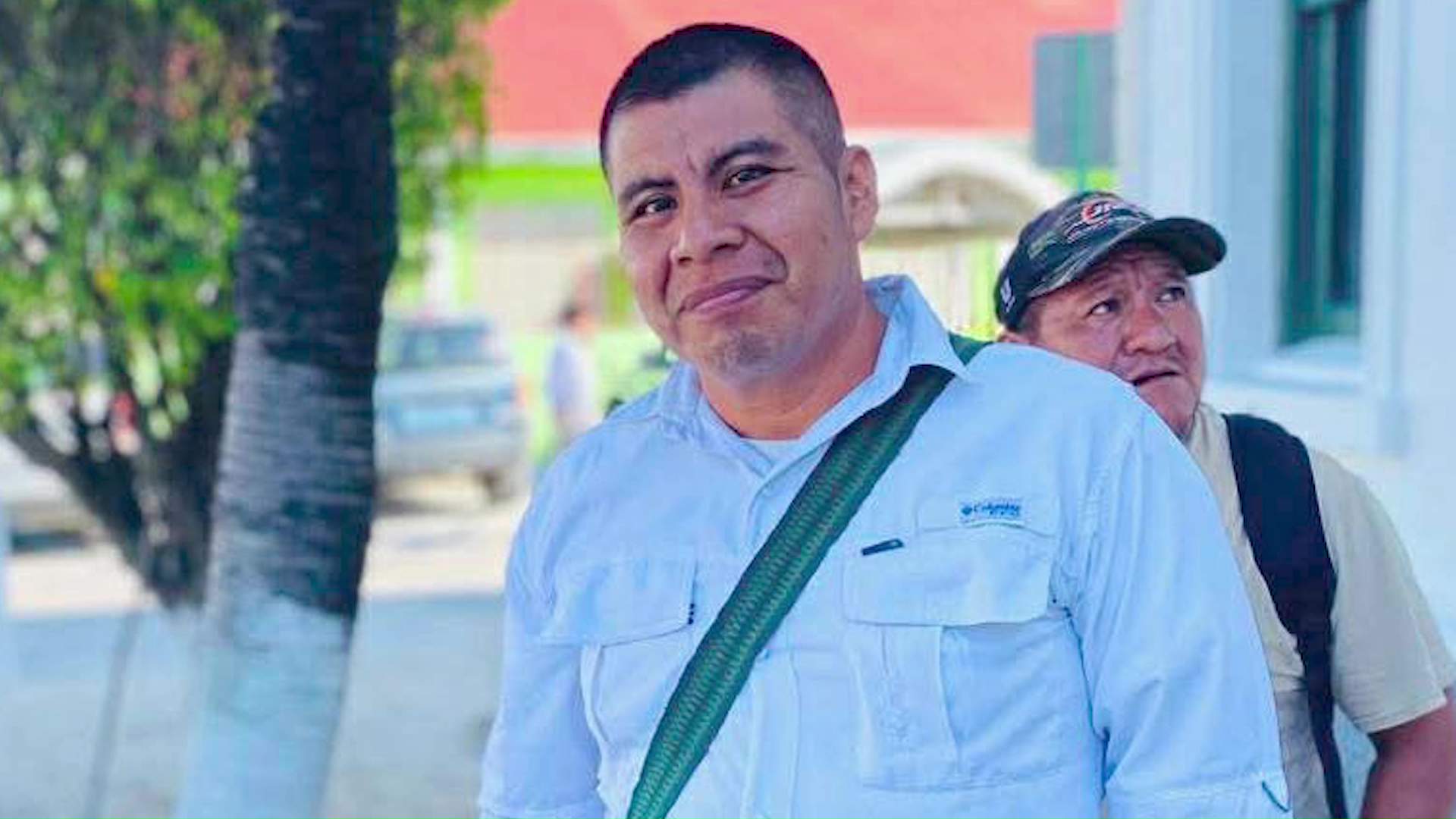
    On the cusp of a years-long internal crisis, the small Maya community of Indian Creek has been thrown into further chaos by the unexplained disappearance of its top traditional leader, First Alcalde Marcus Canti. Last seen on his farm this Monday, Canti’s sudden absence has escalated long-simmering tensions between two rival governance factions in the village, leaving residents on edge and authorities scrambling to de-escalate growing violence.

    Canti’s disappearance has laid bare a bitter rift that has split the once close-knit community for generations: a power struggle between backers of the centuries-old traditional alcalde system, which Canti led, and supporters of the state-recognized elected village council, headed by Chairman Domingo Choc. Choc has been taken into police custody for questioning in connection with Canti’s disappearance, though no formal charges have been filed.

    Local residents report that only two items were found at the site where Canti was last seen: his bicycle and a traditional Maya bag. One anonymous resident, who spoke to local outlet News Five on condition of anonymity, stated that many supporters of Choc maintain his innocence, saying there is no evidence linking the village council chairman to Canti’s disappearance. News Five has also obtained an audio recording, recorded before Canti went missing, that captures the alcalde pleading for assistance in his native Mayan language, though full details of the recording have not been released publicly.

    The conflict that preceded Canti’s disappearance centers on unauthorized land distribution. Canti began issuing what he called communal land certificates to village residents, claiming consent orders gave him the authority to redistribute unassigned land. Among the parcels included in the redistribution were roughly 300 acres of privately held conservation land managed by the Ya’axché Conservation Trust, a regional environmental organization.

    Dr. Louis Zabaneh, Belize’s Minister of Indigenous Peoples’ Affairs, told reporters that the Ministry of Natural Resources is the only governing body with legal authority to issue formal land titles. Prior to Canti’s disappearance, the ministry sent a formal cease-and-desist letter ordering the alcalde to stop issuing the unapproved documents. Zabaneh noted that Canti’s land grab already infuriated private landowners, community members who recognize the ministry’s formal authority, and conservation groups, deepening the village’s divisions long before he went missing.

    Christina Garcia, executive director of Ya’axché Conservation Trust, confirmed that initial reports claimed Canti issued 200 land certificates, but updated information from the community puts the number closer to 280. While Garcia emphasized that the organization recognizes the pressing need for affordable residential land among Indian Creek residents, she stressed that all land transactions must follow formal legal processes to avoid conflicts like the one currently roiling the village.

    Since Canti’s disappearance, the situation has grown increasingly volatile. According to village residents, supporters of the missing alcalde have issued violent threats against Choc and his family, vowing to kidnap one of Choc’s children if Canti is not found quickly. Zabaneh also confirmed that supporters of Canti have targeted property linked to Choc, and that the Ya’axché Conservation Trust’s local field station was damaged during a recent community unrest.

    To date, Belizean police have not confirmed that foul play was involved in Canti’s disappearance, and no suspects have been named publicly beyond Choc’s detainment for questioning. As law enforcement continues the search for the missing traditional leader, Minister Zabaneh has issued an urgent call for calm, urging all factions in the community to stand down and allow authorities to complete their investigation. The village now remains at a tense tipping point, with the land dispute that divided the community for years now transformed into an urgent search for a missing leader and a fight to prevent further violent conflict.