标签: Belize

伯利兹

  • Chief Meteorologist Debunks Viral Heatwave Warning

    Chief Meteorologist Debunks Viral Heatwave Warning

    A false warning claiming an extreme, record-breaking heatwave is imminent in Belize has spread rapidly across social media platforms, sparking unnecessary anxiety among local residents already adjusting to the elevated temperatures of the annual dry season. To counter the misinformation, the country’s top meteorological official has stepped forward to correct the record and guide the public toward reliable weather updates.

    Ronald Gordon, Belize’s Chief Meteorologist, clarified in an official briefing that while the nation is currently in its annual hot season, official forecast models do not predict extreme heat or record-breaking temperatures over the coming four days. “We are in the typical hot season, however, looking out for the next four days based on our forecast, we are not looking at extreme heat,” Gordon explained. “We are gonna be warm and we expect that, but we are not looking at extreme heat. I know that there was an article published on social media, didn’t come from us, indicating there’ll be a heat wave and extreme heat. We’re not looking at extreme heat and we’re not looking at any record breaking for the next, at least four days.”

    Gordon also provided context on Belize’s recent heat trends, recalling that 2024 saw the most extreme recent heat event, with temperatures exceeding 100 degrees Fahrenheit for multiple consecutive days. While 2025 brought a small number of heatwave events, they were far less severe and frequent than the 2024 heat event, he added.

    Looking ahead through the end of April and into early May, Gordon confirmed that long-term climate patterns do indicate heatwaves are likely to occur in the coming weeks. “We do expect that from climatology, that is the average over many years, that going into May, we will get some heatwaves,” he said. “We can say that definitely we will get some, and we cannot say when for sure at the moment, but we will get some heatwaves before the end of this month and into early May.”

    The chief meteorologist urged Belizeans to only seek weather information from official national meteorological sources to avoid falling prey to misinformation that can spread quickly through unvetted social media posts. Even though no immediate extreme heat is on the horizon, residents are still encouraged to prepare for gradually warming conditions as the dry season progresses.


  • Overwhelming Turnout for Free Medical Services

    Overwhelming Turnout for Free Medical Services

    On a bright April morning in 2026, crowds began gathering long before the sun crested the horizon in Belize City, all drawn to a rare offering: completely free, comprehensive healthcare hosted at the city’s Civic Center. The four-day outreach, organized by the Belize Union of Seventh-day Adventist Church in partnership with U.S.-based ministry Amazing Facts International, has seen an outpouring of community demand that has already stretched the volunteer clinic to its maximum capacity.

    Hundreds of patients began lining up as early as 6 a.m. on the opening day of the mission, many traveling from outlying communities to access the free services. Esmeralda Moralez, a resident of Gardenia Village who arrived at 6:25 a.m., explained her early arrival reflected the harsh reality of healthcare access in the country. “Medical is expensive here,” she noted, a sentiment shared by many low-income and uninsured Belizeans who have turned to the mission for care they could not otherwise afford.

    The event brings together a combined force of more than 200 international medical volunteers from the United States alongside dozens of local healthcare providers, covering a far wider range of services than most free clinics in the region. From routine general health consultations and basic check-ups to specialized care in dentistry, gynecology, pediatrics, ophthalmology, physical therapy, nutrition, and pharmacy services, the mission offers full-cycle care at no cost to patients. For the dental wing alone, the clinic has assembled five dentists and three dental hygienists in a dedicated space at the Civic Center—a scale of free specialized care that Al Powell, president of the Belize Union of Seventh-day Adventist, says is unprecedented for the area.

    “This is just what God is doing for us, opening this avenue,” Powell shared. “We don’t take any credit for it. We just try to facilitate his blessings on our community. We have had a full house since this morning, persons trying to get into the service and we are maxed out to capacity.”

    Clinic director Roger Chene, who leads the Amazing Facts International volunteer team, added that for the participating providers, the mission is more than a community initiative—it is a privilege to share their skills with a community in need. “All of our team members are working professionals, and they are taking time out of their own busy schedules to use their skills and God-given ability to serve the community here in Belize,” Chene explained. “There is no charge for any of the services. We will still be here on Wednesday and Thursday, but we want to encourage everyone to come early, because it is first come, first serve.”

    Dr. Zoraida Powell, health ministry assistant for the Belize Union, who coordinated logistics between the local church and the international volunteer team, outlined the breadth of care on offer. “These are medical doctors, dentists, gynecologists, pediatricians, pharmacists, nurses, nutritionists, physiotherapists, ophthalmologists, so all of these people along with some local doctors and dentists,” she said. “We have this health brigade where we can serve the community in Belize.”

    For patients, the long wait in line is a small price to pay for care that would otherwise be out of reach. Joyce Villafranco, a Belize City resident, called the experience life-changing for local residents. “Hundred percent, because it is free,” she said. “You know how Belizeans like free thing.”

    As demand continues to surge beyond organizers’ initial projections, event leaders are urging any residents seeking care to arrive early to secure a spot before the clinic reaches daily capacity. The mission is scheduled to conclude at the end of the fourth day, having brought thousands of Belizeans their first affordable healthcare interaction in years.

  • Are Some Bus Operators Charging Higher Fares Without Approval?

    Are Some Bus Operators Charging Higher Fares Without Approval?

    In Belize, growing anger and uncertainty have gripped the country’s public bus sector as multiple reports emerge of unapproved fare increases being imposed on daily commuters, while independent operators warn they could cease operations within days without urgent government financial support.

    The controversy first came to light when a Belize-based commuter shared their experience with local outlet News Five, confirming they were charged $5 for a standard route between Belmopan and their origin point — a trip that is officially regulated to cost just $4. Under current government pricing rules, only premium express services on the same route are permitted to charge the $5 rate. The passenger provided an official receipt as evidence of the overcharge, and is now joining a growing chorus of riders questioning how some operators are able to charge above the legal price cap despite explicit public statements from transport officials confirming no fare adjustments have been authorized.

    Beyond the immediate frustration of commuters over rising travel costs, the unapproved fare hikes are tied to a deeper, ongoing restructuring of Belize’s bus industry. On Monday, representatives of independent bus operators told News Five they are drafting an open letter to the Office of the Prime Minister, after growing frustrated that the Ministry of Transport has failed to address their mounting financial pressures. Operators say that without either a government-approved fare increase or targeted financial relief, many small independent companies will be forced to give up their independent status and join the newly launched National Bus Company (NBC), a state-aligned entity established to restructure the sector.

    Transport Minister Dr. Louis Zabaneh has publicly responded to the operators’ demands, clarifying that while independent operators retain full constitutional right to request a meeting with the Prime Minister and raise their concerns, his ministry does not have the authority to grant exemptions from goods and services tax or issue emergency subsidies to struggling independent operators. He also pushed back against claims that the NBC is a tool for forced nationalization of the bus sector, noting that when the new entity was established, all independent operators were extended an invitation to join and access perks including free operational audits. To date, 19 operators have accepted the invitation, while dozens more chose to retain their independent status. “This is not a forced nationalization,” Zabaneh emphasized in his statement. “If operators say they can stand on their own, we respect that position entirely.”

    Despite the minister’s reassurance, the Independent Bus Operators Association has issued an urgent warning that many of its member companies do not have the working capital to continue operating beyond the end of this week if no government support is forthcoming. The crisis has left both commuters and small operators in limbo: riders face unplanned cost increases for essential travel, while independent operators face an impossible choice between breaking government fare rules or shutting down their businesses entirely.

  • News 5 Named Semi‑Finalists for UB Investigative Journalism Prize

    News 5 Named Semi‑Finalists for UB Investigative Journalism Prize

    As the fourth iteration of its prestigious annual Investigative Journalism Prize approaches, the University of Belize has unveiled the three shortlisted teams competing for this year’s award, an honor created to highlight impactful reporting that confronts Belize’s most urgent unaddressed public issues.

    Among the semi-finalists is a flagship investigation from News Five, *Stella Maris Child Drowning*, reported by a team of seven journalists led by Paul Lopez. The piece centers on the tragic 2026 drowning death of six-year-old Gabriel Orellano, an autistic student at Belize’s Stella Maris School. Unlike standard accident reporting, the News Five team went far beyond surface-level facts to expose deep-rooted systemic failures and long-overlooked accountability gaps at the institution.

    Through months of on-the-ground reporting, the team uncovered that Gabriel’s death was not the unforeseeable tragedy it was initially framed as. Drawing from exclusive interviews with a sanitation worker who was the last person to see Gabriel before his death, as well as a parent who reported their own child had slipped off campus unnoticed just weeks prior, the investigation revealed repeated prior security breaches, chronic underfunding of campus safety infrastructure, broken perimeter fencing, insufficient on-campus supervision, and unaddressed internal safety concerns that never triggered urgent corrective action. Lopez also cross-referenced witness accounts with surveillance footage to map the full timeline of Gabriel’s final hours, bringing irrefutable clarity to the series of institutional missteps that led to the child’s death.

    The reporting triggered immediate national outrage and sparked urgent public debate across Belize around school safety standards, emergency response protocols, and the collective responsibility to protect vulnerable children with special educational needs. Within weeks of the investigation’s publication, Belize’s Ministry of Education launched a full independent inquiry into the incident, committed public funds to rebuild and secure the Stella Maris campus with updated safety fencing, and announced nationwide structural education reforms designed to improve protections for neurodivergent students.

    The two other shortlisted investigations include *Marine Protected Areas Are Everybody’s Business*, a climate-focused report by Andre Habet and Marco Lopez of *Climate Spotlight*, and *Taken: The Budna Abduction and the Police Cover-Up*, an investigative series from Jules Vasquez, Brian Castillo, and Denver Fairweather of Tropical Vision Ltd.

    All entries were evaluated by an independent panel of regional and international media professionals, drawn from news outlets and institutions across the Caribbean and the United States, to ensure impartial judging.

    The winning team will walk away with a BZ$10,000 cash prize, while the two remaining semi-finalists will each receive BZ$5,000 in recognition of their work. The final results will be revealed during a public awards ceremony hosted on May 2 at the House of Culture in Belize City.

  • Five Detained in Suspected Kidnapping of Indian Creek Alcalde

    Five Detained in Suspected Kidnapping of Indian Creek Alcalde

    A high-profile missing person case has sent shockwaves through the small community of Indian Creek Village in Toledo District, with local authorities confirming five detentions connected to the suspected abduction of 41-year-old Marcos Canti, the community’s First Alcalde. The incident unfolded on a Monday afternoon in 2026, when Canti left his family residence shortly after 2 p.m. to carry out routine work on his agricultural plot located near neighboring Pine Hill Village.

    When Canti failed to return home by early evening, concerned family members and a close friend launched an immediate search. Their search effort uncovered a troubling scene: Canti’s bicycle, working machete, and a basket he had filled with freshly harvested tomatoes were all left abandoned on the ground. Investigators also documented clear evidence pointing to a potential struggle at the site, but there was no sign of Canti himself.

    In statements to law enforcement, Elfina Canti, the missing alcalde’s wife, emphasized that her husband’s unexplained disappearance was completely out of character. She revealed that Canti had received explicit threats just one day before he went missing, and she told investigators she is convinced the incident is directly tied to long-simmering land conflicts that have divided the Indian Creek Village community for months.

    As news of Canti’s disappearance spread, already high tensions within the village boiled over into public unrest, culminating in a riot that forced authorities to intervene to restore order. In the wake of the unrest, police confirmed that five individuals have been taken into custody as part of the ongoing investigation into Canti’s suspected kidnapping. Local law enforcement has not yet released further details about the detainees or any potential charges they may face, and the search for Marcos Canti remains an active priority for investigating officers.

  • Experts Meet in Belize to Tackle Deadly Storm Surge Threat

    Experts Meet in Belize to Tackle Deadly Storm Surge Threat

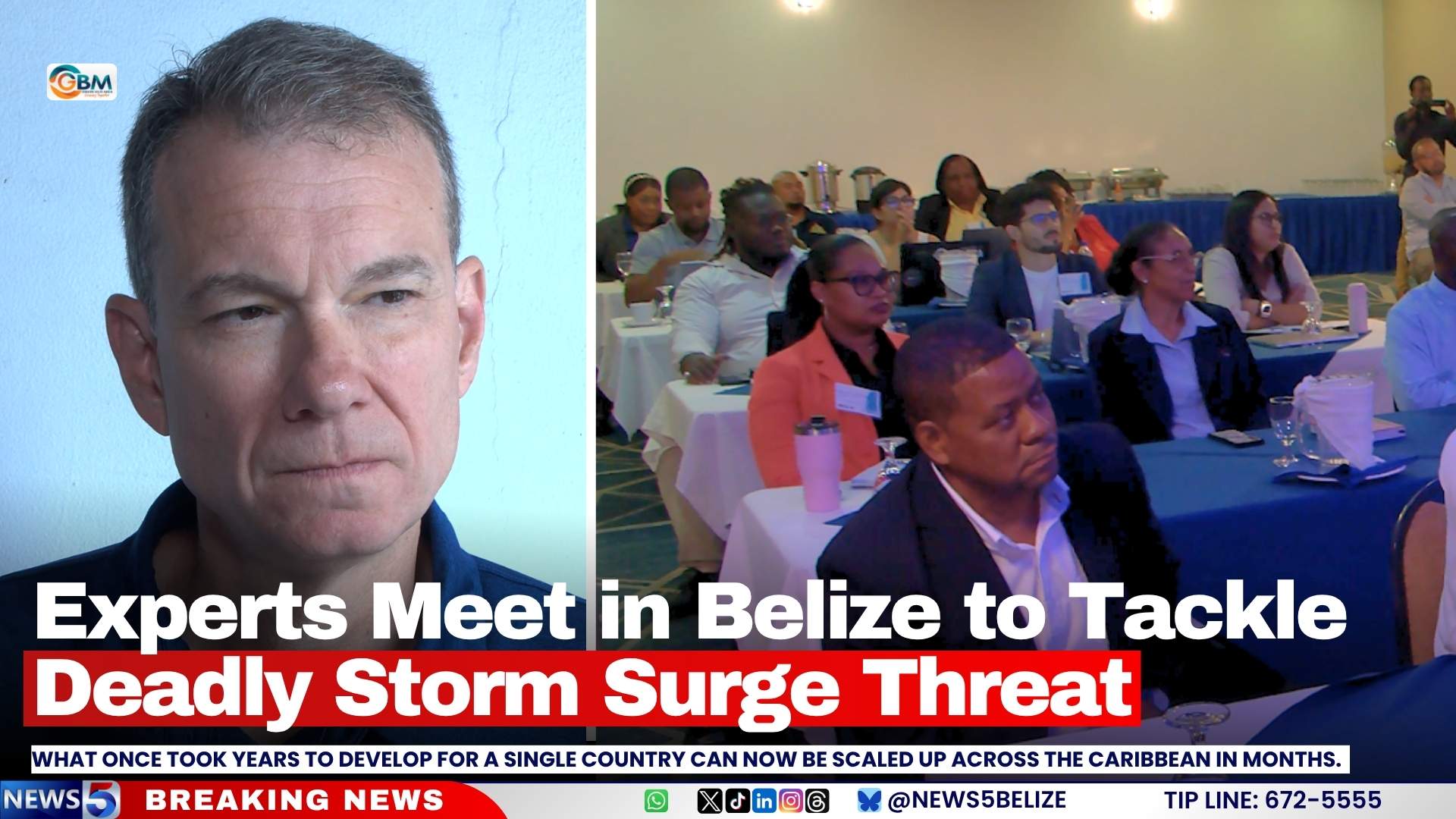
    As the 2026 Atlantic hurricane season draws near, Belize is hosting a pivotal three-day high-level workshop that brings together top international climate scientists, meteorologists, and disaster risk management specialists to strengthen the nation’s ability to predict and prepare for deadly storm surge events. The workshop, backed by the U.S. National Hurricane Center and a coalition of global climate resilience partners, centers on upskilling local teams in cutting-edge storm surge modeling technology — a tool designed to simulate how hurricanes of varying intensity, forward speed, and approach angle would impact Belize’s low-lying, highly vulnerable Caribbean coastline.

    Ronald Gordon, chief meteorologist at Belize’s National Meteorological Service, shared that the Central American nation was selected as an early beneficiary of this advanced modeling initiative due to its persistent high risk of catastrophic storm surge impacts. “As one of the most vulnerable countries in the Caribbean region to storm surge flooding, we were prioritized to gain access to this transformative technology through this international collaboration,” Gordon explained.

    Jamie Rhome, deputy director of the U.S. National Hurricane Center, highlighted the dramatic leaps forward in storm surge forecasting technology that have made this regional expansion possible. In recent years, advances in computing power and data collection have drastically cut down development timelines for customized modeling systems: what once required years of work to build for a single country can now be deployed across multiple Caribbean nations in just a matter of months, Rhome noted. This speedier scaling means more at-risk coastal communities can access life-saving forecasting capabilities far faster than ever before.

    For Belize’s disaster leadership, the workshop is more than a technical training — it is a chance to draw hard-won lessons from recent extreme weather events across the region. Henry Charles Usher, Belize’s Minister of Disaster Risk Management, pointed to Jamaica’s recent damaging encounter with Category 5 Hurricane Melissa as a critical case study for the nation. “This gathering gives us a unique opportunity to learn from regional experiences, refine our preparedness frameworks, and leverage new technology to keep our communities safe,” Usher said. “Ultimately, our goal is clear: protect lives, safeguard private and public property, and build the resilience we need to recover quickly if a major storm hits our shores.”

    The collaborative initiative comes as climate scientists have recorded rising sea levels and increasing hurricane intensity across the Atlantic basin, putting more coastal communities like Belize at heightened risk of deadly storm surge flooding in recent decades. For this small Central American nation, investing in improved early warning and forecasting systems is a core step to reducing disaster risk ahead of what forecasters warn could be another active hurricane season.

  • 230+ Medical Volunteers Bring Faith and Free Care to Belize City

    230+ Medical Volunteers Bring Faith and Free Care to Belize City

    Starting on April 14, 2026, a landmark four-day free health outreach initiative has drawn hundreds of underserved Belizeans to the Belize City Civic Center, highlighting widespread unmet demand for accessible healthcare across the country. Organized by the Belize Union of Seventh-day Adventists, the initiative brings together a cross-functional team of more than 230 medical volunteers, combining international healthcare professionals and local clinical staff to deliver a full spectrum of no-cost services to community members.

    Unlike standard small-scale health camps, this expo offers comprehensive care ranging from general physical consultations and restorative dental work to specialized pediatric check-ups and women’s reproductive health screenings. It also includes complementary services such as pharmaceutical support, nutritional counseling, physical therapy, and public health education tailored to common local health risks. Zodaida Powell, a public health physician and health ministry assistant with the Belize Union of Seventh-day Adventists, outlined the scope of the volunteer team’s mission in an interview with local outlet News 5.

    Powell specifically emphasized the importance of the free cervical cancer screenings offered at the expo, urging women across Belize City to take advantage of the no-cost preventive care. She noted that the overwhelming community turnout confirms just how urgent the unmet need for accessible healthcare is in the region: by the end of the first day Monday, the volunteer team had already treated nearly 500 patients, with lines growing longer each successive day. “We expect more people to join us through the end of the event,” Powell said. “Today the line stretched further than we anticipated, so we just ask that community members remain patient as we work to serve every person who comes through our doors.”

    This event marks the first large-scale community health outreach of its kind organized by the Seventh-day Adventist organisation in Belize, and it kicks off a long-term expansion of the group’s public health initiatives across the country. Following the conclusion of the Belize City expo, the organization plans to host similar free health camps in rural villages, working to address the high prevalence of preventable conditions like obesity and chronic disease that drive mortality rates across Belize. Beyond clinical care, the expo also includes a wellness education section focused on healthy coping strategies, encouraging attendees to manage stress through faith-based practices rather than turning to alcohol, drugs, or other harmful habits.

    The free health expo is open daily from 9:00 a.m. to 5:00 p.m. through Thursday, with a scheduled lunch break for the volunteer team each day. All community members are welcome to walk in and access services regardless of their income or insurance status.

  • Trump Orders Blockade of Strait of Hormuz

    Trump Orders Blockade of Strait of Hormuz

    A major escalation in US-Iran tensions has erupted in the Strait of Hormuz, after a new round of high-stakes negotiations between the two nations broke down in early April 2026. US President Donald Trump has ordered a full naval blockade barring all Iranian-flagged ships from passing through the critical global waterway, bringing the long-running standoff between Washington and Tehran to a new, dangerous boiling point.

    The collapse of weekend peace talks hosted in Pakistan paved the way for the immediate implementation of the blockade, which launched at the start of Monday local time. Speaking publicly to Fox News, US Vice President JD Vance framed the American action as a direct response to Iranian actions that the Biden administration previously labeled as a threat to global maritime commerce. Vance accused Iran of engaging in what he called “economic terrorism” by disrupting shipping through the strait, and justified the reciprocal US blockade with a straightforward warning: “If the Iranians are going to try to engage in economic terrorism, we’re going to abide by the simple principle that no Iranian ships are getting out, either.”

    President Trump amplified the aggressive tone of the US move in his own public remarks, issuing a stark military warning: any Iranian fast-attack craft that approaches the US blockade line will be sunk by American forces. According to reporting from CNN, a senior anonymous US official has confirmed that roughly 15 American naval vessels, led by a full-sized nuclear-powered aircraft carrier strike group, are currently deployed in the Hormuz region to enforce the new restrictions.

    Tehran has responded swiftly and furiously to the US action, with senior Iranian officials condemning the blockade as an unauthorized and destabilizing act of aggression. Iran’s Foreign Minister Abbas Araghchi labeled the US move openly provocative, warning that it carries severe “dangerous consequences” for broader global peace and energy security. In a flurry of urgent diplomatic calls with his counterparts from Russia, Saudi Arabia, and Qatar, Araghchi emphasized that the unilateral blockade risks upending security across the entire Middle East. Following the foreign ministry’s statement, Iranian military command confirmed that all of the country’s armed forces have been placed on the highest possible level of combat alert in response to the US deployment.

    Despite the sharp escalation and failed first round of talks, US officials have confirmed that diplomatic channels between the two nations remain open. Senior administration sources told CNN that plans for a second in-person negotiation round are already under preliminary discussion, leaving a narrow path for de-escalation even as military forces stand off in one of the world’s most strategically vital shipping lanes.

  • “Archaic” Law or Safety Measure?: Groups Slam Contraceptive Enforcement Policy

    “Archaic” Law or Safety Measure?: Groups Slam Contraceptive Enforcement Policy

    In Belize, a new enforcement push for existing contraceptive prescription regulations has ignited fierce public pushback from women’s advocacy groups and national labor organizations, who warn the policy will deepen healthcare inequities and roll back decades of progress on women’s reproductive autonomy.

    The controversy erupted just ahead of a scheduled press briefing by Belize’s Ministry of Health and Wellness (MOHW) earlier this week, when Promoting Empowerment Through Awareness for Lesbian and Bisexual Women (PETAL) issued a formal statement raising alarms about the new enforcement requirements. The organization emphasized that mandatory prescriptions for contraceptive access would create unnecessary, life-altering barriers for women and girls across the country, particularly those facing systemic economic and geographic disadvantages.

    PETAL’s statement noted that the policy threatens core principles of women’s bodily autonomy, equal access to critical healthcare, and economic security for marginalized groups. The National Trade Union Congress of Belize (NTUCB) joined the opposition shortly after, doubling down on criticism by labeling the enforced regulation as “archaic legislation” that demands immediate revision.

    Both organizations point to disproportionate harm the policy will inflict on low-income women and residents of rural communities. Out-of-pocket consultation fees, costly transportation to distant healthcare facilities, and lost wages from taking time off work will put contraception out of reach for many, the groups argue. Left unaddressed, they warn, the policy will drive a rise in unintended pregnancies, widen existing gender and economic inequality gaps, and add even more strain to Belize’s already overburdened public health system.

    “This policy drags us nearly 50 years backward, to an era when women had barely any control over their own personal reproductive choices,” NTUCB representatives said in their statement. “Coming right off a month dedicated to celebrating women’s rights and advancing gender progress, this step backward is completely unacceptable to our movement.”

    During Monday’s briefing, Dr. Melissa Diaz-Musa, Director of Public Health and Wellness at MOHW, pushed back against criticism by addressing the concerns raised by advocacy groups. Dr. Diaz-Musa clarified that the prescription requirement is not a new policy, and that Belize already maintains a robust, multi-layered healthcare access system designed to meet contraceptive demand across all regions.

    She explained that every district in the country is home to well-resourced primary care facilities, many of which operate seven days a week. These facilities employ trained nurses who are explicitly authorized to dispense prescription contraceptives, eliminating the need for many women to seek out separate physician appointments. For residents of remote, smaller communities, Belize has also expanded mobile clinic services that deploy doctors, nurses, pharmacists and other healthcare staff to underserved areas on a regular basis.

    On the topic of ongoing access for current contraceptive users, Dr. Diaz-Musa stressed that repeat prescriptions have long been a standard, streamlined part of the existing system. “This process has been in place for years,” she said. “Thousands of women regularly collect three, six, even 12 months of contraceptive refills through routine channels with no issue.”

    According to Dr. Diaz-Musa, the current public debate stems largely from widespread misunderstanding of how the existing system operates, and a misperception that the prescription rule is a new restriction, rather than an enforcement of long-standing regulation. To smooth the transition and clear up public confusion, MOHW has planned a 12-month phase-in period for the enforcement policy. This window will be dedicated to public education campaigns and ongoing collaborative discussions with pharmacists and other key healthcare stakeholders to address any gaps in access.

  • Alcalde Goes Missing in Indian Creek; “Riot” Erupts

    Alcalde Goes Missing in Indian Creek; “Riot” Erupts

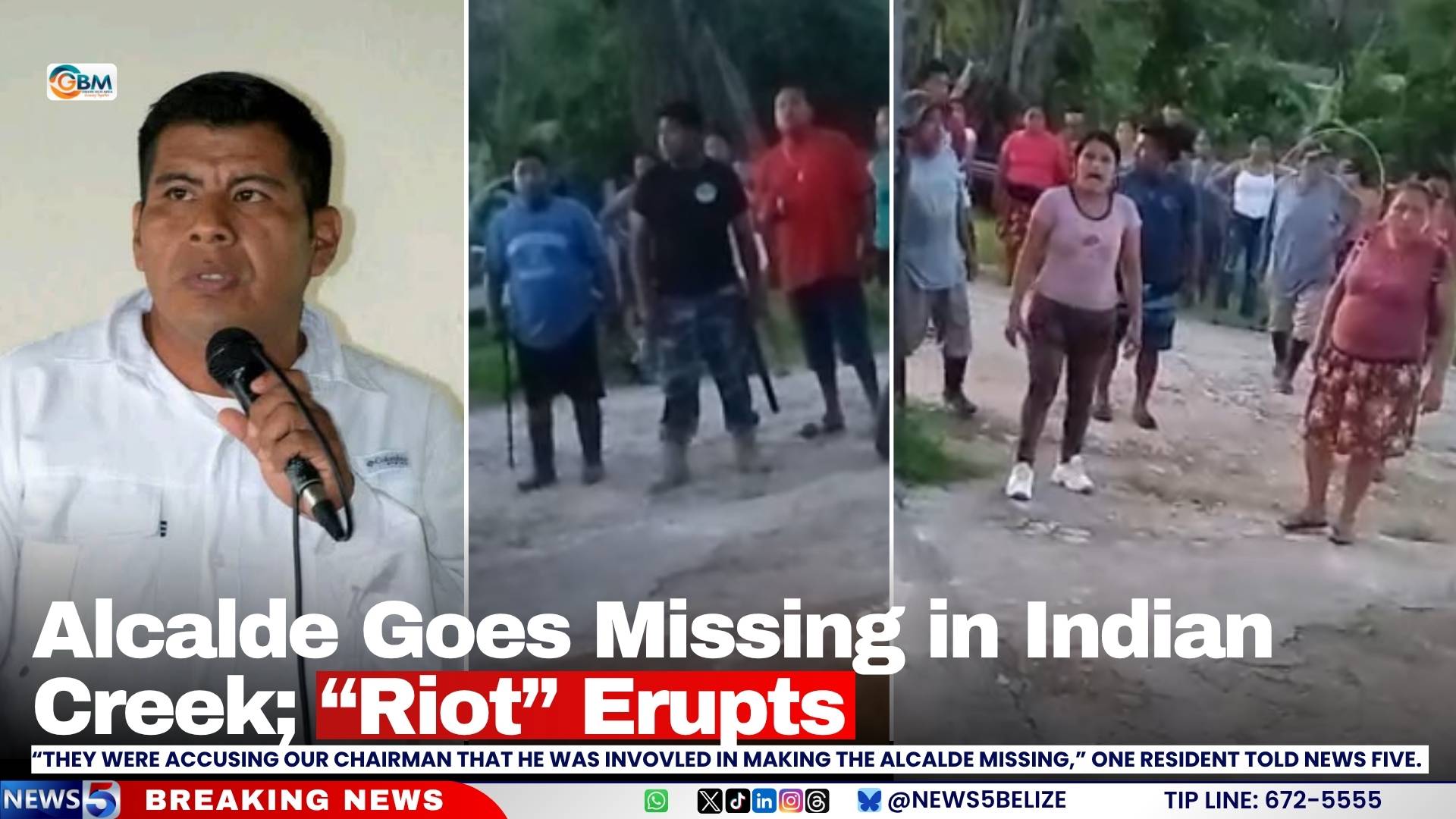
    In the remote community of Indian Creek Village, Toledo District, a developing crisis is unfolding after 41-year-old local Indigenous leader Marcos Canti, who serves as the village’s alcalde, was reported missing on Monday, April 13, 2026, triggering violent unrest that has left local property damaged and residents on edge over personal safety.

    Canti was last documented working his farm earlier that day, and by 3 p.m., his abandoned personal items — including his machete, bicycle, and traditional cuxtal bag — were discovered at the site where he had been working. As news of his disappearance spread through the tight-knit village, community tensions that had been building for years boiled over into public unrest.

    By early evening, a large crowd had gathered, and around 6:30 p.m., demonstrators marched to the residence of Domingo Choc, chair of the village council, who was not home at the time of the incident. Protesters, who accused Choc of being complicit in Canti’s disappearance, pelted his home with stones and damaged his adjacent shop and bar. Local residents report that community members called for police intervention immediately after the violence began, but law enforcement officers arrived after an extended delay.

    The unrest quickly spread beyond Choc’s property, with demonstrators targeting the home of the village’s second alcalde — a leader aligned with Choc, as the two top officials have been publicly at odds for months. Threats were also issued against the home of local resident Anselmo Cholom and the Ya’axché Conservation Trust’s local field station.

    As of April 14, Belizean law enforcement has issued an official missing person bulletin for Canti, and one person of interest is currently in custody for questioning. In a public statement posted to social media on April 14, global Indigenous rights advocacy group Indigenous Peoples Rights International claimed that Canti was kidnapped amid ongoing illegal land grabs targeting Indigenous communities in the region. The organization also alleged that community police received an audio clip sent from Canti’s phone in which the leader can be heard being assaulted and tortured, pleading for assistance in his native Maya language. These claims have not yet been independently verified by official law enforcement.

    The unrest and Canti’s disappearance come against a backdrop of a deepening, long-running land conflict that has divided the community for months. On April 6, just one week before Canti went missing, he issued 200 communal land certificates for territory at Boden Creek that is claimed as private property by the Ya’axché Conservation Trust. Canti justified the distribution by referencing the Caribbean Court of Justice’s landmark 2015 Consent Order, which formally recognizes customary land tenure rights for Maya communities in Belize.

    The move drew immediate condemnation from the Toledo Private and Lease Landowners Ltd. (TPLL), which labeled the issued certificates fraudulent and warned that the unilateral action would directly fuel community conflict. Shortly after the distribution began, Dr. Louis Zabaneh, head of Belize’s Ministry of Indigenous Affairs, ordered Canti to halt the process, issuing a formal clarification that alcaldes hold no legal authority to grant formal land rights until national enabling legislation is passed to codify the 2015 CCJ ruling.

    For decades, Indian Creek has operated under two overlapping systems of governance: the traditional Alcalde system, which was formally legitimized for land matters by the 2015 CCJ ruling, and the state-established Village Council system. While the two structures coexisted uneasily for many years, disputes between the two factions have sharpened dramatically in recent years as demand for land and pressure for formal land rights recognition have grown. This remains an actively developing story, with more updates expected as the search for Canti and investigation into the unrest continue.