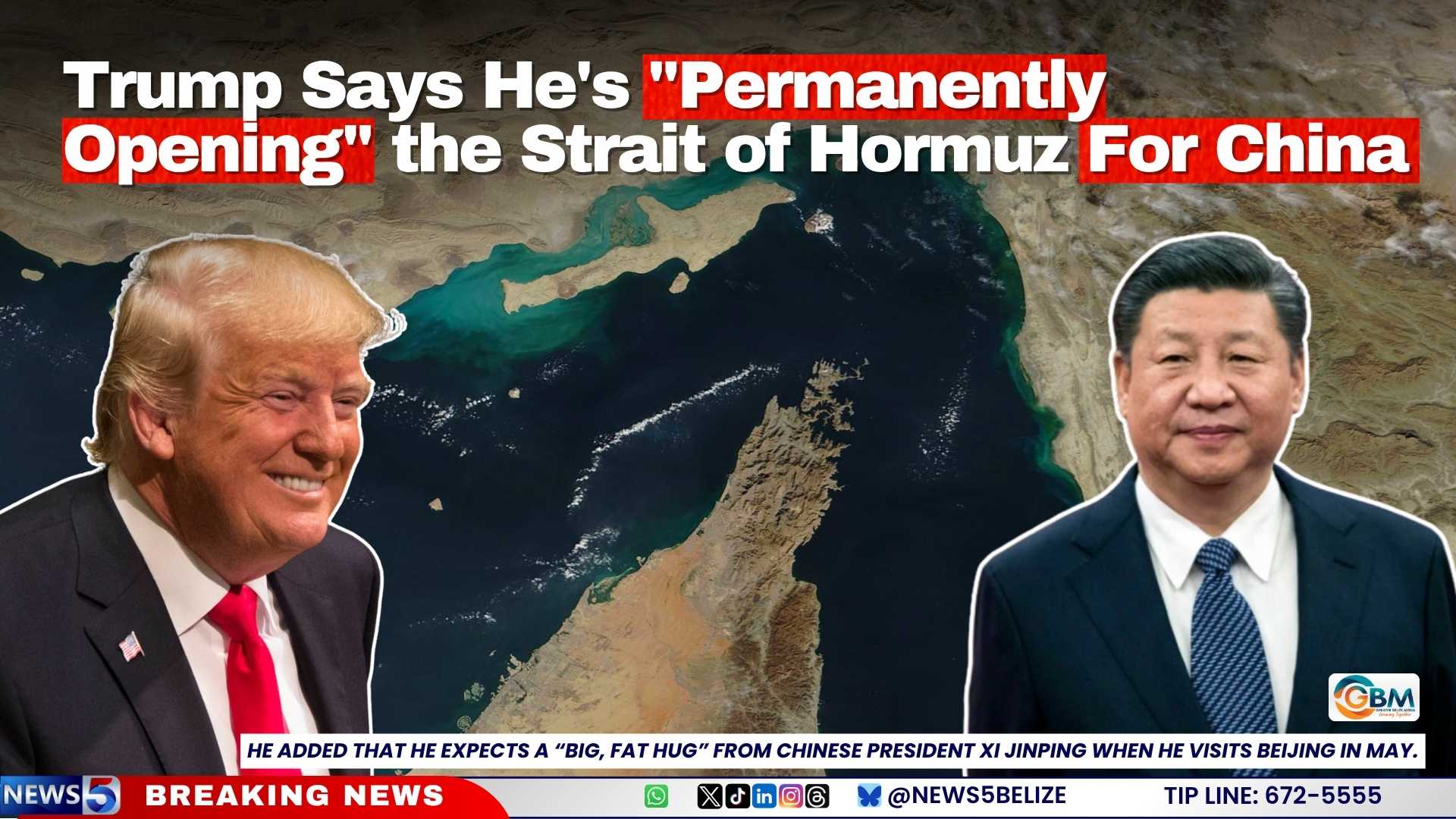
In a provocative series of statements posted to his Truth Social platform on April 15, 2026, U.S. President Donald Trump announced he is “permanently opening” the Strait of Hormuz for China, adding that Beijing has expressed strong approval of the move and agreed to halt arms shipments to Iran in what he framed as a reciprocal arrangement.
“China is very happy that I am permanently opening the Strait of Hormuz. I am doing it for them, also – And the World. This situation will never happen again,” Trump wrote in his post. He went on to claim he expects a warm reception on his upcoming trip to Beijing in May, including what he called a “big, fat hug” from Chinese President Xi Jinping.
Trump’s remarks come as the U.S. military has formally confirmed that its full naval blockade of Iranian ports is now operational. U.S. military officials stated that American forces have “completely halted economic trade going into and out of Iran by sea,” a move that has sharply escalated already fraught tensions between Washington and Tehran. Iranian military commanders have decried the blockade as a violation of international law, issuing stark warnings that they and their regional allied armed groups are capable of shutting down commercial shipping across the Persian Gulf, the Sea of Oman, and even the Red Sea if the blockade is not lifted.
Contradicting the U.S. military’s claims of a total trade halt, Al Jazeera reported Tuesday that maritime tracking data shows multiple commercial vessels departed Iranian ports and successfully transited the Strait of Hormuz even after the blockade was announced, bringing into question the effectiveness of Washington’s current operational posture.
Diplomatic efforts to de-escalate the crisis remain stalled, following the collapse of bilateral peace talks between the U.S. and Iran over the weekend. The two sides have continued to exchange indirect communications through Pakistan as a neutral intermediary. Iranian officials have said they remain open to returning to good-faith negotiations, but have rejected key American demands as unrealistic, and say the burden is on Washington to demonstrate it is serious about reaching a diplomatic resolution.
The broader regional conflict that has gripped the Middle East in recent weeks continues to inflict mounting civilian and military casualties. Local authorities report that more than 5,500 people have been killed across Iran and Lebanon in just the past six weeks. CNN reports that over the past 24 hours alone, Israel has carried out airstrikes against more than 200 Hezbollah-linked sites in southern Lebanon. Israel’s security cabinet is convening Wednesday to discuss a potential ceasefire agreement with the Iran-aligned militant group.
A separate two-week temporary truce between the United States and Iran is scheduled to expire on April 22, leaving open the possibility of a further sharp escalation in hostilities in the coming week if no new diplomatic breakthrough is reached.