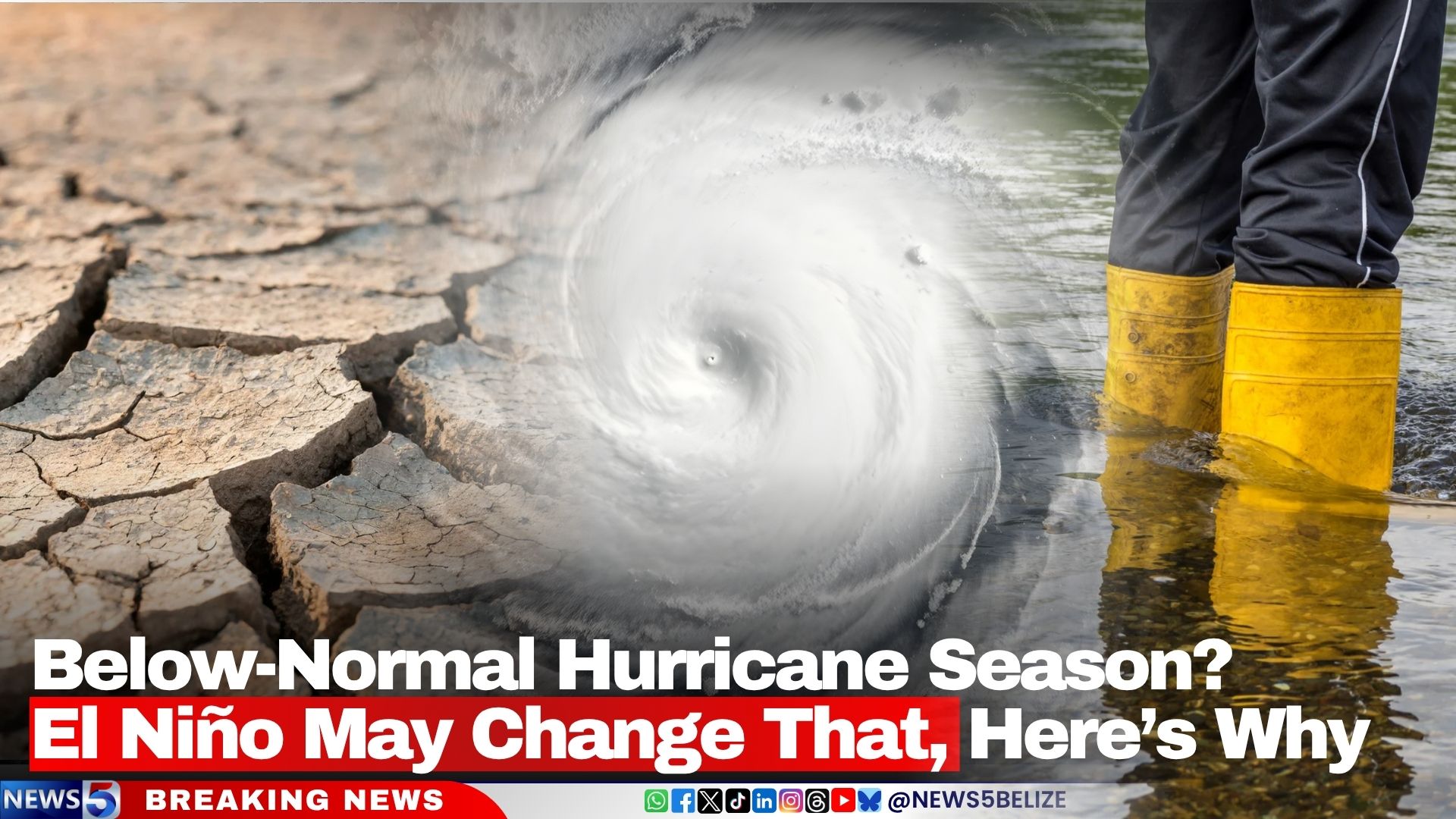
As the 2026 Atlantic hurricane season approaches, Belize’s National Meteorological Service (NMS) has released an early projection calling for slightly below-normal storm activity across the region — but forecasters are sounding a clear note of caution, warning that a developing moderate-to-strong El Niño event, with a non-negligible chance of a rare “super El Niño”, could upend expectations and leave communities vulnerable to unexpected extreme weather.
The World Meteorological Organization (WMO) confirms that global forecast models put the probability of El Niño developing in the coming months at over 60%. What is more, current climate data suggests roughly a one-in-four chance that this event will strengthen into a super El Niño, one of the most powerful classifications of this natural climate phenomenon.
To contextualize the risk, El Niño is a cyclical global climate pattern driven by abnormal warming of surface waters across the central and eastern Pacific Ocean. This shift in ocean temperatures disrupts large-scale atmospheric wind patterns and jet stream trajectories, triggering far-reaching shifts in rainfall and temperature distributions across every continent. The phenomenon can bring crippling drought to some regions while sparking catastrophic flooding in others, and major El Niño events have been repeatedly tied to record-breaking global heatwaves, widespread crop failures, systemic water shortages, and unprecedented swings in extreme weather.
For Belize and the broader Caribbean basin, El Niño’s characteristic impact actually works to suppress hurricane formation in most cases. NMS chief meteorologist Ronald Gordon explained that the pattern typically generates increased vertical wind shear across the Atlantic, a atmospheric condition that tears apart developing storm systems and prevents them from intensifying into full hurricanes. That dynamic is the core reason behind the NMS’s early projection of a slightly slower-than-average 2026 hurricane season.
However, Gordon emphasized that this lower baseline risk does not eliminate the threat entirely — and he urged Belizean residents to avoid complacency in the face of the forecast. “As we always say, ‘Don’t study those numbers, because just one hurricane could impact us and be very bad,’” Gordon noted. “So, again, reminding citizens to be alert, be aware, and be prepared.”
History bears out this warning: even in the quietest hurricane seasons, individual storms can rapidly intensify as they move across warm Atlantic waters, leaving coastal communities with little time to prepare and often causing catastrophic damage.
What makes this year’s forecast particularly tense for climate scientists is the confluence of factors that could push the approaching El Niño into super strength. Current ocean temperature readings and long-term climate trends are aligning in a pattern that favors extreme strengthening. When combined with decades of human-caused global warming that has already raised baseline ocean and atmospheric temperatures, a super El Niño could shatter existing global heat records and exacerbate extreme weather events across the globe far beyond Belize’s borders.
For local officials in Belize, the key takeaway from this mixed forecast is a simple one: preparation matters more than prediction. Seasonal projections can shift dramatically as new climate data emerges, and even a suppressed hurricane season driven by El Niño still carries significant risk for coastal, low-lying nations like Belize.