
In a late-night surprise announcement shared on his Truth Social platform Thursday, former and current (as of 2026) US President Donald Trump has scrapped pre-planned military airstrikes and bombing operations targeting Iran, just hours after issuing a fiery public threat of a massive attack. The sudden reversal comes amid claims that a wide-ranging peace agreement between Washington and Tehran has secured approval from Iran’s top leadership, capping months of fraught negotiations mediated by regional powers.\n\nThe week leading up to the announcement had seen a dramatic escalation of hostilities between the two nations. Over two consecutive days, Iran’s Revolutionary Guard Corps carried out targeted strikes on US military bases stationed across the Middle East. By Thursday morning, Trump had ramped up rhetoric, warning that a “very hard” US strike would hit Iran that same night, and even publicly vowed to seize Kharg Island—an infrastructure critical node that processes roughly 90% of Iran’s total oil exports.\n\nIn his official statement, Trump confirmed that the final outstanding terms of the framework agreement have been signed off by all involved parties, including more than a dozen third-party stakeholder countries ranging from Israel and Saudi Arabia to Qatar and Turkey. As a confidence-building measure while the deal moves toward formal signing, the existing US-led naval blockade on Iranian territorial waters will remain in place, with the time and location of the official signing ceremony set to be revealed to the public in the coming days.\n\nQatar, which has long served as a neutral go-between for US-Iran talks, took a central role in bridging the divides that had stalled negotiations for months. This week alone, Qatari diplomatic officials held closed-door talks with their Iranian counterparts in Tehran to work through the two most contentious sticking points: progress on limiting Iran’s nuclear program and the terms of economic and financial relief to lift crippling sanctions on Tehran.\n\nGlobal financial and energy markets reacted instantly to the news of de-escalation. Wall Street’s benchmark Dow Jones Industrial Average surged more than 800 points in after-hours trading as investor risk appetite rebounded. Meanwhile, global crude prices plummeted: Brent crude, the global benchmark for oil, dropped nearly 4% to trade just under $90 per barrel, reversing a weeks-long upward trend driven by conflict fears.\n\nDespite the optimistic turn, significant uncertainty remains. This is not the first time Trump has announced a near-completed deal with Iran—past announcements have ultimately collapsed into deadlocked talks. Iran’s top military command also doubled down on a stark warning Thursday, reiterating that any unprovoked future US attack on Iranian territory would trigger a retaliatory response “even more severe than before.”\n\nDomestic pressure on the White House had also been building ahead of the announcement. Senior energy industry executives privately warned the Biden administration (wait, correction: the Trump White House in this 2026 timeline) that US strategic petroleum reserves have dropped to critically low levels. According to industry sources who spoke to CNN, a continued escalation of conflict through July would have likely pushed US fuel prices to unsustainable highs, creating political headaches for the administration ahead of any upcoming legislative cycles.
标签: Belize
伯利兹
-
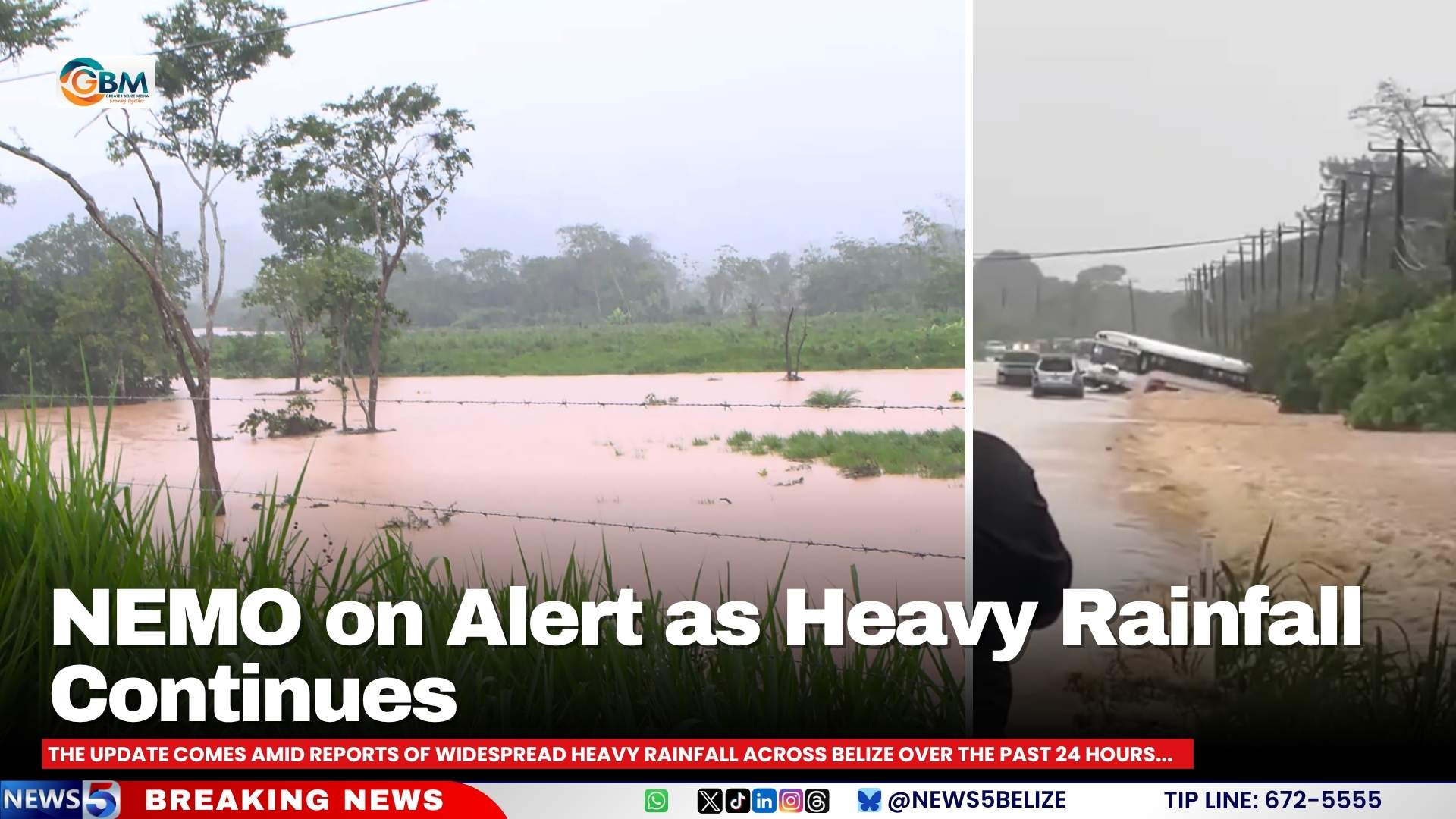
NEMO on Alert as Heavy Rainfall Continues
As prolonged heavy rainfall continues to lash multiple regions of Belize — with the Stann Creek District facing the most documented impacts so far — the National Emergency Management Organisation (NEMO) has kept all its operational teams across the country on high alert, according to a public update released June 11, 2026.
National Emergency Coordinator Daniel Mendez confirmed in a statement that local response teams have already been deployed to Stann Creek to address a small number of weather-related incidents that have emerged over the past 24 hours. NEMO’s national monitoring operations are running in constant coordination with the nation’s meteorological and hydrological services, which are tracking rainfall accumulations and changing flood risks in real time.
“Our teams across the country have been on alert. We have been monitoring, along with the Met Service and the hydrology service, the rainfall,” Mendez said, noting that regional coordinators in hard-hit Stann Creek have been on the ground leading local assistance efforts since incidents began being reported.
The ongoing precipitation event has brought widespread downpours to Belize over the last day, with central and northern parts of the country recording particularly significant moisture accumulations. Early official measurements from weather and hydrology experts show some areas of central Belize have already received more than eight inches of rain, leaving the ground saturated and raising immediate concerns over localized flash flooding.
Forecasts call for additional heavy showers over the next 24 hours, with some regions expected to see another four to eight inches of rainfall. Hydrologists have warned that steep topographical terrain and the nation’s network of river systems amplify the risk of rapid runoff and worsening flooding across multiple vulnerable regions.
Mendez emphasized that while NEMO remains fully prepared to scale up its response if weather conditions deteriorate, the agency has not yet needed to fully activate its national emergency response system. “There is always a potential for further activation of the system. But at this point there has not been the need,” he explained.
Even without a full activation, all NEMO regional offices across Belize remain on standby, with open lines of communication maintained between all branches of the country’s emergency management network. “As the information comes in, the rest of the country remains on the alert. So, all our offices are aware and have been making communications with the different components of the system,” Mendez said, reaffirming that the agency is positioned to launch a rapid, coordinated response should flooding or other weather-related emergencies escalate across the nation.
-
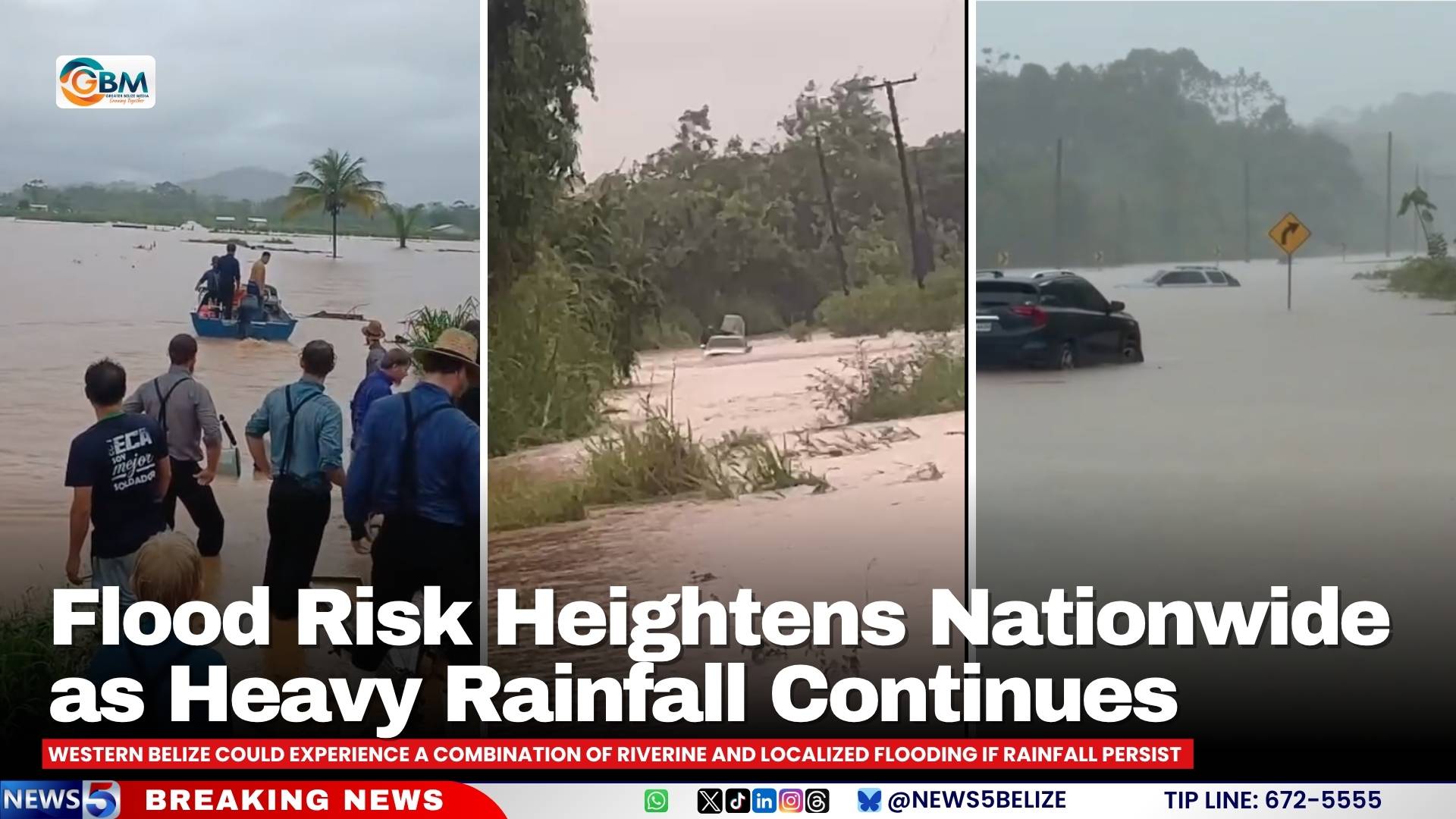
Flood Risk Heightens Nationwide as Heavy Rainfall Continues
As persistent heavy downpours continue to saturate soil across the Central American nation of Belize, national authorities have raised urgent alarms over rapidly escalating flood risks that now threaten every region of the country. Leading the official warning is Tennielle Hendy, Belize’s principal hydrologist, who confirms that the latest meteorological and hydrological projections paint a worsening picture, with particularly dangerous conditions developing in the country’s northern districts.
Hendy explained that ongoing precipitation patterns, aligned with forecasts from the nation’s chief meteorologist, have pushed expanding high-risk zones to cover most of Belize, making flood hazards far more widespread than initial projections indicated. Both urban flash flooding and isolated localized flooding are now expected across broad swathes of the nation, with northern Belize facing the highest likelihood of dangerous flood events driven by sustained excessive rainfall.
Crucially, Hendy stressed that the threat is not confined to northern regions, and urged all communities across Belize to maintain constant vigilance. “Quite literally the entire country has to be on alert from what we are seeing, especially those in the central areas and the south,” she noted.
The country’s unique geography amplifies these flood risks, Hendy explained: Belize’s extensive hilly and mountainous terrain means heavy rainfall runs off rapidly down slopes into low-lying populated areas. For that reason, residents in southern Belize located near the eastern slopes of the Maya Mountains have been specifically advised to stay vigilant throughout the duration of the heavy rain event, and to take immediate precautions whenever an official rainfall advisory is issued for their area.
Western Belize also faces a distinct combined hazard: if heavy rainfall continues, the region is likely to see both riverine flooding and isolated localized flooding, putting vulnerable low-lying communities at heightened risk. Across the entire country, authorities are urging all residents to closely monitor official government updates and advisories, as even small additional amounts of rain can trigger rapid water level rises in at-risk communities, creating life-threatening conditions in a matter of hours.
-
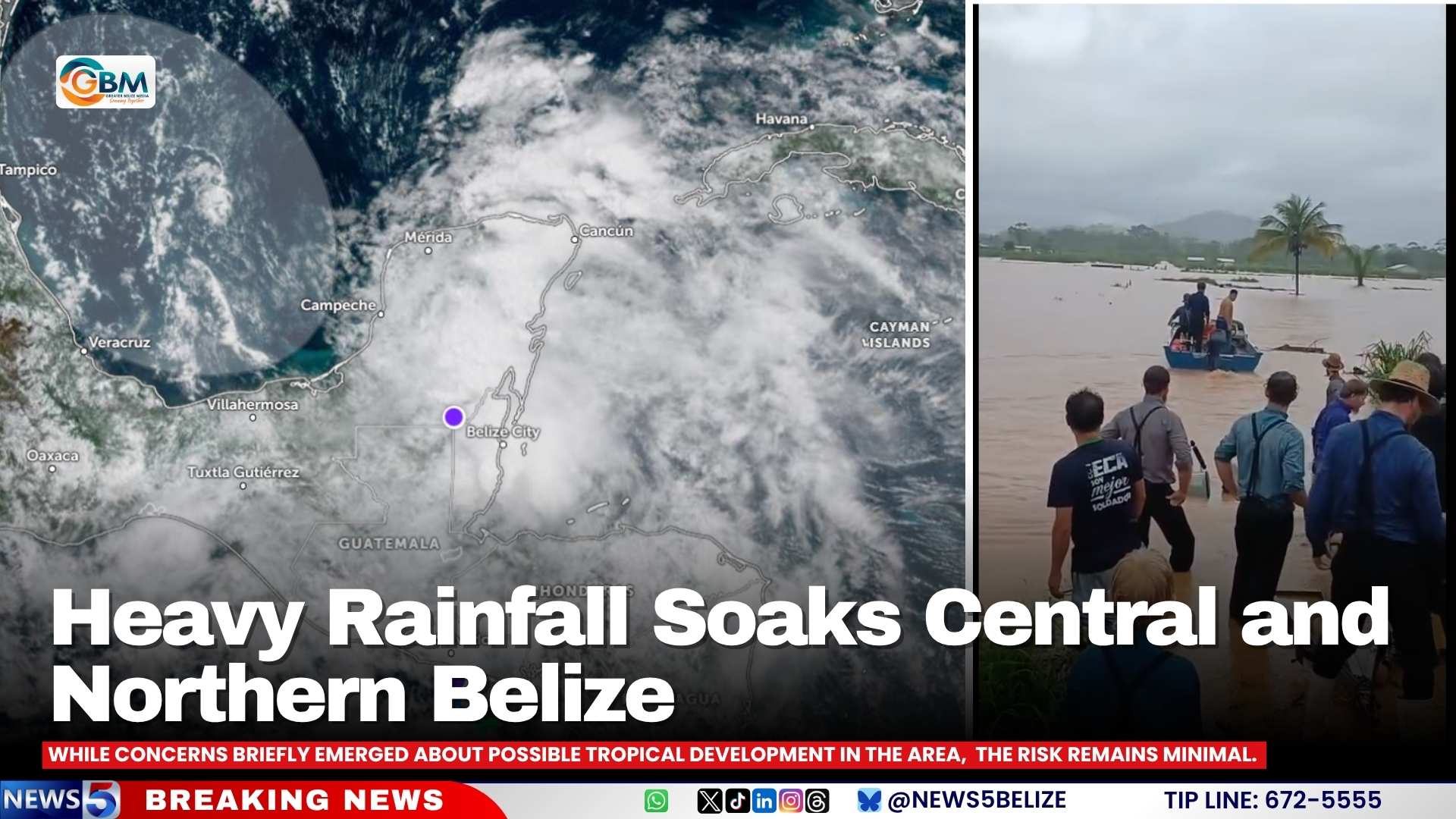
Heavy Rainfall Soaks Central and Northern Belize
As of June 11, 2026, large swathes of Belize are grappling with extreme precipitation that has swept through the country over the past day, with top weather officials warning that additional intense showers are on the way through the overnight hours and into Friday morning.
Ronald Gordon, Belize’s Chief Meteorologist, confirmed that cumulative rainfall has already hit notable high levels across dozens of communities, with the heaviest downpours concentrated in the country’s central and northern districts. According to data collected from the national network of automatic weather monitoring stations, the highest 24-hour total was recorded in Middle Sex, where rainfall has exceeded eight inches – an extraordinary volume of precipitation to accumulate in less than a full day.
Gordon went on to note other hard-hit locations: the community of Kendal has recorded roughly seven inches of rain, while La Democracia has seen between four and five inches of accumulated precipitation since the event began.
While meteorological observers and local residents briefly raised concerns that the weather system could strengthen into a tropical cyclone, Gordon emphasized that the overall risk of tropical development remains extremely low. The U.S. National Hurricane Center has assessed that the system currently parked over Belize has only a minor chance of organizing into a tropical cyclone after moving into the Bay of Campeche, and Gordon confirmed that local forecasters do not expect any significant tropical development to occur.
Even with a low cyclone risk, however, Gordon stressed that the country is not yet out of danger. Forecasters are predicting another round of heavy, sustained downpours overnight continuing into early Friday morning, with central Belize set to bear the brunt of the new precipitation event, and northern districts placed on high alert for dangerous flooding.
Gordon warned that new rainfall totals could once again reach significant levels, advising residents in northern Belize to begin urgent preparation for incoming wet weather. Over the next 24 hours, the region is expected to see between four and six inches of additional rain, with some isolated locations potentially accumulating up to eight inches of new precipitation. Despite the ongoing severe conditions, Gordon noted that a gradual improvement in weather is expected to arrive by the weekend, bringing relief to rain-soaked communities.
-

Today is D-Day: FIFA World Cup 2026
After years of anticipation, the 2026 FIFA World Cup – the largest edition in the tournament’s 96-year history – officially gets underway on June 11 in Mexico City, launching a six-week festival of football that will feature 104 matches across three host nations. The opening day’s schedule begins with a star-studded opening ceremony at Mexico City Stadium, headlined by Colombian pop icon Shakira and acclaimed Nigerian afrofusion artist Burna Boy, who will take the stage to perform the tournament’s official anthem “Dai Dai”. The ceremony is set to kick off at 11 a.m. local time, with two hours later the host nation’s team stepping onto the same pitch for their opening Group A clash against South Africa.
Later the same day, the Group A action continues at Guadalajara’s Estadio Akron, where South Korea will face Czechia to round out the first day of tournament play. Ahead of the opening Mexico-South Africa fixture, statistical forecasts generated from 10,000 computer-simulated match outcomes give Mexico a 66% probability of securing three points to open their campaign, while South Africa holds just a 14% chance of an upset victory. Bafana Bafana head coach Hugo Broos did not shy away from the magnitude of the challenge ahead of kickoff, telling reporters that his squad is prepared to compete for every possession against what he described as the strongest side in Group A. He also noted that the energy of 85,000 cheering Mexican supporters in the stands creates an additional competitive edge that the host side will carry into the match.
While the world turns its attention to the opening of the world’s most-watched sporting event, the lead-up to the tournament has not been free of controversy. Multiple protest movements have surged across Mexico City in the weeks and days before kickoff, with demonstrations organized by teachers, transport labor unions, small-scale farmers, and family members of missing persons. Protesters have blocked major roadways near Estadio Azteca and dismantled temporary World Cup installations around the capital, demanding policy changes including higher public sector wages, pension reform, and urgent government action on long-unresolved national social issues.
A separate diplomatic controversy has also emerged in the lead-up to kickoff: a Somali referee appointed to officiate matches at the tournament has been barred from entering the United States, one of the three 2026 host nations. Citing anonymous sources, Agence France-Presse reports that a U.S. State Department official confirmed the entry denial was issued over alleged links to suspected members of terrorist organizations, a claim that has not been independently verified as of opening day.
Beyond social and diplomatic tensions, the 2026 tournament also makes history as the most expensive World Cup ever staged. For the first time in the competition’s history, FIFA implemented dynamic ticket pricing, a model that increases match ticket costs as consumer demand rises. During the initial ticket sales window, the governing body received more than 500 million requests for tickets, pushing prices for some high-demand seats to unprecedented levels. The steep pricing has already had unintended economic consequences for local host communities: Reuters reports that projected waves of international football fans have failed to materialize, leaving hotels in host regions scrambling to cut room rates to fill vacancies, while overall cross-border flight bookings for tournament visitors remain well below pre-tournament projections.
As the opening ceremony gets underway, football fans across the globe are now waiting to see if on-pitch action can overshadow the pre-tournament disputes, and whether the expanded 48-team format – which created the historic 104-match schedule – will deliver a memorable tournament that lives up to expectations.
-
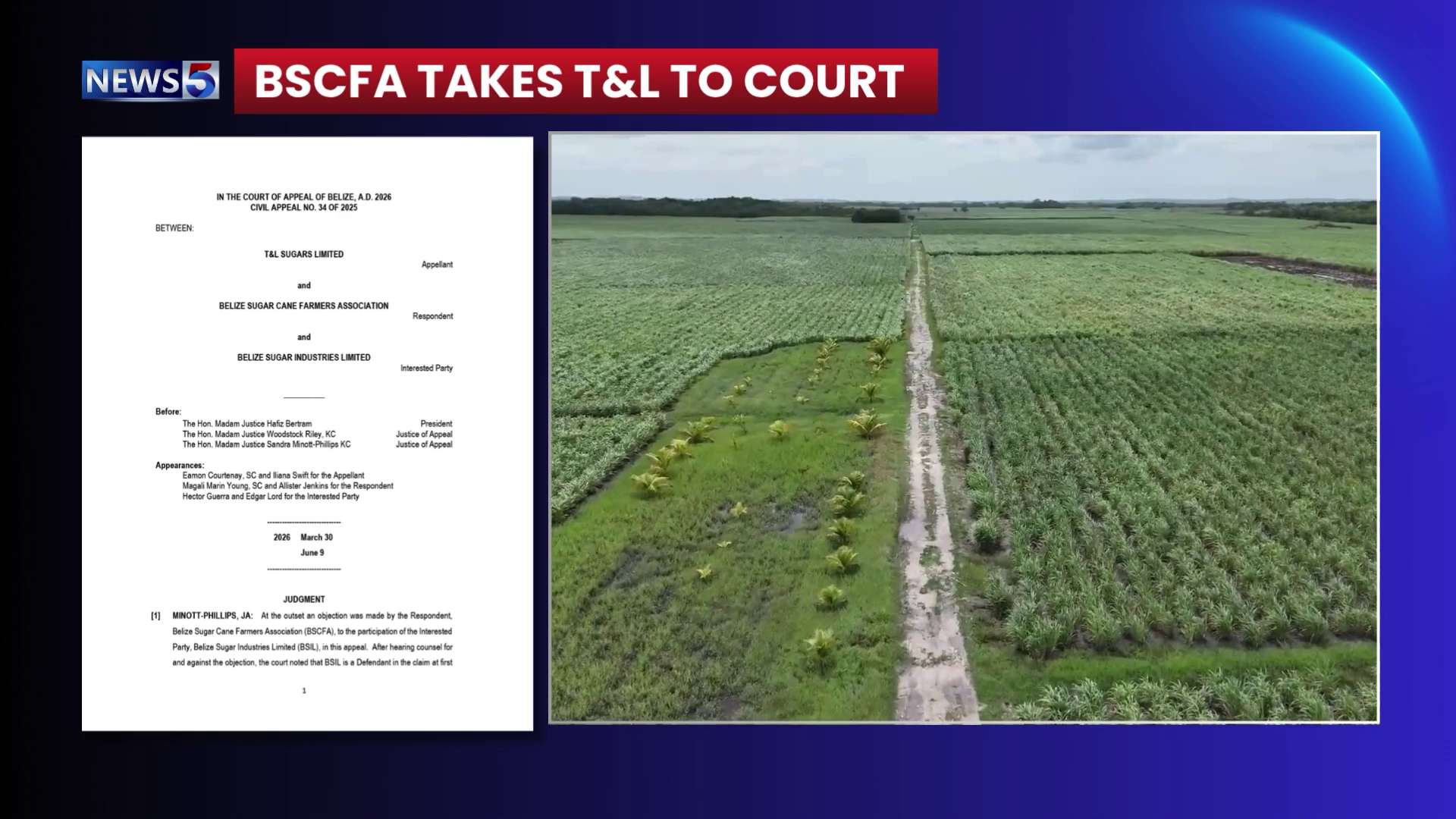
$9M Showdown Between Cane Farmers and Tate & Lyle Sugars Moves Forward
On June 10, 2026, a key jurisdictional ruling cleared the path for a high-stakes $9 million legal dispute between Belize’s sugar cane producers and global sugar giant Tate & Lyle Sugars to be heard domestically, ending months of procedural wrangling over where the case would be tried.
The litigation, brought by the Belize Sugar Cane Farmers Association (BSCFA), centers on claims that Tate & Lyle Sugars (TLS) has withheld more than $9 million in Fairtrade premium payments owed to over 2,000 independent cane farmers covering the 2021 to 2023 production period, plus accumulated interest. In a major win for the BSCFA, the Court of Appeal rejected TLS’s bid to move the proceedings to London, confirming that Belizean courts hold sole jurisdiction over the dispute.
At the core of the disagreement is a technical contractual dispute following the expiration of the BSCFA’s 2020–2021 industry agreement. Tate & Lyle Sugars argues that the farmers’ association is ineligible for premiums because it never signed a new Letter of Enhancement after the prior agreement lapsed. The company has 42 days from the ruling to formalize its legal defense ahead of the upcoming trial.
But the BSCFA and its legal team push back strongly against this position. Magali Marin-Young, lead attorney for the association, explained that Fairtrade rules do not require a separate written letter of enhancement for eligible producers. “Even without this additional signed document, premiums are due to every sugarcane producer association that sells Fairtrade-certified cane to the mill, and that includes the BSCFA,” Marin-Young stated. The legal team further alleges that TLS deliberately withheld the Letter of Enhancement from the BSCFA after 2021, when contract renegotiation talks between the BSCFA and mill operator BSI (a sister company to TLS under shared parent company ASR) broke down and sparked industry unrest. Marin-Young noted that TLS extended new enhancement agreements to other Belizean producer groups during the same period, leaving the BSCFA unfairly excluded.
BSCFA Vice Chairman Alfredo Ortega emphasized that the association has maintained continuous Fairtrade certification throughout the disputed period, even without receiving the premium payments. “We have worked extremely hard to keep our certification up to date, even as Tate & Lyle used the contractual technicality as a tool to pressure us and withhold funds owed to our farmers,” Ortega said. He acknowledged that the legal fight comes at an extraordinarily challenging time for Belize’s cane industry, but stressed that farmers have no choice but to pursue what is rightfully theirs.
The stakes are already high for the sector, which is grappling with a cascading series of crises that have squeezed farmer incomes for years. Former Belizean Agriculture Minister Jose Abelardo Mai warned that the costly litigation arrives at the worst possible moment for the already struggling industry. “Today, farmers face sky-high fuel costs, increasingly erratic weather from climate change, decades of degraded soil from 50 years of twice-annual field burning, and widespread outbreaks of new pests and diseases that have cut average yields to just 11 tons per acre,” Mai explained. He added that the industry’s central mill also faces critical infrastructure gaps, including an urgent need for a $10 million replacement boiler that has not been funded. Ortega echoed these challenges, noting that farmers also face persistent labor shortages for cane harvesting and frequent unplanned mill outages that disrupt harvest schedules.
Despite the myriad headwinds, Ortega said the BSCFA remains committed to seeing the trial through. “Sugar cane is in our blood here in northern Belize; this industry has sustained our communities for generations,” he said. “Even with all the challenges we face, we will continue fighting to secure the compensation our farmers have earned.” With jurisdiction now settled, the case will proceed to a full trial in Belizean courts in the coming months.
-
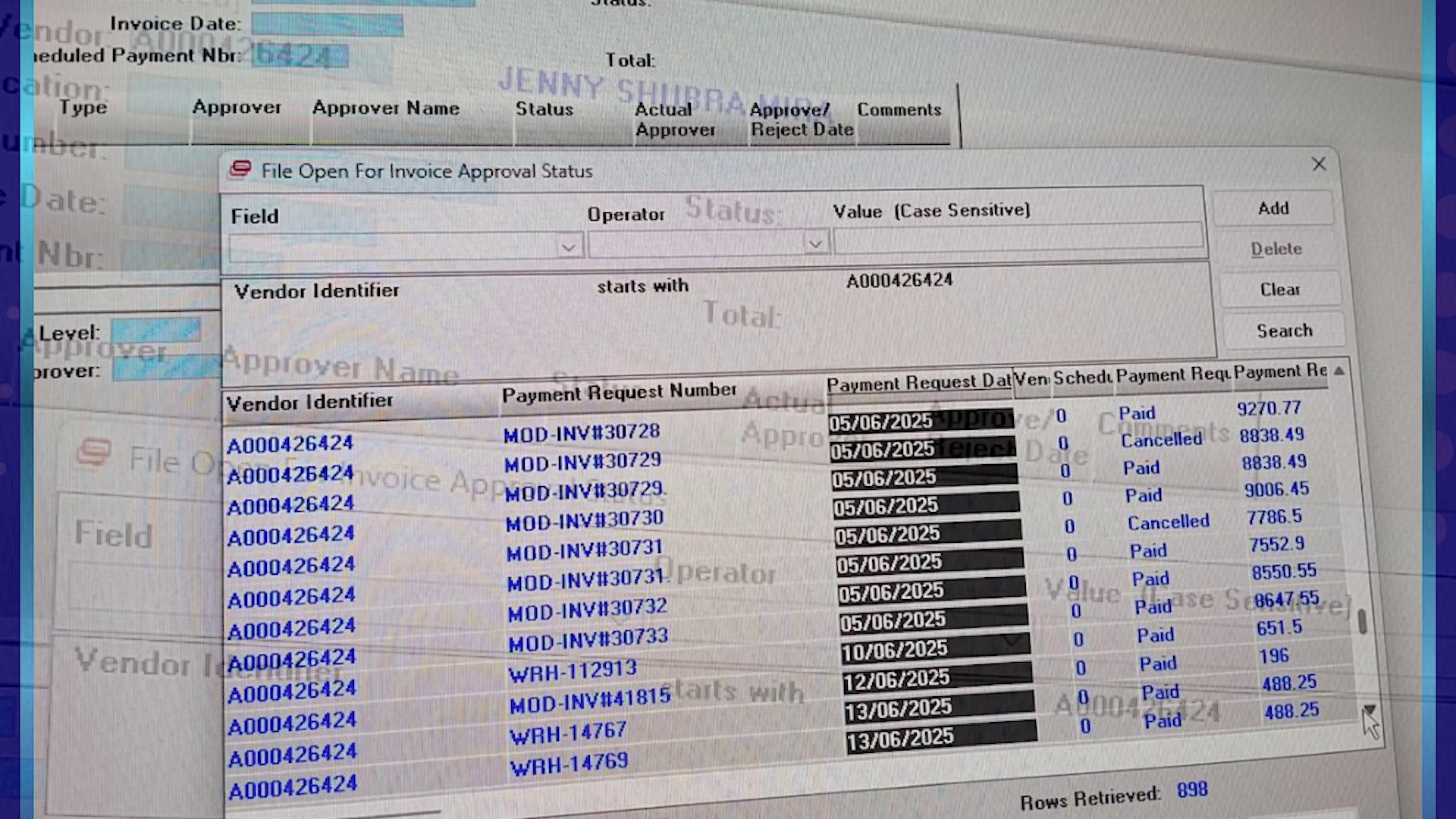
Calls for Answers After Leaks Reveal Extensive Payments to Mira Siblings
A deepening public controversy has placed a senior Belizean government official under growing pressure for answers, after internal leaks from the national payment system uncovered hundreds of unexplained public procurement transactions awarding state supply contracts to the minister’s immediate family members.
Oscar Mira, the elected area representative for Belmopan, is at the center of the unfolding scandal, after documents pulled from the government’s Smart Stream financial platform revealed that multiple state agencies overseen by Mira have directed hundreds of monthly payments to his siblings for the provision of food and goods. The leaks have sparked fresh, widespread debate over the lack of effective transparency and accountability mechanisms for public spending across Belize’s government institutions. News Five investigative reporter Shane Williams first uncovered the records and sat down with Ministry of Defense CEO Francis Usher to discuss the scope of the payments and the status of the controversial contracts.
The leaked records, which date all the way back to 2020, show that the vast majority of payments were made to Jenny Armstrong Mira, Oscar Mira’s sister, for the delivery of vegetables and other food staples to a range of high-budget state entities, including the Belize Defense Force, the Belize Coast Guard, and the Western Regional Hospital. The documents show tens of thousands of dollars in monthly public funds transferred to Jenny Mira’s supply business, with one single transaction date—February 17, 2024—recording seven separate payments for Ministry of Defense supplies totaling more than $43,500.
While the total value of the vegetable orders has raised eyebrows among watchdogs, senior defense officials argue that the large expenditure is a reflection of operational scale, not malfeasance. “We buy a full range of produce from cabbage and lettuce to tomatoes, apples, and grapes, depending on seasonal availability,” Usher explained in the interview. “We purchase a very high volume of vegetables to feed hundreds of active service members daily, so it is natural that we see a high volume of payments. The Mira family is not our only vegetable supplier; we work with multiple vendors across all procurement categories, and sometimes non-produce items like eggs are incorrectly categorized with vegetable orders in the system. It is not an unusual level of activity for our department.”
The leaks have also prompted lingering questions about whether the food supplies that public funds have paid for are actually reaching the service members they are intended for. For years, scattered complaints about inadequate rations for troops deployed in remote field locations have circulated among serving personnel, but Usher—who recently retired from active military service before taking up the CEO role—has firmly rejected allegations of missing or insufficient supplies.
“Who feels it knows it. I came directly from active service, and I know firsthand the challenges that soldiers and coast guards face,” Usher said. “I would never turn my back on the men and women serving this country. I am committed to ensuring they get full value for every public dollar spent, and that taxpayer resources are protected with full accountability at every level of procurement.”
Usher also noted that the Mira family has been a contracted supplier to the defense ministry for decades, dating back to previous administrations led by the United Democratic Party, but that the family’s contract volume has been dramatically reduced in the current 2026 financial year. “They did not secure a full vegetable supply contract this year. All awards are determined through open evaluation of tender bids against published criteria, and the contracts have not even been finalized yet. For the vegetable lot, another bidder delivered better value for taxpayers, so that is the vendor we selected,” Usher explained.
When asked if the cut to the Mira family’s contracts was tied to Oscar Mira no longer holding the position of Minister of Defense—and thus losing direct influence over procurement decisions—Usher rejected any connection outright. “I can say categorically that when Oscar Mira was Minister of Defense and I served as his CEO, he never once pressured me to award all vegetable contracts or any other contracts to his family’s business,” Usher confirmed.
Usher later clarified that, while Jenny Mira’s vegetable contract was not renewed this year, Oscar Mira’s brother Stanley Mira did successfully win one of the 28 open tender lots, securing a contract to supply rice and beans to the defense ministry. News Five has repeatedly reached out to the entire Mira family for comment on the allegations and the leaked records, but has not received any response as of publication. This report was compiled by investigative reporter Shane Williams for News Five.
-
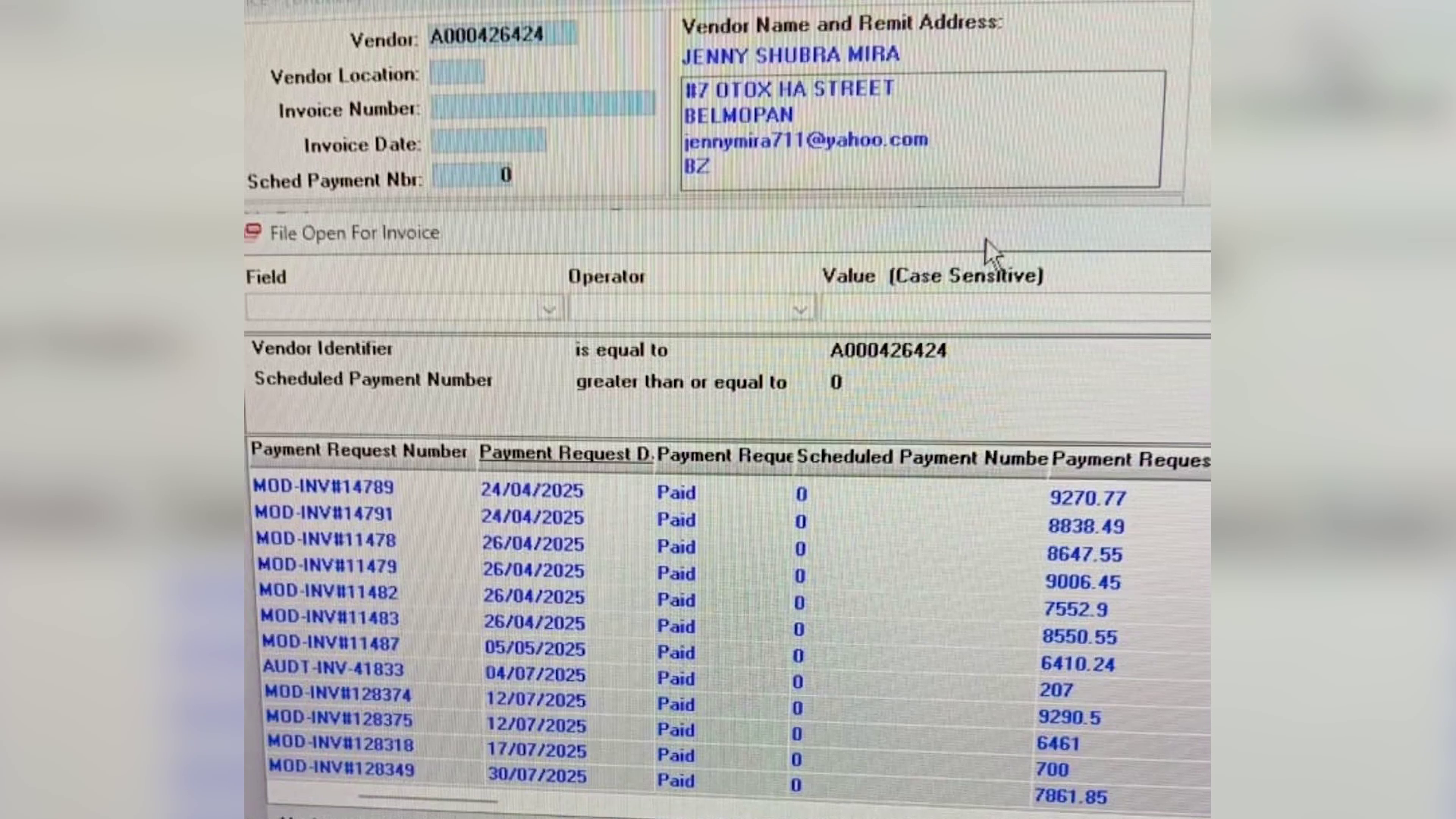
Are Government Invoices Being Split to Dodge Scrutiny?
In a developing public accountability story dated June 10, 2026, documents show a suspicious pattern in government payments to private supplier Jenny Mira: dozens of processed invoices land consistently just under the $10,000 threshold that triggers enhanced external oversight. This pattern has sparked intense questions about whether public officials are deliberately splitting large contracts into smaller, under-threshold invoices to bypass mandatory checks from national financial watchdogs.
Under the country’s existing public finance rules, any transaction above $10,000 for local contracts requires additional review from the Ministry of Finance and Treasury, while contracts exceeding $50,000 must receive formal approval from the office of the contractor general. Invoices under $10,000, by contrast, are classified as discretionary spending that can be approved internally by individual ministries without further external scrutiny. This regulatory structure makes the clustered pattern of under-threshold invoices highly notable to public finance experts, who say it matches a common tactic for avoiding accountability.
Our news outlet reached out directly to two top government leaders to question them about the allegations: Francis Usher, Chief Executive Officer of the Ministry of National Defense and Border Security, and Dr. Louis Zabaneh, Minister of Transportation. Both officials forcefully denied any knowledge or participation in deliberate invoice splitting.
Usher, who took up his post in March 2025, noted that the single suspicious transaction cited in the allegations – an $18,000 invoice that was ultimately canceled and split into two separate $9,000 invoices – occurred before he assumed his current role. “I have never instructed any supplier to split a larger contract into multiple under-threshold invoices to get around oversight rules,” Usher said in his response. He added that he can only confirm that no such practice has occurred during his tenure, and could not explain the pre-existing transaction beyond speculation. He also pushed back on the implication that ministries are the party driving the practice, suggesting it is more likely vendors that have adapted their invoicing to speed up payment processing.
For his part, Dr. Zabaneh emphasized that his ministry strictly adheres to all existing financial regulations. He stressed that integrity is a non-negotiable requirement for all staff working in government entities under his oversight, and that he has maintained strict personal ethical standards throughout his time in public service. “We entered government because the public trusted us to act with integrity, and that is how we operate every single day,” Dr. Zabaneh stated, adding that he expects all of his colleagues to uphold the same standard.
This report is a transcript of a televised evening news broadcast, with all non-English remarks transcribed accurately per standard spelling conventions. The full broadcast is available to view via the original publishing outlet.
-
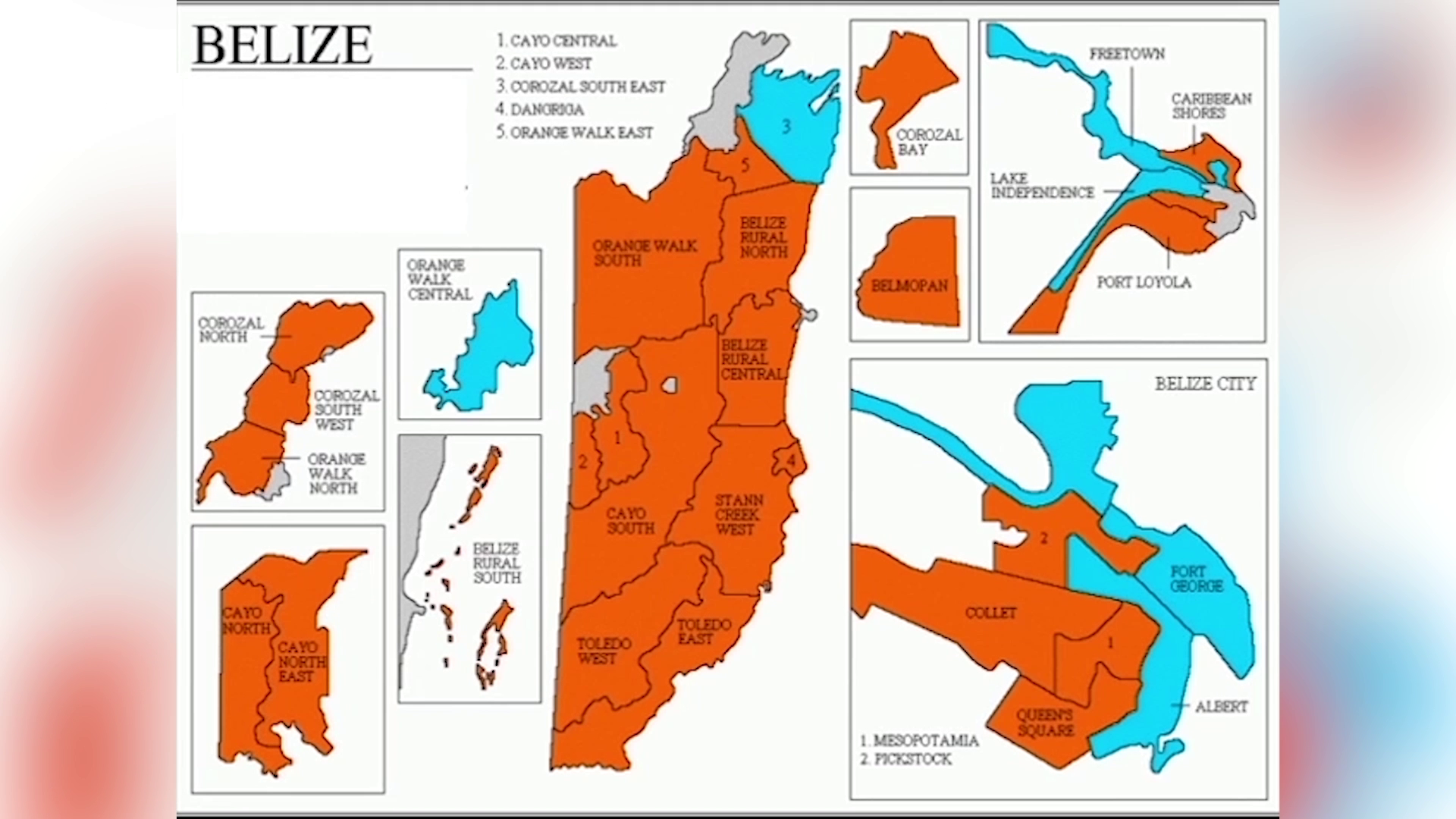
Jerry Enriquez Pressures Elections Commission on Redistricting Delays
As mid-2026 arrives, transparency and political accountability have emerged as the most pressing issues on Belize’s domestic political agenda, with prominent social activist Jerry Enriquez leading two high-profile challenges to government and electoral body actions.
First, Enriquez has escalated pressure on Belize’s Elections and Boundaries Commission (EBC) over months of stalled progress on mandatory electoral redistricting, submitting a formal Freedom of Information (FOI) request to force public disclosure of the causes behind repeated delays. The process of redrawing constituency boundaries is designed to address a severe imbalance across Belize’s electoral map, where some districts now hold vastly larger voter populations than others — a discrepancy that undermines the core principle of equal representation at the ballot box. What was initially promised to be completed by the end of 2025 has already slipped into 2026, with no public updates on the process so far.
Speaking on the stalled initiative, Enriquez drew parallels to broken promises from the previous government term, when redistricting was pledged at the start of the 2020 legislative cycle but never delivered. “We are midpoint 2026 and we have not seen any movement with public consultation, public awareness,” Enriquez stated. “We cannot go down that road again. We are asking the Elections and Boundaries Commission to update us about the process for this redistricting, the timeline, detailed statements outlining these steps, who are the consultants being used, what professional advice are they getting, what reports and analysis are underway. We need full disclosure. The EBC needs to be transparent with the public. No more allowing this secrecy with which this government tends to operate.”
Beyond the redistricting fight, Enriquez has publicly thrown his full support behind a high-profile legal challenge against the Belizean government, brought by retired Major and former Ombudsman Gilbert Swaso. Swaso filed suit against the administration after his contract as the nation’s public watchdog was not renewed in late 2025, alleging the non-renewal was deliberate political retaliation for his intervention in a prior FOI dispute over government legal fees. The case, which is scheduled to be heard in Belize’s High Court in mid-July, has become a flashpoint for broader concerns about institutional accountability and rule of law in the country.
Enriquez argues the case extends far beyond Swaso’s personal grievance, framing it as a critical test of the government’s commitment to upholding constitutional protections for government oversight. While he stops short of attributing Swaso’s ouster entirely to his own prior FOI requests, Enriquez acknowledges he believes his activism contributed to the government’s decision to leave the ombudsman post vacant. “If he does that and is penalized for following the law and constitution then that speaks volume for the kind of leaders we are having,” Enriquez noted.
The activist also emphasized that leaving the ombudsman position unfilled to date is itself a violation of Belize’s constitution, a separate issue he and his allies intend to challenge in court. Pointing to past comments from a government minister who publicly boasted that the office had been left vacant for two years previously, Enriquez called the ongoing vacancy unacceptable. He added that he will continue to push for public access to government records through legal and institutional channels, and expects all current and future ombudsmen to uphold their constitutional mandate to support transparency — regardless of political pressure to do otherwise.
This report is adapted from a transcript of an original evening television broadcast from Belize.
-

Petillo Puts Dangriga Town Council on Notice, Demands $180K After Firing
A looming legal battle is set to play out against the Dangriga Town Council in Belize after its former top administrative official launched a pre-litigation challenge over what he calls a wrongful, contract-breaking firing. Austin Petillo, the council’s ex-Town Administrator, has formally notified the local governing body of his intent to pursue legal action through his legal representative, senior attorney Orson Elrington, who delivered a formal pre-suit notice letter on June 10, 2026.
According to the details laid out in the correspondence, Petillo entered into a fixed-term employment contract with the Dangriga Town Council when he returned to Belize to take up the role in April 2024. That agreement was legally set to run through until April 2027, giving Petillo a clear contractual right to hold the position for the full three-year term. Despite this binding agreement, Petillo alleges the council cut short his tenure without any legitimate justification.
Beyond the outright termination of his contract, Petillo’s claim details a pattern of systemic interference that made his role untenable long before his formal exit. He claims he repeatedly faced political pushback from council members that blocked him from carrying out core duties of his position, creating a toxic and unworkable environment that left him with no viable option but to exit. Elrington frames this sequence of events as a clear case of constructive dismissal, where an employer creates working conditions so intolerable that an employee is effectively forced to resign, a outcome that still carries full legal liability for the employer.
Elrington argues in the letter that the council’s actions do not merely amount to a routine personnel change, but a fundamental repudiation of its binding contractual obligations to Petillo. To resolve the dispute without going to court, Petillo is demanding a total compensation package of $180,000, in addition to all unpaid benefits that he is owed under the terms of his original employment contract.
The council has been given a strict 14-day window from the receipt of the letter to respond to the claim and initiate good-faith settlement negotiations. If the deadline passes without a satisfactory response or meaningful progress toward a negotiated resolution, the letter warns that Petillo will move forward with filing a formal civil lawsuit against the local governing body, opening what is expected to be a high-profile public legal dispute.