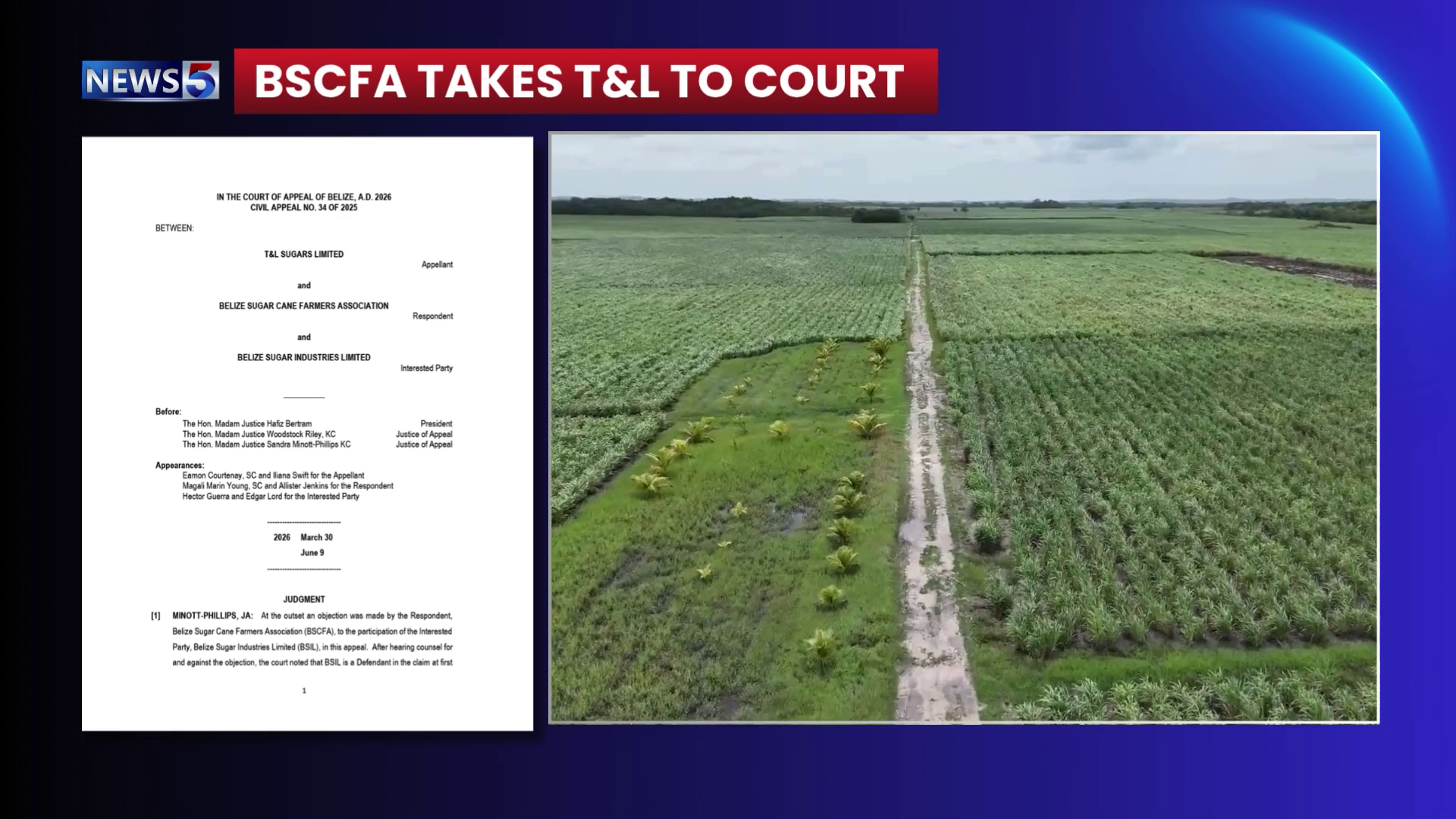
On June 10, 2026, a key jurisdictional ruling cleared the path for a high-stakes $9 million legal dispute between Belize’s sugar cane producers and global sugar giant Tate & Lyle Sugars to be heard domestically, ending months of procedural wrangling over where the case would be tried.
The litigation, brought by the Belize Sugar Cane Farmers Association (BSCFA), centers on claims that Tate & Lyle Sugars (TLS) has withheld more than $9 million in Fairtrade premium payments owed to over 2,000 independent cane farmers covering the 2021 to 2023 production period, plus accumulated interest. In a major win for the BSCFA, the Court of Appeal rejected TLS’s bid to move the proceedings to London, confirming that Belizean courts hold sole jurisdiction over the dispute.
At the core of the disagreement is a technical contractual dispute following the expiration of the BSCFA’s 2020–2021 industry agreement. Tate & Lyle Sugars argues that the farmers’ association is ineligible for premiums because it never signed a new Letter of Enhancement after the prior agreement lapsed. The company has 42 days from the ruling to formalize its legal defense ahead of the upcoming trial.
But the BSCFA and its legal team push back strongly against this position. Magali Marin-Young, lead attorney for the association, explained that Fairtrade rules do not require a separate written letter of enhancement for eligible producers. “Even without this additional signed document, premiums are due to every sugarcane producer association that sells Fairtrade-certified cane to the mill, and that includes the BSCFA,” Marin-Young stated. The legal team further alleges that TLS deliberately withheld the Letter of Enhancement from the BSCFA after 2021, when contract renegotiation talks between the BSCFA and mill operator BSI (a sister company to TLS under shared parent company ASR) broke down and sparked industry unrest. Marin-Young noted that TLS extended new enhancement agreements to other Belizean producer groups during the same period, leaving the BSCFA unfairly excluded.
BSCFA Vice Chairman Alfredo Ortega emphasized that the association has maintained continuous Fairtrade certification throughout the disputed period, even without receiving the premium payments. “We have worked extremely hard to keep our certification up to date, even as Tate & Lyle used the contractual technicality as a tool to pressure us and withhold funds owed to our farmers,” Ortega said. He acknowledged that the legal fight comes at an extraordinarily challenging time for Belize’s cane industry, but stressed that farmers have no choice but to pursue what is rightfully theirs.
The stakes are already high for the sector, which is grappling with a cascading series of crises that have squeezed farmer incomes for years. Former Belizean Agriculture Minister Jose Abelardo Mai warned that the costly litigation arrives at the worst possible moment for the already struggling industry. “Today, farmers face sky-high fuel costs, increasingly erratic weather from climate change, decades of degraded soil from 50 years of twice-annual field burning, and widespread outbreaks of new pests and diseases that have cut average yields to just 11 tons per acre,” Mai explained. He added that the industry’s central mill also faces critical infrastructure gaps, including an urgent need for a $10 million replacement boiler that has not been funded. Ortega echoed these challenges, noting that farmers also face persistent labor shortages for cane harvesting and frequent unplanned mill outages that disrupt harvest schedules.
Despite the myriad headwinds, Ortega said the BSCFA remains committed to seeing the trial through. “Sugar cane is in our blood here in northern Belize; this industry has sustained our communities for generations,” he said. “Even with all the challenges we face, we will continue fighting to secure the compensation our farmers have earned.” With jurisdiction now settled, the case will proceed to a full trial in Belizean courts in the coming months.