标签: Belize

伯利兹

  • What Are 25 Caribbean Entrepreneurs Doing in Belize This Week?

    What Are 25 Caribbean Entrepreneurs Doing in Belize This Week?

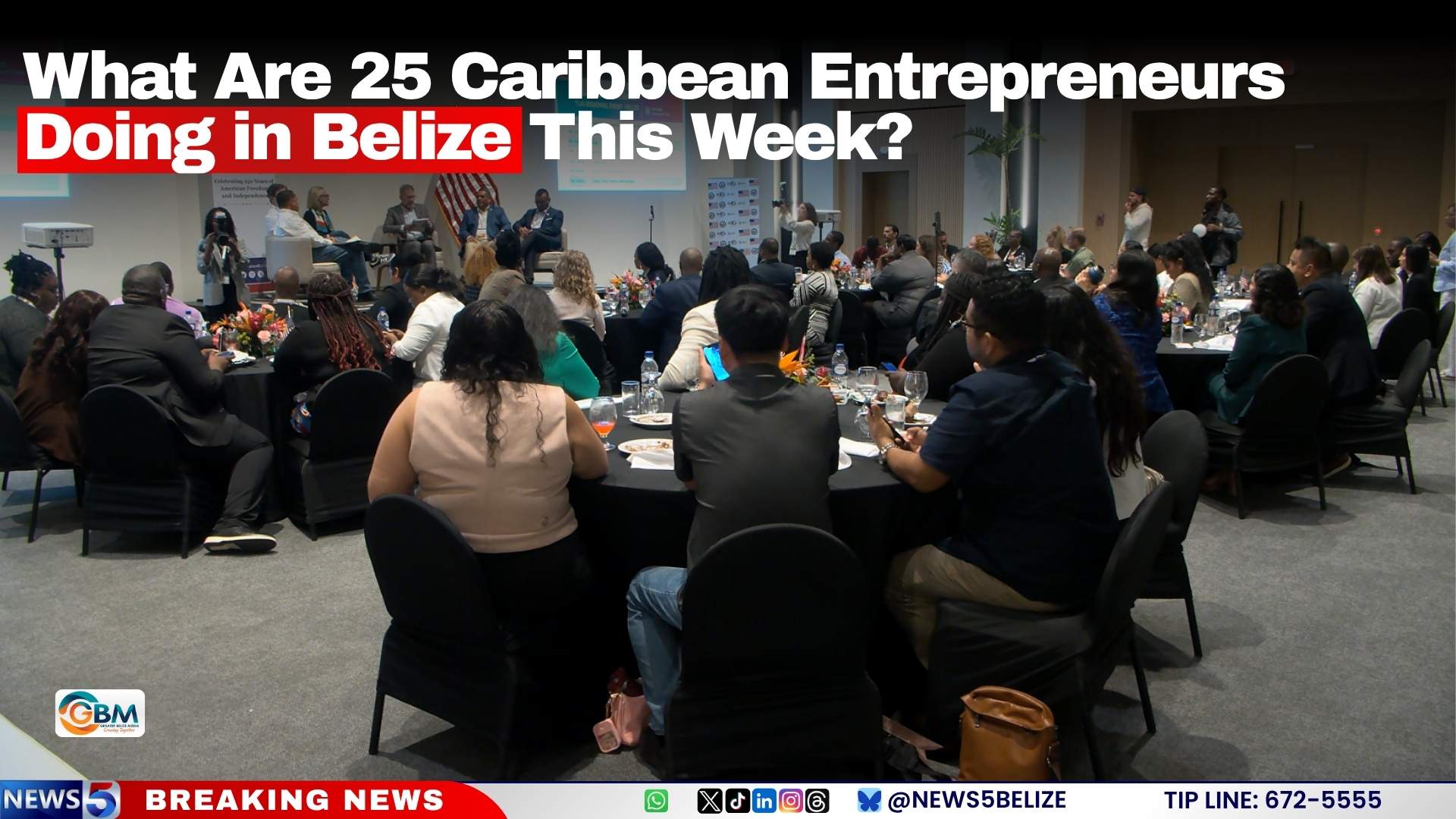
    In a landmark gathering marking a decade of investment in regional economic leadership, Belize is playing host to 25 emerging young entrepreneurs from across the Caribbean this week for a special regional alumni forum organized for the Young Leaders of the Americas Initiative (YLAI), a flagship program run by the U.S. State Department.

    The three-day collaborative event, coordinated by the U.S. Embassy in Belize, brings together 20 to 25 program graduates from 10 different Caribbean nations including Jamaica, St. Lucia, Guyana, Suriname, and Antigua and Barbuda, alongside a cohort of 8 local Belizean entrepreneur participants. Unlike conventional business conferences, the forum is tailored to expand cross-border professional networks within the Caribbean, sharpen hands-on business management skills, and build on the foundational training participants received during their fellowships in the United States.

    Katharine Beamer, Chargé d’Affaires at the U.S. Embassy in Belize, emphasized that the decade-old YLAI initiative embodies a sustained, long-term commitment to nurturing the next generation of business leadership across the Western Hemisphere. “In the United States, small businesses are the engine of our economic growth, and we are really committed to helping entrepreneurs in other countries succeed as well,” Beamer shared in remarks during the opening of the forum. “The United States considers our alumni to be a long-term investment in the future of those people and that country.”

    For local participants, the forum represents a rare chance to connect with like-minded creative and business minds across the region who share similar challenges and goals. Ronelli Requena, a Belizean fashion designer and founder of the local apparel brand Zayvha Sarai, completed the YLAI fellowship program in 2021, and says the one-on-one mentorship she received through the initiative fundamentally reshaped her approach to business.

    “A lot of us entrepreneurs feel like it is a lonely journey sometimes, but with the YLAI programme you get to be paired with a mentor. My mentor was phenomenal. She taught me how to get structure for my business and how to make it more of a sustainable venture and find balance between growth and personal well-being,” Requena explained. She added that the most impactful skill she gained from the program was learning to leverage digital technology to streamline operations and build more scalable, organized business processes.

    The forum is expected to wrap up with actionable partnerships between regional entrepreneurs, with local outlet News 5 set to air a full recap of the event’s outcomes on News 5 Live this evening at 6 p.m. for audiences interested in learning how these emerging leaders are turning regional connections into tangible economic opportunities.
  • Will Government Settle Constitutional Claim With Budna?

    Will Government Settle Constitutional Claim With Budna?

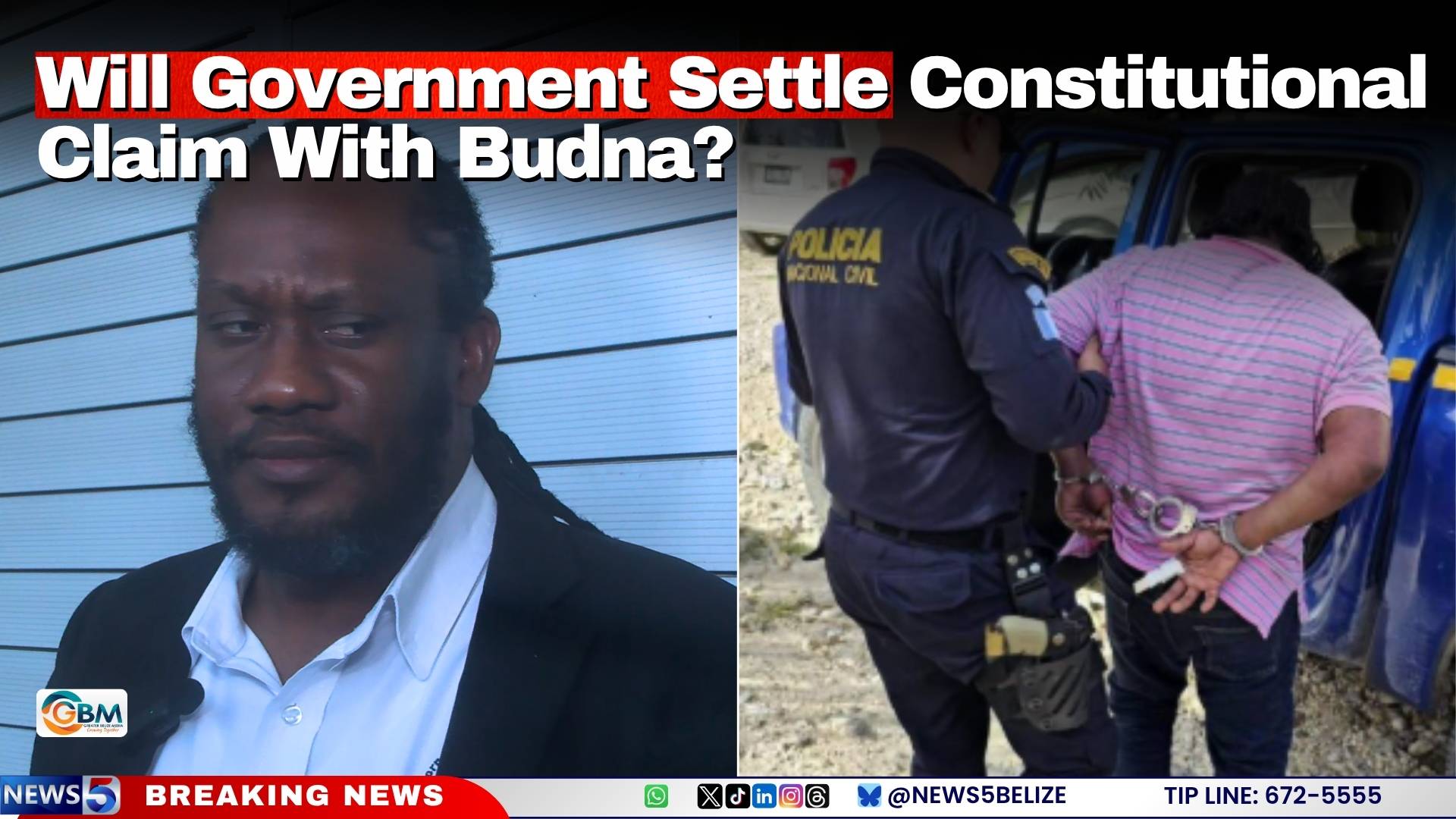
    As of June 11, 2026, the government of Belize has not made a final decision on whether to reach an out-of-court settlement for a major constitutional claim filed by Joseph Budna, according to the nation’s Attorney General Anthony Sylvestre. The legal dispute remains in its earliest procedural phases, so no official stance has been formalized.

    Sylvestre confirmed that a case management conference was recently convened to map out procedural timelines for the submission of witness statements and other required court documents, though he noted he did not have the finalized specific dates available at the time of the interview.

    When questioned whether agreeing to a settlement would effectively mean the state acknowledges responsibility for what has been publicly alleged as a high-level government cover-up, Sylvestre pushed back against this framing. He emphasized that all judicial outcomes are determined strictly by the presentation of verified facts and the application of existing law, not by procedural choices made before a trial begins.

    The attorney general went on to outline the two pre-trial dispute resolution mechanisms available under Belize’s court system. The first is voluntary mediation, which encourages opposing parties to negotiate a mutually agreeable resolution on their own. The second, which Sylvestre identified as the more practical and effective of the two tools, is a judicial settlement conference. In this process, a senior independent legal advisor reviews the arguments and evidence from both sides of the conflict, helping each party accurately evaluate the strength of their legal position ahead of a potential trial.

    Addressing the core legal question of the case, Sylvestre pushed back against assumptions that the court would automatically rule against the state simply because the individuals allegedly involved in the incident were active police officers. “We don’t think that that is the state of the law at this point in time,” he stated.

    The constitutional motion Budna filed with the Belize High Court centers on grave allegations against the state. Budna claims he was unlawfully taken into custody, subjected to torture, then forcibly removed from Belize to Guatemala in what he frames as a state-sponsored extrajudicial rendition that took place in September 2025.

  • Ombudsman Challenges Government in Constitutional Claim

    Ombudsman Challenges Government in Constitutional Claim

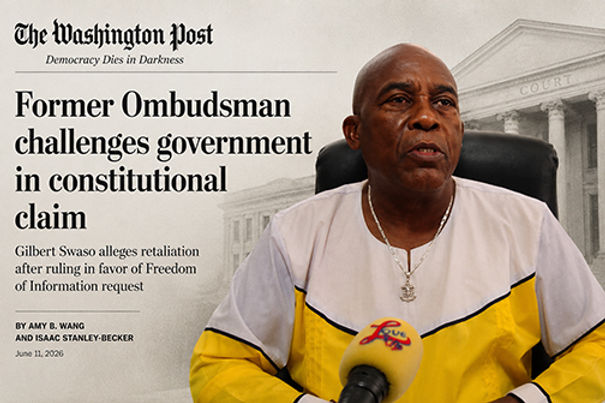
    A high-stakes constitutional dispute has erupted in Belize after retired Major Gilbert Swaso, the nation’s former Ombudsman, launched a formal legal challenge against the government, accusing authorities of violating the constitutionally mandated independence of his former office by refusing to renew his appointment. Court documents submitted earlier this week detail Swaso’s allegation that the government’s decision to end his tenure was an act of retaliation tied directly to a landmark Freedom of Information (FOI) ruling he issued that ordered the disclosure of public records. That ruling centered on a request from activist and public-interest lawyer Jerry Enriquez, who sought transparency around millions in public funds paid by the government to private attorneys working on high-profile redistricting litigation. After Swaso ruled in favor of releasing the requested payment records, the Attorney General’s Ministry immediately contested the decision before the Court of Appeal, where the appeal remains unresolved as of 2026. According to the legal claim, tensions boiled over during a December 2025 meeting between Swaso and Minister of Public Service, Constitutional and Political Reform Henry Charles Usher. During that closed-door session, Swaso was reportedly confronted about the FOI ruling and a second separate report he had completed. Just 48 hours after that meeting, Swaso says he received formal notification that his appointment would not be extended when his term expired at the end of December 2025. The core of the constitutional challenge argues that the non-renewal of Swaso’s term is not just a personnel decision—it represents unlawful political interference in a constitutionally protected independent office, eroding the fundamental guardrail that allows the Ombudsman to operate free from partisan pressure. Swaso is asking the Supreme Court to issue formal declarations confirming the constitutional independence of the Ombudsman’s Office and ruling the government’s actions illegal. Beyond the tenure dispute, the lawsuit also raises serious questions about unpaid compensation, alleging Swaso never received the salary and benefits guaranteed to the office under existing Belizean law. The current Ombudsman Act, in Section 8(1), explicitly mandates that the Ombudsman’s emoluments must be no less than those paid to a Supreme Court Judge. In a parallel development that adds context to the dispute, the government tabled the Ombudsman (Amendment) Act 2026 in March 2026, which proposes repealing the existing Section 8(1) and removing the mandatory minimum salary provision tied to Supreme Court judicial pay. If passed, the amendment would leave the Ombudsman’s compensation entirely open to future adjustment by legislation or National Assembly resolution, a change that critics warn could further increase political leverage over the office. As the legal challenge moves forward, the Ombudsman’s Office remains unfilled more than 160 days after Swaso’s term expired at the end of 2025. This prolonged vacancy has already disrupted core functions of the office, including ongoing Freedom of Information proceedings that rely on the Ombudsman’s oversight. Under Belizean law, the Ombudsman serves as a critical independent watchdog tasked with investigating complaints against government departments and public authorities, covering everything from maladministration and abuse of power to corruption and disputes under the Freedom of Information Act.

  • Burglars Target Belize Cancer Society in Belize City

    Burglars Target Belize Cancer Society in Belize City

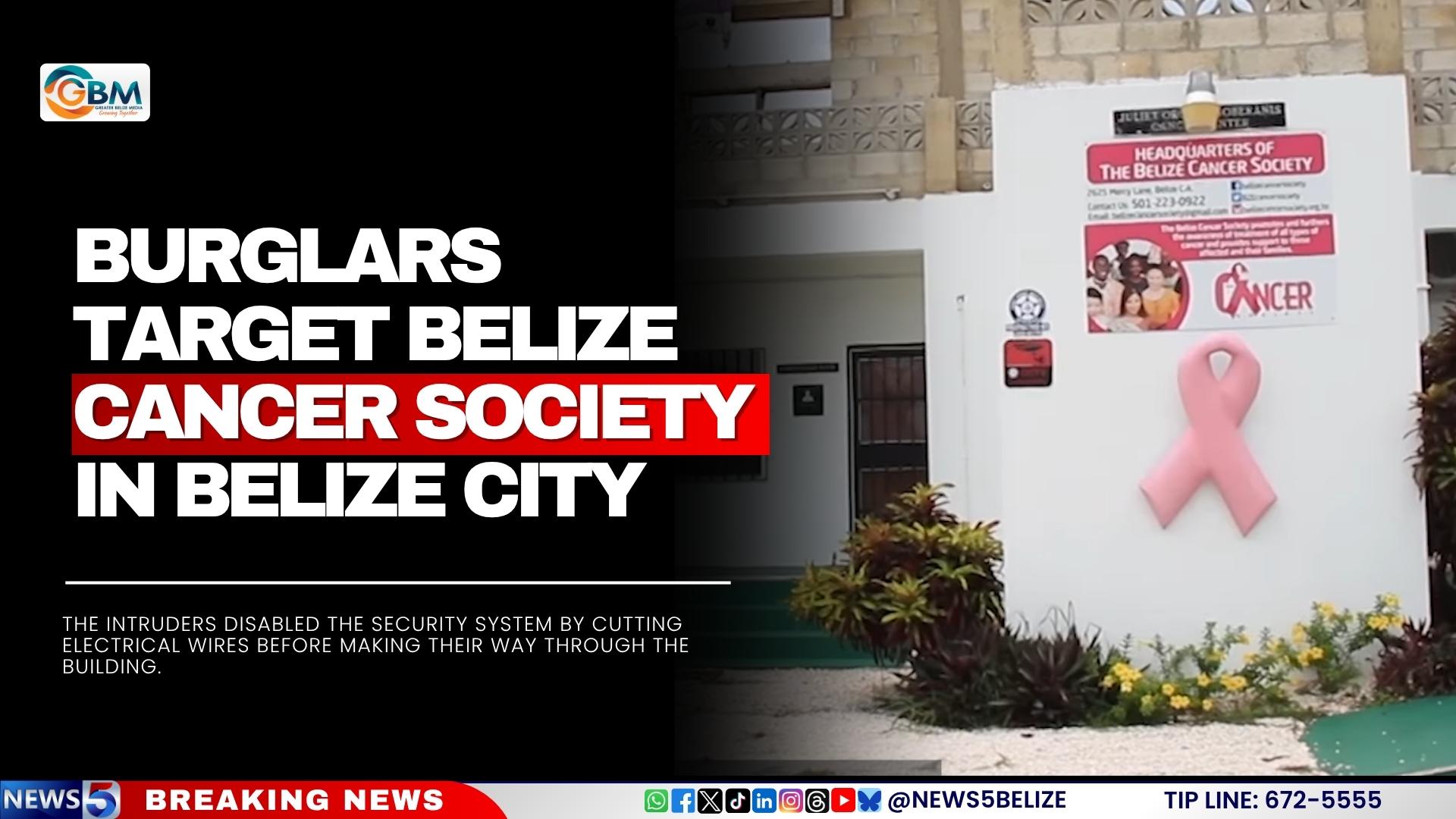
    In an overnight break-in that has sparked outrage across local community circles, burglars targeted the Belize Cancer Society’s offices in central Belize City, stealing critical equipment from the organization’s on-site infusion center where hundreds of patients receive ongoing life-sustaining cancer treatment. Law enforcement authorities confirmed Tuesday that investigations into the incident are already underway, with early forensic evidence gathering pointing to a planned entry by perpetrators who disabled security infrastructure before ransacking the building.

    According to initial police reports, the intruders gained access to the compound after cutting electrical wires that powered the facility’s security alarm and surveillance system. By disabling these protective measures, the group was able to move freely through the office space and target specific high-value items for theft, rather than acting in a spontaneous, opportunistic manner.

    The stolen property includes a large display television that was used by patients and care teams in the infusion center, a small amount of petty cash held for daily operational expenses, and multiple smaller electronic and office items. Officials with the Belize Cancer Society confirmed that the organization keeps no large cash reserves on the premises, a security precaution that prevented a far greater financial loss from the incident. As of Wednesday, investigators and society administrators were still conducting a full room-by-room inventory to document all missing and damaged property, meaning the total value of losses is not yet finalized.

    In a statement released to the media, a senior representative of the non-profit organization expressed deep disappointment over the break-in, emphasizing that the Belize Cancer Society operates exclusively as a community-focused entity dedicated to supporting vulnerable cancer patients and expanding access to affordable care across the country. The representative added that the incident has disrupted routine operations at the facility, forcing administrative teams to rearrange patient services while security upgrades are arranged, and called on anyone with information about the burglary to contact police immediately.

  • Contractor-General Amendment Mirrors Proposed Changes to Ombudsman Act

    Contractor-General Amendment Mirrors Proposed Changes to Ombudsman Act

    Two parallel constitutional and legislative shifts are unfolding in Belize, where changes to pay rules for the nation’s top independent oversight offices have sparked debate over institutional independence and government accountability. The developments come as former Ombudsman Major Gilbert Swaso proceeds with a constitutional legal challenge against the Belizean government, centered on disputed compensation claims from his time in office. At the same time, Belize’s National Assembly is advancing paired amendment bills that would rewrite remuneration rules for two constitutionally mandated watchdog agencies: the Office of the Ombudsman and the Office of the Contractor-General.

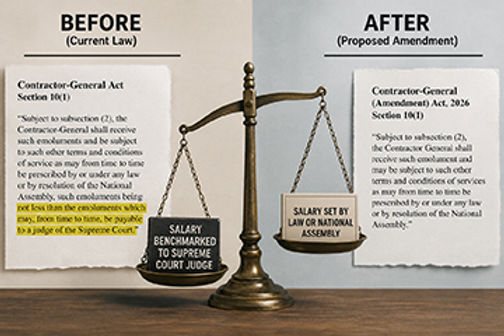
    The most recently tabled proposal, the 2026 Contractor-General (Amendment) Act, targets Section 10(1) of the original Contractor-General Act. Under current legislation, the head of the office is guaranteed annual emoluments no lower than the salary paid to a sitting judge of Belize’s Supreme Court, a statutory benchmark designed to ensure competitive, politically protected pay for the oversight role. If approved, the amendment would strike this existing guarantee and replace it with a provision that lets the National Assembly set pay and terms of service via legislative act or formal resolution. The draft bill schedules the change to take effect on June 1, 2026.

    A nearly identical amendment was introduced around the same time for the Ombudsman Act, a move that received public coverage upon its introduction. Before this proposal, Section 8(1) of the Ombudsman Act carried the same judicial salary benchmark, guaranteeing the Ombudsman compensation at least equal to that of a Supreme Court justice, matching the structure of the Contractor-General’s pay protections.

    Both watchdog positions are enshrined in Belize’s Constitution under Section 61A, which grants the Senate authority over their appointments and ongoing oversight mandates. As independent bodies, the Ombudsman and Contractor-General are tasked with auditing public spending, investigating official misconduct, and holding government agencies accountable to the public.

    Governance analysts and anti-corruption campaigners have long maintained that genuine institutional independence for oversight bodies relies on three core pillars: guaranteed job security, independent financial resourcing, and unrestricted operational autonomy. Global best practices, codified in frameworks like the United Nations Convention against Corruption, stress that independent oversight bodies must have secure remuneration structures and sufficient resources to carry out their mandates without political interference.

    Debate over the amendments has split along competing lines of constitutional authority and accountability. Proponents of the changes argue that the amendments simply formalize the National Assembly’s inherent authority to set public official compensation, and bring greater clarity to the process for establishing pay for senior oversight roles. Critics, however, warn that removing the statutory tie to Supreme Court judicial salaries eliminates a longstanding safeguard designed to shield these watchdog offices from political pressure. Without fixed pay protections, they argue, the government could potentially use remuneration as a tool to influence the decisions of independent overseers, weakening Belize’s anti-corruption framework.

  • Opposition Leader Raises Alarm Over Ombudsman Vacancy, Swaso Lawsuit and Constitutional Rights

    Opposition Leader Raises Alarm Over Ombudsman Vacancy, Swaso Lawsuit and Constitutional Rights

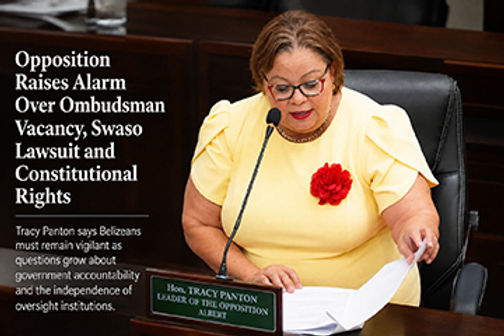
    Belize’s Opposition Leader Tracy Taegar Panton is calling on all Belizean citizens to closely monitor mounting threats to core constitutional rights, government accountability, and the autonomy of national oversight bodies. Her warnings center on two interconnected issues: the months-long persistent vacancy in the Office of the Ombudsman, and a high-profile constitutional legal challenge filed by the office’s former head, Major Gilbert Swaso.

    In multiple recent public addresses, Panton has emphasized that the legal questions raised by Swaso’s claim are far from a personal dispute. Instead, they cut to the heart of a critical national question: can independent constitutional bodies in Belize carry out their mandates without undue political pressure from the ruling government?

    As outlined in this week’s reporting from *The Reporter*, Swaso moved forward with his constitutional challenge against the Government of Belize over his non-renewed appointment. The former ombudsman alleges his term was not extended after he ruled in favor of a Freedom of Information (FOI) request that sought public disclosure of government legal fees tied to a high-profile redistricting court case. He further claims that senior officials repeatedly attempted to interfere in official matters that fell exclusively under the Ombudsman Office’s jurisdiction. At this stage, none of Swaso’s allegations have been adjudicated or proven in court.

    Panton stresses that these claims strike at the core of transparent governance and the protection of constitutional safeguards laid out in Belize’s founding document. She reiterated that the Ombudsman serves as one of the most critical checkpoints on state power, tasked specifically with shielding ordinary citizens from institutional abuse, maladministration, and unfair treatment by government agencies.

    The opposition leader has doubled down on criticism of the ruling administration’s ongoing failure to fill the substantive Ombudsman position, which has been vacant since Swaso’s term expired on December 31, 2025. To date, Belize has operated without a permanent ombudsman for several months, leaving hundreds of citizen complaints against public agencies unaddressed and FOI review requests stalled in limbo.

    Notably, existing Belizean law already creates a framework for temporary oversight during such vacancies. Section 7(1) of the Ombudsman Act explicitly states that when the Ombudsman seat becomes empty, the Governor-General, acting on formal recommendations from the National Assembly, has the authority to appoint an interim officeholder to serve until a permanent appointment can be finalized. Despite this legal provision, no acting appointment has been made.

    Panton frames the Swaso dispute as part of a wider pattern of growing threats to constitutional governance in Belize. She points to two other recent high-profile matters: the case of former United Democratic Party Vice Chairman Alberto August and that of independent journalist Ryan Budna. While Panton acknowledges each case must be evaluated on its own unique set of facts, she argues that the cumulative allegations across these separate incidents raise serious questions about due process, equal treatment under the law, adherence to the rule of law, and the exercise of executive state power.

    For Panton, constitutional rights and fundamental freedoms are not discretionary privileges granted by the sitting government — they are inalienable protections that belong to every Belizean by right. She has issued a sharp warning against the normalization of what she describes as creeping institutional overreach, even the perception of such overreach, noting that a functional democracy relies entirely on robust independent institutions, full government transparency, and meaningful accountability to the public.

    The opposition has formally demanded the government answer three key questions: why no permanent Ombudsman has been appointed since the end of 2025, why no interim Ombudsman has been designated under existing law to keep the office operating, and what options are currently available to Belizean citizens whose rights complaints and FOI matters would normally fall under the Ombudsman’s mandate.

    Panton concluded by urging Belizeans to stay well-informed and remain vigilant on developments that impact constitutional rights and democratic institutions, noting that public trust in national governance is directly tied to the strength and independence of the country’s oversight bodies.

  • National Kriol Council Calls for Recognition of Kriol Indigenous Identity

    National Kriol Council Calls for Recognition of Kriol Indigenous Identity

    Against a backdrop of growing national dialogue around Indigenous rights, territorial ownership and cultural representation in Belize, the National Kriol Council (NKC) has released an official declaration cementing the Kriol people’s status as an Indigenous foundational population of the nation, rooted in centuries of ancestral connection to Belize’s land.

    In the statement, the NKC pushes back against narratives that frame Kriol people as a recent arrival to the territory, emphasizing instead that the community is one of the core founding groups of modern Belize. Over generations, Kriol people have shaped every dimension of national life, the council argues, from economic development and institutional governance to cultural expression and national identity. The group ties its indigeneity to longstanding ancestral bonds with the Mosquitian Nation, a historic regional territory home to multiple Indigenous and Afro-descendant communities whose histories are inextricably linked to the formation of Belize as an independent nation.

    A central grievance outlined in the declaration is the systemic exclusion of Kriol voices from national conversations centered on Indigenous rights, heritage protection, and ancestral land governance. The NKC stresses that Kriol communities, whose centuries-long continuous presence in Belize is well-documented, should not be forced to repeatedly justify their place in national history to gain access to equal rights and recognition. The council specifically names multiple long-standing Kriol communities across the country, arguing these groups cannot be sidelined from discussions or policy decisions related to land rights, territorial stewardship, cultural recognition, or any other issue that impacts their collective future.

    Legally, the NKC asserts that Kriol communities are entitled to full legal protection under both Belize’s national Constitution and binding international human rights frameworks. The declaration cites core principles from the United Nations Declaration on the Rights of Indigenous Peoples (UNDRIP) and other global human rights standards, which enshrine the rights of Indigenous groups to preserve their cultural heritage, maintain their collective community identity, and participate in consultation processes for any decisions impacting their ancestral territories. Going forward, the council maintains that any policy, land use decision, resource allocation plan, or governance change affecting Kriol ancestral communities must include meaningful, representative consultation with the communities themselves, rather than being decided over their heads.

    The declaration closes with a formal call to action, addressed to the Government of Belize, public agencies, non-governmental organizations, and global bodies, urging all stakeholders to formally recognize the Kriol community’s centuries of historical contribution and inalienable ancestral rights. The NKC frames this recognition as a foundational requirement for upholding fairness, equality, and respect for Belize’s rich multicultural national heritage. Beyond institutional advocacy, the council is also urging Kriol people both in Belize and in diaspora communities to actively document and preserve their family histories, cultural traditions, and records of ancestral settlement. This collective documentation, the council argues, is critical for protecting Kriol heritage for future generations and ensuring coming generations understand their community’s enduring role in building Belize.

    For the NKC, recognition of Kriol ancestral communities is far more than a cultural issue: it is a matter of foundational justice, historical accountability, and equal citizenship for all Belizeans. The council emphasizes that the history, contributions, and heritage of the Kriol people are an irreplaceable part of Belize’s national identity, and as such deserve full respect and permanent protection. This declaration comes as Belize navigates broader national conversations about how to reconcile historical narratives, allocate land rights, and honor the contributions of all communities that make up the modern nation, and the NKC has made clear that its advocacy for formal recognition and protection of Kriol ancestral rights will continue in the months and years ahead.

  • Birth Certificates Can Be Printed on Any Paper, Attorney General Says

    Birth Certificates Can Be Printed on Any Paper, Attorney General Says

    In response to widespread public outcry over changes to the appearance of birth certificates issued by Belize’s Vital Statistics Unit, Attorney General Anthony Sylvestre has publicly clarified the reasoning behind the government’s controversial policy shift, which marks a major overhaul of the country’s civil documentation system.

    Sylvestre explained that the transition away from traditional pre-printed official birth certificates is a intentional policy designed to expand public access to vital record services. Under the new framework, residents can now obtain their birth certificates entirely digitally, eliminating the requirement to visit a government office in person to collect a physical printed document.

    Previously, all official birth certificates were produced on specialized pre-formatted paper that included unique serial numbers and a widely recognized standardized official design that Belizeans had relied on for decades. When the government was developing the new system, officials initially considered keeping both the traditional printed format and the new electronic option available to the public. However, that plan was ultimately scrapped over key concerns from government agencies that regularly verify birth documents.

    Sylvestre noted that maintaining two visually distinct versions of the same legal document would create significant verification challenges for institutions including the Social Security Board and the Immigration Department, which process thousands of document checks annually. To avoid confusion and streamlining verification processes, the government opted to fully transition to the new electronic model.

    “You won’t necessarily have to come into the office or have your birth paper printed on a ‘pretty paper’,” Sylvestre told the public. “Having accessed the service and received your e-copy, you could print it on any paper.”

    The attorney general added that residents who prefer a more polished physical copy still have the option to print their electronic birth certificate on high-quality or specialty paper of their own choosing. The only change is that the government will no longer provide the specialized pre-printed paper that was used under the old system.

  • 18 Years Defending Belize, Still Waiting for His Benefits

    18 Years Defending Belize, Still Waiting for His Benefits

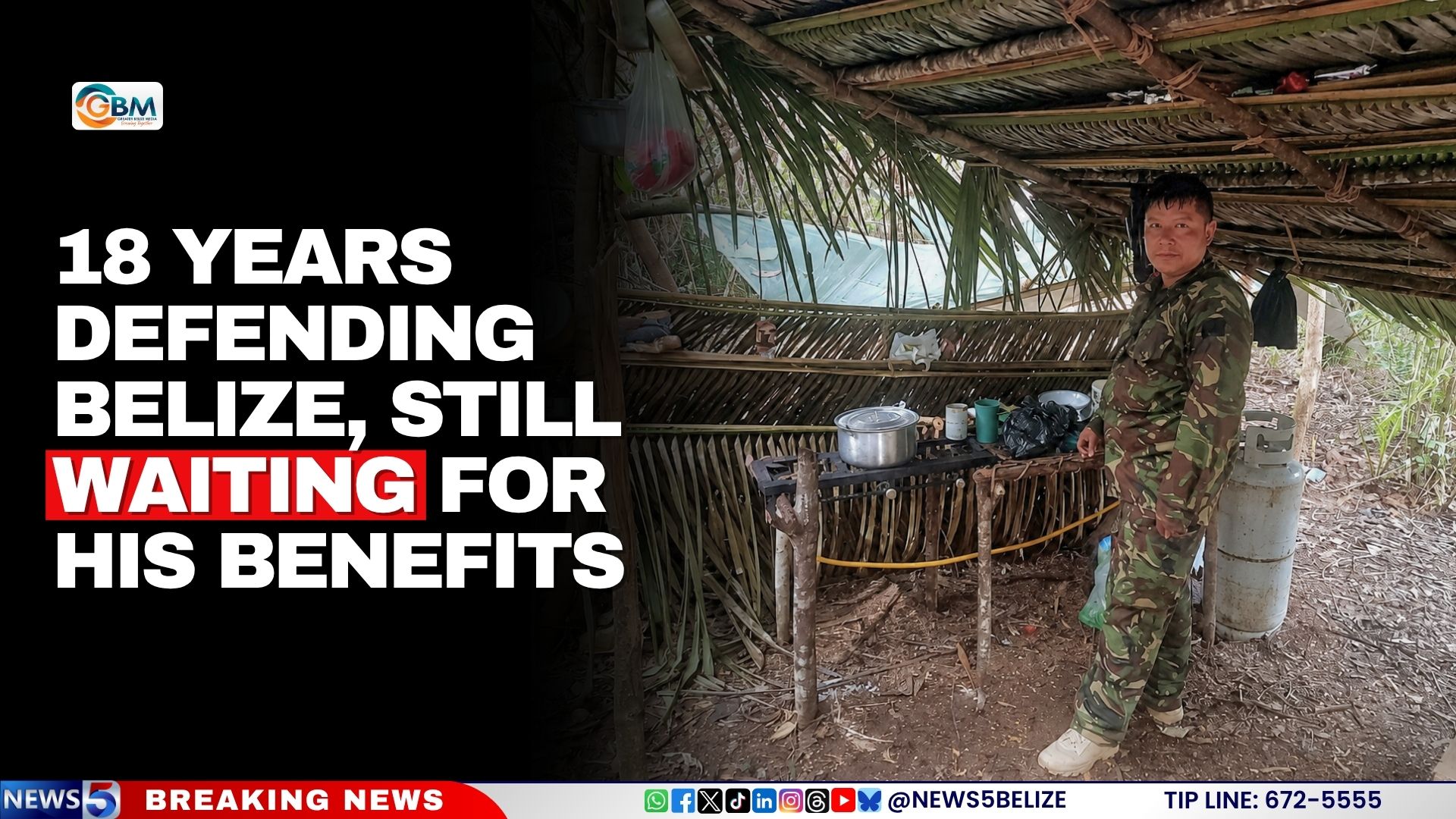
    For nearly two decades, Felix Ack patrolled Belize’s borders, facing off against Guatemalan military personnel at the contested Sarstoon border in service to his country. Now, five months after hanging up his uniform at 37, the retired Belize Defence Force soldier is still waiting to receive the retirement pension and gratuity he earned through 18 years of service. Ack is far from alone in this bureaucratic limbo: local outlet News 5 has received identical complaints from multiple retired service members across the force.

    Ack joined the BDF straight out of adolescence at 18, dedicating the entirety of his early adulthood to national border security. To make ends meet amid the ongoing delay, he has been forced to take casual work on Caye Caulker, a remote island that has left him separated from his family. “I really need my benefits. I believe I’ve served my time already, and waiting for it makes me frustrated that I have to seek another job,” Ack explained in an interview. “I believe the government can do better by facilitating our benefits as fast as possible. Five months is too much to wait.” For Ack and his fellow retired soldiers, their personal files have remained stuck at Price Barracks for half a year, with no visible movement in the benefits approval pipeline.

    When approached with the veterans’ collective complaints, Francis Usher, Chief Executive Officer of Belize’s Ministry of Defence and Border Security, openly acknowledged the systemic delays. Usher explained that the multi-stage bureaucratic process, while designed to ensure accuracy in benefit calculations, creates unavoidable long wait times for retiring soldiers. He walked through the full approval chain a retirement file must complete before any payment is issued: starting at BDF headquarters, moving to the Ministry of Defence, then to the Security Services Commission, a body that only convenes once per calendar month. If a file arrives just after a monthly meeting, the veteran must wait a full 30 days before their case is even added to the meeting agenda. After clearing the commission, the file moves to the national treasury for a full review of the soldier’s entire career salary and increment history, then to the Ministry of Finance, the Public Service Commission, and finally back to the Ministry of Defence before payment processing can begin.

    As a long-term solution to the backlog and delays, Usher confirmed that the government is working to digitize all service records for both the BDF and the Belize Coast Guard. The digitization project aims to eliminate the slow, clunky chain of physical file transfers that currently slows every step of the approval process. “The hope is that by doing that, it can speed up the process because we don’t have to wait for physical files to get to the ministry. It can then be an electronic review, a click of the button,” Usher said. However, he also admitted that the rollout of the new digital system is progressing far slower than officials and veterans would like. Usher sympathized with the veterans’ frustration, noting that after decades of service, retired soldiers have more than earned their benefits, but added that bureaucratic caution is necessary to protect public funds and ensure accurate disbursements. “But I also now understand the other side because we do have to be stewards of the public purse. We do have to make sure that we are administrating it responsibly,” he said.

    For the time being, the delays persist. Many retired soldiers wait months for their earned benefits, and some have been stuck in the approval pipeline for more than a year, with no end to their wait in sight.

  • Training Starts for JPs to Handle Domestic Violence Cases

    Training Starts for JPs to Handle Domestic Violence Cases

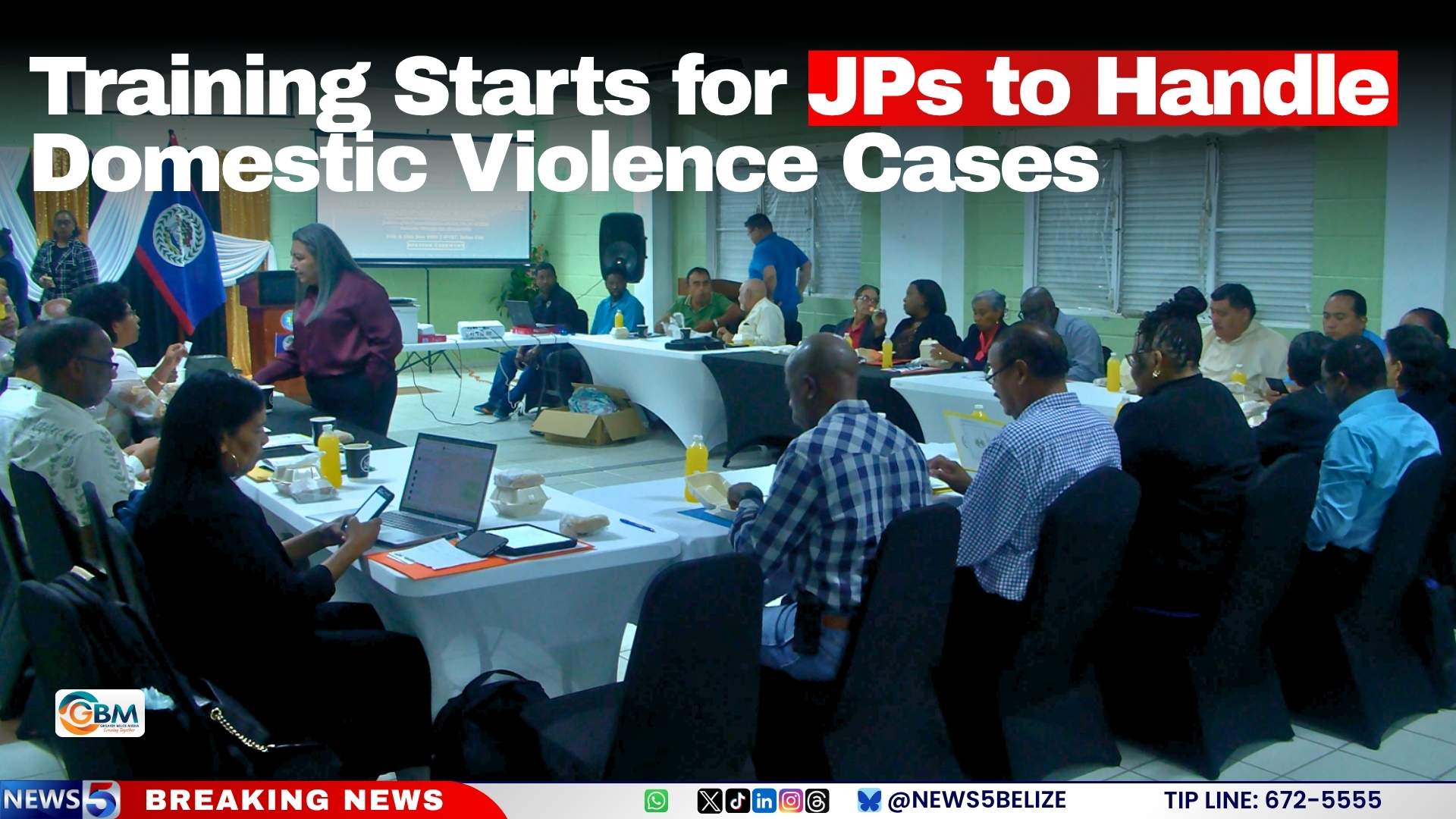
    After months of unanticipated delays, government-led specialized training for a vetted cohort of senior Justices of the Peace (JPs) has officially gotten underway. This new initiative will empower these selected legal officials to issue emergency interim protection orders for domestic violence survivors during periods when courts are closed, addressing a long-standing gap in after-hours support for vulnerable victims.

    Attorney General Anthony Sylvestre laid out the details of the streamlined new process in a public briefing. Under the revised framework, survivors can walk into any pre-designated police station during weekends, public holidays, or other court closures to request an emergency protection order, eliminating the need to wait for court business to resume. Once approved, the order goes into effect immediately: responding officers will locate the alleged perpetrator, serve formal notice, and outline the binding conditions of the order. When courts reopen the next business day, the case will automatically be assigned to a magistrate for a full evidentiary hearing with both parties in attendance.

    Sylvestre acknowledged that the rollout of the program took far longer than initial projections, attributing the delay to the complex cross-agency coordination required to launch the new system. Multiple stakeholders, including national police forces, the national magistracy, and the country’s human development department, had to align policies, protocols, and training frameworks to ensure the system functioned effectively. “Given the nature of the collaboration that had to be undertaken with the various agencies… [it] required some careful thought and planning,” he explained.

    To guarantee the integrity of the program, all selected JPs must meet strict eligibility requirements, Sylvestre confirmed. Candidates must first complete a minimum of 10 years of service as a standard Justice of the Peace to qualify for senior JP status, then serve an additional five years with a completely unblemished professional record to be considered for this specialized cohort. This stringent vetting process is designed to ensure only the most experienced, ethical legal officers are authorized to issue these critical emergency orders.

    The initiative also addresses widespread public concerns about cases where the alleged perpetrator is a serving police officer. Sylvestre confirmed that a separate, specially vetted team of police officers will oversee these high-stakes cases, selected explicitly for their proven track record of upholding impartiality, carrying out duties without fear or favor, and prioritizing survivor safety over institutional loyalties. “That concern was precisely why specific police officers have been selected and trained to manage the process,” he noted.

    In a final move to remove barriers to access for survivors, the Attorney General confirmed that no fees will be charged to applicants seeking emergency interim protection orders during court closures. Any potential associated costs will be addressed at a later stage, when the full case proceeds through the formal court system, removing an immediate financial burden for victims seeking urgent protection.