标签: Belize

伯利兹

  • Why Is Belize City Eyeing a $46 Million Bond? Deputy Mayor Explains

    Why Is Belize City Eyeing a $46 Million Bond? Deputy Mayor Explains

    On July 24, 2026, Belize City Deputy Mayor Eluidge Miller has moved to clear up widespread public confusion surrounding the municipal government’s planned $46 million bond offering, pushing back against misinformation that frames the entire sum as brand new borrowing for the city.

    In a public address addressing growing community questions, Miller clarified that the total bond value combines two key financial components: the refinancing of existing short-term municipal obligations, and targeted new capital for upcoming city projects. He explained that more than $20 million of the total $46 million is tied to reprofiling existing debt, shifting what were originally 12 to 24-month short-term financial commitments into 5 to 10-year long-term instruments to ease near-term budget pressure on the city.

    “I would not want for anybody to get the idea that we’re taking on $46 million in new investment,” Miller emphasized, noting that only the portion above the existing refinanced obligations counts as new capital for development.

    The deputy mayor also moved to reassure investors and residents alike of the council’s strong fiscal track record, even through a series of recent external shocks that have strained local government budgets across the Caribbean. He highlighted that both the COVID-19 pandemic and 2022’s Hurricane Lisa dealt significant blows to Belize City’s economy and revenue streams, yet the council has never once defaulted on an interest or principal payment for its existing municipal debt. “We have been able to meet every single payment,” Miller said. “I am proud to say that we have never defaulted on an interest or principal payment.”

    Miller also addressed a second common question from the public: why the council relies on bond offerings rather than funding large projects through its regular annual operating budget. He explained that major capital infrastructure projects carry price tags far too large to be covered by day-to-day tax revenue and operational income, making municipal bonds the most practical and accessible financing tool available to local leadership.

    Beyond easing budget strain, Miller noted that bond offerings also open up opportunities for external investors to contribute to Belize City’s long-term growth. The city has relied on this financing model for years, he pointed out: over the past six to seven years, municipal bonds have enabled critical upgrades to more than 300 of the city’s more than 700 public streets, work that would not have been possible through annual budget allocations alone.

    Looking ahead, if the bond offering moves forward as planned, the new capital portion will fund two key priority initiatives for the city: an expansion of Belize City’s e-mobility bus fleet to reduce carbon emissions and improve public transit access, and a new round of critical infrastructure upgrades across the city to address longstanding maintenance backlogs.
  • What Did PM Briceño Discuss With a Top U.S. Official?

    What Did PM Briceño Discuss With a Top U.S. Official?

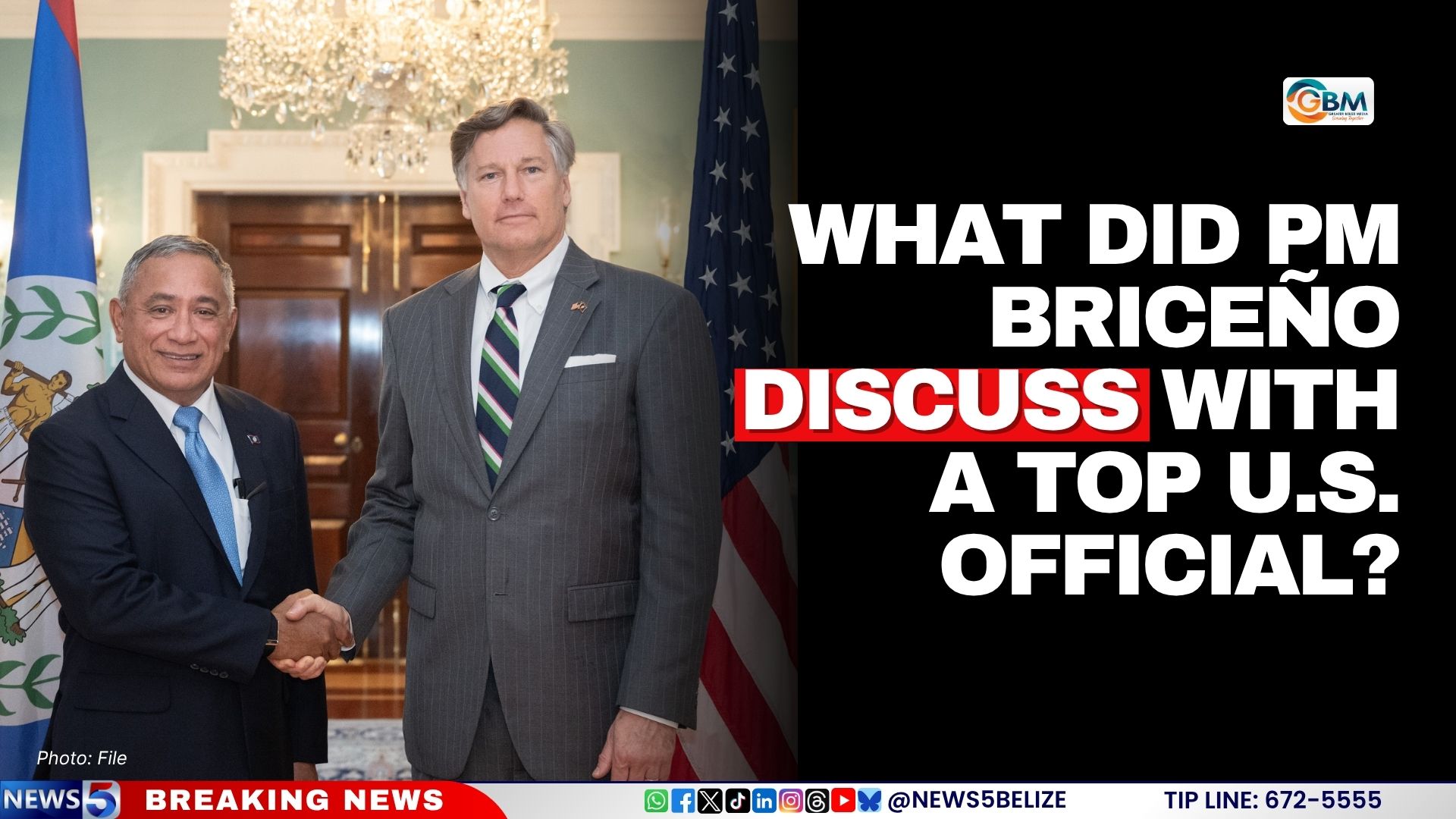
    On a Thursday diplomatic meeting in Washington D.C., Belizean Prime Minister John Briceño sat down with top U.S. official Christopher Landau, U.S. Deputy Secretary of State, to reinforce longstanding bilateral relations between the two nations and map out future collaboration across key priority areas. The high-level discussion, which unfolded July 24, 2026, centered on three core pillars: cross-border security, inclusive economic development, and sustained regional stability, according to official statements from both the U.S. Department of State and the Government of Belize.

    A major focal point of the conversation was the ongoing progress of the Millennium Challenge Corporation (MCC) Compact, a U.S. foreign assistance initiative designed to support economic growth and poverty reduction in partner countries. Prime Minister Briceño expressed his approval of the forward momentum the compact has achieved to date, and reaffirmed Belize’s formal commitment to maintaining close coordination with U.S. stakeholders to advance shared strategic goals through the program.

    Beyond infrastructure and development work under the MCC Compact, the two leaders dedicated substantial time to addressing pressing security challenges facing Central America. Per the U.S. State Department readout, the pair explored new opportunities to deepen security cooperation focused on disrupting transnational narco-trafficking networks and curbing patterns of unauthorized irregular migration across the region. These collaborative efforts, officials noted, are designed to address root causes of instability that impact both Belize and broader North American security dynamics.

    The talks also turned to expanding economic connectivity between the two nations. A official statement from the Government of Belize highlighted that Briceño and Landau discussed avenues to deepen bilateral trade and commercial linkages, with the ultimate goal of unlocking new investment opportunities that drive shared prosperity for residents of both Belize and the United States. Both sides reaffirmed that the longstanding partnership between Belize and the U.S. remains a cornerstone of regional stability and economic progress, with plans to continue regular high-level engagement in the months ahead.

  • Belize Looks to Go Green and Digital Through UNIDO Partnership

    Belize Looks to Go Green and Digital Through UNIDO Partnership

    In July 2026, following its participation in a high-profile regional gathering hosted in Montevideo, Uruguay, Belize has laid out an ambitious roadmap to advance green industrial development and digital inclusion for its small business sector through a new collaboration with the United Nations Industrial Development Organization (UNIDO).

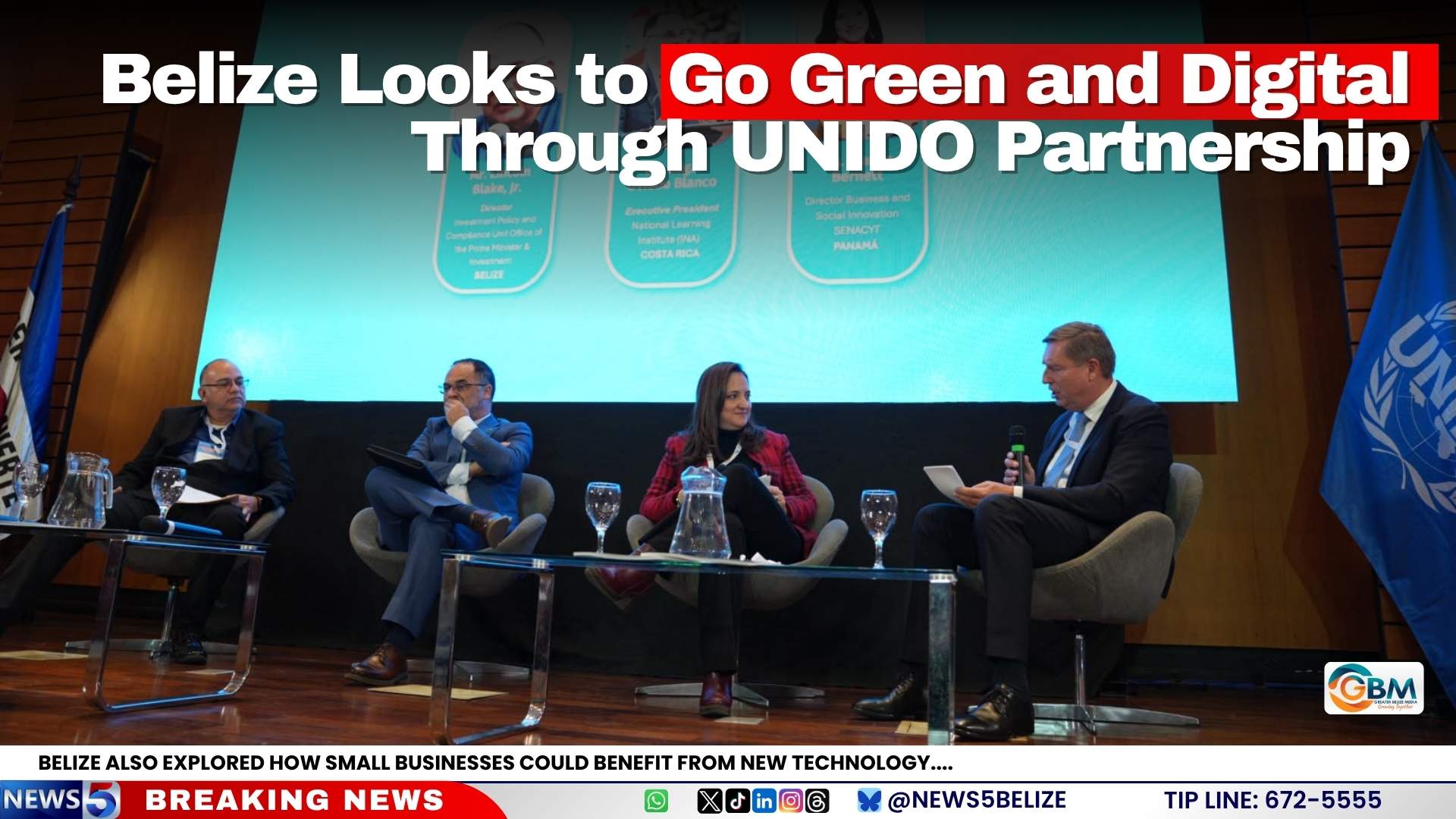
    The UNIDO Regional Conference for Latin America and the Caribbean, held 15 to 16 July, brought together heads of state, private sector stakeholders, and international development partners from across the region to address pressing challenges: how to strengthen industrial resilience, unlock inclusive economic opportunities, and build systems that prioritize long-term sustainability over short-term growth. Belize’s delegation, led by the country’s Ministry of Investment, took a prominent role at the event, showcasing its ongoing policy work and building new connections to support its development goals.

    At the core of Belize’s policy agenda is a National Industrial Strategy centered on expanding the country’s green and blue economies. This initiative, which already receives targeted support from both UNIDO and the Government of Japan, targets high-potential sectors including sustainable agro-processing and low-carbon manufacturing. By focusing on these areas, Belize aims to drive balanced economic growth that creates local jobs while preserving its rich natural ecosystems, a critical asset for the nation’s long-term prosperity.

    Beyond green industrial development, Belize is also prioritizing digital upskilling for its smallest business operators. Delegates held targeted working meetings with representatives from UNIDO’s AIM Global Alliance to explore concrete partnerships that would bring artificial intelligence training and accessible digital tools to micro, small, and medium-sized enterprises (MSMEs), which form the backbone of Belize’s domestic economy. These collaborations aim to close the digital divide, helping small local businesses compete in regional and global markets by leveraging cutting-edge technology.

    Regional development experts note that Belize’s approach aligns with a growing shift across Latin America and the Caribbean, where small and medium-sized economies are increasingly turning to sustainable development and digital innovation to reduce reliance on traditional sectors and build more resilient, future-proof economies.

  • Belize Escapes Trump’s New Tariffs

    Belize Escapes Trump’s New Tariffs

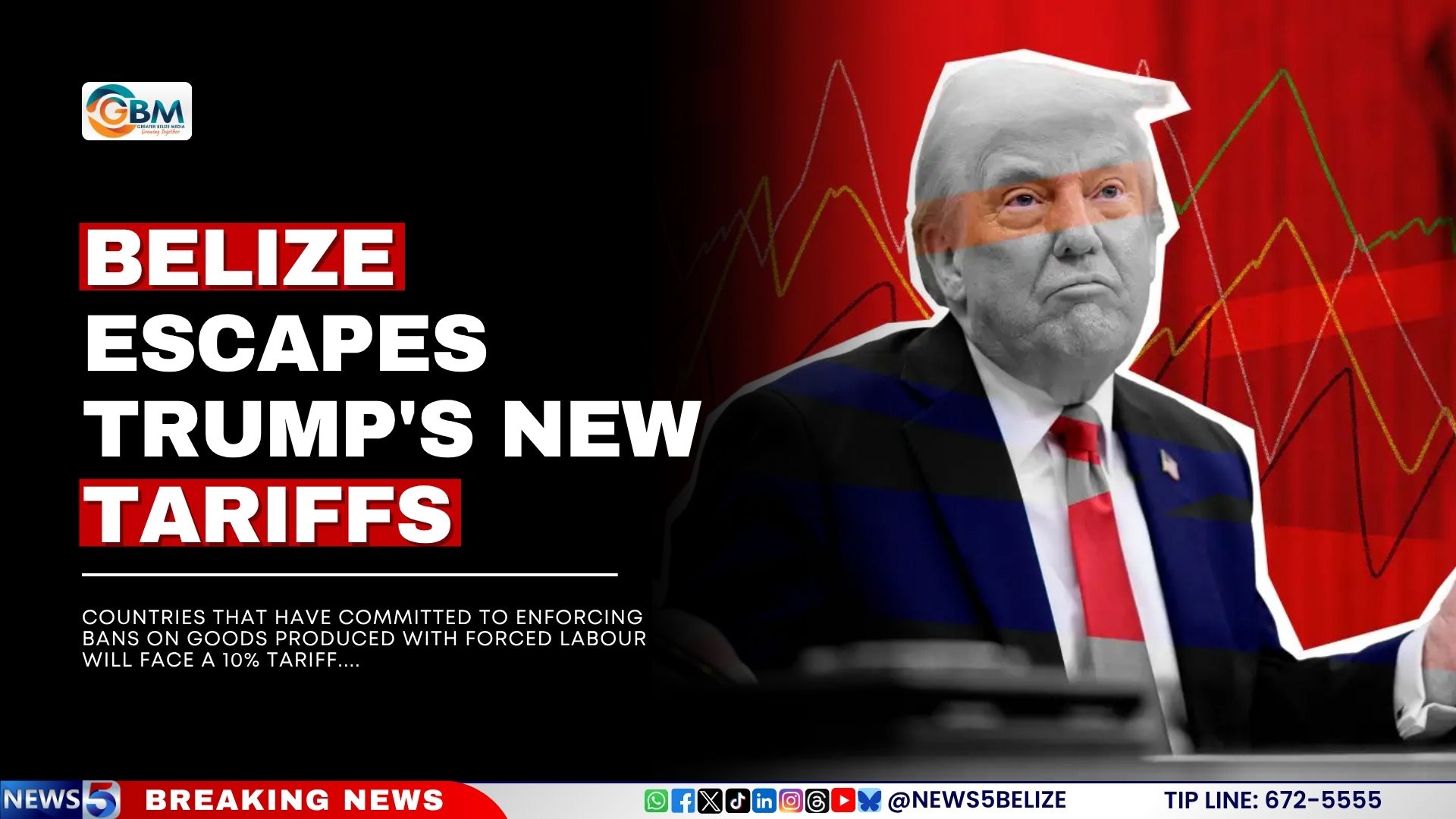
    In a major escalation of the Trump administration’s trade policy agenda, the United States has enacted a sweeping new round of import tariffs targeting 60 of its largest global trading partners, covering nearly all goods flowing into American markets. Effective July 24, 2026, the measures kicked in immediately after a previous temporary tariff regime expired, imposing duties ranging from 10% to 12.5% on imports from major economies including China, the United Kingdom, the European Union, Japan, Australia and Brazil. Notably, the small Central American nation of Belize has been left off the target list, escaping the new trade measures entirely.

    The Trump administration has framed the tariffs as a tool to pressure global trading partners to crack down on forced labor in cross-border supply chains. The tariff structure is tiered to reflect each country’s progress on enforcement: nations that have made formal commitments to ban goods produced with forced labor face the lower 10% duty, while jurisdictions deemed to have insufficient enforcement efforts face the steeper 12.5% rate.

    This latest round of tariffs forms a core pillar of President Donald Trump’s broader economic strategy, which prioritizes cutting the U.S. trade deficit and expanding domestic American manufacturing. This policy focus has remained a central priority for Trump since he returned to the presidency in 2025.

    While Belize has avoided direct impact from the new measures, economists warn the tariffs will send ripple effects across the entire global trade system. Analysts project the duties will push up operational costs for U.S. businesses and raise prices for American consumers, and may also prompt many countries around the world to deepen alternative trade partnerships that reduce their economic reliance on the United States.

  • Despite Growing Scrutiny, Musa Says Belizeans Still Trust the PUP

    Despite Growing Scrutiny, Musa Says Belizeans Still Trust the PUP

    Amid mounting public and political scrutiny over the controversial Mira Millions and Ministry of Defense procurement affair, senior Belizean Cabinet Minister Kareem Musa has pushed back against narratives that the scandal will damage the ruling People’s United Party (PUP), arguing instead that the controversy offers a historic opening to fix long-standing flaws in the country’s public contracting system.

    In comments delivered in late July 2026, Musa emphasized that the current controversy has laid bare systemic vulnerabilities that have plagued Belize’s public procurement processes for decades, affecting not just the current PUP administration but previous governments led by both the PUP and the opposing United Democratic Party (UDP). With the Briceño administration just one year into its second term in office and the next general election scheduled four years away, he said the government has ample time to implement sweeping reforms, rebuild public confidence, and demonstrate a clear commitment to accountability to Belizean voters.

    Central to Musa’s proposed reform package is the introduction of automated transaction monitoring systems designed to flag unusual spending patterns. A key loophole that the new rules would close involves the splitting of large contracts into hundreds of smaller invoices, each valued below the $10,000 threshold that currently triggers automatic review, all disbursed within a single 24-hour period. Under the proposed framework, the Ministry of Finance would receive an immediate alert whenever a government department processes an unusually high volume of small transactions in one day, creating an early warning system for potential misuse of public funds.

    Additional transparency measures outlined by Prime Minister Briceño and backed by Musa require the publication of every contract and competing bid for all public works and services valued under $50,000. Musa acknowledged that this level of transparency may be unpopular with some contractors bidding for public work, but stressed that upholding transparency and ensuring the Belizean public receives full value for taxpayer dollars must take priority over private industry concerns.

    Despite growing criticism and intensifying scrutiny of the administration’s handling of the procurement controversy, Musa rejected claims that public trust in the PUP has eroded significantly. He maintained that ordinary Belizeans still retain substantial confidence in the PUP administration’s ability to address the scandal and deliver meaningful, long-overdue reform to the country’s public spending system, adding that the government is fully committed to correcting the systemic weaknesses exposed by the current affair.

  • Musa Defends Procurement Decisions on Cost and Value Alone

    Musa Defends Procurement Decisions on Cost and Value Alone

    In a press interaction held on July 23, 2026, senior Cabinet Minister Kareem Musa has pushed back against growing scrutiny over undisclosed familial and political links between sitting Cabinet members and private sector suppliers contracted by the Ministry of Defense, reframing the public debate around procurement outcomes rather than personal connections.

    When questioned directly by journalist Paul Lopez about the documented ties between multiple high-ranking government officials—including the Cabinet Secretary and the Prime Minister’s own brother—and contracted suppliers, Musa declined to engage in debate over the perceived ethical optics of the relationships, instead arguing that procurement decisions should be judged on a single metric: whether the chosen contractor delivers the highest quality goods and services at the lowest possible cost to national taxpayers.

    Addressing specific questions surrounding one of the firms at the center of the controversy, the Mira group of companies, Musa noted that the business was established and already supplied government entities long before the relevant minister took office, though its current contract volume is far larger than historical orders. When pressed for details on MP Farms, a rebranded entity linked to the same group that was registered during the current People’s United Party (PUP) administration, Musa said he could not confirm the full details of the company’s rebranding process.

    When asked explicitly whether he endorses the practice of Cabinet members’ connected family businesses holding government contracts, Musa emphasized that his support lies first and foremost in full transparency, rather than a blanket ban on such firms bidding for work. He laid out a clear framework for his position: if a connected firm submits a bid that undercuts competing suppliers such as Save-U and Brodies on pricing for goods like fresh produce, the contract ought to be awarded to that firm, with the full details of the award and connection published publicly to uphold accountability. Musa added that any formal investigation into potential impropriety should be led by the auditor general, whose independent findings will determine the next steps for the government.

    This report is a transcribed excerpt from an evening television news broadcast, with all non-standard English comments rendered using a standardized spelling system for accessibility.

  • Scores of Government Invoices Fall Below Review Threshold

    Scores of Government Invoices Fall Below Review Threshold

    In a developing story that has put government procurement rules under the microscope, an investigation by local outlet News Five has uncovered a striking pattern: dozens of government invoices have consistently been processed just under the $10,000 threshold that mandates heightened financial oversight. The discovery has ignited debate over whether the practice is a deliberate end-run around accountability checks, or merely a bureaucratic shortcut to speed up routine government operations.

    Cabinet Minister Kareem Musa, who previously led the Ministry of Home Affairs, confirmed this pattern is not isolated to a single government department. In comments to reporters, Musa acknowledged that the pattern of sub-$10,000 invoicing appears across nearly all ministries, though he pushed back on claims of widespread abuse during his tenure at Home Affairs.

    Under existing government procurement rules, any payment exceeding $10,000 requires additional review, and contracts surpassing $50,000 must be forwarded to the Office of the Contractor General for formal audit. When asked whether the cluster of sub-threshold invoices stems from a push for administrative efficiency or intentional avoidance of oversight, Musa admitted both explanations are plausible. “It could be both,” he told reporters. “As you know, anything over fifty thousand has to go to the contractor general. And so you have to question. You have that right to question… that is what the Auditor General’s report will determine for all of us.”

    Pressed for details about his time leading the Ministry of Home Affairs, Musa confirmed that sub-$10,000 invoicing did occur during his tenure, but claimed it was limited to isolated individual cases rather than large-scale routine use. He added that questions about current practices should be directed to the sitting Home Affairs minister.

    The investigation also comes amid broader public scrutiny of government supplier selection processes. Reporters pressed Musa on whether his former department maintained a list of preferred suppliers, and specifically on his relationship with Tropicana, a local business that supplied boots to the ministry during his tenure. Musa confirmed Tropicana was one of three approved suppliers for the department, noting that the company provided the Garmon brand of boots that police officers specifically requested. He added that the ministry had previously tested locally made boots from another firm, Umbra Land, but returned to imported brands to meet officer preferences.

    Musa flatly denied allegations that he ever directed suppliers to split large contracts into multiple sub-$10,000 invoices to bypass formal oversight and speed up payment processing. He also emphasized that he did not involve himself in the day-to-day procurement process, leaving those decisions to ministry leadership, the chief executive officer, and the department’s internal procurement unit. “No, absolutely not, no,” he said, when asked if he had ever pressured suppliers to adjust invoice values to fall below the threshold.

    The findings come as the Auditor General prepares to release a full report on government procurement practices that will examine the pattern of sub-threshold invoicing and address questions about potential lack of accountability across government departments. This report is expected to resolve lingering questions over whether the pattern is accidental, a benign efficiency measure, or a deliberate violation of procurement rules intended to avoid public scrutiny.

    This report is based on a transcribed transcript of a televised evening news broadcast.

  • Social Media Lawsuit Collides with Push for Digital Media Regulation

    Social Media Lawsuit Collides with Push for Digital Media Regulation

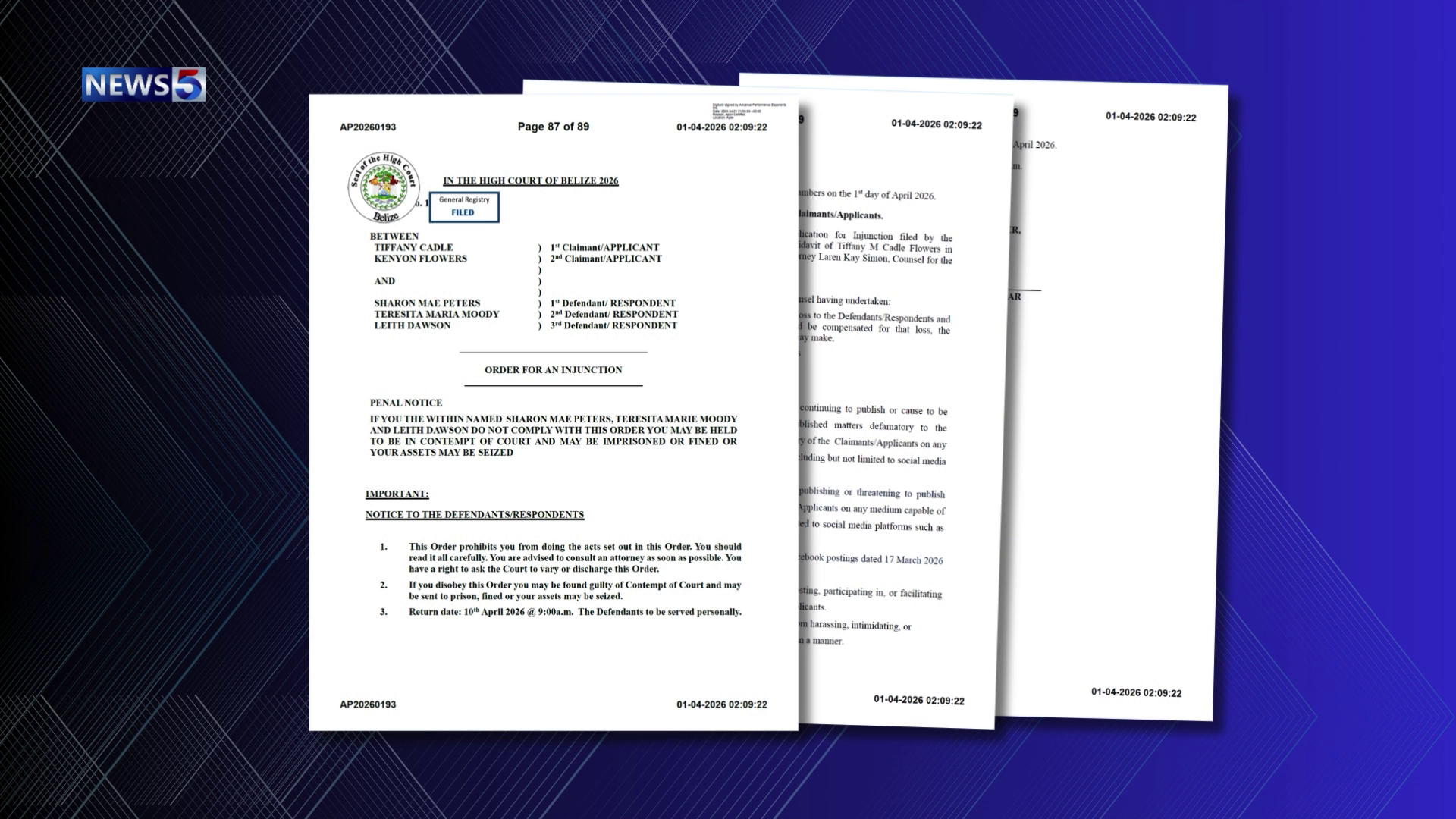
    In the summer of 2026, a unfolding legal battle in Belize’s High Court has become a critical focal point for national debates over sweeping changes to the country’s digital media oversight framework. At the center of the conflict is a defamation lawsuit filed by local attorney Tiffany Cadle and her husband Kenyon Flowers against three social media content creators—Sharon Mae Peters, Teresita Moody, and Leith Dawson—who have failed to submit a formal defense to the court, prompting the plaintiffs to pursue a default judgment.

    The dispute traces back to a March 2026 social media livestream, where Cadle alleges the defendants made false and defamatory statements about her and her spouse. Acting quickly to limit reputational harm, Cadle secured an emergency court injunction in early April that ordered the removal of the problematic content and a ban on further allegations against the couple. According to Cadle, however, lead defendant Sharon Mae Peters openly defied the court order, repeating the same false claims multiple times, including during another online talk show broadcast over the Easter holiday. Frustrated by the inaction, Cadle attempted to file cyberbullying charges with local police, but no formal action has been taken to date.

    As this legal process moves forward, the case is colliding directly with a separate, high-stakes policy debate: the Belizean government’s proposed 2026 Broadcasting Act, a legislative overhaul that would expand government regulation into the digital sphere for the first time. The core question uniting both the lawsuit and the policy debate is the same: who should be held legally responsible for harmful content shared online, and what rules should govern digital public discourse?

    Cadle, who is leading the legal action, says she strongly supports the principle of free expression online, including the right of online commentators to highlight issues of public concern that might otherwise go unreported in traditional media. But she argues that this right comes with a non-negotiable responsibility to ensure information shared with audiences is factually accurate. Currently, she notes, traditional terrestrial broadcasters like Belize’s Channel 5 and Channel 7 are held to clear legal standards for content accuracy—standards that she says unlicensed digital commentators should also be required to follow.

    A major point of public contention around the proposed new broadcasting law has been its scope: many ordinary social media users have raised concerns that the rules would crack down on casual online speech. Belize’s Broadcasting Authority has moved to ease those worries, clarifying that the legislation is not designed to regulate everyday social media users. Instead, licensing requirements would target online operations that function like traditional broadcasters, with eligibility based on factors including audience size, broadcast frequency, and whether the operation generates commercial revenue.

    But Cadle argues the proposed rules do not go far enough. She contends that any public commentator who regularly hosts livestreams to share political, religious, or community commentary with an audience should be required to obtain a license, to demonstrate they can operate as responsible digital content providers. “If the legislation’s goal is to protect the responsible dissemination of information by both traditional and online news outlets, there should be no exemptions for popular online creators who act like broadcasters,” Cadle explained.

    The defamation case has been adjourned to October 6, with the court scheduling mandatory judicial settlement talks between the parties. The allegation that Peters violated the initial court injunction remains an active matter before the High Court, separate from the underlying defamation claim. As the legal process unfolds, policymakers and advocacy groups across Belize are watching closely, as the outcome of both the case and the legislative debate will likely set a lasting precedent for online accountability in the country.

  • Rodwell Ferguson’s Son to Be Arrested After Police Confrontation

    Rodwell Ferguson’s Son to Be Arrested After Police Confrontation

    What began as a routine minor traffic stop in the coastal Belizean community of Placencia has erupted into a high-stakes controversy testing the boundaries of political privilege, institutional accountability, and equal application of the law. Authorities confirmed Wednesday that formal arrest is now imminent for Stoney Anson Ferguson, son of sitting Belizean government minister Rodwell Ferguson, following a string of serious allegations including verbal abuse of law enforcement, resisting detention, assault on an officer, and intentional damage to police property.

    The incident unfolded on Saturday afternoon, when Placencia District police attempted to pull over Ferguson’s white cargo truck near the popular Mariposa Resort over a confirmed traffic violation. Rather than stopping to comply with officers’ instructions, Ferguson reportedly launched into a verbal tirade of abuse against the responding officers before accelerating away to avoid receiving a citation.

    A short police pursuit ended with Ferguson being located and stopped, but the interaction quickly escalated. Witness and police accounts confirm Ferguson refused to cooperate with detainment, continued to hurl insults at officers, and physically shoved one officer during a struggle to take him into custody.

    The confrontation did not end when Ferguson arrived at the local police station. According to official reports, shortly after officers temporarily removed his handcuffs, Ferguson seized a large stone and hurled it directly at the arresting officer. The projectile missed the officer by only a narrow margin, but struck a parked police vehicle, shattering both its front and rear windshields. Officers immediately tackled Ferguson before he could pick up a second rock to throw.

    What makes the incident far more politically charged than a standard assault case is the interim release that followed: despite the gravity of the multiple felony-level allegations, Ferguson was ultimately released from custody after unspecified political figures placed calls to authorities on his behalf. That controversial decision has now been fully reversed, following direct intervention from another senior cabinet member. Minister of Infrastructure and Development Julius Espat has issued formal instructions that Ferguson be taken into police custody immediately to face the pending charges.

    The unfolding controversy has sparked widespread discussion across Belize about whether political connections were initially used to shield the son of a cabinet minister from facing the same legal consequences ordinary citizens would encounter for the same actions. This original report is a transcribed version of an evening television newscast, with Kriol language portions rendered using a standardized spelling system for publication.

  • Espat’s Anti-Crime Campaign Draws Early Criticism

    Espat’s Anti-Crime Campaign Draws Early Criticism

    Just weeks after Julius Espat stepped into the role of Belize’s Minister of Home Affairs, one of his ministry’s flagship public outreach initiatives has already sparked significant public controversy. The newly launched anti-crime campaign, crafted to deter criminal activity by highlighting the grim, life-ending outcomes of a life of crime, has drawn widespread criticism for its decision to feature explicit, graphic imagery and video content.

    The strategy behind the campaign leans into shock value: campaign designers bet that unflinching depictions of violence and criminal consequences would resonate more deeply with at-risk communities than softer, more measured messaging. But this approach has divided observers, even among past leaders of the ministry Espat now leads.

    Former Home Affairs Minister Kareem Musa, who held the post before Espat, has publicly pushed back against the campaign’s creative choices. In comments to local reporters, Musa clarified that he would never have signed off on the campaign’s graphic material, while acknowledging that different leaders bring distinct policy and communication styles to the role.

    “I would not have done it and I know that different ministers and CEOs have a different style and strategy. So, I don’t want to be extremely critical of it, because in some instances people will say they appreciate the messaging that at the end of the day you end up dead or in jail, so you should not use a life of crime. Personally, I did not like the graphic or images of it and I would not have gone with that,” Musa told reporters.
    When asked whether he believed the graphic approach would work as an effective crime deterrent, Musa cast doubt on its impact. “For me no, but you would have to ask the public whether that was effective, but for me no,” he said.

    Beyond sharing his critique of the campaign, Musa confirmed that he had recently held a private meeting with the new minister to offer guidance on navigating the complex responsibilities of the Home Affairs portfolio. As the debate over the campaign’s tactics unfolds, public opinion remains split: some residents have voiced support for unfiltered messaging that confronts the human cost of violent crime, while others have raised concerns that the explicit content could be harmful to young viewers and unnecessarily traumatize communities already impacted by violence.

    This report is adapted from a transcript of a televised evening news broadcast, with translated Kriol language content rendered using a standardized spelling system.