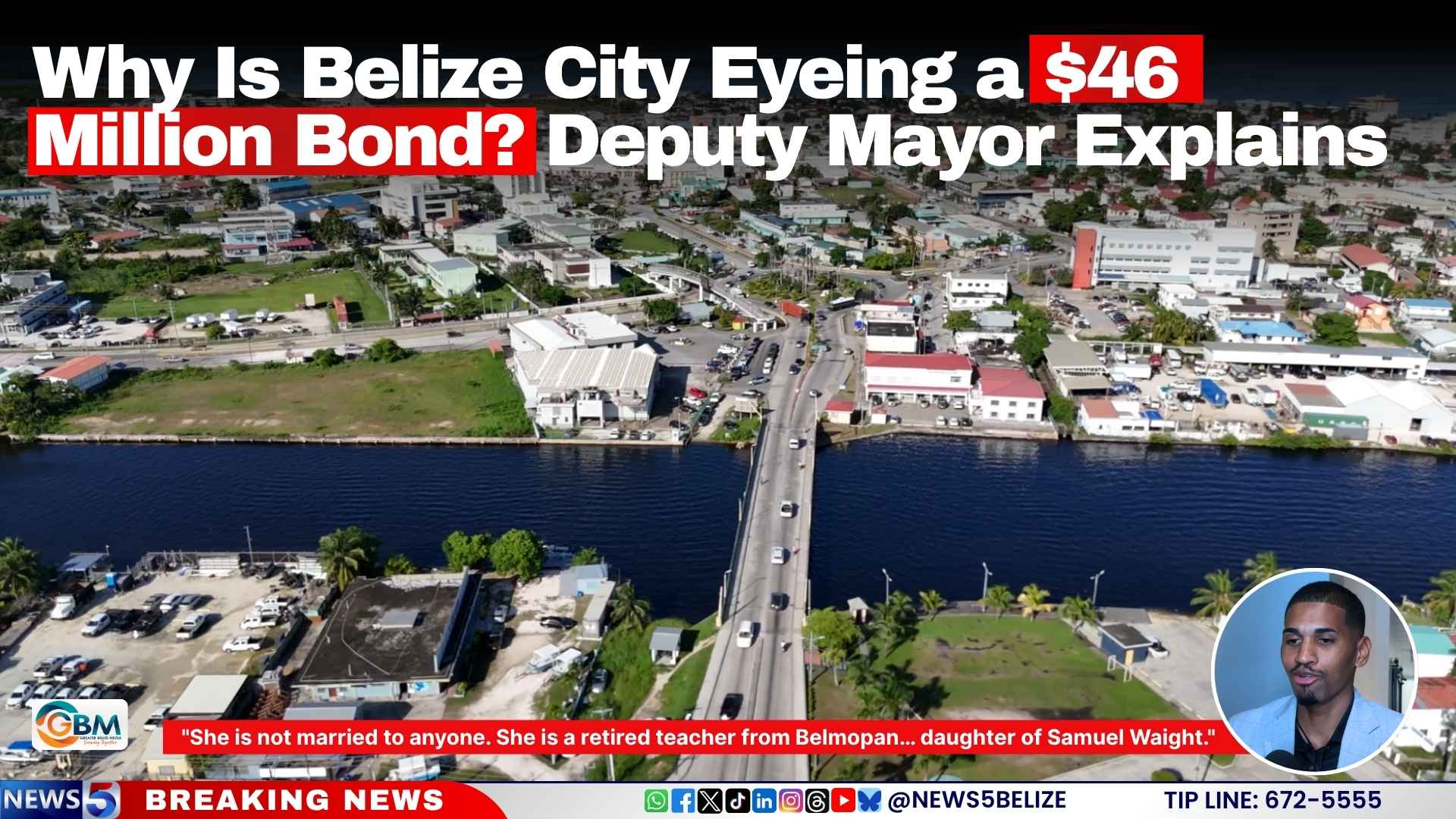
On July 24, 2026, Belize City Deputy Mayor Eluidge Miller has moved to clear up widespread public confusion surrounding the municipal government’s planned $46 million bond offering, pushing back against misinformation that frames the entire sum as brand new borrowing for the city.
In a public address addressing growing community questions, Miller clarified that the total bond value combines two key financial components: the refinancing of existing short-term municipal obligations, and targeted new capital for upcoming city projects. He explained that more than $20 million of the total $46 million is tied to reprofiling existing debt, shifting what were originally 12 to 24-month short-term financial commitments into 5 to 10-year long-term instruments to ease near-term budget pressure on the city.
“I would not want for anybody to get the idea that we’re taking on $46 million in new investment,” Miller emphasized, noting that only the portion above the existing refinanced obligations counts as new capital for development.
The deputy mayor also moved to reassure investors and residents alike of the council’s strong fiscal track record, even through a series of recent external shocks that have strained local government budgets across the Caribbean. He highlighted that both the COVID-19 pandemic and 2022’s Hurricane Lisa dealt significant blows to Belize City’s economy and revenue streams, yet the council has never once defaulted on an interest or principal payment for its existing municipal debt. “We have been able to meet every single payment,” Miller said. “I am proud to say that we have never defaulted on an interest or principal payment.”
Miller also addressed a second common question from the public: why the council relies on bond offerings rather than funding large projects through its regular annual operating budget. He explained that major capital infrastructure projects carry price tags far too large to be covered by day-to-day tax revenue and operational income, making municipal bonds the most practical and accessible financing tool available to local leadership.
Beyond easing budget strain, Miller noted that bond offerings also open up opportunities for external investors to contribute to Belize City’s long-term growth. The city has relied on this financing model for years, he pointed out: over the past six to seven years, municipal bonds have enabled critical upgrades to more than 300 of the city’s more than 700 public streets, work that would not have been possible through annual budget allocations alone.
Looking ahead, if the bond offering moves forward as planned, the new capital portion will fund two key priority initiatives for the city: an expansion of Belize City’s e-mobility bus fleet to reduce carbon emissions and improve public transit access, and a new round of critical infrastructure upgrades across the city to address longstanding maintenance backlogs.