标签: Belize

伯利兹

  • CARICOM Condemns US Actions on Cuba

    CARICOM Condemns US Actions on Cuba

    On May 27, 2026, the Caribbean Community’s Council for Foreign and Community Relations (COFCOR) delivered a forceful rebuke of the United States’ recent tightening of economic and trade sanctions against Cuba, marking a major show of regional pushback against Washington’s long-standing policy toward the island nation.

    In an official statement released following the body’s latest deliberations, COFCOR emphasized that the 60-year U.S. embargo on Cuba has already inflicted widespread, sustained harm to Cuban households and local livelihoods across the country. The newly expanded restrictions, which include disruptions to Cuban fuel imports, have now pushed the country into a full-blown humanitarian emergency, the council argued. COFCOR reaffirmed Cuba’s sovereign right to import critical energy resources, and labeled the U.S. obstruction of these supplies as an unjustifiable violation of both fundamental human rights and the principles of free global trade.

    Beyond the economic and humanitarian impacts, regional leaders also sounded a urgent alarm about recent public discourse hinting at potential U.S. military action against Cuba. The council stressed that any act of military aggression targeting the island would send shockwaves through the entire Caribbean region, unraveling years of collaborative work to maintain the Caribbean’s status as an internationally recognized Zone of Peace. “Cuba poses no threat to any nation,” the statement reiterated, pushing back against narratives framing the country as a security risk to other hemispheric powers.

    Notably, the declaration did not receive unanimous backing from all 15 CARICOM member states. While the vast majority of bloc members endorsed the critical statement, two nations — Guyana and Trinidad and Tobago — chose to reserve their official positions on the text, revealing a small degree of internal division within the regional bloc over how to address tensions between the U.S. and Cuba.

    The rebuke comes as diplomatic friction over Cuba policy has reignited in the Caribbean, where many regional governments have long opposed the U.S. embargo as a violation of international law and a barrier to regional economic integration. COFCOR’s statement adds to growing global pressure on the United States to reconsider its long-standing sanctions regime, which has drawn repeated criticism from international bodies for its disproportionate impact on civilian populations.

  • Mexico Steps In After Trump Bars Iran’s World Cup Team

    Mexico Steps In After Trump Bars Iran’s World Cup Team

    As the 2026 FIFA World Cup co-hosted by the United States, Mexico and Canada approaches, a geopolitical dispute has disrupted competition logistics for Iran’s national men’s football team, with Mexico stepping in to accommodate the squad after a controversial restriction from U.S. President Donald Trump.

    The 2026 World Cup, running from June 11 to July 19, has scheduled all three of Iran’s Group G matches for U.S. host cities: two matches against New Zealand and Belgium in Los Angeles, and a third against Egypt in Seattle. Despite approving Iran’s participation in matches held on American territory, Trump issued an order barring the Iranian squad from staying overnight anywhere in the U.S. The restriction comes amid a three-month ongoing U.S.-Israeli military campaign against Iran that launched on February 28, a conflict that has already killed roughly 3,468 people and injured more than 26,500, according to data from Al Jazeera.

    In March, Trump defended the policy, claiming that barring overnight stays was “appropriate” “for their own life and safety.” As of press time, entry visas for Iranian team members have not yet been issued by U.S. authorities. Stuck between its match schedule and the U.S. travel restriction, global governing body FIFA turned to neighboring Mexico to resolve the logistics gap.

    Mexican President Claudia Sheinbaum publicly confirmed the new hosting arrangement during her daily press briefing on Monday. “The United States doesn’t want the Iranian team to spend the night…So they asked us, ‘Can we stay the night in Mexico?’ We said sure, no problem,” Sheinbaum told reporters. She added that Mexico sees no justification for turning the Iranian team away, saying “We have no reason to deny them the possibility of staying in Mexico.”

    Under the new plan, Iran will establish its team base at the Xoloitzcuintle Centre in Tijuana, a Mexican city located just south of the U.S.-Mexico border opposite San Diego, California. On each match day, the squad will cross the border into the U.S. to compete before returning to their Tijuana base after the game.

    The unusual arrangement highlights how geopolitical tensions are spilling over into global football less than three months before the kickoff of the 2026 tournament, which is the first expanded 48-team World Cup in history.

  • FFB Coach Critically Injured After Bus Crashes Into Cane Truck

    FFB Coach Critically Injured After Bus Crashes Into Cane Truck

    A late-night traffic collision in northern Belize has left a senior Football Federation of Belize (FFB) coach critically injured, with multiple youth footballers and other technical staff also hurt after their team bus crashed into a parked sugar cane truck. The incident unfolded on Tuesday evening along San Victor Road in Corozal District, as the group was returning from a scheduled training session for the FFB Northern Zone High Performance Program.

    When the FFB team bus made contact with the stationary cane truck, most people on board sustained only minor injuries that were treated quickly at local medical facilities. But the program’s most senior leader — identifying as Villamil, who serves as NSC Corozal coordinator and high-performance head coach — received life-threatening harm. Positioned in the front passenger area of the team coach bus, she was left pinned inside the crumpled wreckage by the force of the impact.

    First responders from local law enforcement, emergency medical teams, and even local residents who rushed to the scene worked together quickly to extract her from the destroyed vehicle. She was immediately airlifted by emergency transport to the country’s main tertiary care center, Karl Heusner Memorial Hospital (KHMH) in Belize City, where clinical teams continue to monitor her. As of the latest FFB update, her status is listed as critical but stable, giving small hope for her recovery.

    In response to the high demand for blood products to support her ongoing care, the FFB has issued an urgent public appeal for donations of O+ blood, which is the required type for her treatment. The federation has directed any community members who are willing and able to donate to contact the hospital directly to coordinate their contribution.

    The crash has sent shockwaves through Belize’s small football community, which is now coming together to support the injured coach and her family as she fights for recovery.

  • Sticker Shock at the Meter: What’s Driving Higher Bills?

    Sticker Shock at the Meter: What’s Driving Higher Bills?

    Across Belize, thousands of households are opening their monthly electricity statements to jaw-dropping numbers that have left many reeling financially and frustrated with the national utility provider. Starting in early 2026, widespread reports of bills doubling and even tripling compared to previous months have spread across social media, uniting residents in shared anger and confusion over the unanticipated price surge. For working families already navigating broader cost-of-living pressures, the unexpected jump in energy costs has stretched already tight budgets to breaking point, leaving many questioning what is actually driving the sudden increases.

    The national utility provider, Belize Electricity Limited (BEL), has publicly addressed the outcry, attributing the higher bills entirely to unseasonably warm seasonal temperatures. In an official statement released in response to public inquiries, the company noted that warmer weather forces cooling systems – from ceiling fans to central air conditioning units – to run far more frequently and work harder to maintain comfortable indoor temperatures, which directly increases total energy consumption and final billing totals. BEL added that it prioritizes customer well-being and offered small, actionable energy-saving tips for residents, such as using circulating fans to reduce AC reliance and closing window blinds during the hottest peak daytime hours to block solar heat.

    But this explanation has failed to satisfy thousands of angry customers, many of whom point out that their energy use habits have not changed, even as their bills have skyrocketed. A resident of San Pedro shared her statement with local outlet News Five, showing that her bill has more than doubled over just three months, despite only running a single refrigerator and keeping her daily energy routine unchanged. A second resident from Orange Walk reported a $167 jump in her monthly bill, also noting that the only major appliance in her home is a single refrigerator. Even a Belize City resident who occasionally runs an AC for short periods reported a more than $105 increase, a jump far out of line with his minimal additional usage.

    A number of customers have also raised questions about BEL’s recent shift to digital metering, claiming that their bills began climbing immediately after the new meters were installed. When pressed on this claim, BEL denied that any changes have been made to billing calculation systems, maintaining that its metering and billing processes remain unchanged.

    In on-the-record interviews with News Five reporter Britney Gordon, multiple customers emphasized that they already practice strict energy conservation, yet are still facing crippling increases. “I don’t consume that amount of electricity. You understand? Because once I go into one room, I put on that light. Once I’m not in the room I turn off the light,” one BEL customer told Gordon. When asked if she had noticed a dramatic change in bills since April, the customer responded that costs have climbed across the board: “Right now. It’s going up. Everything’s going up. Whenever gas goes up, everything goes up.”

    As of May 26, 2026, BEL continues to stand by its temperature-driven explanation and has urged residents to adjust their energy habits to lower costs. News Five has reached out to BEL for additional comment and further clarification on customer concerns, but has not yet received a formal response. The public outcry continues to build, with growing calls for an independent audit of the utility’s billing practices to resolve the conflicting claims.

  • Squeezed by Fuel and Competition, Dollar Van Drivers Raise Fare

    Squeezed by Fuel and Competition, Dollar Van Drivers Raise Fare

    Belize City’s iconic dollar van service, long a staple of affordable local public transit, is set to implement a steep fare hike starting June 1, pushing the standard adult ride from $2 to $3. The price adjustment, which drivers and association leaders frame as an unavoidable financial necessity, comes as two mounting pressures—skyrocketing fuel costs and cutthroat competition from unregulated private ride services—continue to erode operator profit margins.

    Fuel prices in the region now approach $15 per gallon, a sharp increase that has transformed daily operations for dollar van drivers, most of whom must refill their vehicles every single operating day. Paul Nwuaobi, Vice President of the Belize Dollar Van Association, outlined the crippling new cost structure facing drivers: Where operators previously spent between $100 and $110 on daily fuel, that figure has now jumped to nearly $160. “We basically end up working just for the gas station,” Nwuaobi explained, noting that many drivers go home at the end of the day with no tangible profit left after covering fuel and overhead. Beyond fuel, he added, rising costs for routine vehicle maintenance have also put greater strain on operators. To keep vans safe, roadworthy, and up to regulatory standards, drivers must cover increasingly expensive repair costs, making a fare adjustment critical to keeping the service operational. “Any business needs to turn a small profit to survive,” Nwuaobi emphasized.

    The fare hike is not the first to hit Belize City’s public transit sector in recent weeks: Independent bus operators already raised their fares at the start of May, leaving daily commuters facing a cumulative hit to their household budgets. For residents who rely on dollar vans to get to work, school, and daily errands, the extra $1 per ride adds up quickly. Many local residents shared that the increase will force difficult budget trade-offs as the overall cost of living continues to climb across Belize. “For people who travel to work every day, you end up having to cut back on groceries just to afford bus fare,” one long-time daily commuter told News Five reporter Britney Gordon. Another local resident, who has two daughters commuting to work in the city daily, noted that working households will feel the impact almost immediately. Even as many residents acknowledge the pressure drivers face, the added cost remains a heavy burden, particularly for low-income families already struggling to make ends meet. One resident pointed out that the $3 fare only covers short trips, making the increase even more disproportionate for everyday riders.

    In a decision designed to ease the burden on family commuters, the association has chosen to leave children’s fares unchanged at $1, a move meant to avoid compounding costs for parents traveling with multiple kids. “We know how hard it is,” Nwuaobi said of the choice. “If we raised kids’ fares too, parents traveling with multiple children would face an overwhelming extra cost, so we decided to leave that rate as it is.”

    Beyond fuel and maintenance costs, the association is also grappling with ongoing competition from unregulated private pick-up services that operate along the same routes as dollar vans, undercutting regulated operators and pulling away riders, further cutting into driver earnings. The association confirmed it remains in active dialogue with the Belize City Council to address this issue and find a balanced solution for all transit providers. For now, drivers are holding out hope that the fare hike will keep their service afloat until broader economic relief brings down fuel costs, allowing fares to be adjusted downward again in the future. Even as the service outgrows its original “dollar van” name, operators remain committed to continuing their core role as an accessible transit option for Belize City residents.

  • Family Alleges Cover-Up After Brutal Machete Assault in San Marcos Village

    Family Alleges Cover-Up After Brutal Machete Assault in San Marcos Village

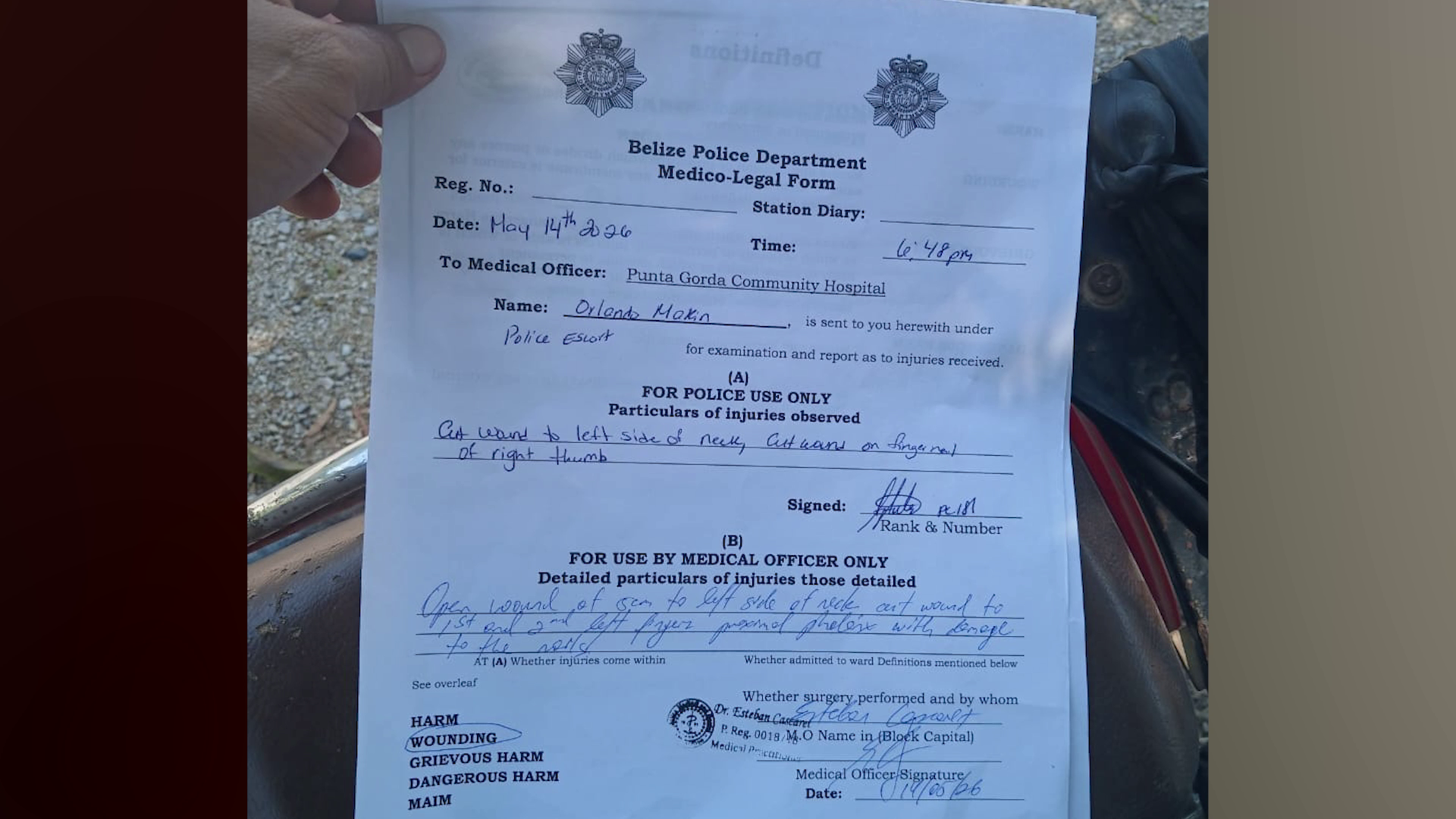
    A brutal machete attack in the quiet community of San Marcos Village has sparked explosive accusations of official influence and a deliberate cover-up, leaving a victim’s family living in daily fear more than a week after the assault. What began as a residential invasion on May 14 has devolved into a clash over conflicting narratives, with the victim’s relatives and local village leadership offering starkly different accounts of how the attack unfolded—and why no suspects have been taken into custody.

    Orlando Makin was the primary target of the assault, according to his family, which says a long-running dispute erupted into violence when a group of men forced their way into the Makin family home. In the chaotic confrontation, Orlando was hacked with a machete, and the attackers turned their weapons on Orlando’s mother before fleeing the scene. What has compounded the family’s trauma is the complete lack of law enforcement action in the days since the attack: the suspects remain free in the community, openly carrying machetes in public, and police have yet to make any arrests.

    In an exclusive phone interview, Mario Makin, Orlando’s brother, detailed the family’s frustration with the slow-moving investigation. “From the 16th, the police came and they didn’t arrest those guys. They only took my brother to the hospital,” Makin explained. After the attack, Orlando’s mother formally filed a police report and requested court intervention, but law enforcement has not moved forward with apprehending the suspects. “Up to now, the people that did all those and people that did the chopping, they’re still walking free on the road with the machete in their hand. We still see them around, walking with machetes,” Makin said. The family claims one of the main accused attackers has close personal ties to San Marcos’ top village leadership, and that this connection is why authorities have failed to act. The ongoing presence of the suspects has left Orlando’s mother, who stays alone at the family home while her grandchildren attend school, in constant danger. “When I just went to check to the police station again, they told me that they will look into it again, but only like that, they’re saying they’re still investigating,” Makin added.

    Attempts to reach San Marcos Chairman Alberto Muku and Village Alcalde Marcos Choc for comment on the accusations went unanswered, as both leaders were unavailable for interviews. But Juan Caal, secretary to the alcalde, offered a counter-narrative that completely contradicts the Makin family’s version of events.

    Caal told reporters that on the afternoon of May 14, while village leadership was attending an off-site meeting, authorities received word of an altercation involving two attackers and the chairman’s brother on a residential backstreet. According to Caal’s account, the clash was initiated by the Makin side, with Orlando Makin acting as the initial aggressor who attempted to attack the chairman’s brother. The injuries Orlando sustained, Caal claimed, came during a struggle for control of Makin’s own machete, when Makin accidentally cut himself while the chairman’s brother acted in self-defense. Caal said village police under the alcalde’s command attempted to arrest the attackers immediately, but all suspects managed to escape. Local leadership then called in the Punta Gorda Police Department to take over the investigation and coordinate efforts to apprehend the fugitives. Caal emphasized that both the alcalde and the chairman are committed to upholding equal justice for all residents and have no bias in the case, confirming only that no arrests have been completed to date.

    As the competing accounts stand, the Makin family continues to wait for justice, while questions persist about whether political connections are undermining law enforcement efforts in the small rural community. This report is a transcript of a televised evening newscast, with Indigenous Kriol speech transcribed to standard English spelling for accessibility.

  • Cop vs Cop Clash at Gas Station Ends in Court

    Cop vs Cop Clash at Gas Station Ends in Court

    A routine traffic enforcement interaction between two serving Belizean police officers erupted into a violent physical confrontation at a popular gas station in Belize City earlier this year, bringing the case and its implications for local law enforcement under public scrutiny following the suspect’s first court appearance.

    The confrontation stemmed from a traffic violation on May 26, 2026: 31-year-old Police Constable Louis Pascascio is alleged to have run a red light at the intersection of Saint Thomas Street before driving to the Puma gas station located on Freetown Road. On-duty Police Constable Jose Mejia observed the violation, followed Pascascio to the station, and initiated a standard traffic stop.

    What was expected to be a routine interaction quickly turned violent, according to official statements from Mejia. He told investigators that Pascascio refused to comply with repeated verbal commands to stop, moved aggressively toward Mejia, and slapped him in the face, which left a visible cut on Mejia’s lower lip. In response, Mejia acted to subdue Pascascio and took him into custody at the scene. It was only after the detainment was complete that Mejia confirmed the individual he had stopped was a fellow member of the Belize Police Department.

    Pascascio was formally charged with aggravated assault following the incident. He made his first court appearance this week, where a judge granted him bail. As a condition of his release, Pascascio is required to stay at least 100 feet away from Mejia at all times until the case concludes. He is scheduled to return to court on July 30 for the formal evidence disclosure hearing.

    This is not the first time Pascascio has faced criminal legal proceedings. In 2024, he was charged with firearm assault in an incident involving well-known Belizean athlete Shaun Gill. That case was ultimately withdrawn by prosecutors before it went to trial, leaving no conviction on Pascascio’s record from that incident.

    The unusual inter-officer clash has drawn local attention, raising questions about protocol for off-duty officer interactions and accountability within the Belize Police Department as the court process moves forward.

  • City Leases Questioned as Court Backs Property Rights

    City Leases Questioned as Court Backs Property Rights

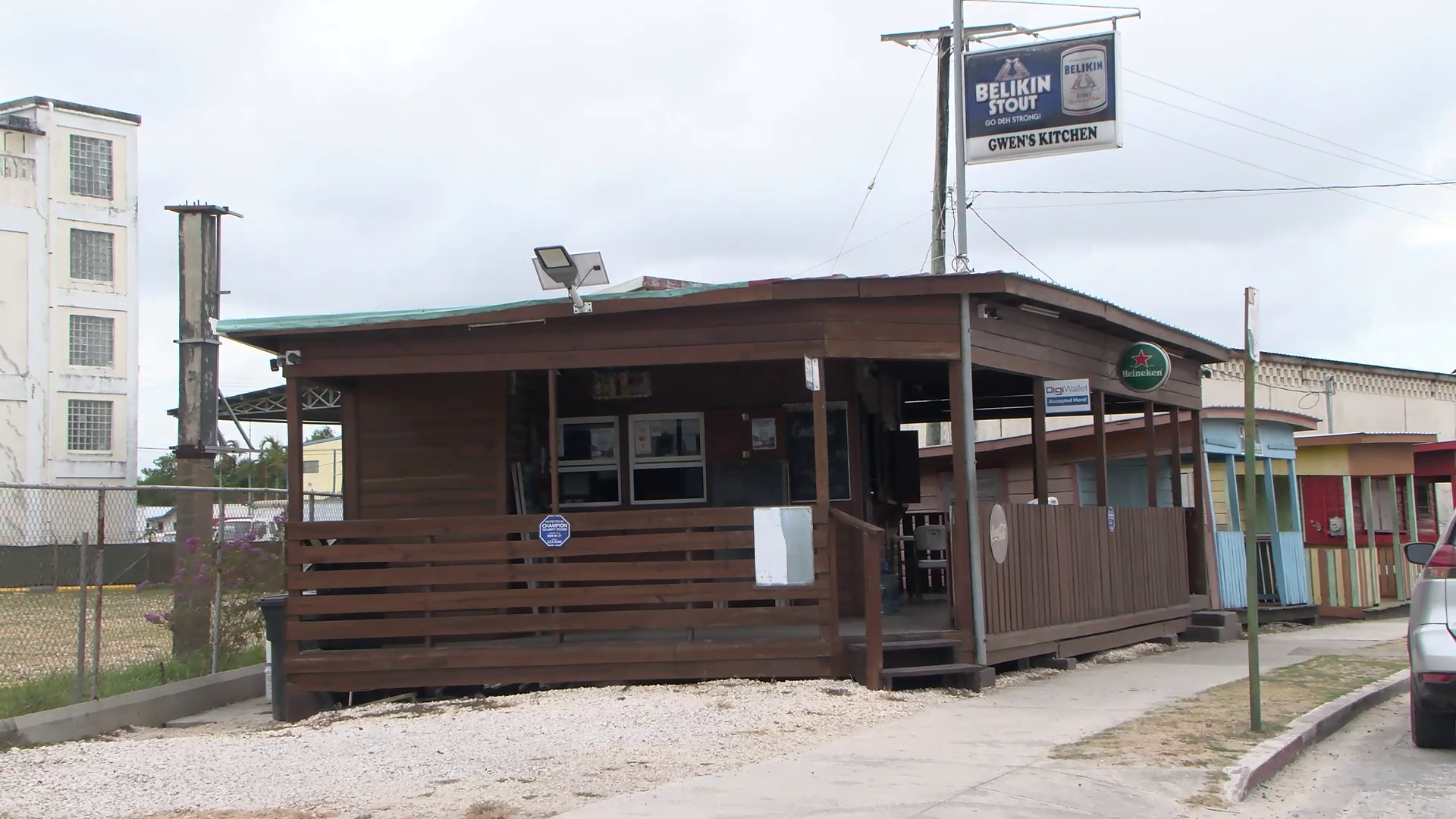
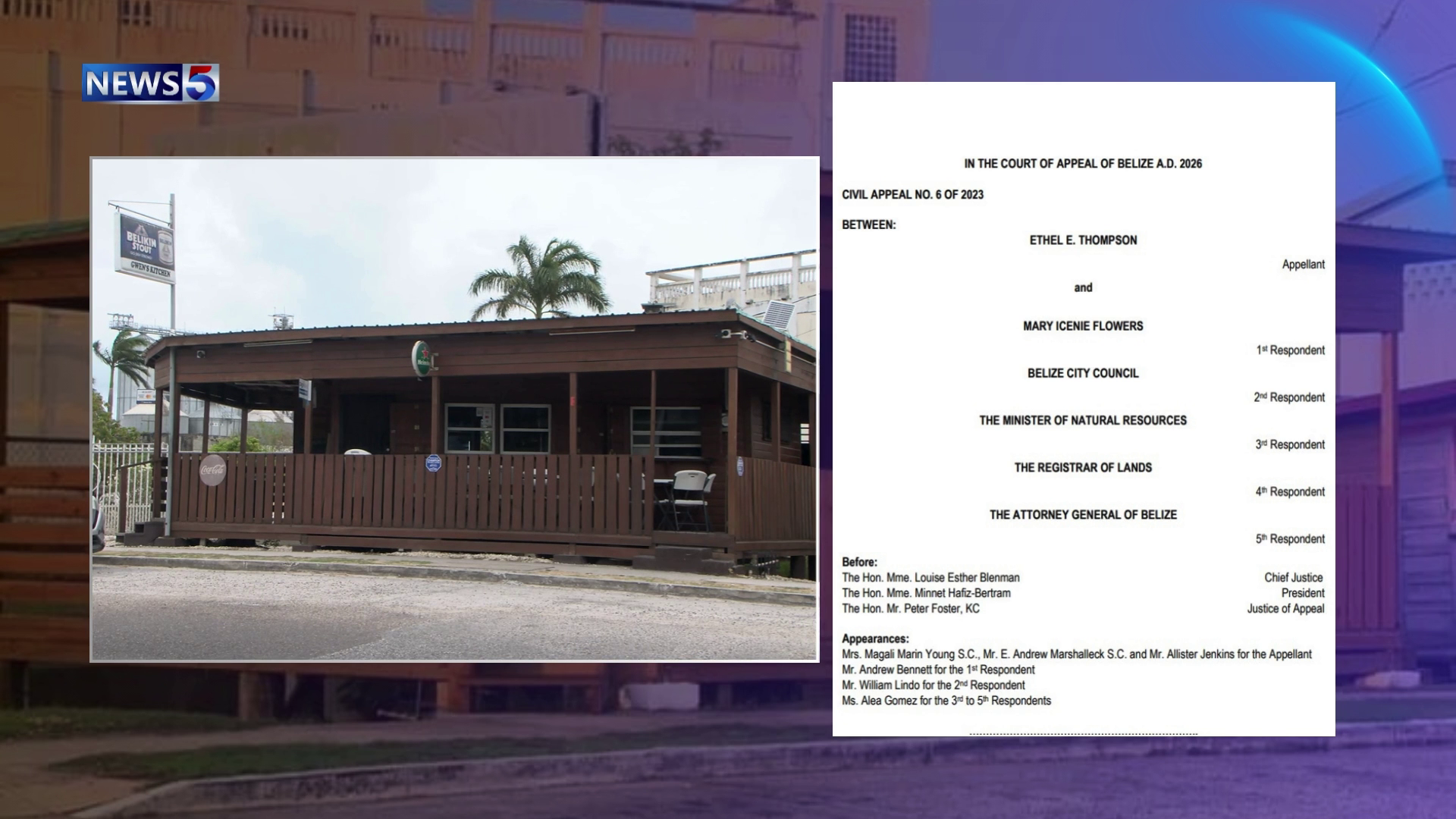
    A landmark 2026 Court of Appeal ruling on a long-running Belize City land dispute has sent shockwaves through the country’s small business community, leaving dozens of street vendors and longtime local establishments questioning the security of their city-issued operating leases. At the center of the case is Gwen’s Kitchen, a popular roadside restaurant on Coney Drive that fought a five-year legal battle over the land it occupies. The court’s decision upheld titled property owner Ethel Thompson’s rights, ruling that leases issued by the Belize City Council do not supersede the legal property rights of formal titleholders. City Hall and national authorities were found to have violated Thompson’s rights by issuing a lease and later a land title to Gwen’s Kitchen without providing formal notice to the titled landowner. While restaurant owner Tiffany Cadle ultimately retained control of her property and business after the ruling, the outcome has sparked widespread alarm among small business owners across Belize City who operate under identical city-issued lease arrangements.

    One of the districts most affected by the ruling is the Mahogany Street Marketplace, home to dozens of long-running local businesses that have operated on city-leased land for years. Among them is Belizean Meat Pies, which has served the community for more than five years, Third Kitchen, a 17-year-old local eatery, and Willie D’s Exotic Barbershop, which has been in operation for 15 years. All three, along with dozens of neighboring vendors, now face the prospect that their leases could be challenged by adjacent titled property owners, leaving their businesses in legal limbo.

    For Cadle, the five-year legal battle that began in 2020 has ended with a hard-won victory. “It’s going on five years. It started, I think, in 2020, and we are in 2026. We feel good. And we’re happy that our building remains, our business remain, the property remains for us. Every single person have a right to survive and we saw the portion of land. It was not being used. It was a vacant piece of property and we saw the idea that we could put up a small restaurant here. And one of the things that I have noticed is that people don’t realize the value of something until when somebody else create a value in it,” Cadle explained in an interview after the ruling. She noted that the core of the court’s judgment centered on the failure to notify the Thompson family before the city leased and sold the land, a procedural error that invalidated the city’s original actions.

    For street vendors like Ainsley Castro, who operates a food business in the Mahogany Street buffer zone under a city lease, the ruling poses an existential threat to his livelihood. “At the end of the day, da just poor people we and we just have to inna it to survive. Cah see me, I no gwein no way from out ya cause I no got no money to go to court. I no got no way fi goh mein. All ah they da fi me man then this wa pass down to my kids, and I think they da the same way pan da side deh,” Castro shared, when asked about his future. “I familiar with everybody, everybody familiar with me. And then I gone far, I deh far, so I can’t turn back and also I wouldn’t want that for nobody also because at the end of the day, right now it rough right now, so we just have to catch on. And they time ya we push some quality food. I noh lie yo. So we do it with a lot of passion.” When asked if he had ever pursued formal title to the land he occupies, Castro acknowledged that the idea had never been fully explored, but that it was now a priority to protect the years of investment he has put into his business.

    Belize City Mayor Bernard Wagner confirmed that the city council is currently reviewing the ruling with deep concern, particularly given its disproportionate impact on low-income small vendors operating on city reserve land. Wagner noted that the council’s immediate priority is to find a balanced solution that protects vendors’ existing lease rights, upholds the formal property rights of titled landowners, and preserves the council’s authority to issue future operating licenses. He added that the ruling also highlights the urgent need to formalize titles for city-owned public spaces including parks and playgrounds to prevent similar disputes over public land. The council is currently consulting with its legal team to map out a path forward, which may include an appeal of the ruling to the Caribbean Court of Justice (CCJ), the region’s highest appellate court.

    Cadle says she expects further legal action to resolve the broader policy questions raised by the ruling. “The judgment will allow my business to continue there. It is a position where maybe the government or a city council might have to decide if they want to take it further so that they can see what the CCJ has to say about that because I believe that the act that governs them tell them what they can and can’t do with property which they have control of,” Cadle said. Until the legal process is fully resolved, hundreds of small business owners across Belize City are left navigating daily uncertainty, continuing to serve their loyal local customers while waiting to learn whether the ground beneath their businesses will remain secure.


  • Courtroom Victory Turns Costly for Gwen’s Kitchen

    Courtroom Victory Turns Costly for Gwen’s Kitchen

    For small business Gwen’s Kitchen based in Belize, a recent ruling from the nation’s Court of Appeal delivered a legal victory that comes with a devastating financial sting. After five years of contentious litigation over their rights to the small parcel of land their restaurant occupies, the appellate court upheld a lower court decision that largely favored the local eatery – but refused to order the opposing side to cover Gwen’s Kitchen’s accumulated legal fees, leaving the small operation on the hook for thousands of dollars in debt.

    The dispute traces back to land once owned by Hector Thompson, a late prominent Belizean businessman who was widely known for his support of small independent vendors operating along the George Price Highway and Coney Drive corridor. According to Gwen’s Kitchen owner Tiffany Cadle, Thompson always maintained positive relationships with the small businesses that set up structures on his land, and many vendors even sought his explicit approval before building their operations. Cadle and her team spent five years defending their right to occupy their portion of the property against claims brought by large, well-funded entities that have since acquired the land.

    In a statement following the ruling, Cadle explained that while the court upheld the core of the original ruling issued by Justice Shoman, the refusal to award costs has turned a legal win into a potential financial catastrophe for her small business. “We won our appeal, so why shouldn’t the other side cover our costs?” Cadle asked, praising her legal team’s five years of dedicated work on the case. She noted the stark power imbalance at play: her opponents are multimillion-dollar operations with deep financial reserves, while Gwen’s Kitchen is a small local enterprise that has poured all of its time and resources into surviving the half-decade long legal battle.

    While Gwen’s Kitchen ultimately secured formal recognition of their right to their small plot of land, Cadle emphasized that the dispute has extracted a heavy toll both financially and emotionally. The five-year conflict has also damaged the once-positive ties between the eatery and Thompson’s family, adding a personal layer of heartbreak to the outcome. Notably, Gwen’s Kitchen’s win does not extend to other small vendors in the same area, many of whom remain locked in their own legal battles over land rights, leaving an uncertain future for the local small business corridor Thompson once supported.

  • Morning Commute Chaos After Bus Crash on Philip Goldson Highway

    Morning Commute Chaos After Bus Crash on Philip Goldson Highway

    On the morning of May 26, 2026, a sudden bus collision upended the daily rush-hour commute for hundreds of motorists traveling along Belize’s Philip Goldson Highway, bringing widespread traffic chaos to the corridor near the Los Lagos Community. The incident unfolded at the 12.5-mile marker, just outside the Friends of Friends entrance, leaving the Sarteneja passenger bus damaged and stranded on the side of the roadway amid wet weather conditions.

    Footage shared widely across local social media platforms captures the immediate aftermath of the crash: the damaged commuter bus pulled off the main travel lane, with disembarked passengers and local bystanders huddled nearby as steady rain falls across the scene. First responders, including local law enforcement and emergency medical teams, were dispatched rapidly to the site to manage the incident and assist anyone affected.

    As of the publication of this report, official authorities have not yet released formal details confirming either the root cause of the collision or the full scope of injuries sustained by people on board the bus. Compounding travel disruptions, ongoing road construction work is already active along sections of the highway, creating extra hazards for drivers navigating the area. Transportation officials have issued an advisory urging all motorists planning to travel the Philip Goldson Highway to allow extra time for their trips, reduce speed in construction and incident zones, and remain alert for sudden changes in traffic flow.

    This report is adapted from a televised evening news broadcast, transcribed for online distribution.