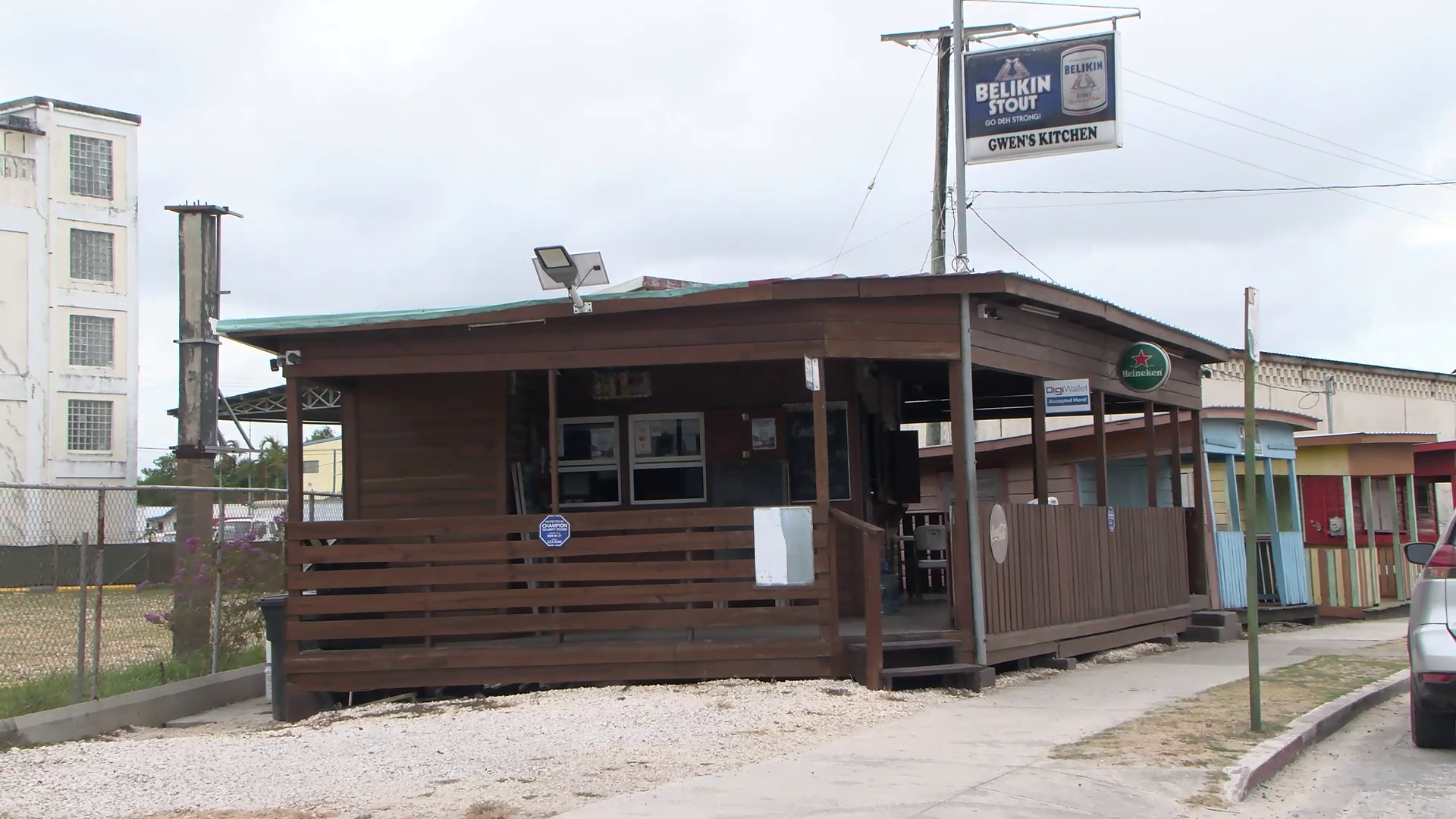
A landmark 2026 Court of Appeal ruling on a long-running Belize City land dispute has sent shockwaves through the country’s small business community, leaving dozens of street vendors and longtime local establishments questioning the security of their city-issued operating leases. At the center of the case is Gwen’s Kitchen, a popular roadside restaurant on Coney Drive that fought a five-year legal battle over the land it occupies. The court’s decision upheld titled property owner Ethel Thompson’s rights, ruling that leases issued by the Belize City Council do not supersede the legal property rights of formal titleholders. City Hall and national authorities were found to have violated Thompson’s rights by issuing a lease and later a land title to Gwen’s Kitchen without providing formal notice to the titled landowner. While restaurant owner Tiffany Cadle ultimately retained control of her property and business after the ruling, the outcome has sparked widespread alarm among small business owners across Belize City who operate under identical city-issued lease arrangements.
One of the districts most affected by the ruling is the Mahogany Street Marketplace, home to dozens of long-running local businesses that have operated on city-leased land for years. Among them is Belizean Meat Pies, which has served the community for more than five years, Third Kitchen, a 17-year-old local eatery, and Willie D’s Exotic Barbershop, which has been in operation for 15 years. All three, along with dozens of neighboring vendors, now face the prospect that their leases could be challenged by adjacent titled property owners, leaving their businesses in legal limbo.
For Cadle, the five-year legal battle that began in 2020 has ended with a hard-won victory. “It’s going on five years. It started, I think, in 2020, and we are in 2026. We feel good. And we’re happy that our building remains, our business remain, the property remains for us. Every single person have a right to survive and we saw the portion of land. It was not being used. It was a vacant piece of property and we saw the idea that we could put up a small restaurant here. And one of the things that I have noticed is that people don’t realize the value of something until when somebody else create a value in it,” Cadle explained in an interview after the ruling. She noted that the core of the court’s judgment centered on the failure to notify the Thompson family before the city leased and sold the land, a procedural error that invalidated the city’s original actions.
For street vendors like Ainsley Castro, who operates a food business in the Mahogany Street buffer zone under a city lease, the ruling poses an existential threat to his livelihood. “At the end of the day, da just poor people we and we just have to inna it to survive. Cah see me, I no gwein no way from out ya cause I no got no money to go to court. I no got no way fi goh mein. All ah they da fi me man then this wa pass down to my kids, and I think they da the same way pan da side deh,” Castro shared, when asked about his future. “I familiar with everybody, everybody familiar with me. And then I gone far, I deh far, so I can’t turn back and also I wouldn’t want that for nobody also because at the end of the day, right now it rough right now, so we just have to catch on. And they time ya we push some quality food. I noh lie yo. So we do it with a lot of passion.” When asked if he had ever pursued formal title to the land he occupies, Castro acknowledged that the idea had never been fully explored, but that it was now a priority to protect the years of investment he has put into his business.
Belize City Mayor Bernard Wagner confirmed that the city council is currently reviewing the ruling with deep concern, particularly given its disproportionate impact on low-income small vendors operating on city reserve land. Wagner noted that the council’s immediate priority is to find a balanced solution that protects vendors’ existing lease rights, upholds the formal property rights of titled landowners, and preserves the council’s authority to issue future operating licenses. He added that the ruling also highlights the urgent need to formalize titles for city-owned public spaces including parks and playgrounds to prevent similar disputes over public land. The council is currently consulting with its legal team to map out a path forward, which may include an appeal of the ruling to the Caribbean Court of Justice (CCJ), the region’s highest appellate court.
Cadle says she expects further legal action to resolve the broader policy questions raised by the ruling. “The judgment will allow my business to continue there. It is a position where maybe the government or a city council might have to decide if they want to take it further so that they can see what the CCJ has to say about that because I believe that the act that governs them tell them what they can and can’t do with property which they have control of,” Cadle said. Until the legal process is fully resolved, hundreds of small business owners across Belize City are left navigating daily uncertainty, continuing to serve their loyal local customers while waiting to learn whether the ground beneath their businesses will remain secure.