标签: Belize

伯利兹

  • BWS Opens Treatment Facilities to Media

    BWS Opens Treatment Facilities to Media

    In response to mounting public apprehension regarding drinking water safety and wastewater management, Belize Water Services (BWS) has launched a comprehensive transparency initiative by granting media access to its critical treatment facilities. This unprecedented move comes directly after the Statistical Institute of Belize’s MICS7 survey revealed concerning data about the nation’s water infrastructure.

    Chief Operations Officer Sanjay Kashwani personally guided journalists through two pivotal operations: the Belmopan Wastewater Treatment Plant and the Double Run Water Treatment Plant in Sandhill. The tour aimed to demonstrate BWS’s operational protocols and quality control measures amidst growing citizen concerns about wastewater leakage in Belmopan and drinking water safety nationwide.

    The utility company addressed specific infrastructure challenges, particularly highlighting the aging pipeline system in Belmopan. Constructed in the 1970s using asbestos cement materials, these pipelines were not designed to support modern urban development. Recent incidents, including pipe damage caused by foreign embassies, have exacerbated system vulnerabilities. Repairing a single section in the Bullfrog area required a $300,000 investment with extensive construction efforts.

    Belmopan Mayor Pablo Cawich joined the inspection, acknowledging resident complaints about sewer odors near the Bullfrog Lift Station. The mayor explained how collapsed infrastructure had necessitated manual wastewater removal using trucks to prevent environmental contamination.

    BWS managers provided detailed technical explanations of their treatment processes. Wastewater undergoes a 37-day purification cycle through four specialized ponds, progressing from anaerobic bacterial treatment to final UV disinfection before being safely returned to the Belize River. For drinking water, engineers demonstrated the complete treatment chain from raw water intake through flocculation, filtration, and disinfection stages.

    The utility’s laboratory technicians showcased daily testing protocols that monitor chlorine levels and contaminant presence to ensure compliance with national standards. District Manager Reina Gonzalez emphasized the company’s commitment to customer health and safety, noting significant infrastructure investments including $10 million in plant upgrades pre-COVID and millions more in pumping station improvements.

    BWS has announced additional network upgrades scheduled for next year across both water and wastewater systems, reaffirming their dedication to maintaining modern, reliable water services for all Belizeans.

  • New Wastewater Treatment System for Belize City

    New Wastewater Treatment System for Belize City

    Belize City is poised for a groundbreaking environmental infrastructure overhaul following the acquisition of a substantial $10 million grant from the World Bank. This financial injection, facilitated through the Government of Belize, will fund a comprehensive modernization of the city’s wastewater management system that promises to establish new standards for environmental sustainability.

    The current wastewater treatment process involves natural filtration through mangrove ecosystems in the Dikes area before effluent reaches the Caribbean Sea. While this natural filtration method provides secondary treatment, the new initiative aims to implement advanced technological solutions that will elevate Belize City’s system to match the upgraded standards recently achieved in Belmopan.

    Sanjay Keshwani, Chief Operations Officer of Belize Water Services, revealed the ambitious timeline for this transformation during a recent announcement. “We are looking at within three to four years time for project completion,” stated Keshwani, emphasizing the comprehensive nature of the upgrade.

    The revolutionary aspect of this project lies in its commitment to establishing a complete circular water economy. Unlike the current practice of returning treated water to natural waterways, the enhanced system will explore opportunities for water reuse in irrigation and other practical applications. This approach mirrors the successful Belmopan model where dry sludge is repurposed as fertilizer, creating valuable byproducts from waste processing.

    Reina Gonzalez, Belize District Manager for Water and Wastewater, highlighted the existing environmental safeguards, noting that “our wastewater effluence are tested monthly” as it undergoes natural filtration through mangrove ecosystems. The new system will build upon these existing protections while introducing advanced treatment technologies that will further enhance water quality standards.

    This infrastructure project represents a significant step forward in Belize’s environmental management strategy, potentially serving as a model for other coastal communities seeking to balance urban development with ecological preservation.

  • Belmopan Council Reflects on Gains, Revenue Struggles

    Belmopan Council Reflects on Gains, Revenue Struggles

    As the calendar year approaches its conclusion, the Belmopan City Council prepares for its ultimate quarterly assembly this Thursday, conducting a comprehensive assessment of municipal achievements and ongoing fiscal difficulties. While municipal authorities report substantial progress in civic services and community collaboration initiatives, financial sustainability remains an elusive objective for Belize’s capital city.

    Mayor Pablo Cawich provided candid commentary regarding the municipality’s performance, acknowledging significant operational improvements while highlighting persistent revenue collection issues. “Profitability remains unrealistic under current circumstances,” Mayor Cawich stated unequivocally. “We did not achieve financial profitability this fiscal year, but in terms of administrative success within city governance, I would unequivocally characterize this as a remarkably productive period.”

    The municipal government has implemented numerous enhancements to public services and resident engagement strategies throughout 2025, though Cawich noted that some initiatives require additional time to demonstrate visible impact. The administration remains optimistic that these improvements will become more apparent to constituents in the coming year.

    Despite these operational advances, tax compliance continues to present formidable challenges. While acknowledging modest improvements in resident tax payment rates, Mayor Cawich emphasized that current compliance levels remain insufficient for sustainable municipal financing. “We continue to encounter substantial resistance regarding tax obligations,” Cawich explained. “Compliance performance has demonstrated slight improvement, yet remains inadequate for establishing financial stability within our municipal budget.”

    The upcoming council meeting will likely address strategies for enhancing revenue collection while maintaining the service improvements achieved throughout the year.

  • Why Black Cake Is the Heart of a Belizean Christmas

    Why Black Cake Is the Heart of a Belizean Christmas

    In the heart of Belize’s Christmas celebrations lies a profound culinary tradition: the black cake. This iconic dessert, a rich, rum-infused fruitcake, transcends its role as mere holiday fare to embody generations of cultural history and familial bonds. Its origins trace back to British colonial-era plum pudding, which Belizean artisans have meticulously transformed over decades into a distinct national delicacy.

    Local bakers Jaqueline Banks, co-owner of SweetSake Belize, and Aeisha Robinson of Kye’s Kreamy Kreations represent the passionate custodians of this tradition. Banks’ journey began in childhood, assisting her aunt in kitchens devoid of modern conveniences like Google, relying solely on observation and inherited technique. What began as reluctant participation evolved into a cherished family enterprise now operated with her daughter.

    The artistry of black cake demands precision and patience. Robinson emphasizes the critical importance of ingredient selection and prolonged fruit soaking—often commencing her process a full year in advance. “With black fruit cake there is an art to it,” Robinson notes, highlighting the need to balance flavors to avoid bitterness while achieving the perfect texture and signature dark hue.

    Belize City’s Sikaffy’s, a family-run establishment operating since 1936, serves as a vital supplier for black cake essentials—pecans, walnuts, mixed fruits, cherries, and the distinctive coloring that defines the cake’s appearance. Despite recent price adjustments reflecting economic pressures, demand remains unwavering.

    Both bakers concur that the foundation—the creaming of butter and sugar—is paramount. Banks explains, “Everything has to measure. Because the measurement important… if ih nuh balance yow ah the taste ‘bucu’ [if it isn’t balanced, the taste is off].” This meticulous process differentiates black cake from other desserts, giving it a unique structural and flavor profile.

    Robinson’s expertise earned her the 2024 title of Best Black Cake of the Year, triumphing over sixty competitors. Beyond technical mastery, she views black cake as a metaphor for societal harmony: “Black cake symbolizes togetherness. Everything comes together… If the community would come together the way how the ingredients come together, I think we would have a better society.”

    This enduring tradition, sustained by both seasoned and emerging bakers, continues to be a flavorful testament to Belize’s cultural resilience and communal spirit during the holiday season.

  • Chester Williams Questions Police Role After Cyberbullying Case Collapses

    Chester Williams Questions Police Role After Cyberbullying Case Collapses

    A controversial cyberbullying case that captivated Belize has concluded with acquittal, raising serious questions about judicial process and potential misconduct within law enforcement. Former Police Commissioner Chester Williams has openly speculated about possible collusion between police personnel and the defendant after charges against Nichole Gilda McDonald were unexpectedly dismissed last Friday.

    The case originated in March 2025 when McDonald, then a 37-year-old matron with the Youth Cadet Corps, faced allegations of using computer systems to disseminate false information targeting Williams. The charges stemmed from Facebook comments she made regarding Opposition Leader Shyne Barrow’s assertions about a ‘narco state’ operating within Belize.

    McDonald’s ordeal included four nights in detention, sixteen court adjournments, numerous court appearances, and ultimately the loss of her employment. She described the experience as profoundly stressful, claiming she was denied essential medication, food, and water during her detention period. Despite numerous individuals commenting on Barrow’s post, McDonald maintains she was selectively targeted for prosecution.

    The case’s collapse has raised eyebrows, particularly because Williams—the primary complainant—was never summoned to provide testimony. Williams expressed bafflement at the judicial outcome, stating he remains completely uninformed about the proceedings and openly questioning whether undisclosed coordination occurred between McDonald and police officials.

    This development highlights ongoing concerns about the application of cyberbullying laws and the potential for selective enforcement within Belize’s justice system, while simultaneously demonstrating the profound personal consequences that legal proceedings can inflict on defendants, even those ultimately acquitted.

  • Lotteries Committee Cracks Down on Unregistered Raffles

    Lotteries Committee Cracks Down on Unregistered Raffles

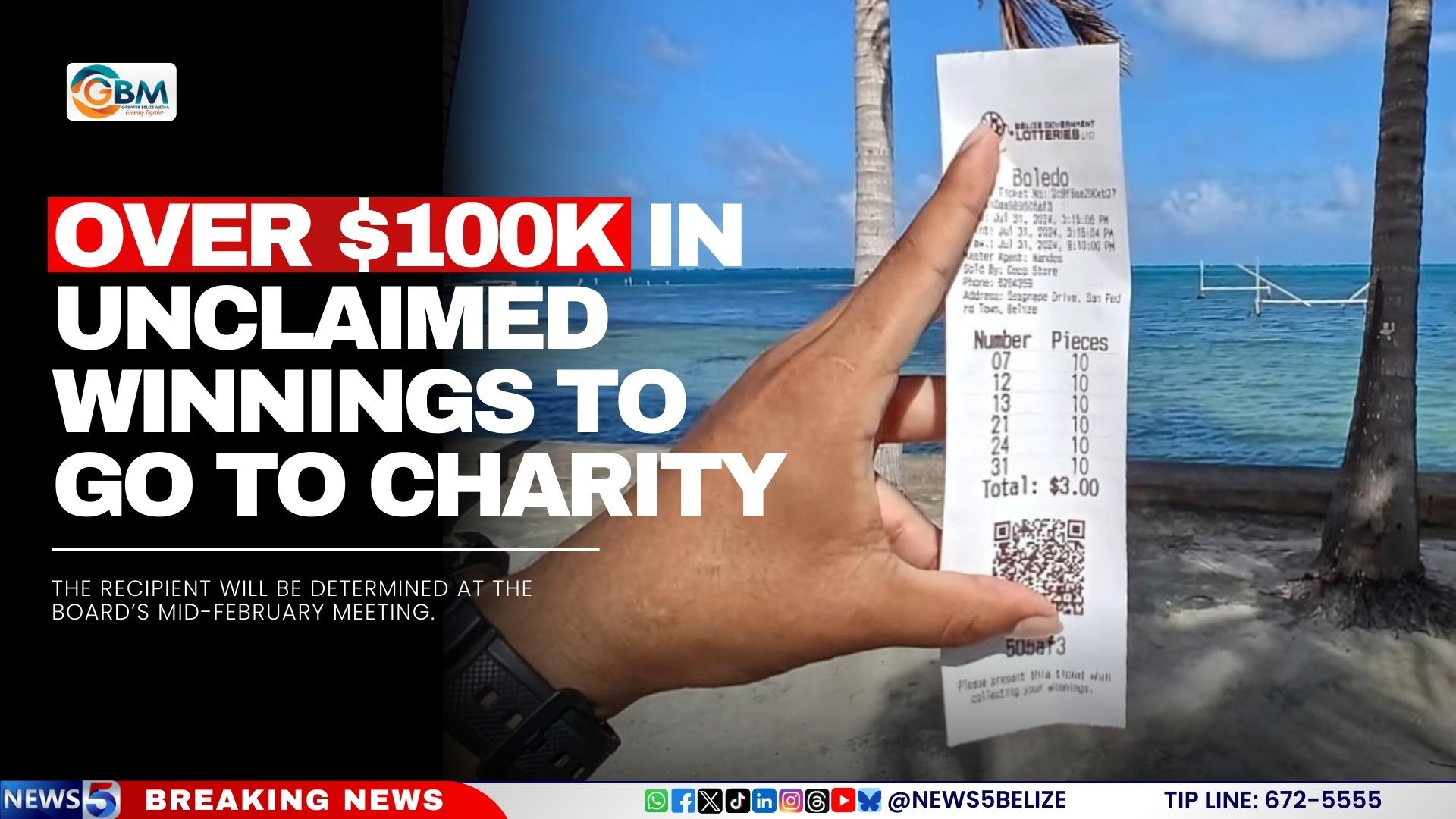
    The national Lotteries Committee has issued a stringent reminder to both corporations and private individuals that all raffle activities must be formally registered in compliance with the Lotteries Control Act, extending to seasonal holiday promotions and Christmas giveaways. This regulatory enforcement aims to bolster consumer protection mechanisms and ensure operational transparency within promotional schemes.

    According to the latest advisory, raffles featuring prizes valued under five hundred dollars will be exempt from licensing fees, though mandatory registration remains compulsory. For higher-value prizes exceeding this threshold, organizers must pay a five percent tax calculated exclusively on the prize’s market value, irrespective of ticket sales volume.

    Lewin Samuels, Secretary of the Lotteries Committee, provided explicit clarification regarding the policy rationale. “This framework is designed for entities seeking to spread Christmas cheer while maintaining legal compliance,” Samuels stated. He emphasized the critical consumer protection aspect, noting recurring instances where winners couldn’t claim unregistered raffle prizes due to absent regulatory oversight.

    Samuels addressed common objections regarding registration fees: “While organizers perceive raffles as charitable gestures, participants typically must purchase goods or services for eligibility. The nominal fee structure—merely five percent of the prize value—is minimal compared to potential revenue from ticket sales.”

    The Committee has specifically adapted regulations for small-scale holiday raffles, such as those offering turkeys or beverages tied to boledo number drawings. While maintaining registration requirements for all activities, the fee waiver for sub-$500 prizes aims to eliminate financial burdens while preserving consumer safeguards.

  • Holiday Giveaways Face Strict Registration Rules

    Holiday Giveaways Face Strict Registration Rules

    The national Lotteries Committee has issued a definitive directive mandating compulsory registration for all raffles and giveaway events, eliminating any ambiguity about optional participation. This regulatory requirement encompasses even charitable initiatives conducted by schools, churches, and medical fundraising campaigns, which while eligible for complimentary licenses, must still undergo formal registration procedures.

    According to Lewin Samuels, Secretary of the Lotteries Committee, the regulatory framework explicitly authorizes minors under sixteen years to sell raffle tickets, creating a distinctive exception to standard gambling age restrictions. “Raffles organized by individuals for amounts under five hundred dollars qualify for free licensing,” Samuels clarified, “including bazaars and NGO promotions supporting their services.”

    The enforcement mechanism carries substantial financial penalties for non-compliance. Initial offenses for operating unregistered raffles may incur fines reaching ten thousand dollars, with subsequent violations doubling to twenty thousand dollars. Officials emphasize that consumer vigilance constitutes a critical component of regulatory enforcement, urging participants to verify the legal status of any raffle before purchasing tickets.

    Samuels specifically advised potential participants: “Consumers should proactively inquire whether raffles are registered with the Lotteries Committee. By neglecting to ask these pertinent questions, purchasers essentially forfeit their eligibility for regulatory protection should the event prove illegitimate.” This warning underscores the shared responsibility between organizers and participants in maintaining legal compliance within the fundraising ecosystem.

  • Iguana Street Gets a Facelift, But One Resident Pays the Price

    Iguana Street Gets a Facelift, But One Resident Pays the Price

    A municipal infrastructure project in Belize City has yielded unintended consequences, leaving one homeowner displaced amid otherwise welcomed urban improvements. The City Council’s recent initiative to refurbish the long-deteriorated Iguana Street involved deploying engineering crews and construction equipment to enhance road conditions through comprehensive compaction work.

    While the project represents significant progress for the community’s infrastructure, resident Allison Jenkins experienced catastrophic property damage when his stilt-supported wooden residence collapsed last Friday. Jenkins attributes the structural failure to intense vibrations from heavy machinery operating adjacent to his property, asserting that the seismic impact compromised the foundational integrity of his home.

    The situation presents a complex scenario where municipal enhancement initiatives inadvertently create civilian casualties. City authorities acknowledge the incident but indicate no clear liability exists, characterizing the event as an unfortunate byproduct of urban development. The case highlights the delicate balance between public improvement projects and private property protection, raising questions about mitigation strategies for infrastructure-adjacent dwellings.

    Local officials continue to assess the incident while proceeding with the roadway rehabilitation, which remains broadly popular among most Iguana Street residents who have endured substandard road conditions for years.

  • Unitedville Families Say Water Trucks Are No Solution to Ongoing Crisis

    Unitedville Families Say Water Trucks Are No Solution to Ongoing Crisis

    The community of Unitedville Village is grappling with a severe and protracted water shortage that has left households without reliable running water for several weeks, escalating long-standing frustrations among residents. Many report that the crisis has actually persisted for months, characterized by dry taps, contaminated water supplies, and inexplicably rising utility bills despite the lack of service.

    Local authorities have implemented a stopgap measure involving water trucks dispatched by the village Water Board to distribute potable water for filling containers and storage vats. However, residents overwhelmingly reject this as an inadequate solution. “This reliance on water trucks is completely insufficient and unsustainable. Our community requires functional running water infrastructure, not temporary deliveries,” one exasperated citizen remarked. The situation has become so dire that local schools have been forced to cancel sessions due to the water scarcity.

    This is not an isolated incident for Unitedville; historical reports from as early as 2021 document similar water shortage complaints, indicating a chronic infrastructural failure.

    Julius Espat, Area Representative for Cayo South, provided technical insight into the problem. He confirmed that while a secondary pump is currently operational, drawing water from the river, the community’s rapid expansion has critically outpaced the capacity of the existing reservoir. Despite drilling approximately 20 boreholes in search of a new water source, only one well is currently productive.

    Espat indicated that a new reservoir is essential, with plans being developed in phases. A formal budget proposal is expected, and if approved in the upcoming annual budget, construction could commence as early as March of next year.

    In a parallel development, Valentino Shal, CEO of the Ministry of Rural Transformation, reported progress on replacing a recently burnt-out pump and motor, with installation anticipated imminently.

    Amid the widespread discontent, a dissenting voice emerged on social media, criticizing the complaints and urging proactive individual measures like purchasing large storage containers. Nonetheless, the severity of the crisis is underscored by reports of residents resorting to buying water for cooking and bathing in local creeks. Neither official could provide a definitive timeline for a permanent resolution to Unitedville’s water woes.

  • Still No Motive For Murder of Eric Reyes

    Still No Motive For Murder of Eric Reyes

    Belize City confronts a deepening crisis of violence against vulnerable populations following the tragic shooting death of 15-year-old Eric David Reyes. The teenager became the third fatality in a violent week that has shaken the nation, with authorities struggling to identify motives or suspects in the case.

    According to police reports, Reyes was cycling home along Park Street shortly after 10 p.m. when an unidentified assailant approached and opened fire, fatally wounding the youth. Assistant Superintendent of Police Stacy Smith confirmed that investigative efforts have yielded no clear motivation for the brutal attack, explicitly ruling out gang connections despite the troubling pattern of violence.

    ‘Current evidence does not indicate Reyes’ involvement in gang activities, nor does it suggest this tragedy resulted from gang rivalry,’ Smith stated during a press briefing. The police official highlighted the victim’s challenging personal circumstances, revealing that Reyes resided with his paraplegic mother and sibling under conditions that limited optimal supervision.

    The killing has sparked broader concerns about societal protection for vulnerable demographics. Smith contextualized the incident within a disturbing pattern that also claimed the life of 61-year-old Wayne ‘Pie Bwai’ Myles just days earlier. ‘A society’s greatness is measured by its treatment of the elderly and the young,’ she emphasized, questioning whether Belize was failing these fundamental tests of civilization.

    Law enforcement authorities have issued a public appeal for information that might advance the investigation, urging community members to come forward with any relevant details. The back-to-back killings of both a minor and senior citizen have intensified scrutiny on public safety measures and social support systems throughout the Belize District.