标签: Belize

伯利兹

  • 115 Apply to Represent PUP in 2027 Municipal Elections

    115 Apply to Represent PUP in 2027 Municipal Elections

    Belize’s main political organization, the People’s United Party (PUP), has wrapped up its candidate application period for the upcoming 2027 national municipal elections, closing nominations to all contenders as the party moves to the next phase of candidate selection. Scheduled to take place on March 3, 2027, the municipal elections will fill leadership and council seats across all nine of Belize’s local municipal jurisdictions, and PUP’s call for potential candidates drew widespread interest from communities across the country.

    According to official statements released by the party, a total of 115 Belizeans submitted completed applications to run under the PUP banner in next year’s local elections. The breakdown of applications shows that 15 prospective candidates put their names forward for the highly contested mayoral positions, while the remaining 100 applications came from individuals aiming to secure seats on local town and city councils spread across the nation’s nine municipalities.

    With the application window now formally closed, the process of selecting the party’s official slate will shift to PUP’s internal governing bodies. First up, the party’s National Campaign Committee will launch a comprehensive vetting process to screen all 115 applicants, reviewing their qualifications, community standing, alignment with party platforms, and eligibility to run for public office. Once the vetting period concludes and the committee produces its shortlist of recommended candidates, PUP’s National Executive will convene for formal deliberations before making the final decisions on which candidates will advance to appear on the PUP ticket in the March 2027 polls.

  • Three Life Sentences For Elmer Nah: Possible Parole At Age 90

    Three Life Sentences For Elmer Nah: Possible Parole At Age 90

    Four years after a brutal New Year’s Eve massacre destroyed the lives of the Ramnarace family in Belmopan, Belize, a long-awaited reckoning arrived in a Belizean high court on June 19, 2026. Convicted triple murderer and former police corporal Elmer Nah learned his final sentence this week, closing a pivotal chapter in a case that has shaken the small Central American nation’s law enforcement community.

    Nah was first found guilty in May 2026 of murdering three members of the Ramnarace family — Vivian, John, and David Ramnarace — during the December 31, 2022 attack that also left a fourth family member severely injured. In a historic ruling, Justice Nigel Pilgrim handed down three concurrent life sentences, with the strict condition that Nah will not be eligible to apply for parole until he has served 50 years behind bars. Under the sentence, the 40-year-old former officer will not have a chance of release until he reaches at least 90 years of age.

    The sentencing hearing took an unexpected turn just 10 minutes after proceedings began, when Nah interrupted the process to demand the opportunity to address the court directly. Justice Pilgrim initially reminded Nah that his chance to make a statement came during the prior mitigation hearing, but granted Nah’s request after the former cop claimed his defense attorney, Dr. Lynden Jones, failed to explain the significance of that earlier hearing.

    Taking the stand, Nah repeated his claims of innocence, offered a perfunctory condolence to the Ramnarace family, and made the explosive unsubstantiated claim that another disgraced former police officer was the actual perpetrator of the 2022 killings. Closing his unplanned address, Nah told the court: “Even if I’m sentenced to one hundred years, my conscience is clear.”

    Special Prosecutor Terrence Williams, KC, who led the case for the state, called the last-minute outburst unusual, noting that Nah had the full opportunity to present any defense and witnesses during the months-long trial that preceded his conviction.

    When delivering the final sentence, Justice Pilgrim outlined a long list of aggravating factors that justified the severe penalty. These included the high number of fatal victims, the fact that the attack was carried out inside the Ramnarace family’s own home, the execution of the murders in front of a five-year-old child, the use of a lethal firearm, the status of one victim as a public servant, and clear evidence that the killings were premeditated. Williams added after the ruling that there were no substantial mitigating factors to justify a lighter sentence, making a life sentence the only appropriate outcome under Belizean law.

    Justice Pilgrim opted against issuing the death penalty, however, noting that he could not fully rule out the possibility of future rehabilitation. Under Belizean law, parole eligibility remains available to inmates who can demonstrate they have been rehabilitated, with final approval resting with the national parole board.

    After the ruling, as Nah exited the courtroom, he doubled down on his claims of innocence, accusing his defense team of deliberately sabotaging his case. When asked by reporters for his assessment of his lead attorney, Nah replied bluntly: “Bogus! He sabotaged my case.” He also quoted a biblical proverb to frame the outcome, saying “Many are the plans in the mind of a man, but it is the purpose of the Lord that will stand.”

    Nah’s claims of inadequate legal representation open the door for a potential appeal of his conviction and sentence. For the Ramnarace family, who have waited more than three years for justice following the brutal attack, Williams says he hopes the final ruling will bring some measure of closure and healing.

    In a phone interview following the hearing, Williams, who has practiced criminal law for more than 30 years, called the case one of the most emotionally heavy of his career. “It was very emotional experience to hear from [the victim’s] aunt how the young girl has had to cope with losing her mother and father. It is a sadness. I feel assured that she’ll have great family support going forward, and the family of the deceased and the injured will take some solace in the verdict,” Williams said.

    Reporting from the Belize High Court for News Five, Shane Williams contributed to this report.

  • Government Deploys Military in Bid to Calm Urban Violence

    Government Deploys Military in Bid to Calm Urban Violence

    In the aftermath of a chaotic, violence-plagued weekend that shook communities across Belize City, the Belizean government has announced an extraordinary security measure: the deployment of the Belize Defense Force to augment local police patrols and operations in high-crime zones. While the use of military support for domestic law enforcement is typically limited to formal states of emergency, government officials have been clear that this action falls short of that designation, framing it as a targeted, calibrated intervention to de-escalate rising tensions in the former national capital.

    Elton Bennett, Chief Executive Officer of the Belize Ministry of Home Affairs, outlined the government’s reasoning and decision-making process in a public briefing following the deployment. “We have certainly increased the tempo of operations,” Bennett explained. “Going back to last week’s series of violent activities in Belize City, the Belize Police Department and all participating security forces carried out extensive strategic planning to design operations that would make a meaningful, long-term dent in violent crime. This hardline security push is being paired with ongoing work to address the root causes of community violence, but we determined that coordinated action from both law enforcement and the military was necessary at this juncture to quell existing tensions.”

    Residents can expect to see visible changes across the city: increased personnel at mobile checkpoints, more frequent patrols in well-documented crime hotspots, and a heightened overall security presence throughout high-risk neighborhoods. Despite the visible troop surge, Bennett repeatedly emphasized that the operation does not equate to a state of emergency, and no sweeping restrictions on civil liberties or freedom of movement will be implemented.

    “It is not an SOE; it is just below the threshold of an SOE,” Bennett clarified. “We believe we can find that sweet spot just below the threshold where we can be operationally effective: by positioning the right personnel in the right high-need locations, we can address ongoing violent crime without needing to institute the sweeping measures of a formal state of emergency. This is an attempt to deliver operational success without the far-reaching disruptions of an SOE.”

    Bennett added that while deployments are concentrated in specific targeted areas across Belize City, the operation does not infringe on the rights of local residents, nor does it impose limits on movement for people living in or visiting any community. The primary goal of the increased presence, he noted, is to send a clear signal that the government views Belize City’s ongoing crime crisis as a top priority and is taking decisive action to improve public safety.

    Unlike many security deployments that have a fixed end date, the current military-backed operation will remain in place until tangible results are achieved, Bennett confirmed. There is no pre-set timeline for withdrawing troops, as the government’s priority is reducing violence rather than meeting an arbitrary deadline. The government has also urged residents to remain calm, continue with their normal daily routines, and work with security forces to address longstanding crime challenges in the city.

  • BDF Finances Under Scrutiny as PM Acts on Corruption Claims

    BDF Finances Under Scrutiny as PM Acts on Corruption Claims

    Nearly five and a half years after first vowing to crack down on systemic public sector corruption, Belize Prime Minister John Briceño has taken formal action to open a full audit of the Belize Defense Force’s (BDF) financial records, responding to long-standing misconduct allegations tied to the previous administration.

    The announcement, made public on Thursday, marks a key milestone in the People’s United Party government’s commitment to root out graft — a promise Briceño first laid out in the House of Representatives just weeks after his party took power from the United Democratic Party (UDP) in January 2021. During that initial address, when introducing the landmark Good Governance Motion, the prime minister committed to full investigations and legal consequences for any public official found to have engaged in corrupt practice.

    Speaking in the legislature, Briceño reiterated that promise to the Belizean public in Kriol, saying: “We promised the Belizean people that we are going investigate and who wrong gwen dah jail fi we find them guilty.”

    He emphasized that 13 years of UDP rule left a pattern of systemic embezzlement and misappropriation of public funds, and holding corrupt actors accountable through the judicial system is the only way to end this pattern. “The only way this type of corruption and stealing that happened under thirteen years of the UDP administration is going to stop is that when you hold the people that plunder the treasury and rob from the Belizean people, that we hold them accountable and they have to go to a court of law,” Briceño said.

    The prime minister also framed the crackdown as a warning to current sitting officials, noting that it sends a clear message that any public servant who deviates from ethical governance will face the same consequences. “And it is important to that because I can tell my colleagues also, see what happened to them. If you don’t walk a straight line, you are going to end up like that,” he told opposition leader in the house.

    Briceño stressed that the investigation is not a politically motivated personal attack, but a necessary step to restore public trust in government institutions. “It is not personal. But this is the only way we are going to stop the stealing and the plundering of the Belizean people money,” he said.

    The BDF audit, Briceño confirmed, is only the first phase of uncovering the full facts surrounding what are known as the “Mira corruption allegations.” This report is a transcribed excerpt of an evening television newscast, with Kriol language remarks reproduced using a standardized spelling system for public accessibility.

  • FOIA Dispute Escalates Over Alleged Smart Stream Irregularities

    FOIA Dispute Escalates Over Alleged Smart Stream Irregularities

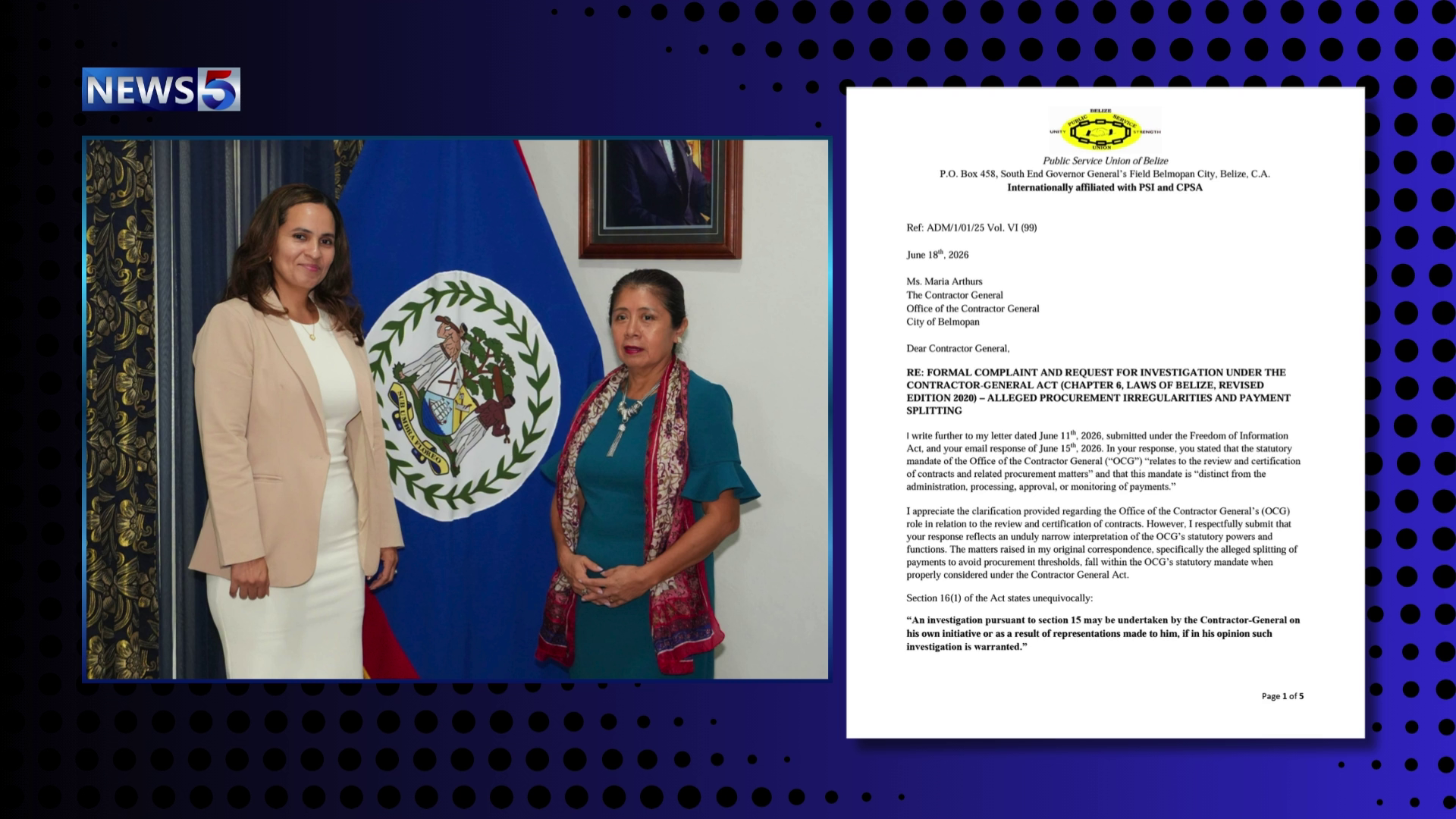
    A growing conflict over transparency and accountability in Belize’s public service has escalated in recent weeks, after the president of the nation’s Public Service Union launched a formal push for investigation into alleged payment irregularities within the government’s Smart Stream digital financial system.

    On June 11, 2026, Dean Flowers, head of the union, submitted a Freedom of Information Act (FOIA) request to the Office of the Contractor General seeking details about claims of unauthorized payment splitting in the platform. But the agency’s response left his questions unanswered, prompting Flowers to issue a scathing five-page rebuttal that rejects the office’s claim it lacks jurisdiction over payment processing and monitoring activities.

    Flowers argues that clear provisions laid out in the Contractor General Act grant the office explicit authority to launch a probe. He specifically cites Section 16(2) of the legislation, which states the Contractor General is empowered to receive and investigate complaints or tips from public body employees regarding potential violations of laws, rules and regulations, alongside mismanagement, gross public fund waste, fraud, and corruption. In an interview with local outlet News Five on June 19, Flowers pushed back against the agency’s attempt to avoid the investigation, noting that both the incumbent Contractor General and Auditor General are new to their roles. He emphasized that the positions are not political appointments, and expressed expectation that the officeholders possess the necessary competence to fulfill their statutory oversight duties.

    The Office of the Contractor General is not the only oversight body that has declined to meet Flowers’ demands for public records. Following a separate FOIA request to the Office of the Accountant General, that agency also deferred action, stating it would only cooperate with an ongoing audit ordered by Prime Minister John Briceño led by the Auditor General. Flowers criticized this response as a blatant buck-passing, noting the Accountant General failed to confirm whether it would review Smart Stream records to identify patterns of improper payments by public financial officers, or release the names of officers allegedly implicated in the practices.

    Flowers claims all three oversight agencies — the Accountant General, Contractor General, and Auditor General — are following the same playbook to avoid disclosing information. He argued that the release of existing records held by the agencies would not compromise the ongoing audit ordered by the prime minister, contradicting the Auditor General’s claim that public disclosure would prejudice its investigation.

    Despite the gridlock over immediate public disclosure, Flowers has voiced support for Prime Minister Briceño’s order to audit the accounts of the Ministry of Defense, tied to broader demands for accountability in the ongoing Mira scandal. He called the planned audit the only source of comfort for stakeholders pushing for transparency, saying he expects the Auditor General to complete a comprehensive review of the irregularities.

    Flowers laid out a clear path for immediate action, noting that the Accountant General holds real-time access to Smart Stream data across all government ministries. He said the agency could immediately release evidence of suspicious payment patterns, including system entry screenshots and the names of implicated financial officers and incumbent or former ministry leaders, to jumpstart accountability efforts. Going forward, Flowers said the union will await the findings of the audit to determine whether formal disciplinary action is warranted against any public officers found to have violated financial regulations or engaged in corrupt practice.

    News Five reached out to Belize’s Integrity Commission for comment on the dispute, but the agency declined to issue a direct statement on the ongoing case. A representative of the commission explained that it only launches formal investigations after receiving a signed formal complaint, which is then reviewed in accordance with the provisions of the Prevention of Corruption Act.

  • NTUCB Leads Charge to Protect Vulnerable Workers

    NTUCB Leads Charge to Protect Vulnerable Workers

    Scheduled high-level talks between Belize’s peak labor body and the national government got off to a chaotic start this week, even as the National Trade Union Congress of Belize (NTUCB) ramps up a landmark initiative to secure basic rights for one of the country’s most underprotected workforces: domestic workers.

    Backed by technical and institutional support from the International Labour Organization (ILO), the NTUCB’s new organizing drive centers on bringing domestic workers together to advocate for their own interests, regardless of whether they formally join a union. As NTUCB President Ella Waight explained in comments following the organization’s meeting with Prime Minister John Briceño, the effort is rooted in a gaping hole in Belize’s upcoming labor regulation framework: current drafts of the new Occupational Safety and Health (OSH) Bill explicitly exclude domestic workers from coverage, leaving thousands of employees who work in private homes without basic workplace protections.

    Waight pushed back against the government’s primary argument for the exclusion, which centers on concerns over privacy for private households. She noted that existing Social Security Board programs already require inspectors to enter private homes to verify working conditions, proving that targeted oversight is logistically and legally feasible. Beyond closing the OSH coverage gap, the NTUCB’s campaign is also pushing to guarantee domestic workers access to core benefits including paid vacation time and compliance with national minimum wage standards, rights that many in the sector are currently denied.

    The NTUCB’s policy priorities extend far beyond domestic worker protections, as laid out in the outcomes of the fraught June meeting with Briceño. The talks, originally scheduled for 9 a.m. in the capital city of Belmopan, were abruptly relocated to Belize City at the last minute, forcing union leaders to rush across the country for a delayed session that ended before 1 p.m. despite months of advance planning. Despite the logistical misstep that cut short discussions, both sides still made progress aligning on key shared policy goals, particularly around governance and anti-corruption reform.

    Waight confirmed that talks on a long-awaited national whistleblower protection bill, first opened in December 2025, remain on track. Briceño told union delegates that the draft legislation is scheduled to go before the national cabinet for review by the end of July 2026, a key milestone for a bill the NTUCB has prioritized as a tool to ensure public resources are managed responsibly and transparently.

    Dialogue on other long-promised reforms is moving at a slower pace, however. The NTUCB raised the issue of campaign finance regulation during the meeting, and while Briceño confirmed that a preliminary draft of the legislation exists, no timeline for formal debate has been set. The union has requested a copy of the draft for its review by the end of June 2026 to inform its input on the proposal. Talks on national redistricting, meanwhile, remain tied to a 2025 pledge to complete the full process by the end of 2026, with ongoing discussion around the legal requirement to maintain a minimum of 31 parliamentary seats. Progress on implementing the United Nations Convention Against Corruption (UNCAC) has also stalled, with scheduled working group meetings paused for more than 18 months, Waight confirmed.

    Despite the logistical blunder and uneven progress across different reform areas, Briceño has committed to reconvening formal talks with the NTUCB in December 2026 to provide updated progress reports on all outstanding issues.

  • Coast Guard Father’s Day Luncheon Leads to Supply Chain Queries

    Coast Guard Father’s Day Luncheon Leads to Supply Chain Queries

    On Thursday, June 19, 2026, the Belize Coast Guard turned a routine Father’s Day commemoration into an unexpected focal point of public inquiry, after a celebratory luncheon for more than 150 serving fathers in the force prompted questions about the origin of the event’s food supplies.

    What began as a tribute to recognize the contributions of uniformed fathers balancing national security duties and parenthood quickly shifted focus when observers noted the fresh rice, beans, and vegetables served at the meal. Reporters pressed Belize Coast Guard Commandant Rear Admiral Gregory Soberanis on whether the institution had sourced the produce from the high-profile Mira family, a line of questioning that sought clarity on procurement practices for the force’s annual multi-million-dollar supply contracts overseen by the Ministry of Defense.

    Instead of addressing the supply chain question directly, Soberanis repeatedly emphasized that procurement and contracting fall outside the scope of his official responsibilities. As the service’s top leader, he framed his core mandate as upholding operational readiness, ensuring rigorous training for all personnel, and safeguarding Belize’s territorial waters. “Anything outside of that is beyond my purview. My focus is to ensure that the men and women here are trained, ready, and equipped to execute our mission and our mandate,” Soberanis told reporters, adding that he remained confident the Ministry of Defense prioritizes the well-being of all coast guard personnel.

    While Soberanis has stepped back from direct involvement in tendering processes, he highlighted major strides the coast guard has made in recent months to modernize its operational capacity through new technology. Just weeks prior, at the end of May, the service partnered with the Southern Environmental Association and other local conservation groups to carry out a successful interdiction of three foreign nationals conducting illegal fishing near Gladden Spit, a key protected marine area off Belize’s coast.

    A central driver of the operation’s success, Soberanis explained, has been the integration of unmanned aerial drone technology into regular coast guard patrols. The technology, he noted, acts as a critical force multiplier that extends the service’s monitoring reach across vast stretches of Belize’s extensive maritime domain. To build expertise in this emerging area, members of the Belize Coast Guard Drone Squadron completed advanced specialized training in Silicon Valley, equipping them to operate and maintain the new systems effectively.

    Soberanis reaffirmed that the service remains committed to its core mission of “utrinque paratus” — prepared for any event — delivering on its mandate to protect Belize’s naval defense, maritime safety, and national security across the country’s waters. This report is a transcript of an evening television broadcast from the originating outlet.

  • Experts Pitch Geospatial Tech as Key to Rebuilding Resilient Infrastructure

    Experts Pitch Geospatial Tech as Key to Rebuilding Resilient Infrastructure

    In the wake of catastrophic torrential rain and widespread flooding that left Belize’s transportation network severely damaged, industry experts have highlighted geospatial technology as a transformative tool to address the nation’s long-running infrastructural vulnerabilities and build climate-resilient public assets. The call for adoption came during the recent Infrastructure Intelligence and Geospatial Innovation Forum, hosted by local technology firm Fultec Systems, where cross-sector professionals from surveying, engineering, agriculture, and infrastructure development gathered to explore how integrated digital tools can reorient traditional infrastructure planning and maintenance.

    Just one week before the forum, extreme rainfall and flooding once again exposed how precarious Belize’s roads and bridges remain even after recent upgrades. The Coastal Plain Highway, which underwent a major renovation just three years ago, already suffered noticeable structural damage from the flood waters — a clear example, experts say, of the gaps in current infrastructure assessment and design practices. Proponents argue geospatial technology fills these gaps by delivering granular, real-time data on road conditions, drainage systems, and structural integrity, allowing engineers to pinpoint at-risk weak points before they escalate into catastrophic failure.

    Carlos Sanabria, president of Puerto Rico-based infrastructure firm HLCM Group Inc., explained that the modern geospatial toolkit encompasses a wide range of accessible, high-precision tools: “We are talking drones, we are talking traditional total stations, terrestrial laser scanners, mobile laser scanners, GNSS system or GPS, which is commonly known to collect data for whatever is needed in terms of surveying, construction, and infrastructure development.”

    Compared to traditional manual surveying methods, these modern tools outpace outdated practices on every metric: they capture far larger datasets, complete work in a fraction of the time, and deliver substantially higher accuracy. This depth of data not only enables early damage detection but also informs more robust design for new infrastructure, creating assets better equipped to withstand the increasing frequency of extreme weather driven by climate change.

    Chad Lewis, Latin American Channel Manager for global geospatial solutions provider Trimble, noted that neighboring countries in the region have already integrated these tools into daily infrastructure operations. “Some of the reality capture platforms that we’ve sold into some of the neighboring countries is pavement inspections, if you will, right? Some of the road conditions throughout the territory are not in what we call a great state right now. So we can use some of the technologies to drive these roads, capture the current state, and identify where we need to do the repairs, right? These countries are really embracing the technology and using it day to day. It’s great to see.”

    Trevor Reneau, General Manager of Belize’s Fultec Systems Ltd., emphasized that the technology is already available locally, and his firm’s work focuses on expanding access to training, local support, and ongoing upgrades for sectors across the country. He highlighted the dramatic efficiency gains the technology delivers: “Like for instance, you might look at the 3D modeling, which is the Trimble X9, and back in the days, you used to use maybe an X-ray machine, and it would take maybe an entire week to do it. But now, with the 3D modeling aspect of the X9, you might be doing it within seven minutes. So you see how efficient that technology is in bringing it within your organization.”

    Farid Hode, a sales engineer at Trimble, added that precise data is the core value of these tools, especially as critical infrastructure ages beyond its original design lifespan. “This can work for example, infrastructure like roads and bridges. Those are usually designed for, like, maybe fifty to seventy-five years maximum. But we know that in practice, these assets, these structures are living for longer than that. So we need to make sure that there’s no structural deformation on them and this data’s gonna help us understand that.”

    Reneau noted that Belizean industry professionals are already rolling out training programs to help local organizations master geospatial tools effectively. While neighboring countries including Guyana and Suriname have already advanced in adopting these solutions, the forum made clear that Belize now has a clear pathway to catch up, modernize its infrastructure practices, and build a more resilient transportation network fit for a changing climate. The report was filed by News Five’s Britney Gordon.

    This report is adapted from a transcript of an evening television broadcast original to News Five.


  • U.S. Ambassador Nominee Pushes Stronger Belize Ties

    U.S. Ambassador Nominee Pushes Stronger Belize Ties

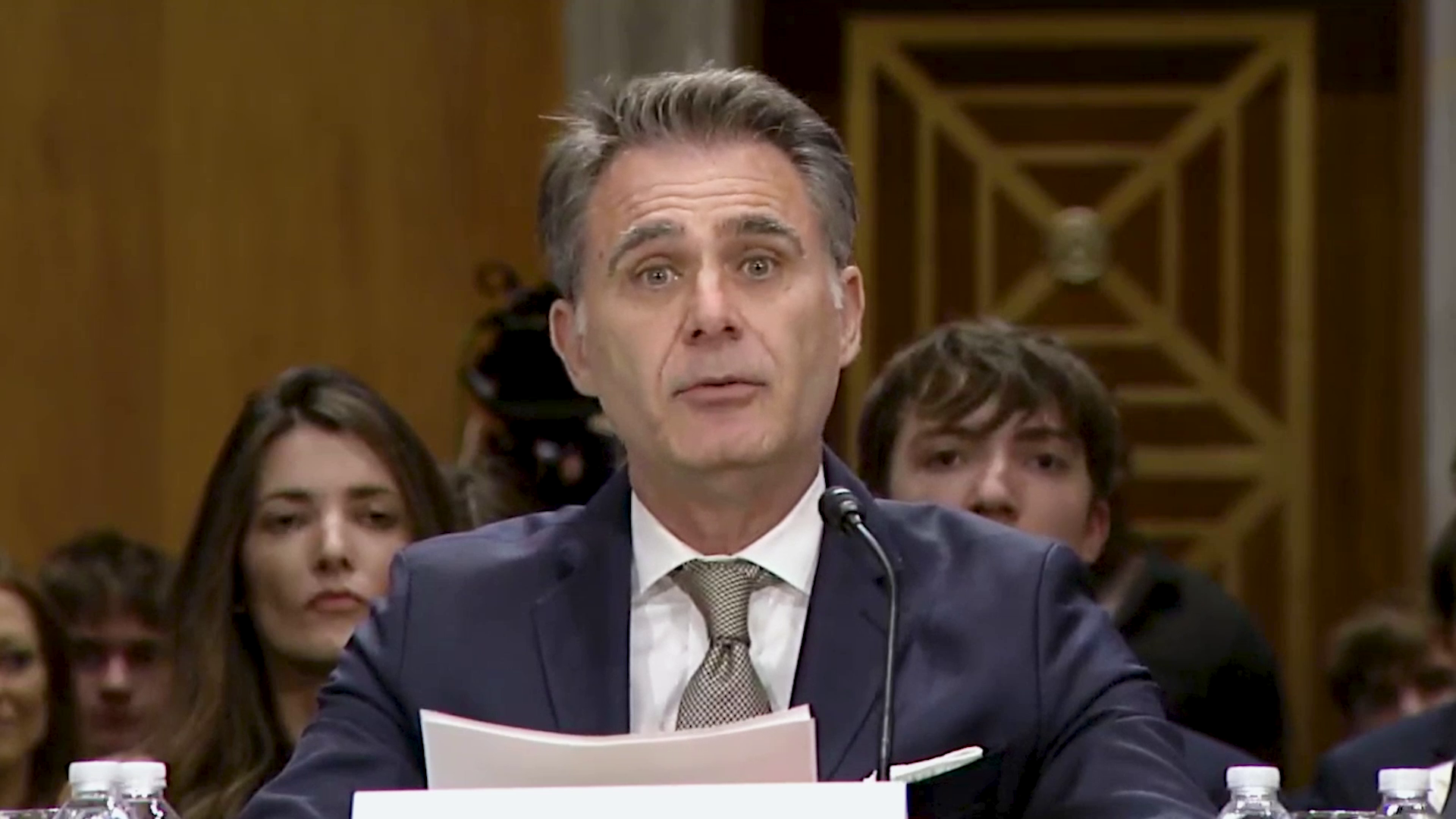
    In his recent Senate confirmation hearing, Presidentially nominated U.S. Ambassador to Belize André Bauer laid out a clear, ambitious agenda to expand cooperation and deepen mutually beneficial economic bonds between the United States and the small Central American nation. Set to undergo the full constitutional confirmation process — which includes committee vetting, a Senate Foreign Relations Committee hearing, and a full Senate majority vote — Bauer highlighted existing strong bilateral connections and laid out his vision for growth if he is approved for the post.

    Bauer opened his remarks by emphasizing the already robust relationship between the two countries, pointing to long-standing people-to-people and economic links that form a solid foundation for further collaboration. Currently, the United States is Belize’s largest source of international tourism, with more than one million American travelers crossing into the country each year to explore its tropical ecosystems, coastal attractions and cultural sites. Beyond travel, more than 85,000 Belizean nationals reside in the United States, creating enduring family, professional and cultural networks that further reinforce close ties between the two nations.

    For Belize’s economy, tourism stands as one of the most critical core sectors, supporting millions of local jobs and driving widespread economic opportunity across rural and urban communities alike. If confirmed by the Senate, Bauer said his top priorities will be strengthening cross-border economic ties, growing bilateral trade, expanding the tourism sector, and unlocking new pathways for mutual investment between U.S. and Belizean stakeholders.

    Drawing on his decades of professional experience in the private sector, Bauer noted that he brings unique, on-the-ground insight into how U.S. businesses and investment operate. He stressed that he will work to build a more stable, predictable investment climate that encourages U.S. firms to expand their operations, invest in Belize’s growing economy, and help the private sectors of both nations flourish. Bauer argued that these efforts will not only drive economic growth for both countries but also create new, shared opportunities for workers, entrepreneurs and communities on both sides of the bilateral relationship.

    As Bauer’s confirmation process moves forward, his agenda signals a clear U.S. commitment to reinvigorating partnership with Belize across economic and commercial spheres, with a particular focus on leveraging private sector expertise to deliver tangible benefits for both nations.

  • Miss Universe Belize Bought by El Salvador-Based Organization

    Miss Universe Belize Bought by El Salvador-Based Organization

    In a sudden shift for Belize’s national pageant landscape, the coveted Miss Universe Belize franchise has changed ownership for the second time in less than three years, with the rights awarded to an El Salvador-based organization earlier this year. The transfer of ownership was formally announced in a press release from the former holding body, the Miss Universe Belize Foundation, on June 19, 2026.

    Under the leadership of former national director and ex-pageant titleholder Destinee Arnold, Belize reestablished a strong, consistent presence on the Miss Universe global stage, sending two consecutive contestants to the international competition after years of inconsistent participation. Arnold, who built the program from the ground up as a passion project, shared her deep disappointment over the unexpected transfer in an exclusive interview with News Five’s Britney Gordon.

    Arnold explained that her team had voluntarily informed the global Miss Universe organization that they planned to step back temporarily after the 2025 competition, with the explicit intention of regaining the franchise in 2027. They requested only that the Miss Universe organization notify them if any third party submitted a bid for the franchise during their planned hiatus. That notification never came, she says, and the global organization instead awarded the full franchise rights to the El Salvador-based group without any advance warning.

    “It was a heartbroken feeling. Everyone who has worked with me through the foundation knows this was never just a job—it was a passion project,” Arnold shared in the phone interview. “I took this on purely to build national pride for Belize, to showcase our local creatives and small businesses on the world’s most watched pageant stage. To have it taken away, even temporarily, is incredibly disheartening. But I haven’t given up hope. I’m still ready to fight, and my goal is to win back the franchise when it is next available in 2027. That’s exactly what I’m going to do.”

    To win back the franchise rights, Arnold says she will need broad backing from across Belize: from local artists, business owners, and past sponsors who supported her work over the last three years. She argues that a locally run franchise is irreplaceable, because only Belizean organizers understand the nation’s culture and what the country wants to project to a global audience. “When it’s home, it comes with more passion, more drive, and more love for what we’re doing,” she said.

    While Arnold acknowledges that it is not uncommon for international pageant organizations to hold multiple franchise rights across different countries, she stresses that the work her team did has left a lasting impact on Belize’s entire pageant community. Her team developed a new national pageant infrastructure that has already been adopted by other local pageant systems, including the popular Queen of the Bay program. She also pioneered an annual advocacy month centered on community service for local titleholders—a model that has already been copied by other international pageants hosted in Belize this year.

    “That’s the great part of what we built: community service is now the center of what all of our local queens do, and that change isn’t going anywhere,” Arnold noted.

    The new owners from El Salvador are scheduled to arrive in Belize later this week to begin preparations for upcoming national pageant competitions. The full interview was broadcast as part of News Five’s evening television newscast on Thursday.