标签: Belize

伯利兹

  • Port of Belize Expansion Approved, But with Heavy Conditions

    Port of Belize Expansion Approved, But with Heavy Conditions

    After years of community pushback, regulatory objections, and repeated project revisions, one of Belize’s most contested infrastructure developments has cleared a critical regulatory hurdle. On April 2, 2026, Belize’s National Environmental Appraisal Committee (NEAC) granted conditional approval to Port of Belize Ltd.’s dual Cargo Expansion and Cruise Port Development project, located in the Port Loyola district of Belize City.

    The approval came after a comprehensive review of the developer’s updated 2026 Environmental Impact Assessment (EIA), which addressed longstanding public and regulatory concerns about the project’s ecological and social footprint. NEAC emphasized that development work can only commence once all mandatory environmental and community benefit conditions are fully formalized and enforced.

    Unregulated dredging, a core point of contention for environmental scientists and local activists since the project was first proposed, remains the committee’s top priority. NEAC issued strict, non-negotiable guidelines for dredging activities: developers must implement rigorous sediment control measures, install industry-standard dewatering systems, and follow tightly regulated protocols for the handling and disposal of dredged material. The agency warned that inadequate dredging management poses irreversible risks to Belize’s fragile coastal marine ecosystems, which support both local fisheries and the country’s $500 million annual tourism industry.

    Beyond dredging, NEAC also flagged broader risks to water quality, terrestrial habitats, and air quality throughout the construction and operational phases of the project, requiring developers to implement permanent, ongoing mitigation measures to reduce harm. The controversial proposal to create a dedicated mangrove island for dredge waste disposal has been allowed to move forward, but only under strict terms: the structure must be engineered to international safety standards, and subject to decades of continuous monitoring to confirm that mangrove and coastal forest ecosystems successfully establish and thrive on the site.

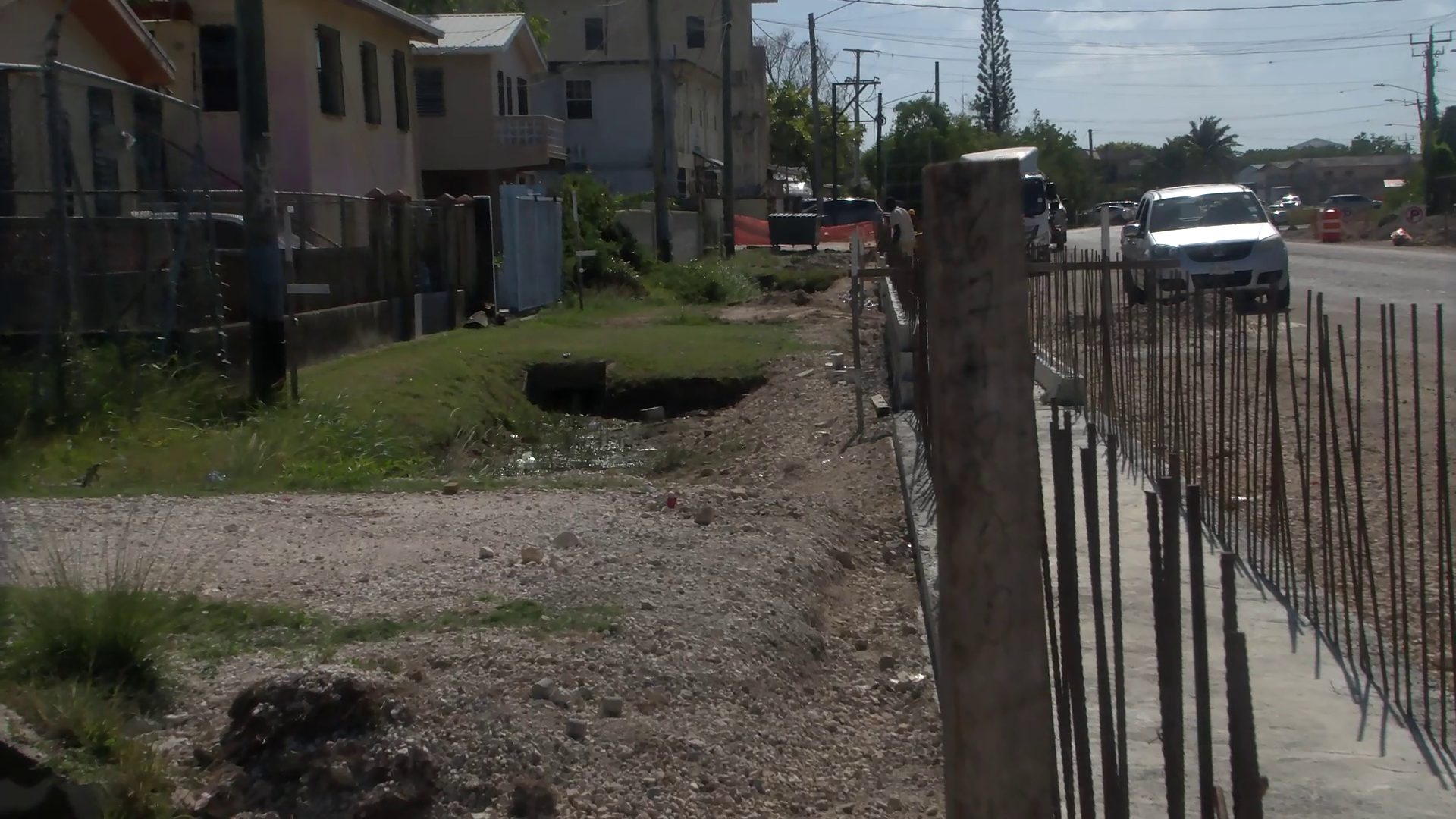
    Regulators also centered community interests in their approval framework, tying project progress to binding requirements around local infrastructure and opportunity. Conditions mandate that developers address expected increases in local road traffic, upgrade drainage systems to reduce existing flood risks in Port Loyola, prioritize local hiring for construction and permanent operations, reserve a share of business opportunities for local entrepreneurs, and establish a formal, independent grievance mechanism to address resident concerns throughout the project’s lifespan.

    Following NEAC’s recommendation, Belize’s Department of the Environment has signed off on the conditional approval and will require developers to submit a formal Environmental Compliance Plan that codifies all required safeguards before any ground (or seabed) breaking can occur. Regulators noted that the 2026 revised EIA represents a dramatic improvement over earlier, less comprehensive versions of the assessment, which helped secure majority support from the NEAC committee—though the approval was not unanimous, with some members still raising unresolved concerns.

    Even with the green light, regulatory oversight will not end once construction begins. Joint inter-agency enforcement teams will conduct continuous, on-site monitoring of all project activities, with a particular focus on compliance during the high-risk dredging and construction phases. For Belize’s environmental regulators, the project represents more than a single infrastructure development: it is a landmark test of whether large-scale economic expansion can proceed without sacrificing the country’s unique natural environment or ignoring the needs of adjacent local communities.

  • Placencia’s Shoreline Slips Away as Erosion Crisis Intensifies

    Placencia’s Shoreline Slips Away as Erosion Crisis Intensifies

    The idyllic shoreline of Belize’s Placencia Peninsula is vanishing at an alarming rate, pushing a decades-long gradual environmental threat into a full-blown emergency that threatens homes, local livelihoods, and the long-term existence of the coastal community. Longtime residents who have watched the shoreline shift over generations are now sounding the alarm, warning that inaction will lead to irreversible damage that could erase the peninsula the same way it erased the historic nearby town of Monkey River.

    Charles Leslie, a Placencia Village resident who has lived in the area for decades, explained that the coastal ecosystem once maintained a natural balance: shorelines would erode slightly during storm seasons and naturally rebuild over time. But that pattern has shifted dramatically over the last 20 years. Erosion has stopped reversing, and the rate of land loss has accelerated sharply over the last decade. Leslie, who compared current shoreline conditions to photographs taken just 10 years ago, estimates that his stretch of beach alone has lost between 50 and 60 feet of sand to the ocean. The crisis is not isolated to Placencia Village, he stressed; the entire 24-kilometer peninsula, from the northern community of Riversdale down to southern Seine Bight, is experiencing severe degradation. For waterfront property owners and local families who depend on coastal tourism and fishing, the uncertainty has turned into a constant source of anxiety. The situation has already reached a critical tipping point, Leslie said, requiring immediate intervention to avoid total collapse.

    When asked about the worst possible outcome for the peninsula, Leslie pointed to Monkey River, a once-thriving larger town that was completely lost to coastal erosion decades ago. As a child, Leslie recalled spending Easter holidays in the active community, which now exists only in local memory. This history, he argued, proves that total loss is a very real possibility if officials continue to delay meaningful action.

    In response to growing public pressure from residents, Belize’s Department of the Environment has announced it is moving forward with collaborative steps to address the crisis. Environmental officials confirm the issue has been a priority for months, and over the past year and a half, the department has partnered with the Placencia and Seine Bight community groups and the University of South Florida to conduct in-depth scientific studies of the erosion patterns and potential mitigation solutions.

    On the evening of April 9, 2026, the department is hosting a public consultation open to all residents across the peninsula to share the study’s findings and collect community input on proposed protection measures. According to Environmental Officer Kenrick Gordon, the goal of the gathering is to secure community buy-in for the next steps, ensuring that any intervention reflects the needs and priorities of the people most directly affected by the erosion. For months, residents have repeatedly raised concerns about the accelerating shoreline loss, and the consultation marks the first formal step toward turning local concerns into actionable policy.

    As waves continue to wear away at the peninsula’s remaining beaches, the public meeting represents a defining turning point for one of Belize’s most ecologically and economically vulnerable coastlines, where the future of the entire community now hangs in the balance.

  • Shock and Fear After Massive Drug Bust Hits Lord’s Bank

    Shock and Fear After Massive Drug Bust Hits Lord’s Bank

    On a Wednesday in early April 2026, law enforcement’s discovery of more than 1,100 pounds of marijuana stashed inside a residential property in Belize’s Lord’s Bank Village has left local residents reeling from shock and growing fear over potential violence. The seized cannabis carries an estimated street value of over $1.6 million, a scale of illicit drug operation that no one in the quiet community anticipated operating right in their neighborhood.

    Lord’s Bank Village Chairman Daniel Salinas told reporters he shared the widespread shock over the seizure. While local residents had long been aware of casual marijuana use among some young people in the area, he noted, none imagined a large-scale storage operation could go undetected for so long. “I was quite surprised with the amount of drugs that was found in the village. I didn’t expect that quantity of marijuana to be here,” Salinas said in a phone interview. “I know there are a lot of young guys that use the drug, but not to the quantity that was found yesterday. A lot of villagers were just as surprised as me; it was all anyone was talking about when I visited the local shop, and multiple people brought it up to me. I’m just as shocked as they are.”

    What makes the find even more unnerving for residents is the location of the stash house: the property sits directly behind the local Belize Water Services compound, the same site where security guard Darwin Valerio was found murdered earlier in 2026. This close proximity has fueled urgent speculation that Valerio’s killing may be directly tied to the large drug operation uncovered this week.

    The murder of Valerio is not an isolated incident in the region. Police are already investigating a connected string of three recent killings in the Ladyville and Lord’s Bank areas, including the deaths of Mr. Bainton and Mr. Ferguson. Back in February 2026, Assistant Superintendent Stacy Smith confirmed that law enforcement was already probing potential links between all three violent deaths as part of a broader pattern of drug-connected crime in the region. “There is a suggestion that this is an area that is being explored, and certainly as I’ve stated, these incidents, all three, including that of Mr. Valerio and that of Mr. Bainton and Ferguson, are being investigated to ascertain whether there is a nexus between these incidents,” Smith said at the time.

    For local residents, the discovery of the massive drug cache has amplified already simmering anxieties sparked by the recent murder spree. Many now fear the drug bust could trigger retaliation from trafficking networks or spark spillover violence into the quiet residential community. What was initially shock among locals has quickly shifted to widespread unease about what dangers may still remain hidden in the village, and what will come next as the investigation unfolds.

    Despite these valid concerns, Salinas emphasized that the community is not helpless. Law enforcement has already ramped up regular foot patrols across the village, boosting visible police presence to deter potential violence. The regional Ville Precinct, which patrols a large stretch of territory from Lord’s Bank all the way to Boom Junction and Moscot, has stepped up its protection efforts for local residents. In addition to increased police presence, Lord’s Bank already has an active network of neighborhood watch groups, which Salinas says will only become more vigilant in the wake of the bust. “The concern is always there, but the police has ramped up their patrols. We always have a lot of police presence in the village,” Salinas said. “We also have a lot of neighborhood watch groups in the area. I do think that villagers will be more cautious, and the watch groups will be more active moving forward.”

    As of Thursday, the investigation remains active. Law enforcement continues to pursue leads on the suspects connected to the drug stash, as well as work to uncover any definitive links between the large drug operation and the string of unsolved murders that have shaken the region in recent months. Reporting from Lord’s Bank, Shane Williams, News Five, April 9, 2026.

  • Inside the Final Hours of Inmate Phillip Bowen

    Inside the Final Hours of Inmate Phillip Bowen

    In the wake of growing public outcry over the death of a pretrial detainee at Belize Central Prison, new details have emerged about the final hours of Phillip Bowen, a 50-something asthma patient who suffered a fatal attack in custody in early April 2026.

    Bowen, who was being held awaiting trial in connection with a high-profile 2020 double homicide in Hopkins Village, suffered a sudden, severe asthma exacerbation in the early morning of April 7, 2026, and died while being transported to the country’s main tertiary hospital, the Karl Heusner Memorial Hospital (KHMH). His passing has prompted widespread public concern, with community leaders and activists demanding a full independent investigation into whether gaps in prison medical care contributed to his death.

    Local outlet 7 News Belize first broke the story of Bowen’s death on April 8, and has since followed up with an on-the-record account from the top official of the Kolbe Foundation, the non-governmental organization that manages Belize’s only maximum-security prison. In an exclusive interview, Kolbe Foundation CEO Virgilio Murillo defended the institution’s response, outlining a step-by-step timeline of the emergency care Bowen received in his final minutes.

    According to Murillo’s account, at approximately 7:20 a.m. on the day of his death, Bowen reported feeling unwell to fellow inmates and immediately requested formal medical assistance. As a known chronic asthma patient, correctional and medical staff moved quickly to redirect him to the on-site prison medical center, and Bowen was able to access his personal inhaler shortly after symptoms began. Even with emergency bronchodilator treatment, however, the attack progressed far too rapidly for on-site interventions to reverse it. Murillo confirmed that Bowen collapsed just before reaching the prison medical facility, prompting emergency response teams to activate the prison’s standby ambulance for immediate transport to KHMH.

    Murillo emphasized that the entire activation process from collapse to ambulance departure took just seven minutes, a timeline he says meets all national correctional emergency response standards. “It was very timely and there was no delay,” Murillo told reporters, noting that Bowen was able to walk independently from his housing unit, the RRC building, nearly all the way to the medical center before his condition deteriorated suddenly. Despite the rapid response, Bowen was pronounced dead by medical personnel en route to the downtown Belize City hospital.

    As of press time, official investigative reports into Bowen’s death are still being compiled by Belizean law enforcement and correctional oversight agencies. Bowen’s death comes amid longstanding international criticism of conditions at Belize Central Prison, particularly around access to chronic disease care for pretrial detainees, a population that makes up more than 60% of the institution’s inmate population. Local activists have reiterated calls for a full public release of the autopsy report and emergency response logs to confirm whether any procedural failures contributed to the death. This report is a transcribed excerpt from 7 News Belize’s evening television broadcast, with all non-standard Kriol language adapted to a consistent standardized spelling system for digital publication.

  • Hattieville Woman Loses Everything to Fire: Suspects Arson

    Hattieville Woman Loses Everything to Fire: Suspects Arson

    On the evening of April 9, 2026, a 39-year-old Hattieville resident and mother, Therese Jacobs, is left homeless and heartbroken after an out-of-control blaze destroyed her property, reducing a lifetime of hard work and treasured personal memories to ash and charred debris. What makes the devastating loss even more wrenching for Jacobs is her growing conviction that the fire was no accident – but instead the result of deliberate foul play tied to a long-running family conflict over her land and home.

    When the fire broke out, Jacobs was hundreds of miles away working a shift in Punta Negra, far from the property she spent decades building. She received a frantic phone call from a neighbor alerting her that her home was fully engulfed in flames. By the time first responders could reach the scene and bring the blaze under control, nothing was salvageable. Among the losses are not just personal belongings and family keepsakes, but also inventory Jacobs had spent months collecting to open a small community store serving her village – a dream that has gone up in smoke along with her home.

    In an emotional interview with local outlet News Five, Jacobs described the gut-wrenching impact of the loss. “I work hard for my home, laboring for years to build a place of my own. I had everything I needed, and more, because I’ve spent years helping other people in this community,” she shared. “I had whole barrels of merchandise ready to open a small store for the village, and all of it is gone. When I got the call that my house was burning to the ground, I couldn’t even process it. Now I can’t stop crying, because there’s nothing I can do to fix this. It feels like someone reached right into my chest and ripped my heart out.”

    Jacobs told investigators that she rules out accidental causes for the fire, pointing to checks she had already completed on her home’s electrical system. The young certified technician she had allowed to stay at the property in her absence reported receiving threats shortly before the fire, she says. The threats, tied to an ongoing dispute over ownership of the land her home sits on, included warnings that he needed to leave the property because it belonged to another family member.

    Long before the fire, Jacobs added, she had noticed suspicious activity around her home that she now believes was connected to the dispute. “Before I left, I kept hearing odd noises near my electric meter, and I could tell someone had been tampering with it for weeks,” she explained. “That same person that’s been claiming the land is the one I suspect was behind it.”

    Now, with only a small handful of the clothes she was wearing when she got the call, Jacobs is struggling to process her grief and begin the process of rebuilding. She told reporters that the stress of the loss has already begun to impact her physical health, but she is holding out hope that she can rebuild with community support – and that police will uncover the truth about what caused the fire.

    “I’m tired, I’m really tired, and I can feel this stress making me sick,” Jacobs said. “But I’m trying to stay calm, because I know God is in control. Still, losing everything you’ve worked for your whole life? It hurts more than I can put into words.”

    Jacobs is now publicly appealing to members of the public and local community for any support they can offer as she starts over from nothing. So far, only a small number of local residents have stepped forward to donate clothing, and she still lacks housing, furniture, basic household supplies, and funds to restart her life. “I need help, that’s all I’m asking for,” she said. “I only have about 10 pieces of clothing with me right now, that’s all I have left. I just need any help the community can give.”

    As of Tuesday evening, Belizean police have not officially confirmed the cause of the fire, and a full arson investigation remains ongoing. Law enforcement officials have not named any suspects in connection with the blaze. Community organizations have encouraged any individuals or groups willing to donate goods, funds, or support to Jacobs to reach out to local News Five studios for contact information, as she begins what will be a long road to recovery.

  • Months of Silence: Family Desperate for Any Sign of Reyna Santos

    Months of Silence: Family Desperate for Any Sign of Reyna Santos

    For a family in Stann Creek District, Belize, what every parent fears most has become their devastating reality: nearly 10 months have passed since 39-year-old Reyna Santos vanished without a trace, and they still have no answers about her fate.

    Santos was last seen at her residence in San Juan Village on June 30, 2025. While unconfirmed reports emerged of a potential sighting in the capital city of Belmopan just days after her disappearance, there has been no confirmed contact with Santos from that day to the present. To her loved ones, this prolonged silence is completely uncharacteristic, leaving them growing more desperate with each passing week as hope slowly dwindles.

    In an emotional appeal for information, Reyna’s niece Maryeni Gomez shared the details of the day her aunt went missing. “Her children saw her for the last time on the morning of June 30, then she was gone,” Gomez explained. “At first, they thought she might have gone to stay with another family member, so they didn’t immediately raise alarm. But by 8 o’clock that night, when she still hadn’t turned up, they launched a search. She never answered any calls or texts, and the last WhatsApp activity recorded on her account was around 8:30 that same morning.”

    Gomez emphasized that this unexplained vanishing is completely out of step with Santos’ normal behavior. “Reyna has never cut off contact like this before. She wouldn’t just leave her parents, her siblings, or her children without reaching out to say she’s okay,” Gomez said. “That’s why we’re all so worried that something terrible has happened to her. All we want right now is any sign of life, even just a quick message that she’s safe. That’s all that matters to our family.”

    Though months of silence have stretched on with no new leads, the family says they are still clinging to fragile hope. They are issuing a direct public appeal, to both members of the community who may have any information related to Santos’ disappearance, and to Reyna herself, to step forward and bring an end to the painful uncertainty that has defined their lives for nearly a year.

  • Fonseca Sidesteps CEO Question, Says PM Has Final Say

    Fonseca Sidesteps CEO Question, Says PM Has Final Say

    As of April 9, 2026, unconfirmed speculation about an impending leadership shakeup at Belize’s Ministry of Foreign Affairs (MOFA) has been circulating among government insiders, with most of the chatter centered on whether long-serving Chief Executive Officer Amalia Mai will be ousted from her position. When pressed by reporters for a clear answer on Tuesday, Foreign Minister Francis Fonseca refused to confirm or deny the reports of an impending leadership change.

    In response to direct questions asking if MOFA was preparing for a CEO transition and whether Mai would be stepping down imminently, Fonseca avoided committing to any statement, confirming only that the ultimate decision rests with the office of the Prime Minister. He also noted that any formal public announcement regarding a change in leadership would come directly from the Prime Minister’s office, rather than his own ministry.

    This report is a transcribed excerpt from an evening television newscast, with all non-English statements translated and transliterated using official Kriol spelling conventions for accuracy. As of press time, the Prime Minister’s office has not issued any comment or official statement regarding the potential leadership change at the Ministry of Foreign Affairs, leaving the status of Amalia Mai’s position unconfirmed.

  • Cabinet Moves to Keep Cuban Doctors, Eyes Foreign Nurses

    Cabinet Moves to Keep Cuban Doctors, Eyes Foreign Nurses

    As Belize grapples with a strained public healthcare system facing persistent staffing gaps, the country’s Cabinet has launched targeted efforts to retain a cohort of Cuban medical professionals whose bilateral work agreement recently expired. Faced with dual pressures of growing international pressure from the United States and deepening domestic alarm over healthcare workforce shortages, the Briceño administration has instructed the Ministry of Foreign Affairs and the Ministry of Health and Wellness to collaborate on negotiating a new framework to keep 92 Cuban medical workers – 45 of whom are practicing doctors – in the country. These professionals, many of whom fill critical care roles in underserved rural communities that struggle to attract local physicians, remain central to Belize’s ability to deliver consistent primary care to its population, according to senior government officials.

    In a public press briefing, Foreign Minister Francis Fonseca clarified the government’s priorities, confirming that interagency teams are currently drafting new proposed arrangements and holding active talks with Cuban authorities to reach a mutually acceptable deal. “Our clear objective is to maintain the presence of these Cuban doctors in Belize,” Fonseca explained. “They play an irreplaceable role in our health system, with many serving remote rural areas that would otherwise face extended gaps in care. We are working urgently to map out all possible pathways to keep them here under a new agreement.”

    Beyond efforts to retain the existing Cuban medical team, the administration is simultaneously pursuing parallel plans to expand Belize’s healthcare workforce by recruiting foreign nursing staff from new source countries. When asked by reporters whether the government was actively pursuing recruitment of nurses from the Philippines, Fonseca confirmed that the option is under active consideration. “Even with the Cuban doctors already on the ground, we face an ongoing, unmet need for qualified nursing staff across all levels of our healthcare system,” he noted. In addition to the Philippines, the government is also exploring recruitment deals to bring nurses from Nicaragua to address persistent staffing shortfalls.

    This development comes as Belize navigates complex diplomatic crosscurrents, as Washington has ramped up pressure on Caribbean and Latin American governments to end medical cooperation agreements with Cuba in recent years. For Belize, however, the practical reality of healthcare access has taken policy priority, as the country continues to struggle to train and retain enough domestic medical staff to meet population health needs, particularly in low-population rural regions.

  • Belize Backs Barnett Amid CARICOM Reappointment Questions

    Belize Backs Barnett Amid CARICOM Reappointment Questions

    Amid growing regional diplomatic tension over the leadership of the Caribbean Community (CARICOM), the Central American nation of Belize has issued an unambiguous endorsement of Dr. Carla Barnett’s bid to retain her post as the bloc’s secretary general. Questions surrounding Barnett’s reappointment emerged this week after Trinidad and Tobago raised formal procedural objections to her renomination for a second term, kicking off a public debate that has exposed subtle divisions within the 15-member regional integration body.

    In a public statement laying out Belize’s official position, Foreign Affairs Minister Francis Fonseca confirmed that the Belizean government stands firmly behind Barnett, emphasizing that broad regional support for her continued leadership far outweighs the procedural concerns raised by a single member state. Fonseca argued that institutional continuity is a critical priority for CARICOM right now, as the bloc navigates overlapping shared challenges ranging from uneven post-pandemic economic recovery to shifting global geopolitical dynamics that disproportionately impact small island and coastal developing states in the Caribbean.

    Fonseca’s remarks clarified a common misperception that has muddled early public discussion of the reappointment process: Barnett’s current five-year term is not set to expire until August 2026, meaning no final vote on her reappointment was scheduled for the recent CARICOM leaders’ retreat. Instead, the retreat served as an informal space for heads of government to signal their positions on the nomination, and the vast majority of participating leaders already expressed clear backing for Barnett to stay on.

    “The procedural concerns Trinidad and Tobago has raised deserve to be addressed properly through CARICOM’s established internal processes, we do not dispute that,” Fonseca stated. “But that does not change Belize’s unwavering support for Dr. Barnett’s reappointment. We are confident that the great majority of CARICOM member states stand with us on this.”

    Formal action on the reappointment will be delayed until the bloc’s next scheduled full meeting in July, where members will complete the official confirmation process. Fonseca acknowledged that the issue remains unresolved as of this stage, with closed-door high-level negotiations expected to continue in the months leading up to the July gathering to align member positions before the formal vote.

  • Education Loses Ground as Energy Gains in MCC Deal

    Education Loses Ground as Energy Gains in MCC Deal

    After months of uncertain stagnation, Belize’s long-debated Millennium Challenge Compact (MCC) with the United States has received the green light to move forward — but not without significant changes to its funding allocation. The $125 million development deal survived intensive negotiations with the new U.S. administration, but the compromise has reshaped its core priorities: education programs will see a sharp funding cut, while investment in the energy sector will see a near-doubling.

    Originally, the compact allocated $74 million of the total budget to education initiatives, with just $21 million earmarked for energy projects. Under the revised terms, education funding will drop to $54 million, while energy investment will rise to $42 million, shifting the split from an 80-20 education-energy breakdown to a 60-40 split.

    Belize’s Foreign Affairs Minister Francis Fonseca confirmed in an official statement that the reallocation was a non-negotiable compromise required to save the entire agreement. After the new U.S. administration took office, it launched a full review of all existing MCC compacts, leaving Belize’s deal in limbo for months with no clarity on whether the program would move forward at all.

    “As someone who also worked closely with the original education-focused framework, I was very supportive of the original structure that directed the vast majority of funds to education,” Fonseca explained. “But after the U.S. leadership transition, a full review was inevitable, and we faced a choice: accept targeted adjustments to keep the compact alive, or lose the entire $125 million development package entirely. We are pleased that we reached a mutually agreeable outcome through diplomatic dialogue that allows the program to proceed.”

    Fonseca emphasized that despite the funding shift, Belize will still derive substantial net benefits from the compact. With the deal now back on solid footing, attention has turned to the next critical phase: implementing the revised framework and delivering tangible, on-the-ground results for Belizean communities. The revised compact’s larger energy focus is expected to expand access to reliable power across the country, while the reduced education allocation will still support ongoing workforce and learning improvements, albeit at a smaller scale than initially planned.