标签: Belize

伯利兹

  • $10 Pills Could Now Mean $85 With Doctor’s Fees

    $10 Pills Could Now Mean $85 With Doctor’s Fees

    A new policy mandate from Belize’s Ministry of Health and Wellness requiring a doctor’s prescription for all hormonal contraceptives — including birth control pills, patches, and injections — has ignited fierce debate over reproductive health access across the country, scheduled to take effect ahead of 2026.

    In an official advisory released by the ministry, regulators framed the new requirement as a critical public safety measure. Officials argue that hormonal contraception carries meaningful physiological side effects and health risks, and mandatory medical oversight will ensure patients receive personalized guidance to use these products safely. The policy changes longstanding rules that allowed many hormonal contraceptives to be purchased over the counter without a physician’s approval.

    But the shift has drawn sharp pushback from longstanding reproductive health advocacy groups, who warn the rule will create crippling new barriers to care for the nation’s most vulnerable women and girls. Joan Burke, founding executive director of the Belize Family and Life Association (BFLA), an organization that has worked to reduce unintended adolescent pregnancy since 1985, called the policy a major step backward that could undo 40 years of progress expanding reproductive autonomy in Belize.

    Burke’s primary criticism centers on the new cost burden the rule imposes on patients. Where a month’s supply of birth control pills previously cost as little as $10 purchased over the counter, the added requirement of a paid doctor’s consultation pushes the total cost to $85 or more per cycle. For low-income women, those living in remote rural areas with limited access to affordable healthcare, and women in abusive or controlling relationships where they do not have independent access to funds, this cost increase is not just an inconvenience — it is an insurmountable barrier that will cut off access to contraception entirely.

    “Just imagine having to find $85 for a month, getting that $85 from the person who basically controls you every day,” Burke explained in an interview commenting on the new rule. She warned that cutting off widespread access to reliable contraception will lead to measurable public health harms: rising rates of unintended teen pregnancy, increased maternal mortality, and a spike in deaths linked to unsafe, unregulated clandestine abortions.

    Notably, Burke emphasized that the BFLA does not oppose medical consultations for contraception — in fact, the group actively encourages women to seek medical guidance before starting any new hormonal birth control method. The organization’s objection is to the government’s decision to make a prescription a mandatory legal requirement, rather than leaving access open for patients to choose to consult a provider on their own timeline.

    “But to have it that a prescription is required, I am not in favour of that. We are putting so many women and girls at risk by that decision,” Burke said. She also questioned whether the government conducted sufficient public consultation with reproductive health stakeholders before implementing the policy, calling on officials to revisit the rule. “For a decision such as that to be made, I don’t know what level of consultation was done. Let’s rethink this.”

  • Health Ministry on Prescription Enforcement: ‘No Interviews…Until Monday’

    Health Ministry on Prescription Enforcement: ‘No Interviews…Until Monday’

    A public debate is quickly escalating over a new policy from Belize’s Ministry of Health and Wellness that imposes mandatory prescription requirements for all forms of hormonal contraception, including birth control pills, patches and injections. The rule has already divided public health stakeholders, with the ministry defending the change as a critical patient safety measure while women’s reproductive health advocates warn it will cut off access for vulnerable groups across the country.

    Shortly after posting a brief announcement about the policy on its official Facebook page, the ministry declined to answer further questions from media, confirming only that Director of Health Services will deliver a full public briefing on the measure next Monday. In its initial public statement, the ministry explained that the new requirement is designed to guarantee that hormonal contraceptives are only used after a full review of a patient’s unique health profile. These medications carry known health risks that can vary widely from person to person, the argument goes, so individualized medical assessment is necessary to prevent adverse outcomes.

    Specifically, ministry officials note that clinicians will screen for key risk factors including a history of blood clots or stroke, chronic high blood pressure, regular tobacco use, chronic migraines, and other pre-existing underlying health conditions before writing a prescription. To push back against early criticism that the rule will restrict access, the ministry also emphasized that valid prescriptions can be issued for up to 12 months, and routine contraceptive consultations also provide opportunities for patients to access a wider range of complementary reproductive health services.

    But the policy has already drawn fierce pushback from leading women’s health advocates, who argue the unanticipated change will undo decades of incremental progress expanding reproductive autonomy in Belize. Joan Burke, executive director of the Belize Family and Life Association (BFLA) — an organization founded in 1985 to address soaring adolescent pregnancy rates — told reporters the new mandate puts low-income, rural and marginalized women and girls in particularly dangerous positions.

    Burke’s core criticism centers on the dramatic cost increase the requirement will impose on contraceptive users. Previously, over-the-counter hormonal contraceptives cost roughly $10 on average; once mandatory doctor consultation fees are added, that total jumps to $85 or more per cycle. For women living in rural areas with limited access to affordable healthcare, or for women in abusive or controlling relationships where they do not have independent access to household funds, that cost increase acts as an insurmountable barrier to access, she explained.

    “Just imagine having to find $85 for a month, getting that $85 from the person who basically controls you every day,” Burke said. She warned that cutting off access to reliable contraception will lead to a wave of negative public health outcomes, including increased rates of unintended teen pregnancy, higher rates of preventable maternal health complications, and a rise in the number of people seeking unsafe, unregulated abortions.

    Notably, Burke clarified that BFLA does not oppose voluntary medical consultations for contraceptive users — the organization only objects to making prescriptions a legal mandate. “We are not opposed to consultation. But to have it that a prescription is required, I am not in favour of that,” she said. “We are putting so many women and girls at risk by that decision.” Burke also questioned whether the ministry conducted sufficient stakeholder consultation before rolling out the new rule, and called on policymakers to reverse course and re-evaluate the policy.

    As the debate continues to grow, the public will have to wait until Monday for further official details from the Ministry of Health and Wellness on the implementation and timeline of the new prescription requirement.

  • Fire Rips Through Olympic Sports Facility in Brazil

    Fire Rips Through Olympic Sports Facility in Brazil

    In the pre-dawn hours of Wednesday, April 10, 2026, a significant fire broke out across the roof of the velodrome located at Rio de Janeiro’s iconic Olympic Park, triggering an urgent large-scale response from local fire authorities. Roughly 80 firefighters backed by 20 fire engines were deployed to the site within minutes of the emergency call, which came in just after 4 a.m. local time.

    Unlike standard competitive venues, this velodrome carries unique historical significance: it currently houses the official Olympic Museum dedicated to the 2016 Rio de Janeiro Summer Olympics, the first modern Olympic Games ever hosted on South American soil. The museum holds a vast collection of one-of-a-kind artefacts, interactive exhibits, and commemorative items from the landmark 2016 sporting event.

    Emergency response teams adopted a dual strategy to tackle the blaze, with crews attacking the fire from both the interior and exterior of the structure. A core priority for first responders was protecting the irreplaceable historical collections stored within the museum as they worked to contain the spread of the fire.

    Thankfully, early official updates confirm no casualties were reported from the incident. It is also not the first time the venue has faced fire risk: the velodrome suffered two separate roof fires back in 2016, both of which were traced to stray, falling sky lanterns that ignited flammable materials on the roof structure. As of the latest update, authorities have not yet released a new preliminary cause for the 2026 blaze.

  • Caye Caulker Village Council Rejects Proposed Sale of Police Property

    Caye Caulker Village Council Rejects Proposed Sale of Police Property

    On the popular island destination of Caye Caulker, Belize, a fierce public policy dispute has emerged over the fate of a key police-owned parcel of land, with the local Caye Caulker Village Council (CCVC) issuing a firm rejection of any proposed sale or transfer of the property to outside interests.

    Parcel 815, the plot in question, is categorized by the CCVC as an irreplaceable public asset that must remain in communal hands for public use. Local governing leaders argue that retaining the land under public control is non-negotiable for upholding the safety and security of the island’s permanent resident population, and they have ruled out any sale or handover for private or non-local development projects.

    A core point of contention for the village council is the complete absence of community engagement around the proposed land deal. The CCVC confirms that neither local elected leaders nor ordinary residents have been invited to participate in any discussions about the future of the property, a lack of transparency that has amplified local opposition to the proposal.

    The conflict unfolds against the backdrop of a national public safety improvement initiative already underway on the island. Months ago, the Belizean government unveiled plans to build a modern, upgraded police station to serve Caye Caulker’s growing community and tourism sector. In January 2026, the Ministry of Economic Transformation finalized a construction contract with Coleman Construction Limited for the project, with Police Minister Oscar Mira and Belize Rural South Area Representative Andre Perez in attendance as witnesses.

    The new Caye Caulker police station is part of the $60 million Belize Integral Security Programme (BISP), a nationwide security capacity-building effort backed by funding from the Central American Bank for Economic Integration. The BISP framework is designed to expand operational capabilities for the Belize Police Department and raise overall levels of citizen security across the country. The Caye Caulker facility carries a price tag of roughly 1.5 million Belize dollars, and will offer more than 3,500 square feet of purpose-built working space. Planned amenities include a dedicated domestic violence response unit, climate-controlled secure evidence storage, confidential private interview rooms, a specialized crime investigation suite, and a community meeting and conference space, all built to serve both long-term residents and the island’s fast-growing annual tourist population.

    Despite the widely supported goal of upgrading local policing infrastructure, the CCVC has raised urgent alarms about the risks tied to any transfer of the existing police land. Local leaders warn that losing control of the parcel would erase critical public space that currently hosts a range of community activities and youth engagement programs, delivering long-term harm to local quality of life.

    Now, the village council is demanding concrete action from national authorities: an immediate freeze on all ongoing land transfer processes, full public disclosure of all agreements related to the property, and inclusive, meaningful consultation with Caye Caulker residents before any final decisions are made about the land’s future.

  • Body Found Behind Port of Belize

    Body Found Behind Port of Belize

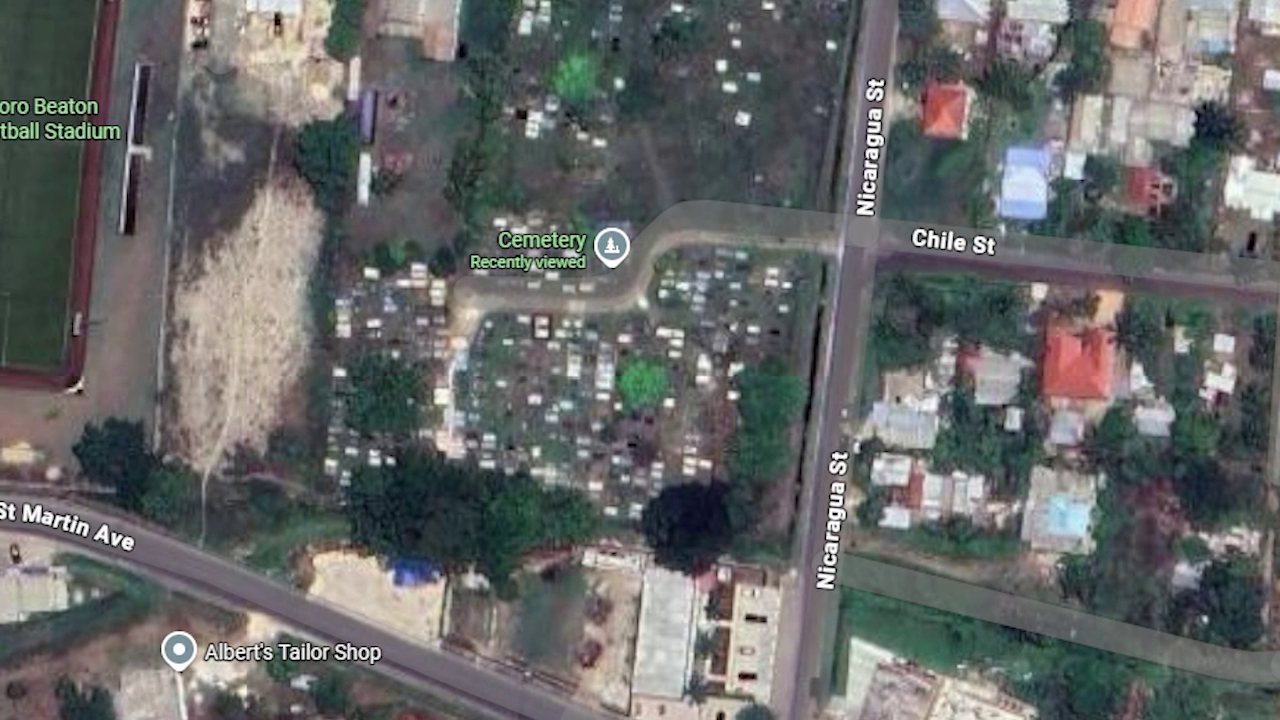
    Authorities in Belize have launched a criminal investigation following the grim discovery of a young man’s body early on the morning of April 10, 2026, in the area surrounding the Port of Belize, located in Belize City – the country’s former capital.

    Local law enforcement confirmed that they received reports of the remains shortly after daybreak, and have since secured the crime scene to begin processing evidence. According to multiple sources familiar with the preliminary investigation, the deceased has been identified as a young man who was a resident of Belize City. Preliminary examination of the body has revealed visible gunshot wounds, indicating the death is being treated as a suspected homicide.

    As the investigation remains in its early active phase, law enforcement has not yet released additional details about the victim’s identity, potential suspects, or the circumstances leading up to the discovery. Local outlet News 5 has confirmed that it will publish a full detailed report on the incident during its 6 p.m. live broadcast, once more information becomes available from investigating authorities.

  • SSB Holds Public Consultations on Contribution Changes… But Are People Hearing About It?

    SSB Holds Public Consultations on Contribution Changes… But Are People Hearing About It?

    As of April 2026, Belize’s Social Security Board (SSB) has been conducting a multi-stop national tour of public consultations, designed to solicit community feedback on sweeping proposed changes to the country’s social security contribution framework. But the initiative has been hampered by significant communication gaps that have left many eligible participants confused about when and where sessions are being held, and unable to engage with a policy process that will directly impact their earnings and long-term social benefits.

    The reform consultation process was first announced in a 22-second promotional video released by the SSB on February 26, which outlined a schedule of sessions across nine districts around the country, kicking off with a Belize City gathering on March 5. That first session passed more than a month ago, with the tour rolling through March to include stopovers in Santa Elena, Corozal, Orange Walk and Independence. The tour is scheduled to continue through mid-April, with a session planned for San Pedro this week, followed by gatherings in Placencia on April 14 and Punta Gorda on April 16, per the original announcement.

    The policy changes up for discussion carry major stakes for both workers and employers across Belize. The SSB’s two core proposed amendments are a shift from a fixed wage-based contribution calculation model to a percentage-based system, and an increase in the minimum contribution floor to $130. Discussions also cover how contribution costs are split between employers and employees. Any adjustment to these terms will immediately impact workers’ take-home pay, and will shape the social security benefits they can access after retirement or during periods of need.

    Despite the high stakes of the reform process, public access to basic event details has been inconsistent at best. The original 22-second announcement video only provided broad dates and locations, with no mention of specific start times or event venues for any of the scheduled sessions. On the SSB’s official website, a homepage banner confirms the consultations are underway, but directs anyone seeking more information to contact the board’s communications officer via email, rather than posting public details directly.

    While some sponsored flyers for the sessions have been pushed to Belizeans’ Facebook feeds, these promotional materials are not posted to the SSB’s own official Facebook page, and the details included on flyers often contradict the original schedule announced in February. One flyer for the upcoming Punta Gorda session, for example, lists a time of 10 a.m. to 12 p.m. at the local SSB branch, but cites an event date of April 30 — two full weeks later than the April 16 date listed in the original announcement. A separate flyer for an Orange Walk session lists a gathering on April 14 at El Gran Mestizo Resort, while the original schedule had marked an Orange Walk consultation for March.

    It remains unclear whether these conflicting dates reflect last-minute scheduling changes, widespread printing errors, or uncoordinated promotional efforts from third parties, and the SSB has not issued any public clarification to resolve the discrepancies. To its credit, the agency has pinned a notice on its Facebook page advertising a live-streamed stakeholder consultation scheduled for April 16 at 1:30 p.m., creating an alternative access point for community members who cannot attend in-person sessions or cannot find information about local gatherings.

    For members of the public who do want to review the full details of the proposed amendments ahead of providing feedback, the SSB has posted a complete presentation document linked on its official website under the events tab, where the purpose of the consultations is outlined clearly.

  • BEL Proposes Monthly Cost Adjustments

    BEL Proposes Monthly Cost Adjustments

    Belize Electricity Limited (BEL), the country’s primary power provider, has submitted a formal regulatory proposal that would introduce automatic monthly adjustments to customer electricity bills, a shift designed to mitigate the growing financial strain caused by persistent swings in global and domestic energy costs that have outpaced current fixed tariff structures.

    Filed on April 1 as part of the company’s 2025–2026 Annual Review Proceeding, the request includes a plan to maintain the existing base Mean Electricity Rate (MER) at $0.4428 per kilowatt-hour and hold the Reference Cost of Power (RCOP) steady at $0.3033 per kilowatt-hour, meaning consumers would not face an immediate jump in base electricity rates if the plan is approved by the Public Utilities Commission (PUC), Belize’s independent energy regulatory body.

    The core policy change at the heart of the proposal is the new automatic monthly Cost of Power (COP) adjustment framework. BEL officials argue the mechanism is a critical response to long-standing cost volatility stemming from structural characteristics of Belize’s national energy system. Though the country maintains a diversified energy portfolio that includes hydroelectric generation, biomass power, imported energy, and thermal production, this diversity has not insulated the provider from extreme price fluctuations. BEL’s filing documents show that actual power generation costs have varied from as little as $0.16 per kilowatt-hour to $0.46 per kilowatt-hour during extreme market events. When paired with ongoing delays in the development of new lower-cost energy infrastructure, these swings have eroded BEL’s financial stability, the company explained.

    To prevent sudden, jarring changes to consumer bills, the proposed framework includes built-in guardrails: monthly adjustments would be capped at plus or minus 5 percent of the fixed RCOP. All adjustments would be calculated using a six-month rolling average of verified actual power costs, a design intended to smooth out short-term price spikes while ensuring changes reflect real market conditions rather than projections. Any gap between the actual cost of power and the approved RCOP would be clearly marked as a separate line item on customer bills, either as a cost recovery for underpayments or a rebate for overpayments. Deferred balances from under-recovery or over-recovery periods would be tracked systematically and settled incrementally over time, rather than being passed to consumers in a single large adjustment.

    BEL says the new model would replace the current regulatory approach, which relies on infrequent but very large tariff overhauls, with smaller, more predictable monthly changes. This shift would cut the risk of sudden, unaffordable bill jumps for households and businesses while improving overall transparency around how power costs are calculated, the company argues.

    Financial data included in the filing underscores the urgency of BEL’s request. For the 2024–2025 regulatory period, the provider recorded an under-recovery of roughly $6.7 million, meaning actual costs were $6.7 million higher than revenue collected from current tariffs. That gap is projected to balloon to $22.8 million for 2025–2026, and grow further to $40.35 million in 2026–2027 before falling to $25.78 million in 2027–2028. Cumulative regulatory under-recovery balances could exceed $110 million by 2027, a level that would create severe cash flow risks for the company, BEL forecasts. Under the proposed monthly adjustment system, the company projects incremental monthly recoveries would fall between $1.3 million and $1.6 million, a gradual pace that would steadily shrink the growing deferred balance over the coming years. The proposal now awaits review and a final ruling from the PUC.

  • Where’s the relief? Opposition Leader asks GOB

    Where’s the relief? Opposition Leader asks GOB

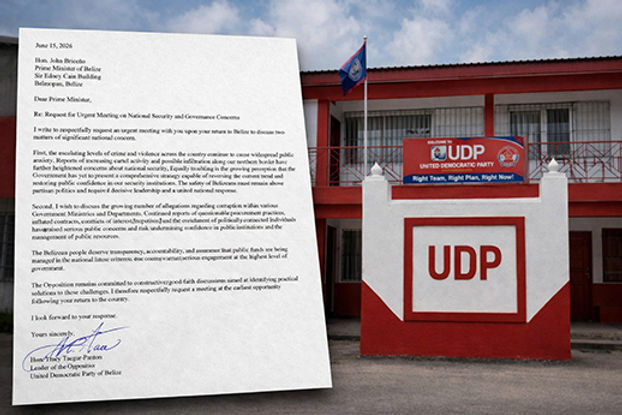
    As skyrocketing global oil costs send domestic fuel prices soaring in Belize, the country’s political opposition is pressing the sitting administration to roll out immediate relief measures for struggling households and businesses — a call that has so far gone unanswered by policymakers.

    Opposition leader Tracy Panton has issued two formal statements this week hammering the government for its inaction as price hikes hit just ahead of the Easter holiday, one of the busiest travel periods of the year for the Caribbean nation. The latest price adjustments pushed premium gasoline up by 86 cents per gallon and regular gasoline by 80 cents per gallon, bringing benchmark prices in the capital of Belize City to $14.62 and $13.82 per gallon respectively.

    Panton has contextualized the current crisis as the product of mounting global energy market instability, pointing to two major geopolitical flashpoints that have disrupted supply chains: escalating tensions in the critical Strait of Hormuz shipping lane and the escalating conflict involving the United States, Israel and Iran. These global shocks have sent international crude prices skyrocketing in recent weeks: official market data shows West Texas Intermediate (WTI) crude climbed to $98.57 per barrel on April 9, marking a nearly 40% jump from the $71.23 per barrel recorded at the start of March, a surge that unfolded over just five weeks.

    The opposition leader warns that the ripple effects of these fuel price increases are already spreading across every corner of Belize’s domestic economy. Higher fuel costs have directly pushed up transportation fares, grocery prices and operational overheads for small businesses and key productive industries. Panton emphasizes that the government’s failure to implement any temporary tax cuts, fuel subsidies, or targeted financial support has placed an unfair, overwhelming burden on the country’s lowest-income households and most vulnerable populations.

    To back up its call for action, the opposition points to the government’s own previous response to economic crisis during the COVID-19 pandemic. At that time, the administration rolled out broad fiscal interventions and targeted social support programs to protect household incomes and prevent widespread economic collapse. Panton argues that the current fuel crisis demands a similarly bold, targeted policy response to shield the public from market volatility.

    As the primary opposition United Democratic Party’s parliamentary caucus pushes for concrete steps including a full review of domestic fuel taxation and the launch of targeted relief mechanisms to soften the blow for affected groups, the Belizean government has yet to release any public announcement of planned interventions to address the rising cost of fuel.

  • Oversight Funding Climbs, But Share Remains Thin

    Oversight Funding Climbs, But Share Remains Thin

    Over the four-fiscal-year period spanning 2023/24 to 2026/27, Belize’s total government expenditure is set to grow by nearly $270 million. However, the three core institutions that form the backbone of the country’s legislative oversight framework have secured only a marginal combined budget increase that barely moves the needle on their share of overall public spending, new budget data confirms.

    Under the recently approved 2026/27 national budget, the Office of the Ombudsman, the Office of the Contractor General, and the Integrity Commission will collectively receive $1,190,825 in public funding. This marks a $330,399 rise from their combined 2023/24 allocation of $860,426. For comparison, total government spending over the same window will climb from $1.633 billion to $1.903 billion, a total increase of approximately $269.5 million.

    As a result of the uneven growth, the combined share of total public expenditure allocated to the three oversight bodies has only inched up from 0.053 percent to 0.063 percent – a gain of just 0.010 percentage points across four years. While the nominal budget for the three offices has risen by roughly 38 percent, their proportional footprint in Belize’s overall government budget has not seen any meaningful expansion, highlighting the limited priority given to oversight spending in the country’s medium-term fiscal planning.

    A breakdown of individual allocations shows uneven growth across the three institutions. The Integrity Commission, which leads in overall growth, will see its budget jump from $179,073 in 2023/24 to $325,222 in 2026/27 – an $146,149 increase that equals roughly 82 percent nominal growth. This single office accounts for more than 44 percent of the total combined budget increase for all three oversight bodies.

    The Office of the Ombudsman follows, with its allocation growing from $328,631 to $461,446 – a $132,815, or 40 percent, nominal increase. The smallest growth by far goes to the Office of the Contractor General, which will see its budget rise by just $51,435 (15 percent), from $352,722 to $404,157. When added together, these adjustments sum to the total $330,399 increase across all three oversight institutions.

    Each of these three bodies plays a non-substitutable role in upholding governmental accountability and transparency in Belize. The Ombudsman’s core mandate is to investigate complaints submitted by ordinary citizens who claim they have faced abuse, unfair treatment, or improper conduct from public authorities. It acts as an independent channel for residents to challenge state administrative actions and secure impartial review of official behavior.

    The critical nature of this role was highlighted in a high-profile case from last year. Public-interest litigant Jerry Enriquez turned to the Ombudsman for support after the Attorney General’s Ministry denied his Freedom of Information Act request. After the Attorney General challenged the Ombudsman’s involvement, the case moved to appellate courts. The existing process demonstrates the gap in accountability that would exist without the Ombudsman’s function, as any halt to its work would leave citizen-led oversight of public administration stalled.

    The Office of the Contractor General fulfills a separate but equally critical public duty: it oversees all government contracting and public procurement processes, working to ensure public bids are awarded fairly and that taxpayer funds used in contracts are spent openly and appropriately. In a governance landscape where public contracts often involve multi-million dollar sums and far-reaching policy impacts, this office acts as a key bulwark against procurement irregularities and opaque decision-making.

    For its part, the Integrity Commission is tasked with monitoring mandatory financial disclosures from all elected and senior public officials. Its core goal is to identify cases where public servants have accumulated wealth that cannot be reasonably accounted for by legitimate income or publicly declared assets. By mandating and reviewing these disclosures, the commission forms a central pillar of Belize’s national anti-corruption framework.

    These budget figures raise urgent broader questions about Belize’s commitment to public accountability. Despite all three institutions being central to upholding governmental accountability, ethical public conduct, and transparent procurement, their combined funding still makes up less than one-tenth of one percent of total national expenditure. Even as overall public spending grows by hundreds of millions of dollars over the four-year period, the 0.063 percent share allocated to these oversight bodies in the 2026/27 budget falls far short of what would match the critical importance of their mandates for building public trust, ensuring administrative fairness, and upholding government transparency.

  • Hormuz slowdown signals prolonged pressure on fuel prices

    Hormuz slowdown signals prolonged pressure on fuel prices

    Nearly a week after a regional ceasefire was announced to de-escalate tensions around the Strait of Hormuz, one of the world’s most critical energy chokepoints, global oil and gas shipments through the waterway have failed to stage any meaningful recovery. Shipping data collected in the first full day after the ceasefire went into effect paints a stark picture of ongoing disruption: just one oil products tanker and five dry bulk vessels completed transits through the corridor, a dramatic drop from the typical daily average of 140 vessels.

    The strategic strait handles roughly 20% of the world’s total daily shipments of oil and liquefied natural gas, making even minor disruptions to its operation ripples across global energy markets. The massive gap between pre-crisis traffic volumes and current activity underlines a key reality: formal diplomatic announcements of de-escalation have not yet translated into the large-scale resumption of energy supply movement that markets have been waiting for.

    Ongoing geopolitical uncertainty is the primary driver of the continued slowdown. Iran has retained strict oversight and restrictions on vessel passage, pointing to unresolved tensions stemming from ongoing Israeli military operations in Lebanon. This de facto bottleneck has been maintained even as formal ceasefire agreements have been announced, keeping global energy supply constrained against a backdrop of tentative diplomatic progress.

    The economic fallout of this disruption hits small, import-reliant open economies like Belize hardest. Unlike larger industrialized nations with strategic reserves and more diversified supply chains, Belize’s domestic fuel prices are directly tied to global benchmark pricing, which reacts not just to current supply levels but also to market expectations of future disruption. When a critical energy artery like the Strait of Hormuz operates at less than 10% of its normal capacity, markets price in inherent supply scarcity, which has already contributed to a sharp recent uptick in global crude prices.

    The scale of the current disruption cannot be overstated. A collapse from 140 daily transits to fewer than 10 effectively brings activity at the chokepoint to a near standstill. Even if the disruption proves temporary, the sudden contraction has injected significant volatility into global energy supply chains, throwing off shipping schedules, reducing consistent inputs for refineries worldwide, and putting sustained upward pressure on retail fuel prices.

    For Belize, where nearly every core sector of the domestic economy relies on imported fuel, the shock propagates rapidly. Higher global crude prices translate immediately to increased prices at the pump, which in turn push up costs for public and private transportation, electricity generation, food distribution, and nearly every goods and service across the country. The knock-on effects can quickly erode household purchasing power and strain small business operations.

    The slow pace of traffic resumption also suggests that price pressures may last longer than initially hoped by many market observers. Until vessel transits return to near-normal, consistent volumes, global energy markets will remain hypersensitive to any new development in the region. While ceasefire announcements and diplomatic negotiations can trigger temporary dips in oil prices, sustained market stabilization and normalization will only come when the secure, unimpeded passage of energy shipments through the strait is fully restored.