标签: Belize

伯利兹

  • Labour Force Shrinks by 13,000. What’s Really Behind It?

    Labour Force Shrinks by 13,000. What’s Really Behind It?

    In newly released labor market data from Belize, a seemingly contradictory economic trend has emerged: the national labor force has contracted by more than 13,000 workers over the 12-month period ending in June 2026, even as the official unemployment rate has edged downward. The findings come from the latest quarterly Labor Force Survey published by the Statistical Institute of Belize (SIB), the country’s central statistics agency.

    According to the SIB report, the national unemployment rate fell slightly from 2.1% to 1.9% over the survey period. But this small improvement does not reflect widespread job growth, officials explain. Instead, the falling rate is driven almost entirely by thousands of Belizean workers exiting the labor force entirely, rather than unemployed workers securing new positions.

    Christian Orellano, the SIB’s manager of censuses and surveys, broke down the demographic shifts driving the contraction. The largest declines in labor force participation are concentrated among adults aged 25 and older, with two key groups accounting for most of the exit. Women between the ages of 25 and 34 have left the workforce in large numbers to take on family care responsibilities, while workers aged 55 and older have exited through retirement. These two demographic shifts have combined to shrink the overall pool of active workers significantly.

    Diana Castillo, SIB’s director general, clarified the mathematics behind the falling unemployment rate amid a shrinking labor force. Unemployment is calculated as a ratio: the number of unemployed workers (the numerator) divided by the total size of the active labor force (the denominator). In this case, both figures have decreased over the past year, but the number of unemployed workers has fallen at a faster percentage rate than the total labor force. That mathematical shift produces a lower official unemployment rate, even without broad job growth.

    The conflicting data has sparked debate among economic observers over whether Belize’s low official unemployment rate signals a genuinely strengthening economy, or if it is just a statistical quirk masking underlying labor market shifts driven by workers dropping out of active employment. Local news outlet will air a full in-depth breakdown of the survey findings and expert analysis during its 6 p.m. newscast the same day to address these questions.


  • Ocean Academy Rejects Call to Surrender Licence as Government Plans Rival School

    Ocean Academy Rejects Call to Surrender Licence as Government Plans Rival School

    On the small Caribbean island of Caye Caulker, a well-established independent non-profit high school is standing its ground against a government push to end its operations, as authorities move forward with plans to launch a competing public secondary institution on the island. Ocean Academy, a beloved community-centered secondary school that has served local students for years, has formally rejected a formal request from Belize’s Ministry of Education to voluntarily revoke its operational license, confirming it will remain an independent educational provider for the island’s community.

    School leadership confirmed to local outlet News 5 that ministry representatives explicitly stated the upcoming government-run secondary school would operate with no formal affiliation or partnership with Ocean Academy, leaving the independent institution with no clear role in the new public project. Following a series of consultations with parents of current students, alumni, and other key community stakeholders, the school’s governing body voted unanimously to reject the government’s request.

    Founder Heidi Curry explained the decision was rooted in deep community ties and widespread support for Ocean Academy’s unique educational model. “We have generations of alumni who deeply value their Ocean Academy diplomas and the reputation that comes with the school’s seal,” Curry said in an interview. “Parents are also consistently enthusiastic about our hands-on experiential learning framework, our specialized programs, and the unique curriculum we have built over the years. As a non-profit rooted in this community, we listened to what our stakeholders wanted, and we made the decision to keep moving forward on our independent path.”

    The standoff comes as Ocean Academy is already navigating significant post-disaster recovery challenges. The school’s original campus suffered months of disruptive closures after severe flooding left widespread mold damage across the building. After extensive structural repairs and renovations to the upper floors of the campus, most students were able to return to in-person learning at the main site in April 2026. To adapt to the remaining damage, school administrators repurposed one upstairs classroom into new office space and restrooms, and the entire contaminated ground floor was permanently abandoned. This overhaul has left the school two classrooms short of its needs, forcing one group of students to continue attending classes at an off-site location as the region’s annual rainy season approaches.

    To address the immediate classroom shortage while the school works toward a long-term solution of building a permanent new campus, Ocean Academy has unveiled plans to construct two modular movable classrooms on a nearby parcel of land. Curry noted that the school has already secured preliminary permission to use the temporary site, and has partnered with an architect to design the movable structures, ensuring that any investment in the facilities can be repurposed for the permanent campus down the line. “We designed the buildings to be movable so that every dollar we invest will benefit our students for years to come, rather than being locked into a site we won’t use long-term,” Curry explained.

    To fund both the temporary movable classrooms and the future purchase of a larger plot for a permanent campus, the school has launched a public fundraising campaign branded as Ocean Academy 2.0. Early responses from the donor community have already been promising, with one donor already committing a $25,000 pledge that will go toward a down payment on the future permanent campus property. The proposed new permanent site would allow the school to add long-missing athletic facilities, including a basketball court, volleyball court, and running track, amenities the current campus has never had the space to accommodate.

    The school has launched a dedicated website for the initiative, where it will post regular updates on fundraising progress for the movable classrooms, and will eventually share full details of the land purchase agreement once terms are finalized. As the government moves ahead with its plans for the new public school, Ocean Academy remains committed to continuing its 501(c)(3) educational mission on the island, backed by widespread community support.

  • Autism Belize: ‘There’s Still a Lot More to Learn About Autism’

    Autism Belize: ‘There’s Still a Lot More to Learn About Autism’

    A recent incident at a Belizean preschool has thrown a long-simmering issue back into the public spotlight: the widespread lack of neurodiversity awareness and accessible support for autistic students across the country’s education system. On Friday, June 20, 2026, three autistic children attending Anglican Diocesan Preschool were reportedly sidelined during the institution’s annual graduation ceremony, pushing the urgent need for systemic change to the top of local advocacy agendas.

    A family member of one of the three students confirmed to local media that the ceremony’s seating arrangement placed the autistic children entirely behind the main graduate seating block, positioning them out of clear sight of most parents and event attendees. The deliberate separation has reignited longstanding concerns from disability advocates about how neurodivergent students are marginalized by educational institutions that lack foundational training on supporting autism.

    Christie Almeida, founder of leading national advocacy group Autism Belize, emphasized that the incident is unlikely to have stemmed from intentional malice. Instead, she framed it as a clear symptom of deep-rooted gaps in public and institutional understanding of neurodiversity that persist across most Belizean schools. Almeida drew a key distinction between formal equality and targeted equity in education, noting that meaningful inclusion requires far more widespread education about autism and neurodivergent needs than the system currently offers.

    Almeida pointed out that repeated missteps like this highlight a critical need for improved, ongoing communication between school leadership, classroom educators and the families of children on the autism spectrum. She called on institutions to proactively engage with autistic people and their families to co-design inclusive practices, rather than making unilaterial decisions that exclude students. “All we can ask is that there is some level of flexibility and that you consult us as parents. Have a sit down, have a discussion, and let’s talk about how best we can involve your child,” Almeida said. “This isn’t something for us to shy away from. Let’s have these conversations and figure out how we support each other.”

    To address the recurring gaps in support for neurodivergent students, Almeida highlighted the transformative role that certified, trained classroom aides could play in supporting teachers who often lack the resources or training to accommodate autistic learners. She made a formal policy call for government-funded specialized aide positions, noting that many low- and middle-income Belizean families cannot afford private, one-on-one support for their children. “If government takes it on, it would be a significant cost, but it is something we need to work towards,” she said.

    As of June 24, 2026, Anglican Diocesan Preschool has not responded to multiple requests for comment from local outlet News 5 on the incident, leaving the preschool’s official position unstated.

  • ‘Constitutional Independence’ or Pure Secrecy? EBC Defers FOIA

    ‘Constitutional Independence’ or Pure Secrecy? EBC Defers FOIA

    A growing transparency crisis has emerged in Belize’s electoral process, after the national Elections and Boundaries Commission (EBC) formally rejected a Freedom of Information (FOIA) request seeking critical details on the country’s long-overdue electoral redistricting effort. The request was filed by prominent social activist Jeremy Enriquez, who has accused the commission of intentionally stonewalling public access to information that directly impacts the democratic representation of all Belizean voters.

    Enriquez submitted his formal FOIA application on June 8, 2026, asking for a full range of unredacted records related to the redistricting process. Among the materials he sought were timelines for the completion of the project, the methodology being used to redraw electoral boundaries, details of third-party consultants contracted for the work, all public and private expenditures associated with the process, draft boundary proposals, and official correspondence between EBC leadership and government officials. Two weeks after the request was filed, on June 22, the EBC delivered its formal response – a refusal to release any of the requested documents, backed by three layers of legal objection.

    The response, signed by EBC Chairman Oscar Sabido, laid out the commission’s position. First, the commission claimed the total volume of records requested was unreasonably excessive. Second, it argued that releasing the documents could interfere with ongoing active litigation that lists Enriquez, the Attorney General of Belize, and the EBC itself as involved parties. Most notably, the EBC asserted that it is not legally required to comply with the FOIA at all, claiming it does not fit the legislation’s definition of a “Ministry” or “Prescribed Authority” bound by freedom of information rules.

    To back up this core claim, the commission directly cited Section 88 of the Constitution of Belize, which states: “In the exercise of its functions, the Commission shall not be subject to the direction or control of any other person or authority and shall, subject to the provisions of this Constitution, act in accordance with the Representation of the People Act or any other law, rule or regulation relating to elections.” In its formal conclusion, the EBC stated it would defer any compliance with the access request under Section 17 of the FOIA until a court of law issues a formal ruling confirming the commission is legally required to provide the requested information. In plain terms, the EBC will not release any documents until it is compelled to do so by a judicial order.

    The rejection leaves Enriquez with very few formal avenues to challenge the decision. The standard process for contesting an unlawful FOIA denial is to file a complaint with the Office of the Ombudsman, the independent body tasked with overseeing transparency and government accountability. However, that position has remained entirely vacant since December 2025, when the government declined to renew the contract of former Ombudsman Major (Ret’d) H. Gilbert Swaso. To date, no permanent replacement has been appointed, leaving the oversight body unable to process complaints.

    For Enriquez and other transparency advocates, the entire situation underscores a pattern of excessive secrecy around an electoral process that carries profound constitutional implications. Redistricting, the process of redrawing electoral district boundaries, directly shapes whether Belizean voters receive equal representation in government, as population shifts can leave some districts overrepresented and others underrepresented without timely updates. In a pre-response interview on June 10, Enriquez already criticized the government’s approach to the process, stating, “No more of this secrecy with which this government tends to operate.” The Belizean government has made a public commitment to complete the full redistricting process by the end of 2026, but the lack of public access to internal process details has cast new doubt on the transparency and fairness of the upcoming final product.

  • Elon Musk is No Longer a Trillionaire

    Elon Musk is No Longer a Trillionaire

    Just two weeks after making history as the world’s first person to reach a $1 trillion net worth, Elon Musk has fallen below the iconic trillion-dollar threshold, driven by a steep correction in SpaceX’s publicly traded shares and new regulatory constraints on a large block of his Tesla stock.

    Musk notched his place in the record books on June 12, when SpaceX’s long-awaited $75 billion initial public offering pushed his estimated total wealth to $1.1 trillion. In the days following the IPO, roaring investor demand sent SpaceX shares climbing, pushing Musk’s peak net worth to an unprecedented $1.45 trillion earlier this month.

    That momentum has reversed sharply in recent trading. From its post-IPO high, SpaceX’s stock has tumbled roughly 31 percent, wiping out hundreds of billions of dollars in the company’s overall market capitalization and carving a massive chunk out of Musk’s personal fortune. The aerospace firm makes up the largest single share of Musk’s current wealth, so its stock volatility has an outsized impact on his net worth calculations.

    The drop in SpaceX valuation was not the only factor behind Musk’s fall from the trillionaire club. Last week, the billionaire surrendered $7.1 billion worth of Tesla shares to cover exercise costs for stock options granted under his controversial 2018 Tesla compensation package. After a high-profile court battle over the approval of the package, the converted shares are now classified as restricted stock. Under the terms of the agreement, Musk will forfeit these holdings if he steps down from his role as Tesla’s chief executive before January 2028, meaning they cannot be counted as fully liquid, unrestricted assets in his net worth calculation.

    As of market close on Tuesday, independent estimates put Musk’s total net worth at approximately $962 billion. Even with the decline, Musk retains his title as the world’s richest person by a substantial gap, with his nearest competitor trailing by hundreds of billions of dollars.

    Market analysts have long pointed out that the vast majority of Musk’s wealth is held in equity stakes in his two flagship companies, rather than cash or liquid low-volatility assets. This structure means his net worth is extremely sensitive to swings in public market sentiment, with billion-dollar gains or losses occurring in days in response to stock price moves. Many market watchers expect further volatility in Musk’s net worth going forward, as both SpaceX and Tesla continue to face shifting investor demand and industry headwinds.

  • Emergency Repairs Underway After Sinkhole Appears on Highway

    Emergency Repairs Underway After Sinkhole Appears on Highway

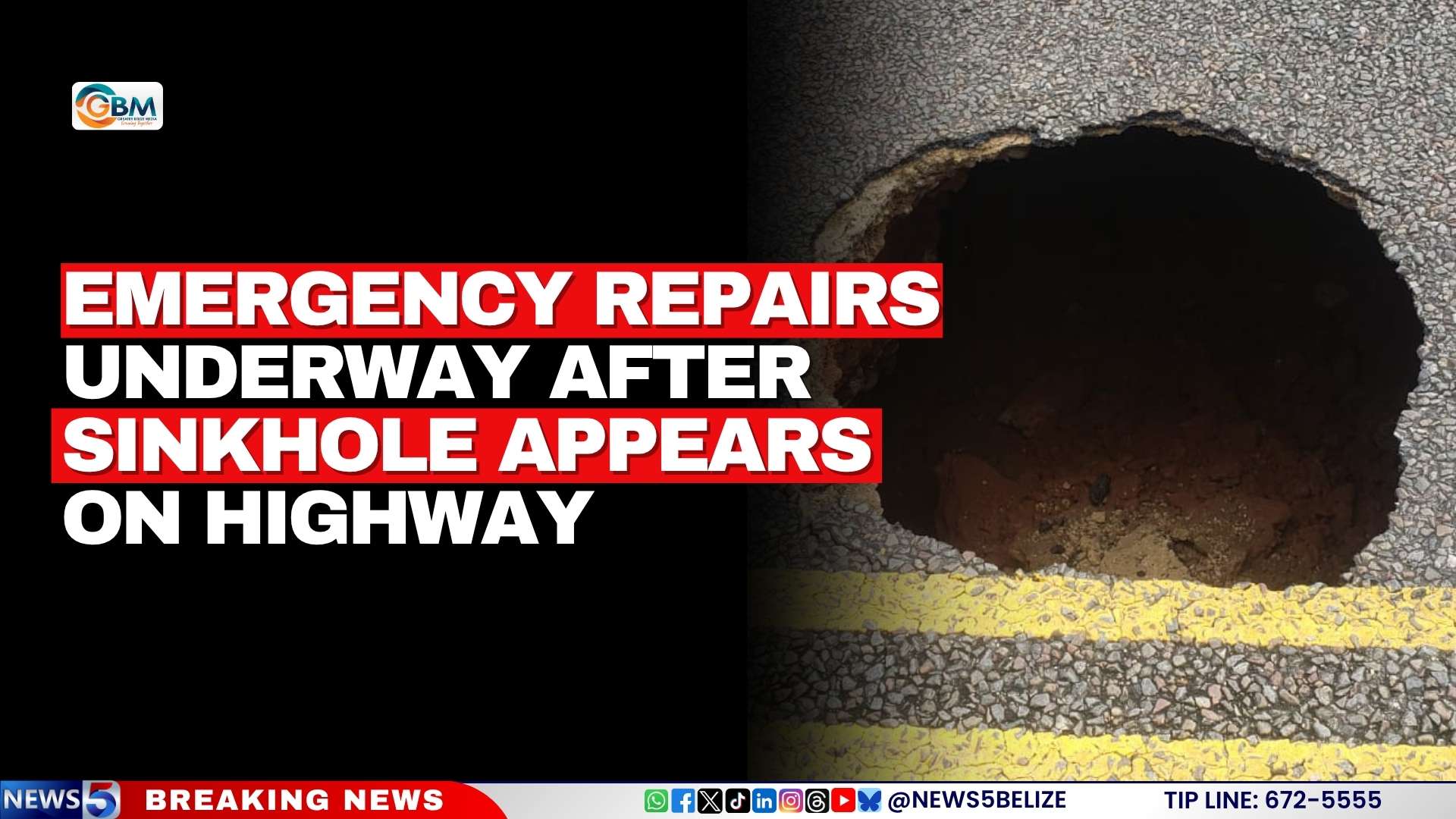
    On June 24, 2026, a sudden road collapse at the 17.5-mile marker of Belize’s Hummingbird Highway triggered an immediate closure of the affected stretch, launching urgent emergency repair work while officials issue safety warnings for all passing motorists.

    Local residents who first spotted the sinkhole raised urgent alarms about the hazard, telling local outlet News 5 that the depression is both large and deep enough to swallow a heavy commercial truck if any vehicle attempts to drive over the damaged area. The unanticipated collapse has disrupted regular traffic flow along the critical highway, forcing commuters and commercial transport operators to rearrange their travel plans on short notice.

    Engineers from the country’s Ministry of Infrastructure Development and Housing (MIDH) completed an initial inspection of the collapse site shortly after the sinkhole was reported. Their assessment confirmed that the metal culvert installed beneath the highway at this location remains structurally sound. Instead, the failure is traced to the road surface and the supporting fill material positioned above the culvert, which eroded and gave way unexpectedly to create the sinkhole.

    Crews of construction and maintenance workers have already mobilized to the site, with the first priority being stabilizing the damaged area to prevent any further expansion of the collapse before full repairs get underway. In an official statement published after the incident, MIDH emphasized that the agency is pulling out all stops to speed up the repair process, while still adhering to strict safety protocols to protect both workers and the traveling public.

    To avoid incidents, transportation officials are urging all motorists planning to travel along this corridor to plan ahead and use marked alternative routes whenever possible. Any drivers who must travel near the work zone are instructed to follow all directions from on-site maintenance crews and traffic management personnel.

    MIDH has confirmed that it will release new public updates promptly as work progresses, including a formal notification when the damaged section of the highway is fully repaired and reopened to all vehicular traffic.

  • Who’s in Charge? Cabinet Reassigns Mira’s Portfolios Amid Scandal

    Who’s in Charge? Cabinet Reassigns Mira’s Portfolios Amid Scandal

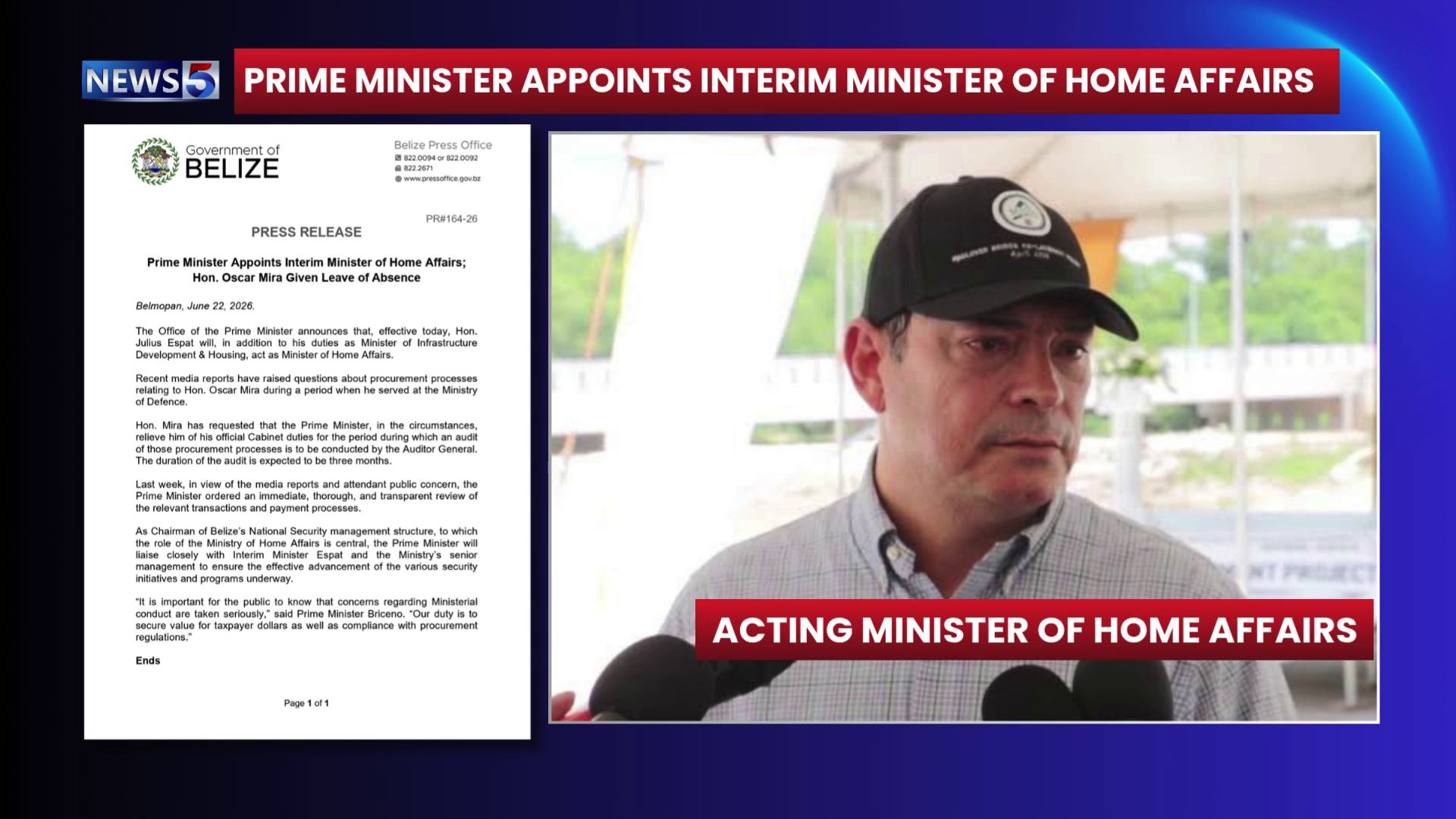
    On June 23, 2026, a Cabinet meeting held in Belmopan, Belize, centered on managing the political fallout of the ongoing Oscar Mira controversy, resulting in a temporary reshuffle of senior government portfolios. As Oscar Mira remains on administrative leave pending an investigation into irregular procurement practices, Prime Minister John Briceño confirmed the temporary reassignment of Mira’s duties: Minister Julius Espat will take over leadership of the Ministry of Home Affairs, while Minister Henry Charles Usher will assume temporary oversight of the Enterprise and Freezones portfolios.

    Beyond the portfolio reshuffle, the Prime Minister has faced growing public and press scrutiny over two additional controversial issues: a series of 11 payments totaling more than $130,000 from the Prime Minister’s own office to MP Farms for bulk grocery bag purchases, and a pending reset of the board for the RECONDEV development authority, currently chaired by Brian Mira, Oscar Mira’s relative.

    During the press question-and-answer session following the closed-door Cabinet meeting, Briceño pushed back against allegations of improper procedure, dismissing concerns over the MP Farms payments as unfounded “grasping at straws.” He emphasized that all financial transactions from his office followed established government protocols, noting that day-to-day payment processing is handled by his office staff and finance department personnel rather than directly by him. When asked why his office required such a large volume of grocery bags, Briceño deferred questions to the Cabinet Secretary, who oversees the government’s payment administration.

    The Prime Minister also addressed questions about irregular transaction patterns at the Ministry of Defense, where more than 1,000 individual transactions were processed for amounts just below the $10,000 threshold that triggers higher-level procurement review. Briceño confirmed that the pattern of split transactions had raised internal red flags, prompting him to order the Financial Secretary to commission an audit by the Auditor General’s office.

    When explaining Mira’s decision to step aside, Briceño clarified that the outgoing minister requested administrative leave voluntarily to avoid creating any public perception of bias during the ongoing audit. Briceño told reporters that there was no internal disagreement among Cabinet members over the decision, adding that while the body was “saddened by what has happened,” governing in the public interest remains the top priority. He also reaffirmed his confidence in Mira’s political future, stating that Mira had performed strong work as Home Affairs Minister and remains politically viable in Belmopan, expecting Espat to continue the policy work Mira initiated.

    Briceño also confirmed that the reconfigured RECONDEV Board will be sworn in within days, with full appointments finalized by early next week. The meeting marked a rare moment of public transparency for the Belizean Cabinet as it works to contain political damage from the unfolding scandal, even as opposition and press figures continue to press for more detailed answers about the controversial transactions.

  • Payments Scandal Tightens Grip on Briceño Administration

    Payments Scandal Tightens Grip on Briceño Administration

    As of June 23, 2026, a widening public contracting scandal centered on improper public payments has thrown the Briceño administration into escalating political turmoil, with the nation’s top financial official confirming troubling irregularities that have triggered an official audit.

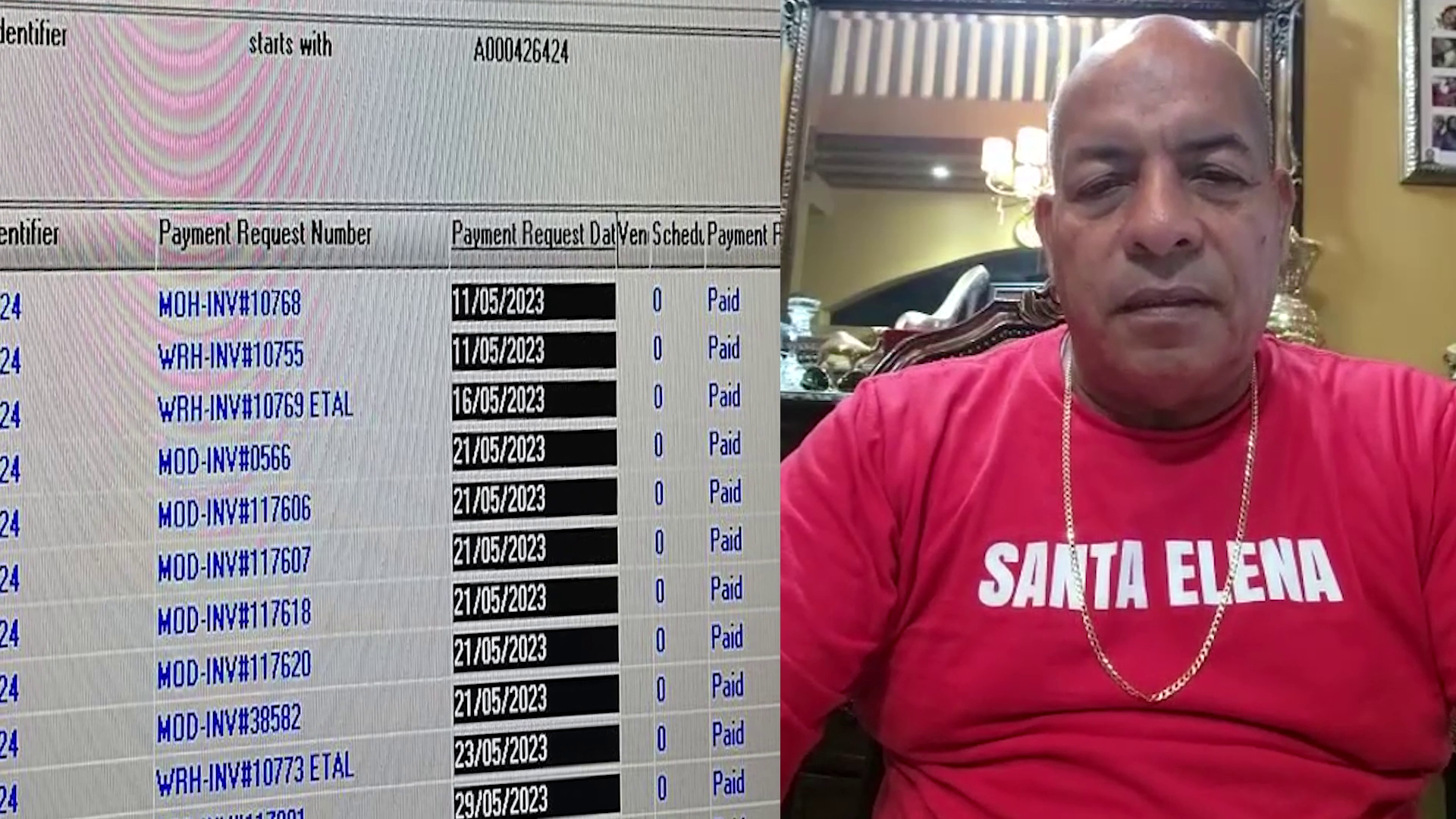
    The controversy revolves around millions of dollars in taxpayer funds disbursed through the Ministry of Defense to food supply companies owned by Cabinet Minister Oscar Mira and his close family members. Leaked internal financial records from the government’s Smart Stream payment system have sparked intense public and official scrutiny over the structuring and approval of these transactions, with growing allegations that the rules were intentionally manipulated to evade mandatory strict oversight.

    In an on-the-record interview for a national evening newscast, Financial Secretary Joseph Waight acknowledged that the emerging details of the scandal “don’t look good”, noting that the pattern of transactions runs completely counter to how the public payment approval system was designed to operate.

    Under Belize’s existing public finance rules, all government payments follow a tiered approval structure: smaller transactions require two levels of official sign-off, while any payment exceeding a $10,000 threshold must receive a third, independent review from the Treasury Department to prevent misuse of funds. Waight confirmed that early evidence indicates a deliberate pattern of splitting large total payments into dozens of smaller individual disbursements, each just under the $10,000 cap, to avoid triggering the extra layer of oversight. Records show dozens of these sub-threshold payments to MP Farms, one of Mira’s linked businesses, were processed and approved in a single day, with hundreds more cleared over the course of one month.

    Waight laid out two core possible explanations for the breakdown: either responsible officials failed to carry out their mandatory oversight duties, or there was coordinated collusion to bypass the rules. “Clearly there is a breakdown in the system. It was not intended to work this way,” he said, pushing back against claims that the batching of payments for administrative convenience was a sufficient explanation for the scale of irregularities observed.

    When asked if the pattern of transactions should have triggered internal alarms, Waight responded definitively: “If you see a whole lot of payments, it should have raised alarms and it should have raised an eyebrow. I think so.” He also noted that while splitting large invoices into installment payments is allowed under policy, that justification does not hold up in this case, because all of the fragmented payments were issued on the same day—an unusual arrangement that Waight described as suspicious.

    Waight stopped short of directly blaming Mira for the irregularities, noting that a full independent audit is already underway to determine individual responsibility. The audit is now focused on verifying whether mandatory individual approvals for each payment were actually completed by financial officers at the Ministry of Defense, or if the checks were skipped entirely to push the transactions through quickly. As the audit progresses, the scandal continues to tighten its hold on the Briceño administration, raising urgent questions about the integrity of the government’s public procurement and financial oversight systems.

  • UDP’s Alberto August Calls Out Alleged Misconduct in Defense Ministry

    UDP’s Alberto August Calls Out Alleged Misconduct in Defense Ministry

    BELIZE CITY – In a developing political controversy rocking the Briceño administration, ruling party officials have placed Home Affairs Minister Oscar Mira on administrative leave amid a sweeping independent audit into past procurement activities at Belize’s Ministry of Defense. The official order, issued Monday via a public statement from Prime Minister John Briceño’s office, came in response to growing public scrutiny and emerging media reports questioning irregular transactions carried out during Mira’s tenure as Junior Minister of Defense. Prime Minister Briceño has framed the step as a commitment to accountability, authorizing the Auditor General to conduct what he calls a “thorough and transparent review” of all relevant procurement records.

    Alberto August, a former deputy chairman of the opposition United Democratic Party (UDP), has publicly weighed in on the unfolding situation, offering a sharp framing of the controversy for Belizean citizens already grappling with economic strain. August argues that the emerging scandal is ultimately a “blessing in disguise” for the Belizean public, because it has pulled back the curtain on alleged government misconduct that would have otherwise remained hidden from taxpayers, who are already burdened by skyrocketing living costs and soaring fuel prices.

    In a public address, August emphasized a core principle of democratic governance: actions taken in secret by public officials will eventually come to light. “My Belizeans, as somewhat of a blessing in disguise, all of this was happening unknown to the Belizean people, unknown to the taxpayers of this country who are being saddled with increasing cost of living, increasing prices of fuel, and here we have these people engaging in this kind of activity,” August said. “That which is done in darkness will one day come to light.”

    With auditors already on-site at the Defense Ministry reviewing official documents, August issued a direct call for investigators and political leaders to prioritize public good over partisan protection. He warned that covering up irregularities would send a damaging message to future public officials, normalizing misconduct by creating an expectation that parties will shield their own to avoid political embarrassment. “This is not about a political party looking good or bad, this is about protecting the taxpayers’ money of this country,” August stressed. “Do what is right for the Belizean people, that’s all we’re asking.”

    The development marks the latest high-profile test of accountability for the Briceño administration, as citizens continue to navigate widespread economic pressure and demand greater transparency over public spending.

  • Smart Stream Leak Sparks Demand for Full Public Access

    Smart Stream Leak Sparks Demand for Full Public Access

    Scheduled publication date: June 23, 2026

    A leak of internal records from Smart Stream, the Belizean government’s core financial management platform, has ignited widespread public pressure for full, unredacted public access to the system, amid circulating screenshots that reveal potentially questionable payment practices. What began as an unauthorized data disclosure has quickly evolved into a fundamental clash of values: one side frames radical transparency as the only path to rebuilding public trust in government spending, while top financial officials warn that full disclosure would create unacceptable risks to personal and commercial privacy.

    At the center of the debate is Financial Secretary Joseph Waight, who is pushing back against growing demands to open the entire Smart Stream system to public scrutiny. In a televised interview, Waight acknowledged that the controversy warrants greater disclosure of government financial data than the current framework allows, but argued that blanket access ignores legitimate privacy interests. “There are two sides to every story here,” Waight explained during the exchange. “My salary is paid with taxpayer dollars, but I still have a right to keep that information confidential. The same logic applies to private suppliers that contract with the government – they are entitled to some level of privacy, not full exposure of every detail of their transactions.”

    Critics, however, say the leak itself exposes a critical failure of oversight that would have remained hidden without unauthorized disclosure. Questioning whether government financial officers have neglected their regulatory duties, opposition figure Paul Lopez pressed Waight on how the suspicious activity went undetected until the leak. “If this information hadn’t been leaked, how would the public ever have found out about it?” Lopez asked. “Is the entire financial oversight team asleep at the wheel? How did no one catch this before it ended up in the public domain?”

    Waight countered that the full nature of the activity captured in the leaked screenshots remains unconfirmed, stressing that no formal finding of fraud has been issued to date. “We won’t know what we’re dealing with until the official audit is complete,” he said. “Right now, it just looks suspicious.”

    Lopez countered with the core argument of transparency advocates: any individual or business that enters into a contractual agreement with the government automatically subjects its financial dealings to public oversight. Waight rejected that framing, noting that while heightened scrutiny is appropriate for government contractors, that does not equate to a public right to access every single record held in the government’s financial system. “There are real privacy considerations that can’t just be thrown out the window,” he said.

    The controversy has thrown into sharp relief a tension that faces democracies worldwide: when hundreds of millions in taxpayer money are at stake, does the public’s right to know outweigh the legal and ethical right to confidentiality for individual government employees and private sector partners? With an audit underway to investigate the suspicious payments revealed in the leak, the debate over Smart Stream transparency is only expected to intensify in the coming weeks.