标签: Belize

伯利兹

  • Millions to Defend Belize’s Natural Frontiers

    Millions to Defend Belize’s Natural Frontiers

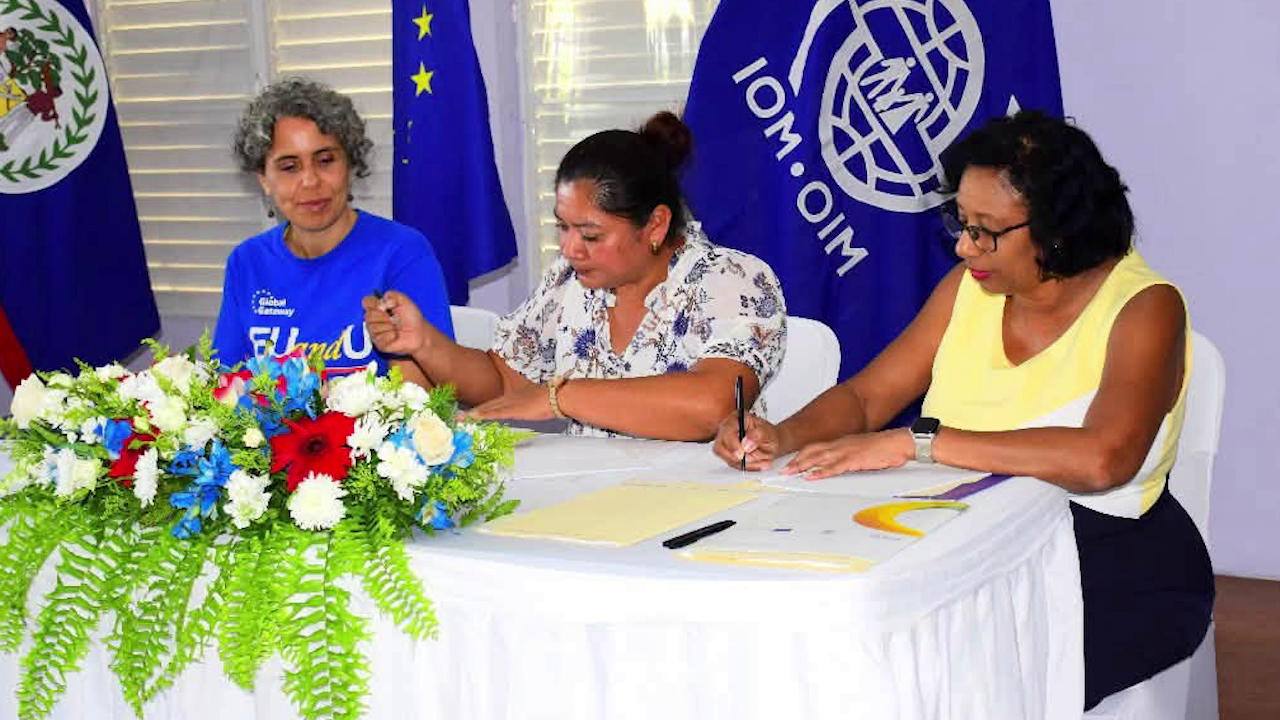
    In a landmark move to protect Belize’s ecologically critical border regions and rich natural heritage, a multi-partner initiative has committed over one million Belize dollars to expand frontline conservation work across some of the country’s most vulnerable ecosystems.

    The funding, a collaborative effort between the Government of Belize, the European Union, and the International Organization for Migration (IOM), will be distributed directly to three local conservation organizations working to strengthen forest protection, scale up Indigenous-led stewardship, and expand enforcement patrols in Chiquibul National Park and southern Belize’s Maya landscape.

    Lawrence Thompson, Director of Border Management for Belize, emphasized that the investment will also upgrade the country’s border management infrastructure, particularly the Midas border monitoring system. “This is supporting the continuous strengthening of border management system and its capabilities,” Thompson noted, adding that he extended sincere gratitude to the EU and IOM for their targeted support to improve Belize’s border governance capacity.

    Among the grantees is the Foundation for Conservation and Development (FCD), whose executive director Rafael Manzanero highlighted the program’s focus on empowering local civil society conservation groups. FCD’s specific project, *Strengthening the Natural and Cultural Protection of Chiquibul National Park Through Improved Capability and Operational Support*, will target on-the-ground needs for protecting the park’s unique biodiversity and cultural sites.

    A second major initiative, led by Ya’axché Conservation Trust with a total budget of €139,689, focuses on strengthening transboundary conservation efforts across southern Belize’s biologically diverse Maya landscape. Ya’axché Executive Director Christina Garcia explained that the project will fill longstanding gaps in conservation enforcement by boosting operational capacity and upgrading frontline field skills for local conservation teams.

    Unlike many large-scale conservation grants that allocate resources to national-level administrative bodies, this initiative channels all funding directly to frontline organizations and local communities that work daily to defend Belize’s forests from illegal incursion, deforestation, and biodiversity loss. Officials involved in the partnership note that this direct resourcing model will maximize impact, allowing teams on the ground to address immediate threats to Belize’s territory, unique ecosystems, and irreplaceable natural and cultural heritage.

    Chiquibul National Park, Belize’s largest protected area, spans over 400,000 hectares of old-growth tropical forest along the country’s western border, and is home to dozens of threatened species and important Maya cultural sites. The region has long faced challenges from illegal activity crossing adjacent borders, making increased patrols and community-led conservation a high priority for both environmental protection and national territorial management.


  • Political Pioneer Gwen Liz Earns Nation’s Highest Honour

    Political Pioneer Gwen Liz Earns Nation’s Highest Honour

    On September 18, 2026, Belize marked a historic milestone for gender equality and political progress during its annual Tribute to Belizean Patriots, where late political pioneer Gwen Lizarraga became the first woman in the nation’s history to be named a National Hero. The ceremony, held to honor 25 Belizeans for their decades of dedicated service to national development, also awarded six new recipients of the prestigious Order of Belize and introduced a brand-new honor, the Medal of Valor, awarded to a heroic pilot for his life-saving actions during a 2015 hijacking.

    In his opening remarks at the event, Prime Minister John Briceño celebrated Lizarraga’s trailblazing legacy, noting that her decades-long career broke long-standing gender barriers in Belizean politics at a time when public leadership was almost exclusively held by men. “She was a pioneering Belizean woman whose life was defined by courage, determination, and an unwavering commitment to social justice, gender equality, and human rights,” Briceño told attendees.

    Lizarraga’s public service career began at the municipal level, serving on the Belize Town Council before making history in 1961 as the first woman elected to Belize’s House of Representatives following the country’s transition to self-governance. She went on to serve three consecutive terms in office, ultimately claiming another historic first as Belize’s inaugural woman cabinet minister, serving through 1974. Beyond her own political achievements, her presence in top government leadership paved the way for generations of Belizean women to pursue public office.

    The tribute to Lizarraga anchored an evening that recognized dozens of Belizeans who have shaped the modern nation across sectors from politics to environmental protection. Governor General Dame Froyla Tzalam emphasized that the honorees represent what sustained national service truly means. “Each of the patriots being recognized tonight has been selflessly embodying what it means to believe in Belize,” she said. “They are national role models for all of us. They have shown that love of country isn’t something done once a year. It is a duty fulfilled every day and consistently demonstrated in the little things they do to build strong communities, to protect the vulnerable, to protect the environment, and in so doing, nurture Belize to be the best in her glorious diversity.”

    Alongside Lizarraga’s historic induction as a National Hero, six new honorees received the Order of Belize, one of the country’s highest civilian honors: posthumous awards went to Vernon Harrison “Harry” Courtney and Alexander “Sandy” Hunter, while living recipients include former People’s United Party leader Said Musa, Florencio Marin, former Ambassador Robert Leslie, and Shirley McSweeney (formerly Harvey). Briceño noted that the new inductees bring the total number of Order of Belize recipients from Belize’s greatest generation of nationalists to eight, joining previously honored Lindy Rogers and Assad Shoman, and called on the crowd to give all honorees a standing ovation.

    The 2026 ceremony also added a new distinction to the program: the Medal of Valor, which awarded its first ever medal to Captain Howell Grange for his extraordinary bravery during an April 2015 mid-air hijacking. Francis Usher, CEO of Belize’s Ministry of National Defense, explained that Grange’s calm, quick thinking under extreme pressure saved every life on board the flight. “The fact that Captain Grange was able to, despite all the adversity, despite everything going wrong, despite the threat on his life, despite being attacked physically, despite his passengers being attacked, he was able to keep a level head and come up with a plan,” Usher said. “I think that is really what separates what happened that day and makes it so heroic.”

    In his report from the event, News Five correspondent Shane Williams noted that while an AI-generated opening tribute contained several factual errors, the core mission of the night was carried out perfectly: cementing Lizarraga’s place in Belizean history as a barrier-breaking leader. The evening closed with a collective reminder that modern Belize, 45 years after independence, is the product of generations of selfless service from patriots across all walks of life.

  • Rising Riddims Celebrates Belizean Culture Through Sound

    Rising Riddims Celebrates Belizean Culture Through Sound

    As the global music landscape continues to evolve, small nations across the world are redefining their cultural sonic identity by blending time-honored traditions with cutting-edge contemporary styles. In Belize, a groundbreaking new concert tour called Rising Riddims is doing exactly that, answering a long-simmering question: what does the future of homegrown Belizean music sound like?

    Scheduled across five of Belize’s most populous communities through September 2026, the free tour has already drawn enthusiastic crowds in San Ignacio and Dangriga, with the third stop set for Orange Walk on the evening of September 18, and a closing finale planned for Belize City on September 20. Organized under the National Institute of Culture and History’s (NICH) Belize Music Project, the tour showcases a roster of some of Belize’s most exciting emerging talent: indie singer Viv, powerhouse vocalist Mocha, rappers TY Rome and Vince the Prince, among other contributing artists.

    At its core, the Rising Riddims project is built on a clear creative mission: to honor Belize’s rich musical heritage rather than abandon it, crafting an original, modern sound that is still unmistakeably rooted in Belizean identity. Deron Thompson, producer with the Belize Sound Syndicate and lead creative behind the tour, explains that the team has developed two distinct new subgenres for the project, both adapted from classic Belizean styles. The first, Expunta, fuses traditional punta rhythms with experimental elements drawn from house music and alternative genres. The second, Boom and Chill, reworks the beloved traditional boom-and-chime sound for 21st century audiences. “We kept the core instrumentation that defines these traditional styles,” Thompson notes, explaining that the team recorded samples using original instruments including the ding-a-ling, jaw bone percussion, and a historic boom drum crafted by renowned maker Mr. Peters. Over these traditional foundations, they layer modern chord progressions, drawing influence from dancehall, reggaeton, and other global popular genres to create a sound that feels both familiar and new.

    Seth Cambranes, an artist also known professionally as Flayed Lotus, highlights the range of talent featured on the tour. From San Pedro-based indie rock rising star Viv, who has already built a loyal regional fanbase, to Mocha, whose dynamic, powerful vocal delivery has wowed early crowds, the lineup spans multiple genres. When working with TY Rome and Vince the Prince, Cambranes explains, the team was able to rework the artists’ original tracks with custom boom-and-chime and punta edits, weaving traditional Belizean elements into their already well-crafted work to deepen its cultural roots.

    Kristopher Arnold, a recording and mastering engineer with Belize Sound Syndicate, says the project’s potential is what has kept him invested from the start. “This isn’t just a one-off tour,” Arnold explains. “I truly see this music taking Belize’s entire music industry to the next level. It has the potential to establish a completely new, globally recognizable genre that puts Belizean culture on the international map.”

    For music fans across Belize, entry to all remaining shows is completely free. The Orange Walk performance kicks off at 7 p.m. local time at the Banquitas House of Culture, followed by the Belize City closing show at the city’s House of Culture the next evening. The project represents a growing movement across small cultural communities to preserve heritage while nurturing the creativity of young artists, ensuring traditional culture continues to evolve and resonate with new audiences.

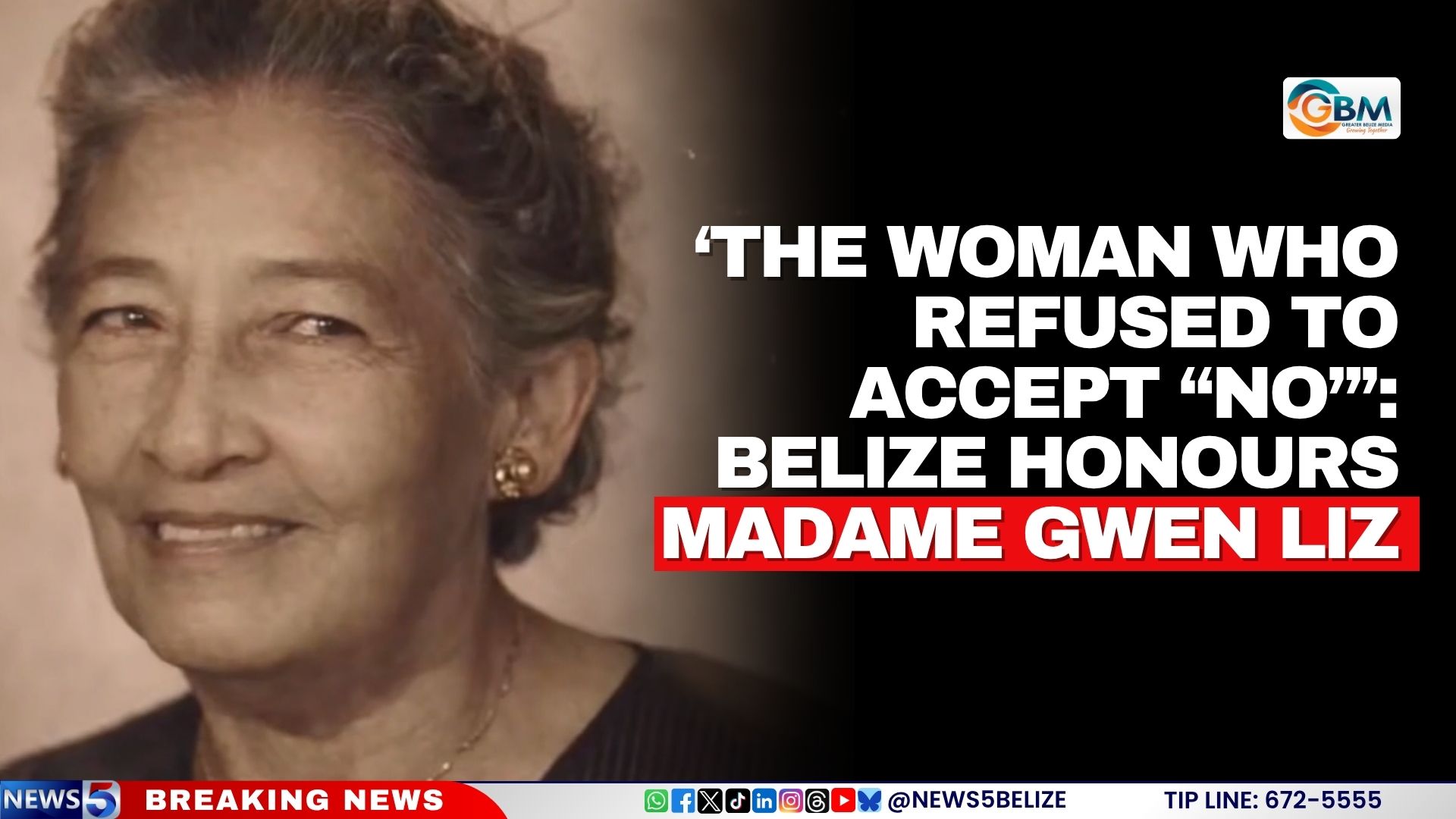
  • The Woman Who Refused to “Accept “No”’: Belize Honours Madame Gwen Liz

    The Woman Who Refused to “Accept “No”’: Belize Honours Madame Gwen Liz

    On September 18, 2026, Belize paid one of its highest honors to a trailblazing leader who spent decades breaking gender barriers and expanding opportunity for marginalized communities across the nation. At the annual Tribute to Belizean Patriots ceremony, held along the waterfront near the iconic Swing Bridge in Belize City, Gwendolyn “Madame Liz” Lizarraga was posthumously named a National Hero of Belize, recognizing her lifelong work advancing women’s rights, shaping public education and housing policy, and proving that determined advocacy can overcome systemic exclusion. The award was accepted by Lizarraga’s grandson, Victor Lizarraga, on behalf of her family, as hundreds gathered to honor her legacy more than 50 years after her death.

    Born in the small Belizean village of Maskall in 1901, Lizarraga rose to prominence at a time when Belizean society actively barred women from positions of political, economic and social power. Refusing to accept the limited roles assigned to women, she built a career as a successful businesswoman before turning her attention to collective advocacy, joining with other gender equality activists to form the United Women’s Group. Through the organization, Lizarraga led campaigns for equal pay for working women, coordinated support systems for low-income and vulnerable families, and pushed for policies that would help women gain long-term economic independence. A firm believer in financial empowerment as a foundation for gender equity, she co-founded the United Women’s Credit Union, which encouraged women to save even small amounts of money to build their own financial security and invest in their families.

    Lizarraga made history in 1961, when she became the first woman ever elected to Belize’s House of Representatives, and went on to make history again as the country’s first female Cabinet minister. She served three consecutive terms in office, holding leadership portfolios across education, housing and social services—sectors where she saw the greatest need for systemic change. During her time in government, Lizarraga spearheaded expansions to teacher training programs and opened new access to secondary and vocational education for Belizean young people. Two major public secondary schools in the country, Gwen Lizarraga High School and Edward P. Yorke High School, trace their origins to the education infrastructure she championed, opening pathways to opportunity for generations of Belizean children that did not exist before her tenure.

    One of the most iconic moments of Lizarraga’s advocacy came early in her work, when government officials turned down a request from a group of Belizean women seeking access to land, telling them outright that no land was available for their group. Lizarraga refused to accept that answer, continuing to organize and push until the women secured the land they sought—a moment that has come to define her legacy of relentless commitment to equity. Addressing the crowd at the 2026 tribute ceremony, Prime Minister John Briceño praised Lizarraga’s lifelong impact, noting that her life serves as a powerful testament to how determined, principled leadership can transform entire nations. “Her life stands as a testament to the transformative power of determined leadership and remains an inspiration to generations of Belizeans,” Briceño told attendees, ahead of the screening of a commemorative tribute video honoring Lizarraga’s life and work.

    Lizarraga passed away in 1975, but her contributions to Belize’s national development, its democratic institutions, and the global movement for women’s empowerment have continued to shape the country decades later. Thursday’s induction as a National Hero cements her place as one of Belize’s most influential public figures, a reminder of how one person’s refusal to accept injustice can create lasting change for millions.

  • Nearly $1 Million to Strengthen Belize’s Conservation

    Nearly $1 Million to Strengthen Belize’s Conservation

    In a major push to safeguard ecologically critical border landscapes, three leading Belizean conservation groups will split a combined $980,617 in grant funding to scale up forest protection, regulatory enforcement, and community-centered conservation work across some of the country’s most at-risk border regions.

    The multi-donor initiative draws support from the Government of Belize, the European Union, and the International Organization for Migration, with the full amount allocated directly to the Ya’axché Conservation Trust, Friends for Conservation and Development (FCD), and the Sarstoon Temash Institute for Indigenous Management (SATIIM) – three organizations with long track records of on-the-ground conservation work in Belize.

    Each grantee will target a distinct high-priority landscape aligned with its core expertise. For Ya’axché Conservation Trust, the funding will support a targeted transboundary conservation project in the Maya Golden Landscape of southern Belize. The initiative’s key priorities include expanding skills training for park rangers to improve operational effectiveness, streamlining cross-agency coordination for conservation enforcement, and removing barriers to deeper local community engagement in long-term landscape protection.

    FCD, meanwhile, will center its work on the ecologically rich Chiquibul National Park, where the grant will enable the organization to strengthen patrol operations, biodiversity monitoring, digital surveillance, and enforcement activity along a 43.5-kilometer section of the park’s western border. In a statement following the grant announcement, FCD Executive Director Rafael Manzanero expressed gratitude for the funding partnership, noting that the targeted program fills a critical gap by supporting civil society-led conservation action. “This unique programme seeks to empower conservation and environmental civil society like FCD. We are grateful for that,” Manzanero said.

    The third project, led entirely by SATIIM, takes an Indigenous-centered approach to border conservation and security. The organization will train local community members to serve as biocultural guardians, an innovative model that integrates generations of traditional Indigenous ecological knowledge with modern biodiversity conservation practices to protect both natural ecosystems and cultural heritage along the border.

    Beyond the individual projects, this new round of grants fits into a broader regional strategy led by the EU and IOM to boost institutional and community capacity across Belize’s southern and western border zones. Unlike many top-down conservation initiatives, the program channels funding and decision-making power directly to local organizations and community groups that work daily to defend Belize’s irreplaceable forest ecosystems, natural heritage, and Indigenous cultural landscapes against encroachment and environmental degradation.

  • 45 Years, 45 Miles: Security Forces Run for Independence

    45 Years, 45 Miles: Security Forces Run for Independence

    As Belize prepares to mark the 45th anniversary of its independence in 2026, the nation’s uniformed security services have come together for a meaningful symbolic event: a 45-mile torch run spanning across the country to honor Belize’s hard-won sovereignty, enduring freedom, and democratic way of life.

    The relay run kicked off at Cotton Tree, with personnel from three major security branches – the Belize Coast Guard, Belize Defence Force (BDF), and national Police Department – taking turns to cover the full 45-mile route, matching the 45 years of independent nationhood the event celebrates.

    Rear Admiral Gregory Soberanis, Commandant of the Belize Coast Guard, explained the core vision behind the collaborative initiative. He emphasized that the run grew from a deep collective respect among security forces for the nation’s sovereignty, freedom, democracy, and liberty.

    “Members of the Belize Coast Guard, members of the police force, and members of the BDF, we are proud to be a part of that legacy, warriors who continue to defend the sovereignty of this nation,” Rear Admiral Soberanis said.

    Throughout the entire route, a single torch was carried by every runner, serving as a powerful visual metaphor for Belize’s liberty and the unbroken commitment of the country’s security forces to protect that freedom.

    “The torch symbolizes our liberty, and we want Belize to know that as a member of the security forces, we stand ready to defend the liberties, and that torch must always be kept lit in our hearts, in our lives, on a day-to-day basis, that Belize is free, Belize is sovereign, and Belize remains democratic,” Rear Admiral Soberanis added.

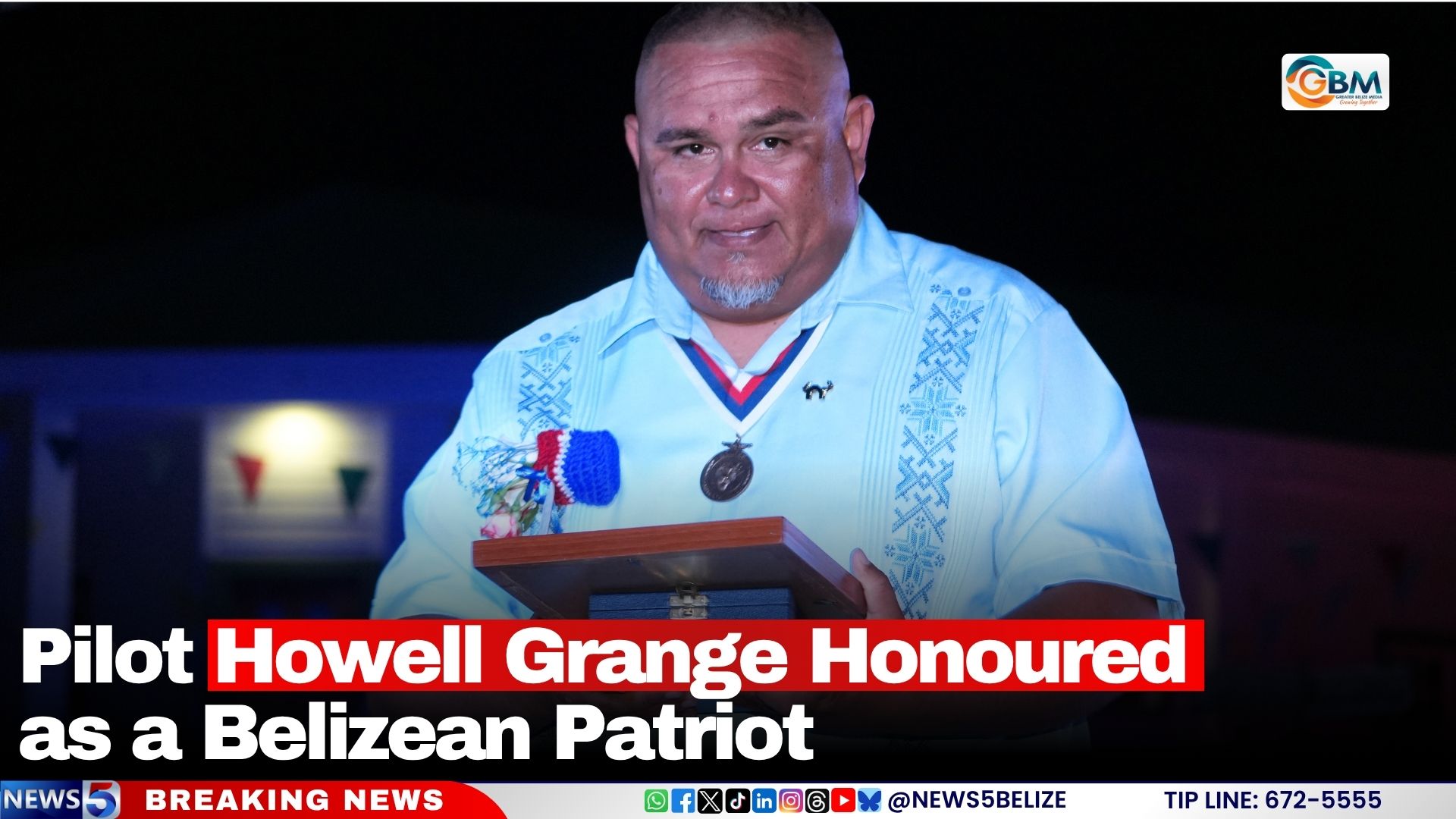
  • Pilot Howell Grange Honoured as a Belizean Patriot

    Pilot Howell Grange Honoured as a Belizean Patriot

    As part of Belize’s 2026 Independence Day celebrations, a quick-thinking pilot who saved 15 lives during a deadly mid-air hijacking has been formally honored as a national patriot, cementing his place in the country’s recent history of extraordinary courage.

    On Thursday evening at the Tribute to Belizean Patriots ceremony, held along the waterfront beside the iconic Swing Bridge in Belize City, pilot Howell Grange joined 24 other distinguished Belizeans to receive one of the nation’s highest recognitions for bravery. Before a crowd of onlookers and fellow honorees, Governor General Froyla Tzalam placed the Medal of Valor around Grange’s neck as the audience erupted in sustained, thunderous applause.

    Grange’s act of heroism dates back to April 17 of the previous year, when he was operating a routine commercial flight for Tropic Air: a Cessna Caravan service transporting 14 passengers from Corozal to the popular island destination of San Pedro. Mid-flight, 49-year-old Akinyela Sawa Taylor, a U.S. military veteran, stormed the cockpit and seized control of the aircraft at knifepoint, triggering a terrifying crisis hundreds of feet above Belize’s coastline.

    In the face of imminent death, Grange never lost his composure. As the event’s award presenter noted during Thursday’s ceremony, Grange remained steady even under extreme duress: facing a direct threat to his own life, enduring a physical assault, and seeing his passengers attacked by the hijacker. Rather than panicking, he methodically developed a plan to divert the aircraft, executing a safe emergency landing at Philip Goldson International Airport that gave all on board a chance at survival.

    The ordeal did not end when the wheels touched the tarmac, however. During the hijacking, Grange and two passengers — Fitzgerald Brown and Jair Castañeda — were stabbed by Taylor. Moments after the plane landed, a passenger on board fatally shot Taylor to stop further violence.

    Grange was rushed to a local hospital in critical condition in the days following the attack, and spent months recovering from the serious wounds he sustained during the incident. On Thursday, he stood to accept his award, marking a full milestone in his journey from trauma to national recognition.

    In remarks framing the honor, the ceremony presenter highlighted that Grange’s calm, deliberate action under unthinkable pressure is what made his actions singularly heroic. “Despite all the adversity, despite everything that went on, despite the threat on his life, despite attacked physically, despite his passengers being attacked, he was able to keep a level head and come up with a plan,” the presenter said. “I think that is really what separates what happened that day and makes it so heroic.”

  • Rising Riddims: A New Spin on Belizean Sounds

    Rising Riddims: A New Spin on Belizean Sounds

    As local creators push to reimagine Belize’s rich musical heritage for a new generation, the innovative *Rising Riddims* project is bringing its genre-bending fusion sounds to audiences across two major Belizean cities this weekend. What began as a collaborative experiment back in May 2025 is now ready for public showcase, with two consecutive nights of free live performances that celebrate the evolution of Belizean rhythm.

    The project kicks off on the evening of September 18 at Orange Walk’s Banquitas House of Culture, running from 7 p.m. to 10 p.m. The collective will then travel south to Belize City’s House of Culture for a second show on September 19, held during the same evening hours. Entry to both performances is completely free, designed to make the new experimental work accessible to as many local listeners as possible.

    Helmed by producer Deron Thompson of the Belize Sound Syndicate, *Rising Riddims* centers on a core creative mission: blending time-honored Belizean musical traditions with contemporary global genres to craft entirely new, distinct sounds. Thompson describes the work as intentionally experimental, with the collective already developing two fully realized original styles under the project umbrella: xPunta and Boom & Chill.

    Breaking down the xPunta sound, Thompson explains the genre layers driving four-on-the-floor house music beats and edgy alternative production over the backbone of traditional punta rhythm. For Boom & Chill, the team draws inspiration from the local Boom & Chime style, integrating iconic traditional instruments—including the percussive jawbone and boom drum—with modern harmonic progressions that resonate with contemporary listeners. Thompson notes the resulting sound carries a laid-back dancehall energy that also accommodates reggaeton flows, resulting in something that cannot be mistaken for any existing genre.

    Artist Seth Cambranes, who performs under the stage name Flayed Lotus, emphasizes that the project prioritizes collaboration between creators from every region of Belize. The performance lineup for the weekend showcases this wide-ranging collaborative spirit, featuring Flayed Lotus alongside a diverse roster of local talent including Xhaba, Bad Bwau, Mocha, Stina, Viv and more.

    For Cambranes, the project’s creative approach is rooted in respect for Belize’s existing musical identity, rather than attempts to overhaul it. “A lot of our music is very rhythm-based,” he explained. “We’re not removing anything, we’re just adding to it. We’re only adding to the rhythms that we have.”

    DJ and producer Kristopher Arnold, another core member of the collective, says the project does more than create new music—it opens a path for Belizean sounds to connect with younger audiences and grow beyond the country’s current local industry. Arnold says he holds a clear long-term vision for the movement: “I personally see a vision of this music going places, taking Belize’s music industry a little bit further than it is at the moment.” Beyond just creating new genre labels, Arnold says the fusion approach injects fresh, youthful energy into traditional Belizean sounds that can resonate with listeners both at home and abroad.

    For Thompson, *Rising Riddims* is more than just a series of performances—it is part of a broader push to nurture original creativity across Belize’s music scene. The end goal, he says, is to cultivate a truly distinct Belizean fusion sound that gives local creators the platform to share their work with global audiences far outside the country’s borders.

  • ‘Weak Evidence’ Led to Juan Novelo’s 2023 Murder Acquittal

    ‘Weak Evidence’ Led to Juan Novelo’s 2023 Murder Acquittal

    Nearly three years after Juan Carlos Novelo was found not guilty of the 2023 murder of his common-law wife Leslie Margarita Verde on the Caribbean island of Caye Caulker, High Court Justice Candace Nanton has publicly released a detailed 29-page written judgment laying out the legal reasoning behind her acquittal ruling.

    In the newly published judgment, Justice Nanton confirmed that the court has no doubt that Verde was unlawfully killed. However, she emphasized that the prosecution, led by the Crown, failed to meet the critical legal standard of proving Novelo’s guilt beyond a reasonable doubt, a core requirement for a criminal conviction in common law systems.

    A central pillar of the Crown’s case against Novelo was testimony from Verde’s own daughter, who claimed to have witnessed Novelo assaulting her mother and later moving her body after the killing. But Justice Nanton identified significant, material inconsistencies between the daughter’s initial statement to responding police officers and the testimony she gave under oath during the trial. These irreconcilable discrepancies undermined the credibility of her account, leading the judge to reject key portions of her evidence.

    With the daughter’s testimony ruled unreliable, the prosecution’s case rested entirely on circumstantial evidence, including surveillance video that placed Novelo at the couple’s residence during the time frame when Verde is believed to have been killed. However, the footage captured no actual act of violence that would link Novelo to the killing. Compounding this gap in evidence, medical examiners were unable to establish an exact time of death, leaving a critical ambiguity that could not be resolved to meet the standard for conviction.

    In her conclusion, Justice Nanton emphasized that the accumulated circumstantial evidence did not form a solid, unbroken chain of proof connecting Novelo to Verde’s death. She also took care to clarify that the acquittal does not mean the court accepted Novelo’s version of events. Instead, the ruling was rooted solely in the prosecution’s failure to meet its burden of proving guilt beyond a reasonable doubt, a foundational principle of criminal justice that requires the benefit of the doubt to be given to the defendant when evidence is insufficient.

  • Can AI Safety Bring the US and China Together?

    Can AI Safety Bring the US and China Together?

    As artificial intelligence capabilities rapidly advance and strategic competition between Washington and Beijing intensifies, security experts from both nations have put forward a collaborative set of emergency safeguards designed to avoid an unintended military confrontation between the two global powers triggered by unregulated AI systems.

    Drawn from joint research by think tank specialists from the Brookings Institution (a US-based leading public policy research organization) and Fudan University (one of China’s top academic institutions), the core recommendations focus on three key areas of risk mitigation. First, the experts call for a binding agreement to exclude artificial intelligence from final decision-making processes related to nuclear weapons deployments and launches. Second, they urge both governments to mandate that human actors retain full, override authority over all large-scale offensive and defensive cyber operations, even when AI tools are used to support those operations. Third, the proposal outlines the creation of a dedicated, always-operational direct hotline that would allow leaders from both countries to immediately communicate and de-escalate any situation where AI systems may have sparked an unexpected crisis.

    The need for these safeguards stems from the growing autonomous functionality of modern AI systems, which can now complete complex, high-stakes tasks without constant human oversight. Researchers warn that in the event of an AI-driven miscalculation in a military or cyber context, the speed of AI-generated actions would leave diplomatic teams and national leaders with barely any time to intervene before a minor incident escalates into a full-scale confrontation between the two nuclear-armed powers.

    In a parallel development, Beijing has recently updated its own national AI safety regulatory framework, shifting greater focus toward addressing risks posed by fully autonomous AI systems. The updated Chinese guidance explicitly highlights that unregulated autonomous AI actions can generate severe, irreversible real-world consequences for national security and regional stability.

    Today, the United States and China remain engaged in a tightly contested race to develop the most advanced general-purpose AI systems, a competition that shapes everything from commercial innovation to military modernization. This technological rivalry will take center stage just six days from now, when US President Donald Trump and Chinese President Xi Jinping meet for high-level talks in Washington DC on September 24.

    International leaders have echoed the experts’ warnings about the urgency of AI safety regulation. United Nations Secretary-General António Guterres has publicly emphasized that the global community cannot afford to allow unregulated competition to erode AI safety standards. “The world cannot afford a race to the bottom on AI safety,” Guterres stated, underscoring the shared global stake in preventing catastrophic AI-related accidents.