标签: Barbados

巴巴多斯

  • Promoters react as ‘Tipsy’ reschedules amid date issue

    Promoters react as ‘Tipsy’ reschedules amid date issue

    A scheduling shakeup in Barbados’ iconic Crop Over festival season has divided event promoters after one major J’ouvert celebration shifted its date to avoid conflicting with a beloved cultural tradition, only to create a new overlap with a long-running private gathering.

    Organizers of the popular Tipsy J’ouvert Party Experience, produced by Twisted Entertainment, announced they would move the annual event from its original Foreday Morning slot to Sunday, August 2, a decision that has drawn widespread praise from the nation’s traditional Foreday Morning bandleaders. For weeks, public debate had simmered over the original timing of the Tipsy event, which many argued placed a large-scale commercial celebration in direct competition with the decades-old, culturally rooted Foreday Morning procession that forms a core part of Barbadian national identity.

    In a public statement, Twisted Entertainment clarified that the date change was a deliberate choice to honor Barbados’ cultural heritage, rather than undermine it. “From day one, our intention has always been to celebrate J’ouvert culture, not compete with it,” the statement read. “The team made the deliberate decision to move the event out of the Foreday Morning window in order to preserve the integrity of one of Barbados’ most important cultural traditions.”

    That commitment has been well received by the Foreday Morning Band Collective, a group representing the nation’s traditional carnival bandleaders. Bryan Worrell, the collective’s spokesperson and director of Colours Entertainment, noted that the original scheduling had posed an existential threat to the success of smaller, traditional bands, which have anchored the Foreday Morning celebration for more than 30 years.

    “The collective is very happy today that one of the events that was causing a major challenge for us has been moved,” Worrell said. “What we wanted was that the event would be protected to some extent from competition. The same type of event on that same night made it kind of difficult for us to operate and be successful. They had a bigger entertainment package, so it would have been challenging for us to compete with them on the same day.”

    Worrell added that as a staple national cultural institution, Foreday Morning deserves targeted support from the Barbados Ministry of Culture and the National Cultural Foundation (NCF) to ensure all bandleaders and stakeholders can remain financially viable. “We are looking to protect our event and we want to make sure that the stakeholders, which are the bandleaders in Foreday Morning, are operating in a space where they can be successful,” he explained. With the core conflict resolved, the collective confirmed it is now moving forward full steam with preparations for its 2026 productions.

    While traditional bandleaders celebrate the shift, the new August 2 date has created a fresh scheduling conflict with another established private J’ouvert event. Ryan Forde, co-director of the 10-year-running events Stain’d and the Brekfus Experience, confirmed that Tipsy’s new slot falls exactly on the same date as his annual Sunday gathering. Despite the overlap, Forde says his team has no plans to alter their already finalized itinerary, and remains unworried by the new competition.

    “I don’t see it as competition… I think all of us complement the festival,” Forde explained. “For me, the more events and the variety or the different style of events and locations is great for our lovely Crop Over festival. People will go to their event, people will come to our event, and people will love Crop Over. Our focus is just putting on a great event for Barbadians and visitors alike.”

    Twisted Entertainment has echoed that collaborative framing, noting that the rescheduling was designed to create space for Foreday Morning to retain its central role in the festival season, while positioning the Tipsy experience as an added attraction that enhances, rather than detracts from, Barbados’ premier cultural celebration. The organizers reaffirmed that Foreday Morning remains an unshakable cornerstone of Barbadian national culture, and that they fully support its continued prominence on the national events calendar.

  • Greaves off to flying start at Cycling Championships

    Greaves off to flying start at Cycling Championships

    A rising star from Barbados has turned heads on the international cycling stage, as junior track cyclist Arielle Greaves delivered a career-defining performance at the Junior Pan American Track Cycling Championships in Mexico on Wednesday morning. Competing in the women’s flying 200m sprint, Greaves smashed her own existing junior national record – a mark she set just one year ago at a competition in Lima, Peru – to secure a spot in the event’s upcoming quarterfinals.

    Greaves crossed the finish line with a blistering time of 11.319 seconds, cutting nearly half a second off her previous national best of 11.800 seconds. The stunning result earned her a third-place finish in the qualifying round, trailing only the Colombian pairing of Manuela Loaiza Zabala and Danna Martinez Mahecha, who topped the qualifying leaderboard with times of 10.747 seconds and 11.054 seconds respectively. Greaves’ top-three finish locks her into the quarterfinal draw, where she is set to go head-to-head against home rider Sofia Lopez Villarreal of Mexico in Heat 3. The quarterfinal race is scheduled to get underway at 5:30 p.m. local Barbados time.

    In a post-qualifying interview, the young cyclist spoke candidly about her excitement and pride in the breakthrough result, noting that months of consistent off-season and training camp work had directly translated to the improved performance. “I’m extremely proud of this achievement. The hard work I’ve put in over the past few months has truly paid off,” Greaves said. “To lower my time from the previous mark I held just a year ago is a direct reflection of the improvements I’ve made. As I go forward into the quarterfinals, I’ll reset my mind and give it all I’ve got.”

    Team manager Deidre Hinkson shared Greaves’ enthusiasm, saying the young rider had already hit the core target the Barbados team set for her ahead of the tournament. “The main goal coming into these Championships was for Arielle to surpass the achievements she accomplished last year in Lima, Peru, and her effort in her very first event clearly demonstrates how much she has improved,” Hinkson explained. She went on to praise Greaves’ coachable mindset, adding, “She’s a strong athlete who is always willing to listen and learn, and that contributes greatly to her overall performance.”

    Elisha Greene, who serves as both the team’s coach and mechanic, echoed Hinkson’s positive assessment, emphasizing the squad’s methodical, race-by-race approach to the championships. “We are taking it event by event. Arielle has put in the work, so once she remains focused, she will continue to do herself and her country proud,” Greene said. Greaves’ record-breaking run has already cemented a milestone moment for Barbadian junior cycling, and all eyes will now turn to the upcoming quarterfinal round to see if the young talent can continue her momentum.

  • DLP calls on Government to address 11-Plus issues

    DLP calls on Government to address 11-Plus issues

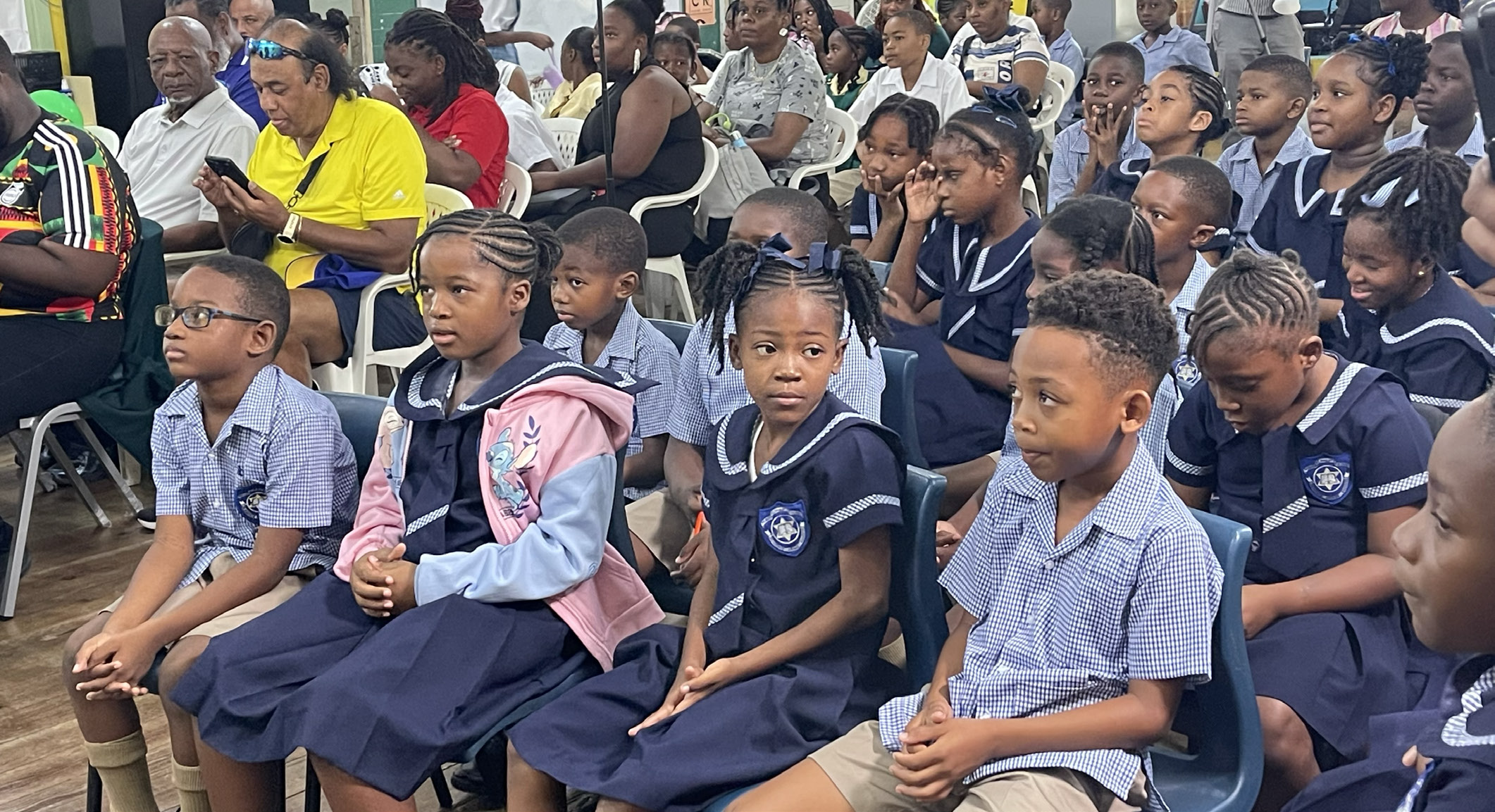
    A political dispute has erupted in Barbados over the administration of the 2024 Barbados Secondary Schools Entrance Examination (BSSEE), better known locally as the 11-Plus, after the main opposition Democratic Labour Party (DLP) rejected the governing administration’s claims that the high-stakes national test ran smoothly on Tuesday.

    Over 2,700 students across the island sat the exam, which determines secondary school placement for young learners. But in an official statement released Wednesday, DLP’s education spokesperson Quincy Jones pushed back hard against claims from Education Transformation Minister Chad Blackman, who dismissed Tuesday’s disruptions as nothing more than minor administrative hiccups. Jones argued the documented issues on exam day reveal far deeper, systemic failures in the Ministry of Education’s planning and execution that cannot be brushed aside.

    “What Barbados is witnessing is not a slight delay or inconvenience; it is a clear and troubling breakdown in the Ministry’s systems,” Jones emphasized in the statement.

    Jones pointed specifically to verified reports that test packets arrived hours late to one of the island’s key exam hubs, St Michael School, a disruption that impacted hundreds of students drawn from multiple local primary schools. Beyond the late papers, he raised urgent red flags about chaotic, last-minute arrangements for students requiring special testing accommodations, a group that has grown steadily in recent years as education authorities expand accessibility provisions. He also questioned whether exam centers had robust, well-rehearsed emergency protocols in place to respond to on-site medical events involving student test-takers.

    Jones stressed that these failures are not trivial administrative missteps. “[These] are not administrative ‘hiccups.’ They are signs of poor planning, weak execution, and a failure to manage the basic responsibilities of the office,” he said.

    Jones’ criticism came one day after Blackman publicly defended the government’s management of the exam, telling reporters that the 2024 BSSEE was overwhelmingly successful, with only one isolated delay reported at a single center. “There was some delay earlier at the St Michael School, but we’re going to ensure that we look into it,” Blackman told reporters Tuesday, adding that the overall examination process “ran smoothly.”

    But Jones rejected the government’s attempts to downplay the disruptions, noting that the 11-Plus is a high-stakes test that shapes the academic trajectory of every participating student. He added that Barbados has a long track record of successfully administering large-scale national exams, including the regional Caribbean Secondary Education Certificate (CSEC) and Caribbean Advanced Proficiency Examination (CAPE), without the level of chaos and confusion seen during Tuesday’s 11-Plus. The root of the problem, Jones argued, is not flaws in the long-standing exam framework itself, but ineffective political leadership overseeing the process.

    “The Minister cannot hide behind soft language and public relations spin while students sit in uncertainty, teachers scramble for solutions, and parents are left concerned about both fairness and safety,” Jones said.

    The DLP is now formally calling on the Ministry of Education to deliver public, transparent answers to three core questions: what caused the late delivery of examination papers, how prepared are exam centers to accommodate the rising number of students with special needs, and what concrete measures are in place to protect vulnerable candidates during on-site emergencies.

    Jones argued that even individual failures add up to a broken system: “If examination papers are arriving late, if centres are stretched beyond capacity, and if there is no clear communication on how medical emergencies like seizures or diabetic episodes are handled, then the system is failing.”

    He repeated the opposition’s demands for full transparency, asking: “The country deserves clear answers: why were examination papers late? Why was there inadequate preparation for the growing number of students requiring special accommodations? What emergency systems are in place to protect vulnerable students during examinations?”

    Jones closed by noting that Barbadians expect competent governance from their elected leaders, not excuses for mismanagement. He insisted that Minister Blackman must take full personal and political responsibility for the confirmed failures on exam day.

  • DLP: Strengthen security at schools

    DLP: Strengthen security at schools

    A mid-morning shooting just meters from a Barbados early childhood education center has reignited urgent nationwide calls for strengthened security protocols across all of the country’s educational institutions, after the incident sent panicked parents and caregivers scrambling on the first drop-off of the school day.

    The gunfire broke out shortly after 8:25 a.m. Tuesday along Sorrel Lane in St Michael, steps from the gates of Eden Lodge Nursery School, when parents were still arriving to drop off their children for classes. Miraculously, no one was hurt in the shooting, but the close proximity of the violence to a facility serving some of the island’s youngest students triggered immediate widespread alarm among families and the broader Barbadian community.

    As a precautionary measure, the Ministry of Education moved quickly to order the nursery’s temporary closure for the remainder of the day, and arranged for trained counseling support to be made available for any affected staff, students, and family members.

    In an official statement released Wednesday, the opposition Democratic Labour Party (DLP) joined other major education stakeholder groups in condemning the reckless act, with the party’s education spokesperson Quincy Jones emphasizing that the shooting put the lives of Barbados’ most vulnerable citizens in direct danger.

    “Zero tolerance is the only acceptable response to this kind of violence,” Jones said. “The safety and security of our children must be the non-negotiable top priority for education leaders. No child, parent, or teacher should ever have to confront the fear and trauma of gun violence, especially in spaces that are designed exclusively for learning and growth.”

    The shooting has drawn widespread condemnation across the island’s education sector, with both the Barbados Union of Teachers (BUT) and the Barbados National Council of Parent-Teacher Associations (BNCPTA) issuing statements echoing concern over rising violence near school campuses and its lasting impact on children and education staff.

    Jones pushed back against framing the incident as an isolated event, arguing instead that it is a symptom of a broader, long-unaddressed public safety crisis around educational institutions that requires immediate government intervention. He pointed to gaps in existing security frameworks, criticizing government leaders for prioritizing peripheral education reforms over the fundamental need for safe learning spaces.

    “It is empty to talk broadly about education reform when we leave the core issue of student safety unaddressed,” Jones explained. “We warn against attempts to distract the public from the government’s core responsibilities by focusing on curriculum changes or adjustments to extracurricular programming that do nothing to mitigate the immediate risks students face every day. Well-structured enrichment programs have their place, but no initiative, past or present, can ever replace a safe and secure learning environment.”

    The DLP is now formally calling for an immediate full review of security arrangements at all schools, with a specific focus on early childhood education centers, as well as the development of clearer emergency response protocols between school administrations and local law enforcement. Key proposals put forward by the party include increasing the visible presence of trained security personnel in areas identified as high-risk, and improving transparent, consistent communication with parents about how school safety is being managed.

    Jones also raised questions about whether current emergency response systems are robust enough to handle crises near or on school grounds, noting that uncertainty during emergency situations can put students at even greater risk. “Our children deserve more than empty assurances; they deserve tangible, immediate action,” he said. “The Democratic Labour Party remains unwavering in our commitment to fighting for safe schools, and we will continue holding the government accountable to ensure every child can learn in an environment free from fear.”

    As of Wednesday, local law enforcement confirmed that investigations into the identity and motive of the shooter are still ongoing.

  • Spring Cottage, Hindsbury crowned Four Hand champions

    Spring Cottage, Hindsbury crowned Four Hand champions

    The final matchweek of the National Dominoes League delivered decisive outcomes across all three divisions, crowning new champions and confirming promotion and relegation placements for the upcoming season.

    In Division One’s headline fixture, title-winners Massy Spring Cottage secured their top spot with a solid 82-60 victory over league tail-enders De Clique. The win cemented their position as the 2024 Four Hand champions, capping off a strong season performance that also earned them promotion to the league’s top tier, the Premier League, for next year.

    Several other tight competitive matches unfolded across the division on the final matchday. Law enforcement side Police pulled off a narrow 70-62 win over Checker Hall in a back-and-forth encounter, while second-place Trident Insurance Patriots battled through a grueling contest to defeat Eastbourne United 75-61. QEH Sports Club also claimed a slim victory, edging out Speightstown 69-65 to round out the division’s final results. Trident Insurance Patriots joined Massy Spring Cottage in earning promotion to the Premier League, while the season’s two lowest-ranked sides, De Clique and Checker Hall, will be relegated to Division Two for the next campaign.

    In Division Two, Turton Construction Hindsbury claimed the division championship title after a convincing 79-57 win over Newbury. The team’s standout performers, Victor Leslie and Tammy McDowall, led the charge for Hindsbury, racking up an impressive 23 points from seven sixes – including one unopposed six love. Finishing second in Division Two, B.U.T secured an 82-62 victory over St Leonards to earn their own promotion to Division One alongside champions Hindsbury.

    Other Division Two results saw Bathsheba cruise to a comfortable 86-55 win over JD’s, while St Joseph pulled off a narrow 68-65 upset over St Leonards.

    In the top-flight Premier League, title front-runners Carlton & A1 Braves continued their dominant season form, overpowering bottom-half side Powerade Locked and Loaded by a decisive 34-point margin 84-50. French Village Piranhas also notched a lopsided win, crushing BNECL 89-55, while Buzo Osteria Welchman Hall edged out Peace and Love 70-66. The round’s only draw came between RM Cleaners and HIV Commission Hillside, who finished tied at 68 points apiece, while 37 Family KC’s Joint claimed a steady 73-59 win over A & B Pest Control Vauxhall.

  • Crash triggers gas leak at Haggatt Hall

    Crash triggers gas leak at Haggatt Hall

    A violent two-vehicle collision in the St Michael district of Barbados on a weekday morning caused a significant gas leak and forced local emergency services to launch a rapid coordinated response to contain the hazard. The incident unfolded on Roberts Road in the Haggatt Hall neighborhood just after 7:30 a.m., when the Barbados Fire Service received an urgent emergency call reporting the crash and the associated risk of gas escaping from damaged infrastructure.

    Fire Officer Ramsey, who was identified by service number 250, shared details of the first responders’ arrival on site. When fire crews pulled up to the collision scene, they confirmed that two passenger vehicles had been involved in the crash, and one of the vehicles had come to rest directly on top of a residential gas meter. The weight of the vehicle had damaged the meter, leading to an uncontrolled leak of natural gas that created an immediate safety risk for anyone in the surrounding area.

    Given the specialized nature of the gas hazard, emergency commanders immediately called in technicians from the National Petroleum Corporation (NPC), the country’s national petroleum and gas authority, to carry out a controlled shutoff and repair the damaged infrastructure. Local ambulance services were also dispatched to the scene to provide immediate medical assessment and care to any individuals injured during the collision.

    Reverend Byron Waithe, a local resident whose property was directly affected by the crash, described the chaotic moment the incident occurred. He told reporters he was in his home when he heard a deafening bang that shook the surrounding area. One of the vehicles involved in the crash careened off the road, crashed through his residential gate, and collided with a van that was legally parked on his property, causing significant damage to both the gate and the parked vehicle.

    Waithe added that in order to protect public safety while emergency crews worked to seal the gas leak and secure the scene, all residents in the immediate impact zone were ordered to evacuate their properties temporarily. Despite the disruption and damage to his property, Waithe offered high praise for the speed and professionalism of the emergency response teams. He emphasized that both fire service personnel and NPC gas technicians arrived at the scene within minutes of the crash being reported, and worked efficiently to bring the dangerous situation under control.

    By the end of the response operation, emergency teams had fully secured the scene, and authorities had begun conducting detailed on-site assessments to determine the cause of the collision and document the full extent of the damage to infrastructure and private property.

  • Man removed from Gall Hill library after complaints

    Man removed from Gall Hill library after complaints

    In a coordinated multi-agency operation carried out on Wednesday, public officials removed an unhoused man who had been squatting at the disused Old Gall Hill Library in St John, Barbados, after months of growing community pushback over unsafe conditions and public disturbance. For an extended period, the vacant former public library has served as an informal shelter for the man, who took up unauthorized residence on the property. In the process of occupying the unused space, the facility’s surrounding yard became heavily cluttered with construction debris, discarded personal goods, and other accumulated waste, creating both health and aesthetic hazards for neighbors living nearby. Local MP Charles Griffith, who represents the St John constituency, confirmed that the intervention was a direct response to sustained complaints from area residents, who had repeatedly raised alarms about the deteriorating state of the property and persistent public disruptions stemming from the occupation. As authorities moved to clear the site, the man’s behavior became increasingly agitated, prompting responding officials to arrange for him to be transported to Barbados’ Psychiatric Hospital for evaluation and care by medical professionals. Griffith extended public recognition to the three government bodies that collaborated to resolve the long-running issue: the Barbados Police Service, the Department of Environmental Health, and the Sanitation Service Authority. He also credited local residents for their persistent advocacy, noting that their consistent efforts to draw official attention to the unsafe situation were key to推动ing the coordinated response that resolved the community concern.

  • BNCPTA backs ministry push to curb student truancy

    BNCPTA backs ministry push to curb student truancy

    On Tuesday, the Barbados National Council of Parent-Teacher Associations (BNCPTA) formally committed to partnering with the country’s Ministry of Education Transformation to curb the growing issue of students loitering on public streets during scheduled school hours. BNCPTA President Nicole Brathwaite outlined a clear, actionable framework for cross-stakeholder cooperation, noting that the association is prepared to coordinate with both the ministry and local parent-teacher associations across the island to implement practical, people-centered solutions. These measures include strengthening two-way communication between households and schools, rolling out attendance-based incentives for students, organizing neighborhood carpool programs to address transportation barriers, and sharing proven successful strategies among schools that have reduced truancy rates. The push for collective action comes just days after Minister of Education Transformation Chad Blackman announced that he and a coalition of education-focused stakeholders would travel across Barbados to address what he has called a persistent and frustrating problem plaguing the island’s education system. Brathwaite emphasized that the priority of the effort aligns with the core values of all caregivers: no parent wants their child to be on public streets instead of in a classroom, where they can access structured learning opportunities. When students are absent from school and out in the community during school hours, she explained, they forfeit more than just academic instruction; they lose out on critical social development opportunities and the controlled, safe environment that educational institutions are designed to provide. The BNCPTA leader stressed that caregivers hold the primary responsibility for ensuring children arrive at school consistently, noting that the vast majority of parents already work diligently to meet this obligation every day, even in the face of significant barriers. Common obstacles that contribute to unexcused absences include rising transportation costs, conflicting work schedules that leave parents unable to drop off and pick up children, competing caregiving demands for other family members, and unaddressed personal challenges that students themselves face. Brathwaite pointed out that truancy is a complex issue with multiple overlapping root causes, so one-size-fits-all enforcement is unlikely to deliver long-term results. She shared that BNCPTA expects the ministry’s approach to the problem to balance firm accountability with targeted support for struggling students and families. For truancy monitoring teams to be most effective, she argued, they must be paired with school social workers who can deliver early intervention for at-risk students and households. Brathwaite also highlighted a critical unmet need: these social work professionals are already overstretched by existing caseloads, so sustained, adequate resourcing for support services will be make-or-break for the success of any anti-truancy initiative. To guide participation from parents and community members, Brathwaite laid out three clear actions people can take immediately. First, she encouraged parents to stay actively connected to their child’s school: familiarize themselves with official attendance policies, keep school contact information up to date to enable fast alerts when a student is marked absent, and respond quickly to outreach from school administrators. Second, she called for early action: caregivers should flag barriers ranging from transportation issues, problems accessing uniforms or school meals, to personal mental health or family challenges before occasional absences turn into a persistent pattern of truancy. Finally, she urged community members to engage in respectful, proactive outreach: a simple, polite question asking a student found out of school during class hours if they should be in class can still have a meaningful deterrent effect. Brathwaite concluded by emphasizing that truancy cannot be resolved by any single stakeholder working alone. “If we – parents, schools, the ministry, and the wider community – commit to tackling the root causes together, consistently, we protect our children’s future,” she said. “Let’s do this together.”

  • Climate workshop urges urgent action as Caribbean faces ‘lived reality’

    Climate workshop urges urgent action as Caribbean faces ‘lived reality’

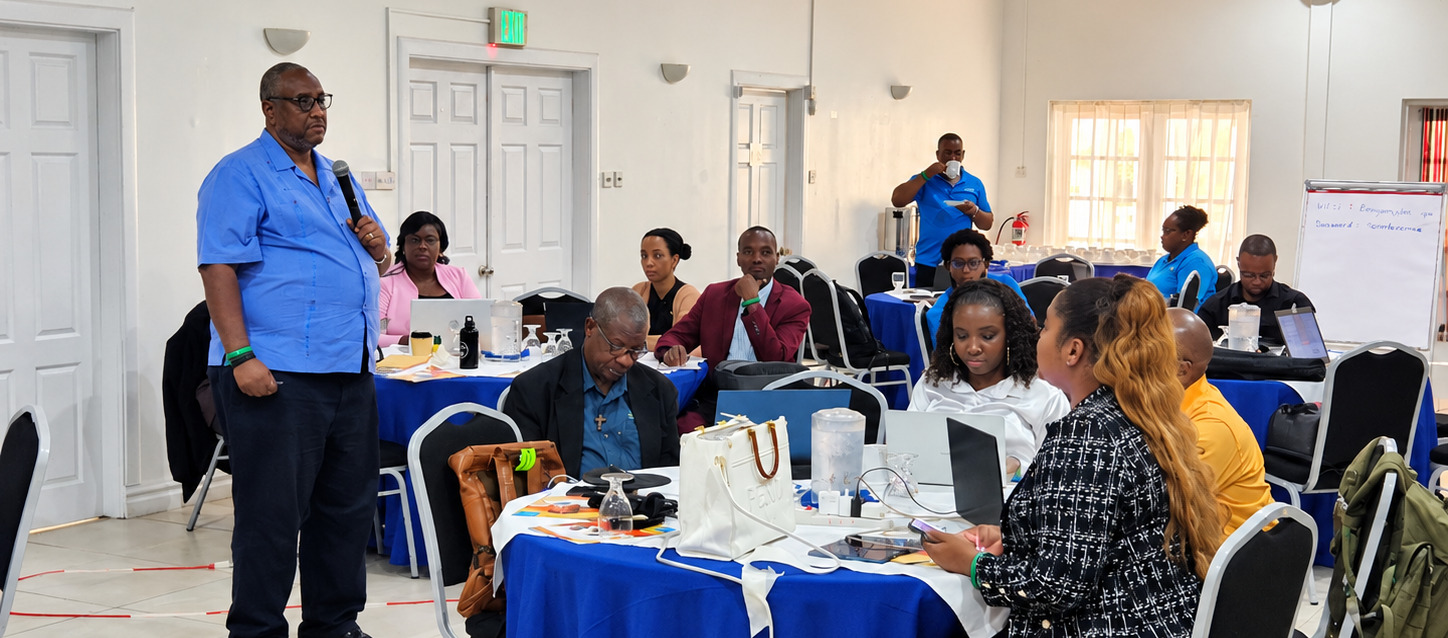
    This week, high-ranking officials from across the Caribbean gathered in Barbados for the Santiago Network Regional Workshop, hosted at the Caribbean Development Bank’s Wildey campus, to sound an urgent alarm over the accelerating climate crisis facing small island developing states (SIDS) and push for immediate, actionable measures to shield at-risk local communities. Against a backdrop of global climate projections showing the planet is on track to warm by close to 3 degrees Celsius this century – far exceeding the 1.5-degree target agreed in the Paris Climate Accords – leaders emphasized that climate breakdown is no longer a distant risk for the region: it is an ongoing, daily crisis reshaping life for Caribbean populations. The workshop centered on scaling demand-driven technical assistance for SIDS and other climate-vulnerable regions, connecting global climate pledges to tangible on-the-ground implementation. Opening the event, Barbados Deputy Prime Minister Santia Bradshaw, who also holds cabinet portfolios for Environment, National Beautification and Fisheries, called out a troubling retreat from global climate ambition, noting that critical resources for adaptation and mitigation are being redirected even as scientific reports confirm the world is drifting toward a catastrophic 3-degree warming threshold. “The world is not on track to limit global temperature rise to 1.5°C,” Bradshaw told attendees. “Instead, we are heading closer to a three-degree increase, an outcome with potentially devastating consequences, particularly for vulnerable regions. For the Caribbean, this is not an abstract threat. It is a lived reality.” Outlining Barbados’ ambitious 2035 national climate strategy, Bradshaw stressed that the region can no longer rely on passive advocacy alone to drive change. Echoing the consistent stance of Prime Minister Mia Mottley, she noted that Caribbean nations are prepared to lead by example, innovate on climate solutions, and prioritize the protection of their citizens. “As our Prime Minister Mottley has said repeatedly, we will not be passive in the face of climate change. We will not wait for others to act. We will lead, we will innovate, and we will protect our people. Our region must not only build resilience, we must become a model of resilience,” Bradshaw said. She also laid out specific, measurable national targets to demonstrate the region’s commitment to proactive climate action: by 2030, 85% of all residential housing in Barbados will be engineered to withstand the force of a Category 3 hurricane, and the country will continue expanding what is already the largest electric bus fleet in the Caribbean, cutting transportation emissions while building cleaner, more resilient infrastructure. Following Bradshaw’s address, Caribbean Development Bank Vice President Dr. Isaac Solomon reinforced the critical mission of the Santiago Network, which was created to coordinate global support for addressing climate loss and damage in vulnerable nations. Dr. Solomon emphasized that the network fills a long-unmet gap between non-binding global climate commitments negotiated at UN Climate Change Conferences (COPs) and the concrete, country-led implementation needed to protect communities. Like Bradshaw, he noted that climate loss and damage is not a future scenario – it is an escalating current crisis. “Extreme weather events, sea level rise, flooding, droughts, and heat stress impose recurrent human, social, and economic costs that strain public finances and erode decades of development gains,” Dr. Solomon explained. He argued that while climate finance is an essential component of climate action, funding alone cannot deliver lasting impact without robust, functional institutional frameworks to support it. The Santiago Network’s core role, he said, is to deliver demand-aligned technical assistance that makes ambitious climate action “bankable” for SIDS. “Addressing loss and damage is not only about post disaster response. It is about institutional readiness, strengthening data systems, legal frameworks, inter-agency coordination, and decision-making processes before disasters occur. Finance alone is insufficient without strong systems, data, and institutions,” Dr. Solomon said. The three-day workshop focused on advancing three core priority outcomes to deliver tangible progress: first, supporting country-led identification of specific climate action needs, rather than imposing external priorities; second, improving cross-institutional coordination to cut down on redundant efforts and maximize the impact of limited resources; and third, directly linking targeted technical assistance to accessible concessional climate finance. Both Bradshaw and Solomon closed their remarks by urging all workshop participants to ensure the event translates into real, tangible benefits for Caribbean communities, shifting from years of high-level policy discussions at global COP summits to concrete, on-the-ground action that will protect current and future generations of Caribbean residents from the worst impacts of climate change.

  • New 50/50 assessment system to begin in 2026/2027 school year

    New 50/50 assessment system to begin in 2026/2027 school year

    Barbados’ Ministry of Education Transformation has announced a sweeping overhaul of the country’s primary-to-secondary school transition assessment system, confirming the long-discussed replacement of the traditional common entrance examination will launch in September 2026. The new framework introduces a balanced 50/50 evaluation model that spreads assessments across two final years of primary education, replacing the current system that relies entirely on a single high-stakes exit exam.

    Education Minister Chad Blackman shared the details of the phased transition during a press briefing at Deighton Griffith Secondary School, outlining which student cohorts will follow the old and new rules. Current second-year primary (Class Two) students will be the first group to complete the revised assessment when they move into Class Three next September. In contrast, the current crop of Class Three students will become the final cohort to sit the common entrance exam in its existing format in 2025.

    Under the reformed system rolling out for the 2026/2027 academic year, half of a student’s final transition score will come from work completed during Class Three, with the remaining 50 percent accumulated through assessments in Class Four. This replaces the current model that hinges on a single three-hour sitting testing English, mathematics and composition at the end of Class Four. Blackman explained the core motivation for the shift: the new structure is designed to give students broader opportunities to showcase their full range of abilities, rather than having their entire academic future determined by performance on a single high-pressure day.

    Chief Education Officer Dr. Ramona Archer-Bradshaw broke down the structure of the new evaluation model, confirming 50 percent of the total score will come from ongoing continuous classroom assessment, while the other half will be determined by standardized end-of-cycle testing. She emphasized that the shift to continuous assessment recognizes that students are multifaceted learners whose abilities cannot be accurately captured by a one-off exam. “They should not be judged by one examination, but they should be judged by what they know and what they can do over a period of time,” she noted, adding that in-class continuous assessment allows educators to accurately measure what students can achieve independently, addressing the common issue of over-parental support on take-home assignments that can inflate scores and mask gaps in learning.

    Despite the government’s framing of the reform as a student-centered improvement, the announcement has drawn mixed reactions from local parents, with some expressing immediate skepticism over the phased rollout. Karen Franklin, a parent waiting for her child at Deighton Griffith Secondary, argued that starting the new system mid-sequence rather than building it into the curriculum from the earliest primary years puts the first cohort at an unfair disadvantage. “To me, if you going to do that, you have to start from full circle not in the middle,” she said, calling for a multi-year delay to the implementation so that assessment can be built into student learning from Reception year.

    Another parent, Marisa Bynoe, said she is adopting a wait-and-see approach to the transition — noting that talks of replacing the common entrance exam have circulated for decades — but she remains concerned about persistent social stigma attached to school placement in Barbados. Bynoe pointed out that cultural norms prioritize admission to a small set of elite government secondary schools, leaving students placed at other institutions feeling marginalized, even when zoning plays a role in assignment. She also noted the widespread hidden cost of this elite school culture: many students enrolled at top-tier institutions end up taking after-school lessons at less prestigious schools to keep up with the curriculum, leaving families burdened with extra education expenses.

    Althea Gill, principal of St Bartholomew’s Primary School, pushed back on the cultural focus on elite school placement, emphasizing that the most critical outcome of the transition process is matching each student to a school that fits their unique needs. “Regardless of where your child ends up after this exam, he or she is in a good place,” she said. “I’ve realised that some schools will cater best to what your child is good at, wherever that child ends up is gonna be the best place for him or her.”

    In response to ongoing public questions and concerns about the reform, education officials announced that public town hall meetings are being planned to walk communities through the new model and address feedback. Full details of these engagement sessions are expected to be released to the public in the near future.