标签: Barbados

巴巴多斯

  • Barbados power past Antigua to stay unbeaten

    Barbados power past Antigua to stay unbeaten

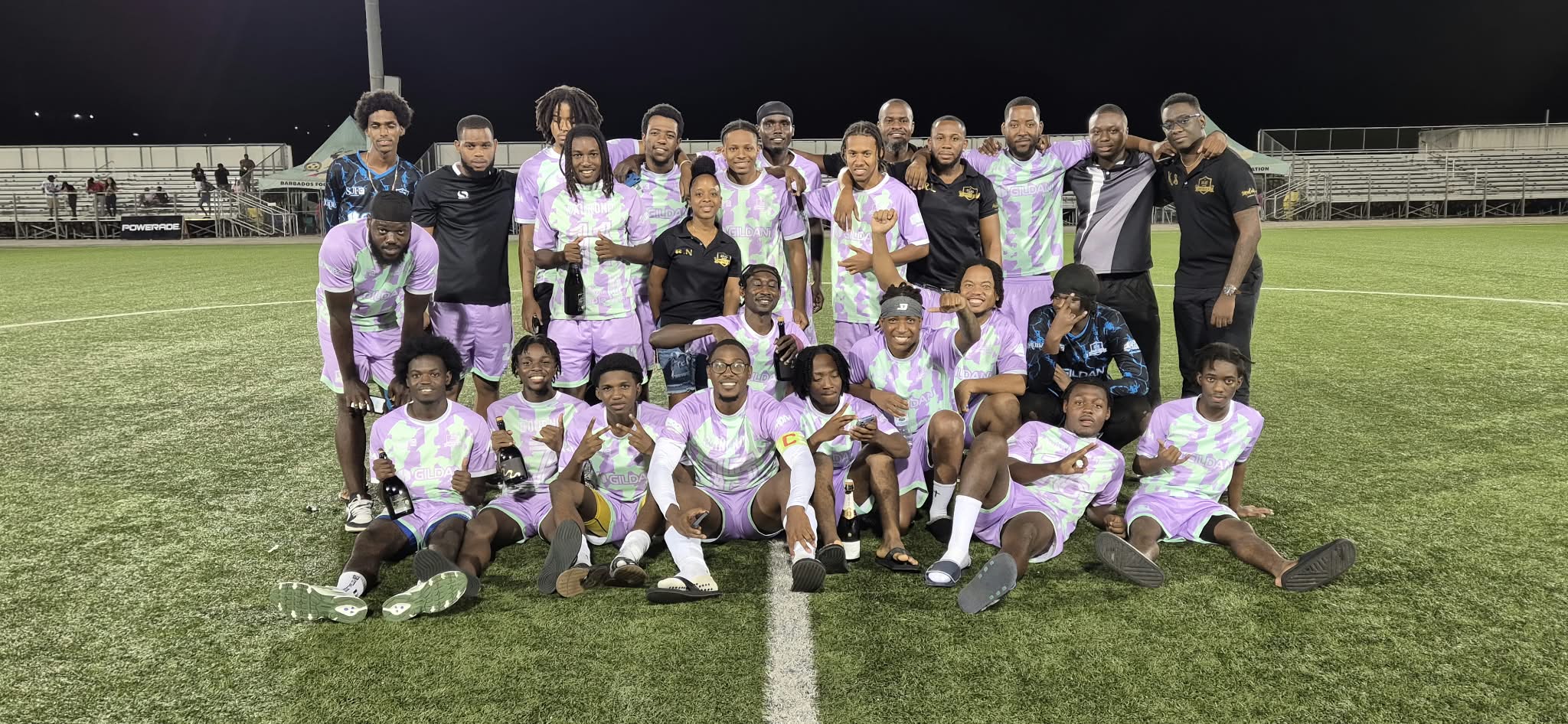
    The Jean Pierre Under-16 Netball Championships, hosted in Trinidad, has seen one undisputed standout through its first four rounds of competition: Barbados’ junior national squad, nicknamed the Baby Gems. The team has maintained a perfect unbeaten streak, closing out their latest match with a statement victory that underscores their early dominance in the regional tournament.

    In their fourth outing of the competition, the Baby Gems delivered a commanding 39–13 win against Antigua and Barbuda. From the opening whistle, Barbados seized full control of the court, never once ceding the lead to their opponents. They set an aggressive pace early, building a 12–3 advantage by the end of the first quarter, and steadily expanded their gap over the following two periods. By halftime, the scoreboard read 23–7 in favor of Barbados, which stretched further to 32–9 heading into the final quarter, allowing the team to close out the match comfortably without any late-game pressure.

    This latest win follows a series of solid performances that have kept the squad’s unbeaten record intact. Just one day before their defeat of Antigua and Barbuda, the Baby Gems notched their third victory against the Cayman Islands, finishing with a 42–17 final score. Mirroring their consistent pattern of play, Barbados held the lead from start to finish in that match, going up 8–4 after the first quarter, 21–6 at the half, and 33–11 by the end of the third period before wrapping up the win.

    On the opening day of competition, held at the University of the West Indies St. Augustine campus, the Baby Gems kicked off their campaign with two back-to-back wins. On Monday, they secured a 23–15 triumph over Dominica after a controlled, steady performance. Though their lead narrowed slightly to 11–8 at halftime and 18–13 after three quarters, Barbados pulled away in the final frame to seal the result. Their tournament opener, played against Grenada, ended in a 20–12 win to launch the squad’s undefeated run.

  • Exclusive: Side-hustle boom pushes motor numbers past 181k

    Exclusive: Side-hustle boom pushes motor numbers past 181k

    Against the backdrop of a growing national push for self-employment and alternative income streams, the Caribbean island nation of Barbados is now devoting more of its limited foreign exchange reserves to importing passenger cars than to critical pharmaceuticals and commercial shipping, new data and senior officials have confirmed. As of 2024, imported motor vehicles rank as the third-largest category of goods entering the country by total import spending, according to data from the Observatory of Economic Complexity (OEC), a leading international platform that compiles and visualizes global trade and economic activity data for analysts across public, private and academic spheres.

    OEC figures show that Barbados spent $111 million on car imports in 2024. Only two categories – refined petroleum at $520 million and crude petroleum at $234 million – exceeded that total. By contrast, the nation spent just $42.9 million on imported packaged medications and $42.5 million on passenger and cargo ships, marking car import spending as nearly 2.6 times higher than spending on either of those two critical categories. Total national imports for 2024 reached $2.58 billion, while overall export revenue for the year amounted to just $443 million, highlighting the country’s ongoing trade imbalance that puts additional pressure on foreign exchange reserves.

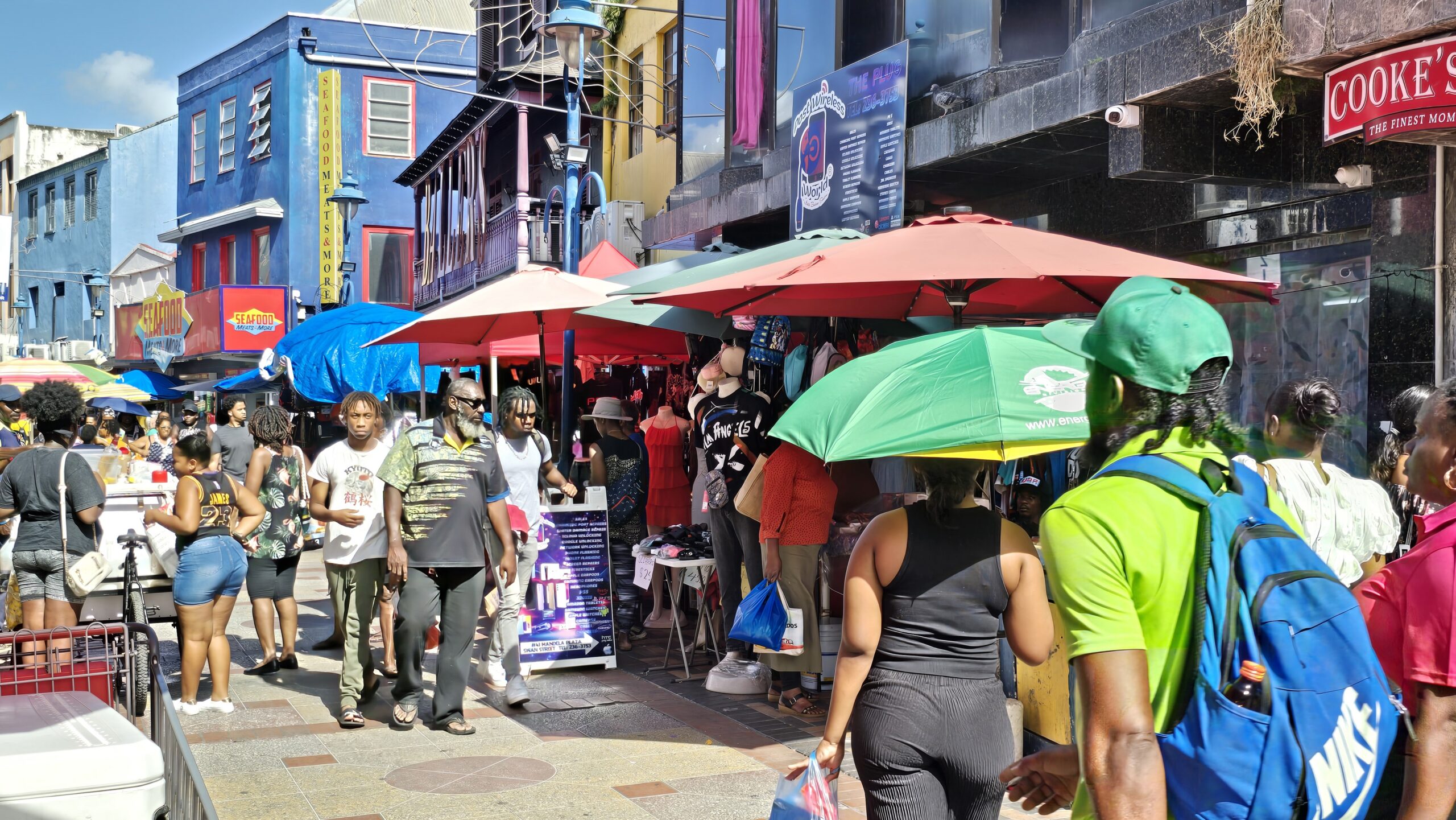
    Treca McCarthy-Broomes, chief licensing officer for Barbados, shared exclusive new insight with Barbados TODAY on the underrecognized driver of this trend: the booming culture of entrepreneurship and side-hustling that has swept the country in recent years. As of the latest count, the total number of registered vehicles on Barbados’ roads has surpassed 181,500, a figure that has grown steadily alongside the push for alternative income generation. Many Barbadians are turning to second jobs and small business ownership to cover rising living costs, from supporting children and aging parents to paying monthly bills, and that demand for extra income has directly translated to more vehicle purchases.

    “Persons are seeking side-hustles…other forms of revenue, and they are seeking to get permits, or they open up small businesses and they are buying vehicles to use as hirers or taxis or commercial vehicles. You will find that a lot of that is occurring,” McCarthy-Broomes explained in the interview. “The push for entrepreneurship, you are really seeing the results of the push for entrepreneurship.”

    She added that multiple new patterns of vehicle ownership have emerged tied to this economic shift, including groups of family members or siblings pooling resources to purchase a single commercial vehicle together, which they then register for commercial hire to generate shared income. Even as new vehicle purchases for commercial use rise, many vehicles bought for this purpose remain unsold at dealerships and stored on private lots, pastures, and under roadside trees, a visible marker of the gap between growing demand for commercial vehicle permits and market absorption. McCarthy-Broomes noted that while entrepreneurship is not the only factor driving vehicle growth, it is a far more significant contributor than previously acknowledged.

    This surge in registered vehicles has exacerbated a long-running traffic management crisis that the Barbadian government is still working to address. Officials have proposed constructing new highway flyovers as one core infrastructure solution, and the government has already held a series of national public consultations dubbed “The Way Forward” to gather community input on solving gridlock. Ideas collected from the public span a wide range of policy areas, from improved infrastructure and updated urban planning to reformed school transportation systems, investment in alternative transit modes, expanded public transport services, targeted measures to reduce overall vehicle volume on roads, strengthened safety enforcement, and upgraded road quality standards.

    In addition to tackling congestion, the Barbados Licensing Authority has partnered with the Barbados Police Service and local insurance industry to crack down on the parallel problem of uninsured vehicles operating on public roads, a growing issue that has accompanied the rise in overall vehicle numbers.

  • Uncle remembers ‘quiet’ young man after fatal shooting

    Uncle remembers ‘quiet’ young man after fatal shooting

    A quiet Caribbean community in Barbados is reeling from senseless violence after a 26-year-old University of the West Indies law student was killed in a late-night drive-by shooting Tuesday, leaving his grieving family struggling to process their sudden, devastating loss. Daquan Roberts, a third-year law student who lived with his two uncles in Christ Church while his mother resided overseas, was caught in the barrage of gunfire on Spruce Street in Bridgetown, The City, during a family gathering to mark his grandmother’s 63rd birthday.

    Speaking exclusively to local media Barbados TODAY on Wednesday, Anthony Ifill, Roberts’ great-uncle, said the entire family remained paralyzed by shock just 12 hours after the attack. Still visibly shaken by the trauma of the previous night’s events, Ifill described his great-nephew as a reserved, focused young man who dedicated most of his time to his legal studies and rarely went out socializing. “He was quiet and he didn’t go anywhere. He was studying law in school,” Ifill said, calling the young student’s untimely death “unfortunate.”

    The shooting unfolded just after 10:50 p.m., when Roberts and dozens of his relatives had gathered outside the family home on Church Hill Road, Gall Hill, Christ Church, to celebrate the birthday milestone. According to preliminary law enforcement accounts, a white motor van approached the gathering from the direction of Beckwith Street, before unidentified assailants inside opened fire on the crowd in a clear drive-by attack. “It actually was a drive-by, right, it’s a drive-by,” Ifill confirmed in an interview, recalling the moment chaos erupted. “When I hear the shots, I actually run, I fall over the table.”

    In the immediate panic of the attack, Roberts and his father attempted to flee to safety down a narrow gap near the home. It was only during the escape that Roberts’ father realized his son had been struck by gunfire, Ifill explained. “He and his ran… straight down the gap. But then when the father realised that he had been shot, he started screaming out,” Ifill said. “He ran from here to the end of the gap… and then he fell.”

    Roberts was rushed by private car to the island’s main Queen Elizabeth Hospital, where medical staff were unable to save him, and he was pronounced dead shortly after arrival from his gunshot injuries. On Wednesday, when Barbados TODAY reached out to Dr Ronnie Yearwood, deputy head of the Faculty of Law at UWI Cave Hill, the senior academic was too distraught over the loss of one of his students to comment on the incident.

    Barbadian law enforcement officials have confirmed that this shooting marks the 19th fatal shooting recorded on the island since the start of the calendar year. Investigators from the local police force have launched a full probe into the attack, and are continuing to canvass for witnesses and review evidence as they work to identify and apprehend the perpetrators behind the killing.

  • Barbados bids to host new global Borrowers’ Platform secretariat

    Barbados bids to host new global Borrowers’ Platform secretariat

    As developing nations rally to challenge a long-unbalanced global financial order they argue is systematically stacked against low-income and vulnerable economies, Barbados has formally thrown its name forward to host the secretariat of the landmark new Borrowers’ Platform. Prime Minister Mia Mottley made the announcement Wednesday during the annual Spring Meetings of the World Bank and International Monetary Fund in Washington D.C., where the initiative was officially launched on the conference’s sidelines.

    First agreed by member states at the 2025 Fourth International Conference on Financing for Development, the Borrowers’ Platform was designed to tackle deep-rooted systemic inequities by strengthening coordination, amplifying collective representation, and delivering targeted technical support for borrowing countries across the Global South. The launch comes at a moment of soaring debt vulnerability across developing economies, with the initiative focused on advancing more responsible debt sustainability practices and pushing for fairer financing outcomes that serve the needs of low-income nations rather than wealthy global stakeholders.

    In her announcement, Mottley emphasized that Barbados’ lived experience with the harms of the existing global financial system makes it the ideal host for the platform’s administrative core. “We make formal our interest as Barbados to host the Secretariat of the Borrowers’ Platform because we have walked it, we have lived it, we are breathing it and we are prepared to continue to advocate for the change in rules and circumstances such that countries can find their way as independent sovereign nations to be able to finance development for their people,” she stated.

    Mottley framed the new platform as a make-or-break step toward correcting systemic failures that disproportionately disadvantage small and economically vulnerable states. She argued that the current global architecture is structured to favor powerful, wealthy nations, leaving low-income countries locked in a cycle of growing inequality: “We have ended up in this position largely because we have a system that does not favour the weak, nor the different. Without reform, global inequalities will continue to widen. The rich are getting richer and the poor are getting poorer.”

    She also pushed back against the dominant global approach to sovereign borrowing, noting that countries facing debt distress are too often penalized rather than supported through structural challenges. “Countries need assistance. They are not begging. They need space. They need assistance,” she said, calling for a far more balanced, human-centered approach to international debt management.

    The platform is designed to deliver tangible benefits to participating nations: it will deepen South-South cooperation, boost global debt transparency, provide customized technical and advisory support to developing economies, and raise the collective voice of borrowing countries in high-stakes global financial governance discussions. Mottley stressed that the initiative must expand rapidly beyond its founding 28 member states and be backed by strong, principled leadership to deliver meaningful change. “I do believe that the chief executive officer ought to be appointed as soon as possible if we are going to see further progress,” she said, adding that the ideal leader would combine “credibility but conscience.”

    Warned that the confluence of overlapping global crises leaves no time for incremental action, Mottley noted “We are running against the clock.” The cumulative shocks of the COVID-19 pandemic, the ongoing war in Ukraine, and escalating geopolitical tensions have already pushed many vulnerable economies to the brink of debt collapse, she explained. For Mottley and the participating developing nations, the platform represents more than a coordination body: it is an opportunity for Global South countries to take ownership of their own financial futures. “We have come not to ask for permission. We have come to execute in the interests of the people whom we have been elected to serve,” she said.

  • Govt pushes for collateral registry to unlock small biz lending

    Govt pushes for collateral registry to unlock small biz lending

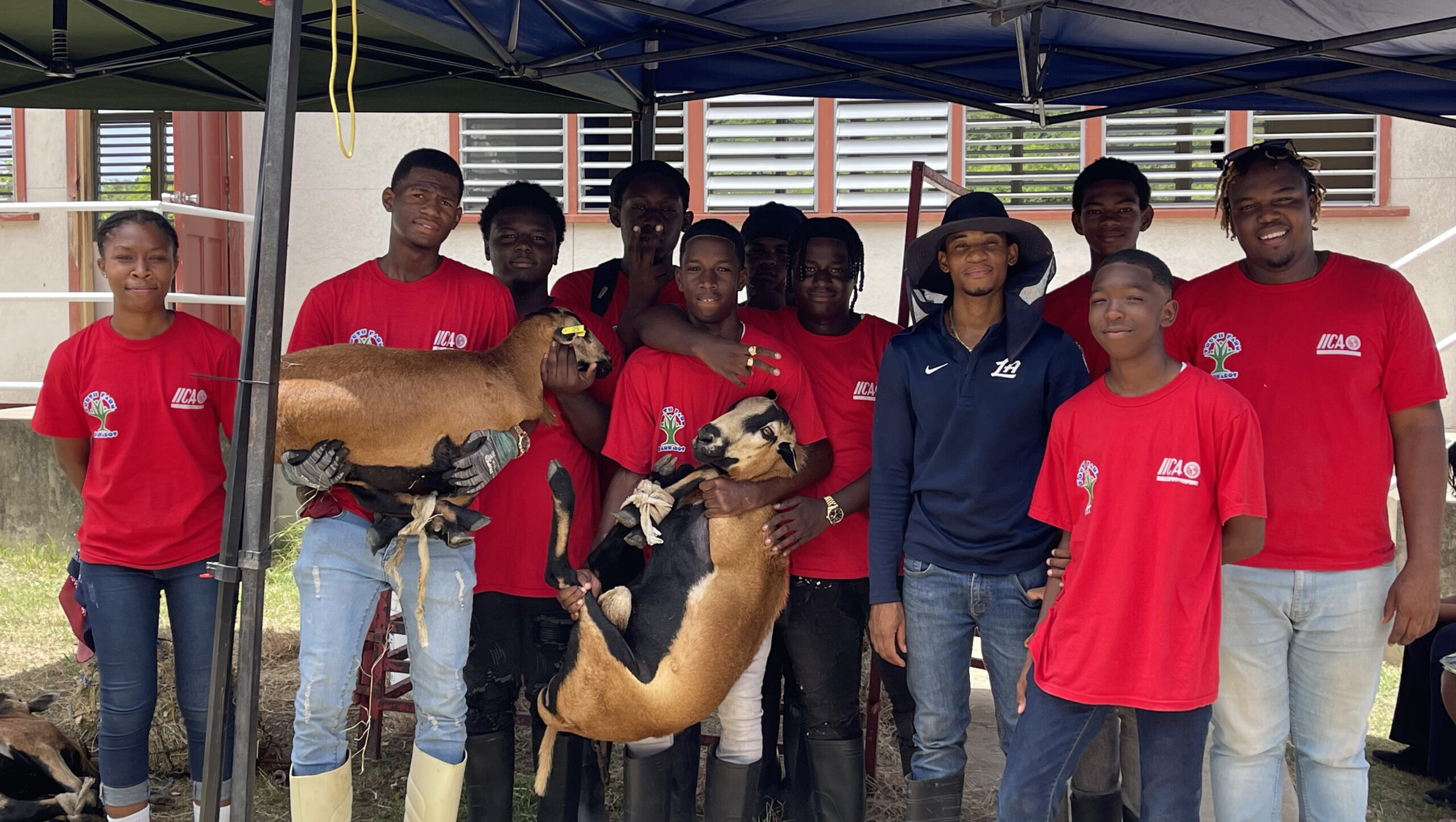
    Barbados’ small business sector is facing a deep-rooted financial barrier that is stifling growth, according to the island nation’s Business Development Minister Kerrie Symmonds. Speaking at the State of the Sector Conference hosted Wednesday at the Lloyd Erskine Sandiford Centre, Symmonds unveiled a landmark new national MSME survey – the first comprehensive assessment of the sector in a decade – that lays bare the scale of the challenge. The study confirms a stark reality for Barbados’ business landscape: 98% of all domestic enterprises qualify as micro, small or medium enterprises (MSMEs), yet more than half of these businesses generate annual revenues of no more than $100,000. Symmonds traced this stagnation directly to a systemic flaw in the country’s lending framework: commercial banks uniformly require land as a condition for approving loans, and the vast majority of small business owners do not hold this traditional form of collateral. Without access to affordable capital, MSMEs cannot expand their operations, hire additional staff, or invest in new infrastructure, trapping most small enterprises in a cycle of low revenue. “The problem isn’t that small business owners lack valuable assets entirely – the system is built to only recognize one type of security, that most of these entrepreneurs simply do not have,” Symmonds explained. He pointed to small-scale local farmers as a key example: many cultivate productive, profitable plots on government-leased land, and own heavy farming equipment and growing crops that hold clear tangible value. But because they do not own the land they work, they are automatically disqualified from accessing bank loans, under current rules. Symmonds noted that this gap between available assets and lending eligibility is not unique to agriculture: emerging tech entrepreneurs, retail operators, and service providers often invest heavily in specialized equipment, intellectual property, and inventory that could serve as security – if the regulatory framework allowed for alternative collateral. The government, which campaigned on addressing MSME access to finance during the last general election, has already begun moving to fix the issue, Symmonds confirmed. In the most recent national budget, the administration introduced factoring services as an interim solution, and the government now plans to move forward urgently with the establishment of a national collateral registry. This system would allow entrepreneurs to pledge non-traditional assets – from farm equipment and harvested crops to business machinery and intellectual property – as security for loans, unlocking capital that is currently inaccessible to small operators. Symmonds emphasized that the collateral registry model is already proven to drive inclusive MSME growth across the developing world. Similar systems are already operational across Latin America, including Colombia, and have been rolled out in multiple regions across Africa, from North Africa to Central, East and West Africa. “Developing economies around the globe have recognized that unlocking access to capital for ordinary people with good business ideas is how broad-based economic development happens,” he said. Beyond giving entrepreneurs a path to growth, Symmonds noted that the reform would also benefit lending institutions by reducing their risk exposure. A properly regulated collateral registry would create a clear secondary market for pledged assets, allowing banks and other lenders to recoup their investment if a borrower defaults on a loan. “This is not a handout to small businesses – it is a rethinking of our lending framework that works for both entrepreneurs and financial institutions,” he added. “We are fully prepared to put in place the necessary regulatory and legislative framework to make this reform a reality for Barbados.”

  • Police probe quarry death

    Police probe quarry death

    A deadly industrial accident has rocked a quarry operation in the Lears district of St Michael, Barbados, leaving one worker dead and three other people hurt after a piece of heavy machinery collapsed on the crew Wednesday morning. Law enforcement authorities have launched a full probe into the circumstances of the tragedy, which unfolded shortly before 10 a.m. local time.

    As first responders arrived on the scene, initial details of the incident began to emerge: the four workers were in the process of preparing and positioning the equipment for use when the structure suddenly gave way, falling directly onto the group. PC Damien Farmer, a spokesperson for the Communications and Public Affairs Department of the Barbados Police Service, confirmed the preliminary findings of the investigation in an on-site media briefing.

    Farmer outlined the immediate aftermath of the collapse: one male worker could not be saved and died of his injuries at the quarry location. A second injured worker was rushed by emergency personnel to the island’s main public care facility, Queen Elizabeth Hospital, for urgent treatment. The two remaining injured people chose to pursue care from private medical providers instead.

    Following standard protocol for unexpected fatalities, a medical examiner traveled to the accident site to conduct an on-scene examination and officially pronounce the man’s death. To date, authorities have not released the name of the deceased, as they are still working to next-of-kin notification. District ‘A’ police officers are leading the ongoing investigation, which is currently classified as an inquiry into an unnatural death, with the exact root cause of the equipment failure still under active review.

  • Peace and Love edge Vauxhall to remain unbeaten

    Peace and Love edge Vauxhall to remain unbeaten

    The National Domino Association Four-Hand League continues to deliver dramatic, closely contested matches, with front-runners Peace and Love maintaining their perfect undefeated streak courtesy of a hard-fought 73-68 comeback victory over A&B Pest Control Vauxhall. The underdogs held the lead for most of the encounter, only to falter in the closing stages as Peace and Love pulled off a late surge to secure the win. For the unbeaten side, Sherry Ann Dawson and Alicia Harewood led the scoring with 17 points apiece. Consistent veteran duo Suzette Hinds and Charles ‘Jack’ Proverbs, along with Cheryl ‘Sweet P’ Worrell and Anthony Codagon, each contributed 15 points to the final tally, while Rachel Burton and Jeremy ‘Angry Bird’ Jordan added 11 points to round out the team’s performance.

    In another league matchup, Buzo Osteria Welchman Hall pulled off a convincing 80-59 win against the notoriously unpredictable Hillside side, a team known for pulling off upsets against higher-ranked opponents. The deciding moment of the match came from husband-and-wife pair Shurland and Vondel Bovell, who notched 15 total points, including a win in the final set that locked in a valuable bonus point to cement their team’s victory.

    Carlton & A1 Braves recorded the most lopsided win of the week, crushing BNECL by a dominant 102-36 margin. Star performers Ian ‘Cappy’ Grimes and Jefferson ‘Smallhead’ Proverbs led the charge with 25 points, including two rare six-point plays, while Delisle Parris and Henry Tank Forde chipped in with an additional 17 points to seal the rout early.

    The most anticipated matchup of the week, billed as a clash between two title-contending sides Powerade Locked and Loaded and RM Cleaners, lived up to every bit of the hype, with Locked and Loaded scraping out a narrow 68-66 win to edge past their rivals. In the final league result, French Village Piranhas defeated 37 Family KC Joint 77-57, leaving 37 Family KC Joint still searching for their first win of the division campaign.

    Outside the regular four-hand league, the knockout stage of 37 Family KC Joint’s annual Out Of Season Three Hand tournament concluded on Monday night at Zimmers Sports Bar, with Ivy Sports Bar De Clique 2.0 emerging as the overall champions. The winning side took home the top prize of $7,000, while the Lucians finished as runners-up to claim $4,000, and third-place finishers Landsharks secured $1,500 in prize money.

    Looking ahead, the R M Cleaners out-of-season tournament is scheduled to kick off on April 15 across multiple venues across the island, while the VOB Carib Wave community domino tournament will resume its schedule this Friday night at the North Stars cricket ground, drawing amateur and elite domino players from across the region.

  • Nearly all businesses micro or small enterprises, ‘struggling’, new study finds

    Nearly all businesses micro or small enterprises, ‘struggling’, new study finds

    Barbados’ micro, small and medium enterprise (MSME) landscape is facing deep structural imbalances that threaten long-term economic stability, according to a groundbreaking new national assessment that provides the first comprehensive look at the country’s small business ecosystem in 10 years.

    Conducted in 2023 by University of the West Indies management scholar Professor Dwayne Devonish, the study upends long-standing assumptions about Barbados’ private sector, confirming that while MSMEs make up 98% of all private sector businesses and employ more than half the private workforce, a tiny cohort of large enterprises hold a disproportionate share of national employment. Just 2% of the country’s largest private firms account for 45% of all private sector jobs, a gap that policymakers say demands urgent action to support MSME growth and scaling.

    Speaking at the State of the Sector Conference hosted at the Lloyd Erskine Sandiford Centre on Wednesday, Minister of Energy, Business Development and Commerce Kerrie Symmonds noted that the empirical findings mark a critical shift from the country’s historical “policy by instinct” approach to small business development. The study’s granular data gives policymakers a clear, evidence-driven foundation to design targeted interventions, he added, while demystifying long-unexamined trends in the sector.

    Digging into the study’s key demographic trends, Symmonds shared that between 2016 and 2024, the total number of business enterprises in Barbados saw a marginal decline, dropping from 9,651 to 9,196. Despite this slight contraction in the total number of firms, total private sector employment across all enterprise sizes grew from 100,449 workers in 2016 to 112,595 in 2024, indicating a trend toward larger firm size even as the total number of businesses shrinks.

    “Ninety-eight per cent of the enterprises that we call private sector enterprises in Barbados sit within the context of the MSME framework… 55 per cent of private sector employment in this country fits within the MSME sector and that also tells us a story about the imbalance that must be corrected in this country because we have a two per cent of the country’s private sector enterprises that fall outside of the MSME framework but they employ 45 per cent of the people in this country,” Symmonds explained. “Clearly, therefore, we are going to have to look at the expansion of the MSME sector so as to ensure that there is a more equitable balance in terms of private sector employment, because I think we would all agree that there is some cause for concern where two per cent of our private sector enterprises are carrying that level of private sector employment.”

    Alongside its revelation of deep employment imbalances, the study also uncovered unexpected surges in entrepreneurial activity following the COVID-19 pandemic, with fully one quarter of all currently operating MSMEs founded after 2020. Symmonds called this post-pandemic wave nothing short of an “entrepreneurial explosion,” marking a bright spot of growth in the small business ecosystem.

    The study also tracked a notable rise in female-led MSMEs, though Symmonds cautioned that most women-owned businesses remain stuck at the micro-enterprise level, facing significant systemic barriers to scaling up. He linked this challenge to long-standing poverty trends, noting that 20% of Barbadian households fell below the poverty line between 2015 and 2016, with a large share of these households led by women. Targeted support for female entrepreneurs, he argued, can both drive MSME growth and address persistent poverty gaps.

    Beyond these demographic trends, the research laid bare key structural weaknesses holding back the MSME sector, including chronically low revenues and limited operational resilience. More than half of all micro enterprises report annual revenues of $100,000 or less, a figure far lower than policymakers deem healthy for sustainable growth. Low digital adoption also emerges as a major barrier to expansion and export competitiveness, with over 50% of MSMEs making minimal use of digital tools. For a small economy heavily reliant on service exports to earn critical foreign exchange, Symmonds emphasized that widespread digital adoption is non-negotiable to enable cross-border service delivery, a core pillar of Barbados’ long-term economic growth strategy.

    Leaders from regional development institutions have praised the study as a critical roadmap for future investment and policy. Michael Hall, senior financial sector specialist at the Inter-American Development Bank’s Caribbean office, said the empirical findings will shape targeted interventions to strengthen the MSME enabling environment, with a particular focus on expanding access to affordable finance and advancing financial inclusion for small businesses.

    “The report provides insights into the impacts. It’s meant to provide empirical evidence that will help us to make informed decisions on how to best approach the challenges that we continue to face,” Hall said, noting that the IDB’s ongoing work in Barbados will be guided by the study’s key findings to deliver more effective support for small business growth.

  • Sealy wins third US Masters Squash title

    Sealy wins third US Masters Squash title

    The US Squash Masters 60+ division wrapped up its annual competition this weekend in New York City, with veteran player Mark Sealy delivering a career-defining performance to secure his third tournament championship. Competing at Manhattan’s iconic Open Squash Bryant Park venue, Sealy overcame a tough test from one of the division’s most decorated players — former World Masters finalist and multi-time US Masters champion Dominic Hughes — to clinch a hard-fought 3-1 victory, with set scores reading 11-9, 12-10, 4-11, 11-6.

    The opening set set the tone for the entire five-game clash: Sealy got off to a fast start, controlling the T and moving fluidly to the front court to claim the first three points. But Hughes, a seasoned competitor with deep tournament experience, rallied back with powerful, well-placed drives and delicate touch shots to level the score at 9-9. Sealy, however, kept his composure under pressure, winning the next two consecutive points to steal the first set.

    The second game followed a nearly identical narrative. Sealy opened with confident, aggressive play, but Hughes capitalized on every unforced error and loose shot to stay within striking distance, once again drawing level at 10-10. For the second time in the match, Sealy held his nerve to win the closing points, pushing his advantage to 2-0 in sets.

    Facing elimination, Hughes upped the intensity in the third set, unleashing aggressive shots to every corner of the court. His attacking strategy paid off: Sealy struggled to maintain consistent length on his returns, allowing Hughes to take the third set comfortably and keep his championship hopes alive. But Sealy adjusted quickly in the fourth set, tightening up his positioning, improving his length, and launching targeted attacks with well-timed drop shots and quick boasts. He built an early lead and held firm through the closing points, even after fending off a late rally from Hughes that saved the first match point, before sealing the win to claim the title.

    In post-victory comments, an elated Sealy spoke of his relief to cross the finish line first against such a strong opponent. “This one was big. It was a very strong field and Dominic is an incredible player, so to win 3-1 is extremely satisfying,” he said. Sealy also credited his revised training routine for his success, explaining he had adjusted his program to add more ghosting drills, switched to lighter weight training, and made targeted technical changes to his swing — adjustments that delivered clear results on the court. He also extended gratitude to his coaching team, including Peter Nicol, Nicole Bunyan, Karen Meakins, and Shawn Simpson, as well as his training partners at Surfside Gym and Red Zen Pilates Studio.

    Sealy’s road to the final began earlier in the tournament at the Harvard Club of New York, where he earned a first-round bye before facing James Green in the round of 16. He delivered a dominant opening performance, sweeping Green 11-3, 11-3, 11-2 to advance. On Saturday, he met California’s Thomas Weylen in the quarterfinals, earning another lopsided 11-4, 11-1, 11-1 win. Just two hours after his quarterfinal victory, Sealy returned to the court for a competitive semifinal clash against Richard Kenny, ultimately securing a straight-set 12-10, 11-7, 11-6 win to book his spot in the weekend’s final.

  • One dead after equipment collapse at Lears Quarry

    One dead after equipment collapse at Lears Quarry

    Authorities in Barbados have launched an investigation into an unexpected fatality after a workplace accident at a quarry in the Lears community of St. Michael on Wednesday morning.

    Preliminary official accounts confirm that at approximately 9:57 a.m., a group of workers were on-site carrying out installation work for a large piece of industrial equipment when the structure suddenly collapsed. The falling debris and structural failure left four people with injuries of varying severity.

    Tragically, one male worker was pronounced dead at the scene of the incident before emergency responders could arrive. A second injured worker was urgently transferred by emergency medical services to the Queen Elizabeth Hospital, the island nation’s primary public care facility, for urgent treatment. The two remaining injured people chose to pursue care from private medical providers instead of accessing public hospital services.

    As of the latest update, law enforcement officials have confirmed that their investigation into the circumstances of the collapse and the resulting death is still ongoing. Investigators are working to determine the root cause of the equipment failure, including whether improper installation, structural defects, or workplace safety oversights contributed to the fatal accident.