Barbados’ micro, small and medium enterprise (MSME) landscape is facing deep structural imbalances that threaten long-term economic stability, according to a groundbreaking new national assessment that provides the first comprehensive look at the country’s small business ecosystem in 10 years.
Conducted in 2023 by University of the West Indies management scholar Professor Dwayne Devonish, the study upends long-standing assumptions about Barbados’ private sector, confirming that while MSMEs make up 98% of all private sector businesses and employ more than half the private workforce, a tiny cohort of large enterprises hold a disproportionate share of national employment. Just 2% of the country’s largest private firms account for 45% of all private sector jobs, a gap that policymakers say demands urgent action to support MSME growth and scaling.
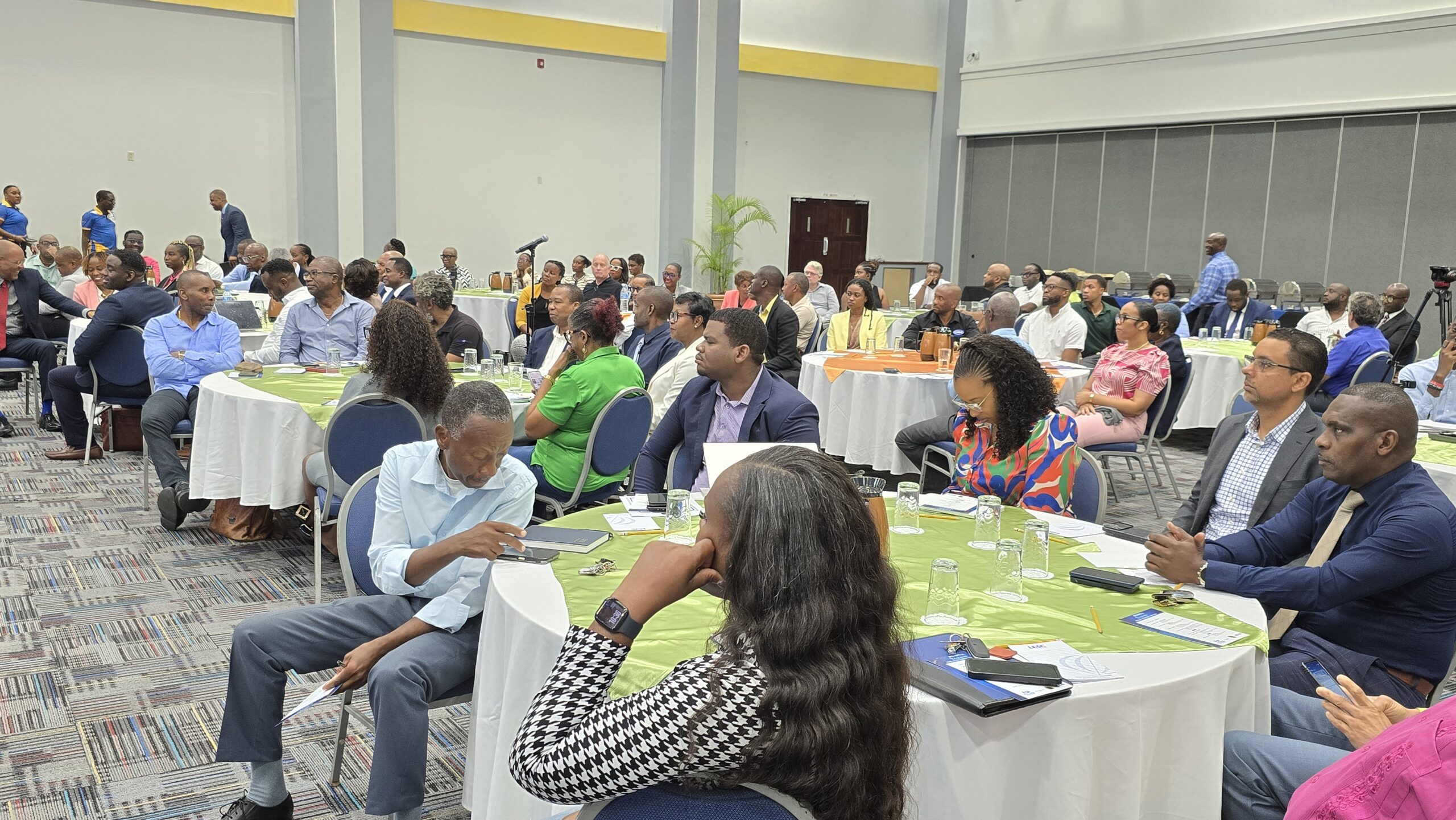
Speaking at the State of the Sector Conference hosted at the Lloyd Erskine Sandiford Centre on Wednesday, Minister of Energy, Business Development and Commerce Kerrie Symmonds noted that the empirical findings mark a critical shift from the country’s historical “policy by instinct” approach to small business development. The study’s granular data gives policymakers a clear, evidence-driven foundation to design targeted interventions, he added, while demystifying long-unexamined trends in the sector.
Digging into the study’s key demographic trends, Symmonds shared that between 2016 and 2024, the total number of business enterprises in Barbados saw a marginal decline, dropping from 9,651 to 9,196. Despite this slight contraction in the total number of firms, total private sector employment across all enterprise sizes grew from 100,449 workers in 2016 to 112,595 in 2024, indicating a trend toward larger firm size even as the total number of businesses shrinks.
“Ninety-eight per cent of the enterprises that we call private sector enterprises in Barbados sit within the context of the MSME framework… 55 per cent of private sector employment in this country fits within the MSME sector and that also tells us a story about the imbalance that must be corrected in this country because we have a two per cent of the country’s private sector enterprises that fall outside of the MSME framework but they employ 45 per cent of the people in this country,” Symmonds explained. “Clearly, therefore, we are going to have to look at the expansion of the MSME sector so as to ensure that there is a more equitable balance in terms of private sector employment, because I think we would all agree that there is some cause for concern where two per cent of our private sector enterprises are carrying that level of private sector employment.”
Alongside its revelation of deep employment imbalances, the study also uncovered unexpected surges in entrepreneurial activity following the COVID-19 pandemic, with fully one quarter of all currently operating MSMEs founded after 2020. Symmonds called this post-pandemic wave nothing short of an “entrepreneurial explosion,” marking a bright spot of growth in the small business ecosystem.
The study also tracked a notable rise in female-led MSMEs, though Symmonds cautioned that most women-owned businesses remain stuck at the micro-enterprise level, facing significant systemic barriers to scaling up. He linked this challenge to long-standing poverty trends, noting that 20% of Barbadian households fell below the poverty line between 2015 and 2016, with a large share of these households led by women. Targeted support for female entrepreneurs, he argued, can both drive MSME growth and address persistent poverty gaps.
Beyond these demographic trends, the research laid bare key structural weaknesses holding back the MSME sector, including chronically low revenues and limited operational resilience. More than half of all micro enterprises report annual revenues of $100,000 or less, a figure far lower than policymakers deem healthy for sustainable growth. Low digital adoption also emerges as a major barrier to expansion and export competitiveness, with over 50% of MSMEs making minimal use of digital tools. For a small economy heavily reliant on service exports to earn critical foreign exchange, Symmonds emphasized that widespread digital adoption is non-negotiable to enable cross-border service delivery, a core pillar of Barbados’ long-term economic growth strategy.
Leaders from regional development institutions have praised the study as a critical roadmap for future investment and policy. Michael Hall, senior financial sector specialist at the Inter-American Development Bank’s Caribbean office, said the empirical findings will shape targeted interventions to strengthen the MSME enabling environment, with a particular focus on expanding access to affordable finance and advancing financial inclusion for small businesses.
“The report provides insights into the impacts. It’s meant to provide empirical evidence that will help us to make informed decisions on how to best approach the challenges that we continue to face,” Hall said, noting that the IDB’s ongoing work in Barbados will be guided by the study’s key findings to deliver more effective support for small business growth.