标签: Barbados

巴巴多斯

  • Transport minister: Free seniors rides permanent

    Transport minister: Free seniors rides permanent

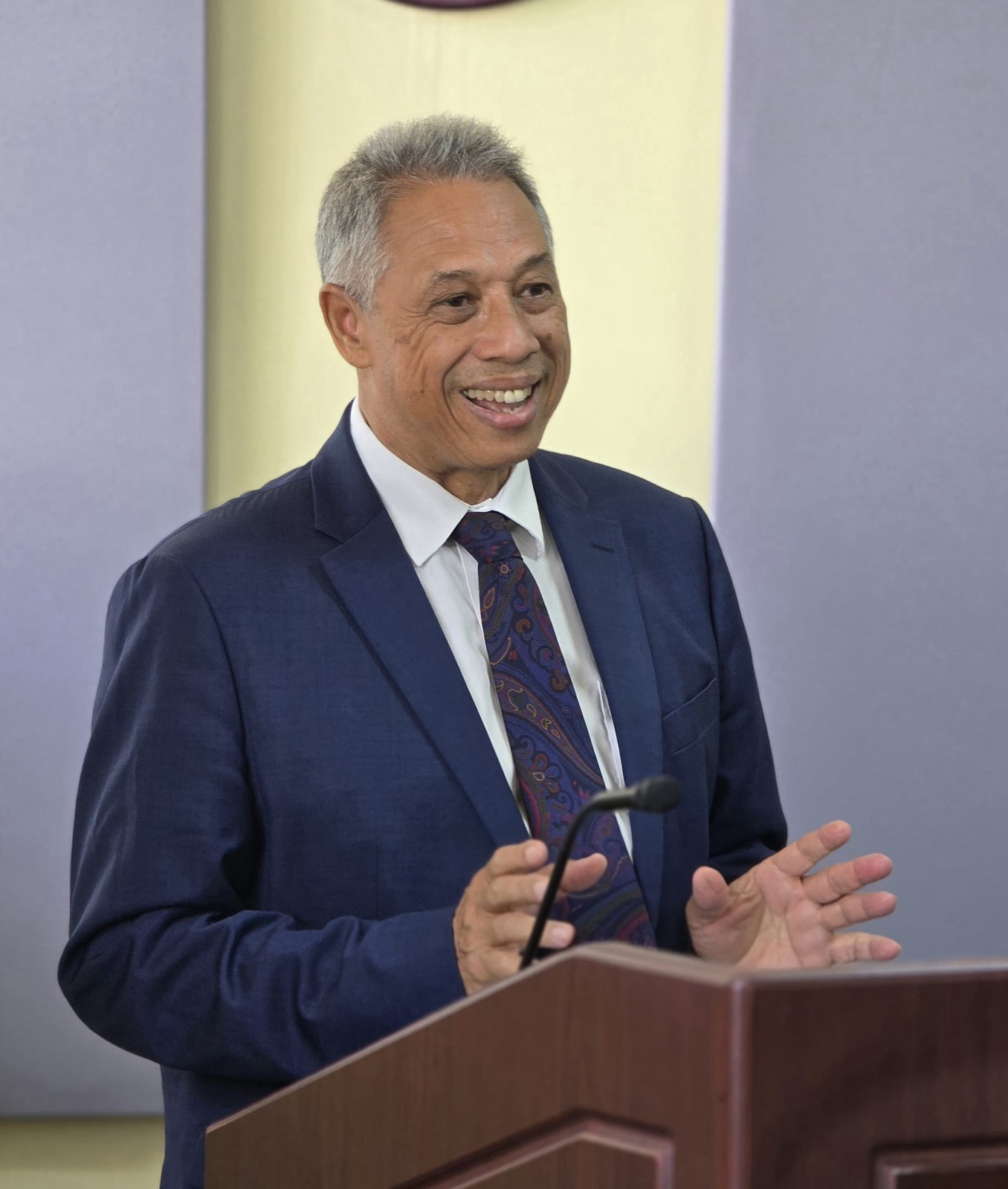
    During a heated debate in Barbados’ House of Assembly on the transformative Older Persons (Care and Protection) Bill, Minister of Transport and Works Kirk Humphrey has issued an unwavering guarantee that the Mottley administration will permanently retain free bus fare for all senior citizens riding public Transport Board buses, even amid ongoing discussions of potential public-private partnerships for the island’s transport sector.

    Humphrey, who draws deep personal and academic expertise in elder rights issues, framed the new legislation not as an act of charitable goodwill from the government, but as a long-overdue fundamental gesture of gratitude to the generations of Barbadians who built the modern nation. The minister used the debate to push back against persistent public rumours that privatization of transport services would eliminate the popular free fare benefit for vulnerable groups, delivering a categorical public reassurance.

    “Let me make it clear. There will never be, under this administration, any time where older persons have to pay to use buses in this country. It is not the policy of the government. That free ride for older persons will continue regardless of whatever structure we settle on for delivering transport to Barbadians,” Humphrey stated emphatically. The minister extended this ironclad guarantee to all other groups that currently hold free public transport privileges, including active and serving police officers, emphasizing that government efforts to boost operational efficiency in the transport sector will never come at the expense of vulnerable and marginalized groups.

    Humphrey also used the occasion to call on Barbadian society to confront a growing worrying erosion of the island’s long-held traditional culture of intergenerational community care. Invoking the classic Socratic maxim that “the unexamined life is not worth living,” he urged the nation to engage in deep introspection about how it treats its aging population. He questioned how a country once famous for its tight-knit community care systems had reached a point where so many seniors report feeling invisible, socially excluded, and neglected.

    “Dignity does not expire at 65 or 67. In fact, we have a responsibility as people get to that age to put a little bit more effort in,” Humphrey argued.

    Drawing on his portfolio oversight, the transport minister detailed the often-overlooked deep connection between accessible public infrastructure and broader social well-being for older Barbadians. He explained that seemingly small oversights, such as cracked sidewalks or unbuilt bus shelters, do more than just hinder mobility – they actively push seniors into social isolation. If an older person cannot wait comfortably for a bus due to a lack of shelter, they will often choose to stay home entirely, skipping critical medical appointments and cutting off visits with family and friends, eroding their independence over time.

    “Getting older should not mean losing independence in these things that are so easy to be able to resolve,” he said. Humphrey challenged his own ministry to abandon outdated accessibility standards that are unfit for a 21st-century Barbados, mandating that all public walkways be fully accessible for people living with disabilities and seniors, who he noted experience mobility and safety risks such as uneven lighting very differently than younger people.

    Beyond the transport policy commitments, Humphrey outlined the core protections of the new Older Persons Bill, which establishes a comprehensive national framework to combat elder neglect, abuse and financial exploitation. He highlighted the landmark creation of a confidential national register of documented elder abusers, a provision he called a personal priority, which will bar anyone with a confirmed history of abusing seniors from working in licensed elder care facilities across the island.

    “This bill says that older persons are right holders and that they are not just passive recipients of government’s largesse. It recognizes physical abuse, emotional abuse, sexual abuse, neglect, abandonment, and financial abuse—including when people take your pensions or your savings. Silence can no longer be used to protect abusers in this country,” Humphrey said.

    The minister closed by issuing a direct challenge to the Social Empowerment Agency and all relevant government bodies responsible for elder welfare: passing groundbreaking legislation is only the first step, and the true impact of the bill will depend on consistent, aggressive enforcement. “Protection delayed is protection denied. We have to enforce what the bill allows us to enforce. We have to put in place the systems to benefit the persons that we’re meant to protect. Use the legislation. Enforce the legislation,” he urged. Echoing a long-held global standard of national accountability, Humphrey noted that “You judge a country not by the way it treats the people who are strong… but by the way it treats its vulnerable.”

  • Karate quartet barely miss out on CAC Games qualification

    Karate quartet barely miss out on CAC Games qualification

    Four up-and-coming karate athletes from Barbados’ national squad have fallen just short of securing automatic berths to the 2024 Central American and Caribbean (CAC) Games, landing reserve positions instead after a strong showing at the regional qualification tournament hosted in the Dominican Republic last month. Joseph Tseu, Kodie King, Shannan Skeete and Ric-Anne Brathwaite left everything on the competition mat between April 16 and 18 at the CAC Qualifiers, ultimately walking away with reserve slots that could see them compete at the main Games, set to run from July 24 to August 8 in the Dominican Republic. Tseu holds the first reserve spot for men’s kata, while King (84kg kumite), Skeete (61kg kumite) and Brathwaite (68kg kumite) are listed as second reserves across their respective sparring divisions. Should any qualified athlete withdraw before the tournament kicks off, the Barbadian reserves will step in to fill the vacant position. Despite missing out on automatic qualification, the team’s coaching staff framed the outing as a promising, respectable showing for the small island nation’s karate program. Assistant coach Corey Greaves, who traveled to the qualification event alongside head coach Cameron King, shared the team’s takeaways in an interview with Barbados TODAY. “We didn’t hit our ultimate goal of locking in qualifying spots, but landing first and second reserves across multiple disciplines means we held our own out here,” Greaves said. “Now we just wait and hope for an opening that lets one of our athletes step into the main draw.” Greaves emphasized that every athlete on the trip turned in a better performance than at past competitions, with the revised qualifying structure giving competitors more opportunities to compete and gain critical experience. He broke down the structure of the qualification tournament, noting that the host Dominican Republic automatically claimed one of the eight total spots available across each division, leaving seven spots open for all other competing nations. Athletes who did not secure one of the four immediate automatic berths advanced to a round-robin playoff to compete for the final three qualification positions. With the possibility of last-minute withdrawals still on the table ahead of the summer Games, Greaves confirmed that the four reserves will maintain a rigorous training schedule back home in Barbados to stay ready if called upon. A key part of that preparation for the kumite athletes, he added, is maintaining their required weight classes to meet tournament regulations. While Greaves expressed optimism about the long-term future of competitive karate in Barbados, he also shared measured concerns about the pace of the sport’s growth on the island compared to regional powerhouses. “Karate is growing steadily, and we’re seeing more athletes from other martial arts backgrounds transition into competitive sports karate now that the World Karate Federation has opened a formal pathway for cross-discipline participation,” he explained. “More and more young athletes are drawn to this side of the sport because it offers a clear path to compete at the Olympics and Commonwealth Games, something traditional karate does not provide. That said, the sport is not growing as quickly as I would like to see it. Countries like Mexico and other Latin American nations bring 20 or more athletes to major regional events, while Barbados rarely travels with more than 10 competitors. When there are 14 possible spots across different divisions and categories, we can only compete for 10 of them because we simply don’t have the depth of athlete numbers to match our regional rivals.” Greaves added that small athlete pools are a widespread challenge across the Caribbean, but noted that English-speaking Caribbean nations, including Barbados, are steadily expanding their ranks of competitive sports karate athletes, setting the foundation for stronger showings at future events.

  • Region moves to strengthen disaster response data systems

    Region moves to strengthen disaster response data systems

    As climate change intensifies the frequency and severity of natural hazards across the Caribbean, the region’s growing exposure to catastrophic disaster impacts has pushed regional cooperation bodies and national governments to prioritize improvements in how they track and respond to population displacement. Over the past 10 years alone, more than 5 million people in the region have been forced to leave their homes following major disasters, a statistic that underscores the urgent gap in consistent, actionable data for response efforts. To address this critical shortcoming, a two-day collaborative workshop opened this week at Bridgetown’s Courtyard by Marriott, bringing together a cross-sector group of stakeholders from 13 member states of the Caribbean Disaster Emergency Management Agency (CDEMA). Attendees include representatives from national disaster management offices, regional intergovernmental agencies, United Nations partnership bodies, and independent technical experts, all united by a shared goal: drafting universal standard operating procedures (SOPs) for collecting and analyzing displacement data as part of end-to-end disaster management.

    Barbados’ Minister of Home Affairs and Information Gregory Nicholls opened the workshop with official endorsement of the initiative, outlining Barbados’ existing approach to integrated disaster displacement management. “Comprehensive disaster management in Barbados addresses the displacement of individuals through a coordinated, policy-driven system that integrates preparedness, emergency response and long-term recovery,” Nicholls stated.

    Mandela Christian, CDEMA’s Programme Manager for Preparedness and Response, emphasized that the lack of standardized displacement data has long created bottlenecks for effective response across the region. After every major hazard event, he explained, the same fundamental questions go unanswered without consistent tracking: How many people have been displaced? Where are they currently residing — in official emergency shelters, informal community settlements, or with host families across the island or national boundaries? What specific humanitarian needs do they have, and what planning is in place to address those needs and make displacement more manageable? “These are things that we need to know in order to provide critical support to our population or citizens,” Christian noted. He added that reliable standardized data is not only critical for immediate humanitarian aid delivery, but also for logistics coordination, civilian protection, public health response, and the dignified long-term recovery that must follow any emergency.

    Christian detailed the core objectives of the workshop, explaining that the new SOPs will be embedded within CDEMA’s existing damage assessment and needs analysis data framework. The protocols will cover three key stages of disaster response: pre-impact baseline data assessment, initial shelter operations management, and early post-disaster damage and humanitarian needs evaluation. The SOPs will also establish common terminology for displacement tracking, uniform data collection standards, cross-system interoperability rules, and clear delineation of roles and responsibilities for everyone from local shelter managers to national emergency operation centers and regional coordination bodies. “It will establish common definitions, data collection standards, interoperability protocols, and enhance clarity on lines of responsibilities across shelter managers, emergency operation centres, and regional systems that depend on that information to coordinate an effective response,” Christian said. He added that the harmonized protocols will also directly strengthen the information management infrastructure of the Caribbean Development Partners Group and regional coordination centers, ensuring that when regional response mechanisms are activated, the data shared across coordination structures is consistent, reliable, and usable for immediate action.

    Nicholls echoed the importance of people-centered data practices, stressing that reliable displacement data exists first to serve affected communities, not bureaucratic processes. “Good data helps respondents locate families faster, match assistance to real needs, and protects dignity. Especially when systems are under stress, displacement data must always serve people and not processes,” he said. Standardized data also eases the burden on frontline communities and responders, he explained, by allowing for more targeted aid distribution, more efficient management of shelter occupancy flows, and reduced strain on both host families that take in displaced people and the first responders working on the ground.

    The minister also highlighted the often-overlooked impact of disaster displacement on education, noting that most emergency shelters in the region are repurposed school buildings. While using school facilities as shelters is sometimes unavoidable, Nicholls explained, the government of Barbados prioritizes minimizing disruption and returning schools to their core educational function as quickly as possible. “Recovery is not only about infrastructure but also about children returning to safe, stable learning environments without delay. Better displacement and shelter data is key to enabling that transition,” he stressed.

    Looking ahead, Nicholls outlined Barbados’ ongoing work to link disaster displacement management with broader regional migration governance and the CARICOM free movement framework. As climate change increasingly drives cross-border mobility across the Caribbean, the country is developing a new modernized facility to support displaced people from across the region. “We have deliberately streamlined our integration processes, strengthening coordination with disaster preparedness, response and recovery frameworks, recognising that climate-related hazards increasingly shape mobility across our region as we move forward together with continued collaboration to address the remaining vulnerabilities,” he said.

  • CIBC Caribbean boosts prize money as it searches for Unsung Heroes

    CIBC Caribbean boosts prize money as it searches for Unsung Heroes

    For the second consecutive year, CIBC Caribbean has launched a regional search to shine a spotlight on unrecognized community changemakers across its 10-country service area, announcing a significant increase in prize rewards for this cycle’s top contenders.

    The Unsung Heroes programme, a flagship community outreach initiative of the bank’s charitable arm the CIBC Caribbean ComTrust Foundation, was first revived in 2025 after a decade-long pause. In its relaunch year, the campaign drew 39 nominations from individuals working across a wide spectrum of community service sectors.

    Mark St Hill, Chief Executive Officer of CIBC Caribbean and Chair of the CIBC Caribbean ComTrust Foundation, highlighted that the 2025 relaunch exceeded all expectations, generating widespread positive engagement across the region. “Last year’s return of the Unsung Heroes Programme was a resounding success, and we are anticipating an even more meaningful, far-reaching campaign this year as we seek out and honor the people who quietly lift up their local communities every day,” St Hill shared in an official statement.

    He went on to reflect on the 2025 cohort of honorees, noting that beyond the top three regional winners – 2025 Regional Unsung Hero Lucinda Mini Smith of the British Virgin Islands, first runner-up Venetta Zakers of St Kitts and Nevis, and second runner-up Joshuanette Francis of Antigua and Barbuda – the programme elevated the work of dozens of national unsung heroes active in causes ranging from environmental conservation, mentorship for at-risk youth and support for vulnerable women, to food access for unhoused populations and care for elderly and marginalized community members.

    St Hill emphasized that the contributions of quiet community advocates cannot be quantified, but the bank sought to provide tangible recognition of their impact by boosting prize allocations for 2026. The 2026 Regional Unsung Hero will receive a $10,000 USD reward – double the top prize from last year’s cycle. First runner-up prize money has jumped from $3,000 USD to $7,000 USD, while the second runner-up award has increased from $1,500 USD to $5,000 USD.

    Eligibility for the 2026 campaign is open to any person aged 10 years or older who has made a sustained positive impact in their community and has not previously received major public recognition or rewards for their work. Nominations can be submitted in two categories: outstanding long-term community service, and extraordinary acts of heroism, bravery, or exceptional kindness carried out within the 12 months leading up to the 2026 campaign launch.

    The nomination window will run from April 1 through July 31, 2026. Local national winners will be selected from the nominee pool and announced in August, with all national honorees automatically advancing to consideration for the regional awards. Regional winners will be revealed by the end of August 2026. In September, the top three regional recipients and each of their guests will travel to Barbados for a dedicated awards ceremony to celebrate their work and present their prizes. Additionally, a $1,000 USD special prize will be awarded to the person who nominates the 2026 Regional Unsung Hero. Full details about the programme and nomination instructions are available on CIBC Caribbean’s official website at CIBCCaribbean.com.

  • St James residents reeling following mass shooting

    St James residents reeling following mass shooting

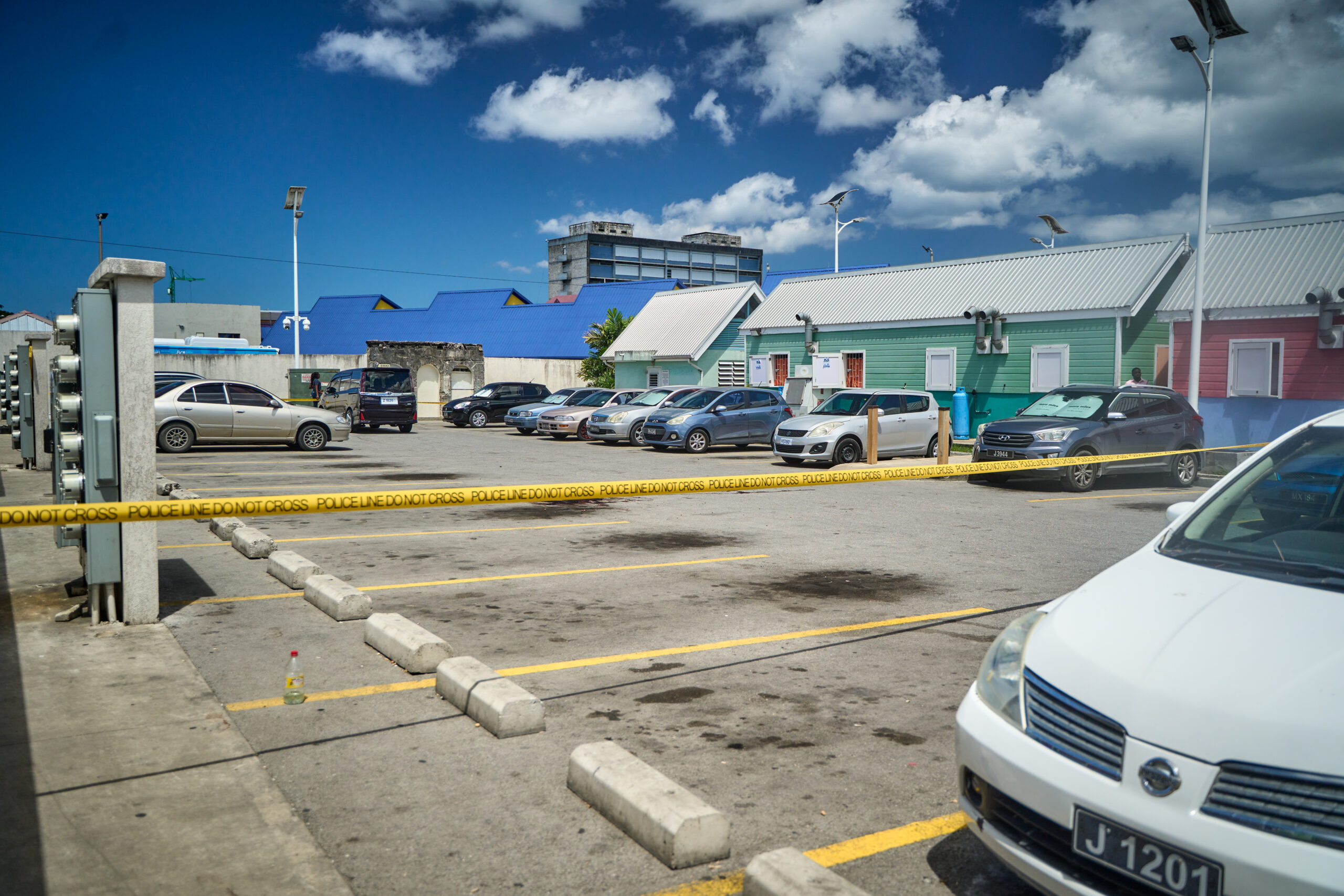
    A thick fog of sorrow and stunned disbelief has settled over the tight-knit Lower Carlton community in Barbados, as locals grapple to process a devastating mass shooting that unfolded Sunday evening at Thunder Bay. The violence has left three men dead, countless families fractured, and a once-peaceful neighborhood grappling with unthinkable loss.

    The three victims have been identified as 34-year-old Jamar Leon Edwards, a resident of 4th Avenue, Lower Carlton, St James; 33-year-old Lyle Anderson Robinson, of 1st Avenue, Lower Carlton, St James; and 33-year-old Jamar Kareem Ramsey, who lived in Brownes Gap, Sargeants Village Christ Church. Emergency and law enforcement responders were alerted to the shooting at approximately 8:42 p.m., where they found the three men fatally wounded.

    Close family members of the deceased remain too overwhelmed by grief to speak publicly about the tragedy, but neighbors and long-term residents have shared harrowing accounts of the night that has left a permanent mark on their community. One Lower Carlton resident, who asked to remain unnamed, recalled the sudden, violent end to an otherwise quiet Sunday evening, when a rapid barrage of gunfire ripped through the neighborhood’s calm.

    “I was in my bed with a headache and I heard about what could be 30-something shots,” she told local outlet Barbados TODAY. “My son come and said to me, ‘Mommy, you hear them?’ I said, ‘Get down. All you’re going to do is get down.’”

    The resident described an unsettling, eerie hush that descended over the area immediately after the shooting, broken only by the desperate, distressing sounds of screams echoing from the direction of the beach. “It was terrifying, to be honest. When I look outside, outside was still… you didn’t know what was going on until probably 15 minutes after,” she added.

    Neighbors who knew Robinson and Edwards for their entire lives remembered the pair as beloved, familiar fixtures of the Lower Carlton area. One local woman shared that she had watched all three victims grow up from young children in the neighborhood, saying she had never had any conflict with any of the men.

    “These are children that I see raise as small children. He (Lyle) and Jamar… they were fun people. I come out, I talk with them, we laugh, we make jokes, we party together. I can’t say anything bad about them,” she said.

    In the wake of the deadly attack, long-simmering concerns about the growing flow of high-powered weapons into Barbados and insufficient deterrence for gun-related violence have boiled over into widespread frustration among community members. One Lower Carlton resident pointed out that the threat of gun violence touches every member of the community, particularly families with children.

    “They said years ago, if you get caught with [a gun], you will get 25 years. That ain’t happening. That needs to be put in place,” the resident said, echoing a widespread demand for stricter enforcement of existing gun control legislation.

    Across Lower Carlton, residents expressed growing alarm at how the nature of crime on the island has shifted in recent decades. “Years ago, you used to hear about a .22… now they gone for bigger things and bigger things,” one local man noted, adding that even with regular law enforcement arrests for firearms possession, high-powered weapons have become alarmingly accessible. “Every boy like them got a gun. It’s real serious.”

    As the community begins the slow, painful process of healing from the tragedy, elder residents have issued an urgent plea for an end to violent conflict across the island. “They could solve their problems in a different way,” one long-time resident urged. “We need to come together and find a solution and try to talk them out. Parents are the ones grieving each and every day. Tell the boys, the girls, remember who they’re leaving behind… the people they leave behind are the ones who feel it the most.”

    When Barbados TODAY visited Ramsey’s home community in Browne’s Gap, a small group of young men gathered at the property declined to speak on the record about the shooting. Other local residents also declined to comment on the incident.

    Law enforcement officials confirmed that investigations into the mass shooting are still ongoing, and have not yet released further details about suspects or motives for the attack as they work through evidence.

  • BNECL record first victory in Four Hand League

    BNECL record first victory in Four Hand League

    The Barbados National Domino Association Four Hand Premier League delivered one of its most shocking results of the current season, as underdog side BNECL pulled off a major upset against favored competitor Buzo Osteria Welchman Hall, securing an 83-75 victory to claim their first top-flight win.

    The winning pair of Andrew ‘Bones’ Sandiford and Auville Holder anchored BNECL’s historic performance, combining for 25 total points to power their side across the finish line. Their breakthrough win marks a key milestone for the squad after a tough start to their Premier League campaign.

    Across other Premier League fixtures, Peace and Love turned in a dominant display, delivering a lopsided 98-36 thrashing of 37 Family KC Joint. Cheryl ‘Sweet Pea’ Worrell and Anthony Codagon led the charge for the victors, notching 21 combined points in the rout. In a hard-fought, back-and-forth clash, Carlton and A1 Braves outlasted HIV Commission Hillside to claim a narrow 71-62 win, with Charmaine and Hamilton ‘Hammy’ Durant combining for 19 points to secure the result. French Village Piranhas failed to find their attacking rhythm, as R M Cleaners claimed a solid 76-66 victory to add three points to their league standings.

    The upset and blowout results continued through the rest of the matchday: Powerade Locked and Loaded were unable to mount an effective defense against A&B Pest Control Vauxhall, who took a comfortable 77-61 win. Trident Insurance Patriots put in a clinical performance to crush the Police team by a final score of 80-56. Hindsbury pulled out a narrow win in one of the day’s tightest contests, edging out St Joseph 72-65 behind a 17-point combined effort from Charles Lovell and Anderson Daniel.

    Rounding out the matchday results, Checker Hall claimed victory over Speightstown, while Eastbourne secured a win against De Clique. R L Sealed QEH cruised past Massy Spring Cottage in a low-tension matchup, and Bathsheba wrapped up the matchday with an easy 83-58 win over St Leonards.

  • PM meets security chiefs

    PM meets security chiefs

    A deadly weekend shooting in the parish of St. James has shaken Barbados, leaving three men dead and a fourth person hospitalized with injuries. Within hours of the Sunday night attack, Prime Minister Mia Mottley convened an urgent, high-stakes gathering with the island nation’s most senior security and law enforcement leaders to coordinate a response.

    Mottley confirmed the meeting via a public post on her social media channels, which included an accompanying photograph of the session. Attendees at the emergency talks included Richard Boyce, Commissioner of the Barbados Police Service, the force’s Deputy Commissioner, and the Chief of Staff of the Barbados Defence Force. The gathering comes as the country confronts the shock of this latest violent incident.

    In her statement, Mottley emphasized the government’s unwavering priority in the wake of the tragedy, noting that “In moments like these, nothing matters more than the safety of our people.”

    Shortly after the emergency meeting, Police Commissioner Boyce publicly characterized the shooting as a deliberate, targeted act of retaliation between criminal groups. He issued a clear warning to those responsible for the attack: law enforcement will spare no effort to track down and hold every person involved accountable for the violence.

  • Wanted man in police custody

    Wanted man in police custody

    A suspect linked to serious criminal activity who had recently been named in an official police wanted notice has been taken into custody following a voluntary surrender. Law enforcement officials confirmed that Jayden Keison Javier Blackett, the individual named in the alert, appeared in person at the District ‘E’ Police Station on Monday, accompanied by his legal counsel. Following his surrender, Blackett is currently cooperating with investigating officers as they work through their ongoing probe into the alleged criminal matters tied to him. The resolution of the manhunt brings a key development to the open case, closing the chapter of the search for the suspect and moving the investigation into its next phase.

  • Tariff battle looms over $350m green hydrogen plant

    Tariff battle looms over $350m green hydrogen plant

    In an exclusive revelation by Barbados TODAY, a landmark $350 million 24/7 hybrid renewable energy project is set to reshape Barbados’ energy landscape, bringing with it a groundbreaking opportunity for local ownership and long-term price stability, even as it sets straight common misconceptions about immediate consumer cost savings.

    The project is being advanced by Renewstable (Barbados) Inc. (RSB), a special-purpose independent power producer created specifically to deliver clean, consistent energy to the Barbados Light and Power Company (BLPC), the island’s national grid operator. Currently, RSB holds a 49% stake split between France-based HDF Energy, while Caribbean energy firm Rubis Caribbean Holdings Inc. owns 51% of the venture. Critically, the development will reserve a minimum of 30% equity for domestic Barbadian entities, with ongoing discussions already underway with key local institutions including the national credit union movement and the National Insurance Scheme. Once construction begins, targeted for between the end of 2024 and early 2025, the facility will operate under a 25-year fixed power purchase agreement with BLPC to supply continuous energy to the island’s grid.

    At the center of the regulatory process right now is a tariff approval application before the Fair Trading Commission (FTC), the island’s utility regulator, which will set the rate BLPC pays for RSB’s energy. In a recent ruling on a confidentiality request from RSB, the FTC rejected most of the developer’s bid to keep application details private during the public consultation period, a decision RSB has already moved to comply with. Aidan Rogers, the project’s strategic advisor and former president of the Barbados Renewable Energy Association (BREA), confirmed the company has released all non-confidential information to the FTC and all participating intervenors as of the previous Wednesday, with only a small subset of genuinely sensitive information kept restricted to the regulator. The FTC has committed to releasing its final tariff ruling by June 2025.

    Rogers addressed widespread public confusion around what the project will mean for residential and commercial electricity consumers, pushing back on the common assumption that renewable energy automatically translates to immediately lower monthly bills. “There is this misconception that renewables automatically translate into cheaper costs. They don’t necessarily. What they do is that they allow you not to see volatile spikes in your light bill up and down,” Rogers explained. He emphasized that the core consumer benefit is long-term price certainty, not an immediate 5 to 10% drop in monthly bills. When the project was first conceived five years ago, it was designed to meet roughly 6% of Barbados’ total energy demand, but recent growth in the island’s tourism sector, driven by a wave of new hotel developments, has pushed overall energy demand higher. As a result, Rogers noted the project’s actual share of total supply is now more likely to land between 3% and 4%, meaning the immediate direct impact on consumer bills will be nearly negligible.

    Far beyond immediate cost changes, Rogers framed the project as a critical milestone in Barbados’ ongoing energy transition toward a cleaner, more locally anchored energy system. The facility will include 120 megawatts of battery storage, allowing it to deliver consistent power around the clock unlike intermittent renewable sources that depend on weather conditions. Unlike fossil fuel-based power generation, which is tied to volatile global oil prices affected by geopolitical shocks such as the ongoing Iran crisis, the project’s tariff will be fixed for its entire 25-year operational life, eliminating exposure to global energy market swings. When the country pays for imported fossil fuels, all profits flow to overseas suppliers, but the 30% local ownership structure means economic benefits from the project will remain within Barbados, supporting domestic institutions that provide benefits to local residents through pension schemes and cooperative financial systems.

    As the regulatory process moves forward, intervenors have been granted additional time to submit new comments on the tariff application following the release of previously redacted information. Rogers stressed that time is critical for the project, as the development team is working to preserve low-cost concessional financing secured from the Green Climate Fund in 2023. The team is pushing for a timely decision from the FTC in May to stay on track for construction, with the regulator’s formal deadline set for early June. Rogers added that this is the first large-scale independent renewable energy project to go through the island’s tariff application process outside of existing feed-in tariff or competitive bidding programs, meaning the regulatory ruling will set important precedent for future clean energy developments in Barbados, enriching the island’s regulatory framework for years to come.

  • Surrender now, ‘we know who you are’, Boyce tells gunmen

    Surrender now, ‘we know who you are’, Boyce tells gunmen

    A coordinated pre-planned attack that left three people dead and one critically wounded has triggered an urgent island-wide manhunt in Barbados, with top law enforcement officials vowing to catch both the shooters and anyone who aids their escape. The violent incident unfolded just after 8:40 p.m. on Sunday along a popular coastal stretch outside the Thunder Bay Bar in Lower Carlton, St James, where a group of locals had gathered to socialize.

    According to official accounts from the Barbados Police Service, a silver sedan pulled up to the beach shortly after the group assembled. Three armed men exited the vehicle and unleashed a barrage of gunfire on the crowd, striking four men. One victim died at the scene before first responders could arrive, while other bystanders rushed the three surviving injured victims to the Sandy Crest clinic in Holetown via private vehicles. Two of those wounded men later succumbed to their injuries in care, leaving the fourth victim in critical condition at a local hospital as of Monday.

    Barbados Police Commissioner Richard Boyce publicly confirmed the attack’s motives in a televised national address on Monday evening, rejecting any ambiguity about the incident. “Last night’s incident was a clear act of retaliation. It was a deliberate attempt to take out the leadership of one of the groups involved in violent criminal activities in this country. That is what this is. We are not guessing. We understand the nature of what happened and we are responding accordingly,” Boyce stated.

    The three deceased victims have been formally identified by authorities: 34-year-old Jamar Leron Edwards from 4th Avenue, Lower Carlton, St James; 33-year-old Lyle Anderson Robinson from 1st Avenue, Lower Carlton, St James; and 33-year-old Jamar Kareem Ramsay from Brownes Gap, Sargeants Village, Christ Church.

    Boyce emphasized that the entire police force has prioritized the case, with investigators already canvassing local neighborhoods for witness testimony and following up on every credible lead to track down the attackers. In a direct message to the three suspected gunmen, the commissioner issued a clear call for surrender, saying law enforcement has already identified those responsible and their known social and criminal connections. “Turn yourselves in. Get a lawyer. Go to the nearest police station and surrender yourselves. Do it now. We know who you are. We know the circles you move in. We know what happened,” Boyce said.

    The commissioner extended his stern warning to any third parties who choose to assist the suspects, making clear that anyone who harbors, transports, communicates with or otherwise aids the shooters will face the same level of investigative urgency as the gunmen themselves. “Those who are helping them, hiding them, transporting them, housing them, passing messages or assisting them in any way … you will not be allowed to run rampant. The associates of those responsible will not be allowed to move across this country as though there are no consequences,” he added.

    Labeling the attack as “organised, dangerous violence”, Boyce warned against the cycle of tit-for-tat killings that has fueled recent criminal unrest in the country, noting that surrender to police is a far better outcome for the suspects than continued escalation. “And the way these retaliations are going, it is better that it is us that comes for you,” he said.

    The commissioner moved to reassure the public that police have already mapped out the ongoing disputes between criminal factions behind the attack, and are taking proactive steps to stop further bloodshed. “We know what is happening. We know the nature of these disputes. We know the individuals and groups involved. We are acting,” he said. “We will continue to act until those responsible are put before the courts.”

    In closing his address, Boyce appealed directly to the Barbadian public to support the investigation by coming forward with any relevant information, even if it seems minor. “If you know something, say something … This is not the time for silence,” he urged. He also delivered a broader message to all organized criminal networks operating in the country, emphasizing that the government and law enforcement would not allow violence to disrupt community life. “Barbados will not be held hostage to violent groups. Our communities will not be surrendered to fear, and The Barbados Police Service will prevail.”