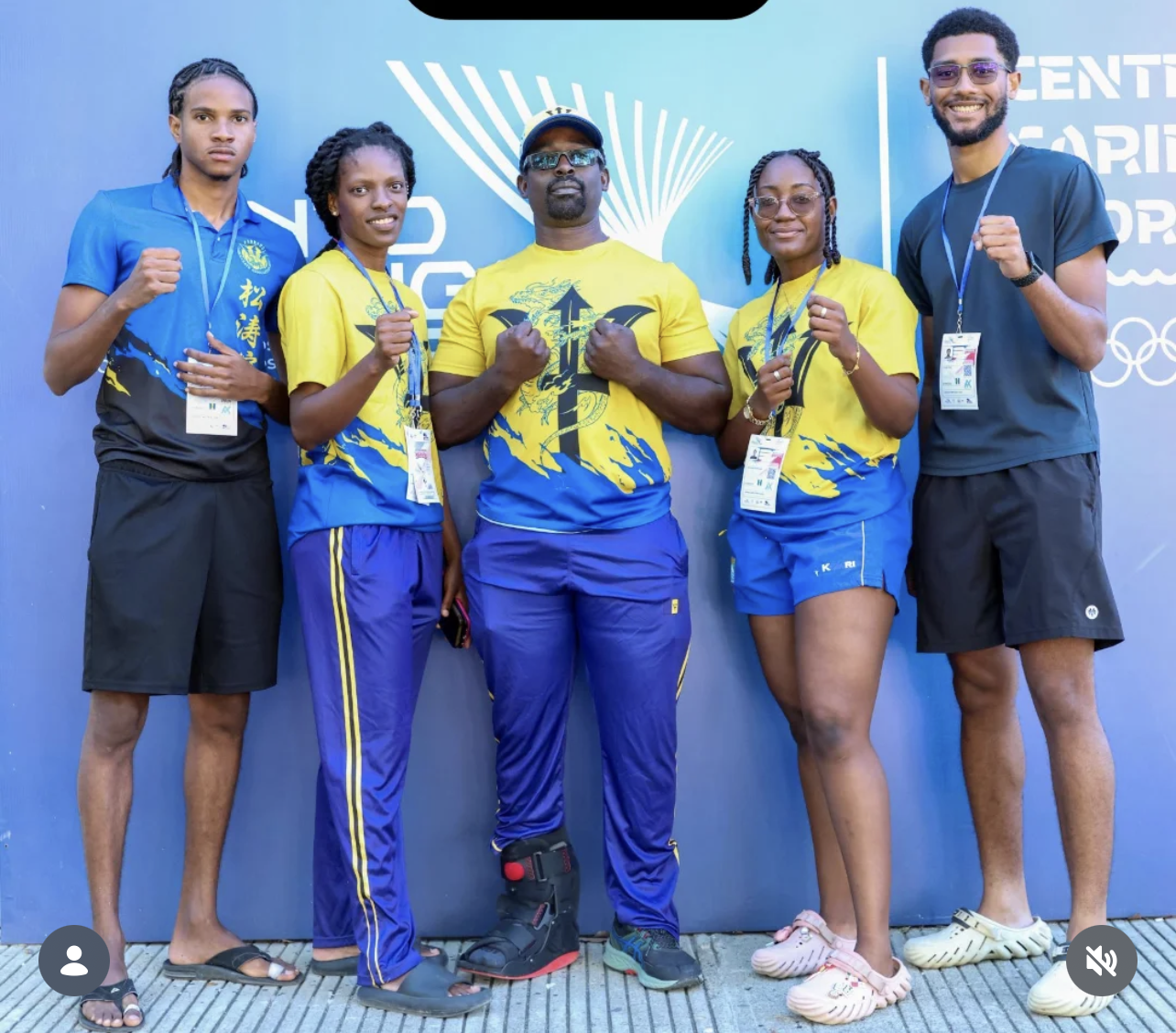
Four up-and-coming karate athletes from Barbados’ national squad have fallen just short of securing automatic berths to the 2024 Central American and Caribbean (CAC) Games, landing reserve positions instead after a strong showing at the regional qualification tournament hosted in the Dominican Republic last month. Joseph Tseu, Kodie King, Shannan Skeete and Ric-Anne Brathwaite left everything on the competition mat between April 16 and 18 at the CAC Qualifiers, ultimately walking away with reserve slots that could see them compete at the main Games, set to run from July 24 to August 8 in the Dominican Republic. Tseu holds the first reserve spot for men’s kata, while King (84kg kumite), Skeete (61kg kumite) and Brathwaite (68kg kumite) are listed as second reserves across their respective sparring divisions. Should any qualified athlete withdraw before the tournament kicks off, the Barbadian reserves will step in to fill the vacant position. Despite missing out on automatic qualification, the team’s coaching staff framed the outing as a promising, respectable showing for the small island nation’s karate program. Assistant coach Corey Greaves, who traveled to the qualification event alongside head coach Cameron King, shared the team’s takeaways in an interview with Barbados TODAY. “We didn’t hit our ultimate goal of locking in qualifying spots, but landing first and second reserves across multiple disciplines means we held our own out here,” Greaves said. “Now we just wait and hope for an opening that lets one of our athletes step into the main draw.” Greaves emphasized that every athlete on the trip turned in a better performance than at past competitions, with the revised qualifying structure giving competitors more opportunities to compete and gain critical experience. He broke down the structure of the qualification tournament, noting that the host Dominican Republic automatically claimed one of the eight total spots available across each division, leaving seven spots open for all other competing nations. Athletes who did not secure one of the four immediate automatic berths advanced to a round-robin playoff to compete for the final three qualification positions. With the possibility of last-minute withdrawals still on the table ahead of the summer Games, Greaves confirmed that the four reserves will maintain a rigorous training schedule back home in Barbados to stay ready if called upon. A key part of that preparation for the kumite athletes, he added, is maintaining their required weight classes to meet tournament regulations. While Greaves expressed optimism about the long-term future of competitive karate in Barbados, he also shared measured concerns about the pace of the sport’s growth on the island compared to regional powerhouses. “Karate is growing steadily, and we’re seeing more athletes from other martial arts backgrounds transition into competitive sports karate now that the World Karate Federation has opened a formal pathway for cross-discipline participation,” he explained. “More and more young athletes are drawn to this side of the sport because it offers a clear path to compete at the Olympics and Commonwealth Games, something traditional karate does not provide. That said, the sport is not growing as quickly as I would like to see it. Countries like Mexico and other Latin American nations bring 20 or more athletes to major regional events, while Barbados rarely travels with more than 10 competitors. When there are 14 possible spots across different divisions and categories, we can only compete for 10 of them because we simply don’t have the depth of athlete numbers to match our regional rivals.” Greaves added that small athlete pools are a widespread challenge across the Caribbean, but noted that English-speaking Caribbean nations, including Barbados, are steadily expanding their ranks of competitive sports karate athletes, setting the foundation for stronger showings at future events.