As climate change intensifies the frequency and severity of natural hazards across the Caribbean, the region’s growing exposure to catastrophic disaster impacts has pushed regional cooperation bodies and national governments to prioritize improvements in how they track and respond to population displacement. Over the past 10 years alone, more than 5 million people in the region have been forced to leave their homes following major disasters, a statistic that underscores the urgent gap in consistent, actionable data for response efforts. To address this critical shortcoming, a two-day collaborative workshop opened this week at Bridgetown’s Courtyard by Marriott, bringing together a cross-sector group of stakeholders from 13 member states of the Caribbean Disaster Emergency Management Agency (CDEMA). Attendees include representatives from national disaster management offices, regional intergovernmental agencies, United Nations partnership bodies, and independent technical experts, all united by a shared goal: drafting universal standard operating procedures (SOPs) for collecting and analyzing displacement data as part of end-to-end disaster management.
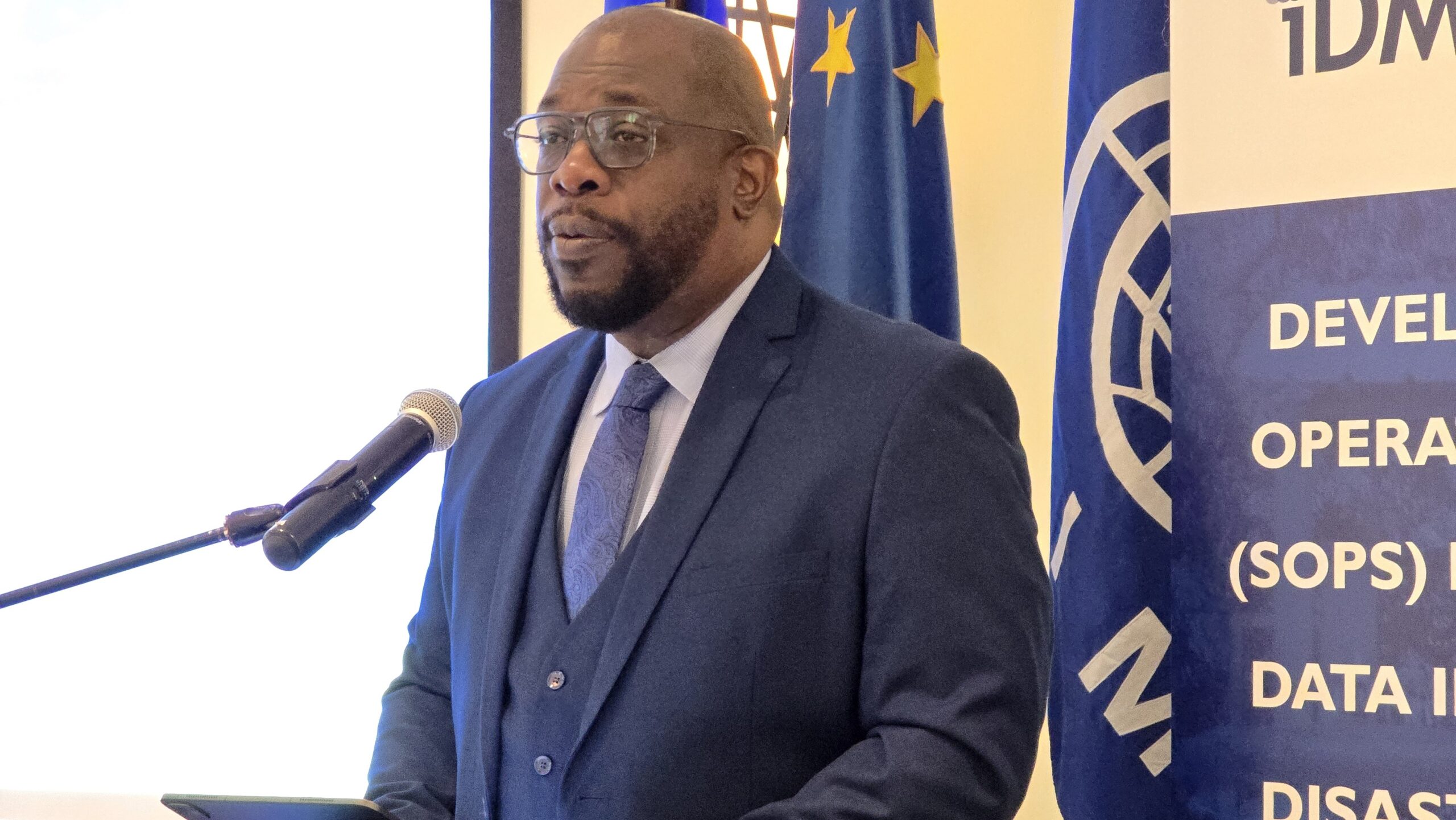
Barbados’ Minister of Home Affairs and Information Gregory Nicholls opened the workshop with official endorsement of the initiative, outlining Barbados’ existing approach to integrated disaster displacement management. “Comprehensive disaster management in Barbados addresses the displacement of individuals through a coordinated, policy-driven system that integrates preparedness, emergency response and long-term recovery,” Nicholls stated.
Mandela Christian, CDEMA’s Programme Manager for Preparedness and Response, emphasized that the lack of standardized displacement data has long created bottlenecks for effective response across the region. After every major hazard event, he explained, the same fundamental questions go unanswered without consistent tracking: How many people have been displaced? Where are they currently residing — in official emergency shelters, informal community settlements, or with host families across the island or national boundaries? What specific humanitarian needs do they have, and what planning is in place to address those needs and make displacement more manageable? “These are things that we need to know in order to provide critical support to our population or citizens,” Christian noted. He added that reliable standardized data is not only critical for immediate humanitarian aid delivery, but also for logistics coordination, civilian protection, public health response, and the dignified long-term recovery that must follow any emergency.
Christian detailed the core objectives of the workshop, explaining that the new SOPs will be embedded within CDEMA’s existing damage assessment and needs analysis data framework. The protocols will cover three key stages of disaster response: pre-impact baseline data assessment, initial shelter operations management, and early post-disaster damage and humanitarian needs evaluation. The SOPs will also establish common terminology for displacement tracking, uniform data collection standards, cross-system interoperability rules, and clear delineation of roles and responsibilities for everyone from local shelter managers to national emergency operation centers and regional coordination bodies. “It will establish common definitions, data collection standards, interoperability protocols, and enhance clarity on lines of responsibilities across shelter managers, emergency operation centres, and regional systems that depend on that information to coordinate an effective response,” Christian said. He added that the harmonized protocols will also directly strengthen the information management infrastructure of the Caribbean Development Partners Group and regional coordination centers, ensuring that when regional response mechanisms are activated, the data shared across coordination structures is consistent, reliable, and usable for immediate action.
Nicholls echoed the importance of people-centered data practices, stressing that reliable displacement data exists first to serve affected communities, not bureaucratic processes. “Good data helps respondents locate families faster, match assistance to real needs, and protects dignity. Especially when systems are under stress, displacement data must always serve people and not processes,” he said. Standardized data also eases the burden on frontline communities and responders, he explained, by allowing for more targeted aid distribution, more efficient management of shelter occupancy flows, and reduced strain on both host families that take in displaced people and the first responders working on the ground.
The minister also highlighted the often-overlooked impact of disaster displacement on education, noting that most emergency shelters in the region are repurposed school buildings. While using school facilities as shelters is sometimes unavoidable, Nicholls explained, the government of Barbados prioritizes minimizing disruption and returning schools to their core educational function as quickly as possible. “Recovery is not only about infrastructure but also about children returning to safe, stable learning environments without delay. Better displacement and shelter data is key to enabling that transition,” he stressed.
Looking ahead, Nicholls outlined Barbados’ ongoing work to link disaster displacement management with broader regional migration governance and the CARICOM free movement framework. As climate change increasingly drives cross-border mobility across the Caribbean, the country is developing a new modernized facility to support displaced people from across the region. “We have deliberately streamlined our integration processes, strengthening coordination with disaster preparedness, response and recovery frameworks, recognising that climate-related hazards increasingly shape mobility across our region as we move forward together with continued collaboration to address the remaining vulnerabilities,” he said.