标签: Barbados

巴巴多斯

  • Wanted man turns himself in after police appeal

    Wanted man turns himself in after police appeal

    A wanted Barbadian man linked to severe criminal cases has turned himself in to law enforcement, closing an intensive 24-hour search that relied on public cooperation. Dwayne Marlon Drakes, who is also known by the alias ‘Oily’, presented himself at the Holetown Police Station on Wednesday, one full day after the Barbados Police Service issued a public wanted bulletin asking citizens to share any information about his location.

    TBPS confirmed that following Drakes’ voluntary surrender, the suspect is currently cooperating with detectives as they advance their investigations into the serious criminal matters he is connected to. Law enforcement officials also extended formal gratitude to both members of the general public and regional media outlets, who responded swiftly to the Tuesday appeal and supported the investigation through the sharing of information and widespread circulation of the wanted notice.

  • Prison reform ‘to target recidivism, rehabilitation’

    Prison reform ‘to target recidivism, rehabilitation’

    Barbados is moving forward with an ambitious, comprehensive overhaul of its national prison system, centered on shifting from a purely custodial model to one prioritized on rehabilitation, reduced recidivism and the dismantling of internal criminal networks, Home Affairs Minister Gregory Nicholls has announced. The initiative forms a core pillar of the country’s broader national crime prevention strategy, with a targeted focus on transforming Dodds Prison as the first major site of reform.

    Speaking on the second day of the Barbados Probation Service’s “Modern Perspectives on Sentencing and Penal Reform” symposium held at the Lloyd Erskine Sandiford Centre, Nicholls emphasized that failing to move beyond the outdated model of merely housing inmates would only perpetuate the cycles of crime that have long plagued the country. “Effective prison systems have to rehabilitate offenders, have to break the strength of the criminal networks inside the prisons and reinforce nonviolent norms and identities,” the minister stated.

    Nicholls pointed out that crime disproportionately impacts young men across Barbadian society, and the current largely custodial system has only strengthened criminal networks while failing to cut reoffending rates. To reverse this trend, he said, national security frameworks must be reformed to reduce community violence, with the modernization of penal institutions serving as a critical first step.

    A central target of the six-year transformation plan is cutting recidivism by 30 percent, reshaping traditional prisons into dynamic rehabilitation centers that improve offender reintegration, reduce in-prison violence and build stronger institutional resilience. To achieve this goal, the plan outlines multiple interconnected strategies, starting with the introduction of evidence-based programming designed to drive lasting behavioral change. These programs include structured rehabilitation courses, cognitive behavior therapy, substance abuse treatment, violence intervention training and conflict resolution workshops.

    Nicholls rejected the status quo of confining inmates to cells with only one to two hours of yard time daily as an ineffective approach that does nothing to prepare offenders for release. Instead, the reform plan embeds comprehensive education and skills training into daily prison routines, including Technical and Vocational Education and Training (TVET) certification in high-demand fields such as construction, information and communications technology, agriculture and maritime skills. For inmates who have never earned formal basic qualifications, the system will also expand literacy and numeracy programming, and officials are currently reviewing a proposal from the University of the West Indies to establish a tertiary education pipeline that allows inmates to pursue higher education while incarcerated.

    The reform strategy also prioritizes targeting high-risk groups, including young men involved in gang activity, drug trafficking and firearms-related offenses who remain vulnerable to outside criminal influence even while incarcerated. Additional measures to cut in-prison violence include the launch of peer mentorship programs and the adoption of a formal restorative justice framework that centers accountability and healing over punitive isolation.

    A core end goal of the entire transformation is to ensure that offenders leave prison prepared to rejoin society as productive, contributing citizens. To support this, the plan establishes a national reintegration program that covers pre-release planning, stable housing placement, employment support and sustained connection with family members. An existing prison aftercare committee has been tasked with expanding its mandate far beyond its current role of providing basic clothing and small stipends to releasing inmates. The committee will now work directly with private sector businesses, non-governmental organizations and government bodies, drawing on national crime prevention budgets to develop sustained support programs for returning citizens.

    Nicholls also highlighted efforts to expand job placement partnerships with the private sector, create new apprenticeship opportunities for ex-offenders, strengthen second-chance employment frameworks and challenge the cultural taboos that create unnecessary barriers to work for people with criminal records. Completing the core reform priorities are plans to upgrade outdated prison infrastructure, increase and train staffing levels, and integrate smart security technology into daily operations.

    Speaking on the same panel alongside Nicholls, Dodds Prison Superintendent DeCarlo Payne reaffirmed the shared vision for reform, noting that the sector’s goal is no longer simply to contain people, but to prepare them for successful reintegration into community life. Payne outlined that several behavioral, educational and vocational training initiatives are already up and running at Dodds Prison, and these early programs have already begun to deliver positive results.

    Payne added that the current Prisons Act is archaic and ill-suited to the new model of corrections, meaning comprehensive legislative reform is a critical prerequisite for rolling out all planned changes. New operational frameworks including ankle monitoring for low-risk offenders, expanded parole, community service sentences and transitional housing all require formal monitoring structures, leading to calls for the establishment of a dedicated parole department.

    Payne emphasized that the full transition from a traditional prison service to a modern Department of Corrections will require targeted investment in infrastructure, formalized institutional restructuring and full implementation of new operational frameworks. While a corrections headquarters is already included in existing planning, Payne said officials will revisit the proposal to speed up its activation. Additional key priorities for the transition include policy reform, ongoing staff training, institutional cultural transformation, full technological integration, sustained investment in rehabilitation programming and focused, adaptive leadership across the sector.

  • Gun court aimed at speeding trials, closing legal gaps – AG

    Gun court aimed at speeding trials, closing legal gaps – AG

    Barbados has launched a groundbreaking specialized firearms court, a key pillar of the government’s sweeping national security reform agenda designed to cut crippling delays in gun crime prosecutions and address growing public anxiety over violent offending, Attorney General Wilfred Abrahams announced Tuesday during parliamentary debate on the Supreme Court of Judicature (Amendment) Bill.

    The new legislation comes just one week after parliament passed strict new anti-gang statutes, marking the latest step in a broader legislative push to rebuild public trust in Barbados’ judicial system. Abrahams framed the court as a direct response to widespread public pressure over escalating violent crime, noting that constituents from across the political divide are demanding urgent action. “Everywhere I go, I get the same question: What is the government doing to get gun violence under control,” he told lawmakers, acknowledging that while no administration can prevent every individual from choosing to commit crime, the state bears an non-negotiable responsibility to protect citizens through robust security infrastructure and responsive legal processes.

    The reforms build on existing security initiatives that already include joint patrols conducted by the Barbados Police Service and the Barbados Defence Force, whose personnel are currently completing specialized training in civilian policing protocols to support domestic security operations. A core flaw the new court aims to fix is the systemic delay that has allowed people charged with serious firearms offenses to easily obtain bail. Under Barbados’ constitution, every accused person has a right to a speedy trial, Abrahams explained. When prosecution teams fail to bring a case to trial or share disclosure documents within two to three years, courts are legally required to grant bail — even for defendants charged with heinous crimes such as murder. “A person is innocent until proven guilty,” Abrahams said. “When an accused has already waited two years in prison without any progress on their case or disclosure, a court bound by constitutional rights cannot justify holding them indefinitely.”

    To close this gap, the legislation imposes strict, tight timelines for all firearms cases. Simple cases must be fully resolved within six months, while more complex matters are required to be concluded within nine months. Abrahams admitted that for years, regional governments avoided creating specialized gun courts because establishing such an institution required publicly acknowledging that firearm violence had reached a crisis point. “Nobody wanted to admit we had a problem big enough to need a dedicated court,” he said, noting that political hesitation has been set aside in favor of the government’s duty to answer to voters. “That horse has already bolted. The problem is here, and we have to address it.” With this reform, Barbados joins regional neighbors Jamaica and Trinidad and Tobago, which have already implemented similar specialized court frameworks.

    Under the new law, the Firearms Court will hold exclusive jurisdiction over all firearms-related offenses, as well as any related matters assigned by the Chief Justice, eliminating duplicative use of limited state resources. Addressing long-running debate over the death penalty, which remains on Barbados’ statute books for murder and treason, Abrahams clarified that the country’s de facto abolitionist status remains unchanged. He cited the landmark Pratt and Morgan ruling from the Privy Council, which established that holding a prisoner on death row for more than five years qualifies as cruel and inhumane punishment. While Barbados now recognizes the Caribbean Court of Justice as its highest appellate body, the five-year principle remains binding precedent in regional legal practice. Because Barbados’ existing appellate process routinely takes longer than five years to exhaust all appeals, and defendants often petition international human rights bodies that further extend proceedings, capital punishment cannot lawfully be carried out under current frameworks. The accelerated trial timelines introduced by the new court are designed to address this systemic sluggishness, though no change to the country’s de facto abolitionist position is being made.

    The legislation also includes a series of operational adjustments designed to protect witnesses, preserve the pace of proceedings, and safeguard due process. The Firearms Court is authorized to convene at any location approved by the Chief Justice, including high-security sites such as Dodds Prison, reducing the security risks associated with transporting high-risk gang members. The law also allows for virtual hearings and video testimony to shield vulnerable witnesses from intimidation by associates of the accused. While the right to a jury trial remains intact for all defendants, the new legislation formally introduces the option of judge-alone trials to counter widespread juror intimidation. “Jurors are frightened, and that is the reality,” Abrahams said. “No one wants to sit opposite one of Barbados’ most wanted suspects. We have to accept that judge-alone trials will become more common for these serious offenses, and that is a necessary change to keep proceedings fair and safe.”

    Crucially, the legislation enshrines that the rights of minors remain the top priority in any case involving children in conflict with the law. Provisions from the existing Child Protection Act and Child Justice Act will take precedence over the new firearms legislation in all youth cases. Abrahams added that the government will continue refining the framework to close any additional loopholes that defense counsel may identify. “Systemic delays frustrate victims, they frustrate families, and they erode public confidence in our judicial system and the rule of law,” he said. “We will update and amend this legislation whenever it is needed. Our only goal is to do what is right for the people of Barbados.”

  • Government goes digital with ‘Pearly’

    Government goes digital with ‘Pearly’

    Barbados has launched a government-backed mobile application, centered on improving civic engagement and public service delivery, marking the first major step in the country’s broader national digital modernization strategy. According to Prime Minister Mia Mottley, the app – built by local Barbadian talent instead of imported generic software – will cut through red tape to speed up state agency responses and boost government accountability to everyday citizens.

    Developed by the Barbadian tech startup Touchstar Group under the guidance of lead developer Ramon Dummett, the app reimagines a beloved local cultural figure, Pearly from the classic *Bajan Bus Stop* television series, for 21st century civic life. Mottley emphasized that while national governments often prioritize large-scale economic and structural reforms, it is the small, unresolved daily community issues that shape public frustration and erode satisfaction with public services. Things like a leaking water pipe that goes unrepaired for days, with callers left stuck on hold for hours when they reach out to authorities, are exactly the frictions the new tool is designed to eliminate.

    The platform simplifies citizen reporting into an intuitive three-step process: users submit a short description of an issue, tag its exact location via the phone’s GPS, and upload photo or video evidence to support their report. Powered by automated routing technology, the system analyzes each submission and sends it directly to the relevant government department, eliminating unnecessary manual sorting and delays that slow responses. The app is built around two core features that meet distinct user needs: “Ask Pearly” centralizes access to information for 155 government entities, providing clear details on opening hours, required documentation for services, and other frequently asked questions, while “Tell Pearly” manages direct incident reporting from the public.

    Beyond civic reporting, the app integrates real-time data with the Barbados Transport Board, allowing commuters to track bus locations on live maps and access predictive traffic updates directly on their phone lock screens, cutting down on the uncertainty and frustration of waiting for public transit. Mottley even lightheartedly noted that the name “Tell Pearly” is intended to replace the frustrated four-letter words Barbadians often use when dealing with slow public service delivery, with the ultimate goal of easing public stress around accessing government support.

    The Pearly app launch kicks off three back-to-back digital transformation rollouts planned by the Barbadian government. The second initiative, BimPay, a new real-time digital payment system developed by the Central Bank of Barbados, will launch at midnight on the coming Saturday. The third app, set to launch the following week, will enable users to pay utility bills and complete financial transfers directly through WhatsApp, eliminating the need for in-person queuing at government licensing offices.

    A key point of pride for the government is that the Pearly app was developed locally, rather than purchasing a generic off-the-shelf solution from an international developer. Mottley highlighted that this decision not only supported local tech talent but also created homegrown intellectual property that can be exported as a prototype to other small island developing states (SIDS), which face many of the same public administration and service delivery challenges that Barbados does. “If you can use Barbados as the prototype to solve these problems, rest assured that there are 46 other small island states across the world that probably are experiencing similar problems,” she said, addressing the development team.

    Minister of Innovation, Industry, Science and Technology Senator Jonathan Reid echoed that praise, commending the team for taking on the risk of building a custom solution tailored specifically to Barbados’ unique needs. He noted that effective modern leadership requires a willingness to experiment, learn quickly from setbacks, and adapt, rather than relying on pre-built imported solutions that do not fit local contexts. The project originated from a practical gap identified by Roy Morris, Director of Citizenship and Engagement, who needed a more efficient system to manage the high volume of daily public complaints. Reid explained that while the initial prototype required adjustments, the team worked through technical challenges to deliver a platform that will drastically improve government response times.

    Reid added that the project serves as a model for local entrepreneurs, framing national challenges as opportunities to build innovative solutions that can have global impact. “Ultimately, we want to be a platform on which people could solve national problems but also create opportunities to create global businesses,” he said. “This could be taken—once done well—this could be taken abroad anyway, right? And it would have been a Barbadian IP with Barbadian ideas, Barbadian skills, using Barbadian data to serve the world.”

  • ‘Pearly’ app aims to improve access to public services, buses

    ‘Pearly’ app aims to improve access to public services, buses

    Barbados has a new locally built digital tool that is set to revolutionize how residents engage with government agencies and access essential public services. Named ‘Pearly’, this unified mobile platform cuts through bureaucratic red tape, creating a single, simplified channel for citizens to submit service requests, track government responses in real time, and access critical information when they need it.

    Developed by Barbadian tech firm TouchStar Group, Pearly officially launched this Tuesday, with company founder and CEO Ramon Drummond walking a gathered audience through the platform’s full suite of features, highlighting how it simplifies interactions with the more than 150 government agencies operating across the island. Beyond core public service reporting functions, the app also integrates real-time public transit data to help commuters plan their daily trips more efficiently.

    Drummond demonstrated the app’s flagship ‘Tell Pearly’ problem-reporting feature using a common real-world example: reporting a dangerous pothole on a local road. In less than 30 seconds, the app automatically pulled the user’s location data, accepted an uploaded photo of the hazard, and routed the complaint directly to the correct government agency responsible for road repairs. This eliminates the common frustration many residents face when they have to guess which government office handles a specific issue, Drummond explained. ‘Citizens should not have to figure out which ministry, department or agency is responsible for a particular issue,’ he said. ‘With Pearly, users simply describe the problem, add their location and upload photos if necessary. The platform automatically sends the report to the correct government department.’

    The app also delivers tangible benefits for daily commuters through its integrated public transportation feature. Drawing on a massive dataset of more than 61,000 traffic mapping points across the island, Pearly provides users with live updates on the exact location of Barbados Transport Board buses, as well as real-time maps showing island-wide traffic congestion. Drummond noted that future updates to the app will add predictive traffic alert functionality, giving commuters advance warning of delays so they can adjust their travel routes accordingly.

    One of the platform’s most critical innovations is its specialized emergency mode, designed to support disaster response during severe weather events like hurricanes, which pose regular risks to Caribbean island nations. When activated, emergency mode simplifies the app’s interface to enable fast, low-bandwidth reporting even when internet connectivity is unstable or intermittent. All user reports are saved locally on the user’s device and automatically sent to authorities once a network connection is restored. For government emergency management teams, Pearly also includes a centralized ‘war room’ dashboard that displays an interactive map tracking active incidents, flood-prone areas, and the locations of vulnerable community members, enabling faster, more data-driven emergency response decisions.

    Beyond reporting, Pearly acts as a centralized verified information hub for all public services through its ‘Ask Pearly’ function. Instead of waiting on hold for hours to reach a government office to ask a simple question, residents can submit their query directly through the app, which returns pre-verified answers covering everything from government department operating hours to what documentation is required for specific services, with direct links to complete transactions online.

    Built by an all-Barbadian team of software engineers, the platform was developed with user security and privacy as top priorities. Nakira, the platform’s lead software engineer and data compliance officer, confirmed that Pearly uses end-to-end encryption for all user data. ‘When a citizen submits a report, it is only visible to authorised personnel who need to deal with that issue,’ she explained.

    For the Barbadian government, Pearly also serves as a built-in accountability tool for public service delivery. The platform tracks every service request from initial submission through to final resolution. If a responsible government department fails to meet its mandated response deadline, the system automatically escalates the issue to senior leadership, ensuring top officials maintain full visibility into how quickly public services are delivered to residents.

    The app is already live and available for all residents to download and use today, but Drummond emphasized that the development team plans to continue iterating on the platform based on user feedback. He encouraged both residents and public servants to share their input through the app’s built-in feedback tools to help refine the service over time. ‘Pearly is not perfect, and we do not expect it to be,’ he said. ‘We want citizens and public servants to tell us what works and what can be improved so we can continue building a platform that truly serves Barbados.’

  • Plans to upgrade Government Industrial School to juvenile detention centre

    Plans to upgrade Government Industrial School to juvenile detention centre

    Barbados is advancing a multi-million-dollar infrastructure and operational overhaul to transform the aging Government Industrial School (GIS) into a fit-for-purpose modern juvenile detention facility, a change mandated by the island nation’s landmark 2024 Child Justice Act. The announcement of the plans came during the second day of the Barbados Probation Service’s symposium, “Modern Perspectives on Sentencing and Penal Reform”, at a dedicated panel discussion focused on the readiness and resource requirements of the new child justice legislation.

    Speaking to attendees gathered at the Lloyd Erskine Sandiford Centre, GIS Principal Seilest Bradshaw made a clear case that the new law can only deliver on its intended goals if significant targeted investment is channeled into the institution. “The 2024 Act requires a secure, purpose-built residential facility, and that is not what we operate today,” Bradshaw explained. “Our current set-up is more comparable to a group home, which cannot meet the requirements of the new legislation. We need major investments in both core infrastructure and specialized professional staff; a full, comprehensive restructuring of GIS is non-negotiable to bring the institution in line with the vision laid out in the new law. Legislation sets the standard, but it is funding that determines whether that standard can actually be achieved.”

    In direct response to Bradshaw’s call, Minister of Home Affairs Gregory Nicholls confirmed that the project is already well in motion. “We have put hundreds of collaborative work hours into this planning process, bringing together the GIS principal, my ministry’s project implementation unit, the permanent secretary, and the full project team,” Nicholls said. “We just met with the project architect last Friday, and we know this transformation will run into millions of dollars. The facility was originally built as a dormitory-style space for misbehaving children under the century-old 1926 Reformatory and Industrial Schools Act, and it is not suited for the needs of today’s young people in the system.”

    Nicholls also noted that the population of youth entering the facility has shifted dramatically since the 1926 legislation was first enacted. “Today, the children who come through our doors are not the same offenders the 1926 law was designed to address,” he said. “Many of these young people have endured neglect, multiple forms of abuse – verbal, physical, sexual, emotional – starvation, and abandonment. They end up on the streets, get in trouble at school, use cannabis, start out as lookouts for criminal actors, move on to stashing illicit goods, commit petty theft, and too often graduate to involvement in gun crime.”

    Bradshaw emphasized that the 2024 Child Justice Act represents a fundamental philosophical shift in how the country approaches youth in conflict with the law. The new framework centers the reality that these young people are first and foremost children, with inherent rights, untapped potential, and the capacity to rehabilitate and change. Core to this new approach are principles of accountability through counseling, restorative justice practice, community-focused sanctions, and an overarching priority on rehabilitation over punishment.

    One major ongoing challenge Bradshaw highlighted is pervasive community stigma against youth who have gone through the juvenile justice system. Even when these young people complete their sentences and are cleared of criminal records, she explained, social stigma often creates greater barriers to re-entry than a formal record would. “When these young people return to their communities, they are not given a fighting chance to rebuild their lives,” Bradshaw said. “Some people still throw their past in their face. Even though they don’t carry a formal criminal record, gossip and social judgment often do more harm than a criminal record ever could.”

    She added that many youth return to the same unstable home and community environments that originally contributed to their harmful behavior, with little access to stable family support. “I am begging, I am pleading for these young people to get the ongoing support they need in their communities after they leave the facility,” she said.

    The principal also called for an end to siloed working practices across government agencies, stressing that sustained positive outcomes require coordinated action from social services, education, health, and justice systems working in lockstep.

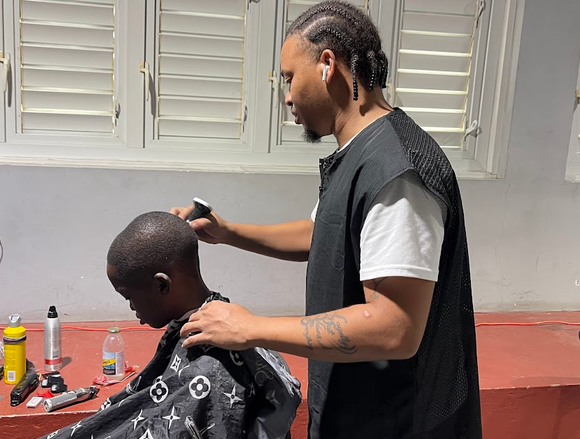
    While the institution works to provide the resources and structure for rehabilitation, Bradshaw noted that the greatest driver of change is the young people’s own dedication – pointing to a growing number of success stories from the GIS. “Nine of our young people in custody have already completed their Caribbean Secondary Education Certificate examinations, and seven young men are currently waiting to be assessed for their barbering certification,” she said. “On any normal day, you can see these young people learning in classrooms, following structured routines. These are the same young people that no one believed in, that no one ever told were capable of achieving these goals.”

  • Charities receive grants from Ross med school

    Charities receive grants from Ross med school

    On a recent Tuesday at its Barbados campus, Ross University School of Medicine (RUSM), a private for-profit medical institution, awarded a series of grants to 11 local charitable organizations spanning health services, social advocacy, youth development, and community support. The initiative is designed to deepen cross-sector community partnerships and scale up critical support systems for vulnerable populations across the island.

    The 11 recipient organizations cover a broad spectrum of community needs: Verdun House Substance Abuse Foundation, the Rotary Club of Barbados, Rotary Club of Barbados South, Caribbean Colon Cancer Initiative, Healthier Nation Initiative Foundation, Hope Foundation, Heart and Stroke Foundation of Barbados, Barbados Alliance to End Homelessness, Eden Lodge Youth Charitable Trust, Barbados Breastfeeding and Child Nutrition Foundation, and the Pleion Foundation. Each group has a decades-long track record of addressing unmet social and health needs in local communities across Barbados.

    During the short award ceremony, Dr. Rhonda McIntyre, Senior Associate Dean of External Affairs at RUSM, opened with remarks that framed the grant distribution as more than a financial transaction. She emphasized that the event was a public recognition of the profound commitment, compassionate outreach, and transformative vision that each recipient organization brings to the communities they serve.

    “Each of these organizations fills a critical gap in addressing pressing social and health challenges across Barbados, while working to build a more inclusive, healthy future for all Barbadians,” McIntyre noted. “Whether you are developing safe, supportive spaces for young people to grow, expanding access to life-saving essential healthcare, or lifting up unhoused community members, your work drives tangible, daily improvement to people’s lives across the country. We are deeply honored to stand alongside you as you advance this important, noble mission.”

    While the university did not publicly disclose the total monetary value of the combined grants, McIntyre made clear that RUSM’s commitment to local community groups extends far beyond one-time financial contributions. She explained that this ongoing partnership is rooted in the core values shared by RUSM and its parent company, Covista Communications, which has long championed the impact of collaborative community work. “This is not just a financial commitment; it is a commitment to building long-term relationships rooted in mutual respect and a shared goal of lifting up all Barbadians,” McIntyre said.

    Beyond supporting the critical work of local charities, the partnership also offers unique, formative learning opportunities for RUSM medical students completing their studies on the island. McIntyre explained that hands-on engagement with community organizations gives students real-world experience that cannot be taught in a traditional lecture hall, complementing their formal academic medical training.

    “Our students come to Barbados to study medicine, but they gain far more than the knowledge we deliver in the classroom,” McIntyre said. “The work they do alongside your teams—listening to community members, learning about local challenges, and lending their time and skills to support your missions—shapes them into the empathetic, community-centered physicians and leaders they will become in their future careers. You teach them empathy, adaptability, and the core value of service to others that no textbook can fully convey.”

    The ceremony was documented through official photography by Shamar Blunt of Barbados TODAY, capturing the grant presentations to leadership from the Hope Foundation, Caribbean Colon Cancer Initiative, and Barbados Breastfeeding and Child Nutrition Foundation.

  • Youth vaping now widespread, psychotherapist warns

    Youth vaping now widespread, psychotherapist warns

    Barbados is facing a rapidly growing public health challenge as underage vaping becomes increasingly normalized among secondary school students, a leading child and adolescent mental health specialist has warned. Nicolette Williams, a psychotherapist at substance abuse support organization Verdun House, outlined the scale of the crisis Tuesday on the sidelines of a grant event hosted by Ross University for local community charities. Drawing on four years of original research conducted in Barbadian secondary schools, Williams confirmed that teen vaping has moved from a hidden trend to a widespread, socially accepted behavior across the island, mirroring a global pattern of youth uptake. What makes vaping particularly attractive to young people, Williams explained, is the deliberate design and marketing of these products. Sweet and fruity flavor profiles, eye-catching colorful packaging, and targeted social media campaigns have been crafted to appeal directly to adolescent consumers, turning what is marketed as a ‘healthy alternative to smoking’ into a trendy must-have activity for teens. Most troubling of all, Williams said, is how easily underage students can access these products. Multiple participants in the research admitted that local retailers freely sell vapes to teens despite age restrictions, removing a key barrier to underage use. Her team’s work has brought them into contact with more than 2,000 students across six Barbadian secondary schools, including a high-risk cohort of young people already grappling with emotional disorders and substance misuse. Among this vulnerable group, nearly all reported regular vaping use. Contrary to the common misconception among teens that vaping is harmless or ‘cool’, Williams emphasized that the practice causes severe damage to multiple aspects of adolescent health and development. As a mood-altering substance, vaping directly disrupts emotional regulation, leaving many users prone to persistent anger, chronic demotivation, and unstable mental health. Physically, the habit has been linked to life-altering medical complications affecting critical organs, including the lungs, kidneys and heart. Beyond individual health impacts, the addiction also drives harmful behavioral changes: some teens develop patterns of dishonesty and even turn to theft to fund their vaping habit. To reverse this growing crisis, Williams is calling for a coordinated, multi-level national response that expands far beyond individual family interventions. She stressed that comprehensive education is the foundation of any effective solution, noting that awareness building must reach students, parents, guardians and school staff alike. To create meaningful, long-term change, Williams argues, public health action must be scaled up from local communities to the regional level, with sustained programming embedded in every secondary school across the country to curb youth vaping before it creates a generational public health burden.

  • Gun laws to be enforced swiftly under new courts – PM

    Gun laws to be enforced swiftly under new courts – PM

    Barbadian Prime Minister Mia Mottley has announced sweeping new plans to establish a specialized, fast-track gun court as the centerpiece of the government’s aggressive new strategy to curb the country’s growing illegal firearm crisis, promising zero tolerance for all gun-related offenses under newly proposed judicial reform legislation.

    Speaking in the House of Assembly this week while defending the Supreme Court of Judicature (Amendment) Bill, Mottley emphasized that unregulated firearms remain the single greatest criminal threat facing the island nation, framing the proliferation of illegal guns as an existential scourge that requires targeted, urgent action beyond incremental judicial expansions. The bill, first advanced by the former attorney general, forms a core part of the administration’s broader push to modernize Barbados’ outdated criminal justice system.

    Mottley outlined that when her government took office in 2018, the High Court Criminal Division operated with just two judges. Through targeted resourcing, that number has now climbed to eight, with further plans to add two more judicial positions. Even with these significant staffing increases, however, the prime minister stressed that expanding general judicial capacity alone has not been enough to reverse the rising tide of illegal firearm-related violence. This gap, she argued, makes the creation of a dedicated, specialized gun court an unavoidable necessity.

    Under the proposed structure, the new gun court system will operate two separate dockets: one to process new firearm cases immediately, and a second dedicated exclusively to clearing the country’s massive backlog of pending gun-related matters. Mottley gave a clear directive that all new cases should be heard within three months, with a target of resolving most cases entirely within just four to six weeks from the time charges are filed. No firearm case, she insisted, should take longer than three months to move from charging to a final hearing.

    The prime minister noted that most illegal gun possession cases are far less procedurally complex than other serious offenses such as murder, aggravated wounding, or drug trafficking. Typically, these cases only require testimony from a ballistics expert, the law enforcement officer who recovered the weapon, and a small number of corroborating witnesses to confirm chain of custody and prove illegal possession. This simplicity, she argued, makes rapid processing entirely feasible for a specialized court focused solely on firearm offenses.

    A core principle of the new policy, Mottley explained, is that swift justice is the most effective form of crime prevention. For years, offenders have operated under the dangerous perception that Barbados’ judicial system moves too slowly to impose meaningful consequences for illegal gun possession. The new court will dismantle this mentality, ensuring that every person caught carrying an unlicensed firearm faces rapid, visible punishment, sending a clear message to communities across the country that illegal gun carrying will not be tolerated.

    Mottley also addressed the long-standing issue of case backlogs, noting that her administration inherited more than 10,000 pending cases when it took office. Progress on clearing this backlog was halted for more than two years by widespread COVID-19 pandemic disruptions to court proceedings and jury trials. To get back on track, the government plans to establish a dedicated three-person unit focused exclusively on reducing backlogs, with a commitment to deploy additional resources after a six-month operational review if needed. Mottley also proposed creating a specialized plea bargaining unit within the Office of the Director of Public Prosecutions, noting that recent plea bargaining reforms have already begun to deliver positive results in reducing case congestion.

    The zero-tolerance approach will extend not only to unlicensed firearms, but also to strict oversight of ammunition and legally licensed gun owners, including members of shooting clubs. Mottley stressed that a firearm is functionally useless without ammunition, requiring rigorous accountability for every round sold or used. All ammunition, she insisted, must be fully accounted for by shooting clubs and licensed owners to prevent diversion of ammunition into the illegal market to unlicensed users, in violation of national law.

    Mottley emphasized that the fight against gun violence cannot be left exclusively to law enforcement and judicial bodies, calling for a whole-of-nation collective effort to remove illegal guns from communities. She appealed directly to parents, cultural practitioners, and all members of the public to play an active role in steering young people away from involvement in gun crime, warning that participation in illegal gun activity almost always leads to drastically shortened lives.

    Urging parents to monitor their children’s activities closely, Mottley delivered a stark warning about the irreversible harm of gun violence. There is no room for mercy after the fact, she noted: while a parent whose child is convicted of gun offenses can still visit them in prison, families of those killed by gun violence are left only with photographs and memories, with no way to reverse the loss. She also called on the public to share information about illegal firearms through anonymous channels including Crime Stoppers, highlighting that human intelligence remains one of the most critical tools for solving and preventing gun crime.

    Mottley confirmed that the government has asked local police to outline any additional resources they need to ensure they can prepare and file gun cases for court in the shortest possible timeline. Reaffirming the administration’s unwavering commitment to eliminating unlicensed guns from Barbados, the prime minister said that the legitimate use of force is the exclusive prerogative of the state’s law enforcement agencies — and no private individual has the right to carry or use an illegal firearm. The new dedicated gun courts, she said, will entrench this principle and bring long-overdue stability to communities shaken by gun crime.

  • Activists back anti-gang law, warn of risks to innocent residents

    Activists back anti-gang law, warn of risks to innocent residents

    Barbados’ recently passed Criminal Gangs (Prevention and Control) Act has earned qualified support from two long-time community advocates who work directly with at-risk young people and current/former gang members, who say the legislation is a critical tool to curb rising gang-related violence — but stress that enforcement alone cannot solve the crisis of youth gang involvement, and that unaddressed biases could put law-abiding residents in high-risk neighborhoods in harm’s way.

    The legislation, approved by Parliament last week, introduces sweeping new measures to combat gang activity: it formally criminalizes gang membership, recruitment, and financial backing for criminal groups, sets mandatory minimum prison sentences for gang-connected offenses, expands law enforcement powers, allows for witness anonymity to protect witnesses from retaliation, and strengthens the state’s ability to seize civil assets linked to gang activity.

    Winston Iston Bull Branch, a former block leader from Chapman Lane, and Roger Husbands — a youth activist, criminologist and founder of the Drug Education and Counselling Services (DECS) — both agree the new law is a necessary step given the steady rise in youth participation in gangs and violent crime across the country. But both are clear: the law will only deliver long-term results if policymakers pair enforcement with targeted interventions to address the deep social and economic inequities that push vulnerable young people into gang life in the first place.

    Branch, who has decades of firsthand experience working with young people in high-crime neighborhoods, traced many of the drivers of gang involvement back to fractured family structures and systemic gaps in education. “Many young people grow up without stable home environments; a large number are born to parents who are not prepared to raise them, and family breakdown creates enormous pressure that pushes kids out onto the street,” he explained. He also criticized the national education system for abandoning struggling students, leaving many young people without basic literacy and numeracy skills when they leave school, with few legitimate pathways to stable employment.

    While Branch noted that legitimate entry-level work and trade apprenticeships are currently available across the country, he added that many disenfranchised young men opt out of formal work, choosing instead to spend their days socializing on neighborhood blocks in the hopes of advancing in local gang hierarchies. “Most don’t realize that only a tiny handful ever reach leadership positions in these organizations,” he said. “The vast majority end up as disposable foot soldiers, caught in a cycle of violence that almost never ends well.”

    He also pointed to a dangerous shift in gang dynamics in recent years: younger gang members who now have easy access to firearms are increasingly acting independently, rather than following orders from senior gang leaders, leading to more spontaneous, unpredictable violence across communities.

    Despite his support for the legislation, Branch raised one urgent red flag: law-abiding residents who live in neighborhoods that are broadly labeled as “gang-affiliated” are at high risk of being caught up in enforcement actions as collateral damage. “The problem is that innocent people are going to get hurt,” he argued. “Most people who live in these areas just want to go to work, come home, relax, and live peacefully. They don’t have any connection to gangs, but they live in an area that’s been branded as criminal, so they end up under suspicion.”

    Husbands echoed the call for balanced implementation of the new law, acknowledging that many Barbadians who live in high-risk neighborhoods are already worried about being unfairly targeted based on where they live, what they wear, who they associate with, or their general appearance. But he expressed cautious confidence that the legislation’s requirement for formal investigative processes will help separate innocent civilians from active gang members. “I understand the concern that people might feel targeted just for being in the wrong place or knowing the wrong person,” he said. “But the law requires thorough investigation before any action is taken, which should help sort out innocent people from those actually involved in criminal activity.”

    Like Branch, Husbands emphasized that enforcement is only one piece of the solution. He called for the government to roll out targeted support and rehabilitation programs alongside the new law, to help at-risk and current gang members exit criminal life and build sustainable alternative futures. “We need to create dedicated anti-gang support groups that offer therapy, life skills training, and employment assistance to people who want to leave gangs behind,” he explained.

    Drawing on years of his own research into gang involvement in Barbados, Husbands explained that most young people who join gangs are not inherently criminal — they are searching for the sense of identity, belonging, and purpose that they have not been able to find in their families, schools, or broader communities. He also uncovered a key structural pressure that pushes new recruits into violent street crime: most gangs require new members to pay regular financial dues to maintain their membership and standing in the group. “Young recruits have to hit a specific quota of money every period to stay in the gang,” he said. “That’s why you see so many bold, daytime robberies these days — these kids aren’t robbing for fun, they’re robbing to meet their quota and protect their own safety within the group.” Without addressing these underlying social and financial drivers, he warned, even aggressive enforcement will not reduce gang activity long-term.