标签: Barbados

巴巴多斯

  • 11-plus students urged to improve writing skills ahead of exam

    11-plus students urged to improve writing skills ahead of exam

    With just a few weeks remaining before Barbados’ annual Common Entrance Examination, education leaders at two top Christ Church primary schools are sounding the alarm about pervasive gaps in students’ composition and reading comprehension skills — gaps that they warn could drag down the performance of even well-prepared test-takers, according to findings from a recent region-wide mock assessment.

    Tyrone Marshall, principal of Water Street’s Milton Lynch Primary School, acknowledged that while the vast majority of students have dedicated significant time and effort to exam preparation, external socioeconomic factors often create unaddressed barriers to academic success. Many working parents in the community are forced to take on two or even three jobs to make ends meet, leaving them unable to provide consistent after-school support for their children’s studying. Even so, Marshall expressed cautious confidence in his students, noting that most have followed their teachers’ guidance closely and are on track to deliver solid results on exam day.

    Fonda Boyce Small, principal of nearby Christ Church Girls’ School — also located on Water Street — echoed Marshall’s concerns, confirming that the mock exam’s results aligned with longstanding observations from classroom instructors. Educators at her school have spent months prioritizing extra practice for composition and comprehension, two areas that have consistently challenged student cohorts for years. Comprehension Section B, in particular, remains a persistent stumbling block for many test-takers. Small expressed hope that students would internalize the feedback from the mock assessment and apply their full effort when they sit for the official exam.

    The cross-school mock assessment was organized and led by Quincy Jones, founder and director of the local Trident Charity, who administered the practice test to students across 12 institutions in the St Michael and Christ Church zones. During a visit to Water Street schools on Monday to distribute customized “11-Plus Kits” for upcoming test-takers, Jones — who is also the Democratic Labour Party candidate for the constituency in the upcoming February 11 general election — flagged a growing modern threat to formal writing performance: the informal, text-based language that students increasingly use on platforms like WhatsApp.

    Jones pointed to the mock exam results that confirmed composition as the lowest-performing section across participating schools, highlighting common informal errors that students continue to make. Examples include grammatically incorrect phrasing such as “me and John” instead of the standard “John and I,” and casual text slang like abbreviating “you” to “U” and “because” to “BC” in formal essays. In the lead-up to the official exam, Jones encouraged students to focus on incorporating descriptive adjectives into their writing and mastering core technical rules like subject-verb agreement to avoid unnecessary point deductions.

    Beyond test performance, Jones reminded the Class 4 students sitting for the exam that dedication and personal leadership matter more than the specific secondary school they gain admission to, emphasizing that every public secondary institution in Barbados has produced successful national leaders. As the countdown to the official exam continues, both school principals and the charity organizer have stressed that the immediate priority is building student confidence and helping learners correct the technical writing errors identified during the mock assessment.

  • Reggae Weekend draws record crowds, says organiser

    Reggae Weekend draws record crowds, says organiser

    After three electric nights of world-class reggae and dancehall performances at Bridgetown’s iconic Kensington Oval, the 2026 edition of Barbados Reggae Weekend closed to rave reviews, with organizers celebrating the event’s highest turnout in recent history. Running across Friday, Saturday and Sunday, the 2026 festival brought back its three fan-favorite signature events: the opening night Mount Gay Legends of Reggae showcase, the high-energy Guinness Showdown, and the closing weekend staple Reggae in the Gardens.

    In a post-festival press briefing Sunday night, sponsorship manager Michelle Straughn shared that audience numbers surged across all three days of the event. Attendance at the Guinness Showdown doubled compared to previous stagings, while turnout for Reggae in the Gardens tripled, marking a dramatic rebound for the festival after a period of hiatus.

    Straughn acknowledged that the 2026 edition faced unforeseen production hurdles and logistical adjustments, particularly as this was the first time the festival was hosted at Kensington Oval, a venue most known for international cricket matches. Despite these challenges, she emphasized that the event achieved its core goal: reestablishing Barbados as one of the Caribbean’s premier festival and entertainment destinations. “When Barbados Reggae Weekend went on hiatus, we lost some of that traction as a go-to festival spot,” Straughn explained. “This event is our commitment to rebuilding that legacy for the island, and we couldn’t be happier with how it turned out.”

    Another milestone for the 2026 festival was its first-ever global livestream, which allowed digital patrons around the world to purchase access tokens to stream all three nights of performances. Straughn reported that the livestream operation ran seamlessly, and organizers plan to retain the digital access option for all future editions of the festival. On the topic of the new Kensington Oval venue, Straughn praised the space as “stunning” for large-scale live entertainment, noting that teams took extra precautions to preserve the venue’s cricket pitch to keep it available for future sporting events.

    Looking ahead, Straughn shared that the festival is strategically timed to boost pre-summer tourism to the island, with organizers hoping the successful 2026 edition will drive a surge of visitor arrivals starting in April, ahead of the traditional peak summer travel season that begins in July.

    A Look Back at Festival Highlights
    The 2026 festival kicked off Friday with the Mount Gay Legends of Reggae Show and Dance, a nostalgic celebration featuring some of the genre’s biggest icons, including Barrington Levy, Super Cat, Sister Nancy, Norris Man, JC Lodge, and Biggie Irie. Though brief technical issues interrupted portions of the opening night set, the legendary performers delivered standout sets that kept the crowd engaged, with Barrington Levy earning particular acclaim for his performance. Resident deejays Jerry Dan and Lil Rick kept energy high between performer sets, bridging gaps caused by the technical disruptions.

    Saturday’s Guinness Showdown upped the tempo with a dancehall-focused lineup headlined by fan favorite Popcaan, with additional high-energy sets from Capleton and General Degree. Local emerging acts including Maasta T, Doejay, Brutal Crankstar, Weather 40, and Idea the Artist earned enthusiastic responses from the packed crowd. Originally scheduled to perform Saturday, dancehall artist 450 had to rearrange his set, with organizers quickly moving his appearance to Sunday’s lineup to accommodate the change.

    The festival wrapped Sunday with Reggae in the Gardens, a diverse closing bill led by international headliner Fantasia. The closing night lineup also featured Dexta Daps, Kranium, Admiral Tibet, DJ Puffy, D’Yani, Spice and Company, and Rite Side of Red, a collaborative set featuring Buggy Nhakente and Rhesa Garnes.

    Barbados Reggae Weekend is produced by FAS7STAR Entertainment, led by veteran promoter Comar “Frankie” Campbell.

  • Vaccination push ramps up into communities as rates dip

    Vaccination push ramps up into communities as rates dip

    Against the backdrop of lingering post-COVID-19 disruptions to routine public health programming, Barbados’ national health authorities have launched an intensified national immunization campaign, bringing critical vaccination services directly into local communities through a schedule of targeted polyclinic open days. The push comes amid official warnings that current vaccination coverage remains far below the threshold required to block outbreaks of dangerous, vaccine-preventable diseases.

    Barbados Minister of Health Lisa Cummins recently shared key data confirming that national inoculation rates have not yet rebounded to the pre-pandemic benchmarks that once kept the island’s population protected. “Coverage for the first dose of measles, mumps, and rubella increased to 89 per cent, and the second dose rose to 86 per cent. That is meaningful progress, but we have to be able to reach that threshold of 95 per cent coverage to secure herd immunity,” Cummins explained.

    This expanded immunization initiative is a core component of the 24th annual Vaccination Week in the Americas, a regional public health campaign that runs from April 25 to May 2 under the unifying theme “Your Decision Makes a Difference. Immunisation for All”. On Monday, local health officials and international public health partners convened a special community-focused open day at the Edgar Cochrane Polyclinic, centered on expanding prevention outreach, improving public health education, and removing barriers to vaccine access.

    Addressing one of the biggest barriers to progress – widespread vaccine hesitancy fueled by rampant online misinformation – Cummins noted that the COVID-19 pandemic created a unique public health challenge: virtually anyone with a smartphone could now position themselves as a self-styled medical expert, spreading unvetted, misleading claims that have eroded public confidence in routine vaccination across local communities.

    Cummins also emphasized that the risk of falling short of the 95% coverage target is not hypothetical. “These vaccines are protecting us from diseases that are one single flight away from our shores. If we don’t reach the 95 per cent threshold, then our communities are at real risk of a large-scale outbreak,” she warned.

    While the minister highlighted Barbados’ long, successful history of robust immunization programming that has protected generations of island residents – including the elimination of polio through sustained, coordinated public health efforts – she cautioned against complacency in the post-pandemic era. “Vaccines have always been and remain to this day the most effective tool we have to protect our communities. When enough of us are protected, we create what we call herd immunity. It is a collective shield that protects every member of our society, including those who cannot be vaccinated for medical reasons,” Cummins said.

    To reassure the public about the safety of nationally administered vaccines, Cummins added that all vaccines used in Barbados undergo rigorous, repeated international testing and meet the highest global safety standards set by leading global health bodies. She also clarified that frontline healthcare workers are not focused on pressuring hesitant parents to vaccinate their children; instead, their role is to listen to concerns, answer questions, and provide evidence-based guidance to help families make informed decisions.

    Amalia Del Riego, the Pan American Health Organization/World Health Organization (PAHO/WHO) Representative for Barbados, reinforced the urgency of closing immunization coverage gaps across the region, noting that decades of steady progress in preventing vaccine-preventable diseases is now under growing threat. “In 50 years in the region of the Americas, we have prevented 15 million deaths and 1.1 billion cases of disability through immunization,” Del Riego said. But she warned that the public health landscape has shifted dramatically in recent years, with measles transmission becoming re-established in the region and confirmed cases tripling compared to 2023.

    Del Riego stressed that immediate collective action is needed to reverse these troubling trends. “Without a decision and engagement from communities, we are losing if we are not very careful. We need to be a little bit more assertive. It is really the time to act now,” she said.

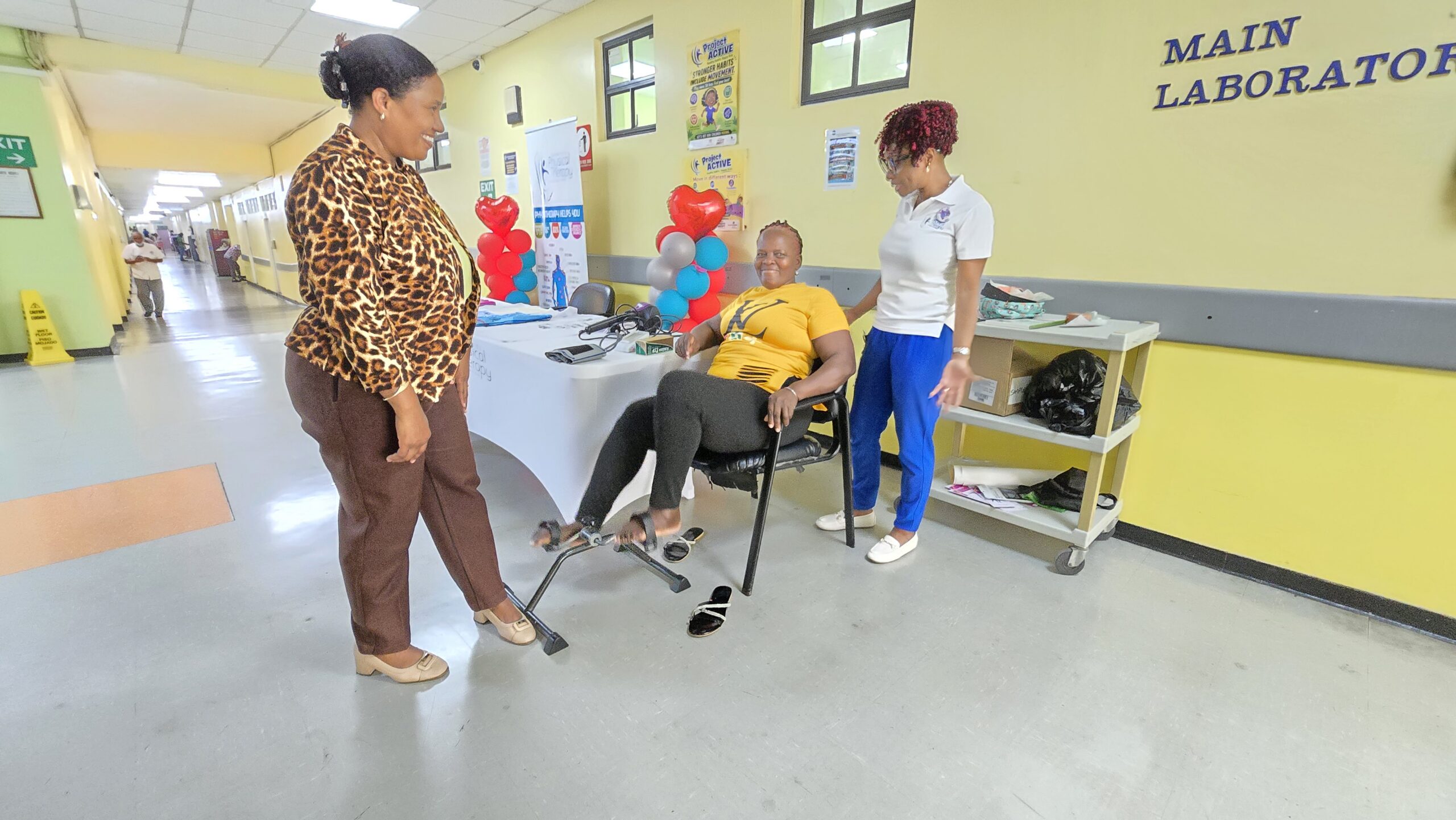
    Senior Health Sister Hazel Forde, who helped organize the polyclinic open day events, underscored the core mission of the campaign, aligning with the Vaccination Week theme. “Today is centered on one simple but powerful idea: Your decision makes a difference. We are not here only to provide services, but to promote and provide advocacy, to support you, to educate you, and to empower you as you take charge of your own health,” Forde explained.

    She added that the campaign extends far beyond routine childhood immunization, offering a full spectrum of community health services to address a wide range of public health needs. “Whether you are accessing vaccinations, learning about non-communicable diseases, or taking advantage of our confidential STI testing, you are making a meaningful investment in your well-being,” Forde said, echoing the WHO’s definition of health as a complete state of physical, mental, and social well-being, not just the absence of disease. “It is about prevention. It’s about awareness, and it’s about community,” she noted.

    Forde also emphasized that Vaccination Week is more than a one-off public health campaign; it is part of a broader, sustained movement to embed shared responsibility for public health across Barbadian society. “Health is a shared responsibility. And that by working together we can protect generations from preventable disease,” she said.

    Cummins added that the vast majority of Barbadian parents already support routine childhood vaccination, but everyday life challenges often prevent families from keeping scheduled vaccination appointments. “Life happens, people get busy. Some parents sometimes forget appointments. It’s okay to have questions, and that’s what our medical health professionals are here for,” she said.

    The ongoing polyclinic open days offer a broad range of integrated services beyond immunization, including general health screenings and evidence-based public health education sessions. Organizers say the goal of the community-focused model is to close persistent coverage gaps and ensure that underserved populations across the country have equal access to life-saving vaccination services.

  • Commonwealth Sport wraps up ‘successful’ tour of Barbados

    Commonwealth Sport wraps up ‘successful’ tour of Barbados

    After a week of high-level meetings, venue assessments and cultural engagements across Barbados, the top leadership of Commonwealth Sport has declared the organization’s first executive board visit to the Caribbean nation a resounding success.

    In closing remarks delivered at a press briefing hosted at Hilton Barbados last week, Commonwealth Sport President Dr. Donald Rukare highlighted the multiple productive outcomes of the trip, beyond the formal scheduled business. Beyond the warm hospitality extended by local organizers, Rukare noted that the board secured valuable face time with senior Barbadian leadership, including President of Barbados and the country’s Minister of Youth and Sports.

    During their stay, board members also toured the island’s existing sports infrastructure, explored key tourist and cultural landmarks, and got a first-hand taste of Barbados’ beloved local pastime: road tennis. “That cultural connection was just as important as our formal business,” Rukare told reporters.

    Looking ahead, the organization’s immediate top priority is the smooth delivery of the 26th edition of the Commonwealth Games, set to kick off in Glasgow, Scotland in the coming months. Rukare confirmed that the organization is already in full preparation mode, and expressed excitement for strong participation from Barbados and other Caribbean nations at the multi-sport event.

    Commonwealth Sport Chief Executive Officer Katie Sadleir expanded on the key business outcomes of the Barbados meetings, noting that the board advanced progress on several critical governance priorities. The most significant action taken was the formal approval of the organization’s annual business plan for the coming fiscal year, which aligns with the group’s existing 10-year long-term strategic framework. As is standard annual practice, the board conducted a full review of the 10-year strategy during the meeting to update key priorities and align upcoming work with evolving member needs. The board also signed off on the full budget tied to the newly approved business plan, Sadleir confirmed.

    One topic that gained attention during the visit was the push to add road tennis, a popular Barbadian homegrown sport, to the official Commonwealth Games lineup. Sandra Osbourne, President of the Barbados Olympic Association and Commonwealth Sport Vice-President, shared that while local leaders strongly support the eventual inclusion of the sport, the path to formal recognition comes with significant structural hurdles.

    Osbourne explained that the dual mandate of the local organization, which serves both as the national Commonwealth Sport association and the Barbados Olympic Association, requires it to only formally recognize sports that already hold International Olympic Committee (IOC) recognition. At present, road tennis has not secured that IOC status, meaning it cannot be formally affiliated or recognized by the local body.

    Still, Osbourne emphasized that the organization remains committed to supporting the Barbadian government’s goal of growing and promoting the sport, even with the structural limitations. “Whenever we are asked, we work collaboratively with the government to map the path forward, and have shared clear guidance on the steps required to achieve international recognition and eventual inclusion in the Games,” she noted, adding that the group is still learning the process itself as it supports the local push for road tennis.

  • Call for intervention after 11 plus mock exams reveals learning gaps

    Call for intervention after 11 plus mock exams reveals learning gaps

    A newly released diagnostic assessment of 150 Barbadian primary school students has uncovered stark learning disparities in core academic subjects, pushing a local education charity to call for immediate, targeted support across all regional primary institutions to help at-risk students prepare for their high-stakes 11+ entrance examinations.

    The assessment was carried out by Trident Charity, an education-focused nonprofit founded and led by Quincy Jones, a former first-time candidate for the Democratic Labour Party (DLP) in February’s general election. Jones shared the preliminary findings during on-site visits to two participating schools: Milton Lynch Primary School and Christ Church Girls’ School, both located in the Christ Church East Central electoral constituency where Jones ran for office.

    In total, 12 primary schools across the parishes of Christ Church and St Michael took part in the initiative, which was designed to act as a formative diagnostic tool. The goal of the project was not just to test students, but to generate actionable data that could help parents and educators tailor support to students as they approached the final stretch of preparation for the 11+ exam, a key milestone that determines secondary school placement. The mock examination assessed student proficiency across three core domains: written composition, mathematics, and English reading comprehension.

    Overall, the results painted a picture of deep stratification within the student cohort, with a clear gap emerging between high-performing students and those in need of urgent academic support. Just 8% of participating students earned the top A (Excellence) grade, and another 22% scored a B (Good), combining to make up less than a third of all test-takers. The largest share of students, 45%, reached a C (Satisfactory) grade, but the charity flagged the remaining 25% of results as a major cause for concern: 15% scored a D (Developing), and 10% scored an E, a rating that signals a need for significant, immediate improvement to reach grade-level standards.

    Jones framed these findings as a call to action rather than a cause for despair, emphasizing that early intervention can close gaps before they become insurmountable. “These results tell us two important things,” Jones shared in remarks following data analysis. “First, there is a solid academic foundation among many students, and second, there is an urgent need to support those who are falling behind. This is not a crisis; it is an opportunity to intervene early, close the learning gaps, and give every child a fair chance at success in the 11+ examination.”

    When broken down by subject, the data identified written composition as the area of greatest weakness. Only 18% of test-takers earned top marks in writing, while 40% performed below the expected grade-level standard. Jones noted that students struggled most with foundational writing mechanics: grammar rules, sentence structure, logical organization of ideas, spelling, and subject-verb agreement were all common pain points for low-performing students. In contrast, English reading comprehension showed far stronger results, with roughly 60% of students scoring above 70% on that section of the exam. Even so, Jones pointed to a “noticeable gap” between a student’s ability to understand a written text and their ability to clearly communicate their analysis and ideas in writing.

    Mathematics results presented what Jones described as a “mixed picture.” While 35% of students earned strong scores, an equal 35% scored below the 50% pass threshold. The assessment uncovered major gaps in basic numeracy skills and strategic problem-solving, particularly in the exam’s extended response section. Jones added that many students lost unnecessary points to careless calculation errors and a lack of practice showing their step-by-step working, a habit that not only costs points but also makes it harder for teachers to identify where students are going wrong in their reasoning. Key foundational topics including decimals, percentages, angles, and fractions were consistent areas of weakness, with Jones estimating that between 10% and 15% of participating students need immediate one-on-one or small-group intervention to get on track for the official 11+ exam.

    In the immediate aftermath of the assessment, every participating student and their family has received an individual performance report breaking down their strengths and weaknesses, paired with practical study and test-taking tips. Looking ahead to the 2026–2027 academic year, Trident Charity has committed to moving beyond data collection to build out a sustained support system for struggling students. Planned programs include small-group tutoring for all students scoring below 50% on the diagnostic, a structured sequential writing program to build composition skills from the ground up, and targeted mathematics support that prioritizes explicit instruction in step-by-step problem-solving. The charity also plans to roll out monthly mock exams to track student progress over time, and introduce family engagement initiatives to help parents support their children’s learning at home.

    Jones emphasized that the vast majority of students who are currently behind can make significant gains with the right targeted support, reaffirming the charity’s core mission to ensure no child is left behind due to unaddressed learning gaps. “Our findings indicate that over 60% of these students can significantly improve with the right support,” Jones said. “Trident Charity is committed to implementing targeted programmes and differentiating learning approaches to ensure no child is left behind. We are focusing on early intervention to ensure that every student has the tools they need to excel.”

  • Mayers rewrites BKA history books

    Mayers rewrites BKA history books

    The 2026 Sectus Technologies Barbados Karting Association (BKA) Championship held its third competitive round on Sunday, and the event made unforgettable history for the island nation’s karting community. Eleven-year-old Ava Mayers delivered a stunning performance in the Easykart 60cc Cadet class, claiming three race victories and securing the highest overall points total across all classes on raceday – a milestone never before achieved by a female karter in the BKA’s 40 years of organized competition.

    While a small number of female drivers have claimed individual class victory at past BKA racedays – most notably Kayleigh Catwell, who topped her class twice in 2018 before finishing second overall in the 100cc championship behind Calem Maloney – no woman had ever climbed to the very top of the day’s overall standings before Mayers’ historic win.

    Mayers set the tone for her historic day early, posting the fastest qualifying time out of the six competing Cadet drivers. She grabbed the lead early in the opening race and held off all challenges to cross the finish line more than two seconds ahead of championship leader Edward Norris, who put on an impressive comeback drive of his own after a qualifying first-lap breakdown left him starting at the back of the grid. Finn Cox crossed the line in third position to round out the opening race podium.

    In the reverse-grid second race, Mayers again seized the advantage immediately after the green flag, with Norris and Cox replicating their opening race results to finish second and third respectively. The third race saw a shift in momentum, as Norris reclaimed his pace at the front of the pack. A first-lap collision between Mayers and Cox dropped Mayers to the back of the starting order, but the young driver fought her way through the field to reclaim a podium position. Cox received a penalty for the incident that pushed him from second place down to fourth, behind Mayers and Shamer Eversley.

    Mayers sealed her perfect day with a third victory in the final race of the class, with Cox and Norris completing the overall podium for the round. Despite his solid second-place finish across the round, Norris retains his lead in both the 60cc class standings and the overall BKA championship.

    The event also saw intense competition in the Easykart 125cc class, where Mayers’ older brother Jacob Mayers also put on a dominant performance to start the round. Jacob claimed pole position in qualifying and posted the first of three fastest laps on his way to a flag-to-flag victory in the opening race. Aaron Blackett finished second in the opening contest, while Aeden Bruce held off a hard challenge from Cody Mark to take third.

    Blackett led every lap of the reverse-grid second race, while Jacob recovered from an early first-lap spin to cross the line third. That result was revised after the race, however, when Bruce received a 10-second penalty for starting outside the designated track lines, moving Jacob up to second.

    Jacob’s luck turned for the worse at the start of the third 125cc race, when his kart’s starter failed, ending his day of competition early. Blackett claimed a narrow victory in the contest, beating Bruce to the line by just nine-tenths of a second after Bruce fought a tense late-race battle with Mark.

    Jacob returned to form in the final 125cc race of the day, claiming a comfortable victory. Bruce put on a late charge to overtake Blackett for second place on the very last lap. Despite the late race loss of position, Blackett still managed to overhaul Jacob’s earlier points lead, taking the top spot in the 125cc class standings by just three points heading into future rounds.

    In the Easykart 100cc class, pole sitter Jaydn Brathwaite turned his qualifying pace into an unprecedented clean sweep for the 2026 season, winning all four races held at the round and posting the fastest lap in every contest. Jordyn Hinkson and Jaylan Priddee matched their podium positions across every race of the round, finishing second and third overall respectively.

  • Bajan volleyballers create history by qualifying for World Championships

    Bajan volleyballers create history by qualifying for World Championships

    For the first time in Barbadian volleyball history, a pair of young local athletes have broken through to qualify for a global world championship event. Teenagers Joshua Ashby and Cael Greenidge etched their names into Barbados’ sporting record books last week by claiming one of the final remaining berths at the upcoming Under-18 Beach Volleyball World Championships, sealing their qualification at the NORCECA Qualifiers held in the Dominican Republic.

    The road to qualification was far from smooth for the young Barbadian duo. They got off to a rocky start, dropping their opening matchup 0-2 to a tough Puerto Rican side. With elimination staring them down, the pair needed back-to-back wins in their remaining matches to claim the last available qualifying spot for the July tournament, set to run from July 8 to 12 in The Hague, Netherlands.

    Their first comeback test came against Costa Rica. After dropping the opening set 18-21, Ashby and Greenidge fought back to claim the second set and force a decisive third frame, eventually pulling out a hard-won 15-13 victory to keep their qualifying dream alive. Next up was a showdown with a highly ranked Canadian team for the final spot.

    History repeated itself in the decisive matchup: the Barbadians dropped the opening set 18-21 after Canada broke a late deadlock with three straight points, but they rallied once again to edge Canada in a tight second set 21-19 to force a third-set decider. The final frame stayed neck-and-neck through the opening stages, with both teams trading points to stay locked. When the score reached 13-all, Ashby delivered two consecutive game-winning points to secure a dramatic 15-13 upset and punch Barbados’ first ever ticket to a volleyball world championship.

    In an interview with Barbados TODAY from the qualifying event in the Dominican Republic, team manager Anica Wood said the historic result was the product of years of consistent hard work and relentless dedication from the pair and their coaching staff. “There’s no question about the commitment these young men have shown, and the endless hours they’ve put in training at home with our coaches, Mark Lewis and Cuban coach Jose Hernandez Murray,” Wood explained. “They’ve been putting in this work for years now, and it’s all finally paying off. Both Ashby and Greenidge are incredibly dedicated to this sport, and they wanted this qualification more than anything. When they realized the final qualifying spot was still within reach heading into the final matchday, they shifted their mindset entirely, seized the opportunity and made the most of it.”

    While celebrating the groundbreaking achievement, Wood also opened up about the structural changes Barbadian volleyball needs to make to turn this single success into consistent qualification for global events. The biggest shift needed, she said, is greater athlete specialization. Currently, most of the island’s volleyball athletes compete in both indoor and beach volleyball, spreading their training focus thin across two codes. This challenge is amplified by Barbados’ small overall population, which limits the pool of available talent.

    “Right now, our athletes are balancing training for both indoor and beach volleyball, and we’ve seen a huge growth in age-group competitions at all levels – Under-17, Under-19, Under-21, all the way to seniors – that these young athletes are competing across,” Wood noted. “To excel consistently, we need to adjust our structure so that athletes can specialize fully in either beach or indoor volleyball, so they can dedicate all their training time to that one code. This time around, Joshua and Cael put in extra hours on the sand, but if we want to keep reaching this level, we need fully dedicated beach athletes moving forward.”

    Ahead of the World Championships, Wood said the pair needs more competitive experience on the NORCECA circuit to sharpen their skills ahead of the tournament, and called for additional funding to support the team’s travel to these regional events. “Local training and competitions can only take you so far. Getting out and competing against top teams from across North America, Central America and the Caribbean does wonders for these young athletes’ confidence and skill development,” she explained. “More funding to let us compete in as many NORCECA events as possible would be a huge boost to their preparation ahead of the World Championships.”

    Wood also credited the new dedicated beach sports facility opened recently in Wildey as a critical contributing factor to the team’s success. “We’ve been using that facility nonstop since it launched,” she said. “In the past, we could only train for an hour or so after school or work before sunset, but this new facility has lights, so we can train both in the morning and evening. We’ve been able to double our practice hours because of it, and we’re so grateful for that resource.”

    In the girls’ division of the NORCECA Qualifiers, Barbados’ pairing of Destiny Layne and Gabrielle Sandiford capped off their tournament with two lopsided wins in the ninth place classification round, defeating the Cayman Islands 21-9, 21-8 and following that up with a 21-8, 21-18 victory over Nicaragua.

  • Sarah Ann Gill remembered as champion of faith, freedom and equality

    Sarah Ann Gill remembered as champion of faith, freedom and equality

    As the Methodist Church in Barbados celebrates 236 years of continuous operation on the island, community leaders have gathered to honor the enduring legacy of Sarah Ann Gill, the country’s beloved National Hero and a groundbreaking champion of religious freedom who rose to prominence during an era of violent persecution against dissenting faith communities.

    The commemoration took the form of a quiet, respectful wreath-laying ceremony held Sunday at Bridgetown’s James Street Methodist Church, where senior Methodist preacher Natalie Phillips delivered a reflective address exploring Gill’s lifelong work and its ongoing relevance to the church’s core mission of advancing equal rights and unhindered freedom of worship.

    “Even when she faced brutal persecution and open death threats, Sarah Ann Gill never abandoned the Methodist cause,” Phillips told attendees. “She kept the spirit of our faith alive, provided critical education to enslaved people at great personal risk, and spent her life pushing for greater religious and racial tolerance across Barbadian society.”

    Phillips emphasized that Gill’s contributions stretched far beyond her own individual acts of courage, pointing to the broader, trailblazing role the early Methodist Church played in challenging systemic racial injustice during the height of chattel slavery in the Caribbean. “At a time when every legal and social institution on the island — including the government-established church — openly classified African people as property to be bought and sold, this denomination stepped straight into the heart of Bridgetown’s oppressive power structure to defend the full humanity of enslaved and free African people across the region,” she said.

    Against this backdrop of deadly systemic oppression, Gill remained unwavering in her deeply held convictions, Phillips noted. “Strengthened by her Christian faith and the church’s mission of justice, she never bowed to threats of violence or death, even when those threats were carried out against her. She refused to step back from the work that mattered most.”

    Gill did more than just provide spiritual support to marginalized communities; she actively challenged the legal and institutional systems that perpetuated chattel slavery, all while expanding access to education and religious instruction for enslaved Africans across the island. “She took on the most powerful, self-interested defenders of slavery that sat in the colonial parliament, and she won,” Phillips explained. “By expanding access to religion and education for the enslaved, she accelerated the movement toward full emancipation that would eventually end slavery in Barbados.”

    Phillips also reminded the audience of the severe legal risks Gill took to carry out this work. “We have to remember that in that period, colonial law explicitly criminalized educating enslaved people. Every lesson she gave was an act of open rebellion against an unjust system.”

    Beyond her immediate impact on the fight against slavery, Gill left a lasting physical and symbolic legacy across Barbados that endures to this day. Multiple houses of worship, including the Gill Memorial Church, bear her name, and she is buried in the James Street Methodist Churchyard — a plot of land that was Gill’s own private property, which she donated to build the church in the first place.

    Even though her final resting place is a modest, unassuming site, its meaning far outstrips its simple appearance, Phillips said. “Her grave is quiet and understated, a stark contrast to the monumental, transformative contribution she made to both religious life and the broader social fabric of Barbados.”

    In closing, Phillips noted that Gill’s legacy remains a critical guiding example for faith communities across the world grappling with modern social justice challenges. Her message of unyielding hope and resilience has stood the test of time, and her extraordinary courage and commitment to justice have secured her an immortal place in Barbadian history.

  • DLP marks 71 years with call for renewal

    DLP marks 71 years with call for renewal

    On the 71st anniversary of its founding, Barbados’ historic Democratic Labour Party (DLP) has used its annual Founders Day observance to invite members to celebrate its seven-decade legacy of public service while issuing a rallying cry for organizational renewal and community reconnection. The commemoration, outlined in an official media statement published Sunday, opened with reflections from acting DLP President Stephen Lashley, who walked through the party’s origins rooted in the vision of a more equal, justice-centered Barbados when it was first established on April 27, 1955.

    From its earliest days, Lashley emphasized, the DLP has never been just a political organization — it emerged as a grassroots movement driven by courage and a deep commitment to building a fair, inclusive society anchored in the principles of social justice. Over its 71 years of existence, the party has played an unparalleled role in shaping the modern Barbadian nation, delivering a series of transformative, long-lasting achievements that continue to shape daily life for Barbadians today.

    Among the most foundational contributions Lashley highlighted is the 1972 establishment of the Central Bank of Barbados, an institution created to protect the country’s monetary stability and insulate the national economy from external shocks. Beyond financial governance, the DLP spearheaded far-reaching public investments in accessible education that have unlocked opportunity for multiple generations of Barbadians, built robust social protection systems that guarantee basic dignity for citizens facing hardship, and strengthened core public institutions to embed greater accountability and effective governance across the state.

    These milestones were not random policy wins, Lashley argued: they were deliberate, interconnected steps in a coordinated nation-building project designed to construct a modern Barbadian social democracy centered on equal opportunity, shared fairness, and collective national pride. Crucially, he added, the DLP’s most lasting contribution goes beyond individual policy achievements — the party led Barbados to full independence, then built the entire institutional framework required to sustain sovereign self-governance, laying the groundwork for decades of national stability, resilience, and long-term growth.

    Decades after those foundational structures were put in place, they have stood the test of time, Lashley noted. “It was this party that laid that foundation, establishing the structures that have enabled Barbados to endure, adapt, and thrive,” he said.

    Shifting focus from the party’s historic legacy to its current path, Lashley stressed that commemoration must go hand in hand with renewal and recommitment to the DLP’s core mission. “We are called not only to remember, but to renew. Our history is a source of strength, but it is also a responsibility. It reminds us that we are heirs to a proud legacy and the custodians of a future yet to be fully realised,” he said.

    To advance that future, Lashley urged DLP members to rebuild direct ties with local communities, repair public trust, and reposition the party as the leading political voice for ordinary Barbadians. “The call now is for unity, for recommitment, and for action, guided by the clear wishes of our people. Let us reconnect with each other. Let us re-engage with our communities. Let us bring forward the full measure of our talent, our ideas, and our energy in service of Barbados. The task before us is not simply to rebuild, but to reimagine, to rekindle trust and confidence in who we are as a people, to once again position this great party as the voice of the people and a voice for national progress,” he said.

    Acknowledging openly that the DLP has faced significant setbacks and challenges in recent years, Lashley insisted that the party’s founding spirit remains unbroken. “Though we have faced recent challenges, the spirit of the Democratic Labour Party remains unbroken. Our mission endures with you, the people of Barbados, as our anchor; our purpose is clear,” he said.

    Expressing firm confidence that the DLP can achieve a full revival through intentional hard work, humble service to citizens, and abiding faith in the Barbadian people, Lashley closed by noting that the celebration of past founders must also lift up the next generation of party leaders who will carry the movement forward. The party’s future, he emphasized, will be built collectively through shared service and unwavering commitment to the DLP’s core mission.

  • Mottley calls for renewed commitment amid global challenges

    Mottley calls for renewed commitment amid global challenges

    On Sunday, during a commemorative Founder’s Day service held at Bethel Methodist Church on Bay Street, Mia Mottley – Prime Minister of Barbados and leader of the Barbados Labour Party – issued a heartfelt call for a renewed collective commitment to national progress, emphasizing that the work of building a stronger nation extends far beyond the responsibilities of elected officeholders.

    Mottley opened her remarks by framing the gathering as both a moment to seek spiritual guidance and a public appeal for widespread recommitment to the country’s development. “The work will not be done by members of parliament or ministers alone,” she told attendees, underlining that every Barbadian has a role to play in driving national growth.

    The Prime Minister highlighted three core pillars that remain critical to advancing the party’s founding mission: political education, grassroots mobilization, and unwavering dedication to public service. She argued that these values are non-negotiable for stabilizing Barbados’ long-term growth trajectory and upholding the original purpose that guided the party’s establishment. “If ever there was a time for this political institution to redouble its efforts in political education, in political mobilisation and in political commitment, in order to stabilise this nation’s growth and to stabilise our commitment to the renewal of the purpose for which we were established,” she stated.

    Acknowledging the widespread fatigue many Barbadians feel amid ongoing global and domestic challenges, Mottley noted that periods of difficulty are the ultimate test of a nation’s collective resolve. “It may seem like some to be a call to those who are already weary, and yes, I acknowledge that the distance sometimes can be long and it can carry but it is when you are tired, more often than not, that we see through history that you are tested the greatest,” she explained.

    Mottley also stressed the importance of cross-community unity, bridging both religious and political divides to pursue shared national goals. She pointed out that the gathering brought together people of all faith backgrounds, united by the understanding that political work does not override individual spiritual missions. Looking ahead to the coming year, she warned that Barbados will likely face continued headwinds, but expressed confidence in the country’s ability to navigate these challenges – a success that she says depends entirely on collective action, not just top-down leadership.

    Drawing a powerful historical parallel, Mottley connected today’s climate of global uncertainty to the era in which the Barbados Labour Party was founded, on the eve of World War II. That period, like today, was defined by widespread instability and systemic inequality: “We were founded at a time when fascism was raising its head. We were founded at a time when people were not seen and people were not heard, and the majority of the people of this country had to do as they were told, not as they wished to do.”

    She emphasized that the party’s founding mission – advancing economic enfranchisement and social justice for all Barbadians – remains just as urgent today as it was nearly a century ago. Amid rising global unpredictability, she warned that vulnerable communities are once again at risk of being left behind: “The transformation needed to resist the winds of change that allow the mighty to dominate is urgent. The least, the last and the lost are once again fighting to be protected.”

    Mottley also referenced recent conversations with progressive political leaders across the globe, where participants shared growing concern that long-held core values of equity and justice are no longer universally upheld. She urged supporters to persevere, reminding them that the fight for social progress has always demanded sacrifice. “We will not be the first to be asked to carry a heavy burden to fight injustice, nor the first to be asked to complete the journey of transformation,” she said.

    Closing her remarks, Mottley paid tribute to a deceased member of the host church before repeating her call for both individual and collective recommitment to national progress. She acknowledged that the Barbados Labour Party and the country as a whole have achieved significant gains over the years, but stressed that sustained, collaborative work remains essential to secure a prosperous future for all Barbadians.