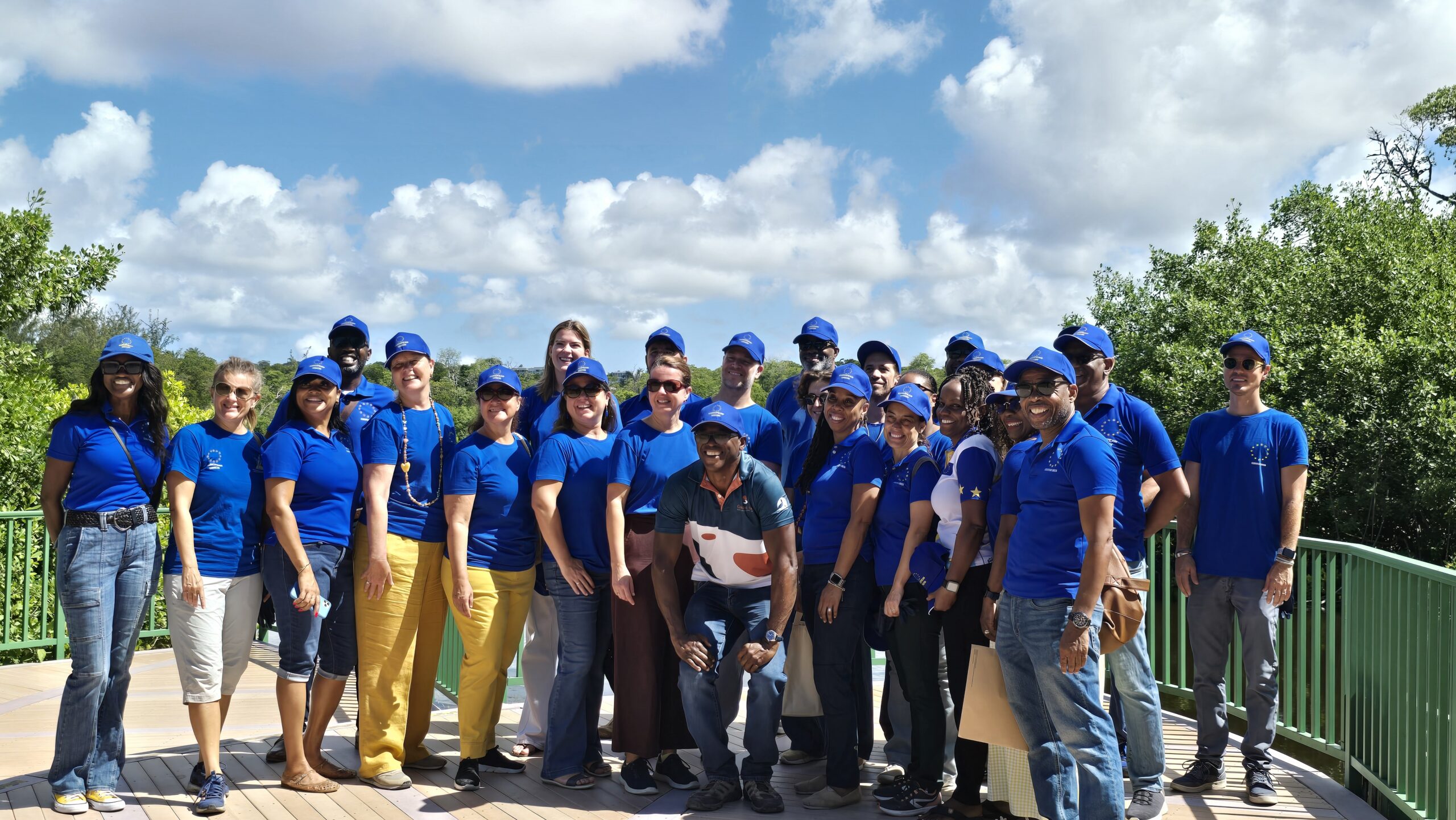
On the occasion of Barbados’ observance of World Arbour Day and the 50th anniversary of the European Union’s diplomatic presence on the island, the EU’s top representative to Barbados has emphasized that widespread tree planting across the small Caribbean nation is a critical step to cut its carbon footprint and boost environmental resilience.
Friday’s commemorative activities kicked off with the ceremonial planting of 30 native tree saplings at the Graeme Hall Nature Sanctuary, a sprawling protected wetland and wildlife habitat that serves as one of Barbados’ most important biodiversity hubs. EU Ambassador to Barbados Fiona Ramsey used the event as a platform to reaffirm the bloc’s commitment to placing sustainability at the heart of all its global policy and partnership initiatives, highlighting the EU’s longstanding leadership in international climate action.
“Across global climate forums, the European Union has led efforts on ambitious climate policy, scaled up green climate financing, and built actionable partnerships that deliver real progress on decarbonizing energy systems and global supply chains, protecting vulnerable biodiversity, and sustainable management of coastal ecosystems,” Ramsey told attendees at the event. She framed the small-scale tree-planting exercise as far more than a symbolic gesture, describing it as a tangible, hands-on contribution to safeguarding Barbados’ unique natural environment.
“As the EU delegation here in Barbados, we are delighted to make this modest but deeply personal contribution to protecting the island’s natural heritage, preserved for future generations right here at the Graeme Hall Nature Sanctuary,” she added. Ramsey explained that the 30 trees planted Friday are all indigenous species selected to support the local ecosystem, noting that expanded tree cover delivers far-reaching benefits beyond climate action, including improvements to public health and overall community well-being.
The initiative aligns with a national tree-planting target first announced by Barbadian Prime Minister Mia Mottley in 2019, which set a goal of planting one million new trees across the island by the end of the initiative. Ramsey stressed that this ambitious national goal carries extra weight for small island developing states like Barbados, which are among the nations most vulnerable to the worst impacts of human-caused climate change. Expanded tree coverage directly supports these nations’ climate resilience, long-term economic stability, and sustained prosperity, she added.
Against a backdrop of accelerating global climate change, Ramsey warned that the climate crisis is not a distant future threat, but an immediate daily reality for Caribbean communities. “Rising global temperatures, more frequent and intense extreme weather events, and growing environmental pressure – these are not abstract concerns for future generations. They are immediate, everyday challenges that demand urgent, consistent action from all stakeholders,” she said.
The ambassador also voiced growing concern over ongoing deforestation across Barbados driven by expanding commercial development and residential housing construction. She praised Mottley’s one million tree target as a critically important step forward, noting that robust tree cover serves three core functions for small island nations: it protects fragile soil from erosion, acts as natural carbon sinks to absorb greenhouse gas emissions, and expands biodiversity by creating native habitats for local wildlife.
Ramsey emphasized that consistent, intentional tree replacement efforts are just as critical as new planting initiatives. “It is essential to protect mature, established trees in their natural environments, but we also have a responsibility to continuously renew tree stocks as older trees die off. That is exactly what we are doing here today: planting new saplings that will take decades to reach full maturity, but will deliver decades of environmental, social, and economic benefits for the people of Barbados over their lifetime.”
Beyond Friday’s planting at Graeme Hall, the EU delegation plans to partner with local community and environmental organizations across Barbados to plant an additional 20 trees, bringing the total number of new trees planted for the anniversary initiative to 50.
Geoffrey Roach, general manager of the Graeme Hall Nature Sanctuary, echoed Ramsey’s comments on the climate benefits of expanded tree planting, noting that the protected sanctuary already holds significant carbon reserves. “Graeme Hall has always been committed to environmental stewardship, and we are incredibly grateful for this partnership with the European Union to expand our carbon capture capacity through today’s tree and native shrub planting. We want to encourage all Barbadians to recognize the critical role individual and collective action plays in reducing the island’s carbon footprint,” Roach said.
Roach also echoed the ambassador’s concern over tree loss tied to Barbados’ ongoing residential development boom, noting that as construction expands across the island, natural tree cover is steadily lost. “To preserve our natural environment and expand biodiversity, we all need to adopt a far more intentional, conscious approach to replacing that lost tree cover through consistent planting efforts,” he added. Roach also shared that the Graeme Hall Nature Sanctuary is actively seeking to deepen partnerships with a wide range of public and private organizations to expand its environmental work, which extends well beyond tree planting to include a broad portfolio of conservation initiatives across the island.