
A week after a devastating blaze tore through residential structures in Barbados’ Chapman Lane, government officials confirmed on Monday that formal assessments are now underway to explore viable pathways for reconstructing the destroyed homes, months after the incident left multiple households displaced and stripped of all personal possessions. The affected families have already been relocated to temporary emergency housing arranged by state agencies. Leading the on-site inspection were Senator Shane Archer, Minister of State in the Prime Minister’s Office, and Michael Lashley, Member of Parliament for the City of Bridgetown. They were joined by senior leadership from the Rural and Urban Development Commission (RUDC), the government body tasked with housing and community infrastructure development. The primary goals of the visit were to conduct a full survey of the fire-ravaged properties and verify which residents hold formal land titles — a critical prerequisite to advancing official rebuilding efforts. Standing amid charred debris and rubble that still litters the Chapman Lane neighborhood, Archer told reporters that the scope of the disaster has left the community in an extremely vulnerable position. “We observed that they lost everything…they have lost everything, so it is a very dire situation at this point,” Archer said. He went on to explain that the inter-agency visit was designed to map out what role the RUDC can play in supporting affected families to rebuild their homes and get their lives back to normal after the disaster. “We’re here to help,” he emphasized, adding that Lashley had been present in the community working directly with residents since the night the fire broke out. Lashley confirmed that all displaced residents have already been moved into appropriate temporary accommodation, with basic essential supplies provided through the government’s network of social services. “Those who were affected by the fire…they have been placed in alternate housing. The families are comfortable at this stage,” he said. With the immediate emergency response successfully completed, Lashley noted that the entire focus of stakeholders is now shifting to long-term recovery: reconstructing the lost homes and helping the damaged community return to its normal function. “So we just need to work hard now and work quickly with the ministry,” Lashley said. “We have now to get the community involved, working along with the state, working along with rural, working along with the urban officials.” The Bridgetown MP commended the rapid action of government social agencies, highlighting that displaced residents were placed in safe alternative housing just hours after the fire was contained. Looking ahead, Lashley stressed that local community-led fundraising will be a critical complement to government support, to help speed up recovery and help families regain long-term stability. “So now we need to work on the community level in terms of fundraising activities, to get those funds so that we can assist the government and get this matter resolved and get the families back into a place of comfort,” he added.
标签: Barbados
巴巴多斯
-

CPL ticket sales gain momentum
The 2024 Republic Bank Caribbean Premier League (CPL) is seeing extraordinary demand for match tickets at Bridgetown’s iconic Kensington Oval, where Barbados will play host to a critical stretch of the tournament including the highly anticipated playoffs and championship decider. Christine Charles, Chief Marketing Officer of the CPL, shared details of the overwhelming public interest in an interview with Barbados TODAY, noting that the event has generated unprecedented excitement among local and visiting cricket fans alike.
Charles explained that the intense enthusiasm stems from Barbados being selected to host the tournament’s final knockout stages, giving local supporters double the action to cheer on compared to typical tournament editions. “Barbadians have really thrown their support behind this year’s event, and the energy across the island is palpable,” she said. “Having the playoffs and final right here at Kensington Oval means more cricket, more excitement, and more reason for fans to get invested.”
In addition to the men’s tournament, Kensington Oval will also serve as the home venue for the Women’s Caribbean Premier League (WCPL), where the Barbados Tridents enter the competition as three-time defending champions. Charles highlighted that the women’s competition has already drawn strong crowds, and she urged even more spectators to turn out to support the athletes. “The women’s game has been incredible to watch this year, and they’ve already gotten great support from fans on the ground,” Charles noted. “But every cheer makes a difference. This is going to be a hard-fought battle for the title, and they deserve every bit of the crowd’s backing.”
Beyond the on-field action, Charles emphasized that the dual CPL and WCPL tournaments are set to deliver a substantial economic boost to Barbados, though she declined to share specific financial projections. She pointed to three key areas of economic benefit: increased local job opportunities tied to the tournament, full hotel occupancy from visiting fans, and a welcome uptick in tourism arrivals at a traditionally slow period on the island’s calendar.
“Right now we’re in the lull just after the annual Crop Over festival, so this event could not have come at a better time to keep visitor numbers up,” Charles explained. “We’re actively encouraging cricket and sports fans from across the Caribbean and around the globe to make the trip to Barbados for the tournament. It’s a beautiful island with so much to offer, and this is the perfect time to experience it.”
The men’s CPL final is scheduled to take place on September 20, and organizers have added a new high-profile attraction to the lead-up of the championship match: the “Live and Louder” mega concert, set for September 19 at Barbados’ Botanical Gardens. Charles explained that the concert was developed to expand the fan experience beyond cricket, leaning into the CPL’s long-standing reputation as “the greatest party in sport.”
“Every day, we have hundreds of fans coming through to buy match tickets, and we wanted to give them even more to look forward to,” Charles said. “The Live and Louder mega concert will bring that unbeatable big-party atmosphere that the CPL is known for, giving music lovers and sports fans alike a full weekend of energy and fun.”
The concert boasts a star-studded lineup of international and regional talent, headlined by dancehall icon Movado. Additional confirmed acts include British R&B singer Estelle, Jamaican dancehall star Mr Vegas, and Caribbean music favorite Chris Martin, with more surprise guests set to be announced ahead of the event. Tickets for both the concert and tournament matches are available for purchase now at the dedicated ticket booth located outside Kensington Oval.
Organizers have dubbed the back-to-back match and concert weekend the “CPL Mega Weekend,” built to deliver nonstop energy for attendees from opening pitch to closing encore. “We built this weekend for everyone who loves great sport, great music, and great vibes,” Charles added. “We want everyone to come out on September 19 and be part of what’s set to be an unforgettable experience.”
-
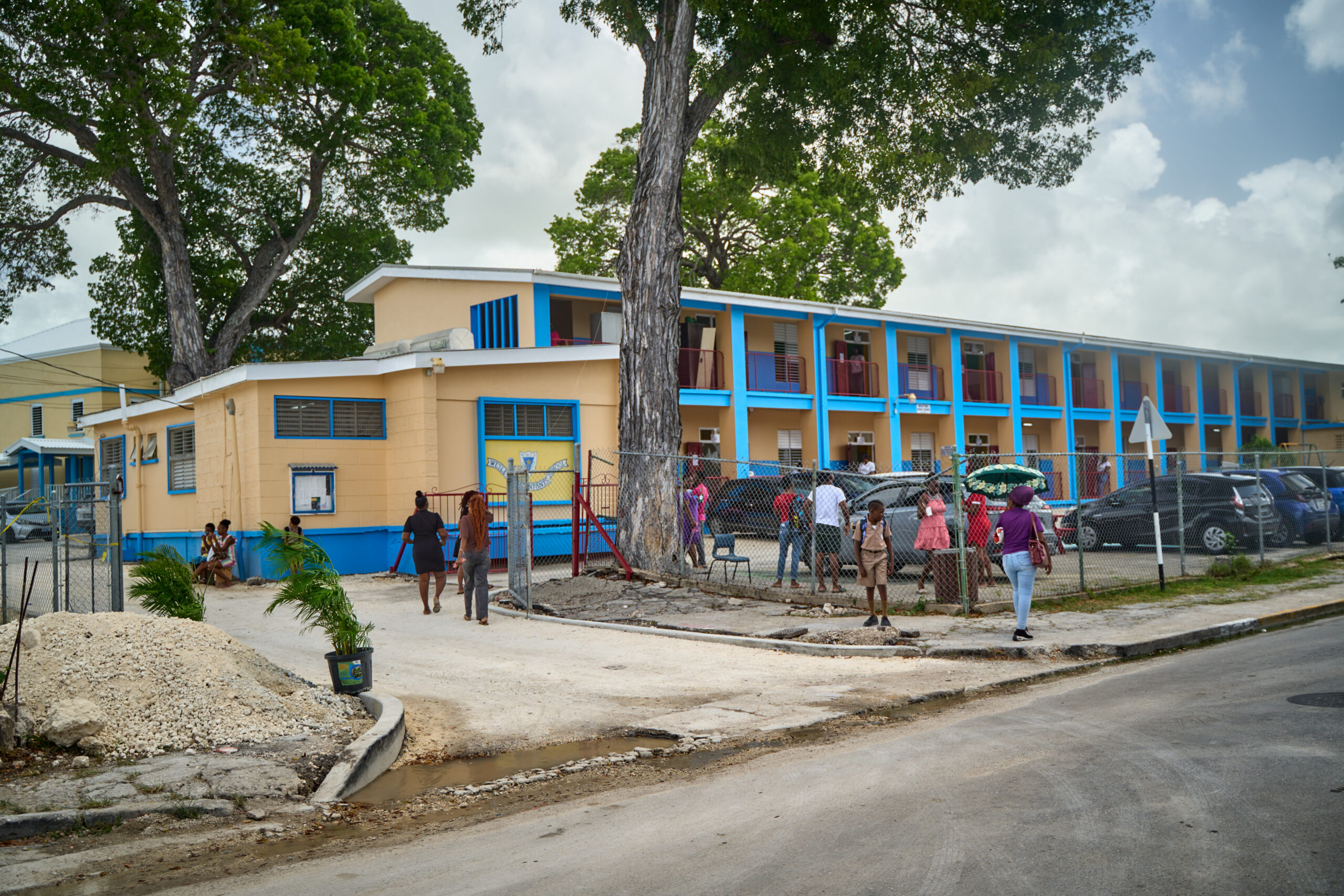
Wesley Hall pupils sent home amid paving delays, sewer leak
The first day of the 2025 academic term at one of the nation’s most historic primary institutions got off to an unexpected start, as Wesley Hall Junior School dismissed all students and staff just hours after the morning bell, sending the entire school community home early over unresolved construction hazards. The abrupt shutdown stemmed from two overlapping issues: a contractor delay on critical campus paving works and an emergency unplanned underground sewer line repair that pushed back the entire renovation timeline, leaving large swathes of the campus riddled with air-borne dust and unsafe, unpaved surfaces.
The sweeping full-campus renovation project at Wesley Hall Junior School, which first broke ground in September of last year, was launched to address long-standing structural decay in the school’s iconic two-story main building. Over the 12-month construction period, work crews have completely gutted and reconstructed the aging structure, converted underused empty spaces into new modern learning facilities, and ended the decades-long practice of holding regular scheduled classes in the school’s main assembly hall. The project’s core goal is to deliver a vastly upgraded learning and working environment for both students and teaching staff, with improvements including fully renovated staff housing, a repositioned modern principal’s office at the main entrance, and restored dedicated space for assemblies and school events in the main hall as originally designed.
According to Kim Belle, Permanent Secretary of the Ministry of Education Transformation, the timeline disruption began when construction crews conducting pre-paving groundwork discovered a broken sewer line running directly beneath the school’s main entrance driveway and rear parking lot. Project leaders made the call to prioritize repairing the damaged line before laying asphalt to avoid the need for costly, disruptive digging after paving was complete. The contractor had given a formal commitment to finish all paving work over the final weekend before term began, but the unplanned sewer repair pushed that deadline past the start of school.
By the time education officials conducted an on-site inspection on the first morning of term, large sections of the entrance, driveway and parking lot remained covered in exposed dirt and loose construction aggregate. With loose material expected to be kicked up by vehicle traffic and wind, creating significant hazardous dust conditions across the campus, officials made the decision to send students and staff home immediately to complete the outstanding works. Belle added that beyond the unfinished paving, final post-construction quality checks, widely referred to in the construction industry as “snagging”, were still incomplete in multiple indoor areas of the renovated campus.
In the hours following the early dismissal, ministry officials ordered the contractor to move all heavy equipment back onto the empty campus immediately to finish paving while the site was clear. Project lead Mr De Freitas has given a formal commitment that all outstanding works, including both paving and internal snagging, will be fully completed by the end of Tuesday. Officials also noted that the revised campus layout, which added multiple new classrooms, caused minor confusion for returning students who were unable to find their reallocated rooms on the first morning, a temporary issue that will be resolved once the construction wraps up.
Despite the messy opening-day disruption, Belle shared that most parents who visited the campus on the first morning expressed overwhelming satisfaction with the scale of upgrades delivered by the renovation project. Many of the visiting parents were alumni of the school, who could directly compare the renovated facility to the dilapidated campus they attended, and praised the improvements to learning spaces. Ministry officials confirmed that regular classes are currently scheduled to resume on Wednesday morning, barring any further unexpected delays from the contractor.
-

YWCA to expand youth, community empowerment programmes
After years of disrupted operations stemming from the global COVID-19 pandemic, the Young Women’s Christian Association (YWCA) of Barbados is launching an ambitious organizational revitalization effort centered on expanded, holistic programming for youth and community empowerment. Newly installed president Onika Crawford has laid out a clear, forward-looking strategic vision that will see the rollout of a suite of new and updated initiatives within the next 60 days.
Crawford’s new leadership framework reorganizes YWCA’s work across three interconnected core pillars, each tailored to address distinct community needs. The first pillar, Y Youth, builds on the organization’s longstanding legacy of youth engagement by expanding beyond popular existing programs, including summer camps and a community reading initiative, to add targeted training for skills development and growth mindset building. This pillar aims to support young people from childhood through adolescence to build foundational tools for long-term success.
The second pillar, Y Cares, anchors the organization’s commitment to local community outreach and direct service. Core programs under this framework include the existing children’s breakfast initiative, which addresses food insecurity for young residents, alongside new efforts like care package distribution for vulnerable community members and targeted neighborhood development projects that meet locally identified needs.
The third pillar, Y Grows, focuses on hands-on personal and professional skill building that creates tangible economic and personal value for participants. Programming here will include training in practical trades and creative arts, spanning small-scale agriculture, sewing, handcrafted basket weaving, and floral arranging, giving community members opportunities to develop new hobbies, supplement income, or launch small local businesses.
At its core, the revitalization effort is designed to foster holistic personal growth across all age groups, from children to adult community members, a priority the new board of directors has centered since taking office. Like many community-focused nonprofits around the world, the Barbados YWCA saw a significant decline in in-person programming and engagement during the COVID-19 pandemic, prompting a period of organizational rebuilding to meet current community needs. To bring this expanded vision to life, Crawford is calling on members of the public to contribute as new volunteers or provide corporate and community sponsorship to support the rollout of new programs. She noted that any contribution, no matter the size, that can add value to the organization’s community mission is welcome.
While final logistics for several initiatives are still being finalized, Crawford confirmed that most of the planned programs are on track to launch within one to two months of the announcement. Founded in 1950, the Barbados YWCA is an affiliate of World YWCA, a global movement that advances the empowerment of women and girls across more than 100 countries worldwide.
-
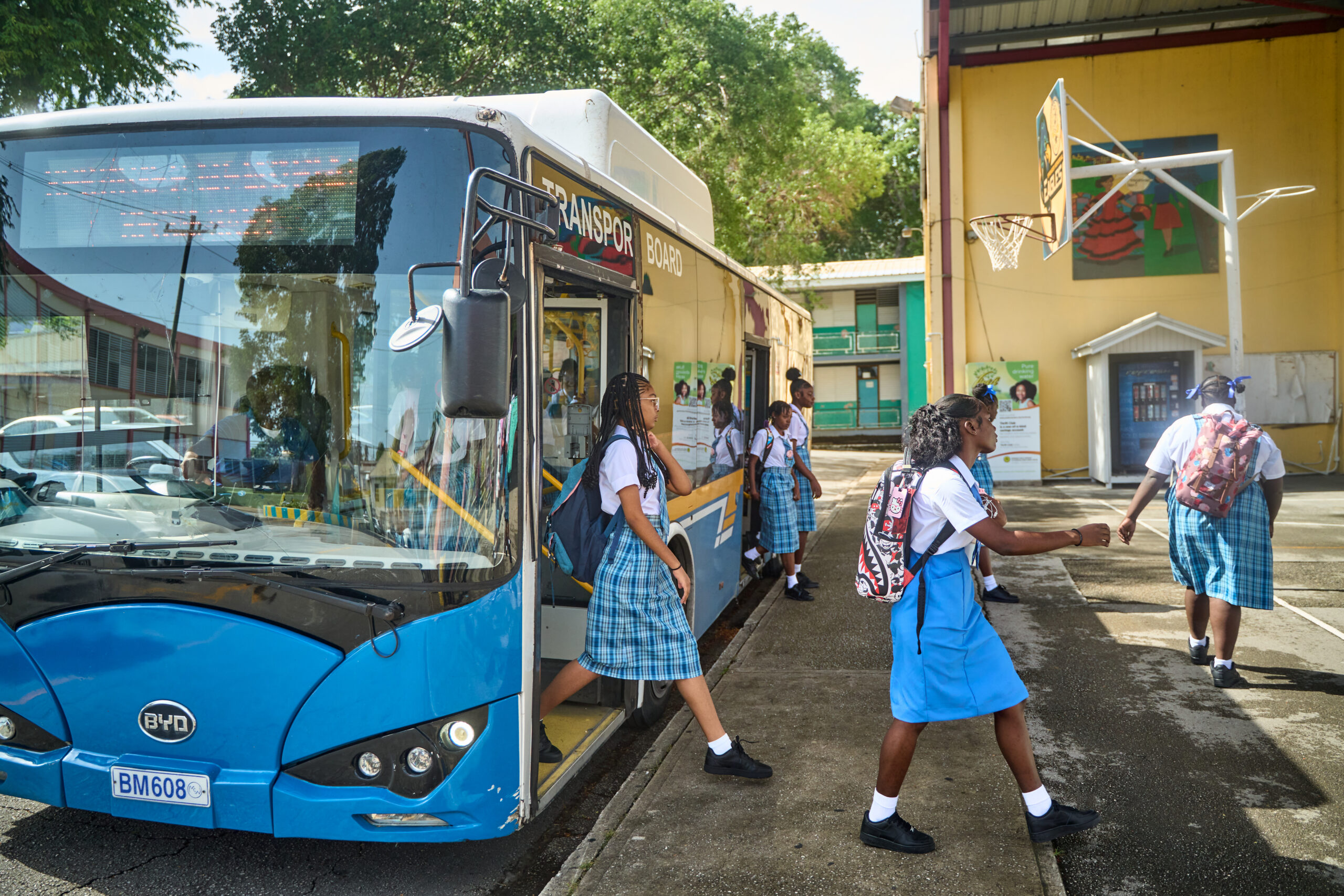
Students urged to remain steadfast as new school year begins
The 2026-2027 academic year has officially launched across Barbadian primary and secondary schools, with campus leaders rolling out targeted upgrades, new programs, and motivational messages designed to support student growth and success. Two neighboring schools, Springer Memorial Secondary School and Charles F. Broome Memorial Primary School, are leading the way with changes that address curriculum structure, student well-being, and community engagement.
At Springer Memorial School, returning students were greeted by principal Sonja Goodridge on Monday, who urged the student body to embrace the school’s continuing mantra of “steadfast and motivated” for the coming year. First adopted in 2025-2026, the theme was retained after both teaching staff and students asked to keep it, citing its positive impact on campus culture. Goodridge explained that the mantra is intended to empower students to believe in their ability to overcome any challenge they may face academically or personally. “We want them to remain unwavering in whatever they’re doing and just continue to be steadfast but to be motivated as well to excel, not just motivated to come to school, but come to school and add value as well,” Goodridge told the assembled student body.
Beyond reinforcing a positive campus mindset, Goodridge encouraged students to fully participate in the school community by taking advantage of extracurricular opportunities and making the most of their secondary school years. “I keep telling them these are the best days they will ever have, and we want to ensure that when you pass through the Springer Memorial gates that you have had a good experience,” she said. Despite scattered early morning showers on the first day of term, Goodridge reported that the return to campus went smoothly, with most students showing up in the school’s well-known regulation uniform and displaying visible excitement to be back. “The children seemed eager, they seemed excited to be here and I’m pleased basically with what I’ve seen. I think it augurs well for our future,” she noted.
A key focus of this year’s changes at Springer Memorial is improving overall student outcomes through targeted curriculum and structural reforms. Following a comprehensive curriculum review, the school has introduced two key adjustments: business and tourism coursework for third-form students, and a new tourism stream for senior students. Administrators have also reintroduced a room-based system that converts each classroom into a subject-specific resource hub, making learning materials more accessible and tailored to each course. The school has also shifted from its previous scheduling model to a 40-period week, a change designed to create space for the new Community Service Learning (CSL) requirement without reducing instructional time for core academic subjects.
Next door at Charles F. Broome Memorial Primary School, principal Paula Toppin opened the term by highlighting the benefits of the government’s newly introduced National School Breakfast Programme, which will provide nutritious morning meals to students who arrive at school hungry, particularly those who leave home early for their commute. Toppin expressed gratitude to the government for the initiative, saying it addresses a critical need for supporting student well-being and academic readiness. “I am particularly pleased to have the national nutritional policy extended to the breakfast programme and I’m really happy that the students at my school who may come to school a little hungry, because some of them leave home early, will get that nutritional start to the day,” she said.
Toppin also shared her excitement for the new term, noting that school staff spent weeks over the planning period preparing a range of engaging new programs for students. She emphasized her commitment to building on Charles F. Broome Memorial Primary’s existing reputation for academic excellence, working in partnership with staff, parents, and the wider school community to maintain high standards of teaching and learning. “I am truly happy to be back at the plant working with my staff, the parents, and all the students to ensure our level of success continues. We have lots of exciting programmes planned this school year and we’ve been working really hard during the planning week to bring all of these plans to fruition,” Toppin said.
-
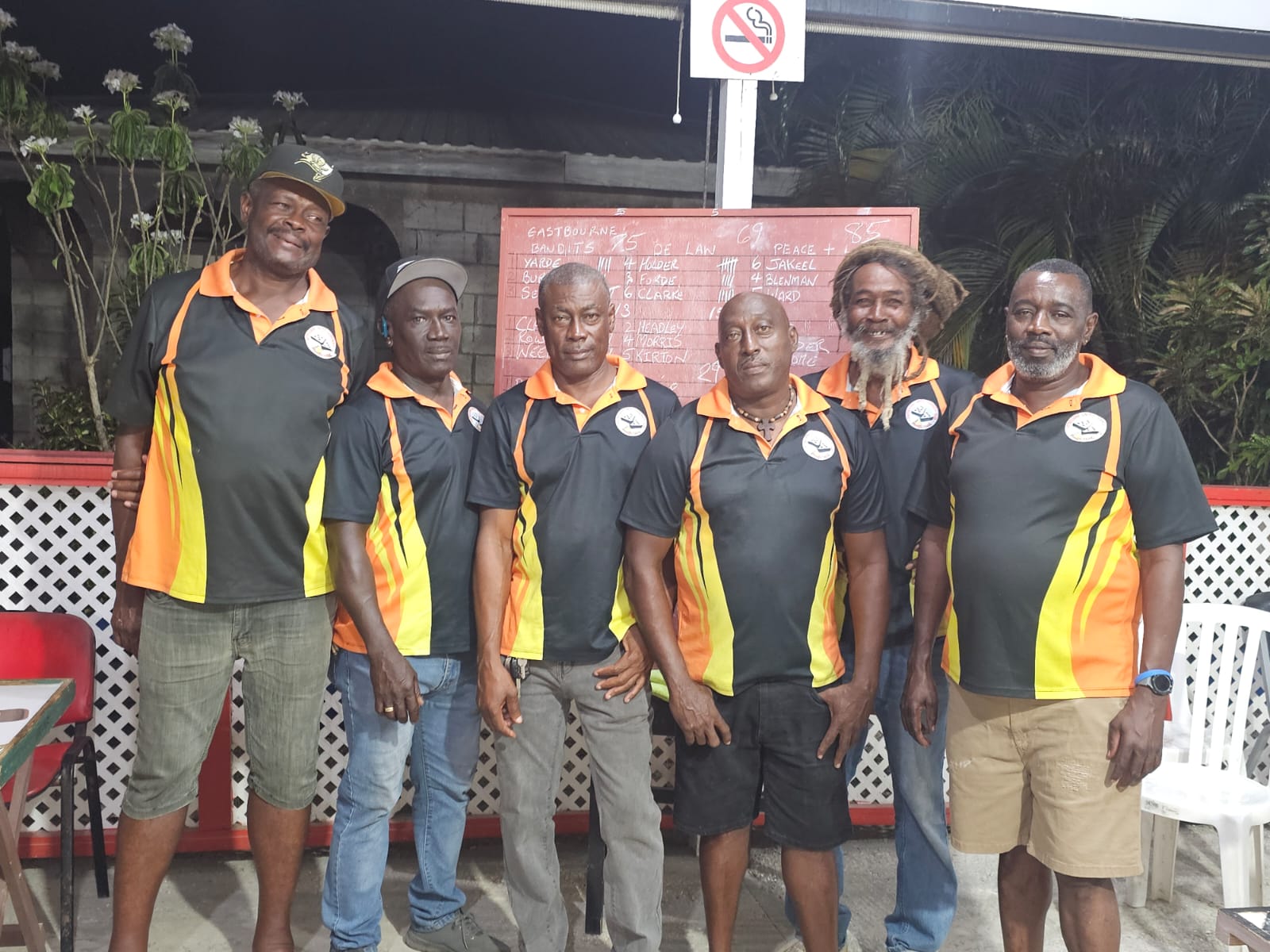
Bandits clinch national dominoes three-hand title
The 2026 edition of the Barbados National Dominoes Association Village Three Hand Championship has crowned a new titleholder, with Eastbourne Bandits emerging triumphant after a tense, hard-fought final round held on September 3 at JD’s Domino Club.
Unlike many lopsided competitions, this year’s final went down to the final play, with only a handful of points separating the top three contenders. When all scores were tallied, Eastbourne Bandits secured the top spot with a total of 77 points, edging out their closest competitor by just four points. Second place went to Newbury, who finished with 73 points, while De Blurr rounded out the top three with 70 points in a tight contest that kept spectators engaged from the first round to the last.
It was a standout performance from the Bandits’ key players that pushed the team over the finish line. Veteran player Clairemonte “Rastaman” Weekes delivered a star turn for the championship side, putting up an impressive 17 points to lead all team scorers. He received solid support from teammate Neil Rowe, who chipped in with 15 critical points to cement the team’s winning margin.
Though Newbury fell short of the top spot, the team also had reason to celebrate standout individual play: Michael “Hard Dog” Parris turned in the highest individual score of the entire final, notching 18 points for his side. For third-place De Blurr, Kevin “Kegan” Edwards led the team’s effort with a solid 14-point contribution, helping the club secure a spot on the tournament’s podium.
-
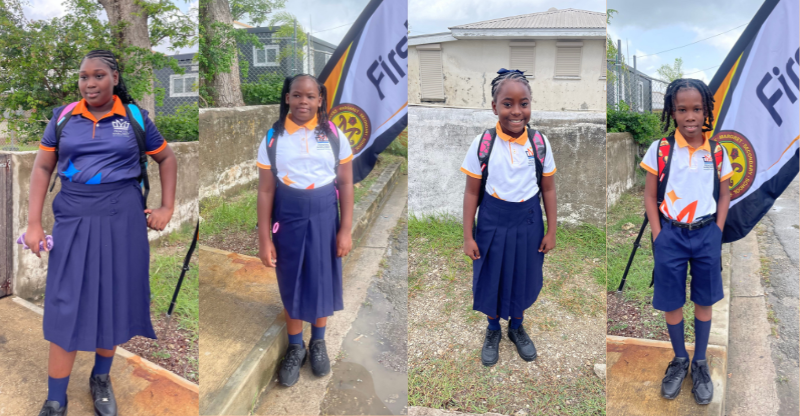
New uniform gets positive marks from Princess Margaret first-formers
The start of a new academic year brings change for first-year students at Princess Margaret Secondary School, and one of the most visible updates is a revamped school uniform that has quickly earned positive feedback from teenagers and their families as the cohort adapts to high school life.
On Monday, the first day of term, incoming first-formers arrived on campus wearing the new uniform, designed to offer greater comfort amid rising seasonal temperatures as they navigated their first experience in a secondary education setting. For 11-year-old Sariya Perch, the updated uniform offered more than just a fresh aesthetic. “I feel good. I feel confident in myself and I feel comfy in my uniform,” Perch shared, adding that she was optimistic about the day ahead, saying “I feel happy. I feel that I’ll have a great day today and I feel that my classmates will have a great day also.”
Perch’s classmate Junia Carmichael echoed that positive assessment, saying “It feels very good and comfortable. It looks better than the other one,” and predicting that the first day of high school would be a success. Fellow student Faith Grandison, who will study in form 1S, also praised the redesign: “It’s great. I love it. And I didn’t really like the first uniform, but I like this uniform better.” Samaria Best, another first-former, echoed her classmate’s approval.
While the uniform received largely favorable reviews, the transition from primary to secondary school brought a complex mix of emotions for the new cohort. Grandison described the shift to high school as “sad and exciting,” explaining that “I miss my old school. I miss my parents but I got to learn so I happy.” She added that she was looking forward to meeting new peers and building new friendships.
Keshra Barker, a student from form 1C, admitted she felt anxious at the start of the day. “It was okay. At first, it was scary, but then I get confident,” Barker said, crediting her mother, sister and grandmother for helping her calm her nerves and feel ready for the new term. In contrast, Lashawn Bynoe of 1J embraced the new chapter without hesitation. “I feel amazing,” he said, explaining his reaction simply: “Because I went to a new school.” Bynoe also shared that the new uniform filled him with pride, saying “I feel proud. Yes please I feel proud,” and adding that he hoped other male students across the school would eventually adopt the updated style.
Parents also shared a range of perspectives on the new uniform design. Sevol Pommells, a parent of one first-former, said he welcomed the change, noting that the updated design is far more distinctive than the previous traditional uniform. “I feel good about it. I like it a lot, a lot more unique than a regular uniform, you know,” Pommells said. He also pointed to the rising temperatures across Barbados as a key reason the new uniform is a practical improvement, explaining “I believe that is much better, especially in times like this when it’s becoming hot in Barbados,” and adding that the new fabric is noticeably lighter than the old material. When asked about potential differences in cost between the new and old uniforms, Pommells said he had no concerns about the pricing, framing the update as a modern, globally-aligned change for the school.
Another parent, Kerri Taylor, also supported the redesign, though she noted one small issue with the fit. Taylor shared that her daughter found the uniform comfortable, but had to have it adjusted to fit correctly. On the first day of term, Taylor’s main concern was not the uniform, but how her daughter would adjust to the new educational environment. “Nervous, nervous,” she said of her own feelings, explaining that the shift from primary school to a new campus brings big changes that take time to adapt to.
First-former Kyjara Barrow said the new uniform took a small period of adjustment. “I feel good. At first I was like, but then I started liking it and I say, like, good,” she said, confirming that the uniform ultimately felt comfortable to wear. Her father, Jamal Barrow, took a neutral stance on the redesign, saying “I ain’t feel no way about it, it’s just a new look.” Because the uniforms are distributed through the Barbadian government, Barrow explained he had no basis to compare the cost of the new and traditional options. He also noted a current supply gap: Kyjara was supposed to receive three skirts as part of her uniform allocation, but “right now the government could only do one for right now.”
For Kyjara, the first day of high school brought a mix of excitement and worry, much like it did for many of her peers. “At first I was excited. Then I started thinking about all the bullies and all that,” she said. But reassurance from her father helped ease her fears: “He said it’s going to be okay. So I said okay. So I’m happy.”
Photos by Lauryn Escamilla
-
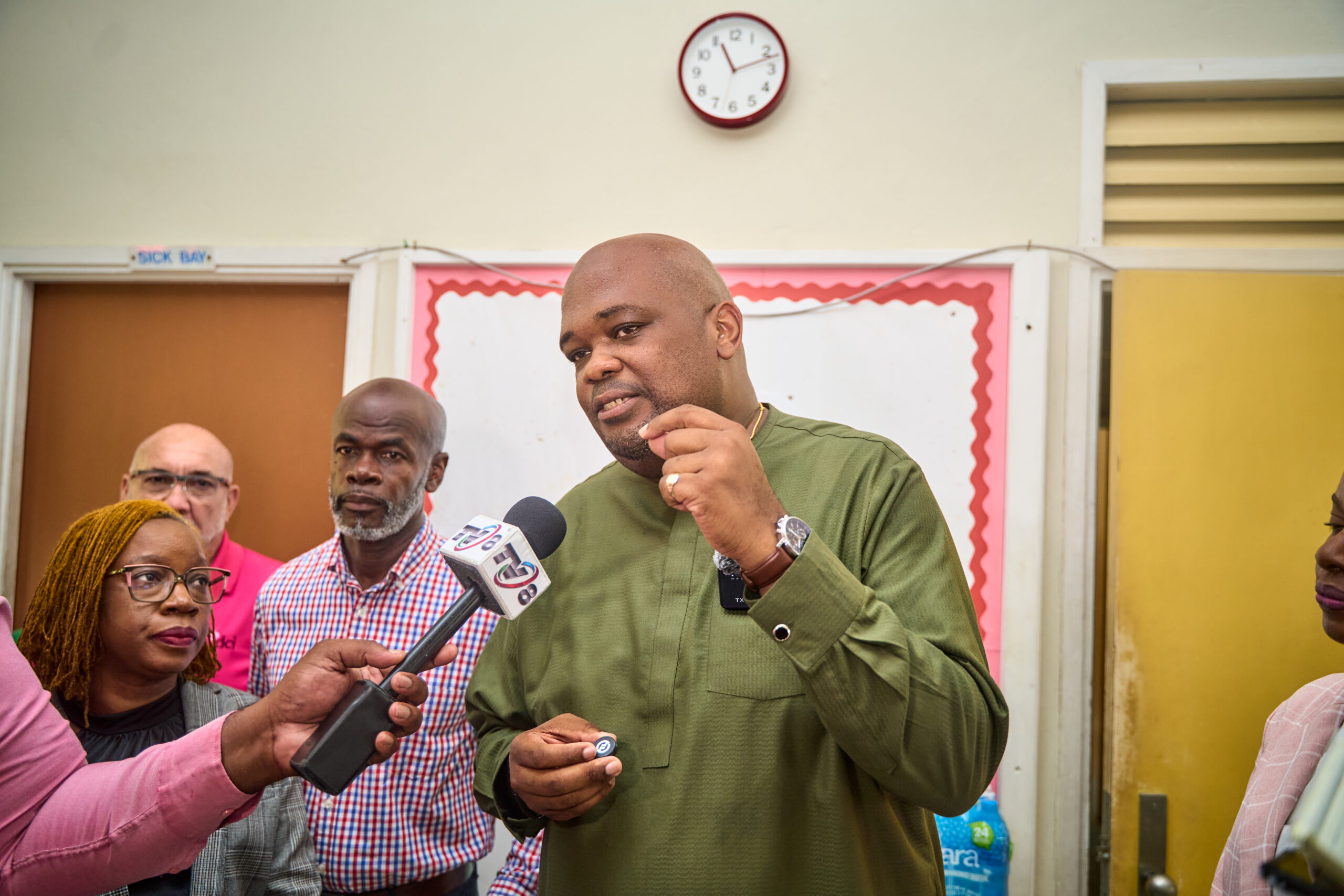
Minister sends strong warning to food companies targeting school children
As a new academic term kicks off across Barbados, the island’s Minister of Education Transformation Chad Blackman has drawn a clear line in the sand: commercial enterprises looking to target school-aged children with advertisements and sales of ultra-processed foods will be barred from school premises if they violate official national nutrition policies.
Blackman made the stance explicit during an appearance at St Mary’s Primary School Monday, where he spoke to reporters about the rollout of two key government projects: a new universal school breakfast program and updated national school nutrition guidelines. He warned corporate entities against exploiting common loopholes to reach young consumers, such as hiding marketing outreach behind the guise of charitable donations or branded promotional giveaways.
“Schools are hands off,” Blackman stressed during the address. “If your business sells ultra-processed foods, this is not a space where you can enter, court students by donating items children are likely to want, and still operate in violation of school nutrition policy.”
The hard line on marketing comes as part of a broader coordinated push across Barbados government agencies to reverse a steady rise in childhood obesity, a growing public health crisis that officials say demands proactive intervention. Blackman emphasized that while the government is committed to supporting food vendors to adapt their offerings rather than punishing them, its commitment to curbing youth weight gain remains unwavering. To that end, the Ministry of Education has partnered with the Ministry of Health and the Heart and Stroke Foundation to offer free specialized training for vendors, helping them revise their menus to prioritize nutritious, whole food options over ultra-processed goods.
Contrary to narratives that frame the policy as a ban on vending around schools, Blackman emphasized the government is pursuing collaboration over exclusion. “When we sit down with vendors, we have been clear: they can keep operating, they can keep earning a living,” he explained. “But with so many of our children already living with obesity, any food sold on or near school grounds has to be fit for purpose – it has to be healthy. What has been encouraging is that vendors have told us they want to work with us to make this transition, and that is the collaborative relationship we are building.”
Francine Charles, manager of the Barbados Childhood Obesity Prevention Coalition, echoed the minister’s urgency, noting that targeted food advertising actively rewires consumer preferences, particularly for children who lack the cognitive ability to resist persuasive marketing. Ultra-processed foods are specifically engineered to encourage repeated overconsumption, she added, making unregulated marketing to young people a major public health threat. Health officials across the island have repeatedly noted that children’s food choices are far more heavily shaped by sophisticated advertising than independent free will, making restrictions on school-based marketing a critical first step to reversing obesity trends.
Alongside the new nutrition policies, the Ministry of Education is rolling out additional reforms for the new term across Barbados’ secondary education sector. All secondary schools on the island have launched orientation programs for a new mandatory community service learning initiative, which requires students to secure community placement and engage in friendly inter-school competitions as the new academic policy is fully implemented this term.
-
New school breakfast earns praise, first-day gripes
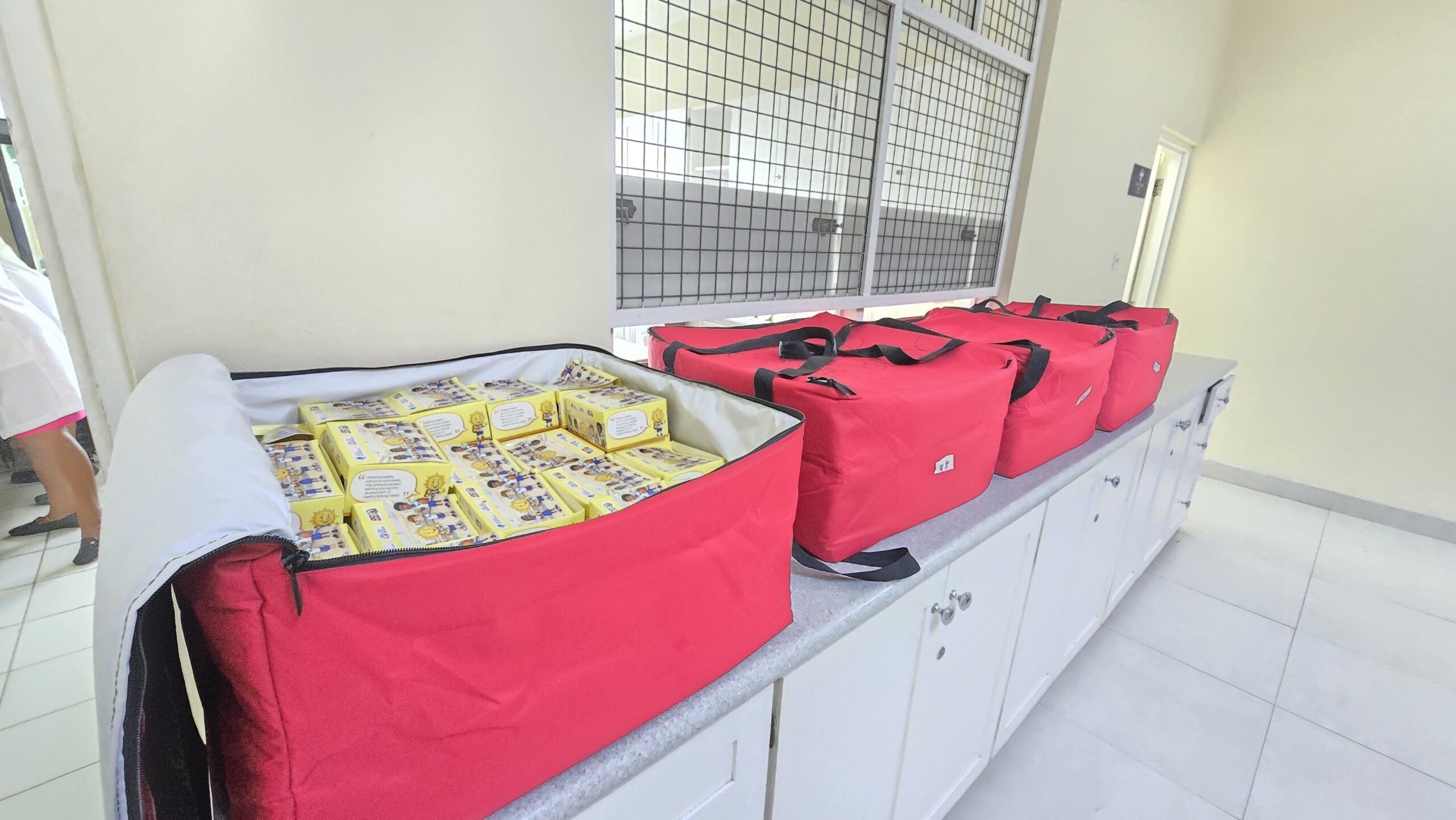
As the new academic year kicks off across Barbados, a long-awaited national school breakfast programme has rolled out to all public nursery and primary institutions, providing free morning meals to approximately 17,000 young students. Education Transformation Minister Chad Blackman confirmed the launch during a first-day school tour of St Mary’s Primary, framing the initiative as a targeted government intervention to reduce financial and logistical strain on households. The core mission of the programme, Blackman explained, is to guarantee every primary-aged child who wants a breakfast can access one, giving working parents or caregivers peace of mind regardless of their morning schedule or financial circumstances. Many parents face barriers to preparing morning meals, from tight commute timelines that require leaving home before dawn to limited financial resources, and the new programme is designed to address both of these challenges. Behind the timely launch, Blackman highlighted the intensive work of government teams, particularly the existing School Meals Department which already manages national school lunch provision. “The team and the permanent secretary have worked tirelessly to hit this launch deadline, while maintaining strict quality standards for every meal served,” he noted. Blackman added that the programme’s rotating menu has been curated to offer a diverse range of flavorful, nutritionally balanced options, with the full menu published on the ministry’s official website and social media channels for public transparency. School leaders across the island have broadly welcomed the expansion of the National Nutrition Policy to include the breakfast programme. Paula Toppin, principal of Charles F Broomes Primary, emphasized that the programme fills a critical gap for students who travel to school early and arrive hungry, ensuring they get a nutritious start to their school day. At Bay Primary School, principal Stacey Blunte echoed that enthusiasm, pointing out that proper morning nutrition directly boosts students’ ability to focus and engage in learning. “Without the right fuel from breakfast, many of our students struggle to focus throughout the morning. This initiative removes that barrier entirely,” Blunte told local outlet Barbados TODAY, adding that school staff were on site early to receive meal deliveries and ensure smooth service ahead of the first class. For the current academic year, Bay Primary is also hosting St Paul’s Primary School’s Kindergarten through Grade 2 cohorts while St Paul’s campus undergoes full infrastructure upgrades, meaning the programme benefits displaced students as well. Many parents have echoed school leaders’ praise, sharing personal stories of how the initiative has already simplified their daily routines. One mother from St Thomas, who travels long distances to get her child to school and often leaves home before 7 a.m., explained that the programme eliminates the daily rush to prepare breakfast before heading out. “For us, this is a huge relief. There are some mornings I just don’t have time to sit down and make breakfast before we leave, so knowing my son can get a meal here makes everything easier,” she said, as her son ate his breakfast at school. Another parent noted that the programme fills a critical safety net for low-income children who cannot afford morning meals at home, a sentiment shared by many other caregivers. One elderly Barbadian resident who attended primary school nearly 90 years ago recalled a historic school milk and biscuit programme that operated decades ago, saying she was thrilled to see a similar nutritious meal initiative return to local schools. Janelle Reid, president of Bay Primary’s Parent-Teacher Association (PTA), also endorsed the programme, urging parents to encourage their children to take advantage of the free daily meal. However, the programme’s launch was not without criticism. Some parents voiced disappointment with inconsistencies between the published menu and the meals served on the first day. Multiple parents reported that items listed on the menu, such as bananas and hot tea, were not included in first-day servings. One parent raised concerns about portion size, arguing that a single slice of bread was not enough to sustain a 10-year-old child through the morning. Other parents claimed that meal offerings varied between schools, suggesting some institutions might receive preferential treatment with more substantial portions or additional items not available at other campuses. A small number of critics also argued that too much of the programme’s budget was going toward packaging rather than the food itself. In response to these early concerns, Minister Blackman committed to ongoing monitoring and adjustments to the programme. He emphasized that authorities will track not only meal quality and consistency but also delivery times to ensure breakfast service does not disrupt scheduled teaching and learning. “We are committed to continuously improving this initiative as we deliver enhanced educational support across Barbados,” Blackman said. “Our goal is to make sure this programme delivers real, lasting benefit for students and families across the country,” he added.
-

Blackman opens first form academy at PMSS
In a landmark moment for education transformation in Barbados, Education Transformation Minister Chad Blackman officially opened the new First Form Academy at Princess Margaret Secondary School (PMSS) in Six Roads, St. Philip on Monday, challenging the academy’s inaugural cohort to embrace intentional purpose and lay the foundation for a new legacy of academic and personal excellence at the institution.
Designed to deliver targeted, holistic support that goes far beyond traditional academic instruction, the First Form Academy expands first-year students’ learning experiences to cover both core subjects and life-critical soft skills. Alongside standard core curricula including mathematics, English language, conversational Spanish and integrated science, students will attend regular specialized seminars focused on emotional intelligence, personal financial literacy, career exploration, mental health and wellbeing, active citizenship, and leadership development.
Speaking to the founding class at the launch ceremony, Blackman emphasized that students’ status as the first cohort of the academy places them at a historic turning point for PMSS, carrying both unique opportunity and profound responsibility. “This represents the future of this school… not just in creating a new culture but saying to the rest of our village that Princess Margaret means business. Princess Margaret is deliberate,” he stated. He encouraged students to look past their immediate secondary school years and consider how they will one day give back to their school, local communities, and the entire nation of Barbados, posing a core question for every student: “This is your purpose. Why am I here? How can I contribute not just to the school but to your wider community, your country, and the world?”
As part of the broader transformation push, Blackman issued a bold five-year target: PMSS will rise to become one of the top 10 performing secondary schools across Barbados. “I want to challenge the school to embrace that bold five-year vision. And what is that vision? That within five years, Princess Margaret Secondary School should be amongst the top ten secondary schools in Barbados,” he said. The minister stressed that hitting this ambitious goal will require collective effort from every stakeholder: students, classroom teachers, parents, the school’s board of management, and the surrounding local community. “Providing opportunity does not mean lowering expectations. We are here to raise the expectations of this school and everyone that comes through it,” he added.
Chief Education Officer Ramona Archer-Bradsaw framed the new academy as a visible example of the broader national shift in education policy, which is pushing schools to adapt their structures and programming to better meet the evolving needs of modern learners. “We have recognised that our schools must continuously evolve to meet the needs of our students,” she explained. “We must be willing to adapt our programmes and our structures to do what we really want them to do, and that is to support you.”
Archer-Bradsaw pointed to early success from similar adaptive reforms already rolled out at other Barbadian secondary schools, noting that St George Secondary recorded a more than 60% increase in passing grades for mathematics between 2025 and 2026, while Daryll Jordan Secondary saw a more than 40% jump in English passes over the same period. She confirmed that PMSS now joins a growing national movement of student-centered education transformation, with the First Form Academy initiative targeting improved academic outcomes while integrating parenting support programs, psychosocial support interventions, and whole-school culture change to guide the institution’s five-year transformation journey.
For PMSS’s new acting principal Dr. Michelle Edwards, the academy’s launch marks an opportunity to build on the school’s longstanding history while equipping a new generation of students to thrive in the future. “Today we officially launch the first form academy, a sanctuary designed exquisitely to transition, nurture, and elevate our newest scholars into titans of excellence,” she said. Edwards called on parents to partner closely with the school and challenged teachers to uphold uncompromisingly high standards as they guide students through their first year of secondary education, noting: “To our phenomenal teachers and staff because we know we are architects of their future. Let our passion be the fuel that drives them. Let our standards remain uncompromisingly high.”
The launch of the academy also aligns with the rollout of a updated school uniform for PMSS, a change Blackman said reinforces the institution’s ongoing transformation. “The introduction of this modern uniform further reinforces transformation, representing renewal, pride, belonging, and the high expectations we have for both students’ achievements and conduct,” he explained.
Blackman reminded the inaugural class that their status as the academy’s first students will remain a core part of their identity long after they graduate, but warned that this distinction comes with the responsibility of setting a clear benchmark for all future cohorts. He encouraged students to take full advantage of the array of extracurricular and co-curricular opportunities available to them, including competitive sports, community service learning, and public speaking development. This week, students will begin their community service programming, and a new Student TV initiative launching later this term will give them hands-on opportunities to build communication and interview skills. He also urged language learners studying French and Spanish to use digital platforms to practice and engage with the languages outside of structured classroom time, noting: “Your world is not limited by the language that you speak. There’s a world out there, a huge world that we want to expose you to.”
The academy’s instructional framework places heavy emphasis on modern best practices including ongoing teacher professional development, cross-staff collaboration, differentiated instruction tailored to individual student needs, inclusive education, restorative disciplinary practices, and collaborative professional learning communities for staff.
As the new school year gets underway, Blackman noted that the long-term success of the academy will be measured by its lasting impact on students and the broader school culture. “This is a moment of celebration, but not just celebration. Reflect on it and ask yourself, ‘Where will the academy be within the next five, ten years?’” he said during the official unveiling of the academy’s sign.
Ultimately, the First Form Academy is positioned to serve as a national pilot model for education transformation across Barbados. Insights and outcome data collected from the PMSS pilot will be used to refine and scale similar approaches to secondary education across the island. In his closing remarks to students, Blackman challenged the inaugural cohort to believe in their own potential and pursue excellence with intentional purpose, self-discipline, and relentless determination. “Nobody can stop me from achieving what I set out to do. Nobody. And I want you to have the same mindset,” he said, urging first-formers to make the most of the unprecedented opportunity in front of them: “That all of you will be great in every single thing that you have put your mind to do.”