标签: Barbados

巴巴多斯

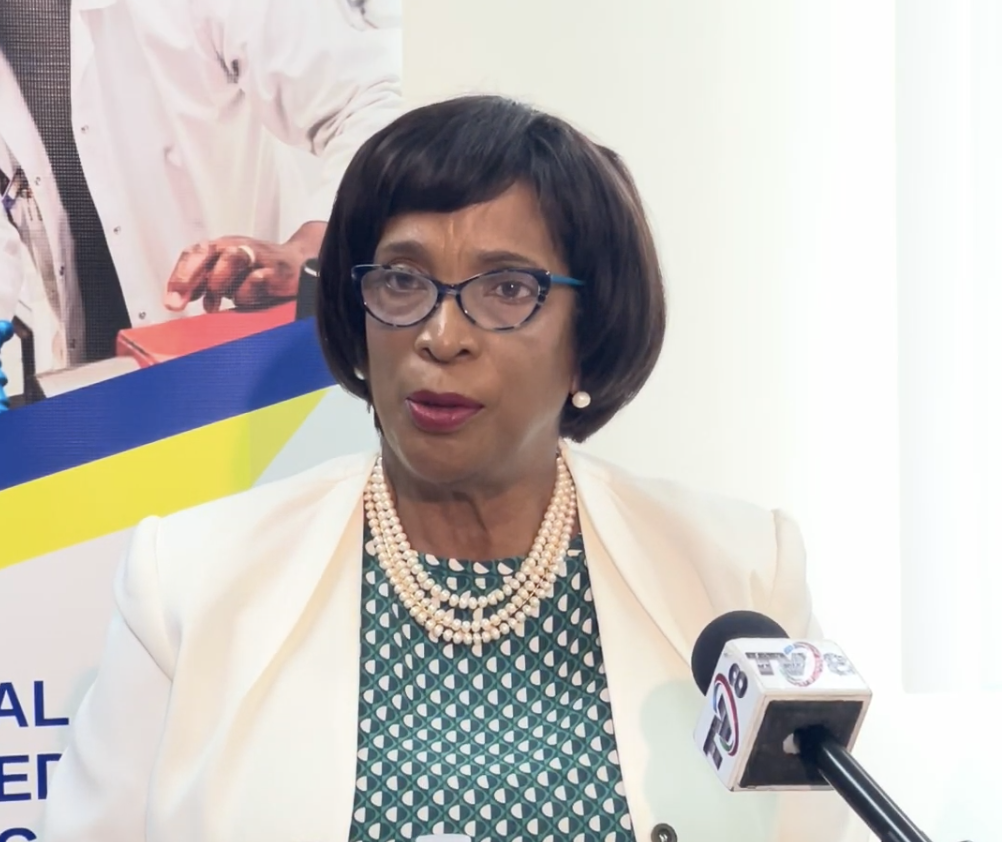
  • Chief Fisheries Officer Dr Shelly-Ann Cox passes away

    Chief Fisheries Officer Dr Shelly-Ann Cox passes away

    The small Caribbean nation of Barbados is reeling from unexpected tragedy this week after the sudden death of one of its most promising young public sector leaders, Chief Fisheries Officer Dr Shelly-Ann Cox. The 36-year-old trailblazer collapsed mid-speech while presenting an award at a public fishing industry gathering held in Weston, a coastal community in the parish of St James. Witnesses and first responders immediately initiated life-saving efforts at the scene in a desperate attempt to revive her, before rushing her to a nearby hospital. Sadly, medical professionals were unable to save her, and she was officially pronounced dead shortly after arrival.

    Dr Cox made history when she stepped into the role of Chief Fisheries Officer in January 2023. Aged only 35 at the time of her appointment, she made two landmark marks on the region’s fisheries sector: she was the youngest person ever to hold the top post, and only the second woman to serve as a chief fisheries officer across the entire Caribbean. Over the 12 months she led the division, Dr Cox earned widespread respect across the industry for her rare combination of hands-on practical knowledge and innovative academic insight. She brought a full 10 years of frontline experience in fisheries management to the role, alongside specialized expertise in interdisciplinary climate research that she applied to address pressing challenges facing Barbados’ coastal fishing communities.

    Beyond her policy and leadership work, Dr Cox was deeply committed to public education and community outreach. On the very same day of her death, she had already spent hours interacting with young girls from the St Stephen’s Brownie Troop, welcoming the group for a guided tour of the Fisheries Division’s facilities and engaging them in learning about the island’s marine resources. Colleagues and community members have highlighted this full day of service as a reflection of her lifelong dedication to lifting up others and nurturing public understanding of the ocean. Dr Cox is survived by her seven-year-old son, Shae, who is now at the center of an outpouring of support from across the country.

  • BiMPay praised as credit unions call for further reform

    BiMPay praised as credit unions call for further reform

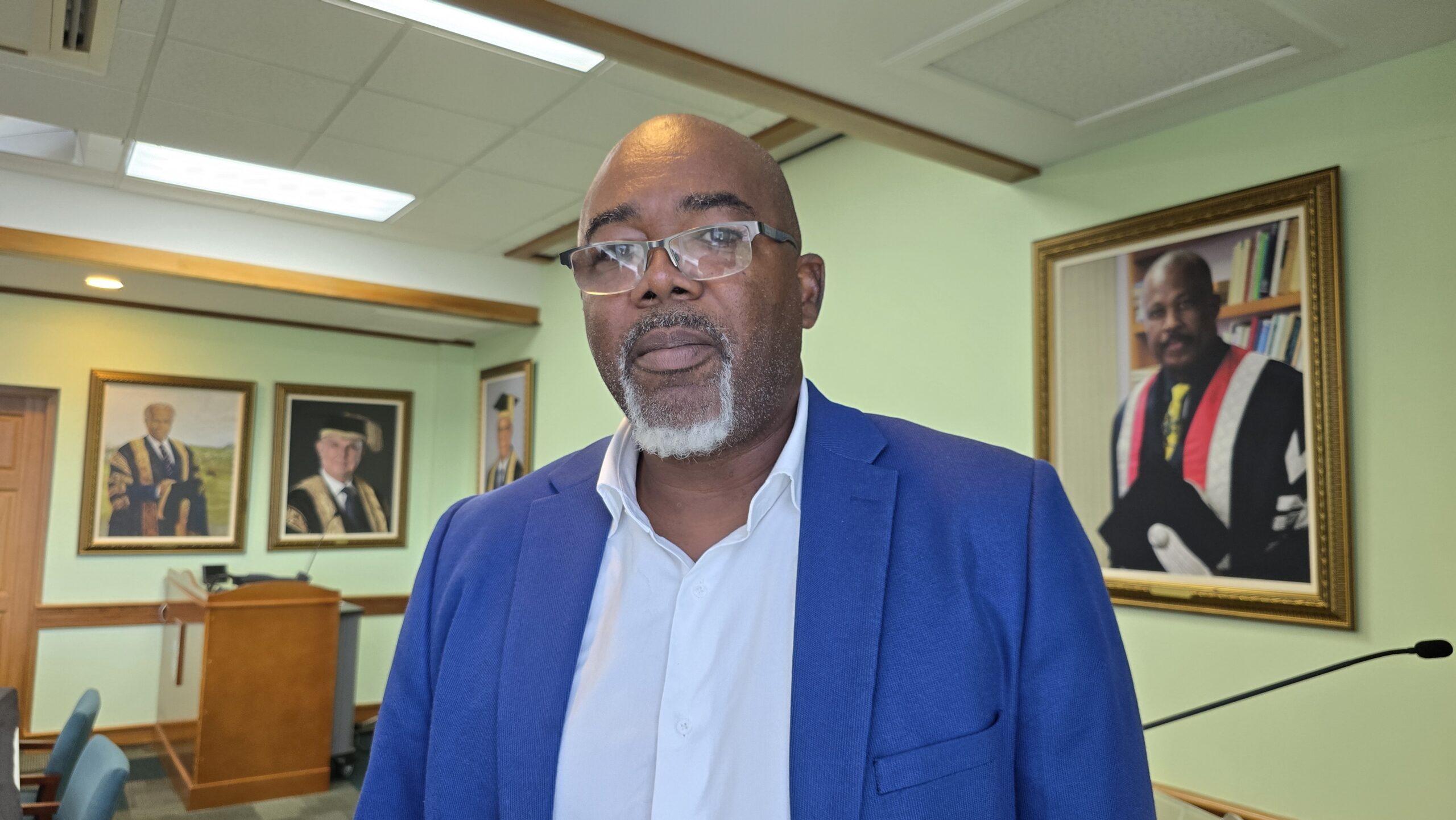
    Barbados has entered a new era of digital finance with the official launch of BiMPay, the nation’s first domestic instant payment system, an initiative celebrated by financial leaders across the country even as key sector representatives highlight unresolved structural barriers holding back cooperative and small business growth. The launch event, hosted Friday evening at the Central Bank of Barbados, brought together major stakeholders from commercial banking and the credit union movement to mark the milestone. Glendon Belle, chief executive officer of City of Bridgetown Co-operative Credit Union Limited—one of the largest credit unions in Barbados—opened his remarks by framing BiMPay as a transformative step forward for the island’s financial inclusion goals. For credit unions, which center their mission on serving community members rather than just maximizing shareholder profits, innovation is defined not by raw financial returns, but by expanding access to financial tools and delivering measurable improvements to members’ daily lives, Belle explained. Against that backdrop, he called BiMPay a major win for the entire sector. Even with the progress represented by the new payment platform, Belle emphasized that long-standing structural challenges continue to stifle the growth of Barbados’ credit union movement. The most persistent issue, he noted, is the widespread reluctance among many Barbadian employers to route employees’ salary deposits directly into credit union-held accounts. This practice artificially restricts membership growth, blocks efforts to expand financial inclusion across the country, and holds back the expansion of credit unions, which focus heavily on serving working people and small community businesses. To address this gap, Belle argued that BiMPay offers a workable workaround: its secure, real-time transaction infrastructure creates clearer, more connected links between employers, workers, and all types of authorized financial institutions, reducing friction that has kept credit unions sidelined for years. Turning to the critical role of micro and small enterprises (MSEs) in Barbados’ economy, Belle noted that more than half of the island’s MSEs generate less than $100,000 in annual revenue, with many operating on thin profit margins or sustaining consistent losses. Far from being peripheral players, these small businesses are the backbone of the national economy, representing every local community and driving grassroots employment, he said. This reality makes clear that access to capital alone is not enough to support small business growth; MSEs also need efficient, low-cost, fast financial infrastructure that enables them to improve their bottom lines and scale over time. To unlock further growth, Belle called on policymakers to grant credit unions formal access to Barbados’ Credit Guarantee Fund. He explained that this access would allow credit unions to expand responsible lending to viable small businesses, while lowering the financing barriers that currently prevent many promising MSEs from growing. Belle also praised ongoing efforts to integrate foreign exchange transaction capabilities into the evolving BiMPay framework, noting that this feature will let small Barbadian businesses engage more easily and effectively in regional and international trade. When paired together, these policy and infrastructure advances will position credit unions as full-service, comprehensive financial partners for all segments of the Barbadian economy, Belle said. Beyond benefits for businesses, he added that instant payments through BiMPay will cut transaction costs for merchants, speed up cash flow via immediate transaction settlement, simplify routine financial operations for small operators, and give individual consumers real-time control over their personal finances. Shimon McIntosh, president of the Barbados Bankers Association, joined Belle in celebrating the launch, calling the new system a landmark achievement for the entire Barbadian financial sector. “Today we celebrate a watershed moment in Barbados’ financial journey,” McIntosh said, crediting months of cross-sector collaboration between the Central Bank of Barbados, licensed commercial banks, and participating credit unions for turning the BiMPay project from a concept into a fully functional platform. Delivering a nationwide instant payment system was no small feat, McIntosh emphasized: teams across sectors worked countless long hours and overnight shifts to integrate disparate existing banking and credit union platforms, complete rigorous third-party and user testing, and ensure BiMPay meets the most stringent global security and performance standards. McIntosh stressed that BiMPay is far more than a routine technological upgrade for the island’s financial system. Instead, it acts as a catalyst for expanded economic opportunity, greater financial empowerment for all Barbadians, and broad-based national progress. Drawing a comparison to globally recognized, high-impact instant payment systems including Brazil’s Pix and India’s Unified Payments Interface (UPI), McIntosh noted that Barbados is now part of a fast-growing global movement of nations leveraging real-time digital payments to drive economic transformation. The Barbadian banking sector views BiMPay as a pivotal leap forward for the country, he added, and it reflects the entire financial industry’s shared commitment to innovation, cross-sector collaboration, and keeping Barbados’ financial system competitive in an increasingly digital global economy.

  • Veteran engineer calls for drainage network overhaul

    Veteran engineer calls for drainage network overhaul

    With more than five decades of professional experience spanning major infrastructure projects across three Caribbean nations, a decorated veteran civil engineer has delivered a stark warning about the critical state of Barbados’ stormwater drainage networks, linking decades of faulty policy to accelerating road decay and growing flood vulnerability across the island.

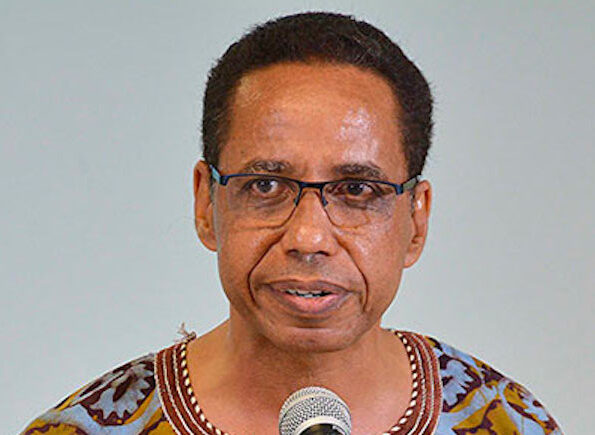
    Andrew Hutchinson, whose career covers civil, structural and environmental engineering with deep expertise in stormwater management, watershed modeling and rainwater harvesting, shared his decades of on-the-ground insights during a recent Friday webinar focused on how poor drainage systems undermine urban infrastructure. His assessment pulls back the curtain on longstanding systemic flaws that have left Barbados ill-prepared to handle intense seasonal rainfall.

    Hutchinson argues that substandard drainage is not a minor infrastructure issue—it is the single leading driver of road deterioration across the entire island. Rating the country’s current road drainage infrastructure just 2.5 to 3 out of 10, he emphasized that policymakers and planners have repeatedly failed to recognize drainage’s outsized role in preserving road integrity.

    The roots of the current crisis stretch back to road expansion projects carried out in the 1980s, Hutchinson explained. Instead of acquiring additional land to build out full, functional drainage networks, project leaders opted to remove existing drains and replace them with narrow kerbs and slipper drains. This cost-cutting shortcut effectively turned the roads themselves into makeshift drainage channels. When heavy rains hit, water cannot run off the road surface into designated storage ditches, leaving water pooled on pavement until it overtops kerbs and floods adjacent private and public land.

    This short-sighted policy has created generational damage to Barbados’ road network, the engineer added. Compounding the problem, the Barbados Water Authority regularly excavates trenches to install utility connections, and often fails to properly restore the road surface after work is complete, creating additional weak points that break down faster when exposed to standing rainwater.

    Hutchinson pointed to the ABC Highway as a proven model of what proper drainage design can achieve. Unlike nearly all other major roads on the island, the ABC Highway includes purpose-built stormwater ditches that capture runoff, store it temporarily, and allow it to gradually drain into underground wells, fitted with grates to block debris from clogging the system. Even after heavy downpours, the system works as intended, keeping road surfaces clear and preventing downstream flooding.

    Beyond large-scale infrastructure design, Hutchinson stressed that every stormwater project requires rigorous hydrological analysis tailored to the size of the local watershed, and encouraged widespread adoption of specialized modeling software like HydroCAD to guide design decisions. For any watershed larger than 10 hectares, engineers must use modeling to calculate precipitation rates for 24-hour storm events and decide whether to design for 10-year or 25-year storm events to ensure long-term resilience. A core, often overlooked, factor in this modeling is the time of concentration— the period it takes a drop of water to travel from the farthest point of a watershed to the infrastructure point of interest, such as a culvert. Getting this calculation wrong leads to undersized, ineffective drainage systems that fail during heavy rain, he explained.

    To address the current crisis, Hutchinson has put forward a range of actionable solutions, starting with expanded adoption of low-impact development drainage systems that boost water infiltration and slow runoff. Options like GeoWeb permeable surfaces and grassed parking lots, he noted, create durable, usable surfaces that can even handle heavy truck traffic while allowing rainwater to soak into the ground rather than running off. For areas with limited open space, Hutchinson recommended the installation of small check dams in natural gullies and underground stormwater chambers in dense urban areas, which provide critical extra storage and infiltration without requiring above-ground ditches or ponds that take up valuable space. He highlighted existing successful examples of this approach on the island: underground storm chambers are already in use near Kensington Oval and along Highway 5, where there was no room for above-ground storage infrastructure.

    During the webinar’s question-and-answer session, Hutchinson doubled down on his call for widespread deployment of natural and built water storage solutions across Barbados, including expanded check dams, retention ponds, detention areas and rainwater harvesting systems. These interventions, he argued, could dramatically reduce the severe flooding that regularly hits urban centers including Holetown, Speightstown and Bridgetown, while also recharging the island’s depleted aquifers and boosting long-term water security for all Barbadians. When asked if the island needs to prioritize expanded water storage, he answered simply: “I would say yes to all of the above.”

  • Health advocates welcome drinks makers reduced-sugar shift

    Health advocates welcome drinks makers reduced-sugar shift

    Against a backdrop of growing global alarm over rising childhood obesity and diet-related chronic illness, public health advocates in Barbados are celebrating a landmark shift among domestic beverage producers, who have recently rolled out a wave of reduced-sugar and no-added-sugar product lines as a critical win for population health.

    Francine Charles, programme manager for the Childhood Obesity Prevention Coalition, told local outlet Barbados TODAY that civil society health groups have widely praised the industry reformulation trend that has unfolded over the past several months. One major local producer, Pine Hill Dairy, has expanded its portfolio to add two new lines: a reduced-sugar range and a 100% fruit juice line, both of which carry no added sugar and no artificial preservatives. Several other local beverage distributors have followed suit, updating their own product catalogs to include more low-sugar options for consumers.

    This industry shift marks exactly the outcome health advocates have pushed for through years of policy advocacy, Charles explained. A key policy driver behind the change, she noted, was the recent government decision to raise the excise tax on sugar-sweetened beverages to 20%. Contrary to common criticism that such taxes exist solely to boost government revenue, Charles emphasized that the policy’s core goal was always to incentivize manufacturers to reformulate their products to fall below the sugar threshold that triggers the tax. “We were very happy to see that because the intent was not necessarily to be taxing companies but encouraging reformulation so that the sugar content of drinks comes below the tax bracket,” she said.

    Progress has also been made through the country’s national school nutrition policy, which has gradually tightened restrictions on the nutritional content of foods and beverages sold to students on school grounds. Under current rules, all beverages available in schools must be free of added sugar and artificial sweeteners. Rather than push back against the regulation, beverage companies have adapted by developing a range of compliant, healthier alternatives including sugar-free water-based drinks and milk-based products, alongside healthier imported options that meet the policy’s standards. Charles credited productive collaboration between the Ministry of Education Transformation and private industry for this successful outcome, noting that civil society groups are encouraged by the pace of change so far and hope to see more industry action in the coming years.

    Even as advocates celebrate these incremental wins, Charles warned that Barbados still faces steep, systemic challenges in bringing down population obesity rates, especially among children and adolescents. The most recent national data, collected in 2022, puts Barbados’ childhood obesity rate at 42%, and it remains unclear whether current public health interventions are robust enough to reverse this alarming trend. “I’m not sure that we have done enough as a society,” Charles said. “The policies have probably not been enforced as strongly as we could, and education has to be massive to really touch every single household in Barbados.”

    She is calling for two key next steps to address the gap: more rigorous enforcement of existing public health and nutrition policies, and a far expanded public education campaign to help households across the country adopt and sustain healthier dietary habits. Looking ahead, Charles revealed that civil society groups are currently finalizing new policy proposals to tackle another major barrier to healthy eating in Barbados: the high cost of nutritious food. The Food and Agriculture Organization (FAO) has previously flagged that healthy diets are disproportionately expensive in Barbados and across the Caribbean region, putting them out of reach for many low-income households. The coalition is studying global best practices and consulting with public health and policy experts to develop evidence-based recommendations that will lower the cost of nutrient-dense foods and expand access to affordable healthy options for all Barbadians. The proposals will be presented to government officials for discussion in the coming weeks.

  • Lawyer questions need for gun court amid resource strain

    Lawyer questions need for gun court amid resource strain

    Against the backdrop of rising gun violence and a crippling backlog of cases in Barbados’ criminal justice system, a top defence attorney has publicly challenged the government’s plan to launch a dedicated firearms court, arguing that targeted investments in the existing judicial framework would deliver faster, more cost-effective progress on both issues.

    Defence counsel Shadia Simpson, in an exclusive interview with Barbados TODAY, did not mince words when weighing in on the executive branch’s latest policy proposal to tackle the island’s pressing gun crime crisis. The government has framed the specialized court as a critical intervention to speed up trial proceedings for firearm-related offences, which have contributed to growing public safety concerns across the island. But Simpson argues that the plan misallocates limited public resources at a time when foundational gaps in the current system are the real root of persistent delays.

    “I think that a specialisation in court is not necessary at this time,” Simpson stated plainly. While she openly acknowledged that gun violence remains a critical threat to Barbados communities, she pointed out that the jurisdiction already has structural provisions in place to handle serious weapon-related cases. Currently, the island operates eight active criminal courts, with one specifically designated to hear high-stakes matters including murder and firearms charges. “So I personally don’t think that we needed this at this time,” she added.

    At the core of Simpson’s critique is the strain that a new standalone court would place on already overburdened judicial support services. She emphasized that most administrative delays that slow case progression do not stem from a shortage of dedicated courtrooms, but rather from understaffing and outdated infrastructure across the system. For example, pre-sentencing reports, which are required to move cases toward resolution, often take months to complete because probation officers are already stretched far too thin across existing caseloads.

    “ We already have limited resources, so sometimes the sentencing reports, for example, take an extremely long time to reach the courts because the probation officers are stretched,” Simpson explained. “I just think that the resources could have been allocated better if you wanted to see a more efficient criminal justice system. And I don’t think that necessarily is the best use of resources to establish a specialised gun court at this time.”

    Notably, Simpson pushed back on one of the most common critiques of specialized courts: that creating one for gun crimes would open the door to a proliferation of separate tribunals for every high-profile crime category. Citing long-standing successful models across the Caribbean, she noted that jurisdictions like Jamaica have operated specialized gun courts for years, while many other regional systems maintain dedicated drug courts, with no major disruption to their overall legal frameworks. “I personally don’t have a challenge with it. It’s just that to me, if we want to clean up the backlog and we want to address crime, I just think that there are better ways to do it,” she clarified.

    One of the most significant practical barriers Simpson highlighted is the ongoing manpower shortage among criminal bar practitioners in Barbados. She warned that launching an additional court without expanding the pool of available defence attorneys and prosecutors would only exacerbate existing delays, rather than solving them. Currently, a small group of criminal lawyers already handle all cases across the eight existing criminal courts; adding another venue would force these already overworked practitioners to split their time across more dockets, slowing proceedings across the board.

    “You don’t knock things until you try them, yes, but to me one of the challenges is the fact that again you don’t have the manpower,” Simpson cautioned. “I don’t know if there are going to be prosecutors assigned, but you still have the same handful of attorneys who practise at the criminal Bar who are now going to not only be stretched between the eight existing criminal courts, but now who are expected to also be in these courts as well. So I personally don’t think that it may have the desired results.”

    Beyond understaffing, Simpson added that the shift between multiple specialized court venues would add unnecessary logistical complexity to case management, further slowing the delivery of justice. She noted that lawyers are already able to manage mixed caseloads more efficiently when cases are heard at a single venue, rather than forcing practitioners to travel between separate specialized locations throughout the workweek.

    Simpson did acknowledge that the sharp rise in gun-related crime across Barbados demands urgent, decisive action from policymakers, and said that the legal community would reserve final judgment until the policy is implemented and its outcomes can be assessed. Still, she argued that addressing foundational gaps in the existing system would have delivered more immediate, sustainable improvements in both case backlogs and public safety.

    For example, lower courts across the island still rely heavily on manual, paper-based processes, with no digital transcription of proceedings. Magistrates still write court notes by hand, creating unnecessary delays when records need to be accessed for trial progression. Even with these gaps, Simpson maintains that the existing eight criminal courts are fully capable of handling firearm-related cases more efficiently if they receive adequate targeted funding and support.

    “I certainly think the existing framework could handle it,” she said. “For example, we are now waiting in some instances for two to two and a half months to get a pre-sentencing report, and the probation officers are extremely stretched. They’re working with limited resources and they have to service some courts, so we understand the constraints.”

    “In the magistrates’ court, for example, we aren’t even to a place where there are transcripts available from the proceedings. You still have magistrates writing by hand. If we had tried to deal with those foundational things first, we could get matters moving through the system a lot faster.”

  • BiMPay goes live: Barbados launches instant digital payments system

    BiMPay goes live: Barbados launches instant digital payments system

    Barbados has marked a major milestone in its digital economic evolution with the official launch of BiMPay, the country’s first national instant payment infrastructure, which now enables round-the-clock, real-time money transfers for individuals, private businesses and public sector agencies across the island nation.

    The launch ceremony, held as an informal “Go-Live Pyjama Party” on Friday evening, saw Prime Minister Mia Mottley complete the system’s first public live transaction: purchasing a burger from a local small business owner. In her remarks shortly after the transaction, Mottley emphasized that in an always-connected global economy, a country that restricts financial transactions to standard business hours cedes critical economic opportunity.

    Calling the launch a source of national pride, the Prime Minister noted that BiMPay is just the latest in a string of new digital public and private services rolled out across Barbados in recent weeks, with more initiatives planned to fully integrate the island into a comprehensive digital national framework in the coming months.

    Mottley pointed to other ongoing digital transformation projects already delivering results for Barbados, including telemedicine partnerships that have cut through a critical backlog of diagnostic reads at the Queen Elizabeth Hospital. Through a collaboration with medical specialists in India, the country has leveraged cross-border digital connectivity to significantly reduce wait times for X-ray and CT scan reviews, addressing gaps created by a persistent domestic skills shortage.

    “Addressing our national skills deficit is my top ongoing priority,” Mottley explained. “We do not have enough skilled workers locally to meet all our needs, so we are turning to technology to augment our capacity and keep our economy moving. Beyond closing skills gaps, digital infrastructure like BiMPay makes it possible to do business at any time, breaking down the old barriers of clock and calendar.”

    The Prime Minister also outlined two key public benefits of the new instant payment system: it will reduce opportunities for financial-related crime by cutting reliance on unrecorded cash transactions, and it will build a formal digital transaction history for micro-enterprises and informal workers who have historically struggled to access formal credit from financial institutions. From neighborhood shopkeepers and auto mechanics to itinerant coconut vendors, Mottley emphasized that BiMPay was designed to serve marginalized groups that have long been excluded from formal financial infrastructure.

    Dr. Kevin Greenidge, Governor of the Central Bank of Barbados, added that BiMPay has been two years in development, with plans for ongoing expansion to eventually fully integrate all government agencies into the system. Currently, six commercial banks, three credit unions, the Barbados Stock Exchange and the Accountant General’s Office have already connected to the new infrastructure.

    Greenidge noted that a modern, competitive economy cannot thrive on outdated payment infrastructure. “Whether it is a family sending funds to a child studying abroad, a small vendor waiting for payment to restock inventory, or a business needing immediate access to working capital, people and enterprises can no longer afford to wait days for transactions to clear,” he said. “Beyond improving daily financial activity, BiMPay creates the foundational infrastructure we need to grow a dynamic, competitive fintech sector that will drive future economic growth for Barbados.”

  • Police mull uniform change to beat Crop Over heat

    Police mull uniform change to beat Crop Over heat

    As Barbados prepares for the annual Crop Over festival and braces for a predicted extreme heatwave, the nation’s police force has thrown its full support behind a groundbreaking proposal to swap traditional heavy uniforms for lighter, more climate-appropriate alternatives during the event. In an exclusive confirmation with Barbados TODAY, Police Association of Barbados President Inspector Wendly Carter outlined the details of the initiative, which has been under active review by government and law enforcement leadership for months.

  • Universal free pre-primary education ‘to begin in September’

    Universal free pre-primary education ‘to begin in September’

    Barbados is set to roll out a landmark universal free pre-primary education programme for all qualifying three and four-year-olds starting this September, marking a major expansion of the island nation’s early childhood learning ecosystem, with education leaders emphasizing the critical role of parental partnership in preparing young learners for this new phase.

    The launch of the initiative was the central focus of a recent Pre-Primary Expansion Parent Engagement Session hosted at George Lamming Primary School, where senior education officials outlined the programme’s goals, structure, and next steps for families ahead of its official rollout. Deputy Chief Education Officer Julia Beckles highlighted that the scheme is far more than a childcare service, centered instead on delivering intentional, curriculum-aligned learning experiences tailored to young children’s natural development.

    “We are excited about the possibilities this expansion unlocks, and we have made steady progress to open up additional spots for three and four-year-olds across the country,” Beckles told attendees. “This is not daycare. This is structured learning rooted in a formal early childhood curriculum. Even as children engage in play and age-appropriate activities, they will make meaningful developmental gains that set them up for long-term success.”

    Beckles added that education authorities welcome open feedback from parents ahead of the September 2026 launch, encouraging caregivers to share questions, concerns, and suggestions to refine the rollout process. The programme forms a core pillar of the Government of Barbados’ Every Child Barbados national education transformation agenda, which aims to reduce opportunity gaps and advance equitable access to high-quality learning from early childhood onward.

    “Every child in Barbados deserves a strong start to their educational journey,” noted Jenise Clarke, an Education Officer within the Ministry of Education Transformation. “No matter what community a child comes from, what their family’s income level is, or what their personal background may be, they are entitled to free, quality early childhood education that prepares them for primary school and beyond.”

    Beyond outlining the policy itself, the engagement session offered evidence-based, practical guidance to parents on how to prepare their children for the transition to structured pre-primary learning. Shioma Francis-Porte, another Education Officer in the transformation ministry, urged families to establish consistent daily routines early, including fixed bedtimes and dedicated quiet time for shared reading and open conversation.

    “Consistent routines help young children build independence, self-regulation, and the foundational skills they need to be ready to learn,” Francis-Porte explained, reminding attendees that “you are your child’s first teacher – not us.” She encouraged parents to nurture children’s communication skills through casual conversation during daily tasks, shared storytime, singing traditional nursery rhymes and local Barbadian cultural songs, and to help children build social-emotional skills by teaching them to share, name their emotions, use kind language, and practice empathy.

    Francis-Porte also emphasized that play is the most effective vehicle for early learning, urging parents to support unstructured imaginative play, creative activities like drawing, outdoor exploration, and to limit excessive recreational screen time. Education Officer Dwane Goddard focused on supporting children’s overall physical and emotional well-being ahead of enrollment, advising parents to prioritize healthy habits including balanced meals, consistent water intake, regular physical activity, and keeping children’s preventive health check-ups and vaccinations up to date.

    “Good nutrition, regular movement, and consistent healthcare all lay the foundation for children’s overall well-being and ability to learn,” Goddard said. He also encouraged caregivers to practice positive discipline, maintain open lines of communication with their children, and monitor children’s online activity to keep them safe. “Children thrive and learn best when they feel safe, loved, and supported at home,” he added.

    Goddard stressed that ongoing parental engagement with schools is a key driver of children’s long-term success, noting: “Your involvement makes a significant difference in your child’s outcome. Learning begins at home, and it continues in the classroom.” He also encouraged families to center Barbadian culture and identity in daily activities with their children, while teaching young learners to respect diversity in all its forms.

    “Parents are their children’s first and most important teachers. Together, we can nurture confident, caring, creative, and capable learners who will build the future of Barbados,” Goddard said.

    Two additional education officers, Tanya Byone and Natasha Reeves, walked attendees through building foundational self-help and academic readiness skills. They recommended that parents help children practice independent daily skills including handwashing, communicating when they need to use the bathroom, and managing clothing fasteners like buttons and zippers on their own. To strengthen cognitive, communication, and social skills ahead of enrollment, they encouraged families to incorporate simple counting activities, colour recognition games, puzzles, shared story reading, and group play opportunities into daily routines.

    To qualify for the programme, children must turn three or four years old by September 1 of this year. The Ministry of Education has advised parents to prepare required documentation ahead of enrollment, including official birth certificates, proof of residential address, up-to-date immunization records, passport-sized photographs, and any required immigration documentation, and to monitor official ministry channels for further announcements and updates.

  • Defending champs West Terrace Primary advance to quarter finals

    Defending champs West Terrace Primary advance to quarter finals

    The knockout round of the National Sports Council/BICO Primary School Football Competition has wrapped up its Round of 16 matches, with eight elite teams punching their tickets to the upcoming quarter-finals, and a highly anticipated rematch of last year’s championship final already building buzz among young football fans across the country.

    Defending tournament title holders West Terrace Primary secured their spot in the final eight with a hard-fought 1-0 shutout victory over Reynold Weekes Primary, with Neymar Forde netting the decisive lone goal of the match to seal the win. Last year’s tournament runners-up Arthur Smith Primary also advanced to the next round, but they were pushed to the limit by a determined St Paul’s Primary side, needing a penalty shootout to secure a 4-3 edge on penalties after a thrilling 3-3 draw in full regulation time. St Paul’s forward Zeshawn Shorey delivered a standout individual performance in regulation, notching a hat-trick to put his side in position to pull off an upset, while Arthur Smith found the back of the net from Jakkori Best and Tristan Carew-Stephens, plus a late own goal that forced the match to penalties.

    Two other Round of 16 matches on Friday at St George’s Greens Playing Field also delivered clear results. Host representative St George Primary dominated Bernard’s Primary 2-0 to advance, with Tyree Cumberbatch and Cameron Hope each finding the score sheet. Deacons Primary also secured a 2-0 victory over Roland Edwards Primary, with Adrian Allen and Jaylen Fenty combining for the winning goals to book Deacons’ quarter-final spot.

    The first four quarter-final berths were claimed a day earlier, on Thursday, in a series of tightly contested matches. Milton Lynch Primary picked up a 3-0 win over All Saints Primary, with Amari Callender, Jovanni Bascombe and Shakir Perch all splitting the goals for the winning side. Wesley Hall Primary advanced with a 2-0 shutout of Hitz 106.7 FM Bay Primary, with Shaquri Burgess and Tazarie Marshall notching one goal apiece. St Stephen’s Primary edged past Blackman and Gollop Primary 1-0 thanks to a single first-half strike from Sirr Dash, while St Cyprians Primary claimed a 1-0 victory over Providence Primary, with Tashim Welch’s second-half goal proving to be the game-winner.

    All quarter-final matches are scheduled to take place on June 15 at the Greens Playing Field, setting up four compelling matchups for football fans to enjoy. St Stephen’s will square off against Milton Lynch, St Cyprians will take on Wesley Hall, and Deacons will go head-to-head against St George. But the undoubted highlight of the quarter-final draw is the marquee matchup between defending champion West Terrace Primary and last year’s runner-up Arthur Smith Primary, a rematch of the 2023 tournament final.

    Both sides have entered the quarter-final round undefeated through the 2024 competition, and both have made clear their goal of reaching the semi-finals, which are scheduled to be held at the Barbados Football Association’s Technical Centre on June 18. The 2024 tournament final will also take place at the Technical Centre, with the championship match set for June 27.

  • Windies Women primed for crucial New Zealand clash

    Windies Women primed for crucial New Zealand clash

    As the ICC Women’s T20 World Cup gets underway, the West Indies Women’s squad has declared itself ready for its opening clash against defending champions New Zealand on Saturday, with both head coach Shane Deitz and captain Hayley Matthews expressing confidence in their team’s preparations while navigating an uncertain fitness question around a key veteran player.

    The upcoming matchup carries extra history: these two sides met in the 2024 tournament’s semifinal, where New Zealand scraped across the line to claim an eight-run victory in a low-scoring battle that could have swung either way. Deitz says he expects another tightly contested battle this weekend, noting the two squads are far more closely matched than the defending champions’ title status might suggest.

    “It doesn’t matter who is across the pitch from us – New Zealand is clearly a top side, and they showed that by winning the last tournament,” Deitz said. “That semifinal in Dubai two years ago was a close one; if a couple of breaks had gone our way, we could have been the ones moving on. These are two evenly built teams, and getting off to a strong start in this opening game will be critical. We’ve put in the work, the squad has done all the prep we need, and we’re ready to step onto the field.”

    Deitz also shared his expectations for the pitch conditions at the host venue, noting recent cool, wet weather will likely create opportunities for both bowlers and batters. “We’ve had a lot of rain and lower temperatures lately, so the wicket should have something in it for bowlers, especially with the new ball,” he explained. “But these are excellent grounds, so even with that assistance for the bowlers, the ball should come onto the bat well for batters too. If you hit your lines and lengths, you’ll get wickets, but if you settle in and time your innings well, you can put up a big total.”

    One major unanswered question remains, however: the fitness of star veteran all-rounder Chinelle Henry, who was stretchered off the field during a Wednesday warm-up match against Australia with an injury. Deitz declined to give any update on whether Henry would be available for Saturday’s opener, but Matthews acknowledged that missing the key player would be a significant loss for the side.

    “Chinelle is a leader in this dressing room, one of our opening bowlers, and a critical middle-order batter batting at five or six,” Matthews said. “If she can’t go, it’s going to be a massive blow for our whole group. But if that’s the case, we’ll adjust, find a way to move forward, and still fight to get wins.”

    While the 2024 semifinal loss is still fresh for the side, Matthews pushed back on the idea that a win on Saturday would be about revenge for that narrow defeat. “We didn’t play our best cricket that day, and coming up short was unfortunate,” she said. “But what I’m focused on is that getting to play them first in this tournament gives us a chance to set the tone for our whole campaign. This is a World Cup – every single match demands your full attention, but if we can get a result against the defending champions in our first game, it puts us in an incredible position going into the rest of the group stage.”

    Matthews, who was named player of the match when West Indies claimed the 2016 T20 World Cup title, has grown significantly in her role as team captain since that career-defining win. The Barbadian all-rounder said she has learned to balance her own on-field performance with the off-field responsibilities of leading a squad. “I’ve learned so much over the years – I’m a different person and a different player now than when I first took the captaincy,” she explained. “The biggest adjustment has been learning to separate my own batting and bowling performance from managing the whole team. As captain, it’s my job to make sure every player is in the best headspace to perform, and that’s a responsibility I take seriously.”

    In recent years, West Indies Women have struggled with inconsistency across long bilateral series, but the side has a long history of stepping up in major global tournament play – a trend Matthews says holds true for this current squad. “Looking back at the history of both our men’s and women’s programs, we always tend to rise to the big occasion, so I can’t argue with that,” she said. “This year, we’re hoping we can show up again when it matters most and make a deep run in this tournament.”