Across Barbados, a hidden public health and social crisis is quietly unfolding: a rising tide of male domestic abuse survivors are enduring their trauma in silence, blocked from seeking help by deep-seated social stigma, public ridicule, and inconsistent enforcement of existing protections, advocates have warned. This gap in support exposes long-entrenched cultural biases that permeate the island’s justice system, and top stakeholders are now calling for urgent systemic change to address the unmet needs of male victims.
The issue was brought to center stage during the recent National Consultation on Victims and Victim Support, where Minister of Legal Affairs and Criminal Justice Michael Lashley joined Fabian Sargeant, head of the Men’s Empowerment Network, to push for widespread public education and foundational cultural shifts to tackle the growing problem. Lashley shared a harrowing anecdote from his early career practicing law in the magistrates’ courts that laid bare the severity of public bias against male victims. He recalled a man who appeared in court seeking a protection order, telling the bench he feared for his life – and in response, the entire courtroom erupted in laughter. That mockery did not end when the proceeding adjourned: as the victim stepped out onto the court steps, bystanders continued laughing and pointing at him, Lashley said.
The minister lamented that this cruel reaction stems from a deep-rooted cultural double standard that has shaped public and institutional attitudes for generations. “We hold this view that men should not need protection either,” Lashley explained, adding that he commended the victim for choosing to pursue legal protection rather than responding with violent retaliation. “He didn’t pick up a rock, a hammer or a stick to strike back at the woman… but that’s how harmful stereotyping works.” Lashley emphasized that every stakeholder across the criminal justice system has a critical part to play in dismantling these harmful biases, noting that legal protections on paper are only effective if they are enforced consistently and fairly.
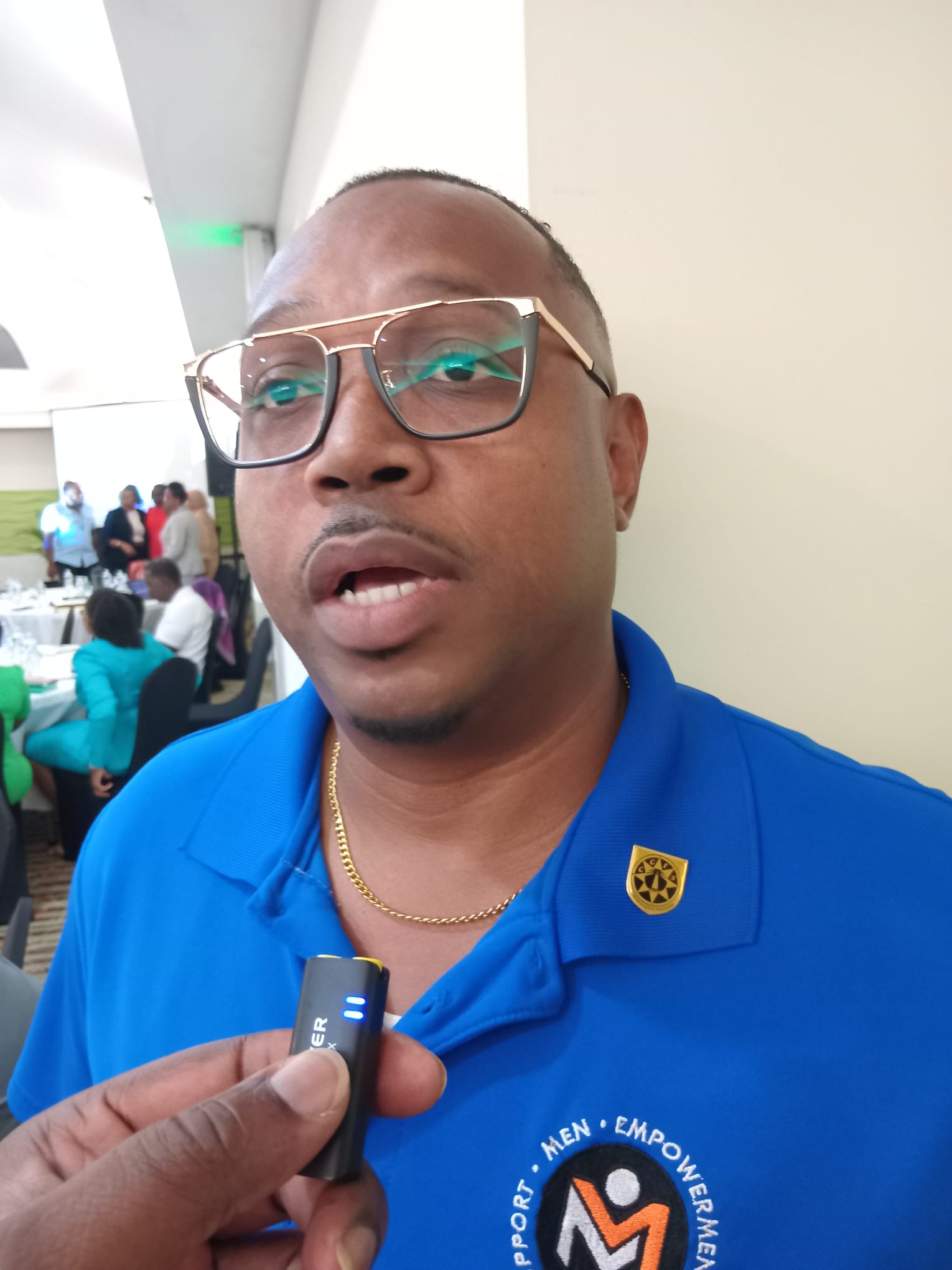
Sargeant fully echoed Lashley’s concerns, explaining that harmful socialization and pervasive stigma push a growing number of male abuse victims to suffer alone. Speaking to Barbados TODAY on the sidelines of the symposium, Sargeant acknowledged that decades of research and public awareness have rightfully centered women as the primary victims of domestic violence, but that has come at the cost of ignoring a fast-growing crisis affecting men. “Because of our culture, and the way we socialize boys from a young age, men don’t think it’s appropriate to come forward and report abuse, so they suffer in silence,” he said.
This culture of silence triggers a devastating domino effect that harms individuals and strains public services across the island, Sargeant argued. Unaddressed abuse erodes male survivors’ self-esteem, cuts into workplace productivity, and eventually pushes more people into already overburdened social and mental health systems, including psychiatric care. Compounding the issue, many men do not even recognize their own experiences as domestic abuse, Sargeant added: even when men are stabbed, scalded, beaten or attacked by their partners, they often dismiss the harm as a minor conflict they can overcome on their own. This lack of recognition stems in part from decades of public messaging that has exclusively framed women as the only victims of domestic abuse, leaving no space for male survivors to see their experiences reflected.
“For our organization, education is the most critical tool we have to change this narrative and help men understand what abuse looks like when they experience it,” Sargeant said.
While legal protections such as protection orders are already available to male victims under existing law, advocates stressed that formal frameworks are not enough to fix the crisis when the people working within those systems still hold biased attitudes. Sargeant raised specific concerns about how male survivors are treated when they reach out to law enforcement or social services for help, noting repeated cases where victims were met with dismissive attitudes, laughed at, or had their reports minimized as unimportant or unworthy of action.
Looking toward long-term solutions, the consultation emphasized that addressing the crisis is critical to protecting the well-being of future generations, noting that unaddressed adult conflict and poor emotional regulation directly harm youth development. “An emotionally unintelligent parent cannot raise an emotionally intelligent child,” Sargeant said. “Change has to start with empowering adults to regulate their emotions and address abuse, so we can build a better future for everyone.”