标签: Barbados

巴巴多斯

  • Barbados declares national mourning as Sir Gary to receive State Funeral

    Barbados declares national mourning as Sir Gary to receive State Funeral

    The Caribbean nation of Barbados has entered a period of national grief following the death of Sir Garfield St Aubrun Sobers, one of its most revered national heroes and the greatest cricket players to ever grace the sport. In an official national address delivered on Friday, July 17, Prime Minister Mia Mottley confirmed the passing of the icon, universally known to fans and loved ones as Sir Gary, and outlined official plans to honor his extraordinary life and legacy.

    Per the government’s official proclamation, July 17 has been formally designated as the first Day of National Mourning. A second national day of remembrance will be held on the date of Sir Garfield Sobers’ interment, with all official government functions canceled across both days to allow the nation to pause and pay tribute. In addition, Mottley ordered that the national flag of Barbados be lowered to half-staff effective immediately, and it will remain at half-staff through the date of the funeral and burial.

    To ensure the ceremony honors Sobers’ standing as a national icon, the Prime Minister announced that Senator Lisa Cummins has been appointed to lead coordination of the state-level funeral, working in close partnership with the Barbados Cabinet Office and the Barbados Defence Force. Mottley confirmed that additional details regarding the exact date, venue and full arrangements for the state funeral will be released to the public in due course by Cummins’ coordination team.

    Opening her address, Mottley framed the moment as a solemn hour not only for Barbados, but for the entire Caribbean region and the global cricket community. “It is with profound sadness that I now advise the people of Barbados, the region and the wider cricketing world of the passing of The Right Excellent Sir Garfield St Aubrun Sobers, our beloved Sir Gary,” she said.

    On behalf of the government and people of Barbados, the Prime Minister extended formal condolences to Sobers’ entire family, including his three children Matthew, Daniel and Genevieve, stepchildren Stuart and Trisha, his grandchildren, former wife Prue, brother Cecil, as well as his extended network of friends, colleagues and millions of admirers across the globe.

    In closing her emotional tribute, Mottley paid homage to Sobers’ indelible impact on his home nation and the world of sport. “Sir Gary, Barbados stands for you. The West Indies stands for you. The world stands for you,” she said. “For an innings that was so well played, Sir Gary, so well played. We will always love you.”

  • Dems question Vineyard estate’s conversion to housing project

    Dems question Vineyard estate’s conversion to housing project

    Barbados’ main opposition Democratic Labour Party (DLP) has launched a scathing critique of the Mia Mottley administration’s latest major infrastructure push, condemning a plan to turn 80 acres of fertile agricultural land in the parish of St. Philip’s Vineyard district into one of the country’s largest affordable housing developments. The rebuke comes just days after the government and private sector partners formally broke ground on the joint venture between the state-owned National Housing Corporation (NHC) and private firm Vineyard Development Inc., which aims to deliver roughly 1,100 residential units over the next five to six years, with entry-level house-and-land packages priced starting at $170,000 Barbadian dollars.

    In an official public statement released Thursday, Amoy Gilding-Bourne, the DLP’s spokesperson on agriculture and national food security, framed the initiative as a major step backward for Barbados’ struggling agricultural sector. “It is deeply alarming that this administration continues to trade irreplaceable prime farmland for residential development,” Gilding-Bourne said, noting that the 80-acre site marked one of the largest recent conversions of agricultural land to non-farming use on the island.

    Gilding-Bourne first challenged the government’s justification for the new project, pointing to a backlog of stalled and unfinished public housing developments across the country, including multiple phases of the Hope Housing initiative in Dodds, Cliffden Hill, and Brighton. She argued that the administration owes Barbadian citizens a full accounting for these uncompleted projects, and for millions in taxpayer funds that have already been allocated without delivering finished homes. “Before breaking ground on another massive residential development, the government owes every Barbadian a clear explanation for these unfinished projects and the millions of taxpayer dollars already squandered,” she emphasized.

    Beyond the backlog of existing housing work, the opposition spokesperson disputed the government’s labeling of the development as “affordable housing,” arguing that the $170,000 starting price puts the units out of reach for the low-income and working-class households that are most in need of subsidized housing. Amid sustained high inflation, stagnant wage growth, and a rapidly rising cost of living across the Caribbean island, Gilding-Bourne noted that even the cheapest available units in the new development would be inaccessible to many vulnerable families, effectively locking out the very group the project claims to serve. “Housing starting at $170,000 simply cannot be described as affordable for many working-class families struggling under the weight of rising inflation, stagnant wages, and an ever-increasing cost of living,” she said.

    The most significant criticism, however, centers on the project’s direct threat to Barbados’ long-stated national goal of improving food security. Gilding-Bourne argued that the conversion of 80 acres of prime farmland directly contradicts the government’s public commitments to boosting local food production and reducing reliance on costly, carbon-intensive imported food. “If we do not produce, we will perish,” she said, adding that every acre of fertile agricultural land lost to development erodes the island’s ability to feed its own population and makes it more vulnerable to global food price shocks. “Food security cannot be achieved while reducing the very land base upon which local food production depends. Every acre of fertile agricultural land lost to housing or commercial development weakens Barbados’ ability to feed itself.”

    Gilding-Bourne also took aim at the Ministry of Agriculture, accusing the department of prioritizing flashy public relations over tangible, practical support for local farmers. She highlighted ongoing unresolved issues across the sector, including inadequate irrigation infrastructure, unfair competition from cheap imported pork, and a persistent lack of progress on key government-backed agricultural initiatives.

    The DLP is now demanding full transparency around the public-private partnership structure of the housing development. The party has raised a series of unanswered questions, including whether the arrangement received required parliamentary approval, how the public land contribution was independently valued, whether the property will be transferred to a special purpose private vehicle, and what legal and financial safeguards are in place to guarantee that taxpayers receive fair full value for the public land asset being used for the project.

    Additionally, Gilding-Bourne called on the administration to release public updates on a handful of stalled or underperforming government agricultural programs, including the prison farming initiative, the Black Belly sheep genetic improvement program, the imported heifers livestock project, and the newly legalized medicinal cannabis industry.

    “Barbadians deserve clear answers, measurable outcomes, and responsible stewardship of our national resources,” Gilding-Bourne said. She closed by emphasizing that meaningful progress on national food security “requires vision, planning, investment, and above all, the protection of the finite agricultural lands upon which our nation’s future depends.”

  • Barbados extend lead, ahead of Round Four of CWI U19 competition

    Barbados extend lead, ahead of Round Four of CWI U19 competition

    The 2026 Cricket West Indies (CWI) Rising Stars Under-19 50-Over Championship has entered its early competitive phase, with defending champions Barbados cementing their dominance at the top of the rankings after three consecutive unbeaten matches. The Caribbean side pulled further ahead of their rivals following a dominant 63-run win over Guyana, pushing their total points to 22 and stretching their gap over the second-placed team from 2.6 points to a comfortable 6.2-point advantage.

    While Barbados continues to set the pace in the youth tournament, the biggest shakeup of the third round came in the lower top ranks, as the Leeward Islands delivered a standout performance to climb the table. A commanding 144-run victory over the Windward Islands propelled the side from third to second place, with a total of 15.8 points. Jamaica also made significant upward progress, after securing a win against Trinidad and Tobago, which pushed them into third position on 12.6 points. Their higher net run rate proved the deciding factor, despite Trinidad and Tobago finishing the round with the same points total, dropping the pre-round second-placed side to fourth.

    At the lower end of the table, the Windward Islands and Guyana remain winless after three matches, holding fifth and sixth place on 3.8 and 3.6 points respectively, as both sides continue to chase their first victory of the tournament.

    Off the team rankings, individual contests for top batting and bowling honors are already intensifying as players compete for personal accolades alongside team success. Barbados captain and opening batter Gadson Bowens retains his position as the tournament’s leading run-scorer, with Leeward Islands opener Tanez Francis staying locked in second place on the run aggregates table. Barbados batter Jordan Graham joined the top three after a match-defining innings against Guyana: his calm, composed 78 runs off 101 deliveries not only powered his side to victory but also pushed him to third in the overall run-scoring rankings.

    In the race for the tournament’s leading wicket-taker, Daniel Holder, Trinidad and Tobago’s left-arm fast bowler, remains out in front with a total of nine wickets after three rounds. Jamaica medium pacer Jahdae Moore produced a spectacular bowling performance against Trinidad and Tobago, taking three wickets for just ten runs, which lifted his tournament tally to eight wickets. That haul matches that of Leeward Islands seamer Matthew Miller, leaving the two players tied for second place in the wicket-taking rankings.

    A key factor shaping the current standings is the championship’s bonus points system, which has already had a major impact on how teams rank after three rounds. Barbados has accumulated 10 bonus points to go alongside its three outright match wins, contributing heavily to its wide lead at the top. For the Leeward Islands, their climb to second place has also been boosted by the bonus point system, with 7.8 additional points helping the side overtake higher-ranked opponents ahead of the next rounds of play.

    Final Updated Standings After Round Three:
    1. Barbados – 22 points
    2. Leeward Islands – 15.8 points
    3. Jamaica – 12.6 points
    4. Trinidad and Tobago – 12.6 points
    5. Windward Islands – 3.8 points
    6. Guyana – 3.6 points

  • Cricket legend Sir Garfield Sobers dies at 89

    Cricket legend Sir Garfield Sobers dies at 89

    The global cricket community is mourning the loss of one of its most iconic and trailblazing figures, National Hero of Barbados the Right Excellent Sir Garfield Sobers, who passed away at his residence at the age of 89 following a prolonged illness. Reliable sources close to the matter confirmed to Barbados TODAY that the universally acclaimed greatest cricketer in history drew his last breath shortly after 9 a.m. local time on Friday.

    Sobers’ legendary international career spanned 20 years, from 1954 to 1974, during which he represented the West Indies cricket team at the highest level of the sport, leaving an indelible mark on Test cricket that still influences the game decades after his retirement. In 1958, Sobers etched his name into the record books by posting an unbeaten individual score of 365 runs against Pakistan, a landmark achievement that stood as the highest Test score in men’s international cricket for more than 36 years.

    Across his 93 Test matches, Sobers delivered extraordinary all-round performance: he accumulated a total of 8,032 runs at an impressive batting average of 57.78, and claimed 235 wickets with a bowling average of 34.03, cementing his reputation as one of the most versatile talents the sport has ever seen. His list of groundbreaking achievements also includes a historic first in 1968, when he became the first batsman in the history of first-class cricket to hit six sixes from six consecutive deliveries in a single over, during a match where he captained Nottinghamshire against Glamorgan.

    Shortly after bringing his decorated international career to a close, Sobers received one of the highest honors in British honors systems when he was knighted by Queen Elizabeth II in 1975 in recognition of his transformative contributions to cricket. Beyond his statistical achievements, Sobers redefined what it meant to be an all-round cricketer, inspiring generations of players across the Caribbean and around the globe, and his legacy will continue to shape the sport for decades to come.

  • BCEN backs moves on pricing, questions consumer protection effort

    BCEN backs moves on pricing, questions consumer protection effort

    A leading consumer advocacy organization in Barbados has thrown its weight behind the government’s planned review of corporate transfer pricing practices, a key policy move targeting the island nation’s persistent high cost of living, while pushing back against the government’s characterization of consumer protection as centered largely on conservation-focused public outreach.

    On Wednesday, Minister of Commerce and Consumer Affairs Kerrie Symmonds outlined the government’s dual-pronged strategy to rein in soaring living costs: cracking down on potentially abusive internal pricing among supermarket chains, paired with a national campaign to encourage household resource conservation. Transfer pricing, the practice by which connected divisions of a single corporate entity set prices for internal exchanges of goods and services, has been flagged as a hidden driver of inflated retail grocery prices in Barbados. When a single corporate group controls every step of the supply chain – from importation to distribution to retail sales – it can layer additional markups at each internal transaction, pushing final shelf prices far higher than actual market conditions would warrant.

    Symmonds, who also holds senior portfolios for energy, business development and commerce, revealed that policymakers are drafting regulatory reforms that would mandate more transparent, arm’s-length pricing between related corporate entities. The goal of the reforms is to eliminate hidden “padding” in supply chain costs that is ultimately passed through to consumers.

    Maureen Holder, executive chair of the Barbados Consumer Empowerment Network (BCEN), says her group recognizes the transfer pricing review as a critical step toward unpacking the structural forces driving Barbados’ high cost of living. But the organization has raised sharp concerns over how Symmonds framed the government’s overall consumer protection approach.

    Holder explained that BCEN took issue with Symmonds’ announcement that the government would prioritize consumer protection through a conservation-focused public education campaign, which he asked local media to help promote. “While BCEN welcomes initiatives that encourage responsible consumption and nationwide environmental stewardship, we are concerned that this approach mischaracterises what constitutes consumer protection and risks creating confusion about the role of government in protecting consumers,” she said.

    Long before the minister’s public announcement, Holder noted, BCEN has consistently argued that consumer protection is far broader than consumer education or resource conservation. She acknowledged that the government’s package includes positive measures, including the transfer pricing review and temporary relief for household electricity and fuel costs. But she emphasized the need to draw a clear line between policies that help households cope with high prices and policies that actively protect consumers from unfair market practices.

    “BCEN also maintains that the cost of living cannot be addressed solely by encouraging consumers to shop differently or conserve more resources,” Holder said. “Therefore, it is prudent that the pricing environment itself also be examined.”

    Holder argued that when connected companies involved in importing, wholesaling, distribution and retail exchange goods at prices that do not align with open market conditions, there is a clear public interest in mandating transparency and requiring arm’s-length transactions. Greater transparency, she said, would boost public confidence that consumers are paying prices rooted in genuine production and distribution costs, rather than unnecessary cumulative markups within integrated corporate groups.

    BCEN has welcomed the government’s decision to open a national conversation on transfer pricing reform, and is calling for broad, inclusive consultation with key stakeholders – including the Fair Trading Commission, the Barbados Revenue Authority, independent consumer organizations, economists, private sector representatives and competition policy experts – before any legislative changes are enacted.

    Holder reiterated that BCEN supports conservation and consumer education as valuable policy goals in their own right. Encouraging efficient use of electricity, water and fuel is unquestionably good public policy, she noted: efficient resource use cuts household expenses, reduces national import bills, and advances environmental sustainability. Similarly, long-term priorities such as promoting energy-efficient building codes and supporting a gradual transition to electric vehicles are entirely worthwhile. But, she stressed, these initiatives should not be labeled as consumer protection.

    By definition, Holder explained, consumer protection exists to shield the public from unfair, deceptive, or anti-competitive business practices. This core mandate includes ensuring fair pricing, transparent commercial contracts, enforceable product safety standards, accessible dispute resolution, fair financial services, truthful advertising, and strong regulatory oversight of key markets. “Consumer education empowers consumers to make better choices. Conservation encourages behavioural change. Consumer protection, however, places legal and regulatory obligations on businesses and governments to ensure markets operate fairly,” she said. “While education is an important component of consumer protection, it cannot substitute for robust enforcement of consumer rights.”

    BCEN also acknowledged the government’s recent temporary interventions to ease household financial strain, including continuing to absorb a portion of global fuel price increases through the Fuel Clause Adjustment mechanism and cutting the value-added tax rate on the first 250 kilowatt-hours of monthly residential electricity use. These measures have undoubtedly provided critical short-term relief for many households amid ongoing global energy price volatility, the group said. But it warned that temporary subsidies should not replace action to address the root structural causes of high living costs.

    Long-term price affordability, Holder argued, requires competitive markets, greater end-to-end pricing transparency, effective industry regulation, and updated, comprehensive consumer protection laws. BCEN has long pushed for a modern consumer protection framework that goes beyond stopgap fiscal measures, she added.

    Barbados still needs comprehensive standalone consumer protection legislation, stronger enforcement of competition policy, more robust market surveillance, and enhanced pricing transparency across all sectors that make up a large share of household spending, Holder said. As such, the proposed transfer pricing review should be folded into a much broader policy agenda focused on improving market competition, cracking down on excessive market concentration that harms consumers, increasing price transparency, and equipping regulators with the full authority they need to investigate unfair market practices.

    BCEN also sees the ongoing policy process as an opportunity to improve coordination between key regulatory bodies, including the Fair Trading Commission, Barbados Revenue Authority, and Central Bank of Barbados, to strengthen market oversight and rebuild public confidence. Holder said BCEN is ready to participate constructively in all upcoming consultation processes, and remains committed to working alongside the government, regulators and the private sector to develop policies that promote competitive markets, defend consumer rights, and improve living cost affordability for all Barbadians.


  • EU launches regional climate resilience plan

    EU launches regional climate resilience plan

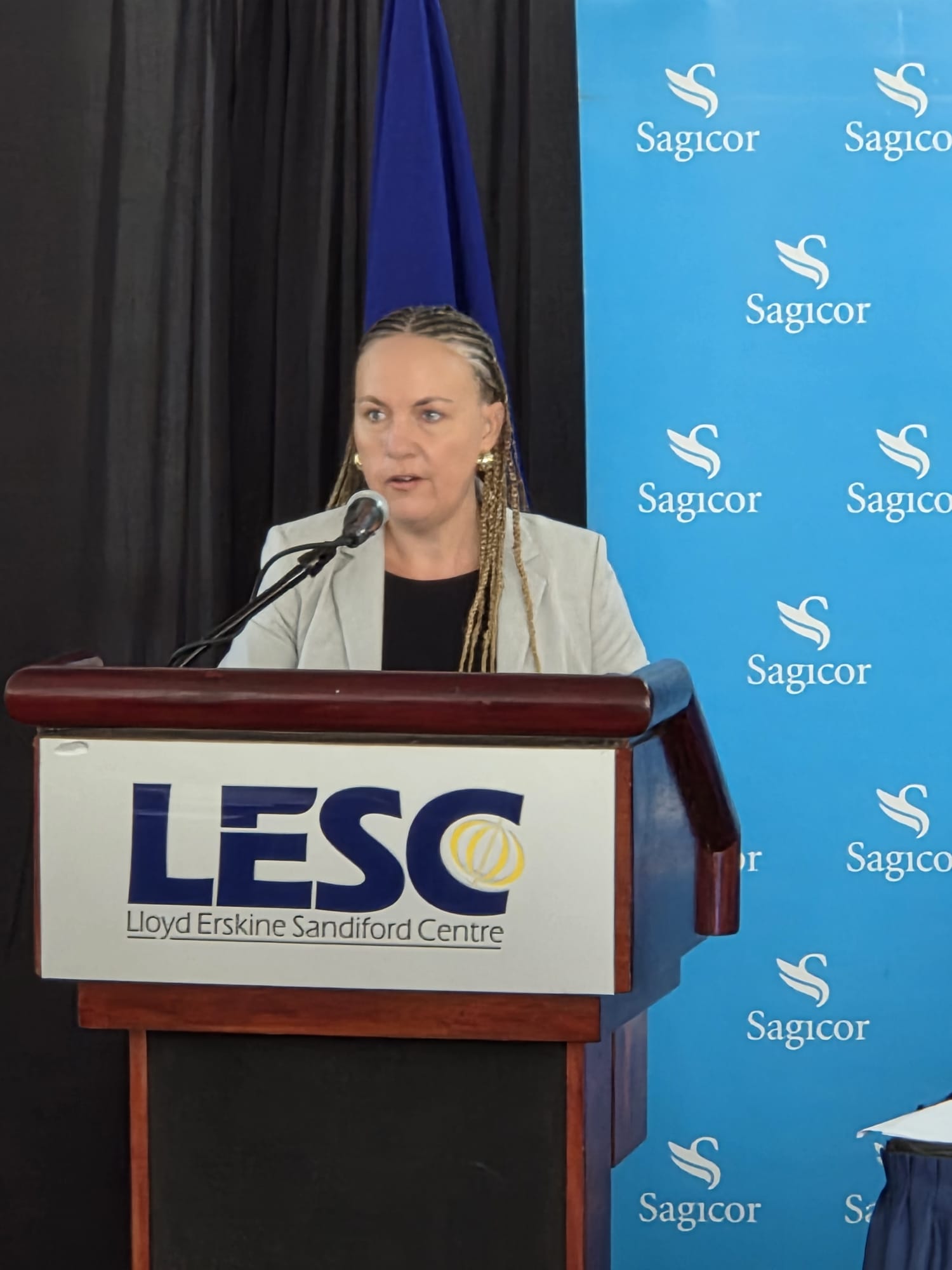
    Against a backdrop of intensifying climate-driven extreme weather events battering small island nations, the European Union has unveiled a landmark new partnership program tailored to transform disaster risk management across the Caribbean. The initiative, announced at the opening of a three-day regional conference hosted at Barbados’ Lloyd Erskine Sandiford Centre, prioritizes stronger early warning infrastructure, faster cross-border disaster response, and community-led preparedness – with targeted support for recovery efforts in the wake of Hurricane Beryl.

    Virginie Andre, the EU’s lead program manager for disaster risk management, delivered the announcement on behalf of Fiona Ramsey, the European Union Ambassador to Barbados. The new cooperation framework centers on upgrading four critical pillars of regional disaster management: enhanced meteorological forecasting, expanded climate adaptation services, streamlined cross-regional logistics networks, and deeper public-private collaboration to accelerate post-disaster recovery. Two key regional bodies will receive direct structural investment to boost their operational capacity: the Caribbean Disaster Emergency Management Agency and the Caribbean Institute for Meteorology and Hydrology, which underpin the region’s entire disaster risk architecture.

    Andre emphasized that the strategy is anchored in high-level diplomatic cooperation between Caribbean leaders and EU institutions. “Through ongoing dialogue between Prime Minister Mottley of Barbados and the President of the European Commission, we are collaborating not just to rebuild after disasters strike, but to anticipate threats, strengthen readiness, and build long-term, lasting resilience,” Andre explained. “That high-level engagement is already delivering tangible, on-the-ground results.”

    The conference’s core theme, *Advancing Sustainable Community Resilience through Shared Responsibility*, signals a deliberate shift away from top-down disaster management toward a citizen-centered approach. Andre stressed that effective climate adaptation cannot be designed solely in government offices; it must be rooted in the lived experience of local communities. “When we talk about resilience, we know that it starts first and foremost at home, with people,” she said. “It starts with the neighbor checking on an elderly resident living nearby, the fishing community that notices subtle shifts in ocean conditions, the teacher that prepares children for emergencies, and the kids who go on to share that knowledge with their parents. Communities are always the first responders – they face the disaster first, and they launch recovery efforts before any outside support arrives.”

    To illustrate why centering local voices is non-negotiable, Andre shared a decades-old personal story that shaped her approach to disaster policy. Twenty-eight years ago, she met a young girl whose entire village had been destroyed by a mudslide. The girl lost all her family and sustained permanent life-altering injuries, but the two stayed in touch over the following 28 years. “What has stuck with me more than anything is not just her incredible story of survival, but a simple thing she told me: ‘No one ever really asked us what we needed,’” Andre recalled. “That one sentence reminds us exactly why community leadership matters so much. Communities know their own vulnerabilities better than anyone, and they know their own strengths. Our job is to listen, and to turn their lived experience into better policies and stronger preparedness.”

    In the immediate aftermath of Hurricane Beryl, the EU already moved to provide targeted support to the region, including funding to rebuild and strengthen the Caribbean’s hard-hit fisheries sector. In a demonstration of the cross-border mutual learning at the heart of the partnership, senior emergency management officials from Barbados recently completed a study visit to European institutions to exchange best practices in disaster response. Andre added that the partnership between the EU and Caribbean is reinforced by shared geographic reality: multiple European territories sit within the Caribbean basin and face the same climate-driven disaster risks as their regional neighbors, creating a natural foundation for collaboration.

    As conference delegates began their three days of deliberations, Andre urged them to center all discussions on one central question: “How can we ensure that our communities are better prepared tomorrow than they are today?” Acknowledging that the scale of the climate crisis far outstrips the capacity of any single actor, Andre reaffirmed the EU’s long-term commitment to the region. “The answer will not come from one government, one organization, and certainly not from one international partner,” she said. “It will come from true partnership, from shared responsibility, and from listening to the people whose lives we are trying to protect. The European Union remains a trusted, long-term partner to Barbados and the entire Caribbean region.”

  • Vincentian recruit sweeps top honours at police graduation

    Vincentian recruit sweeps top honours at police graduation

    A young recruit from Saint Vincent and the Grenadines has made history as the standout graduate of Recruit Course 150 at the Regional Police Training Centre, outperforming all her peers and claiming most of the course’s top honors ahead of her official entry into the Barbados Police Service.

    Newly commissioned Police Constable Arika Parsons, badge number 2574, has turned her long-held ambition of a career in law enforcement into a remarkable achievement, capping months of grueling physical and mental training with a sweeping victory at the passing out parade held at the Sewell Christchurch training facility.

    Parsons first relocated to Barbados on the encouragement of her mother, building early professional experience working as a cashier and customer service representative before pursuing her dream of joining the police force. “I did want to join the force before, but I thought it was too early,” Parsons explained in an interview after the ceremony. “So I just waited a while to get to know Barbados more. I am very passionate about providing a service, and I am looking forward to serving the people of Barbados with professionalism, fairness, and integrity.”

    From the first day of training, Parsons faced steep challenges that tested her personal grit. Located adjacent to Grantley Adams International Airport, the training center put recruits through a relentless daily regimen that pushed her outside her comfort zone from the start. “The next day we started physical training, and that is when I realised that I need to step my game up,” PC Parsons recalled. “I was never really into extreme physical training, but I decided that I need to get myself there, and from then on, I just committed myself to learning, paying attention, and staying focused.”

    Beyond the intensive physical requirements, the training course allowed Parsons to overcome a long-held personal fear that once seemed insurmountable. “The most interesting part for me was learning to swim,” she shared. “Growing up, I have always been afraid of swimming, and I am very grateful that I got the opportunity to learn to swim here. I can definitely say that I can float and I can swim now.”

    There were points during the program where the pressure of the academy became almost too much to bear, and Parsons admitted she twice considered abandoning the course and returning home to Saint Vincent. “There were moments, at least two, where I wanted to give up,” she confessed. “But with God by my side, with the instructors here at the Regional Police Training Centre, and with the recruits—where there are some friends here that I have—they pushed me. They encouraged me to stay and to keep on pushing, to not give up, and so I continued. I am actually happy that I did.”

    While Parsons had anticipated she would take home the Best in Police Duty award for her top performance on course examinations, the volume of awards she received came as a welcome surprise. “I honestly saw myself receiving at least one award, which was Best of Police Duty, because in the exams, I noticed that the grades that I got were at the top,” she said. “But when I was told that I would be receiving all those other awards, I was truly happy and I am blessed.”

    Watching her daughter make history from the ceremony audience was Aletha Parsons, who traveled from Saint Vincent to attend the passing out parade. The proud mother credited her daughter’s strong work ethic to the foundational education she received at Saint Joseph’s Convent in Marriaqua. “I feel so happy and I am very proud of her,” the elder Parsons said. “She is an intelligent, loving, caring, and disciplined person. Her school moulded her to be a good, respectable person, so that when you complete your education and go out into the community, you continue that trend.” Parsons was also joined at the event by her brother Alrick Parsons to celebrate her milestone.

    As Parsons prepares to officially leave the training facility this Friday to begin her active duty, she reaffirmed her commitment to serving her adopted home country. “I am looking forward to giving my best and to learning and to improving myself so that I can provide a service to the people of Barbados,” she said. “I will bring forward my discipline and everything that I have learnt, and this will help me to always do my best.”

    (Photos by Ricardo Roberts/Barbados TODAY)

  • Police training chief retires after nearly five decades

    Police training chief retires after nearly five decades

    After nearly five decades of dedicated service spanning every rank within the institution, Commandant Rodney Archer of the Regional Police Training Centre (RPTC) formally announced his retirement on Thursday during a celebratory passing-out parade for the centre’s 150th recruit course. The momentous occasion drew crowds of dignitaries, fellow officers, family members, and media to the RPTC’s Sewell Christ Church campus, where graduating recruits entertained attendees with novelty performances during their ceremonial march past.

    Archer’s career journey at the training centre began as a new recruit back in 1978, and he climbed the organisation’s ranks steadily over the decades: progressing from recruit to entry-level instructor, then chief instructor, deputy commandant, and ultimately the post of commandant. He will officially step down and hand leadership of the centre to incoming Commandant Roderic Walcott on July 29, closing out 28 years and three months of full service at the institution.

    In a reflective address to attendees, Archer described his decades at the RPTC as a deeply fulfilling and rewarding experience. “My attachments at the Regional Police Training Centre… have been mostly enjoyable. No doubt I will miss the training centre, its ambience, and everything that goes with it. My time has come,” he said, earning a standing ovation from the assembled crowd for his decades of service. Over the course of his career, Archer took part in 36 of the RPTC’s 150 total passing-out parades, a legacy unmatched by any other officer in the institution’s 70-year history.

    Archer’s retirement announcement coincided with the graduation of Recruit Course 150, which ran from January to July 2026 and delivered a historic milestone for the 70-year-old training centre. When the course kicked off, 52 recruits were enrolled, 27 of whom were women and 25 men. This marked the first time in RPTC history that female enlistment outnumbered male enlistment, part of a growing four-year trend of increasing female participation in police training across the region. The unexpected demographic shift required quick logistical creativity: one of the centre’s existing male dormitories had to be converted to female housing to accommodate the larger-than-usual intake of women recruits.

    By the end of the grueling six-month training programme, two female recruits had withdrawn, leaving 50 graduating officers split evenly between 25 women and 25 men. The RPTC’s foundational recruit curriculum is famously rigorous, requiring recruits to complete 70 distinct modules covering subjects from the sociology of crime and criminal psychology to English language proficiency, officer safety protocols, and road policing. Training days start as early as 4:30 a.m. and often run past 8 p.m., with additional coursework required on weekends to meet programme requirements. Despite the intense physical and mental demands of the course, every graduating recruit met the mandatory 60 percent minimum pass mark. In a first for Archer’s tenure as commandant, every recruit also passed the course’s critical firearms qualification module. The top honour of Best Recruit was awarded to Police Constable 2574 Arika Parsons, who earned an aggregate score of 85.47 percent across all modules.

    Beyond training new Barbadian police recruits, the RPTC fulfills a critical regional security mission, hosting 24 advanced leadership courses and skills workshops that have trained 497 law enforcement personnel from neighboring Caribbean nations and territories including Saint Lucia, Grenada, Montserrat, and the Turks and Caicos Islands.

    As the centre marks its 70th anniversary, long-planned major infrastructure upgrades are currently underway to expand capacity and modernize the aging campus. Though construction of two new dormitories has experienced minor delays, the projects are on track to be completed by September 2026. Once finished, the expansion will boost the centre’s maximum training capacity to 152 students, helping regional police forces including the Barbados Police Service address persistent staffing deficits. “These upgrades will further transition the Regional Police Training Centre from the 1950s to somewhere in the 21st century,” Archer noted in his final training report.

    In his final address to the 50 new graduating officers, the outgoing commandant offered a message of guidance and responsibility, urging each new officer to uphold the integrity of their profession. “Each of you graduated officers has an individual service number. It is your responsibility to guard that number. You will encounter good and bad examples during the course of your apprenticeship. Choose your mentors wisely… and take good care of your mental and physical health,” he advised.

  • Nigerian man denies escape charge, faces deportation

    Nigerian man denies escape charge, faces deportation

    A 38-year-old Nigerian national facing allegations of escaping official immigration custody has formally rejected the charge against him, with a Barbadian court ordering his remand ahead of imminent deportation proceedings.

    Dennis Ikenna Nwogbu, who lists his permanent address as Bishops Court Avenue in New Owerri, Nigeria, made his first appearance before the No. 2 District ‘A’ Magistrates’ Court this week. The charge filed against him alleges that he fled lawful detention between June 28 and 29, after being taken into custody at a secured facility operated by the Barbados Immigration Department.

    When presiding Magistrate Manila Renee read the allegation aloud in court, Nwogbu entered a straightforward not guilty plea. Speaking directly to the court on his own behalf, the defendant outlined his recent travel history to the Caribbean nation. He told officials he first arrived in Barbados last December, but immigration authorities ordered his deportation just 24 hours after his arrival, instructing him to resolve outstanding documentation issues before seeking re-entry.

    According to Nwogbu’s statement, he re-entered Barbados on June 28 this year with the explicit goal of filing a formal asylum claim. Following the court proceeding, Magistrate Renee granted a remand order, transferring Nwogbu to Dodds Prison to await processing. He is scheduled to be turned over to Barbados Immigration Department officials next week to carry out the deportation order. No additional details on the status of his asylum application have been released publicly as of this reporting.

  • EVs, hybrids gain traction with consumers – dealers

    EVs, hybrids gain traction with consumers – dealers

    Barbados’ automotive market is undergoing a rapid, transformative shift, as growing numbers of local motorists turn to electric vehicles (EVs) and hybrid electric vehicles (HEVs) in search of lower running costs and accessible prices made possible by targeted government policy. The accelerating consumer uptake aligns with the island nation’s official decarbonization goals, with Energy Minister Kerrie Symmonds recently announcing the government’s target of achieving near-total vehicle electrification within 5 to 10 years. The policy is designed to cut Barbados’ heavy reliance on costly imported fossil fuels and drive down systemic energy costs across the country.