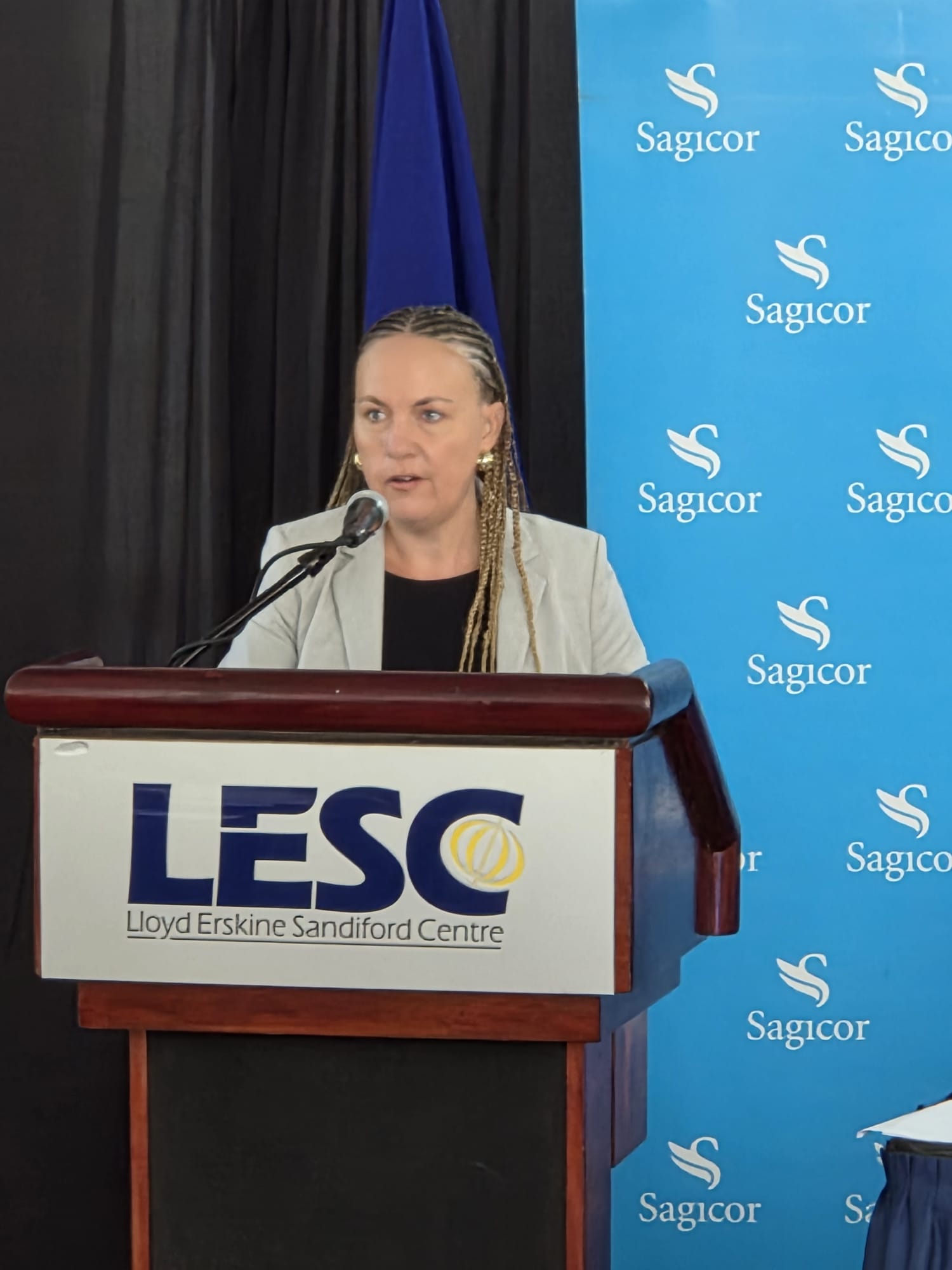
Against a backdrop of intensifying climate-driven extreme weather events battering small island nations, the European Union has unveiled a landmark new partnership program tailored to transform disaster risk management across the Caribbean. The initiative, announced at the opening of a three-day regional conference hosted at Barbados’ Lloyd Erskine Sandiford Centre, prioritizes stronger early warning infrastructure, faster cross-border disaster response, and community-led preparedness – with targeted support for recovery efforts in the wake of Hurricane Beryl.
Virginie Andre, the EU’s lead program manager for disaster risk management, delivered the announcement on behalf of Fiona Ramsey, the European Union Ambassador to Barbados. The new cooperation framework centers on upgrading four critical pillars of regional disaster management: enhanced meteorological forecasting, expanded climate adaptation services, streamlined cross-regional logistics networks, and deeper public-private collaboration to accelerate post-disaster recovery. Two key regional bodies will receive direct structural investment to boost their operational capacity: the Caribbean Disaster Emergency Management Agency and the Caribbean Institute for Meteorology and Hydrology, which underpin the region’s entire disaster risk architecture.
Andre emphasized that the strategy is anchored in high-level diplomatic cooperation between Caribbean leaders and EU institutions. “Through ongoing dialogue between Prime Minister Mottley of Barbados and the President of the European Commission, we are collaborating not just to rebuild after disasters strike, but to anticipate threats, strengthen readiness, and build long-term, lasting resilience,” Andre explained. “That high-level engagement is already delivering tangible, on-the-ground results.”
The conference’s core theme, *Advancing Sustainable Community Resilience through Shared Responsibility*, signals a deliberate shift away from top-down disaster management toward a citizen-centered approach. Andre stressed that effective climate adaptation cannot be designed solely in government offices; it must be rooted in the lived experience of local communities. “When we talk about resilience, we know that it starts first and foremost at home, with people,” she said. “It starts with the neighbor checking on an elderly resident living nearby, the fishing community that notices subtle shifts in ocean conditions, the teacher that prepares children for emergencies, and the kids who go on to share that knowledge with their parents. Communities are always the first responders – they face the disaster first, and they launch recovery efforts before any outside support arrives.”
To illustrate why centering local voices is non-negotiable, Andre shared a decades-old personal story that shaped her approach to disaster policy. Twenty-eight years ago, she met a young girl whose entire village had been destroyed by a mudslide. The girl lost all her family and sustained permanent life-altering injuries, but the two stayed in touch over the following 28 years. “What has stuck with me more than anything is not just her incredible story of survival, but a simple thing she told me: ‘No one ever really asked us what we needed,’” Andre recalled. “That one sentence reminds us exactly why community leadership matters so much. Communities know their own vulnerabilities better than anyone, and they know their own strengths. Our job is to listen, and to turn their lived experience into better policies and stronger preparedness.”
In the immediate aftermath of Hurricane Beryl, the EU already moved to provide targeted support to the region, including funding to rebuild and strengthen the Caribbean’s hard-hit fisheries sector. In a demonstration of the cross-border mutual learning at the heart of the partnership, senior emergency management officials from Barbados recently completed a study visit to European institutions to exchange best practices in disaster response. Andre added that the partnership between the EU and Caribbean is reinforced by shared geographic reality: multiple European territories sit within the Caribbean basin and face the same climate-driven disaster risks as their regional neighbors, creating a natural foundation for collaboration.
As conference delegates began their three days of deliberations, Andre urged them to center all discussions on one central question: “How can we ensure that our communities are better prepared tomorrow than they are today?” Acknowledging that the scale of the climate crisis far outstrips the capacity of any single actor, Andre reaffirmed the EU’s long-term commitment to the region. “The answer will not come from one government, one organization, and certainly not from one international partner,” she said. “It will come from true partnership, from shared responsibility, and from listening to the people whose lives we are trying to protect. The European Union remains a trusted, long-term partner to Barbados and the entire Caribbean region.”