标签: Bahamas

巴哈马

  • Gibson’s ex-fiancée testifies she took immunity deal to tell the truth

    Gibson’s ex-fiancée testifies she took immunity deal to tell the truth

    A high-profile corruption trial centered on public infrastructure contracts in The Bahamas took another pivotal turn this week, as the star prosecution witness pushed back against aggressive defense questioning while standing by her agreement to cooperate with authorities. The case, which has gripped local political circles since opening in late 2023, involves Adrian Gibson, a Long Island Member of Parliament and former executive chairman of the country’s Water and Sewerage Corporation, who stands accused of misconduct tied to contract awards during his tenure at the state-owned utility. Alexsndria Mackey, Gibson’s one-time romantic partner and former business associate, took the stand in the Supreme Court on Tuesday to face cross-examination from Damian Gomez, KC, lead defense counsel for Gibson.

    Under hours of pointed questioning, Mackey reaffirmed her commitment to testifying truthfully, noting that her grant of immunity from prosecution is explicitly conditional on her full and honest cooperation with the investigation. She acknowledged that the serious criminal charges she originally faced, which carry severe legal penalties, were a major factor in her decision to negotiate a plea deal, but pushed back against defense claims that she fabricated testimony solely to avoid prison time. “I knew I needed to tell the truth,” Mackey told the court, adding that even with the threat of potential incarceration hanging over her, her decision to accept the deal was rooted in a requirement to disclose everything she knew about the business arrangements tied to the contracts.

    Mackey detailed the timeline of her decision to cooperate, explaining she moved forward with the immunity agreement shortly after co-defendant Tanya Demeritte was arrested and returned to The Bahamas. At that time, Mackey said, she learned she was also at risk of arrest, prompting her to move forward with negotiations through her legal representation. She flatly denied a defense claim that former Assistant Commissioner of Police Deleveaux pressured her to testify by threatening deportation or legal action against her parents, dismissing the assertion outright.

    Much of Tuesday’s cross-examination centered on the corporate structure of two firms tied to the case — Elite Maintenance and Oak Bay Limited. Mackey has maintained that she, Gibson, and Demeritte were the true beneficial owners of the companies, which won contracts from the Water and Sewerage Corporation during Gibson’s tenure. She admitted that the beneficial owners were never officially registered with authorities, and that bank documents listed Jerome Missick and Joan Knowles, two of Gibson’s co-defendants in the trial, as placeholder owners to conceal the identities of the true shareholders. When challenged by Gomez over whether she is hiding key corporate records and lying about having already turned relevant documents over to Gibson, Mackey denied the allegations.

    On one point of discrepancy, Gomez called into question Mackey’s recent claim that key documents were sent to Grand Bahama, noting she had not raised that detail in earlier police interviews. Mackey acknowledged that she did not mention specific trust documents during her initial interview with law enforcement, and could not recall when she first brought up the detail, but stood by her core account of the companies’ ownership structure. She confirmed she received payments from Oak Bay Limited, though she could not recall the full total of disbursements. She also told the court that Gibson outlined the roles of director nominees when the companies were first formed, though she acknowledged she never directly heard Gibson give instructions to placeholder owner Joan Knowles, confirming she followed his direction on all corporate matters when the pair were in a relationship.

    Additional details that emerged during the cross-examination included confirmation that attorney David Cash negotiated the immunity deal for Mackey and Demeritte, and that Mackey’s mother paid the $10,000 fine required under Demeritte’s plea agreement. Gibson is one of five defendants on trial over the contract awards, alongside former Water and Sewerage Corporation general manager Donaldson Jr, Joan Knowles, Peaches Farquharson, and Jerome Missick. The trial, which began in November 2023, is being presided over by Senior Justice Cheryl Grant Thompson, and is expected to continue through coming weeks as more evidence is presented and witnesses testify.
  • Pastor Bethel says FNM lottery proposal insults Bahamian voters

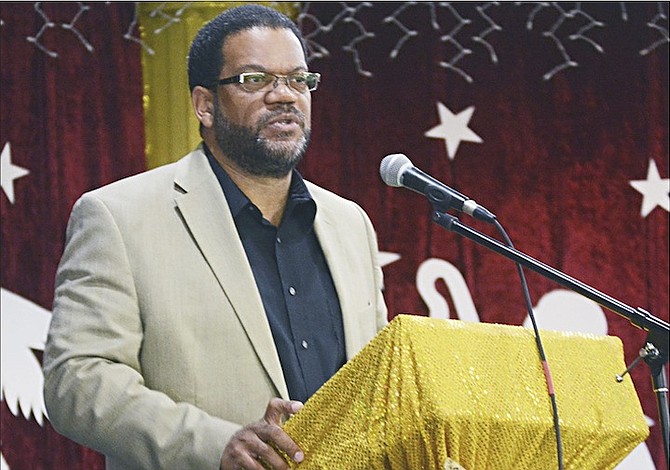
    Pastor Bethel says FNM lottery proposal insults Bahamian voters

    A decades-long debate over gambling legalization in The Bahamas has reignited after the opposition Free National Movement (FNM) announced plans to pursue a state-operated national lottery, drawing fierce pushback from a prominent religious and anti-gambling activist who says the plan directly defies the will of the Bahamian public.

    Pastor Lyall Bethel, who previously served as co-leader of the anti-gambling advocacy group Save Our Bahamas, has emerged as one of the most vocal critics of the proposal. In a public letter to the editor, Bethel called the FNM’s policy shift an unforgivable “slap in the face” to voters who overwhelmingly rejected both a national lottery and the regulation of unlicensed web shop gambling in a 2013 national referendum.

    Bethel says he was shocked by the opposition’s decision to resurrect the policy, noting that official referendum results make voter opposition unambiguous: 59.56 percent of participants rejected a national lottery, while 60.71 percent voted against regulating and taxing existing web shop gambling operations. For Bethel, the FNM’s choice to advance the proposal despite this clear outcome is not just a policy misstep — it is a deliberate insult to the majority of Bahamians who cast their ballots against expanded gambling.

    “To see the opposition wade foolishly and recklessly into this conversation with talk of a national lottery is insulting and a slap in the face to the majority of Bahamians who said NO to BOTH the proliferation of numbers house gambling AND a national lottery,” Bethel wrote. “THE PEOPLE SAID NO!”

    Beyond the breach of democratic will, Bethel argues the FNM has surrendered the moral high ground it held among the large bloc of Bahamian voters who oppose expanded gambling. He notes the party had a clear opportunity to demonstrate its commitment to respecting public opinion and the stance of the country’s majority religious institutions, but squandered that political advantage through what he calls an unnecessary and reckless action.

    The controversy stems from recent remarks by FNM leader Michael Pintard, who framed a state-run national lottery as a promising new revenue stream to fund national development projects. The proposal has pulled back the curtain on a decades-long national debate that has stalled multiple previous attempts to expand legal gambling, held back by widespread concerns over its potential social harms and questions about long-term feasibility.

    Incumbent Prime Minister Philip Davis has already dismissed the FNM’s plan as a shallow political “gimmick”, and Bethel is far from alone in his opposition. Other senior religious leaders across the country have renewed their longstanding objections to the proposal, pointing both to the 2013 referendum result and the proven social damage that expanded gambling brings to low-income and vulnerable communities.

    For Bethel, gambling is already a corrosive force in Bahamian society, which he describes as “a parasitic pariah on the soul of this country”. He warns that formalizing and expanding access through a national lottery would only exacerbate the social harms that Bahamians already grapple with, from problem gambling to increased economic inequality.

    Bethel also raised pointed questions about whether lottery proceeds would actually be used for the public development projects promised by the FNM, pointing to longstanding public anger over mismanagement and corruption in the handling of public funds across successive Bahamian governments. “Bahamians are tired of waste, corruption, failed rehashed ideas peddled by one government after the other,” he wrote.

    In closing, Bethel issued a direct warning to Pintard, urging the FNM leader to reverse course immediately before the proposal erodes his party’s political support. “I urge Mr Pintard to step back from this reckless, foolish decision that will cost you more votes than you think you gained,” he said. He added that the plan risks alienating both influential church groups and the large share of voters who oppose gambling, insisting that the 2013 referendum result must remain the final word on the issue. “The people said NO to a National Lottery! What part of ‘NO’ is unclear to the FNM?” he wrote.

  • Davis says Grand Bahama on rebound, warns Port Authority

    Davis says Grand Bahama on rebound, warns Port Authority

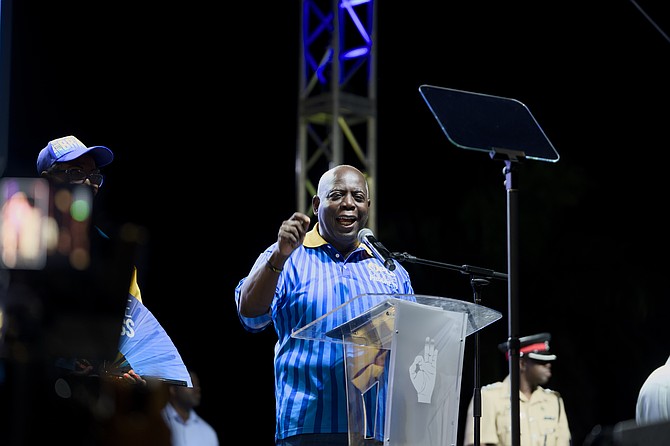
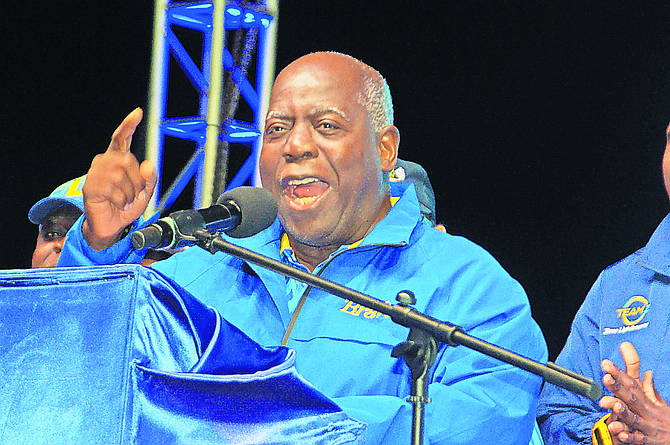
    At a packed political rally held Wednesday night in Grand Bahama’s West End, Bahamian Prime Minister Philip ‘Brave’ Davis delivered an optimistic address framing the island as firmly in the early stages of economic recovery, buoyed by new capital inflows, rising employment, and long-stalled infrastructure projects moving forward.

    The leader of the Progressive Liberal Party (PLP) told attendees that a long-awaited “new chapter” has opened for Grand Bahama, pointing to on-the-ground progress that residents can already see across the island. “People are working again. The new Freeport Health Campus is under construction. Major investments are moving forward. The Grand Bahama Shipyard is expanding, and local workers are accessing new skills training to advance their careers,” Davis said.

    Davis also highlighted a recent major investment announcement from global cruise operator MSC Cruises tied to Grand Lucayan, noting that the deal serves as external validation of the Davis administration’s years of targeted work to attract high-impact, sustainable investment to the island. He expressed full confidence that the four PLP candidates running for parliamentary seats across Grand Bahama — incumbent Pineridge MP Ginger Moxey, incumbent West Grand Bahama MP Kingsley Smith, Central Grand Bahama candidate Parko Deal, and Marco City candidate Eddie Whan — will keep the island’s recovery trajectory on track if elected.

    A core point of Davis’ address centered on the government’s ongoing standoff with the Grand Bahama Port Authority (GBPA) following recent arbitration proceedings. While Davis incorrectly stated that the administration secured a full victory in the arbitration, he emphasized that the PLP government took unprecedented decisive action to hold the private port authority accountable for failing to meet its long-term contractual obligations to the Bahamian people.

    “For far too long, this private authority has collected millions in public fees and concessions, but has never held up its end of the bargain for the communities of Grand Bahama,” Davis said. “The era of unaccountable license fee collection is coming to an end. We have put the Port on clear notice: Bahamian people will not continue to subsidize private profits while our local communities crumble from neglect.”

    Davis added that moving forward, the administration will take an unflinching stance to enforce the original terms of the Hawksbill Creek Agreement that established the port authority’s mandate. “We will use every legal tool at our disposal, every regulatory power granted to this government, and every bit of political capital we have to make sure the original promises of Hawksbill Creek are finally honored for the people of Grand Bahama,” he said.

    The prime minister also used the rally platform to criticize key policy proposals from Opposition Leader Michael Pintard and the Free National Movement (FNM), opening with a sharp rebuke of the opposition’s plan to abolish the Post Office Savings Bank. Davis told the crowd that roughly 7,000 residents of Grand Bahama rely on the community bank, with more than 35,000 users across the entire Bahamas who depend on its accessible savings services.

    He also dismissed the FNM’s proposal for a national government-run lottery as an empty political stunt with no real policy substance. “Their national lottery is not a serious plan for the country’s challenges — it’s just a gimmick,” Davis said. “They are chasing newspaper headlines instead of working on actual solutions that improve people’s lives.”

    In contrast to what he framed as the opposition’s shallow policy ideas, Davis argued that his administration has prioritized long-term, inclusive growth across the Bahamas through targeted policy action: energy sector reform to lower costs for residents and businesses, large-scale infrastructure investment, expanded workforce skills training, and opening new economic opportunities for all Bahamians.

    “While we are investing in real, lasting solutions for the Bahamian people, the opposition’s big idea is to turn the national government into a numbers house,” he added.

    Despite rising partisan tensions ahead of the upcoming election, Davis stressed that the progress Grand Bahama has made in recent years is undeniable and will continue under PLP leadership. “For the first time in a generation, we have a government that is finally standing up for the people of Grand Bahama,” he said. “We are not bowing to private special interests or clinging to outdated, unfair arrangements that shortchange local communities.”

    Deputy Prime Minister Chester Cooper also spoke at the rally, confirming that the planned redevelopment of Grand Bahama’s airport is now fully funded and construction is set to move forward. Cooper echoed Davis’ criticism of the previous FNM administration, noting that “for 34 years, the FNM gave the Port Authority a free pass on its obligations, but this PLP government has given them a clear deadline to deliver.”

  • PM and Church leaders reject FNM lottery plan

    PM and Church leaders reject FNM lottery plan

    A fresh political and social clash has erupted in The Bahamas over the opposition’s plan to launch a state-run national lottery, with Prime Minister Philip “Brave” Davis publicly dismissing the idea as a headline-grabbing, ill-conceived gimmick aligned with a proven failed, corruption-plagued model.

    The proposal was put forward Sunday by Michael Pintard, leader of the Free National Movement (FNM), who framed the independent board-overseen lottery as an untapped revenue source to drive national development. Pintard argued the new state system could operate alongside the country’s existing private gaming operators, pointing to frameworks already in place in jurisdictions including the Dominican Republic, Curaçao, Saint Martin and Ghana as successful blueprints for the plan.

    But Davis rejected the proposal outright during a press briefing with reporters, calling it a transparent political stunt born of desperation rather than a thoughtful policy solution. He pushed back particularly hard on Pintard’s choice of a model, noting the Dominican Republic’s national lottery has long been mired in confirmed corruption and fraud scandals. Davis questioned the opposition’s true motivations behind the push, suggesting the plan could create a slush fund open to abuse by corrupt actors. He also criticized the proposal for ignoring potential harm to the thousands of Bahamians already employed in the existing gaming industry, as well as the steady tax revenue the country already collects from private gaming operations. “It’s rather odd that you want to turn the Treasury into a gaming house,” Davis told reporters.

    The FNM’s announcement has reignited a decades-long contentious national debate that has killed every previous attempt to launch a national lottery in The Bahamas. Multiple past administrations have explored the policy, but all efforts have stalled amid fierce political pushback and widespread public concern. The Christie administration most recently attempted to legalize a lottery through provisions included in the 2014 Gaming Bill, but the plan collapsed after organized opposition from religious groups and large swathes of the public.

    Public resistance was clearly demonstrated in the 2013 national gambling referendum, when 59 percent of more than 81,000 participating voters cast ballots against approving a national lottery. Critics of the policy have repeatedly raised overlapping concerns: they question whether The Bahamas’ small population can support a state lottery without eating into existing tax revenues from private gaming, and they warn of persistent risks around lack of transparency, weak regulation, institutional corruption, and disproportionate social harm to low-income households. Supporters of a national lottery, by contrast, argue that a well-regulated system could generate significant new funding for critical public services including education and infrastructure, while also strengthening government oversight of the country’s entire gaming sector.

    In line with past opposition to the policy, senior church leaders have already renewed their vocal rejection of the new proposal, echoing the prime minister’s criticism. Bishop Walter Hanchell argued that a national lottery directly contradicts core Christian principles, pointing back to the 2013 referendum’s clear rejection of the policy. He recalled that even after voters rejected expanded gambling and lottery legalization a decade ago, then-Prime Minister Perry Christie moved forward with legalization anyway, against the explicit will of the Bahamian people. Hanchell said every negative outcome the church warned of at the time has since come to pass: rates of gambling addiction have risen sharply, and countless low-income Bahamians lose money earmarked for mortgages, rent and basic groceries to gambling operators every day. He called on national political leaders to abandon the lottery push and instead focus policy efforts on expanding social support and economic empowerment for vulnerable communities.

    Bishop Delton Fernander, president of the Bahamas Christian Council, echoed these concerns, noting that the proposal would disproportionately shift the burden of revenue generation onto low- and middle-income Bahamians. He pointed out that the public has already rejected the idea once, yet political actors continue to bring it back to the table. Fernander questioned whether repeated pushes for a national lottery are ultimately aimed at privatizing the lucrative sector for the benefit of a small, connected group of private actors. The Bahamas Christian Council has long maintained an unwavering opposition to the policy, he said, and past data already confirmed the country’s population is too small to sustain the system without major harm. Fernander added that critical public safeguards remain unaddressed more than a decade after the last debate, including targeted rehabilitation programs for people living with gambling addiction and formal systems to identify and support compulsive gamblers. Introducing a national lottery without first putting these protections in place, he warned, would only deepen the country’s existing social and economic inequalities.

  • Mitchell, Pinder and Bonaby top list of most absent MPs in House

    Mitchell, Pinder and Bonaby top list of most absent MPs in House

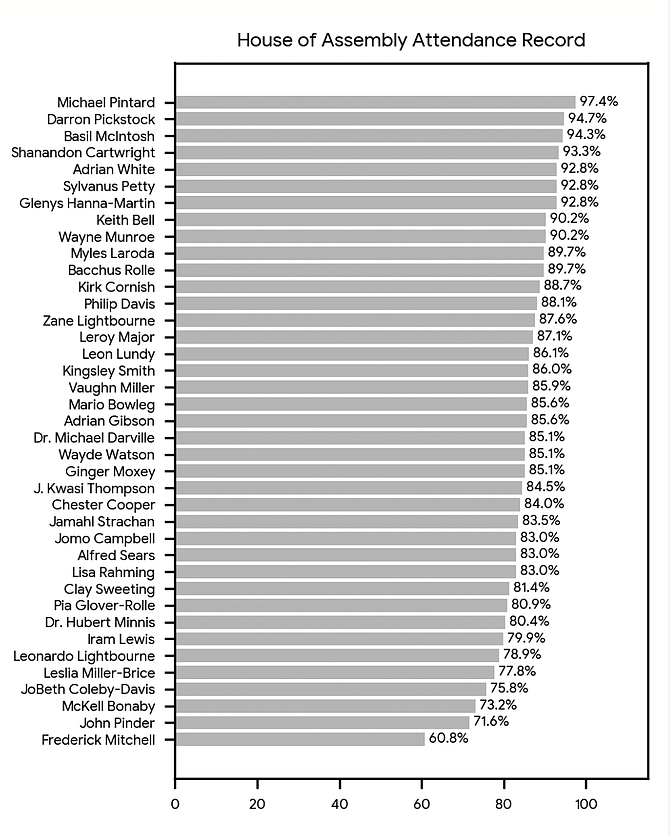
    Newly obtained official records from The Tribune have pulled back the curtain on attendance trends among members of the Bahamas’ House of Assembly, exposing significant disparities in participation among sitting lawmakers since the Davis administration took power in 2021. At the top of the list of the most frequently absent parliamentarians are three senior figures from the ruling Progressive Liberal Party (PLP): Foreign Affairs Minister and PLP Chairman Fred Mitchell, Central and South Abaco MP John Pinder, and Mount Moriah MP and Bahamas Public Parks and Beaches Authority chairman McKell Bonaby. All three have maintained attendance rates below 80 percent across the two parliamentary sessions covered in the data.

    The dataset spans two full parliamentary periods: 88 sittings held between October 2021 and August 2023, and an additional 106 sittings running from October 2023 through March 2026. Mitchell, who represents the Fox Hill constituency, has missed 76 total sittings, translating to an attendance rate of just 60.8 percent – the lowest among all sitting members. When reached for comment by The Tribune, Mitchell declined to provide any explanation for his high number of absences.

    Following closely behind Mitchell is Pinder, who has missed 55 sittings for a 71.6 percent attendance rate, and Bonaby, with 52 absences and a 73.2 percent attendance rate. Neither lawmaker responded to repeated requests for comment from The Tribune regarding their poor attendance track records. Energy Minister JoBeth Coleby-Davis came just behind this trio, missing 47 sittings to notch a 75.8 percent attendance rate. Seabreeze MP Leslia Miller-Brice missed 43 sittings, while North Andros and Berry Islands MP Leonardo Lightbourne missed 41 – with official records noting that one of Lightbourne’s absences was excused due to his participation in an official parliamentary conference.

    On the opposite end of the spectrum, opposition Free National Movement (FNM) lawmakers claim the top three spots for the most consistent attendance. FNM leader and Marco City MP Michael Pintard, MICAL MP Basil McIntosh, and St Barnabas MP Shanendon Cartwright hold the best attendance records in the entire body. After these three opposition figures, Englerston MP Glenys Hanna-Martin, North Eleuthera MP Sylvanus Petty, Carmichael MP Keith Bell and Freetown MP Wayne Munroe all posted attendance rates at or above 90 percent, placing them among the most active participants in House proceedings.

    One particularly notable entry in the records is the late Obie Wilchcombe, former MP for West Grand Bahama and Bimini, who maintained a perfect attendance record with zero absences before his unexpected passing in September 2023. The vast majority of other sitting lawmakers, including Prime Minister Philip Davis, Deputy Prime Minister Chester Cooper, and former Prime Minister Dr Hubert Minnis, all hold attendance rates above the 80 percent threshold. Kingsley Smith, who won the 2023 by-election to fill Wilchcombe’s vacant West Grand Bahama and Bimini seat, has missed 14 sittings since taking office, while Darron Pickstock – who won the Golden Isles by-election last November – has only missed one sitting in his short tenure so far.

  • US ex-cop reunites with Doctor’s Hospital surgeon who saved his life

    US ex-cop reunites with Doctor’s Hospital surgeon who saved his life

    Five years after a catastrophic stroke nearly claimed his life during a romantic anniversary trip to The Bahamas, former 28-year police veteran Ray Wood, 54, has finally fulfilled a year-long mission: meeting the neurosurgeon who pulled him through the most critical weeks of his medical battle to say thank you in person.

    The fateful event unfolded in July 2019 (corrected from original date misstatement) when Wood and his wife Raemie, also a police officer, traveled from their home in Southern California to celebrate their 10th wedding anniversary. Frequent Caribbean travelers, the couple was four days into their trip when Wood developed a sudden, severe headache and breathing trouble ahead of a planned scuba dive. Though he initially rested on the boat, he joined the dive roughly 45 minutes later; by the time the group returned to shore, his condition deteriorated rapidly.

    After returning to their hotel, Wood lost consciousness and all memory of the hours that followed. Raemie quickly recognized the signs of a life-threatening event: her husband’s speech was slurred, he could not walk steadily, he had been vomiting, and he could barely navigate their hotel room. She immediately called for emergency services, packed essential items for a hospital stay, and reached out to a doctor acquaintance for guidance while waiting in the emergency department hallway as her husband underwent emergency imaging. “There was no time to cry at first,” Raemie recalled of the chaotic night. “I only broke down once I was in the hallway making calls.”

    Imaging scans confirmed a devastating brain bleed that affected nearly one-quarter of Wood’s brain. He arrived at Doctor’s Hospital around 2 a.m. with right-side weakness, complete inability to speak, and rapidly declining consciousness. When Dr. Susheel Wadhwa, the consultant neurosurgeon on the case, assessed him, his Glasgow Coma Score — a standard scale measuring consciousness levels — had fallen to just 10 and was dropping quickly.

    The case was uniquely high-risk from the start. The bleed occurred on the left side of Wood’s brain, the dominant hemisphere that controls critical motor and cognitive function for right-handed people like him. Compounding matters, Wood had a pre-existing heart condition: he had undergone a heart ablation procedure in 2019 and was taking daily aspirin, which significantly increases bleeding risk during brain surgery. He also tested positive for COVID-19, adding another layer of complexity to his care.

    Wadhwa led the first emergency surgery that lasted four hours, with the entire perioperative process stretching to seven to eight hours total. In the days that followed, Wood’s condition slowly stabilized, but the severe brain impairment left him unable to form new memories, resulting in little to no recollection of his two-week stay in the Bahamian hospital. When he finally regained full consciousness, his first question was not about his own condition — he asked if his wife was safe. He later underwent a second, shorter procedure, and part of his skull was temporarily removed and stored in his abdomen to reduce swelling before being reattached during a later procedure in Florida that November.

    After two weeks of critical care in Nassau, Wood was transferred to a rehabilitation facility in Florida to begin the long, grueling process of recovery. For the former law enforcement officer, re-learning basic daily skills was a humbling, disorienting experience: he struggled with speech and mobility, and the stroke left him with permanent vision loss that prevents him from seeing anything below chest level, causing persistent balance issues. Today, he relies on a cane to walk to avoid falls. Raemie retired from her own police career to serve as his full-time caregiver, and the couple has entered a new chapter of life permanently reshaped by the near-tragedy.

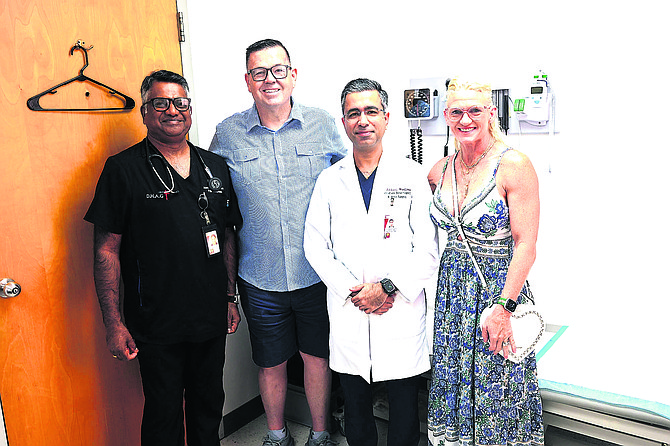
    For more than a year, Wood held one unwavering goal: to return to The Bahamas and meet the surgical team that saved him, to express his gratitude in person. That long-awaited meeting happened last Friday, when Wood and Wadhwa sat down together to revisit the original CT scan that showed the life-threatening brain bleed.

    With tears in his eyes, Wood reflected on the extraordinary circumstances of his survival. “I was a policeman for 28 years, I can’t tell you how many times I was shot at, how many times bad guys tried to take my life,” he told The Tribune. “Here I am, celebrating life and having a great time, and this comes out of nowhere — and a man that can save my life. Today I’m just grateful to be alive.”

    For Wadhwa and his medical team, these rare in-person reunions carry profound meaning, especially for intensive care staff who rarely get to see the long-term outcomes of the critical patients they treat. “When you are amidst all of this work, and you have a story like this that just comes back, it brightens the whole team,” Wadhwa said. “Even the team’s morale, especially with nurses in the ICU — they’re seeing very sick patients every day, and they so rarely get to find out what that person’s outcome ends up being. This means more than you know.”

  • FNM: We work for you, not the few

    FNM: We work for you, not the few

    As The Bahamas prepares for its general election on May 12, the main opposition Free National Movement (FNM) has formally launched its ambitious policy platform, a 54-page manifesto titled *We Work For You*, aimed at reversing the party’s 2021 electoral defeat and preventing the incumbent Progressive Liberal Party (PLP) from claiming a historic consecutive term in office.

    The release of the FNM’s agenda comes just days after the ruling PLP debuted its own election platform, the “Blueprint for Progress”, at the University of The Bahamas, setting the stage for a clear policy-driven contest between the two major parties ahead of polling day.

    At the forefront of the FNM’s cost-of-living relief proposals is a plan to eliminate value-added tax (VAT) entirely on all everyday consumer essentials, medical expenses, and educational supplies. The party also targets housing accessibility, promising to lower down-payment requirements for first-time homebuyers and deliver at least 5,000 new housing units via public-private partnership projects. For family support, the manifesto pledges a $200 monthly child allowance for children in their first two years of life, alongside a guaranteed minimum $100 weekly stipend for young people enrolled in accredited job training programs.

    A core distinguishing feature of the FNM platform is its sharpened focus on government transparency and anti-corruption reform, an area the party frames as underdelivered by the current PLP administration. The centerpiece of this agenda is a binding timeline to fully implement the long-stalled 2017 Freedom of Information Act (FOIA): the party commits to beginning the rollout within its first 90 days in office, with full completion scheduled within the first year of a FNM government. FOIA has remained partially implemented for years after its passage; the current PLP administration stated in 2022 that pilot training had begun for staff at 10 government agencies, but offered no firm full rollout date, and Prime Minister Davis confirmed in 2025 that full FOIA implementation was not an administrative priority, with the government focusing instead on cost-of-living and public safety concerns.

    The FOIA pledge is part of a broader suite of accountability measures put forward by the FNM, including a new Public Anti-Corruption Bill, a binding Public Officials’ Code of Conduct Bill, enhanced legal protections for whistleblowers, a more empowered Public Accounts Committee, a shift of the Auditor General’s Office from executive oversight to parliamentary supervision, independent board appointments for state-owned enterprises, and full implementation of the long-delayed Ombudsman Act.

    On healthcare, the FNM expands on its already publicized commitments to redevelop Nassau’s Princess Margaret Hospital and upgrade Grand Bahama’s Rand Memorial Hospital. The manifesto adds pledges to hire 100 new doctors and 200 new nurses to address staffing gaps, expand the national health insurance (NHI) scheme, confront the growing national mental health crisis, improve urgent and emergency care access, and strengthen dental care services across the country. The document also promises targeted action to resolve widespread drug and supply shortages across the public health system and speed up ongoing infrastructure upgrade projects.

    On immigration, the party has announced Operation SHIELD, a strict enforcement initiative centered on a “zero tolerance” policy toward illegal immigration. The manifesto explicitly rules out citizenship for any person who entered The Bahamas illegally, and breaks Operation SHIELD’s core priorities down to: Secure land borders, Heighten surveillance, Investigate systemic abuse, End unfair processing, Limit irregular approvals, and Disclose regular public data on immigration activity.

    To address public concern over crime, the FNM pledges to rebuild public trust in the Royal Bahamas Police Force through the introduction of independent external oversight, recruit hundreds of additional frontline police officers, invest in programs to address the root social causes of crime, and implement a comprehensive ten-point anti-crime strategy. The party also proposes a broad overhaul of the justice system to reduce delays, including clearing long-standing court backlogs, expanding virtual court hearings, digitizing case management systems, constructing a modern national forensic laboratory, strengthening specialized court divisions, updating outdated firearms legislation, and adopting stricter bail eligibility rules for violent offenders.

    On economic and fiscal policy, the FNM proposes enshrining the National Development Plan in national law, replacing the existing National Investment Fund Act with a new sovereign wealth fund, setting binding annual national economic growth targets, adopting a statutory fiscal rule that requires balanced budgets during normal economic conditions, and publishing a formal plan to reduce national debt to 50 percent of gross domestic product (GDP) over the medium to long term.

    The party’s tax reform agenda includes replacing the current business licence tax levied on gross turnover with a system based on net business earnings, creating industry-specific free trade zones, simplifying VAT and business licence compliance processes, modernizing tax payment timelines, introducing a formal Taxpayer Charter to protect resident and business taxpayers, allocating a minimum of $10 million annually in grant funding for small and micro-enterprises, and establishing a dedicated standalone Commercial Court to speed up business dispute resolution.

    Additional economic proposals include the introduction of a national lottery to generate new public revenue, the creation of two new government departments focused on innovation and research and development, and a policy push to expand domestic Bahamian ownership across key national economic sectors. This includes increasing local equity participation in large foreign-backed tourism developments, expanding Bahamian ownership stakes in cruise destinations and private island developments, and opening up greater access for Bahamian entrepreneurs in the banking and financial services sector.

    Tourism and urban redevelopment feature prominently in the platform. The FNM proposes a ten-year tourism diversification strategy targeting a 35 percent increase in stopover visitor arrivals, pursuing UNESCO World Heritage designation for historic Bahamian communities, creating a dedicated Downtown Authority to coordinate revitalization efforts, transforming Nassau’s Bay Street into a pedestrian-friendly promenade, launching designated “Orange Districts” to support the creative economy, and implementing a 24/7 Nightlife Project to boost after-hours activity in downtown Nassau. For Grand Bahama, the party plans a targeted economic and tourism revitalization through the BOOM Initiative.

    The manifesto also includes a section dedicated to banking reform, with promises to introduce new consumer protection legislation, mandate greater public scrutiny of excessive bank fees, require banks to offer low- and no-fee basic accounts for lower-income customers, mandate that banks process personal account openings within one business day, and speed up access to modern app-based digital payment systems for Bahamian small business owners. On energy policy, the FNM commits to targeted electricity discounts for senior citizens, implement national fuel hedging programs to stabilize consumer energy costs, expand residential and commercial solar adoption, set a target of generating 30 percent of the country’s electricity from renewable energy sources by 2030, and expand access to pre-paid electricity meters for consumers who prefer the flexible payment model.

    In education, the FNM reaffirms its previously announced pledge to deliver universal free pre-primary education, while adding new targeted financial support and broader structural reforms. The policy ties the $200 monthly early childhood benefit to the goal of strengthening educational outcomes from the earliest years, and also includes new commitments to increase support for working teachers and expand stipends for trainee educators entering the workforce.

  • Minnis: I didn’t leave, FNM abandoned me

    Minnis: I didn’t leave, FNM abandoned me

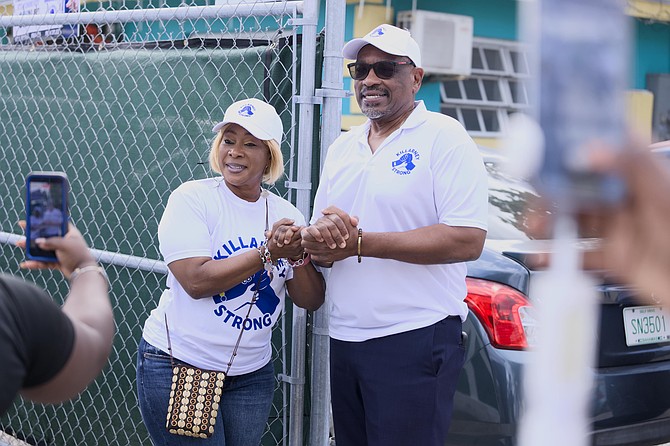
    On Saturday, former Bahamian Prime Minister Dr. Hubert Minnis officially kicked off his campaign to keep his hold on the Killarney constituency seat, using the launch event to level explosive allegations against his long-time political party, the Free National Movement (FNM), claiming its current leadership has systematically shut him out of party activities and orchestrated a smear campaign targeting him and his family.

    Following the FNM’s disappointing general election defeat that pushed Minnis out of the prime minister’s office, the ex-leader says party officials have waged a coordinated effort to marginalize him. Despite his decades of loyalty to the FNM, Minnis said it was the party that turned its back on him, not the other way around. “I have always been an FNM. It was the FNM who left me, the FNM who abandoned me. I never walked away from the party,” he told reporters at Saturday’s press conference, adding that he could not stay silent about the unacceptable treatment he has received.

    Minnis detailed the multiple restrictions the party imposed on him after the election. “After the loss, I was told the public rejected both me and the party, so I no longer had a place in FNM circles. All local party associations were ordered not to let me speak at any party events. Many groups had already invited me and put my name on their promotional materials, which put them in an incredibly difficult position. Out of respect for them, I told them to just find another speaker rather than risk conflict with party leadership,” he explained.

    The restrictions went far beyond speaking bans, according to Minnis. “If that wasn’t enough, leadership told me I was not allowed to answer any questions from reporters at all. If the press approached me, I was supposed to report the question back to party leaders, let them draft a response, and they would speak to the press instead of me,” he said. When he pushed back against these rules, arguing they violate standard political procedures followed across The Bahamas and globally, Minnis says leadership gave him a blunt response that still stings: “I had my time, now it’s their turn. They’re in charge now, they make the rules, and they don’t want to hear anything I have to say.”

    Worsening the tensions, Minnis also claimed the FNM launched a coordinated smear campaign against him and his wife. Even through this hostility, however, Minnis says he never lost his connection to the Killarney community, which he has represented for more than 20 years. “Like the people of Killarney, we stayed strong and stayed focused. I knew the voters would get their chance to have their say eventually. The FNM may have abandoned me, but I never abandoned Killarney, and I would never walk away from the loyal, wonderful people of this constituency,” he said.

    Minnis emphasized that he is running as an independent candidate not out of preference, but out of necessity. He told constituents to treat all rival candidates with basic respect, but made clear he is asking voters to return him to office to continue his representation. Running without a party affiliation, he argues, frees him from binding party whips and forced policy alignment that would stop him from prioritizing the needs of Killarney residents first.

    The candidate laid out a clear policy agenda focused on three key areas: public safety, digital innovation, and expanded social support. “We have already started a lot of important programs here in Killarney, but we need to be the first constituency in the country to roll out full CCTV coverage across every part of Killarney,” he said. “We also need to finish our ring doorbell program, so every single resident in the constituency can access this safety tool.”

    Beyond public safety, Minnis proposed a new digital system for constituents to report community issues and pushed for the expansion of existing social support programs. In one of the most striking comments of his launch speech, he called out the deep crisis facing the country’s healthcare system, admitting that the sector has declined under every prime minister in modern history — including his own tenure.

    “We cannot play political games with people’s health. Too many Bahamians are dying needlessly, and no one else in this race is willing to say it out loud. That’s the advantage of being an independent: I can tell voters the plain facts, no sugarcoating,” he said. Minnis is calling for the creation of a non-partisan special committee, made up of sitting politicians, healthcare professionals and ordinary members of the public, to lead a full overhaul of the country’s broken healthcare system. He urged voters to reject any candidate who refuses to back this reform push.

    The campaign launch drew a number of high-profile Bahamian political figures in a show of support for Minnis, including former Deputy Governor General Lonnie Rolle, former Democratic National Alliance leader Branville McCartney, and former Bamboo Town Member of Parliament Renward Wells. When reached for comment on Minnis’ multiple allegations against the FNM, party chairman Dr. Duane Sands declined to issue any response.

  • McCartney claims Bahamas in long-standing ‘immigration crisis’

    McCartney claims Bahamas in long-standing ‘immigration crisis’

    A public debate over immigration governance in The Bahamas has reignited, as former Immigration Minister Branville McCartney has publicly claimed the nation has struggled with a persistent immigration crisis for decades, citing three key systemic failures: lax law enforcement, widespread document fraud, and a chronic lack of political will among successive leadership. This assertion directly contradicts the current Davis administration’s official position that no systemic crisis exists.

    McCartney made his comments on the sidelines of former Prime Minister Dr Hubert Minnis’ re-election campaign launch, where the opposition has recently raised sharp alarms over forged National Insurance cards, counterfeit birth certificates, irregular spousal permits, and fraudulent e-passports. Unlike disputes centered on surging illegal border crossings, this current controversy does not hinge on evidence of growing unauthorized arrivals; instead, it focuses on gaps in enforcement, internal corruption, and governance failures within the immigration system.

    One of the most troubling revelations McCartney highlighted is the alleged involvement of sitting Bahamian public servants in document fraud schemes, which he called a violation of national trust approaching treason. He tied his remarks to an ongoing court case probing these illicit activities, emphasizing that while the corrupt acts are carried out by individual bad actors rather than being state-sanctioned, current penalties are far too lenient to deter future wrongdoing. He called on authorities to use high-profile prosecutions of caught offenders as a public warning to other complicit officials.

    The former minister stressed that the issue is not unique to the current Philip “Brave” Davis-led administration, noting that the crisis was already present when he served as Immigration Minister. At the core of the long-standing problem, he argued, is a lack of sustained political commitment to addressing the issue head on. Too many leaders, he claimed, prioritize holding onto power over making tough, unpopular decisions that serve the national interest.

    Prime Minister Davis and his Progressive Liberal Party (PLP) administration have rejected McCartney’s crisis framing. They acknowledge that document fraud is a serious issue, but maintain it does not represent a systemic failure of the country’s immigration institutions. The government points to ongoing active enforcement operations and thousands of repatriations of unauthorized migrants as proof of its commitment to addressing the problem. PLP officials also note that it was due diligence from serving public officials that brought existing fraud cases to public and legal attention, contradicting claims of institutional inaction.

    McCartney pushed back against this narrative, outlining three core pillars he says are needed for meaningful immigration reform: consistent, unwavering enforcement of existing immigration laws, strengthened border security infrastructure and protocols, and aggressive legal action against criminal networks that facilitate illegal migration. He also warned against allowing the issue to become purely a partisan political football, arguing that what is required is consistent, cross-administration commitment to protecting the country’s borders and upholding the integrity of its official identity documents. At its core, McCartney said, political will means unflinching commitment to doing what is right for the Bahamas, regardless of political cost.

  • Pintard urges listeners to ‘fire’ the Davis administration at rally in GB

    Pintard urges listeners to ‘fire’ the Davis administration at rally in GB

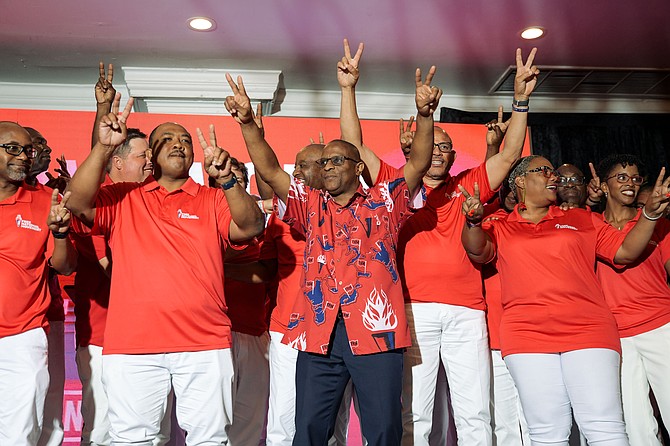
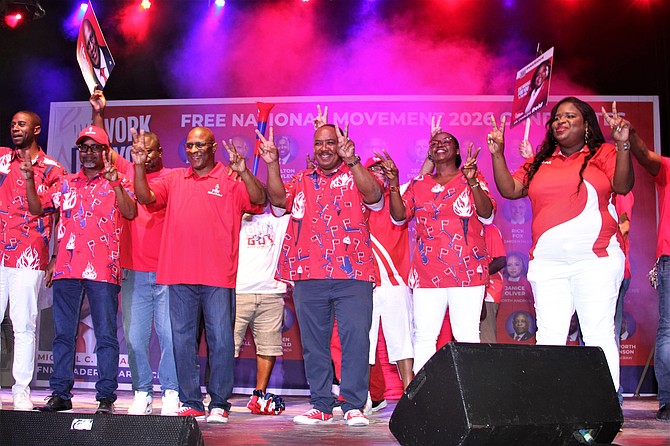
    As The Bahamas heads toward a general election, the opposition Free National Movement (FNM) launched its first national campaign rally on the island of Grand Bahama Saturday, positioning itself as a corrective to the ruling Progressive Liberal Party (PLP) whose term the party decries as a half-decade of broken pledges, stagnant growth and mismanagement.

    Speaking to supporters at FNM’s Grand Bahama headquarters, party leader Michael Pintard opened his address by urging registered voters to oust Prime Minister Philip Davis’ current administration, centering his critique on the island’s long-stalled Grand Lucayan redevelopment project. Pintard took direct aim at the PLP’s recent public statement regarding a proposed beach club tied to the multi-year development, dismissing the announcement as nothing more than pre-election political theater designed to feign progress after years of inaction.

    “They issued a statement saying they welcomed a new partnership announcement, they didn’t announce that it’s been signed, sealed, and delivered,” Pintard told the crowd. “They didn’t say that the money was in the bank. They said they welcomed an agreement. You see, you can’t claim progress when you haven’t left the starting line.”

    Pintard reminded attendees of two high-profile, unfulfilled promises the PLP made to Grand Bahama voters when it campaigned for office four and a half years prior: the full sale of the Grand Lucayan property and construction of a new world-class airport on the island. To date, Pintard argued, neither commitment has been realized. He added that former workers at the shuttered Grand Lucayan hotel have still not received owed compensation, and the abandoned property currently sits closed without access to running water.

    Beyond stalled development, Pintard called for sweeping reform of the Grand Bahama Port Authority, arguing the current institutional structure creates unacceptable conflicts of interest between its regulatory and commercial functions, and lacks basic accountability mechanisms.

    Turning from island-specific concerns to national policy, FNM’s leader accused the sitting Davis administration of effectively abandoning its governing responsibilities five months ahead of the end of its five-year term, leaving critical legislative priorities on immigration and national security unaddressed ahead of the upcoming vote. Pointing to recent allegations of fraudulent voter identification cards circulating in the country, Pintard called on the PLP to deliver a full public explanation of the controversy, and outlined a hardline new immigration policy for his party.

    “And so I want to say it plainly, no one who comes into the Bahamas illegally will ever have a pathway to citizenship in the Commonwealth of the Bahamas,” Pintard stated. He introduced FNM’s proposed Operation SHIELD, an initiative that would strengthen border security protocols, expand enforcement capacity and increase transparency around immigration processes.

    FNM Deputy Leader Shanendon Cartwright followed Pintard’s address with a sharp rebuke of the administration’s national security track record, highlighting a sharp uptick in armed robberies across the country and accusing government officials of deliberately withholding complete crime data from the public. Cartwright noted that Prime Minister Davis recently claimed his administration’s crime reduction strategy was delivering results during a constituency tour – a claim directly undercut the same day by the national Police Commissioner, who confirmed armed robbery rates were rising.

    Cartwright further alleged that frontline law enforcement, Customs and Immigration officers are underpaid, under-resourced, and even locked out of access to routine medical care because the government has failed to pay their group insurance premiums. “The safety of this country is not a talking point,” he said. “You cannot grow an economy in a country where people are afraid to open their front doors.”

    Other FNM candidates used the rally to highlight pressing local social and economic concerns impacting Grand Bahama residents. Dr. Charlene Reid, a party candidate, noted that long-promised infrastructure upgrades at Rand Memorial Hospital remain unfinished, including critical renovations to the facility’s morgue. Candidate Frazette Gibson drew attention to deteriorating conditions at public schools across the island, adding that overstretched teachers are already operating beyond their capacity to support students.

    Candidate Omar Isaacs highlighted that Grand Bahama’s youth unemployment rate remains stubbornly above 20 percent, warning that limited economic opportunity is pushing young people to leave the island in search of work elsewhere. To reverse that trend, Isaacs outlined FNM proposals including a weekly stipend for trainees in workforce development programs and a $100 million fund to support homegrown Bahamian entrepreneurs.

    The opening rally concluded with a celebratory motorcade through Grand Bahama and a fireworks display, with Pintard closing by expressing confidence that FNM will secure all five of the island’s parliamentary seats in the upcoming election.