标签: Bahamas

巴哈马

  • ‘We can choose progress, or we can go backwards,’ Davis says at rally

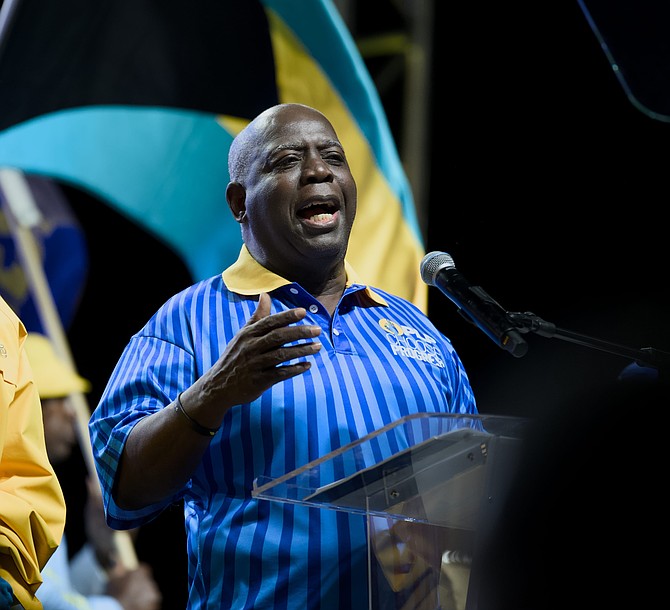
    ‘We can choose progress, or we can go backwards,’ Davis says at rally

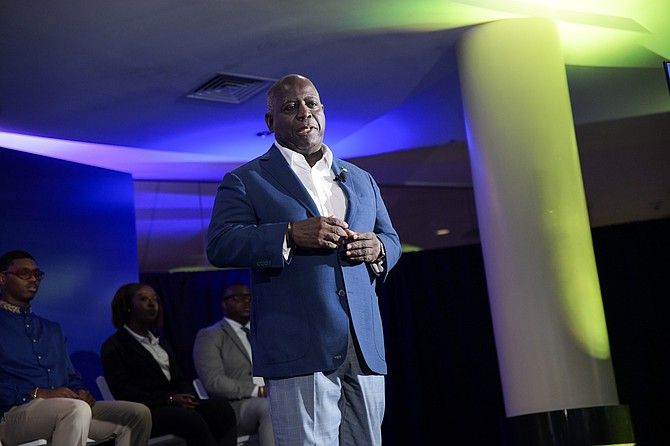
    Bahamas’ ruling Progressive Liberal Party (PLP) kicked off its formal re-election campaign over the weekend, hosting its first large-scale public rally following the official announcement of the country’s upcoming May 12 general election. Held Saturday evening at Nassau’s RM Bailey Park under the campaign slogan “Rally for Progress”, the event drew an enthusiastic crowd of loyal supporters ready to rally behind the incumbent administration.

    Attendees, clad in the party’s signature blue, packed the majority of the park grounds, waving PLP-branded flags and rallying alongside pre-program opening activities including energetic music, organized motorcades, and group chants that steadily built anticipation for the night’s headline addresses. While the venue did not reach full capacity, the space echoed with nonstop cheering and party slogans throughout the entire event, signaling strong grassroots enthusiasm for the incumbents.

    A roster of high-profile PLP candidates and party leaders took the stage throughout the night, including Fred Mitchell, Keno Wong, Leslia Brice, Lisa Rahming, Zane Lightbourne, Sebas Bastian, Jobeth Coleby-Davis, and Glenys Hanna-Martin. The evening closed with the two most anticipated speeches from the party’s top officials: Deputy Prime Minister Chester Cooper, who served as the opening headliner, and Prime Minister Philip “Brave” Davis, who delivered the closing address.

    Opening his speech to what he called a sprawling “sea of blue”, Cooper kicked off his remarks with high energy, framing the rally as the official launch of the PLP’s new campaign chapter ahead of the mid-May vote. “Look at this crowd! Look at this sea of blue! Looks like a Blue Wave to me,” he declared, drawing thunderous cheers from the gathered supporters.

    Cooper centered the entire upcoming election around a clear binary choice: progress under the PLP, or regression under the opposition. He highlighted key economic policies the incumbent administration has rolled out to ease financial strain on households, including broad tax cuts and targeted cost-of-living relief measures, most notably the removal of value-added tax (VAT) from a range of staple food items and essential consumer goods. While he did not deny that many Bahamian households still face ongoing economic pressure, he emphasized that the PLP government has prioritized addressing these challenges head-on.

    Cooper also used his time on stage to draw sharp contrasts between the PLP’s policy agenda and that of the opposing party, while making a direct appeal to first-time and young voters of all genders to back the PLP’s vision. He specifically highlighted the party’s focus on expanding job opportunities, supporting small business entrepreneurship, and increasing access to ownership opportunities for Bahamian residents.

    When Prime Minister Davis took the stage, he was met with immediate, sustained applause, with supporters chanting party slogans and waving their blue flags in a show of enthusiasm. Davis framed the upcoming vote as one of the most critical decision points in the nation’s recent history, warning voters against what he described as the disruptive pattern of alternating ruling parties every five years.

    “In 31 days, we have a choice,” he told the crowd. “In 31 days, we can choose progress, or we can go backwards.”

    A core announcement of Davis’ speech was the launch of the new “Blueprint Tracker”, a publicly accessible digital tool designed to document and showcase the administration’s progress on the key policy commitments it made during its 2021 election campaign. Davis urged all attendees and voters across the country to use the tracker to review the PLP’s first-term achievements firsthand.

    Throughout the hours of speeches, the crowd remained actively engaged, frequently interjecting with applause, chants, and enthusiastic responses, especially when speakers repeated the rally’s core call to “choose progress”. The event ran late into the evening, wrapping up shortly before 11 p.m. with a festive fireworks display and falling confetti as supporters celebrated the official start of the PLP’s re-election drive.
  • PLP official addresses finance reform as party outlines election deadlines

    PLP official addresses finance reform as party outlines election deadlines

    As The Bahamas counts down to its general election on May 12, the ruling Progressive Liberal Party (PLP) has thrown its tentative support behind integrating campaign finance reform into the country’s long-term national development strategy, while declining to lock the party into binding legislative action if it retains power after the vote.

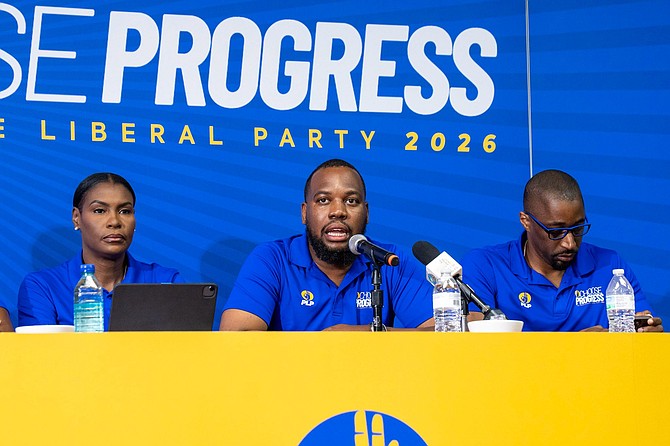
    Speaking at the PLP’s first scheduled weekly press briefing on Sunday, party Communications Director Latrae Rahming framed long-debated campaign finance overhauls as a critical topic for national planning. “Looking ahead, and even right now, we need a structured approach to this issue that is woven into our national development plan,” Rahming explained.

    Rahming added that Bahamian policymakers should look to successful regulatory models from comparable jurisdictions around the world to identify a framework that aligns with the country’s unique political context, noting that reform “definitely ought to be a consideration in the national development plan, and we absolutely need to benchmark which policies work for our jurisdiction.”

    The call for broader discussion comes amid a years-long national debate over campaign finance regulation that has never resulted in enacted legislation. Both major Bahamian political parties have campaigned on promises of reform for years, facing sustained pressure from good governance groups including the Organisation for Responsible Governance, as well as international bodies like the Organisation of American States. No major legislative progress has materialized to date.

    Most recently, Prime Minister Philip “Brave” Davis clarified in September 2024 that despite the PLP including reform promises in its 2021 Blueprint for Change manifesto, the policy was not a current administration priority. “I don’t know where this renewed focus on this issue came from,” Davis said at the time, adding “I will not disclose our campaign donors unless those donors personally give me permission to do so.” The prime minister argued that reform legislation would not directly address the immediate economic and social struggles facing most Bahamian households, noting the administration is focusing on more urgent priorities while still reviewing the issue.

    Rahming on Sunday acknowledged that existing financial safeguards are already in place for political campaigns, but stressed that cross-party consensus is required to move reform forward. “This is a conversation that all major political parties in the country need to have together,” he said.

    Alongside the discussion of campaign finance, the PLP’s legal advisor Keenan Johnson used Sunday’s briefing to outline key electoral deadlines for the upcoming May 12 vote, to help voters and candidates prepare. Nomination Day, when all candidates must complete official documentation to appear on the ballot, is scheduled for April 16. Johnson emphasized that despite many parties having already publicly ratified their chosen candidates, no candidate is officially registered until they complete this formal process.

    Additional key dates include an April 17 deadline for overseas voters to submit their ballot applications via the MyGateway digital voting portal, and an April 25 deadline for applications from voters requesting special access to polling. Advance in-person polling for eligible voters will be held on April 30. Johnson also confirmed that voters can use either a valid passport or driver’s license as official photo identification to cast a ballot, expanding options for eligible participants.

    The party confirmed that it will hold weekly press briefings every Sunday leading up to election day to keep voters updated on its platform and campaign activities. Golden Gates Member of Parliament Pia Glover-Rolle noted that the campaign has now entered its most critical phase, with just 30 days remaining until polling day. “Every single day counts between now and May 12,” she said.

  • Haitian leader: We pay more for healthcare

    Haitian leader: We pay more for healthcare

    As the Bahamas approaches its election, a leading voice in the country’s Haitian-Bahamian community is challenging widespread public rhetoric that frames irregular and regular migrants as an unfair drain on the nation’s public healthcare system. Michael Telarin, president of the United Haitian and Bahamas Association, is pushing for a fundamental shift in how policymakers and the public discuss migrants’ contributions to the healthcare sector, arguing that the group actually contributes more to public coffers and pays more out of pocket for medical services than the average Bahamian citizen.

    Telarin’s comments come in direct response to a recent campaign policy announcement from the incumbent Progressive Liberal Party (PLP), which pledged Wednesday that if reelected, it will implement a new mandate requiring all migrants to either hold private health insurance or enroll in a new government-run coverage plan. The policy, framed as a way to reduce strain on public medical institutions, has gained traction among voters frustrated by perceived strains on public services. Telarin acknowledged that the PLP’s proposal is an attempt to address voter concerns, but he says the conversation around migrants and healthcare needs to be reframed to reflect on-the-ground realities.

    A key point of contention for Telarin is the relationship between migrant workers and the National Insurance Board (NIB), the country’s social security system. He points out that most migrant workers contribute to NIB on a regular basis, either through automatic payroll deductions arranged by their employers or via direct individual payments. Despite these contributions, Telarin explains, migrants are still required to pay full out-of-pocket costs immediately when they access hospital and clinical services, and most are able to cover these costs despite the financial burden. Even for native-born Bahamians, however, NIB does not function as a comprehensive health insurance scheme: it only provides targeted benefits for sickness, maternity leave, and workplace injuries, and does not cover routine or emergency medical care costs for any group, regardless of immigration status.

    Telarin says that while he supports the PLP’s broader goal of strengthening and enforcing the country’s immigration policies, the party’s campaign platform overlooks a far more pressing, long-running problem that has left thousands of migrants in limbo: crippling delays in processing applications for legal residency and citizenship. For migrants who have completed all required vetting, submitted all necessary documentation, and followed every rule of the legal application process, there remains no clear timeline for when their applications will be resolved. Telarin argues that the government owes these law-abiding applicants clear transparency around expected wait times, which currently stretch on for months or even years without resolution.

    On the topic of immigration enforcement, the PLP has campaigned on a series of aggressive new measures, including rolling out a comprehensive National Biometric Immigration System, installing biometric electronic entry gates at border crossings, and imposing harsher fines and criminal penalties for employers and corrupt public officials who facilitate immigration violations. Telarin, however, argues that the success of any new enforcement framework will depend on consistent implementation and closing existing loopholes that have undermined past immigration policies. Too often, he says, enforcement is inconsistent, gaps in regulation allow bad actors to exploit migrants and flout the law, and tough new policies amount to nothing more than empty campaign rhetoric. He is calling on the government to take a holistic, systemic approach to reform that addresses underlying structural flaws rather than just announcing new, unimplemented policies ahead of an election.

  • Glover-Rolle clarifies mental wellness will begin as unpaid leave initially

    Glover-Rolle clarifies mental wellness will begin as unpaid leave initially

    A key policy pledge from the Bahamas’ Progressive Liberal Party to grant workers three annual mental wellness leave days will launch as unpaid time off, the nation’s Minister of Labour and Public Service Pia Glover-Rolle has confirmed. The rollout comes after the policy was first introduced as part of the party’s *Blueprint for Progressive* election manifesto earlier this week, with the critical detail of unpaid leave left unstated during the public launch. Glover-Rolle, who also serves as the Member of Parliament for Golden Gates, clarified the policy’s terms to reporters days after the manifesto event, noting that the current unpaid structure is framed as an incremental first step toward a potential future paid leave mandate.

  • Davis asks voters for trust, defends record on unfulfilled reform promises

    Davis asks voters for trust, defends record on unfulfilled reform promises

    As the Progressive Liberal Party (PLP) kicks off its re-election bid, Bahamas Prime Minister Philip Davis is pushing back against growing criticism over a string of unkept pre-election promises centered on government transparency and accountability. Speaking to reporters this week, Davis framed the core issues of transparency and accountability as fundamentally questions of personal character and public trust, arguing that voter confidence in his leadership underpins belief in his administration’s agenda.

    When the PLP took office after the last general election, it ran on a platform that included sweeping transparency reforms: full implementation of the Freedom of Information Act, new national integrity legislation, and comprehensive campaign finance reform. With the party now seeking a new term, none of these key pledges have been completed, a gap opposition critics have repeatedly highlighted on the campaign trail.

    Pressed on this discrepancy between campaign promises and governing action, Davis did not deny that many commitments remain unfulfilled. Instead, he urged Bahamian voters to balance these unmet goals against the full record of his administration’s achievements over the last term. “We could accept the things we didn’t fulfil, you know,” Davis told reporters. “As I keep saying, we did a lot, please acknowledge that.”

    The prime minister also addressed recent backlash over new policy pledges unveiled at the PLP’s Wednesday launch of its “Blueprint for Progress” campaign platform. Critics have argued that rolling out new policy proposals ahead of an election, when the party failed to deliver on old promises, is a disingenuous politically motivated move. Davis rejected that characterization outright, noting that laying out a forward-looking policy agenda is a core part of any democratic electoral process.

    “We are in the political season,” Davis said. “I expect my critics to attack, not debate me on the issues and the ideas. If you look at what we’re saying, we are building upon which we have already started, some of which we promised and wasn’t able to complete and we’re building on that.”

    He emphasized that presenting future policy initiatives is how political parties share a national vision with voters, rather than a cynical political tactic. “The critics will continue to say, anything I say now, I’m doing it for politics,” he added. “But what we are doing now is, we are saying to the Bahamian people, the politics is about the future. So we have to paint the future for the people and to give them a vision of The Bahamas that will include the initiatives that we think we have to put in place.”

    To shore up public credibility, Davis pointed to his administration’s overall track record, claiming that hundreds of smaller campaign commitments were completed over the last term. He also highlighted unplanned policy actions not included in the party’s original election platform as proof of the government’s responsiveness to public needs, specifically calling out the popular school breakfast programme rolled out during his tenure as an example of meaningful, unpledged progress.

  • ‘Why pay somebody to eat?’: Chamber blasts PLP lunch plan

    ‘Why pay somebody to eat?’: Chamber blasts PLP lunch plan

    As the Bahamas’ Progressive Liberal Party (PLP) rolls out a sweeping slate of new labor protections in its pre-election \”Blueprint for Progress\”, a top business leader has launched sharp criticism of several key provisions, drawing attention to the ongoing tension between worker welfare and private sector operational costs. The opposition party unveiled the full package of labor pledges during a public event Wednesday evening, which includes a range of policy changes aimed at improving working conditions across the country: a mandatory one-hour paid lunch break for any shift 8 hours or longer, a legal requirement of 8 hours of rest between consecutive shifts, capped probation periods for new hires, three annual paid mental wellness days that do not require a doctor’s note, expanded paid parental leave for new parents, and legal mandates for workplaces to provide dedicated private space for breastfeeding employees.\n\nPeter Goudie, the Bahamas Chamber of Commerce’s top labor committee official, made his opposition clear to the most high-profile proposal on the list. In blunt remarks, he argued that forcing businesses to compensate workers for meal time is an unnecessary overreach of government power. \”I don’t agree with that at all. Why I gotta pay somebody to eat food?\” Goudie stated, noting that while many businesses already choose to offer paid breaks voluntarily, that does not mean the policy needs to be codified into law. \”I’m a strong believer that you get paid for what you work. That’s my personal belief, and paying me to eat food, I got a problem with that.\”\n\nGoudie also targeted the PLP’s 8-hour rest period mandate between shifts, arguing that the rule would actually harm workers who want to pick up extra hours to earn overtime pay. He specifically called out how the restriction would disproportionately impact younger workers who are often more willing to work extra shifts to boost their income. \”Especially if I’m a young man… and I want to work overtime, and I have an opportunity, and you’re telling me I can’t work overtime? Not sure I agree with that,\” he explained, adding that the rule would remove worker choice instead of protecting employee welfare.\n\nThe third policy the chamber official raised concerns about was the proposed three annual mental wellness days without mandatory doctor verification. Goudie argued that the lack of formal medical check requirements would leave the policy open to abuse by workers, saying that employers would have no way to confirm whether the leave is being used for a legitimate mental health need. \”People just say, oh I am going to take a day off today, it’s a mental health day, I’m having a mental health day, and who decides that? I have a problem with that,\” he noted, adding that all medical-related leave should require an official diagnosis to prevent misuse.\n\nNot all of the PLP’s labor proposals faced pushback from Goudie. He expressed broad support for the party’s family-focused leave changes, including the plan to increase paid maternity leave from 12 weeks to 14 weeks and introduce two weeks of paid paternity leave for new fathers. On the maternity leave expansion, he noted, \”We don’t have a big problem with that because the more time the mother spends with the child, the better the child is going to be at the end of the day.\” He called the new paternity leave requirement \”no big deal\” and acknowledged that the breastfeeding accommodation mandate is already proven to work in other Caribbean nations including Barbados, calling it a feasible policy that would only require minor adjustments for local businesses.\n\nEven for these broadly supported policies, however, Goudie raised a critical caveat: small businesses with fewer than 10 employees would face disproportionate strain from expanded mandatory leave. \”If you only got two to ten employees, and you keep increasing time off from work, it gets rough on a small business,\” he explained. \”They just don’t have the personnel, so they’ve got to go out and find somebody else to hire while these people are out, and that’s a tough one.\”

  • Prime Minister Davis has ‘Blueprint for Progress’

    Prime Minister Davis has ‘Blueprint for Progress’

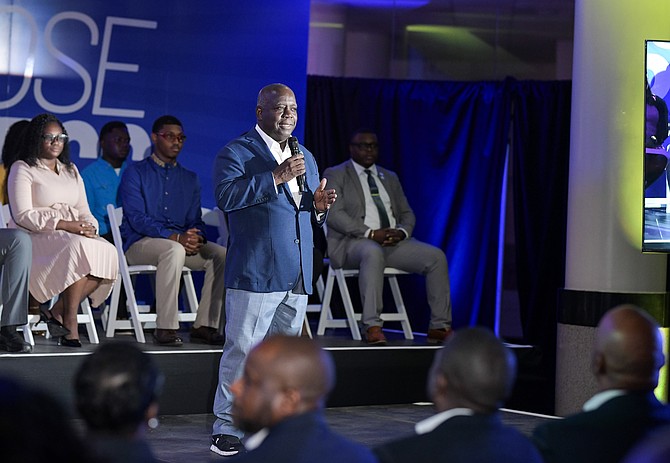
    As The Bahamas approaches its upcoming general election, the ruling Progressive Liberal Party (PLP) has launched an ambitious, wide-ranging policy platform that outlines the party’s priorities if re-elected, spanning everything from immigration regulation to emerging technology governance. The comprehensive policy agenda, officially branded the “Blueprint for Progress,” was presented at a public launch event Wednesday night, where senior party leaders and electoral candidates broke down key commitments across every major sector of national governance.

    One of the most attention-grabbing pillars of the new platform centers on immigration reform and public cost containment. A core proposal would mandate that all migrants residing in The Bahamas hold valid health insurance, either through private plans or a newly created government-run migrant health insurance scheme. Party officials emphasized that this policy shift would ease the growing financial strain the current uncompensated care model places on the country’s public healthcare system, which has long borne sole responsibility for covering uninsured migrants’ medical costs.

    To strengthen border and immigration enforcement, the PLP has committed to rolling out a series of new systems and harsher penalties for violations. Key infrastructure investments include a fully integrated National Biometric Immigration System and AI-powered biometric e-gates at ports of entry designed to flag previously deported individuals and cases of identity fraud. The plan also introduces daily fines for visa overstays starting from the first day a visitor’s permission to remain expires, rather than the current grace period framework. For employers that hire undocumented workers, penalties would scale steeply: an initial offense would carry a $5,000 fine, while repeat violations could result in fines as high as $15,000, up to 12 months of prison time, and a permanent ban from applying for future work permits. Additional anti-fraud measures include the creation of a dedicated Immigration Fraud Intelligence Unit and a national Bahamian e-Verify system for employee eligibility checks, stiffer criminal penalties for public officials found to be facilitating fraudulent immigration document processing, and expanded re-entry bans for individuals convicted of major immigration violations.

    On labor and workplace protections, the party’s platform introduces sweeping updates to the country’s employment regulations via a new Employment Bill. The legislation would cap probationary employment periods at six months for private sector workers and 12 months for public sector employees, guarantee a paid one-hour rest break for shifts of eight hours or longer, and require a minimum of eight consecutive hours of rest between scheduled work shifts. The PLP also included new provisions for worker well-being: all employees would be granted three annual mental wellness days that do not require a doctor’s note for approval (though these days remain unpaid, per the party’s prior clarification), paid maternity leave would be extended from 12 weeks to 14 weeks, and all new fathers would gain access to two weeks of paid paternity leave, with a new legal guarantee of paid adoption leave for prospective parents. For workplaces with 20 or more employees, employers would be legally required to provide dedicated breaks and private, suitable spaces for breastfeeding mothers.

    In a bold push to position The Bahamas as a regional hub for digital innovation and responsible artificial intelligence development, the PLP outlined a multi-year technology transformation strategy. Plans include passing a new eGovernment Act that mandates all public sector agencies integrate their services into the national MyGateway digital platform within three years, expanding access to end-to-end digital government services for all citizens. A new Bahamas AI Academy would be launched in partnership with the University of The Bahamas and Bahamas Technical and Vocational Institute (BTVI) to train the domestic workforce in AI skills. The party also committed to integrating AI literacy and adaptive AI learning tools into all national public school curricula by the end of the three-year implementation period. To mitigate risks associated with AI expansion, the PLP has proposed an AI Governance Act that would codify strict guardrails: facial recognition technology would be banned for general use without explicit parliamentary approval, predictive policing tools targeting individuals would be prohibited, and controversial social scoring systems would be outlawed entirely.

    The platform also addresses the country’s ongoing affordable housing crisis with a series of targeted interventions. A new Social Housing Acquisition Programme would acquire and rehabilitate distressed and abandoned residential properties to expand the national supply of affordable housing, with additional affordable rental units developed through public-private partnerships. To protect renters, the PLP pledged to implement enforceable national minimum housing standards, a centralized national rental property registry, and a new Residential Tenancy Authority with the power to conduct inspections and enforce housing regulations. For families facing sudden displacement from their homes, a new Temporary Social Housing initiative would provide short-term accommodation and coordinated support services.

    On economic policy, the PLP has committed to updating decades-old regulatory frameworks to protect consumers: a modern competition law would be introduced to crack down on anti-competitive practices including price-fixing and abuse of market dominance, alongside a rapid-response enforcement unit to investigate reports of predatory price gouging. A new Foreign Direct Investment Compliance Unit would be established to audit existing investment concession agreements to ensure foreign investors meet all contractual and regulatory obligations, and state-owned enterprises would be required to submit binding, multi-year business plans designed to reduce their long-term reliance on government subsidies.

    To boost domestic food security and reduce the country’s heavy reliance on food imports, the platform sets a target of cutting national food import spending by 25 percent by 2030. The goal would be advanced through a series of technology-driven agricultural initiatives: a national digital marketplace platform connecting smallholder farmers directly to consumers and businesses, a new Agriculture Innovation Centre to test and disseminate new growing techniques, and the rollout of solar-powered container farming systems across multiple out islands. Additional measures include a National Agricultural Drone Programme to improve crop monitoring and disaster response, and expanded support for young and new farmers through dedicated scholarships, improved access to agricultural land, and formal mentorship programs.

    For the country’s Family Islands, the PLP pledged to develop customized economic development plans for each individual island, supported by targeted tax and investment incentives, expanded funding for local tourism development, and grants to grow small local enterprises. The plan also opens the door for large-scale new development, including a public consultation process to explore building a new planned city on Andros Island, and the creation of regional innovation hubs and small business centers on the country’s most populous major islands.

    In the healthcare sector, the platform expands coverage and access: all public sector workers, including contracted employees, would gain access to national health insurance coverage, telemedicine services would be rolled out to all major public clinics within two years, and new legislation would be introduced to criminalize the abandonment of elderly dependents. The party also committed to a 10-year national strategy to reduce rates of chronic disease, a four-year national mental health and suicide prevention plan, the launch of a 24/7 national suicide prevention hotline, and the expansion of community-based mental health centers across the country.

  • Quarter of government contracts awarded without bidding

    Quarter of government contracts awarded without bidding

    A new analysis of official Bahamian government procurement data has revealed that nearly one in four public contracts awarded over the two-year period from December 2023 to December 2025 were secured without an open competitive bidding process, accounting for close to 40% of all public spending captured in the dataset.

    Tribune News reviewed the publicly available procurement records to identify patterns in non-competitive contracting, finding that of the 3,881 categorized contracts included in the dataset, 927 – or roughly 23.9% – were awarded through no-bid procedures. The value of these non-competitive contracts reached approximately $233.6 million, out of a total combined contract value of $599.1 million across all tracked awards. Critically, the dataset is incomplete: state-owned enterprises, which have never fulfilled the legal requirement to publish their procurement awards, are entirely excluded from the public records.

    Under the 2023 Public Procurement Act, open competitive bidding is enshrined as the standard, mandatory approach for awarding all public sector contracts. The law only permits no-bid awards in a narrow set of limited exceptions: low-value purchases under $100,000, emergency response projects, situations where an initial competitive bidding process failed to produce qualified bids, and cases where only a single supplier can deliver the required goods or services. All non-competitive awards are also legally required to include a formal written justification for bypassing open competition.

    The analysis found that non-competitive public spending is heavily concentrated among a small pool of very large contracts, rather than spread across many small permitted awards. The single largest no-bid contract recorded was an $180.2 million award issued by the Ministry of Finance in October 2024 for the Eleuthera Road Improvement Project. Other notable large non-competitive awards include $7.25 million for road infrastructure works on South Andros, $2.82 million for road repairs on Bimini, $2.2 million for renovation works at the Queen Elizabeth Sports Centre National Stadium, and $2.04 million for electrical and lighting upgrades at the Thomas A Robinson Stadium.

    In terms of agency spending, the Ministry of Finance accounted for the overwhelming majority of all no-bid spending captured in the records, with the Department of Public Works holding a distant second place for non-competitive contract value. A breakdown of contract sizes confirms the concentration of spending in large no-bid awards: of the 927 non-competitive contracts, 848 fall under the $100,000 threshold explicitly permitted by law, and their combined value totals just $17 million. By contrast, only 80 non-competitive contracts exceed the $100,000 threshold, but these 80 awards make up the vast remainder of total no-bid spending, at more than $216 million. Larger contracts that bypass competitive bidding are required by law to meet strict exception criteria, including urgency, limited market competition, or technical constraints that restrict the pool of available suppliers. However, the public procurement records do not include any documentation of which legal exception was used to justify each large no-bid award.

    The 2023 Public Procurement Act mandates that all procurement decisions be fully documented and all contract awards published publicly, to enable independent public scrutiny of how taxpayer money is allocated to private vendors. The absence of justifications for large non-competitive awards and the exclusion of state-owned enterprise procurement from public records fall short of the transparency requirements laid out in the legislation.

  • Parliament dissolves as voters endure hours in long lines on final day of registration

    Parliament dissolves as voters endure hours in long lines on final day of registration

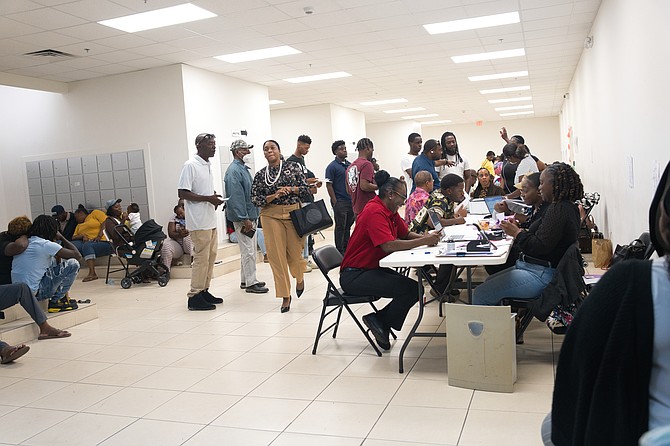
    The Bahamas’ national parliament was formally dissolved on Wednesday, marking the official start of the campaign period for the country’s upcoming May 12 general election, as thousands of eligible Bahamian voters endured multi-hour waits in lengthy lines on the final day of voter registration across the archipelago.

    On the steps of Parliament House, Police Commissioner Shanta Knowles publicly read the dissolution proclamation on behalf of Governor General Cynthia “Mother” Pratt. Under constitutional rules, the next parliamentary session is scheduled to convene just eight days after the general election, on May 20, once new representatives have been elected.

    Across registration sites, from the Parliamentary Registration Department’s headquarters to mall locations and post office branches, the flood of last-minute registrants stretched operational capacity to its limit. At the main registration department, crowds packed the building’s entry foyer as steady rain fell outside, with many voters describing the process as frustratingly slow even for those who had started their applications weeks earlier.

    Many of the voters who turned out on the final day cited pressing economic and public service concerns that are shaping their voting decisions, from sky-high inflation and rising living costs to gaps in healthcare and lack of support for small business owners.

    Moses McKenzie, who returned to the Bahamas roughly two months ago after a decade living in Canada, said skyrocketing living costs were the top issue on his mind as he prepared to cast his ballot. “I feel like inflation in The Bahamas is crazy,” he explained. “I looked at gas prices yesterday – $6.50 for a gallon of fuel. Inflation is just killing us over here.”

    Chrastina Rox, a voter in the Southern Shores constituency, told reporters she waited two and a half hours to complete her registration, a process she described as reasonably organized but held up by systemic slowdowns. She noted she had initially started her registration two months prior, but a technical glitch erased all her information, forcing her to start over from scratch. Rox said she is still undecided on her vote, but added that PLP candidate Obie Roberts has earned her early interest for his campaign focus on expanding mental health access and advocating for women’s rights.

    First-time voter Mario Knowles said he ultimately completed his registration after persistent encouragement from his parents and outreach from party campaign workers. For Knowles, the lack of full healthcare access in the country’s outlying Family Islands is a non-negotiable issue. “In my 24 years on this earth, it doesn’t make any sense to me, especially medically, why our Family Islands only have small clinics,” he said. “There is no reason we should still only have basic clinics out there in 2024.”

    At the Town Centre Mall registration site, wait times stretched to multiple hours, with many voters sharing stories of repeated failed attempts to register. Marco Ricardo Bell said he had already waited nearly three hours and was told he might not be processed until 10pm that night, adding that if the process did not speed up, he would leave – and likely would not bother turning out to vote at all.

    Nadia Bevans, a mother of five who lost her beauty business and her home during the COVID-19 pandemic, said Wednesday marked her fifth attempt to register. On previous visits, she was turned away despite arriving before the official closing time, after being given contradictory information about registration hours. She arrived shortly after 8am and did not complete her process until close to noon, though she acknowledged the process was less chaotic than her prior attempts. For Bevans, government support for struggling entrepreneurs is the defining issue of this election. “During the pandemic, I lost my business, I lost my home and everything like that,” she explained. “I’m just starting over again as a beautician. I can’t find anyone to help me, to fund my business to bring it back up. Everybody talks about government jobs, but there’s no help for people who want to work for themselves.” Bevans added she plans to vote for the Coalition of Independents in her constituency.

    Veronica Ferguson, a mother of three with a special needs child, said balancing caregiving responsibilities made it extremely difficult to carve out time to register, but she was determined to complete the process to vote for incumbent Englerston MP Glenys Hanna-Martin, whom she plans to support for re-election.

    Long lines were also reported at the Cable Beach Post Office registration site. R Smith, an entrepreneur and voter in the Fort Charlotte constituency, said she is particularly concerned about the rising costs of operating a small to medium-sized business in the Bahamas, and wants to see the next government implement policies to ease that burden. Smith added that she is deeply disappointed in the performance of the opposition Free National Movement (FNM). “I’m very grossly disappointed in the FNM – it’s almost as if we don’t have an opposition,” she said. “Therefore, you almost leave the Bahamian people with only one real choice.” She plans to vote for PLP candidate Sebas Bastian.

    In a statement Wednesday, Progressive Liberal Party (PLP) chairman Fred Mitchell said he expects the general election process to proceed peacefully, and confirmed that party officials have been advised the formal writ of election will be issued on Thursday, the day after parliament’s dissolution.

  • PM urges Bahamians to judge his administration on its record

    PM urges Bahamians to judge his administration on its record

    As the Progressive Liberal Party (PLP) formally unveiled its re-election campaign platform “Blueprint for Progress”, Bahamas Prime Minister Philip Davis delivered a closing address that framed the upcoming May 12 general election as a clear choice between proven governance and untested opposition. Davis, who leads the current PLP administration, is seeking a second consecutive term to build on the policy gains his government has delivered over its first term in office.

    In his remarks delivered the evening of the launch, Davis emphasized that the newly released platform lays out a clear, actionable roadmap for the party’s next term of governance if voters return the PLP to power. Rejecting secondhand interpretations of the party’s agenda, he urged Bahamian voters to engage directly with the document’s proposals to understand the direction the party intends to take the nation.

    Davis centered his address on his administration’s record over the past term, noting that while the government’s work is not without room for improvement, it has successfully steered the country out of the overlapping multiple crises it inherited upon taking office. The nation, he argued, is now firmly positioned on a sustainable trajectory of inclusive growth and long-term national development. “I am proud to run on our track record,” Davis stated, pushing back against criticism from political rivals.

    To reinforce his commitment to transparency and accountability, Davis highlighted the introduction of the new “Blueprint Tracker”—a public, online digital tool that allows any Bahamian citizen to cross-reference the government’s past policy promises against completed deliverables. The tool, he explained, embodies the administration’s commitment to open governance that the public can hold to account.

    The new re-election platform, Davis confirmed, retains the core priorities of the administration’s existing agenda while expanding the scope of the party’s ambitions to address emerging national needs. Turning to the country’s opposition parties, Davis issued a direct challenge: he called on rival political groups to release their own detailed, concrete policy platforms and prove their capacity to deliver on promised reforms, urging voters to press opposition candidates for clear answers ahead of polling day. “When they come asking for your vote, ask them, ‘what is your plan’?” he said.

    Framing the election as a fundamental decision about the Bahamas’ long-term direction, Davis encouraged voters to weigh the value of experienced, continuous governance against the untested alternatives put forward by opponents. He argued that voters must evaluate which leadership team has the proven capability to steward the nation’s resources and advance the collective interests of all Bahamians.

    Davis also took aim at what he characterized as unproductive negative political attacks and distracting political theater from rivals, arguing that the campaign should remain focused on substantive plans for the country’s future rather than partisan bickering. He confirmed that his administration would remain focused on delivering core governance responsibilities throughout the campaign period, rather than engaging in retaliatory political back-and-forth. Closing his address, Davis urged all Bahamian voters to carefully consider the high stakes of the upcoming election as they prepare to cast their ballots on May 12.