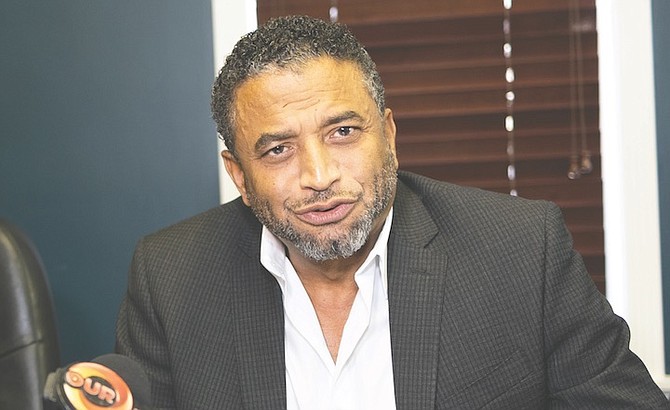
A public debate over immigration governance in The Bahamas has reignited, as former Immigration Minister Branville McCartney has publicly claimed the nation has struggled with a persistent immigration crisis for decades, citing three key systemic failures: lax law enforcement, widespread document fraud, and a chronic lack of political will among successive leadership. This assertion directly contradicts the current Davis administration’s official position that no systemic crisis exists.
McCartney made his comments on the sidelines of former Prime Minister Dr Hubert Minnis’ re-election campaign launch, where the opposition has recently raised sharp alarms over forged National Insurance cards, counterfeit birth certificates, irregular spousal permits, and fraudulent e-passports. Unlike disputes centered on surging illegal border crossings, this current controversy does not hinge on evidence of growing unauthorized arrivals; instead, it focuses on gaps in enforcement, internal corruption, and governance failures within the immigration system.
One of the most troubling revelations McCartney highlighted is the alleged involvement of sitting Bahamian public servants in document fraud schemes, which he called a violation of national trust approaching treason. He tied his remarks to an ongoing court case probing these illicit activities, emphasizing that while the corrupt acts are carried out by individual bad actors rather than being state-sanctioned, current penalties are far too lenient to deter future wrongdoing. He called on authorities to use high-profile prosecutions of caught offenders as a public warning to other complicit officials.
The former minister stressed that the issue is not unique to the current Philip “Brave” Davis-led administration, noting that the crisis was already present when he served as Immigration Minister. At the core of the long-standing problem, he argued, is a lack of sustained political commitment to addressing the issue head on. Too many leaders, he claimed, prioritize holding onto power over making tough, unpopular decisions that serve the national interest.
Prime Minister Davis and his Progressive Liberal Party (PLP) administration have rejected McCartney’s crisis framing. They acknowledge that document fraud is a serious issue, but maintain it does not represent a systemic failure of the country’s immigration institutions. The government points to ongoing active enforcement operations and thousands of repatriations of unauthorized migrants as proof of its commitment to addressing the problem. PLP officials also note that it was due diligence from serving public officials that brought existing fraud cases to public and legal attention, contradicting claims of institutional inaction.
McCartney pushed back against this narrative, outlining three core pillars he says are needed for meaningful immigration reform: consistent, unwavering enforcement of existing immigration laws, strengthened border security infrastructure and protocols, and aggressive legal action against criminal networks that facilitate illegal migration. He also warned against allowing the issue to become purely a partisan political football, arguing that what is required is consistent, cross-administration commitment to protecting the country’s borders and upholding the integrity of its official identity documents. At its core, McCartney said, political will means unflinching commitment to doing what is right for the Bahamas, regardless of political cost.