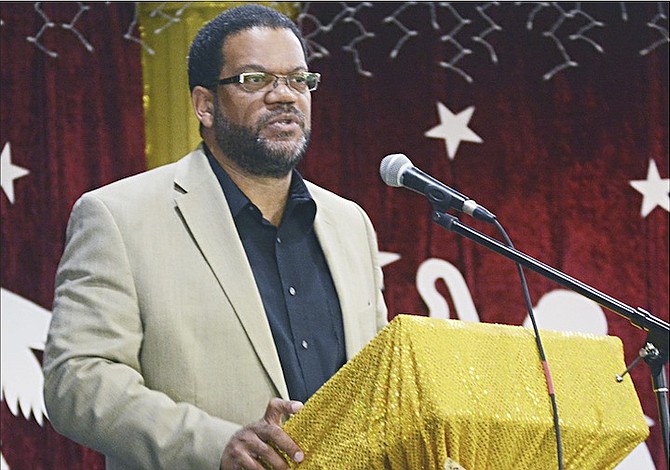
A decades-long debate over gambling legalization in The Bahamas has reignited after the opposition Free National Movement (FNM) announced plans to pursue a state-operated national lottery, drawing fierce pushback from a prominent religious and anti-gambling activist who says the plan directly defies the will of the Bahamian public.
Pastor Lyall Bethel, who previously served as co-leader of the anti-gambling advocacy group Save Our Bahamas, has emerged as one of the most vocal critics of the proposal. In a public letter to the editor, Bethel called the FNM’s policy shift an unforgivable “slap in the face” to voters who overwhelmingly rejected both a national lottery and the regulation of unlicensed web shop gambling in a 2013 national referendum.
Bethel says he was shocked by the opposition’s decision to resurrect the policy, noting that official referendum results make voter opposition unambiguous: 59.56 percent of participants rejected a national lottery, while 60.71 percent voted against regulating and taxing existing web shop gambling operations. For Bethel, the FNM’s choice to advance the proposal despite this clear outcome is not just a policy misstep — it is a deliberate insult to the majority of Bahamians who cast their ballots against expanded gambling.
“To see the opposition wade foolishly and recklessly into this conversation with talk of a national lottery is insulting and a slap in the face to the majority of Bahamians who said NO to BOTH the proliferation of numbers house gambling AND a national lottery,” Bethel wrote. “THE PEOPLE SAID NO!”
Beyond the breach of democratic will, Bethel argues the FNM has surrendered the moral high ground it held among the large bloc of Bahamian voters who oppose expanded gambling. He notes the party had a clear opportunity to demonstrate its commitment to respecting public opinion and the stance of the country’s majority religious institutions, but squandered that political advantage through what he calls an unnecessary and reckless action.
The controversy stems from recent remarks by FNM leader Michael Pintard, who framed a state-run national lottery as a promising new revenue stream to fund national development projects. The proposal has pulled back the curtain on a decades-long national debate that has stalled multiple previous attempts to expand legal gambling, held back by widespread concerns over its potential social harms and questions about long-term feasibility.
Incumbent Prime Minister Philip Davis has already dismissed the FNM’s plan as a shallow political “gimmick”, and Bethel is far from alone in his opposition. Other senior religious leaders across the country have renewed their longstanding objections to the proposal, pointing both to the 2013 referendum result and the proven social damage that expanded gambling brings to low-income and vulnerable communities.
For Bethel, gambling is already a corrosive force in Bahamian society, which he describes as “a parasitic pariah on the soul of this country”. He warns that formalizing and expanding access through a national lottery would only exacerbate the social harms that Bahamians already grapple with, from problem gambling to increased economic inequality.
Bethel also raised pointed questions about whether lottery proceeds would actually be used for the public development projects promised by the FNM, pointing to longstanding public anger over mismanagement and corruption in the handling of public funds across successive Bahamian governments. “Bahamians are tired of waste, corruption, failed rehashed ideas peddled by one government after the other,” he wrote.
In closing, Bethel issued a direct warning to Pintard, urging the FNM leader to reverse course immediately before the proposal erodes his party’s political support. “I urge Mr Pintard to step back from this reckless, foolish decision that will cost you more votes than you think you gained,” he said. He added that the plan risks alienating both influential church groups and the large share of voters who oppose gambling, insisting that the 2013 referendum result must remain the final word on the issue. “The people said NO to a National Lottery! What part of ‘NO’ is unclear to the FNM?” he wrote.