标签: Antigua and Barbuda

安提瓜和巴布达

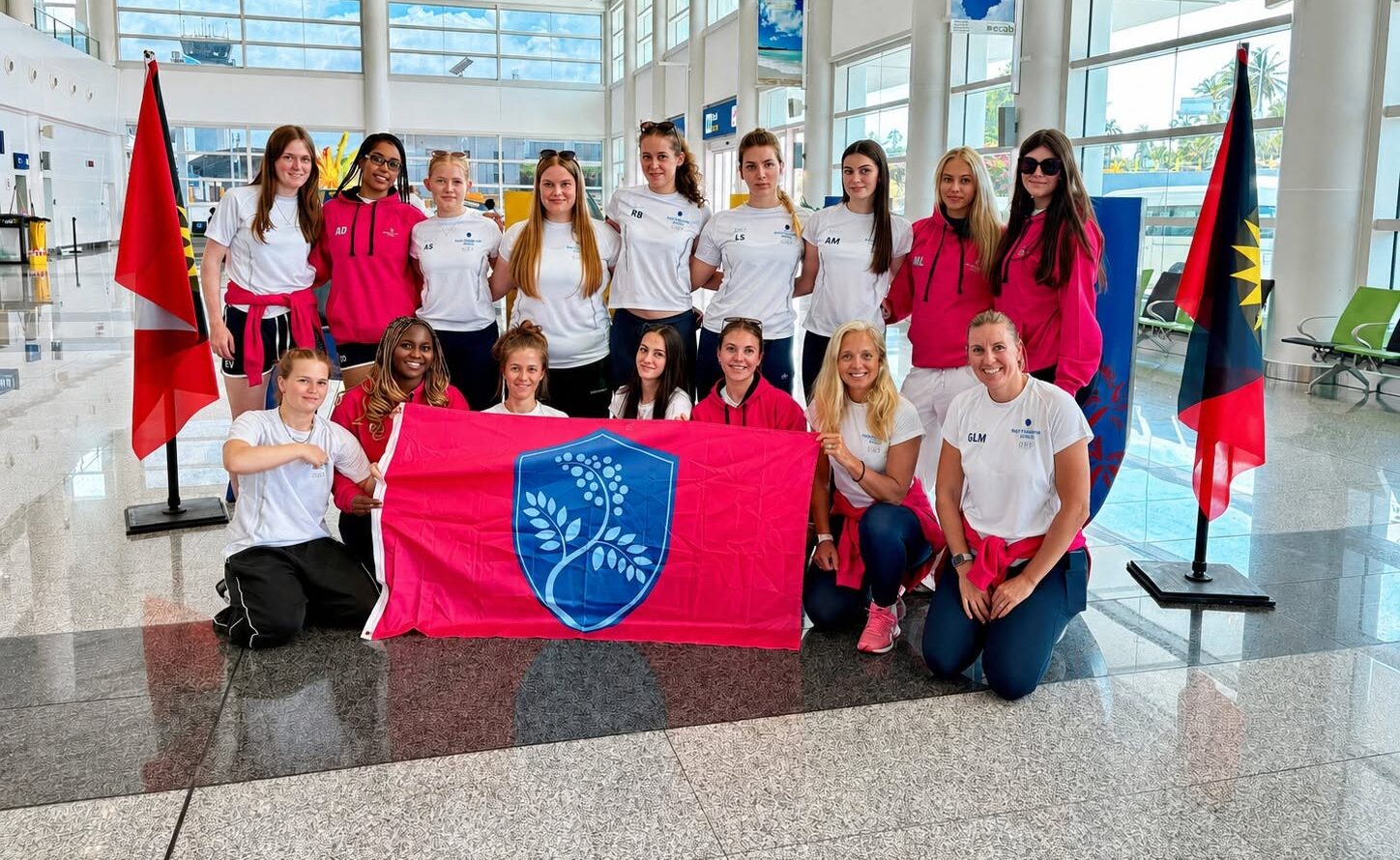
  • Antigua and Barbuda delegation participates in Transforming Global Education Summit at the United Nations

    Antigua and Barbuda delegation participates in Transforming Global Education Summit at the United Nations

    This week, a five-person cross-generational delegation from Antigua and Barbuda will travel to United Nations Headquarters in New York to join world leaders for the landmark Transforming Global Education Summit, a high-profile initiative aimed at modernizing education frameworks across small island developing states (SIDS).

    Convened on May 1 by the PVBLIC Foundation in partnership with the governments of Antigua and Barbuda, the Kingdom of Tonga, and the Learning Economy Foundation, the one-day gathering brings together a diverse cohort of stakeholders: heads of state, cabinet ministers, leaders of multilateral organizations, tech pioneers, veteran educators, private sector innovators, and youth advocates. Centered on the transformative theme “Redefining Education as Global Infrastructure,” the summit seeks to advance a cohesive, forward-thinking new model for national education systems that unifies policy design, technological integration, sustainable funding, and cross-border multilateral collaboration under one shared framework.

    Leading the Antigua and Barbuda contingent is Clare Browne, the nation’s Director of Education, alongside Dr. Jrucilla Samuel, Director of the country’s Youth Department. Three young leaders round out the delegation: Pia Nicholas, President of the National Youth Volunteer Corps and former CARICOM Youth Ambassador; Janet Simon, the incumbent CARICOM Youth Ambassador; and Chevaughn Burton, Assistant to the Safe Schools Focal Point. This mix of senior government officials and emerging youth voices underscores Antigua and Barbuda’s deep commitment to inclusive, youth-centered education reform – a priority that ensures young people have an active seat at the table when shaping the future of learning across the region.

    Antigua and Barbuda’s Permanent Mission to the United Nations has overseen all coordination for the delegation’s participation, working to guarantee the small island nation’s unique perspective on education development is centered in global discussions. “For countries like ours, education is not simply a social service, it is a matter of national resilience and sovereignty,” stated Ambassador Walton Webson, Permanent Representative of Antigua and Barbuda to the UN. “Small Island Developing States understand that our ability to adapt, innovate, and compete globally depends on how we invest in the knowledge and skills of our people,” he added.

    The delegation will play an active role across the summit’s official program. Browne will deliver opening remarks on Antigua and Barbuda’s behalf before joining the panel discussion focused specifically on challenges and opportunities for Small Island Developing States. Simon, the sitting CARICOM Youth Ambassador, is scheduled to address attendees during a separate panel titled “Scaling the Model: From Youth to National Development.” Dr. Samuel will take on moderation duties for a third high-profile panel, “Redefining Education Systems for the Future: Integrating Mental Health, Nutrition, and Holistic Youth Development as Global Priorities,” which will also feature input from the delegation’s youth members. Outside of plenary and panel sessions, the Antigua and Barbuda team is also set to hold targeted bilateral talks with representatives from the PVBLIC Foundation and other partner governments aligned with the nation’s development goals.

  • COMMENTARY: A Pin, a Principle, and the Integrity of the Caribbean

    COMMENTARY: A Pin, a Principle, and the Integrity of the Caribbean

    In the delicate landscape of global diplomacy, even minor symbolic gestures can expose deep divides over core international principles. The recent uproar over an official Caribbean diplomatic engagement, where a Venezuelan official wore a lapel brooch depicting Guyana’s Essequibo region as Venezuelan territory, stands as a perfect example of this dynamic.

    Critics who brush off this incident as an overblown reaction to a trivial piece of personal clothing miss the point entirely. Dismissing the controversy as mere hypersensitivity to personal attire is not just inaccurate—it deliberately misframes what is at stake here. This is not a debate over fashion; it is a debate over official state conduct.

    When a sitting senior government official wears a territorial claim symbol during an official diplomatic meeting with a third party in a dispute over that land, the act stops being personal expression and becomes an explicit tool of state policy. The gesture is deliberately crafted to communicate, entrench, and normalize a disputed territorial position that is currently the subject of formal international legal proceedings.

    This border dispute between Venezuela and Guyana is far from a theoretical disagreement. Guyana has already brought the case to the International Court of Justice (ICJ), seeking a final, legally binding ruling on the validity of the 1899 Arbitral Award that established the current international border between the two nations.

    Venezuela has framed its claim as rooted in international law and the 1966 Geneva Agreement, but this narrative demands closer inspection. The Geneva Agreement never settled the question of sovereignty over Essequibo, nor did it invalidate the 1899 border award. What it did do was create a framework for peaceful negotiation of the dispute, which ultimately led to the case being referred to the ICJ for adjudication. There is no legal basis for Venezuela to claim the agreement justifies unilateral assertions of territorial ownership while the court is actively considering the matter.

    This contradiction is impossible to ignore: Venezuela claims it upholds international law, yet its actions are clearly designed to shape global public opinion on a case that is currently sub judice—meaning under judicial consideration. No state can credibly claim to submit a dispute to binding international adjudication while simultaneously working outside the courtroom through symbols, legislation, and administrative moves to lock in the outcome it favors.

    The lapel brooch incident is far from an isolated misstep. It fits into a broader pattern of Venezuelan actions: national legislation that purports to annex the Essequibo region, the appointment of unofficial administrative officials to the territory, and a sustained public campaign asserting Venezuelan sovereign ownership. Taken together, these moves show no willingness to exercise restraint while the court rules. Instead, they represent a parallel political campaign to consolidate Venezuela’s claim through non-legal means.

    Against this backdrop, the recent statement from the Caribbean Community (CARICOM) carries outsized importance. Released on April 28, 2026, the CARICOM statement was measured in tone but unmistakeable in its message. It reaffirmed that CARICOM member states retain the right to conduct their own bilateral relations with outside nations, but framed that right within the boundaries of collective obligations laid out in the Revised Treaty of Chaguaramas. Most critically, it emphasized that CARICOM regional platforms cannot be used, either directly or indirectly, to advance or legitimize territorial claims that are currently before the ICJ.

    This position is a quiet but firm assertion of regional rules-based discipline, even at a time when critics point to growing disunity within the Caribbean integration movement. The CARICOM statement accomplishes three key goals: it protects the integrity of the international judicial process, preserves the overall unity of the regional bloc, and makes clear that while CARICOM will not interfere in individual member states’ bilateral ties, it will not allow its own forums to be used to advance a territorial claim against one of its own members. That last principle is far more significant than many observers have acknowledged.

    Guyanese President Irfaan Ali’s formal written response to the CARICOM chair was therefore both fully justified and necessary. It was not an overreaction, nor was it empty political rhetoric. It was a principled defense of international law at a moment when ambiguity could have easily damaged that principle.

    For context, this article’s author worked closely with Venezuelan Vice President Delcy Rodríguez between 2015 and 2017, when he opposed efforts by some Organization of American States member states to impose unilateral sanctions on the Venezuelan government that violated the OAS’s own rules. That stance grew out of a core commitment to due process, international law, and fair treatment of all nations, and the author still recognizes Rodríguez as a formidable defender of her government’s interests during a period of intense geopolitical pressure. But this current controversy has nothing to do with personal relationships, political alignments, or pieces of clothing. It is entirely a matter of principle, legal process, and respect for the ICJ’s ongoing adjudication.

    The larger question raised by this incident goes far beyond the Essequibo border: it asks whether all parties will actually back their public commitments to international law with conduct that aligns with those commitments. For this dispute to end in a peaceful, final resolution consistent with international rules, the ICJ’s process must be allowed to move forward without external actions that prejudge or politicize its outcome. That requires deliberate restraint, not provocative symbolism; it demands disciplined adherence to process, not political theater.

    A small lapel brooch cannot redraw an international boundary. But the conduct it represents can either strengthen or undermine the very principles that are supposed to guide the peaceful resolution of this dispute. In this case, the Caribbean community has made its position clear: quietly but unflinchingly, it stands on the side of international law.

  • Volunteers Remove Hundreds of Pounds of Debris from Wreck off Barbuda

    Volunteers Remove Hundreds of Pounds of Debris from Wreck off Barbuda

    Off the quiet shoreline of Barbuda, a coalition of volunteer divers has completed a targeted marine cleanup that pulled nearly 300 pounds of discarded debris from the sunken wreck of the yacht *Jonah*, in a critical push to safeguard the fragile coral reef system surrounding the site. For months, the wreck had accumulated all manner of waste, most dangerously abandoned fishing gear known as “ghost nets” – a pervasive marine pollutant that continues to entangle, injure, and kill fish, sea turtles, and other marine organisms long after they are discarded by fishing operations. These tangled nets had already wrapped around large sections of the nearby reef, putting additional stress on a ecosystem already grappling with global threats like rising ocean temperatures and acidification.

    The cleanup effort brought together 16 experienced free divers and snorkelers, who spent multiple hours navigating the wreck site to extract trapped waste. Divers ferried each bag of collected debris from the seabed up to waiting support boats on the surface, working carefully to avoid damaging living coral during the process. What made the initiative particularly notable was the heavy involvement of emerging local conservation leaders: nine young eco-divers from Antigua joined the expedition, alongside professional boat crew, rounding out the total 18-person team. Organizers have publicly highlighted the dedication and hard work of these young participants, noting that their presence signals a growing shift toward youth leadership in global marine conservation.

    The project was a community-led collaboration, with in-kind support from local tourism and marine conservation groups including Adventure Antigua and the Barbuda Ocean Club. Financial backing for the cleanup came from the Global Environment Facility Small Grants Programme (GEF SGP) operating in Antigua and Barbuda, which funds grassroots environmental initiatives across the region.

    Coral reefs, often called the “rainforests of the sea,” support more than 25% of all known marine biodiversity despite covering less than 1% of the ocean floor. Today, these critical ecosystems face unprecedented pressure from a range of threats: plastic and chemical pollution, manmade climate change that drives ocean warming and coral bleaching, and destructive overfishing practices. Local, small-scale cleanup projects like this one do not solve the systemic challenges facing coral reefs, but they do address immediate, localized hazards that prevent reef recovery, while building community momentum for larger, long-term restoration efforts. Video footage of the cleanup was provided by the Antigua Barbuda Ocean Trust.

  • Pringle confident after casting ballot in the 2026 general election

    Pringle confident after casting ballot in the 2026 general election

    On Thursday, as general election voting got underway across the twin-island nation of Antigua and Barbuda, United Progressive Party (UPP) leader Jamale Pringle cast his own ballot and quickly stepped forward to make a public appeal for widespread voter participation, while sounding an optimistic note about his opposition party’s path to victory.

    Speaking to reporters immediately after completing his voting process, Pringle emphasized that the ballot box remains the most impactful channel through which citizens can shape the trajectory of their nation. He stressed that this election will determine the long-term future of Antigua and Barbuda, making it critical that every eligible voter exercises their democratic right to have a say.

    “While political parties of all stripes put forward their policy positions and ideological arguments, the ultimate and most authentic voice of the nation is the vote itself,” Pringle said, urging all registered citizens to make their voices count by heading to polling stations before voting closes.

    The UPP leader shared that he had toured multiple polling locations across the country earlier in voting day, and observed that election administration was running smoothly, with a consistent stream of voters arriving to cast their ballots. Though concerns have circulated in the lead-up to the election about potential low turnout driven by voter apathy, Pringle said he remained optimistic that the final turnout figure will be encouraging.

    To voters who may feel hesitant to participate, Pringle issued a straightforward call to action: regardless of whether they support his leadership or oppose it, every eligible citizen should still turn out to vote in line with their beliefs.

    Outlining his party’s agenda if voted into office, Pringle highlighted that the UPP ran on a “people first” policy platform, with immediate, targeted action on pressing economic challenges as a top priority. He confirmed that if his party secures a majority, key issues including the current high cost of living, poor road infrastructure, and persistent water shortages will all be addressed within the new government’s first 100 days in power.

    “Antigua and Barbuda residents can expect a government that moves aggressively to turn around the nation’s current economic situation,” Pringle said.

    The opposition leader went on to affirm his strong confidence in a UPP victory, arguing that given the country’s current circumstances, his party represents the only viable choice for voters. He added that the UPP’s policy pledges and forward-looking plans have resonated deeply with voters across the country throughout the campaign period.

    Looking ahead to vote counting, Pringle said he will remain in his own constituency throughout the final stages of voting, before joining other UPP members to wait for the final election results. He concluded with a prediction: “After that, we will get together and celebrate the victory.”

    Polling is ongoing at stations across Antigua and Barbuda, as voters select from candidates vying to form the nation’s next governing administration.

  • Antigua and Barbuda ranked 154th in CARICOM AI readiness index, 2025 report shows

    Antigua and Barbuda ranked 154th in CARICOM AI readiness index, 2025 report shows

    A new 2025 global assessment of government preparedness to leverage artificial intelligence for public good has revealed significant gaps in capacity across Caribbean Community (CARICOM) member states, published by leading international research firm Oxford Insights. Covering 195 nations worldwide, this year’s Government AI Readiness Index introduces a newly updated analytical framework built around six core pillars: Policy Capacity, AI Infrastructure, Governance, Public Sector Adoption, Development and Diffusion, and Resilience, replacing the index’s previous structure to better reflect evolving AI ecosystem needs.

    When ranked against the rest of the world, CARICOM nations see a wide spread in positions, stretching from 93rd all the way down to 189th. Only one CARICOM member, Jamaica, claims a spot in the global top 100, a outcome researchers attribute directly to the island nation’s recent launch of a formal national AI strategy. A second tier of mid-ranking regional states includes Trinidad and Tobago at 122nd and The Bahamas at 126th, while the 11 remaining member states fall far behind, with rankings between 144th and 189th.

    In addition to global rankings, the index assigns individual scores from 0 to 100 for each of the six measurement pillars across every assessed country. Aggregated regional data shows CARICOM’s strongest performing area is AI Infrastructure, which posts an average regional score of 33. Governance and Resilience tie for second place with average scores of 29 each. The region’s weakest pillars, by contrast, are Policy Capacity, and Development and Diffusion, which both carry an average regional score of just 13.

    Taken as a whole, the 2025 index data paints a clear picture of the CARICOM region’s current AI landscape: while member states have built comparatively stronger foundational digital infrastructure than many peer economies, they still lag far behind in developing formal national AI strategies, scaling up AI development, and rolling out applied AI solutions across public and private sectors.

  • Pressure mounts on executors in Jamaica after court blocks audit in Stewart estate dispute

    Pressure mounts on executors in Jamaica after court blocks audit in Stewart estate dispute

    A recent Supreme Court ruling in Jamaica has marked a major turning point in a years-long dispute over the estate of legendary tourism industry pioneer Gordon “Butch” Stewart, clearing a key legal barrier for the transfer of majority ATL Group shares to his son Adam Stewart. Attorneys representing Adam Stewart have publicly praised the court’s decision to dismiss a legal application brought by the estate’s acting executors, who had blocked the share transfer for years despite the terms of Butch Stewart’s uncontested will.

    Conrad George, a partner at the law firm Hart Muirhead Fatta, emphasized the significance of the ruling for his client. More than five years have passed since Butch Stewart’s passing, and in his publicly filed, unchallenged will, the business leader left a controlling majority stake in the ATL Group — the core holding of the Stewart family’s sprawling business empire — to Adam Stewart. Even after securing formal probate for the will, George explained, the existing executors have repeatedly refused to complete the share transfer. Their primary justification has been a claim that they must first commission a third-party red-flag audit of ATL Group conducted by an international accounting firm, tied to unsubstantiated allegations against Adam Stewart connected to Gorstew Limited, Appliance Traders Limited and their respective affiliate subsidiaries.

    To formalize their demand for the audit, executors Trevor Patterson, Cheryl Hamersmith-Stewart, Elizabeth “Betty-Joe” Desnoes and Hugh Martin Veira petitioned the Supreme Court for a court order authorizing the investigation. Justice Brown Beckford struck out the petitioners’ claim approximately two weeks ago, with the full written judgment officially released to parties last week. George called the ruling an important step toward forcing the executors to uphold their fiduciary duties and execute the transfer of shares exactly as outlined in Butch Stewart’s will.

    Legal and business observers across Jamaica have framed the judgment as a critical development in the protracted dispute over estate administration, which has centered on control of the ATL Group, a foundational asset for one of the country’s most high-profile and economically influential business families. In a separate, recent development tied to the estate, the court has appointed retired Court of Appeal Judge Hilary Phillips to serve as an additional executor. George noted that Phillips was not involved in the dismissed legal application, and expressed optimism that her addition to the executor team will bring greater balance and reasoned judgment to the group’s future decisions.

    However, the legal battle is far from over: within a day of the written judgment’s release, legal counsel for the executors — including Michael Hylton of the firm Hylton Powell — formally filed an appeal challenging Justice Beckford’s ruling. The appeal argues that the judge made a material error of law in two key findings: that the Jamaican Trusts Act does not apply to the case, and that the executors did not have legal standing to bring their original audit claim.

    Appellants contend that under Section 4(1) of the Trusts Act, any property held by one party for the benefit of another qualifies as a trust. When Butch Stewart’s shares were vested in the executors following his death, they automatically became trust property meeting all the criteria for a trust defined under the act, according to the appeal. The executors also push back against the judge’s reliance on the precedent set in *Heather Montague v GM and Associates*, arguing that the earlier ruling was handed down before the Trusts Act was enacted, meaning it did not address the law’s provisions or its applicability to cases like this one.

    The ongoing dispute has attracted close attention from Jamaica’s corporate and tourism sectors, as the final outcome is expected to set meaningful precedents for business governance and family business succession planning for large, influential corporate groups across the island.

  • Adam Stewart Wins Latest Jamaica Court Battle Over Butch Stewart Estate

    Adam Stewart Wins Latest Jamaica Court Battle Over Butch Stewart Estate

    A long-running family feud over the management of the late Jamaican hospitality magnate Gordon “Butch” Stewart’s business empire has hit a major turning point, after the Supreme Court of Jamaica threw out a legal bid by estate executors to launch a special “red flag” audit of two core holding companies tied to the tycoon. The court’s top finding centered on a critical question of legal authority: the executors did not have the standing to bring the claim under Jamaica’s Trusts Act, the statute they relied on to file their suit.

    Justice Cresencia Brown Beckford first delivered her ruling orally during a March 26 court hearing, and published the full 24-page written judgment this past Wednesday. The decision blocks the executors’ push to audit Gorstew Limited, Appliance Traders Limited, and all of their affiliated subsidiary businesses.

    Butch Stewart, the founder of the iconic Sandals Resorts international hotel chain, passed away on January 4, 2021. Three years after his death, in 2024, the four executors named in his will submitted an urgent court application for approval to launch the targeted audit. The group raised sharp red flags about corporate governance and operational management of the companies in the years following Stewart’s death. The four executors are Trevor Patterson, Cheryl Hamersmith-Stewart – Stewart’s common-law widow – Elizabeth “Betty Joe” Desnoes, and Martin Veira.

    Adam Stewart, Butch Stewart’s son and the current head of Sandals Resorts who stepped into his father’s role leading the business empire, launched a counter-application to have the executors’ claim struck out entirely. Adam Stewart’s legal team rejected all allegations of mismanagement, and argued the suit amounted to an abuse of court process. Their core legal contention was that the executors held no authority under the Trusts Act to bring their claim, a position the Supreme Court ultimately endorsed.

    In her written judgment, Justice Brown Beckford drew a clear legal distinction between the roles of executor and trustee, noting that while the two positions may sometimes involve overlapping tasks, they are not legally interchangeable. The judge emphasized that the executors brought this claim in their formal capacity as executors of Stewart’s will, not as trustees of the estate. Since the Trusts Act only governs actions taken by trustees, it does not grant legal standing for executors to bring this type of audit request.

    “In view of this finding, the executors in seeking to carry out this red flag audit are acting [as] executors and not trustees of the will of the Founder,” Justice Brown Beckford wrote. “In that event, they do not have standing under the Trusts Act to bring this claim.”

    The judge further clarified that even if the court accepted that the executors could be legally classified as trustees, the specific action they sought – the audit – fell squarely under core executorial duties rather than trustee functions. She pointed to the claimants’ own court filing, which explicitly identifies the applicants as executors, not trustees, confirming the capacity in which the suit was brought.

    Addressing a common wording convention in wills, the judge also noted that labeling named fiduciaries as both “Executors and Trustees” throughout the document does not automatically turn executors into trustees for all legal purposes. In Stewart’s will, this shared nomenclature was only for administrative convenience, not a legal reclassification of their roles, the court found. A close review of the will’s relevant clauses confirmed that the shares for the ATL Group – which encompasses the two targeted companies, Gorstew Limited and Appliance Traders Limited – were never placed in a formal trust structure.

    The court also considered a secondary argument from Adam Stewart’s legal team, which objected to the executors’ plan to hire the U.S.-based accounting firm Alvarez and Marsal to lead the audit. Stewart’s team argued that hiring a foreign firm without proper local accreditation would violate Jamaica’s Public Accountancy Act. Justice Brown Beckford noted this argument was “not without merit” on its face, but ultimately did not need to rule on the point, since the application before the court only requested general authorization to conduct an audit, not formal approval of the specific firm.

    As part of the ruling, the court ordered the losing side – the four executors – to cover all of Adam Stewart’s legal costs associated with the case. The judge granted the executors permission to file an appeal of the decision with a higher court if they choose to move forward with a challenge.

    The ruling marks a clear, substantial legal victory for Adam Stewart and his siblings Brian Jardim and Jaime Stewart, who have been locked in a protracted internal dispute over the administration of Butch Stewart’s multi-million dollar estate. The case featured a roster of top Jamaican legal talent: Walter Scott KC, Ian Wilkinson KC, Conrad George, Anna Gracie, André Sheckleford, and Gabrielle Chin represented Adam Stewart, while Michael Hylton KC, Kevin Powell KC, and Timera Mason led the legal team for the executors. John Graham KC and Peta-Gaye Manderson appeared on behalf of Gorstew Limited.

  • ABEC Says Voters Without Renewed ID Cards Can Still Vote Today

    ABEC Says Voters Without Renewed ID Cards Can Still Vote Today

    On election day across Antigua and Barbuda, the Antigua and Barbuda Electoral Commission (ABEC) has introduced a flexible last-minute measure to ensure no eligible voter is locked out of the democratic process, even if they failed to renew or replace their official voter identification cards ahead of the poll.

    Appearing on Pointe TV’s Thursday morning broadcast, ABEC Public Relations Officer Elisa Graham moved to ease widespread anxiety among affected voters, confirming that there remains a clear pathway for them to exercise their constitutional right to vote.

    Under the newly outlined special protocol, any voter without a valid, up-to-date voter ID can visit any active registration unit across the country – which will operate extended hours from 6:00 a.m. to 6:00 p.m. on election day – to initiate the replacement process immediately upon arrival. To complete the on-site procedure, voters only need to bring one passport-sized photograph and fill out the required official documentation. Once these steps are finalized, election officials will issue a temporary special identification card that grants the holder immediate access to cast their ballot at the polls.

    Graham detailed the dual function of this on-site process in an interview, noting: “So you’re facilitating two processes — starting the replacement process and being issued a special ID card to go out and exercise your franchise.” After the conclusion of election day, the commission will complete processing of the permanent replacement voter ID card, which can be collected by the voter at a later date.

    Graham stressed that the emergency accommodation was deliberately designed to remove unnecessary barriers to participation, ensuring every eligible citizen who wants to take part in the election can do so, regardless of missing the advance deadline for ID renewal or replacement. In additional guidance for voters, ABEC also urged those who had already submitted applications for replacement IDs but had not yet picked up their new cards to stop by registration units to collect their official documentation before traveling to their polling locations.

    This adaptive arrangement is a core component of ABEC’s broader strategy for the 202x election, balancing the dual goals of boosting maximum voter participation across the islands and upholding the strict integrity and security standards required for a free, fair, and credible electoral process, as voting continues throughout Antigua and Barbuda.

  • Commonwealth Observers Deployed Across Antigua and Barbuda Ahead of Election

    Commonwealth Observers Deployed Across Antigua and Barbuda Ahead of Election

    As Antigua and Barbuda prepares to hold its nationally awaited general election this Thursday, international oversight has officially kicked into gear, with Commonwealth observer teams spreading out across the twin-island nation to vet pre-voting preparations. The mission is designed to uphold transparency and cement the credibility of the democratic process, one of the core mandates of the Commonwealth’s electoral observation work.

    Heading up the deployment is Pelonomi Venson-Moitoi, Botswana’s former Minister of Foreign Affairs, who occupies the role of Chairperson for the Commonwealth Observer Group. Under her leadership, members of the mission have been traversing every region of Antigua and Barbuda, conducting on-site checks at both polling stations and vote counting centres to gauge how ready these facilities are for the April 30 ballot.

    This Commonwealth deployment is not an isolated effort. It forms a key component of a wider international observation initiative, with all participating teams mandated to evaluate whether pre-election conditions and the upcoming conduct of the poll align with globally accepted democratic standards. Over the course of their pre-election work, observers are focusing on a range of critical areas: from the logistical arrangements that will allow voting to run smoothly, to whether all stakeholders are adhering to national electoral laws, and the overall political and social environment in which citizens will cast their ballots.

    Beyond assessment, the presence of independent observers serves a broader purpose: boosting public trust among Antigua and Barbuda’s electorate that the process will be fair and free of manipulation. Once voting is completed, the mission will compile its full observations, identify any strengths or shortcomings in the process, and publish a detailed post-election report laying out its findings.

    The outcome of this general election will shape the next half decade of governance in Antigua and Barbuda, as voters head to the polls to select the country’s next governing body. Given the nation’s position in the Caribbean and its ties to the Commonwealth and other international blocs, the vote is drawing close attention from both domestic stakeholders and the international community as a whole.

  • Increase to 190 Polling Stations Delivers Faster, Smoother Voting — ABEC

    Increase to 190 Polling Stations Delivers Faster, Smoother Voting — ABEC

    Voting in Antigua and Barbuda’s latest election kicked off on a steady, trouble-free note on polling day, with administrative systems operating at high efficiency as registered electors made their way to polling stations across the two-island nation, according to senior electoral official Elisa Graham.

    Graham, who serves as the Public Relations Officer for the Antigua and Barbuda Electoral Commission (ABEC), shared the update during a morning interview on Pointe TV’s flagship current affairs program. She confirmed that the opening hours of voting proceeded entirely without disruption, and voiced steady confidence that the electoral process would maintain this orderly trajectory through to the final closing of polls.

    One key point Graham addressed was widespread public speculation that unusually short lines at polling locations might signal lower-than-expected voter turnout. She pushed back against this interpretation, clarifying that the compact queues are not a sign of low participation — they are the direct outcome of intentional administrative design to eliminate crowding.

    To cut down on wait times and keep voter movement flowing smoothly, ABEC expanded the total number of polling stations for this election to 190, a larger network than was available during the 2023 general election. This targeted expansion has allowed voters to check in, cast their ballot, and exit in far less time than in previous cycles, eliminating the need for the long lines that often mark major election days.

    Beyond outlining the operational design behind the day’s early success, Graham also highlighted remaining accommodations for voters who have not yet picked up replacement voter ID cards. Eligible voters who submitted applications for replacement identification can still collect their documents at designated registration units, with operating hours extended through the close of polls to accommodate last-minute needs.

    Graham used her public appearance to issue a renewed call to action for all eligible citizens of Antigua and Barbuda to exercise their democratic right by casting a ballot. “We want to encourage all eligible Antiguans and Barbudans to go out and exercise their franchise,” she emphasized, reinforcing the value of broad participation in the nation’s democratic process.

    The ABEC spokesperson also confirmed that the election is being overseen by independent international observers, as part of the nation’s commitment to electoral transparency. Observers from the Commonwealth, the Organization of American States (OAS), and the Caribbean Community (CARICOM) were all officially invited to monitor every stage of voting and ensure the process meets international standards for credibility.

    In her closing remarks, Graham reiterated core election day regulations that all voters are required to follow. Most notably, she reminded electors that they are prohibited from wearing political paraphernalia or any clothing branded with party logos or messaging when entering polling stations, a rule designed to maintain a neutral, non-intimidating environment for all voters.

    She wrapped up the interview by reiterating a call for continued peaceful participation across the day, urging all citizens to play their part in ensuring the election proceeds seamlessly and upholds its status as a credible expression of the public will.