标签: Antigua and Barbuda

安提瓜和巴布达

  • BREAKING: Trevor Walker Wins Barbuda Seat

    BREAKING: Trevor Walker Wins Barbuda Seat

    After all votes were cast and counted in the tightly contested Barbuda constituency election, long-serving incumbent Trevor Walker has successfully held onto his parliamentary seat for the Barbuda People’s Movement (BPM).

    Preliminary official vote tallies confirm that Walker outperformed his main challenger, Kendra Beazer, who ran for the Antigua and Barbuda Labour Party (ABLP), locking in another five-year term as the island’s representative in national parliament. The final preliminary count puts Walker at 616 votes, with Beazer trailing behind at 391 votes, a clear margin that solidifies the BPM’s hold on the Barbuda constituency.

    A well-established, prominent political figure across Barbuda, Walker faced a robust competitive challenge from the ABLP this election cycle. However, early vote counting throughout election night consistently placed the incumbent ahead, a trend that held through the final tally.

    While the final national results across Antigua and Barbuda are still being finalized to determine which party will form the next national government, the outcome of the Barbuda race guarantees that the BPM will retain its representation for the island in the upcoming legislative session.

  • Gaston Browne wins City West Seat

    Gaston Browne wins City West Seat

    In a closely watched electoral contest that has drawn significant political attention across the region, Gaston Browne has emerged victorious in the race for the City West parliamentary seat, confirming his continued hold on one of the area’s key legislative positions.

    The City West constituency, a densely populated urban district that serves as a critical hub for local commerce and community activity, has long been considered a bellwether for broader political trends in the nation. Voter turnout for the contest reached respectable levels, with constituents turning out at polling stations across the district from early morning to cast their ballots on a range of key local and national issues, including infrastructure investment, affordable housing, and job creation for young residents.

    Political analysts note that Browne’s win reinforces his standing within his party and solidifies the governing bloc’s position in the legislature ahead of upcoming national policy debates. Speaking to supporters shortly after the final vote count was confirmed, Browne emphasized his commitment to delivering on campaign pledges, highlighting plans to expand public transportation access, upgrade local schools, and attract new small business investment to the City West area. He also extended gratitude to voters for their trust and pledged to serve as a responsive advocate for all constituents, regardless of their political affiliation.

    Opposition candidates, who mounted a vigorous campaign challenging Browne on issues of cost of living and public service delivery, have acknowledged the result. Most have congratulated the victor and reaffirmed their own commitment to holding the administration accountable on behalf of City West residents during the upcoming legislative term.

  • WATCH: Vote Counting Begins in Barbuda, Walker takes early lead

    WATCH: Vote Counting Begins in Barbuda, Walker takes early lead

    Vote counting is progressing across polling stations in Barbuda following the closure of polls earlier this evening, with early partial results showing the sitting candidate holding a clear lead in the race for the constituency seat. The first official partial tally from Box 1, one of the local polling locations, puts incumbent Trevor Walker, the candidate for the Barbuda People’s Movement (BPM), at 128 votes. His challenger, Kendra Beazer of the Antigua and Barbuda Labour Party (ABLP), has secured 78 votes in the same box in this first count. This early result puts Walker ahead as election officials continue counting the remaining ballots from across the constituency. Walker has served as the elected representative for Barbuda for multiple terms, and he is currently working to defend his seat against a strong renewed challenge from the ABLP, which has focused its campaign on flipping the long-held BPM constituency. As of the latest update, counting operations remain ongoing, and electoral authorities have not yet announced any final official results for the race, with final numbers expected to be released once all ballots have been processed and verified.

  • Polls Close Across Antigua and Barbuda; Counting Set to Begin

    Polls Close Across Antigua and Barbuda; Counting Set to Begin

    After a full day of orderly, widely praised balloting, polls have officially closed across Antigua and Barbuda in one of the Caribbean nation’s most closely watched general elections in recent history. The outcome of the vote will decide whether incumbent Prime Minister Gaston Browne makes history by securing an unprecedented fourth consecutive term leading the country.

    Voting operations kicked off precisely at 6 a.m. local time and wrapped up at 6 p.m., with election authorities confirming that any voter already waiting in queue before the closing deadline would still be permitted to cast their ballot. Now, all cast ballots are being secured ahead of transport to centralized counting centers, where official tabulation will get underway. Preliminary results are expected to trickle in overnight, with a final official projection likely by Friday morning.

    Across the nation’s 17 electoral constituencies, voters faced a diverse field of candidates. The main contest pits Browne’s ruling Antigua and Barbuda Labour Party (ABLP) against the opposition United Progressive Party (UPP) led by Jamale Pringle, alongside one candidate from the Barbuda People’s Movement (BPM) and three independent hopefuls.

    Election day unfolded without major incident, with organizers and voters alike describing the process as exceptionally smooth and efficient. Early morning saw strong voter turnout across multiple districts, while lines remained short for most of the day — an intentional improvement driven by the addition of new polling stations to streamline voter flow and reduce wait times.

    Independent election observer missions from leading regional and global bodies, including the Commonwealth, the Caribbean Community (CARICOM), and the Organization of American States (OAS), have issued initial positive assessments, confirming that the election was conducted in a free, fair and transparent manner, with no significant disruptive events reported.

    Throughout the weeks-long campaign season, the election was framed as a clear national choice between continuity and change. Browne, who is vying to break modern political records for the longest consecutive premiership in Antigua and Barbuda, centered his campaign on his administration’s track record of strong economic growth, large-scale infrastructure development, and what he termed a national “renaissance.” He argued that retaining his leadership is critical to sustaining the nation’s upward trajectory and raising living standards for all residents.

    In contrast, opposition leader Pringle cast the 2024 election as a critical opportunity for change after more than 10 years of ABLP incumbency. He centered his platform on addressing voter concerns over skyrocketing cost of living, unaddressed infrastructure gaps, alleged governance shortcomings, and widespread public dissatisfaction among key demographic groups of the electorate.

    Key policy issues that dominated campaign discourse included rising household living costs, persistent national water supply challenges, poor road conditions, growing crime rates, overall economic management, and international relations. The two major parties also put forward competing plans on public sector wages, tax policy, and expanded social support programs for vulnerable communities.

    On election day, both major parties publicly expressed confidence in their prospects, with candidates and party operatives reporting steady turnout in their traditional political strongholds. Election officials, backed by uniformed security personnel and accredited party agents at every polling location, maintained consistent order across all sites. The Antigua and Barbuda Electoral Commission also rolled out expanded access measures, including the additional polling stations and on-site voter ID support, to remove barriers to citizen participation.

    As counting teams prepare to work through the night to tabulate results, all national and regional attention now shifts to the incoming outcome. The final results will not only determine the makeup of the nation’s next parliament, but also set the policy direction of Antigua and Barbuda for the coming five-year term.

  • Caribbean Women in Leadership Congratulates Five Women Contesting Antigua and Barbuda General Election

    Caribbean Women in Leadership Congratulates Five Women Contesting Antigua and Barbuda General Election

    As Antigua and Barbuda prepares for its 2026 general election, a regional gender equity advocacy organization Caribbean Women in Leadership (CIWiL) Antigua and Barbuda is celebrating a key milestone for gender representation in the country’s political space: five women have stepped forward to contest parliamentary seats in the upcoming vote, a development the group says marks meaningful progress for inclusive democracy.

    CIWiL Antigua and Barbuda has publicly named each of the trailblazing candidates, who span independent and major party lines, reflecting growing gender diversity across the country’s political spectrum. The five candidates are Gail S. Pero, an independent contender running for the St. George constituency; Malaka Parker, who is representing the United Progressive Party (UPP) in St. John’s Rural North; Kiz Johnson of the Antigua and Barbuda Labour Party (ABLP), contesting the St. Philip South seat; Maria Bird-Browne, also of the ABLP, who is running in St. John’s Rural East; and sitting UPP Senator Pearl Quinn-Williams, who is seeking election in St. John’s City East.

    In a formal statement released recently, the organization emphasized that increased women’s participation in electoral politics delivers far-reaching benefits that strengthen Antigua and Barbuda’s democratic foundation. CIWiL pointed out that women in elected office bring unique, lived perspectives to legislative debates that are often overlooked when political spaces remain male-dominated. These diverse outlooks, the group noted, drive meaningful progress on a range of high-priority issues that directly impact families and communities across the country, including accessible public healthcare, affordable and reliable childcare, and more transparent, accountable governance. By bringing more diverse voices to the table, CIWiL argued, political institutions become more responsive to the needs of all citizens, ultimately reinforcing public trust in democracy.

    Beyond celebrating the candidates, CIWiL also issued a call to action for all eligible voters across Antigua and Barbuda to engage actively in the upcoming electoral process. The organization reminded citizens that every single vote carries weight, and collective participation is what shapes the long-term trajectory of the nation’s future. CIWiL’s announcement comes amid a broader regional push across the Caribbean to break down longstanding barriers that have kept women underrepresented in political leadership, with groups like CIWiL working to normalize female candidacy and encourage more women to pursue public office.

  • Antigua and Barbuda scientist Alexandra Hughes completes ocean acidification training in Jamaica

    Antigua and Barbuda scientist Alexandra Hughes completes ocean acidification training in Jamaica

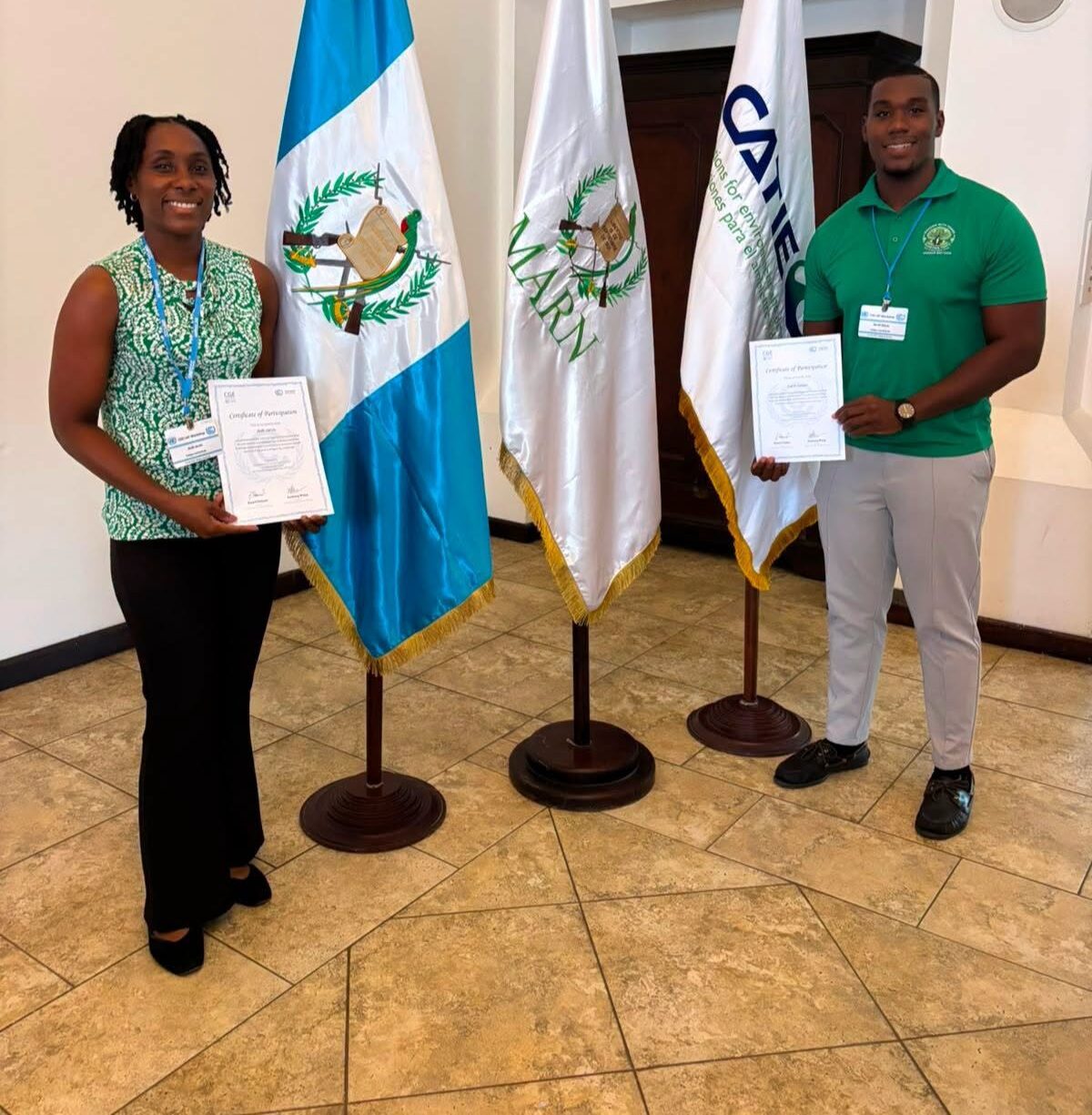
    A growing environmental threat to Caribbean marine ecosystems has received a boost in regional preparedness, as a young scientific professional from Antigua and Barbuda has completed specialized training focused on understanding and monitoring ocean acidification. Alexandra Hughes, a graduate assistant attached to Antigua and Barbuda’s Department of Analytical Services, completed the intensive instruction at a training event hosted in Jamaica this cycle.

    The foundational ocean acidification training course was co-organized by two leading institutions in global marine science: the University of the West Indies, and the Ocean Acidification International Coordination Centre operating under the International Atomic Energy Agency (IAEA). The entire program was fully sponsored by the IAEA, which has made expanding developing nation capacity on climate-linked ocean issues a key priority for the Latin America and Caribbean region.

    Throughout the multi-day training, Hughes did not only gain new technical skills — she also took the opportunity to represent her home country’s scientific work as a featured speaker in a panel discussion. During her panel contribution, she outlined the ongoing projects and core missions of Antigua and Barbuda’s Department of Analytical Services, and led a productive conversation about how targeted ocean acidification research can be formally integrated into the island nation’s existing national environmental work framework.

    Unlike many general environmental conferences, this training was designed specifically to build hands-on capacity for early-career scientists across the Caribbean. It gathered early-to-mid-career researchers from 12 different Caribbean island and coastal nations, delivering interactive, practical training on field monitoring protocols, laboratory sample processing, and data analysis techniques that are critical for tracking local changes in ocean chemistry linked to acidification.

    Ocean acidification is a climate change-linked phenomenon that occurs when the world’s oceans absorb excess carbon dioxide from the atmosphere, pushing seawater chemistry toward a lower, more acidic pH level. For the Caribbean, which relies heavily on healthy coral reef ecosystems, commercial and artisanal fisheries, and coastal tourism for national livelihoods, this trend poses an outsized long-term threat. Acidification erodes coral skeleton formation, weakens shellfish populations, and disrupts entire marine food webs that underpin billions in regional economic activity and hundreds of thousands of jobs.

    Regional environmental and science officials from the Caribbean Environment Programme and participating national institutions have emphasized that training local scientific talent through cooperative initiatives like this one is a critical first step to building effective collective and national policy responses. For small island developing states like Antigua and Barbuda, which are among the most vulnerable to climate change impacts but often lack specialized scientific capacity, investment in training like this creates ripple effects that strengthen entire regional response networks. Officials from Antigua and Barbuda’s Department of Analytical Services noted that Hughes’ new expertise will allow the agency to launch its own local monitoring efforts, and contribute national data to regional ocean acidification research initiatives in coming years.

  • ECAB Announces Permanent Closure of Woods Branch Effective June 1, 2026

    ECAB Announces Permanent Closure of Woods Branch Effective June 1, 2026

    In a formal announcement that has drawn attention from local business communities and area residents, the ECAB organization has confirmed that its Woods Branch location will cease all operations permanently starting on June 1, 2026. The planned shutdown marks the end of an era for the branch, which has served customers in the Woods region for an unspecified number of years. The announcement, released through official organizational channels, gives stakeholders and customers nearly three years advance notice to adjust their plans and make alternative arrangements for the services previously provided at this location. While specific details behind the decision to close the branch have not been fully disclosed at this stage, the multi-year lead time indicates that the organization has been working on long-term strategic planning that led to this final call. Customers who rely on the Woods Branch for regular services have been encouraged to reach out to ECAB’s central administration or other nearby branch locations to learn more about how the transition will impact their access to services moving forward. The company has also indicated that it will release additional updates, including information about staff transitions and service reallocation, in the months leading up to the 2026 shutdown date.

  • Antigua & Barbuda Announces Closed Season for Lobster and Parrotfish Starting May 1, 2026

    Antigua & Barbuda Announces Closed Season for Lobster and Parrotfish Starting May 1, 2026

    Antigua & Barbuda’s coastal ecosystems and fishing industry are set to receive a major conservation boost, as the Antigua & Barbuda Defence Force (ABDF) in partnership with the national Fisheries Division has officially announced the 2026 annual closed fishing season for two ecologically and economically critical marine species: spiny lobster and chub (commonly known as parrotfish). Scheduled to go into full effect starting May 1, 2026, this regulatory measure is a longstanding requirement under the country’s national fisheries laws, designed to shield vulnerable populations of these species during their critical breeding cycles and secure the long-term sustainability of local marine resources.

    The closed season follows different timelines tailored to the biological needs of each species. For spiny lobster, the harvest and trade ban will run for two full months, from May 1 through June 30, 2026. For chub and parrotfish, the protection period is extended by an additional month, concluding on July 31, 2026. Across the entire duration of the closed season, a full set of restrictions applies to every person and entity operating within Antigua & Barbuda’s jurisdiction, including independent fishermen, commercial restaurants, seafood vendors, and seafood export businesses. All activities related to the targeted species are prohibited: this includes catching, selling, purchasing, and even possessing the regulated species during the ban.

    To ensure full compliance with the new regulations, joint enforcement teams from the ABDF and the Fisheries Division will carry out routine and targeted compliance checks across key locations nationwide, including commercial fishing ports, retail seafood markets, food service establishments, and coastal fishing access points. Authorities have confirmed that violations of the closed season rules will result in strict penalties, in line with national fisheries legislation. Penalties for non-compliance include fines reaching up to $50,000 XCD, the mandatory confiscation of any illegal catch, and potential criminal prosecution for repeat or severe offenders.

    Beyond meeting regulatory requirements, the closed season initiative delivers clear long-term benefits for both the environment and local communities that rely on fishing for their livelihoods. Protecting spiny lobster during their breeding period directly supports the maintenance of healthy, harvestable populations for future fishing seasons, which is critical given that lobster is a key export commodity and a core part of the local fishing economy. For parrotfish, the protection addresses the species’ outsize role in maintaining coral reef health: parrotfish graze on algae that would otherwise overgrow and kill coral reefs, making them essential to preserving the ecological balance of Antigua & Barbuda’s coastal reef systems, which in turn support tourism, protect shorelines, and sustain fish populations across the region.

    Overall, the annual closed season is a core part of Antigua & Barbuda’s broader strategy to conserve marine biodiversity and ensure that fishing remains a viable livelihood for current and future generations of coastal communities. In the public advisory accompanying the announcement, the ABDF has urged all stakeholders — from local residents and small-scale fishermen to large commercial vendors and hospitality businesses — to comply fully with the regulations. Authorities emphasize that coordinated public cooperation is essential to safeguarding the country’s valuable marine natural resources for generations to come.

  • Antigua and Barbuda Groups Invited to Apply for Grants to Tackle Plastic Pollution

    Antigua and Barbuda Groups Invited to Apply for Grants to Tackle Plastic Pollution

    On April 30, 2026, the International Union for Conservation of Nature (IUCN) announced the launch of a landmark grant initiative from its Regional Office for Mexico, Central America and the Caribbean (ORMACC) based in San José, Costa Rica, aimed at tackling the Caribbean’s growing plastic pollution crisis through community-led circular economy action. Titled the Sustainable Small Grants Programme (SSGP) and operating under the broader “Closing the Caribbean Plastic Tap” umbrella, the initiative opens applications for eligible groups across five Eastern Caribbean nations: Antigua and Barbuda, Grenada, Saint Lucia, St. Kitts and Nevis, and St. Vincent and the Grenadines.

    Backed by funding from the Italian Agency for Development Cooperation (AICS) and the Italian Ministry of Foreign Affairs and International Cooperation (MAECI), the SSGP carries a total program budget of €400,000, or approximately $430,000. Funding is split evenly across the five participating countries, with a maximum €80,000 allocated per nation. Individual grants to successful applicants will range from €30,000 to €80,000, designed to support the full implementation of locally tailored projects.

    Unlike top-down environmental interventions, the SSGP centers local leadership by extending eligibility to a wide range of community-rooted entities: micro, small, and medium-sized enterprises (MSMEs), community-based organizations (CBOs), non-governmental organizations, cooperatives, community associations, local schools, and even informal community groups, so long as they can prove a track record of meaningful local engagement. Funded projects will prioritize two key approaches to plastic waste management: upstream prevention, which cuts plastic production and consumption at the source, and midstream circularity, which reimagines plastic materials as reusable resources rather than disposable waste.

    The program is a core component of a wider regional strategy to eliminate plastic pollution at its origin by scaling up systems for waste reduction, product reuse, material recycling, and the adoption of sustainable alternative materials. All funded projects will be required to track and deliver measurable outcomes, both for environmental health and local socio-economic development. These outcomes will align with participating nations’ national climate and environmental priorities, as well as global sustainability commitments including the United Nations Sustainable Development Goals (SDGs) and the Global Biodiversity Framework (GBF).

    Applications for the first round of grants are open now, and interested eligible organizations have until 11:59 p.m. Atlantic Standard Time on May 31, 2026 to submit full proposals. Full application guidelines and submission details are available via the IUCN’s official engagement portal at https://engage.iucn.org/topic/sustainable-small-grants-programme-closing-caribbean-plastic-tap.

  • Antigua and Barbuda delegation participates in Transforming Global Education Summit at the United Nations

    Antigua and Barbuda delegation participates in Transforming Global Education Summit at the United Nations

    This week, a five-person cross-generational delegation from Antigua and Barbuda will travel to United Nations Headquarters in New York to join world leaders for the landmark Transforming Global Education Summit, a high-profile initiative aimed at modernizing education frameworks across small island developing states (SIDS).

    Convened on May 1 by the PVBLIC Foundation in partnership with the governments of Antigua and Barbuda, the Kingdom of Tonga, and the Learning Economy Foundation, the one-day gathering brings together a diverse cohort of stakeholders: heads of state, cabinet ministers, leaders of multilateral organizations, tech pioneers, veteran educators, private sector innovators, and youth advocates. Centered on the transformative theme “Redefining Education as Global Infrastructure,” the summit seeks to advance a cohesive, forward-thinking new model for national education systems that unifies policy design, technological integration, sustainable funding, and cross-border multilateral collaboration under one shared framework.

    Leading the Antigua and Barbuda contingent is Clare Browne, the nation’s Director of Education, alongside Dr. Jrucilla Samuel, Director of the country’s Youth Department. Three young leaders round out the delegation: Pia Nicholas, President of the National Youth Volunteer Corps and former CARICOM Youth Ambassador; Janet Simon, the incumbent CARICOM Youth Ambassador; and Chevaughn Burton, Assistant to the Safe Schools Focal Point. This mix of senior government officials and emerging youth voices underscores Antigua and Barbuda’s deep commitment to inclusive, youth-centered education reform – a priority that ensures young people have an active seat at the table when shaping the future of learning across the region.

    Antigua and Barbuda’s Permanent Mission to the United Nations has overseen all coordination for the delegation’s participation, working to guarantee the small island nation’s unique perspective on education development is centered in global discussions. “For countries like ours, education is not simply a social service, it is a matter of national resilience and sovereignty,” stated Ambassador Walton Webson, Permanent Representative of Antigua and Barbuda to the UN. “Small Island Developing States understand that our ability to adapt, innovate, and compete globally depends on how we invest in the knowledge and skills of our people,” he added.

    The delegation will play an active role across the summit’s official program. Browne will deliver opening remarks on Antigua and Barbuda’s behalf before joining the panel discussion focused specifically on challenges and opportunities for Small Island Developing States. Simon, the sitting CARICOM Youth Ambassador, is scheduled to address attendees during a separate panel titled “Scaling the Model: From Youth to National Development.” Dr. Samuel will take on moderation duties for a third high-profile panel, “Redefining Education Systems for the Future: Integrating Mental Health, Nutrition, and Holistic Youth Development as Global Priorities,” which will also feature input from the delegation’s youth members. Outside of plenary and panel sessions, the Antigua and Barbuda team is also set to hold targeted bilateral talks with representatives from the PVBLIC Foundation and other partner governments aligned with the nation’s development goals.