标签: Antigua and Barbuda

安提瓜和巴布达

  • Retirement Age For Judges in the OECS Increased

    Retirement Age For Judges in the OECS Increased

    Leaders from the Organisation of Eastern Caribbean States (OECS) have formally approved a landmark policy change that will raise the mandatory retirement age for judges of the Eastern Caribbean Supreme Court (ECSC) from 65 to 70 years old. The decision was reached during a two-day annual OECS summit that concluded in Antigua on Monday, following in-depth consultations with the court’s top leadership.

    Gaston Browne, chairman of the OECS and Prime Minister of Antigua and Barbuda, confirmed that the proposal originated directly from discussions with ECSC Chief Justice Madam Justice Margaret Price-Findlay. According to Browne, the push for an extended retirement age comes amid a persistent, challenging gap in judicial recruitment that has strained the regional court system for years.

    “When our most experienced judges retire at 65, we struggle to quickly find qualified replacements with the same level of expertise and institutional knowledge,” Browne explained, referencing the ongoing recruitment challenges the court has faced.

    The heads of government across all OECS member states unanimously backed the Chief Justice’s recommendation, Browne confirmed, adding that legal and administrative amendments to implement the change are expected to be finalized and rolled out over the coming weeks and months.

    As the highest superior court of record for the Eastern Caribbean bloc, the ECSC holds jurisdiction over all civil and criminal legal matters across nine Caribbean territories: six independent sovereign nations (Antigua and Barbuda, Dominica, Grenada, St. Lucia, St. Vincent and the Grenadines, and St. Kitts and Nevis) and three British Overseas Territories (Montserrat, Anguilla, and the British Virgin Islands). Headquartered in Castries, St. Lucia, the court operates through two core divisions: the High Court of Justice, which serves as the court of first instance for trials and initial hearings across each member territory, and the itinerant Court of Appeal, which travels between islands to hear appeals from both the High Court and local magistrate courts.

    The policy shift is designed to preserve institutional expertise, reduce caseload backlogs that stem from prolonged judicial vacancies, and provide greater stability for the regional judicial system that serves more than 600,000 people across the Eastern Caribbean.

  • Antigua and Barbuda, France Explore Bilateral Crime-Fighting Agreement

    Antigua and Barbuda, France Explore Bilateral Crime-Fighting Agreement

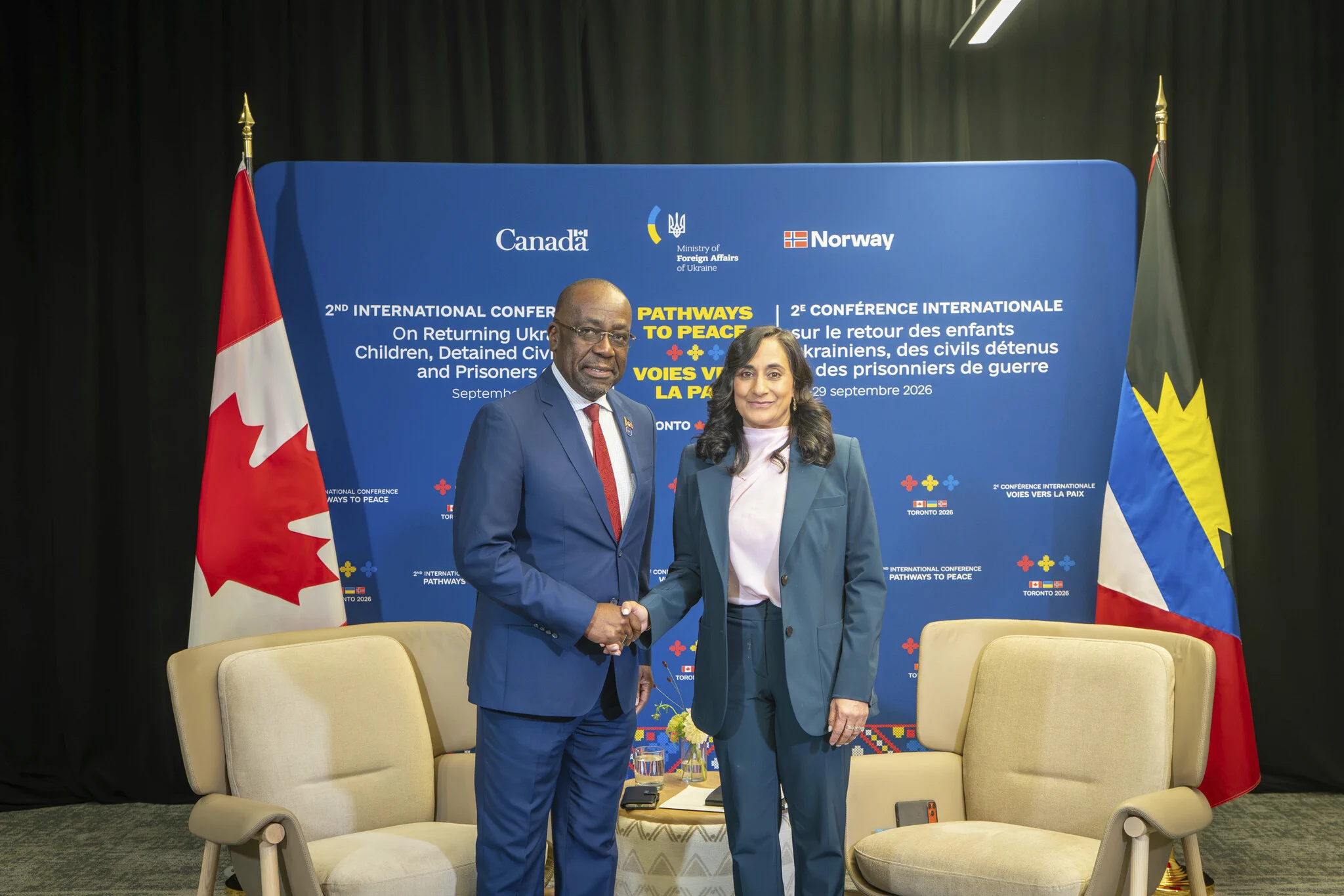
    High-level diplomatic and technical discussions held in St. John’s on Thursday have opened a new chapter of potential security collaboration between Antigua and Barbuda and France, with both sides moving forward to explore a targeted bilateral agreement aimed at countering growing transnational security threats. The talks were hosted during an official working visit by Emmanuelle Doffe, France’s Liaison Judge to the Caribbean region, who held in-depth negotiations with E.P. Chet Greene, Antigua and Barbuda’s Minister of Foreign Affairs, Trade and Barbuda Affairs.

    Greene opened the discussion by reaffirming the Antigua and Barbuda government’s firm commitment to deepening ties with France across justice, public security and rule of law initiatives. He emphasized that the island nation has a clear strategic interest in finalizing a formal bilateral deal that would boost collective efforts to dismantle transnational organized criminal networks, with a specific focus on curbing illicit drug trafficking and the downstream criminal activities that accompany this trade.

    Minister Greene also highlighted that cybercrime has emerged as one of the fastest-growing and most destabilizing threats to Antigua and Barbuda’s national security and economic stability. As criminal groups continuously adapt their tactics and operate across international borders, he stressed that stronger coordinated international partnerships are not optional but a necessity to effectively counter these evolving threats.

    Among the concrete collaborative proposals laid out during the talks was a plan to establish joint investigative teams for relevant cross-border cases. This framework would streamline cross-border probe processes and remove bureaucratic barriers to more robust, real-time intelligence sharing between the two countries’ law enforcement and judicial bodies.

    Judge Doffe outlined France’s existing regional engagement strategy, noting that the European nation is already finalizing bilateral extradition and criminal cooperation pacts with multiple Caribbean nations. She pointed to existing similar arrangements that France has already concluded with Saint Lucia and Dominica, highlighting that these deals have already delivered tangible improvements to judicial coordination across the region.

    She further confirmed that France stands ready to support Antigua and Barbuda’s law enforcement capacity through formal memoranda of understanding and specialized targeted training programs. These training initiatives would cover a range of critical disciplines, from criminal investigation procedure and judicial cooperation to countering financial crime, combating cybercrime, and other core law enforcement skills.

    Following the conclusion of the productive talks, Judge Doffe confirmed that she will formally submit all discussed proposals to relevant decision-making bodies within the French Ministry of Justice for review and consideration. She emphasized that her current visit to Antigua and Barbuda is framed as a primarily technical mission, focused on building practical on-the-ground cooperation between France and Caribbean judicial jurisdictions on criminal justice issues, rather than routine symbolic diplomatic engagement. The core goal of this mission is to improve direct coordination between judicial authorities, prosecuting bodies, law enforcement agencies and other relevant institutions through enhanced operational collaboration, to more effectively tackle the shared challenge of transnational crime.

  • Dr. Didacus Jules Reappointed for a Fourth Term as Director General

    Dr. Didacus Jules Reappointed for a Fourth Term as Director General

    The highest governing body of the Organisation of Eastern Caribbean States (OECS), the OECS Authority, has formally greenlit the reappointment of Dr. Didacus Jules to serve his fourth consecutive term as the organisation’s Director General. This move serves as a clear reaffirmation of the Authority’s unwavering confidence in Jules’ leadership capabilities and its shared commitment to pushing forward the bloc’s long-held regional integration agenda.

    The historic decision was reached during the 78th official gathering of the OECS Authority, where regional Heads of Government gathered to deliberate on the appointment and collectively praised Jules’ outstanding track record of service over his previous three terms. Leaders highlighted the transformative impact of his work, which has advanced cross-border cooperation, driven tangible regional development, and bolstered the institutional capacity of the OECS bloc as a whole.

    Speaking on behalf of the Authority following the vote, former OECS Authority Chairman and Prime Minister of Saint Vincent and the Grenadines, Honourable Dr. Godwin Friday, highlighted the unique strengths Jules brings to the role. Friday commended Jules for his far-sighted strategic vision, lifelong dedication to public service, and unwavering commitment to nurturing deeper regional integration and inclusive sustainable development across all Eastern Caribbean member states.

    “The decision to reappoint you is a direct reflection of the Authority’s collective confidence in your leadership, and a formal recognition of the immeasurable contributions you have made to advancing the OECS integration agenda and strengthening our organisation from within,” Friday stated in his official address. “On behalf of the entire OECS Authority, I extend my warmest and sincere congratulations on your reappointment. We eagerly anticipate your continued service and dedication to the people and governments of all OECS Member States.”

    As the Eastern Caribbean bloc continues to chart a path through an increasingly complex and volatile global geopolitical landscape, OECS Authority leaders have emphasized that experienced, steady leadership is critical to advancing the organisation’s core vision: building a more closely integrated, economically resilient, and prosperous region for all citizens. In a separate statement following the announcement, the OECS Commission added its own congratulations to Dr. Jules, confirming it looks forward to continuing its collaborative work with his office to deliver tangible, meaningful improvements to the daily lives of people across OECS member nations.

  • Antigua And Barbuda Tops Best Honeymoon Destinations In The Caribbean Listing By Caribbean Journal

    Antigua And Barbuda Tops Best Honeymoon Destinations In The Caribbean Listing By Caribbean Journal

    For couples planning their post-wedding getaway, few places in the world can compete with the romantic appeal of Antigua and Barbuda. This twin-island Caribbean nation has curated a landscape of love that caters to every type of couple, from pairs craving grand, all-inclusive celebrations to those seeking quiet, sequestered luxury far from the crowds. What sets the destination apart above all else is its iconic natural offering: 365 pristine beaches, giving visiting couples a new private stretch of golden sand to explore for every day of their stay.

    The region’s adults-only all-inclusive resort scene is widely considered the best in the Caribbean, setting a high bar for laid-back barefoot luxury that other destinations struggle to match. Leading the pack of couple-focused retreats are Hammock Cove and Hermitage Bay, two intimate all-suite properties designed almost exclusively with pairs in mind, prioritizing privacy and shared connection over crowded common spaces.

    For couples who want to take seclusion up a notch, Jumby Bay offers an elevated experience spread across its own private island, accessible only by boat. Here, guests leave behind rigid schedules, room keys and the noise of daily life, trading them for unspoiled white shorelines and total peaceful silence.

    On the other end of the spectrum for active couples who want more than just relaxation, St. James’s Club anchors Antigua’s southeastern coast with a lively, energetic vibe. The resort offers no shortage of on-demand activities, including the increasingly popular game of pickleball, for pairs who want to stay moving during their trip.

    When it comes to pure high-end luxury, two properties stand out. Hodges Bay brings a sleek, modern sophistication to Antigua’s north shore, even featuring an outpost of the acclaimed Japanese restaurant Katsuya for food-loving couples. Meanwhile, Carlisle Bay remains one of the Caribbean’s most understatedly refined retreats, with low-key luxury that lets the natural beauty of the island take center stage.

    Across every style and budget, Antigua and Barbuda fills a rare niche for honeymooners: it is a destination that lets each couple customize their experience to match their ideal romantic vibe, whether they want a bustling, celebratory trip full of new experiences or a secluded getaway where they barely leave their room together. This article is an excerpt from a larger feature ranking the 10 best Caribbean honeymoon destinations to visit right now.

  • ABHTA Trains Hospitality Professionals in Kitchen Management and Leadership

    ABHTA Trains Hospitality Professionals in Kitchen Management and Leadership

    Antigua and Barbuda’s leading tourism industry body has marked a major milestone in workforce development for the local hospitality sector, closing out its second annual professional training program focused on elevating kitchen operations and leadership for culinary teams across the islands.

    The Antigua and Barbuda Hotels and Tourism Association (ABHTA) wrapped its 2024 iteration of *Kitchen Management Essentials: People, Systems & Service*, a two-day intensive training held June 17–18 at the Muriel O’Mard Campus. The program brought together culinary professionals from a wide range of local hotels, restaurants, and hospitality outlets, all aiming to refine their core management capabilities that underpin smooth, profitable kitchen operations.

    Led by Olvanah Richardson, Executive Sous Chef at Antigua’s renowned Blue Waters Hotel, the curriculum covered a comprehensive set of high-priority topics for modern kitchen management. Sessions delved into foundational team leadership strategies, rigorous food safety protocols, efficient inventory tracking and management, accurate food costing to protect profit margins, practical waste reduction techniques that cut costs and support sustainability, and consistent execution of high-quality customer service standards.

    At the conclusion of the program, all participants who completed the full training received official certificates, celebrating both their successful mastery of new skills and their ongoing commitment to continuous professional growth within the hospitality sector. For many attendees, the training fills a critical gap between hands-on culinary experience and the management expertise needed to advance into senior kitchen leadership roles.

    Looking ahead, ABHTA has already announced its next targeted professional development initiative for local hospitality workers: the *Supervisory Management Development Course*, scheduled to run from September 10 to October 15, 2026. The association confirmed that interested hospitality professionals can reach out directly to ABHTA’s administrative team for full details on curriculum, eligibility, and registration for the upcoming course.

    Industry observers note that ongoing workforce training initiatives like these play a key role in strengthening Antigua and Barbuda’s competitive position in the global luxury travel market, by ensuring local hospitality teams maintain the high standards of service and operational efficiency that international travelers expect.

  • More Companies to Pay Windfall Tax Under New Government Policy

    More Companies to Pay Windfall Tax Under New Government Policy

    The government of Antigua and Barbuda has formally given the green light to a key policy change that expands the country’s existing windfall profits tax to a much broader group of businesses, with all new revenue generated by the adjustment earmarked exclusively for the government’s popular free tertiary education initiative.

    The confirmation of the final decision came during a post-Cabinet press briefing held on Thursday, where Director General of Communications Maurice Merchant addressed lingering questions from reporters about whether the tax would be expanded beyond its original narrower scope.

    Merchant made clear that the policy adjustment has already secured full Cabinet approval, laying out that the expanded levy will apply to every profit-generating company operating across Antigua and Barbuda that crosses the threshold of 1 million Eastern Caribbean dollars in annual profits. When clarifying the scope of the new rule, he emphasized: “All companies within Antigua and Barbuda who make a million plus dollars, they would be required to pay that tax—on profits, that is.”

    Unlike generic windfall taxes often introduced to address sudden excess profits, this expansion is explicitly designed to build a stable, long-term funding stream for the administration’s flagship free post-secondary education program. That funding will cover a range of education costs, including tuition support for local students enrolled at the University of the West Indies Five Islands Campus, one of the country’s main tertiary education institutions.

    Before the tax can go into effect, the government must first pass necessary amendments to existing national legislation through the country’s Parliament. Merchant confirmed that this is the only major procedural step remaining before the policy can be implemented.

    Thursday’s formal confirmation of the plan aligns with earlier public comments from Prime Minister Gaston Browne, who first signaled the administration’s intent to broaden the windfall tax as a way to lock in sustainable long-term financing for the free tertiary education program. With the Cabinet having now signed off on the final decision, the process of advancing the required legislative changes through Parliament is expected to move forward in the coming weeks.

  • Antigua and Barbuda nominated for Caribbean’s Best Emerging Culinary City Destination 2026

    Antigua and Barbuda nominated for Caribbean’s Best Emerging Culinary City Destination 2026

    Building on a successful 2025 victory in the same global competition, Antigua and Barbuda has earned a second consecutive nomination for the coveted title of Caribbean’s Best Emerging Culinary City Destination 2026 from the World Culinary Awards, cementing its growing reputation as a rising global food tourism hotspot.

    This latest nomination places the twin-island Caribbean nation alongside a select group of international destinations recognized by the World Culary Awards for their expanding culinary appeal, unwavering commitment to culinary excellence, deliberate innovation, and dedication to delivering authentic, culture-forward dining experiences. The award category specifically highlights destinations that have strategically leveraged local food culture as a core driver of tourism, drawing international travelers who prioritize unique, culturally immersive culinary adventures over generic dining experiences.

    Shermain Jeremey, lead for Antigua and Barbuda Culinary Month at the Antigua and Barbuda Tourism Authority, emphasized the significance of the repeat nomination for the destination. “As Antigua and Barbuda continues to elevate and expand its culinary tourism product, this nomination reinforces our position as a must-visit destination for food lovers worldwide,” Jeremey said.

    She added that a second consecutive win would carry meaningful weight for the nation’s culinary identity: “To win this award for a second year would signal that the destination is not only offering high-quality cuisine but is also developing a strong culinary identity rooted in local culture, traditions, and creativity.”

    Public voting for the 2026 World Culinary Awards officially opened on June 25 and will remain open to voters globally through August 14, 2026.

    Media inquiries about the nomination and Antigua and Barbuda’s culinary tourism initiatives can be directed to Maria Blackman or Kayla Christian, both representatives of the Antigua and Barbuda Tourism Authority.

  • Four CARICOM Economies Earned More From the World Than They Spent in 2025

    Four CARICOM Economies Earned More From the World Than They Spent in 2025

    New 2025 economic data compiled from the International Monetary Fund’s April 2026 World Economic Outlook shows a stark divide across the Caribbean Community (CARICOM) bloc: just four of its 14 member states recorded current account surpluses, meaning they earned more revenue from global markets and cross-border transactions than they spent on foreign goods, services and transfers. The remaining ten nations ran sustained current account deficits, a pattern that has become the norm for most small, open economies in the region. For context, a country’s current account balance aggregates the total value of its exports of goods and services, cross-border income flows such as remittances, and subtracts total spending on imports and outgoing international transfers. A surplus signals a net positive inflow of foreign currency, while a deficit means the country spends more abroad than it brings in.

    Among the four surplus economies, Guyana stands out as the clear leader, posting a current account surplus equal to 12.9% of its total gross domestic product, fueled almost entirely by booming crude oil exports that have transformed the small Caribbean nation’s economic profile in recent years. Next in line is Trinidad and Tobago, another regional energy powerhouse, which recorded a smaller but still solid surplus of 3.1% of GDP, driven by its long-standing oil and natural gas export sectors. The two remaining surpluses are far more modest, and rely on very different economic drivers: Haiti’s surplus comes almost exclusively from remittances sent home by Haitians living and working abroad, while Jamaica’s surplus is supported by a combination of remittances and international tourism revenue.

    For the other ten CARICOM members, current account deficits are the status quo, with the gaps between foreign earnings and spending covered by a mix of international tourism receipts and foreign direct investment. Belize recorded the smallest deficit among the group, at just 3.5% of GDP, a relatively manageable gap for the small tourism-dependent economy. At the opposite end of the spectrum, two nations posted extremely deep deficits: Dominica recorded a deficit equal to 38% of GDP, while Suriname’s deficit hit 53% of GDP. Importantly, CARISTATS notes these large deficits do not signal economic distress in either country: both stems from heavy capital spending on imported infrastructure and energy development equipment, financed by large inflows of foreign capital that offset the current account gap.

    The overall trend underscores a long-standing structural divide across the CARICOM bloc: the only economies that consistently earn more from the world than they spend are those with abundant energy reserves to export or those that rely heavily on remittances from overseas workers, while the majority of member states, most of which depend on tourism as their primary foreign exchange earner, continue to import more goods and services than they generate from international activity. This data release comes from independent regional statistics project CARISTATS, which publishes its economic analysis for free to the public. The organization has called for voluntary future subscription pledges from readers who value its work, with no charges applied until payment systems are formally activated.

  • Antigua and Barbuda to Benefit from Donation of Eye Care Equipment from He Vision Group

    Antigua and Barbuda to Benefit from Donation of Eye Care Equipment from He Vision Group

    A new strategic philanthropic partnership has been struck between Antigua and Barbuda’s Ministry of Health, Wellness, Environment and Civil Service Affairs and China’s He Vision Group, formalizing a donation of specialized eye care equipment designed to elevate the Caribbean nation’s ophthalmic care infrastructure.

    The agreement was cemented during an official working meeting attended by key stakeholders from both sides. Attendees included Hon. Michael Joseph, Minister of Health, Wellness, Environment and Civil Service Affairs of Antigua and Barbuda; Dr. He Wei, founder of He Vision Group; Helen Yan, Assistant to the President of He Vision Group and Director of the company’s Social Responsibility Department; alongside H.E. Clement Antonio, Antigua and Barbuda’s Ambassador to China, and H.E. Ian Marshall, Grenada’s Ambassador to China.

    Currently, the donated equipment is in the final preparation phase before being shipped to Antigua and Barbuda. Once it arrives and is deployed, it is projected to significantly expand the country’s ability to deliver high-quality specialized eye care, broadening access to critical diagnostic tools and treatment options for local patients who previously faced gaps in care.

    Minister Joseph opened up about the value of this collaboration, extending sincere gratitude to He Vision Group for its dedication to advancing local healthcare development in Antigua and Barbuda. “This partnership marks a meaningful milestone in strengthening eye care services across our national healthcare system,” Joseph stated. “We are deeply thankful to He Vision Group for this generous gift, and we eagerly await the arrival of the equipment, which will directly help drive better eye health outcomes for all people of Antigua and Barbuda.”

    He Vision Group has earned global recognition for its decades-long impact across the ophthalmic sector. The firm operates an extensive global network of specialized hospitals, cutting-edge research institutions, and professional medical training programs, with core focuses on advancing ophthalmic innovation, medical education, and global blindness prevention initiatives.

    Moving forward, Antigua and Barbuda’s Ministry of Health plans to maintain long-term collaborative engagement with He Vision Group. Both parties share a common goal of continuously improving eye health services and expanding equitable access to high-quality healthcare for all residents of Antigua and Barbuda.

  • Man Urinates on Treasury Desk During Back Pay Dispute

    Man Urinates on Treasury Desk During Back Pay Dispute

    In a stern rebuke of unacceptable harassment targeting public workers, Director General of Communications Maurice Merchant has issued a strong condemnation of abusive and threatening behavior directed at employees of the national Treasury, as the agency works through a massive backlog of outstanding back-pay claims for public servants.

    Speaking at the post-Cabinet media briefing held Thursday, Merchant clarified that despite widespread public frustration over delayed payments and perceived shortcomings in customer service, Treasury staff have been pushing forward with extraordinary effort, even putting in extra hours on weekends to fulfill the government’s financial commitments to eligible workers. He noted that one recent incident crossed all lines of acceptable public conduct, after an individual unhappy with the update they received on their back-pay claim allegedly urinated on a workspace inside the Treasury building and issued threats to return with a weapon.

    Merchant emphasized that this kind of aggression has no place in interactions with public employees, and appealed to the public for patience as the Treasury and relevant line ministries work systematically to resolve every outstanding claim. He addressed a widespread misconception about the processing delays, explaining that the government has already allocated the full funds required for the back payments; delays stem not from a lack of available money, but from the mandatory administrative protocols that must be followed to ensure accurate disbursement.

    He further explained that some claims are delayed because eligible workers were accidentally left off initial back-pay rosters, but the correct path to resolution is to follow the established administrative chain of inquiry: questions should first be raised with the applicant’s employing ministry, which then submits corrected information to the Treasury for processing.

    While Merchant openly acknowledged that members of the public have legitimate concerns about customer service standards across the public sector, he stressed that no grievance, no matter how valid, can justify violence, intimidation or abusive treatment of staff carrying out their duties. He closed by urging all residents to practice patience and maintain good decorum when engaging with public workers, noting that government employees deserve humane respect even as the agency works to clear the backlog of unpaid claims.