TORONTO, Ontario – October 1, 2026 – Global Affairs Canada
Diplomatic dialogue between Canada and the Caribbean nation of Antigua and Barbuda took center stage this week, as top foreign affairs officials from both countries met on the sidelines of a major international peace conference in Toronto.
Canada’s Minister of Foreign Affairs, the Honourable Anita Anand, hosted a bilateral meeting with Chet Greene, Antigua and Barbuda’s Minister of Foreign Affairs, Trade and Barbuda Affairs, on September 29. The gathering occurred during the “Pathways to Peace: Second International Conference on Returning Ukrainian Children, Detained Civilians, and Prisoners of War”, which brought global leaders to Toronto for two days of focused discussions between September 28 and 29.
Minister Anand opened the conversation by extending Canada’s sincere gratitude to Minister Greene and the government of Antigua and Barbuda for joining the Toronto conference. She emphasized that broad global participation was critical to advancing the urgent goals of the gathering, and that Antigua and Barbuda’s ongoing commitment to issues of global peace and hostage welfare does not go unnoticed by the Canadian government.
Beyond the immediate work of the peace conference, the two ministers turned their attention to upcoming multilateral cooperation, specifically discussing in detail ongoing preparations for the 2026 Commonwealth Heads of Government Meeting (CHOGM). This landmark gathering of Commonwealth leaders is scheduled to take place from November 1 to 4 in St. John’s, the capital city of Antigua and Barbuda. Minister Anand reaffirmed Canada’s full support for Antigua and Barbuda as the host nation, praising the Caribbean government’s leadership and organizational efforts to date. She specifically noted Canada’s ongoing capacity-building assistance as a key component of its support for a successful CHOGM 2026.
The bilateral discussion also touched on long-term development cooperation between the two nations. Minister Anand underscored Canada’s strong interest in supporting Antigua and Barbuda’s national goals for agricultural development and food security. She outlined that Canada stands ready to share its advanced agricultural technology solutions, provide specialized technical expertise, and act as a reliable supplier of high-quality Canadian food products to help Antigua and Barbuda advance these critical national priorities.
标签: Antigua and Barbuda
安提瓜和巴布达
-
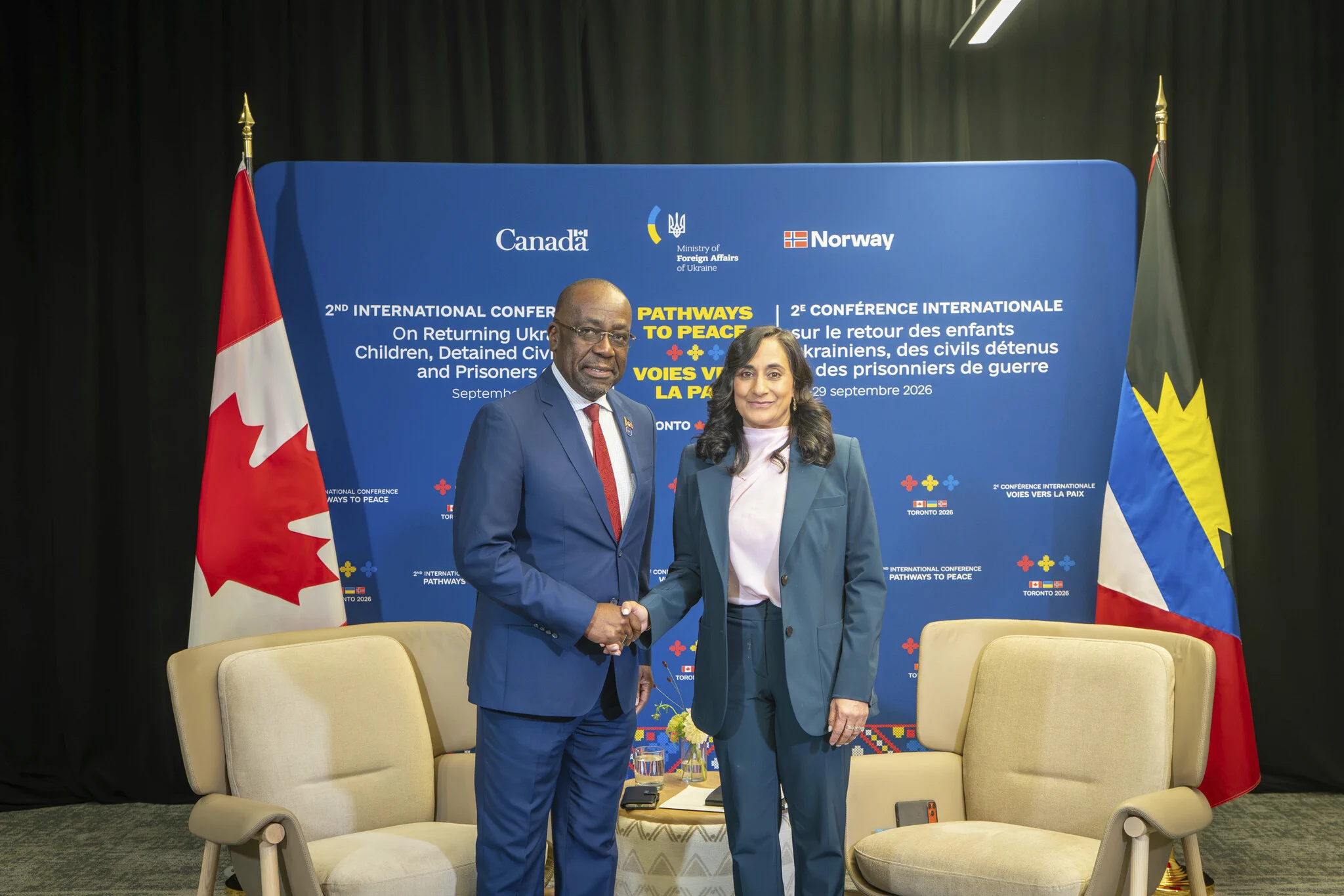
FM Greene meets Canadian counterpart in Toronto
-
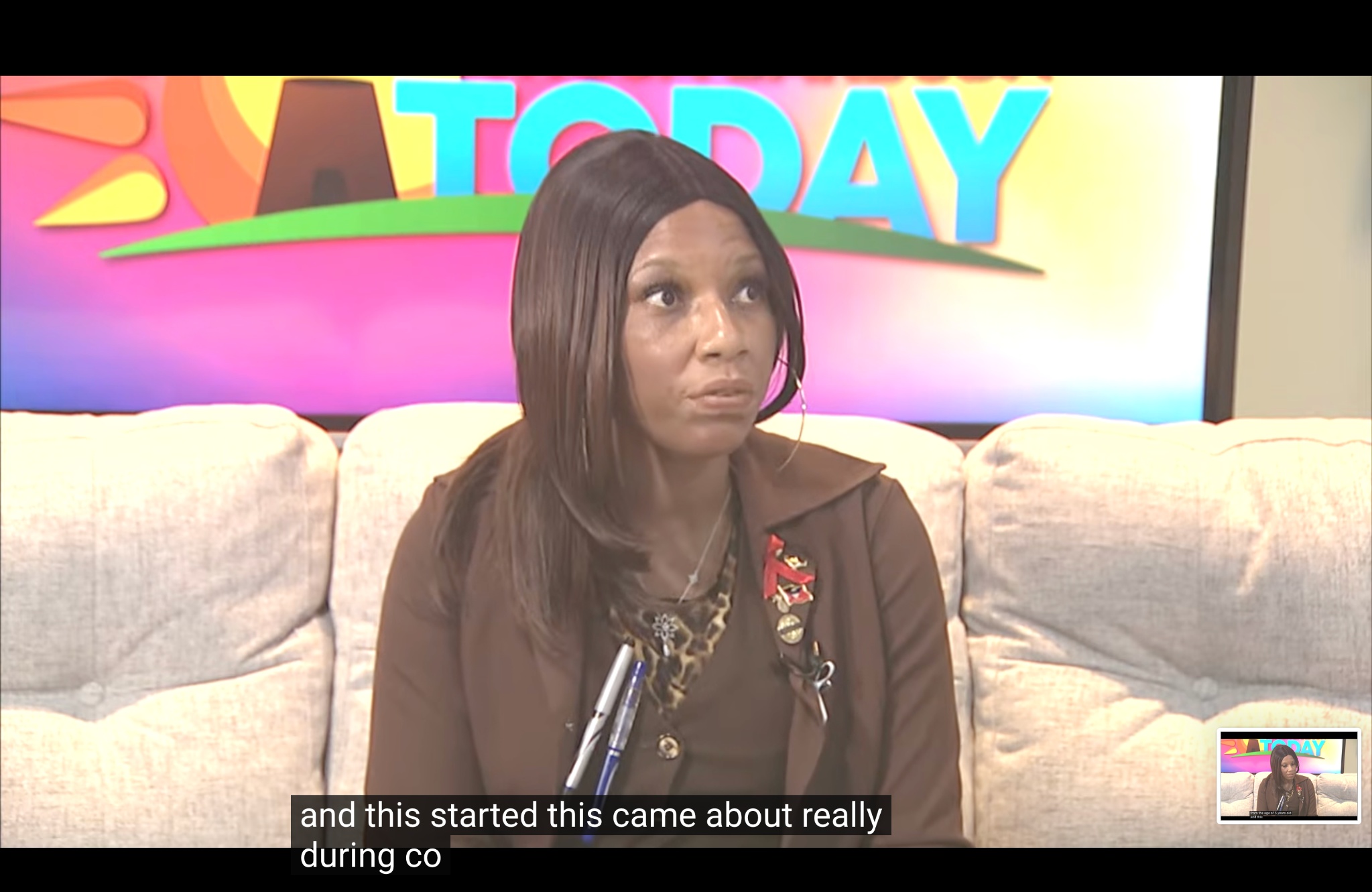
Sexual Abuse Survivor Launches Petition Calling for Antigua and Barbuda’s Age of Consent to Be Raised From 16 to 18
A lifelong sexual assault survivor from Antigua and Barbuda is driving a nationwide push to overhaul the country’s outdated sexual offense laws, after her public call for reform earned early bipartisan support in parliament just weeks after she first outlined her plan.
Françoise Bowen, who first endured sexual abuse starting at age 5, went public with her three-point plan to address gaps in support for survivors and strengthen child protection during a September 1, 2026 appearance on ABS Radio/TV’s flagship morning program *Antigua Barbuda Today*. During the interview, Bowen opened up about the lasting ripple effects of childhood sexual abuse not just for survivors like herself, but for their loved ones and communities as a whole, before laying out clear policy changes to turn the tide on gender-based violence and child exploitation.
Her first and most urgent proposal centers on updating Antigua and Barbuda’s Sexual Offence Act to raise the legal age of sexual consent to 18, aligning domestic law with the country’s obligations under the UN Convention on the Rights of the Child (CRC). The international human rights treaty, which defines all people under 18 as children entitled to special protection, was ratified by Antigua and Barbuda in October 1993, more than three decades ago. Currently, the country’s law allows 16-year-olds to consent to sexual activity – a provision Bowen argues directly contradicts the nation’s international commitments and leaves minors dangerously vulnerable to exploitation.
To Bowen’s surprise and delight, just 27 days after her interview, both the governing party and opposition leader raised her call for consent law reform during parliamentary debate on September 28, 2026, marking a critical first step toward formal legislative change. To build on this momentum and demonstrate broad public support for urgent action, Bowen has launched a nationwide digital petition urging lawmakers to move forward with a full amendment of the Sexual Offence Act without delay.
“Children under 18, regardless of age, lack the emotional maturity to give informed consent to sexual activity,” Bowen argues. “When we align our law with our commitment to protect children, we will see rates of sexual abuse and assault drop dramatically, potentially even to zero in the long term.” The petition calls for stiff, enforceable penalties for any adult – male or female – who engages in sexual activity with a person under 18, framing reform as a necessary investment to protect both current and future generations of Antiguan and Barbudan children.
Beyond legal reform, Bowen’s original three-point plan also calls for two key changes to expand mental health access for trauma survivors: First, the government should add automatic coverage for trauma therapy and counseling to Antigua and Barbuda’s Medical Benefits Scheme, with a maximum out-of-pocket fee of just 20 Eastern Caribbean dollars (equivalent to roughly $7.40 USD). Currently, the country’s main public hospital does not employ full-time psychiatrists or trauma therapists, but Bowen notes existing infrastructure already allows care teams to refer survivors directly to trained counselors and faith leaders for support immediately.
Second, Bowen calls for all employee insurance packages to mandatory include coverage for grief counseling and trauma therapy, ensuring working survivors do not face financial barriers to accessing the healing care they need.
A survivor who has turned her trauma into advocacy, Bowen has also released a memoir titled *Stolen Innocence: A Tale of Survival and Triumph*, designed to support other survivors on their healing journeys. The book, which is suitable for teen and adult readers, is available for purchase and download through Bowen’s official link page, and can be accessed on Kindle devices. Bowen emphasizes that survivors of sexual violence are not defined by their trauma – they are survivors, and capable of overcoming harm to lead full, powerful lives.
Bowen invited all members of the public to add their name to the reform petition, share their own stories if they feel safe doing so, and engage with her work to build a safer Antigua and Barbuda for all children. The full text of her original interview is available to view on YouTube, and links to the petition, book purchase, and Bowen’s other advocacy work are available via her official Linktree: https://linktr.ee/francoisegbowen.
-
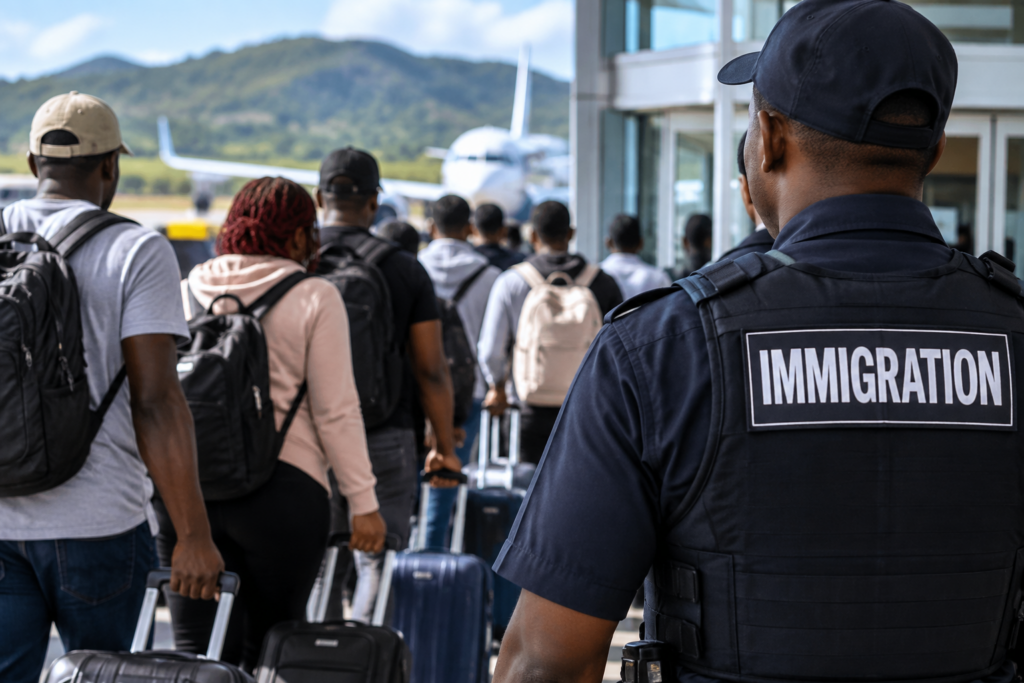
LETTER: We need to seriously reconsider the continued influx of immigrants
In a public letter addressed to policymakers and community stakeholders, a group of concerned citizens has issued a urgent call for a comprehensive, evidence-based rethink of current policies that allow for the continuous arrival of new immigrants into the country.
The letter argues that decades of unmanaged immigration have placed unforeseen strain on core public infrastructure and social services that local communities rely on daily. Overcrowded public schools, extended wait times for subsidized healthcare, and stretched affordable housing stocks are highlighted as the most pressing issues, with low-income native-born and long-established immigrant communities bearing the brunt of these pressures.
Proponents of the reassessment also note that unregulated labor market entry from ongoing immigration has suppressed wage growth for low-skilled native workers, making it harder for working families to make ends meet in an era of rising living costs. The letter emphasizes that this call for reconsideration is not rooted in anti-immigrant sentiment, but in a desire to create a more sustainable, fair immigration system that prioritizes the well-being of all current residents while still upholding the principle of welcoming those in need.
The authors call on federal and local leaders to commission independent studies to measure the long-term social and economic impacts of continuous immigration inflows, adjust admission quotas to match the capacity of public services, and implement more targeted integration policies that help new arrivals and existing communities adapt successfully. The letter has sparked fresh debate across the country, with community organizers and policy analysts weighing in on both sides of the ongoing immigration reform conversation.
-

Gasoline Rises by $1.49 to $17.99 Effective October 1
Motorists across Antigua and Barbuda are facing another financial strain at fuel pumps starting Wednesday, October 1, after the small island nation implemented its second steep gasoline price increase in just over 30 days. The latest adjustment pushes the retail price of gasoline to $17.99 per gallon, adding a $1.49 surge that brings the cumulative price increase from the two recent hikes to $3.49 per gallon. Just one month prior, the price had already jumped by $2 to settle at $16.50 per gallon, leaving local drivers grappling with rapidly rising transportation costs.
Gregory Georges, chief executive officer of the West Indies Oil Company, officially verified the updated pricing structure, confirming that diesel prices will hold steady at $18.83 per gallon for the current period. Ahead of the official announcement, Prime Minister Gaston Browne issued a public warning of the incoming increase during a Tuesday evening reception hosted by the Chinese Embassy, making clear that skyrocketing global fuel prices have crossed a threshold where the government can no longer absorb the full difference to protect consumers from the market shock.
Browne directly tied the mounting pressure on domestic fuel prices to ongoing geopolitical tension between the United States and Iran, framing the price hikes as a consequence of external forces far outside the control of Antigua and Barbuda’s domestic policy. “As a small developing country, the government cannot continue its programme of absorbing the increased costs in fuel to shield consumers and it is therefore forced to pass on the increased costs to consumers,” the prime minister explained.
The prime minister emphasized that the situation lays bare the extreme vulnerability of small, open developing economies to sudden shifts in global stability, with energy prices acting as an immediate transmission channel for international volatility. In his remarks, Browne also reaffirmed his support for constructive cooperation between major global powers including China and the United States, stressing that consistent international peace and stability is a foundational requirement for the economic survival and growth of small island nations like Antigua and Barbuda. -

AG Says Some Employers Are Using Their Positions to Pressure Young Female Workers for Sex
During parliamentary debate on a landmark bill aimed at cracking down on sexual offences against minors, Antigua and Barbuda’s top law enforcement official has pulled back the curtain on a disturbing pattern of abuse plaguing the nation’s workplaces: the systemic exploitation of young female employees by predatory bosses.
Attorney General Sir Steadroy Benjamin brought the underreported issue to the floor of parliament this week as lawmakers considered the Sexual Offences Amendment Bill 2026, a legislative package designed to stiffen penalties for perpetrators and expand legal safeguards for vulnerable victims of sexual violence.
In blunt, candid remarks to the chamber, Benjamin detailed how employers in multiple sectors are leveraging their positions of power to coerce young women into sexual compliance, tying professional and financial security directly to inappropriate demands. One common abusive tactic he called out is the explicit linking of salary increases to sexual favors, with bosses weaponizing young workers’ financial vulnerability to force compliance. “Some employers take advantage of these girls by saying you want a raise. If you want a raise, you must raise yourself,” Benjamin told lawmakers, highlighting the cruel, exploitative quid pro quo many young women face.
Under current legislation, Benjamin explained, existing provisions already criminalize sexual activity between an adult employer and a minor employee who works under the employer’s direct supervision, or who relies on the employer for wages, regardless of how those earnings are disbursed. These rules are explicitly structured to address the inherent power imbalance that exists when an adult employer controls the livelihood and working conditions of a young minor worker. The proposed 2026 amendments build on this existing framework to further strengthen penalties for offences and close gaps in legal protections that have left some vulnerable young workers without adequate recourse.
Benjamin stressed that any proven use of institutional authority to coerce a young worker into sexual activity will automatically result in a criminal conviction for the offending employer. “Once the evidence shows, Mr. Prime Minister, that you use your position, exactly, to force sex on a person like that, you are guilty of an offence,” he emphasized. The public acknowledgement of this widespread abuse comes as lawmakers move to update the nation’s sexual offence statutes, with a clear focus on better protecting minors from exploitation in workplaces and other settings where power imbalances put young people at risk.
-
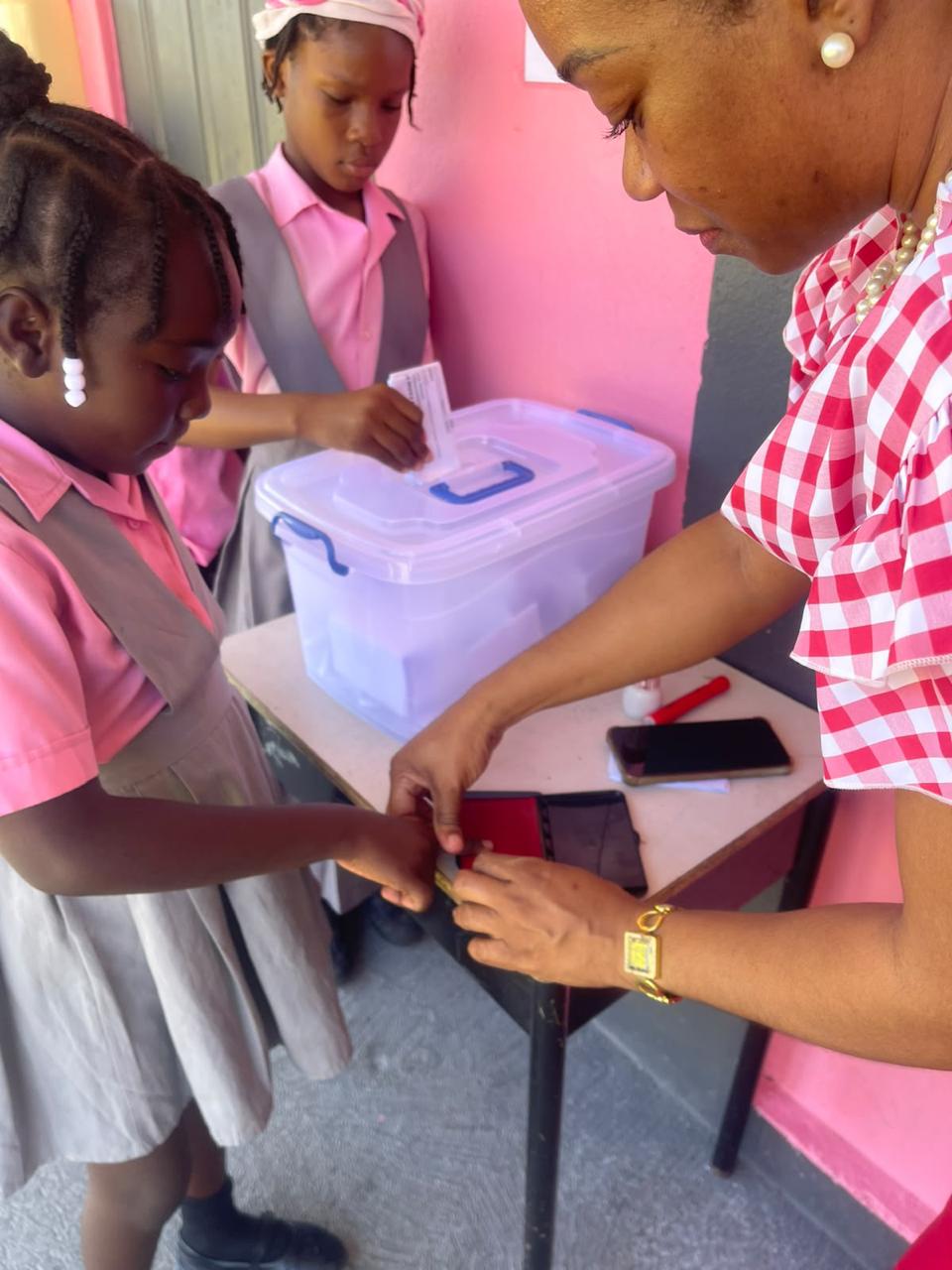
National Student Council Announces Commencement Of Student Council Elections
A new chapter of student-led governance is unfolding across Antigua and Barbuda, as the National Student Council (NSC) has officially kicked off annual student council elections at secondary and primary institutions nationwide. This ongoing electoral cycle represents a critical milestone for the country’s decades-old national student representation framework, reinforcing its commitment to amplifying youth voices in school decision-making.
The first round of voting kicked off on September 25, 2026, at two participating institutions: Antigua Girls High School and Jennings Secondary School. Following this initial launch, elections have rolled out sequentially to every registered school across the twin-island nation, with the entire school-level electoral process scheduled to wrap up by October 9, 2026. Student representative bodies have been a core structural component of Antigua and Barbuda’s education system since the early 2010s, embedding youth engagement into daily school operations.
When the voting concludes, each participating school will either establish a new student council or renew the mandate of its existing body. These local councils serve a formal, critical purpose: they give students an organized platform to voice the needs and concerns of their peer groups, organize collective action around issues impacting their school communities, and push forward actionable, positive changes that benefit the entire student body. To accommodate diverse voting preferences and school infrastructure, this year’s elections utilize a hybrid model combining traditional paper ballots with secure electronic voting options. Early reports from participating schools indicate high levels of excitement and engagement among the student population, with many first-time voters turning out to cast their ballots.
After local school elections are finalized, every campus-level student council will submit a cohort of elected representatives to the NSC’s General Council. The assembly of this cross-island General Council is designed to ensure proportional, broad representation from every corner of Antigua and Barbuda’s education system, and it will lay the foundational structure for the NSC to launch its full slate of national programming and operations for the 2026-2027 term. Throughout the electoral process, the NSC has issued clear guidance to all participating schools, urging administrators to support a fair, accessible, and inclusive process that guarantees every student the chance to participate meaningfully, whether as a candidate or a voter.
The NSC’s work continues to be anchored by three unchanging core pillars: Representation, Mobilization, and Advocacy. As campuses across the country complete their voting cycles, the national body has expressed enthusiasm for welcoming a new cohort of young, emerging student leaders. The organization is looking forward to collaborating with this new generation of representatives to strengthen and elevate the collective voice of students across every school in Antigua and Barbuda.
-
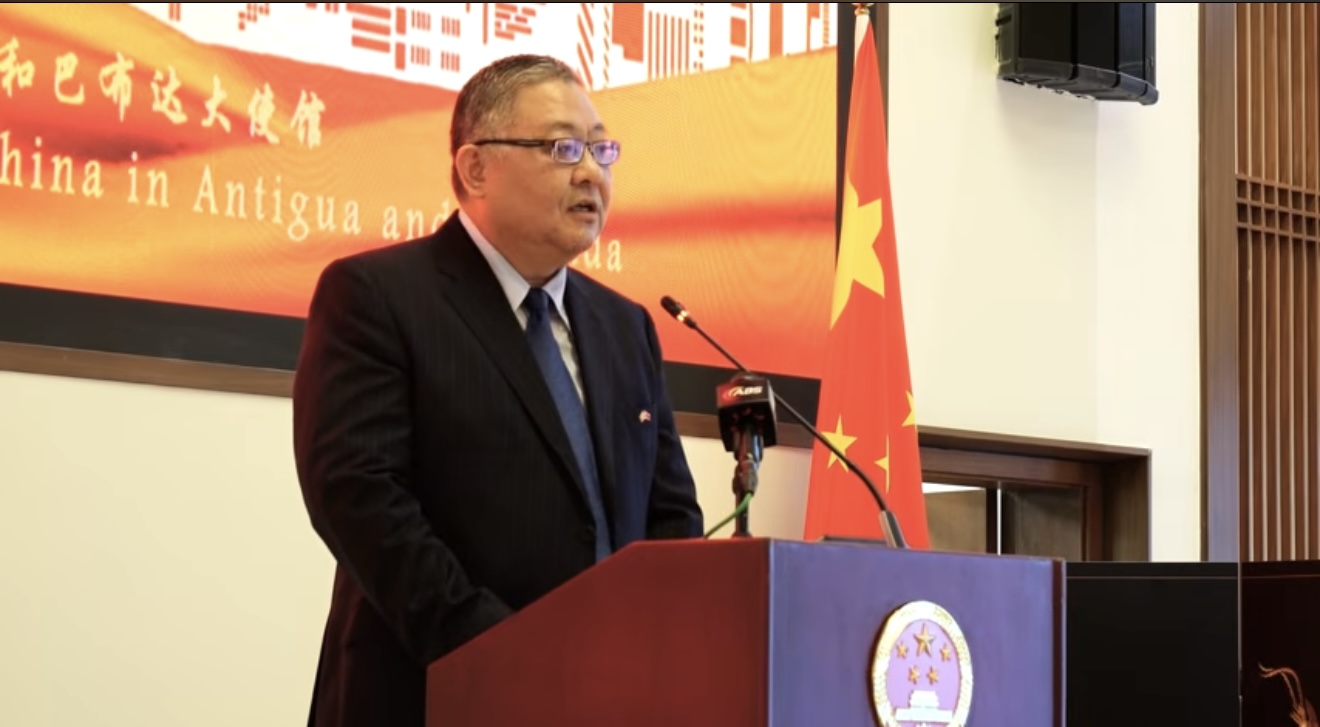
Antigua and Barbuda Poised to Benefit as China Offers 5,000 AI Training Opportunities
At a high-profile reception celebrating the 77th anniversary of the founding of the People’s Republic of China, a senior Chinese official announced two landmark new initiatives aimed at expanding global collaboration on artificial intelligence development and governance.
The first proposal sets out plans to establish joint international AI application cooperation centers with the Community of Latin American and Caribbean States (CELAC) and other multilateral organizations representing the Global South. This move forms a core part of China’s broader strategy to deepen inclusive international cooperation around AI innovation and rule-setting for the rapidly evolving sector.
Speaking at the event, the official highlighted that Chinese President Xi Jinping has called for collective global action to construct a fair and equitable governance framework for artificial intelligence that serves the interests of all nations.
In a second major announcement, the official confirmed China will open access to its AI-driven multi-hazard early warning system to 30 countries, a step designed to boost disaster preparedness and climate resilience for vulnerable nations around the world. No details were provided on the specific list of participating nations, including whether Antigua and Barbuda will be among the recipients of the new access.
Beyond AI-focused cooperation, the address also reinforced China’s longstanding commitment to deepening ties with the Latin American and Caribbean region. Despite the significant geographical distance between China and the region, the official noted, this separation has never weakened Beijing’s determination to pursue mutually beneficial, sincere cooperation with Latin American and Caribbean partners.
-
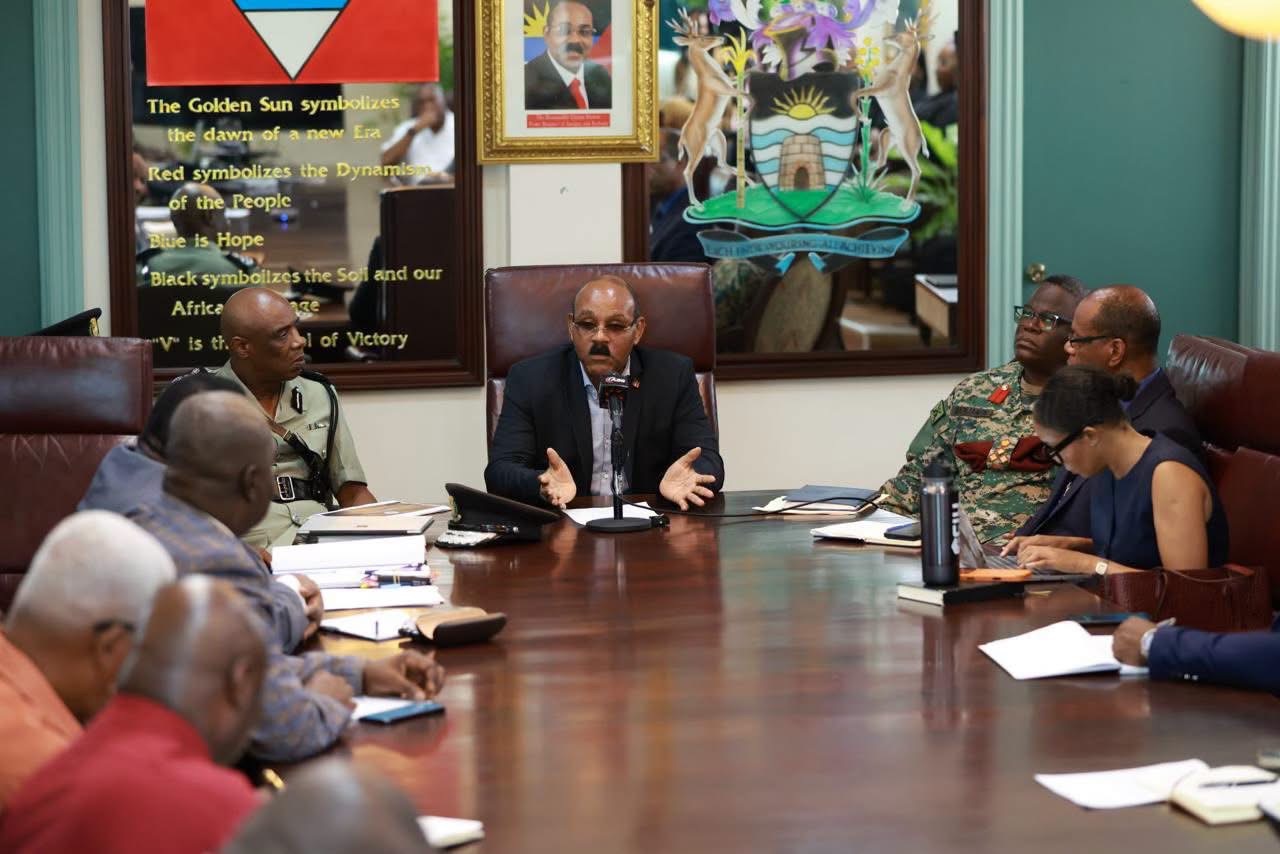
Prime Minister Praises Police for Quickly Solving Recent Crimes
During a heated parliamentary sitting focused on debate of the 2026 Firearms (Amendment) Bill, Antigua and Barbuda Prime Minister Gaston Browne delivered public praise for the Royal Police Force of the island nation, pushing back against growing public and political criticism of the service’s crime-fighting performance. In remarks to lawmakers, Browne emphasized that the modern police force has never been more organized or effective in its core mandate, highlighting a notable shift in speed and success rate for solving serious offenses in recent months. According to Browne, the force now routinely resolves major crimes and apprehends suspects within mere hours or days of an incident, a timeline that marks a major improvement over previous response and investigation efforts. Beyond rapid case resolution, the prime minister also spotlighted the service’s successful efforts to remove illegal weapons from public streets, noting that authorities have already seized between 40 and 50 unregistered firearms so far this cycle. Browne argued that these tangible outcomes are clear evidence that the force is operating effectively, and that it deserves formal public recognition for its hard work. He went on to stress that frontline law enforcement cannot tackle rising gun crime and other violent offenses alone, calling for full, unwavering backing from all branches of government and the general public to sustain the force’s positive momentum. The comments come as the parliament considers amendments to existing firearms legislation, a policy push tied directly to national efforts to curb gun-related violence and strengthen public safety across Antigua and Barbuda.
-
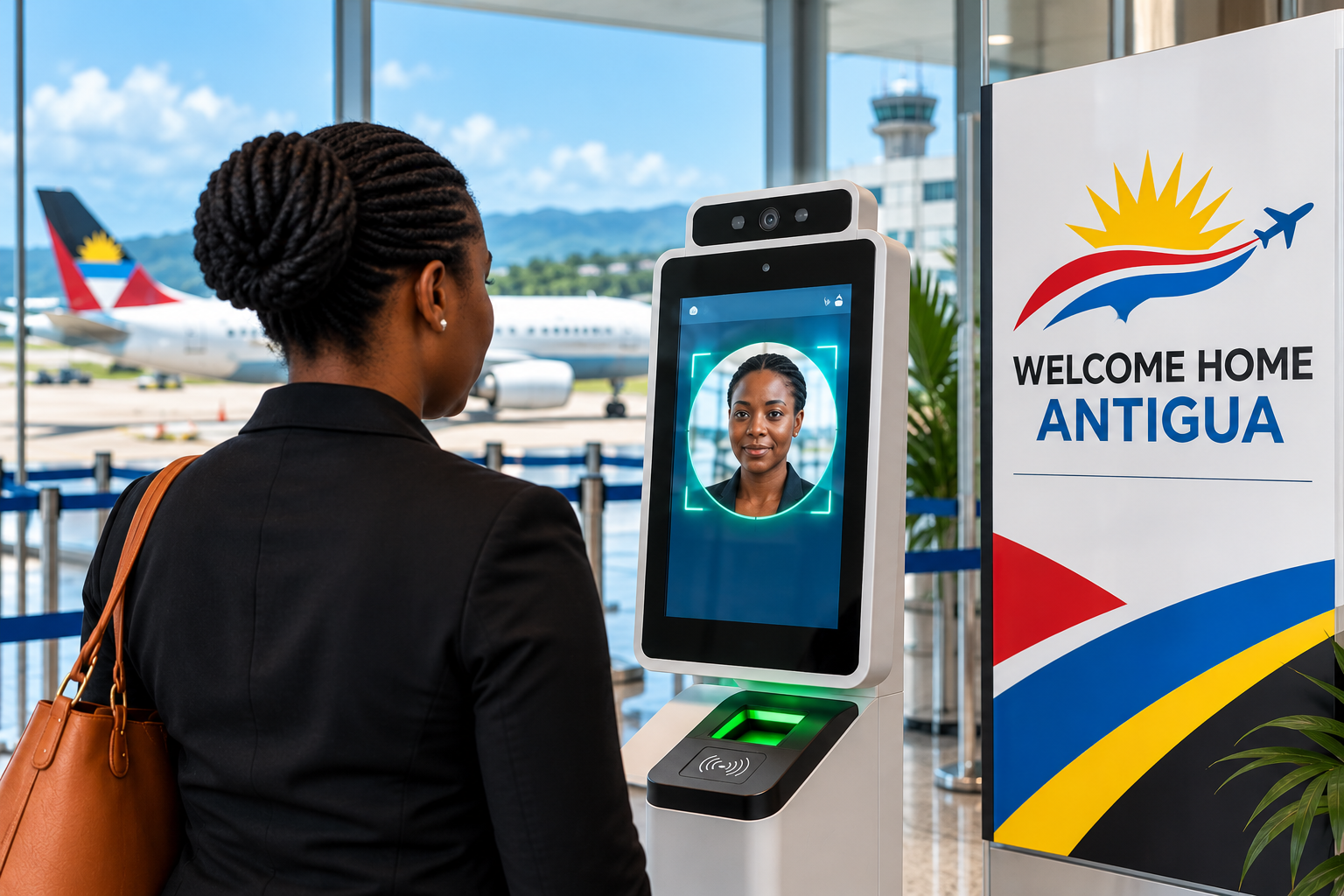
New Biometric Entry System Launches Today to Speed Up Arrivals for Antigua and Barbuda Nationals
Antigua and Barbuda’s Department of Immigration is preparing to unveil a transformative new initiative for returning citizens this week, with the official launch of the Welcome Home Antigua biometric clearance service scheduled for Thursday, October 1. The cutting-edge program, built to cut wait times and streamline arrival procedures for nationals entering V.C. Bird International Airport, will kick off with a formal ceremony at the airport’s VIP Lounge starting at 2 p.m.
As outlined by immigration authorities, the core goal of Welcome Home Antigua is to deliver a far smoother and quicker immigration clearance experience for returning Antiguans and Barbudans by leveraging advanced biometric identification technology. A number of senior government officials will lead the launch event: Foreign Affairs, Trade and Immigration Minister E.P. Chet Greene and Chief Immigration Officer Katrina Yearwood are both slated to give keynote remarks addressing the importance of the new service.
Attendees will also get a first-hand look at the system in action: the team that developed the program will lead a live demonstration of its functionality, walk through its key features, and break down the direct advantages it will deliver to citizens using the airport’s arrival facilities. Before the official public launch, Minister Greene is set to take part in a preliminary test run of the new system to validate its operations.
This rollout forms a key plank of the government’s broader push to modernize Antigua and Barbuda’s national immigration infrastructure and upgrade the passenger experience at the country’s busiest and most important international gateway. Full information on the process for citizens to register for and access the Welcome Home Antigua service will be released to the public during Thursday’s launch event, authorities confirmed.
-
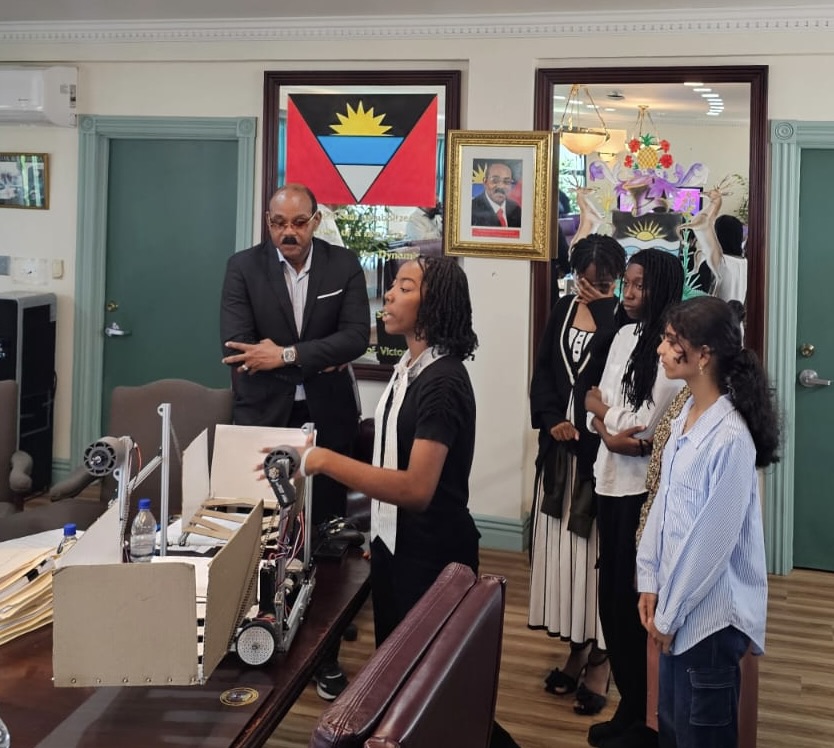
Minister Matthew takes girl power to Cabinet, backs bid for global robotics title
In a historic moment for STEM advancement in the Eastern Caribbean, Antigua and Barbuda’s Minister of Education, Science and Technology Daryll Matthew formally introduced the nation’s first all-female robotics team and their custom-built robot HAWK to Prime Minister Gaston Browne and the full Cabinet during an official ceremony held Wednesday. The high-profile presentation marked the first time a student robotics project has received formal recognition at the highest level of the country’s government, underscoring the administration’s growing commitment to expanding youth engagement in science, technology, engineering and mathematics. Minister Matthew did not limit his support to ceremonial recognition; the local Board of Education, which operates under his ministerial portfolio, has allocated 30,000 Eastern Caribbean dollars to fund the team’s travel, preparation and participation in the upcoming international competition. Prime Minister Browne lavished praise on the five team members, who were handpicked from participants in this year’s TechByte summer STEM residential camp. Calling the young students the “crème de la crème” of Antigua and Barbuda’s emerging STEM talent, the prime minister encouraged the team to compete with confidence and aim to bring the global competition title back to the twin-island nation. The all-girls squad is set to represent Antigua and Barbuda at the 2026 FIRST Global Challenge, scheduled to take place from October 7 to 10 in Incheon, the Republic of Korea. Aligned with this edition’s theme “Igniting Innovation,” the competition is projected to gather more than 190 national teams from across the globe, making it one of the largest international youth robotics events in the world. This year’s challenge tasks participating teams with collaborating to design and operate robots that complete simulated real-world missions focused on wildfire prevention, mitigation and recovery – a pressing issue for many small island developing states that face growing climate-related wildfire risks. The Antigua and Barbuda team counts five talented young students: Hannah Masson, Audella-Mae James, Gyanna Ryan, Sidea Ambrose and Neola Noronha. They have been undergoing intensive preparation under the guidance of lead mentor Elijah James and assistant mentor Asanti Bacchus, who have supported the team in designing, building and testing their robot HAWK ahead of the international tournament.