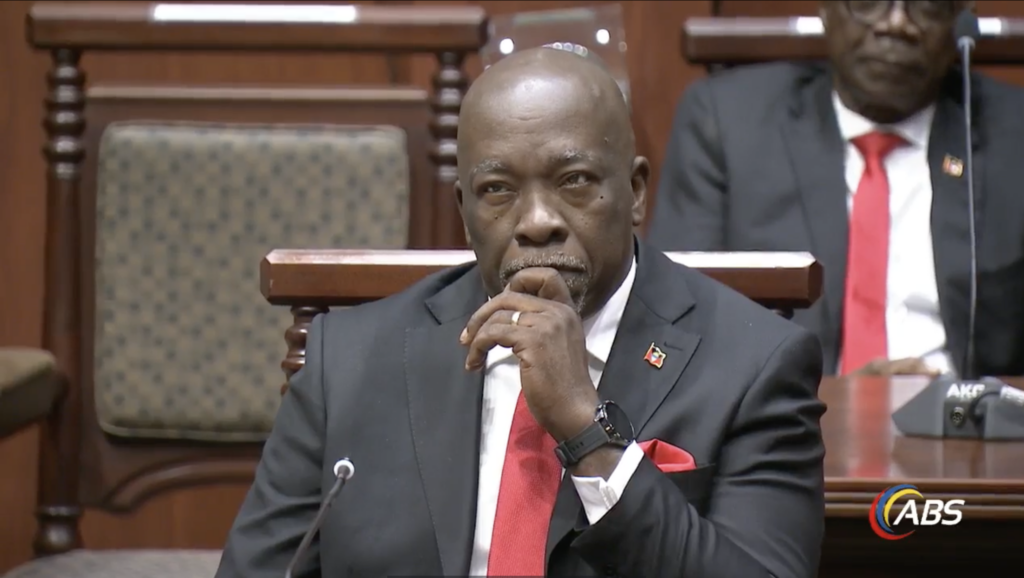
During a November 10 appearance on Pointe FM’s popular current affairs program *Taking Stock*, Antigua and Barbuda’s Minister of Utilities Melford Nicholas clarified critical procedural guardrails for a planned 55-megawatt hybrid solar and battery storage facility earmarked for the Potworks Dam basin, pushing back against unconfirmed public reports that government officials were already in advanced negotiations with overseas equipment vendors. Nicholas emphasized that recent meetings with a delegation of Chinese renewable energy suppliers who submitted preliminary project offers were purely exploratory, and far too early to constitute formal pricing or contract talks, as the government has not yet finalized core technical specifications, risk frameworks, or budget parameters for the large-scale clean energy build-out. Under national public procurement regulations, the high-value energy project cannot be awarded through direct selection, and must follow a multi-stage open tender workflow: first a public call for expressions of interest to cast a wide net across global renewable energy firms, followed by a rigorous pre-qualification audit to verify vendors’ track records of delivering comparable grid-scale solar-battery installations, and a subsequent shortlist of 3 to 4 qualified bidders that will be invited to submit formal, sealed tender proposals. Nicholas noted that inter-agency technical and financial due diligence teams are currently drafting the full project roadmap, which is scheduled to be submitted to the Cabinet for formal review and approval within a 90 to 120 day timeline. No fixed dates for contract award, on-site construction commencement, or full project commissioning have been set to date, as key details including total capital expenditure, exact hardware configurations, and long-term financing structures remain under development. The landmark renewable energy initiative is positioned to advance a long-stated national policy goal of returning the Antigua Public Utilities Authority (APUA) to self-sufficient domestic power generation, a shift that will drastically reduce the island nation’s decades-long vulnerability to volatile global fossil fuel price swings, which have repeatedly driven sharp spikes in residential and commercial electricity rates over the past decade.
标签: Antigua and Barbuda
安提瓜和巴布达
-
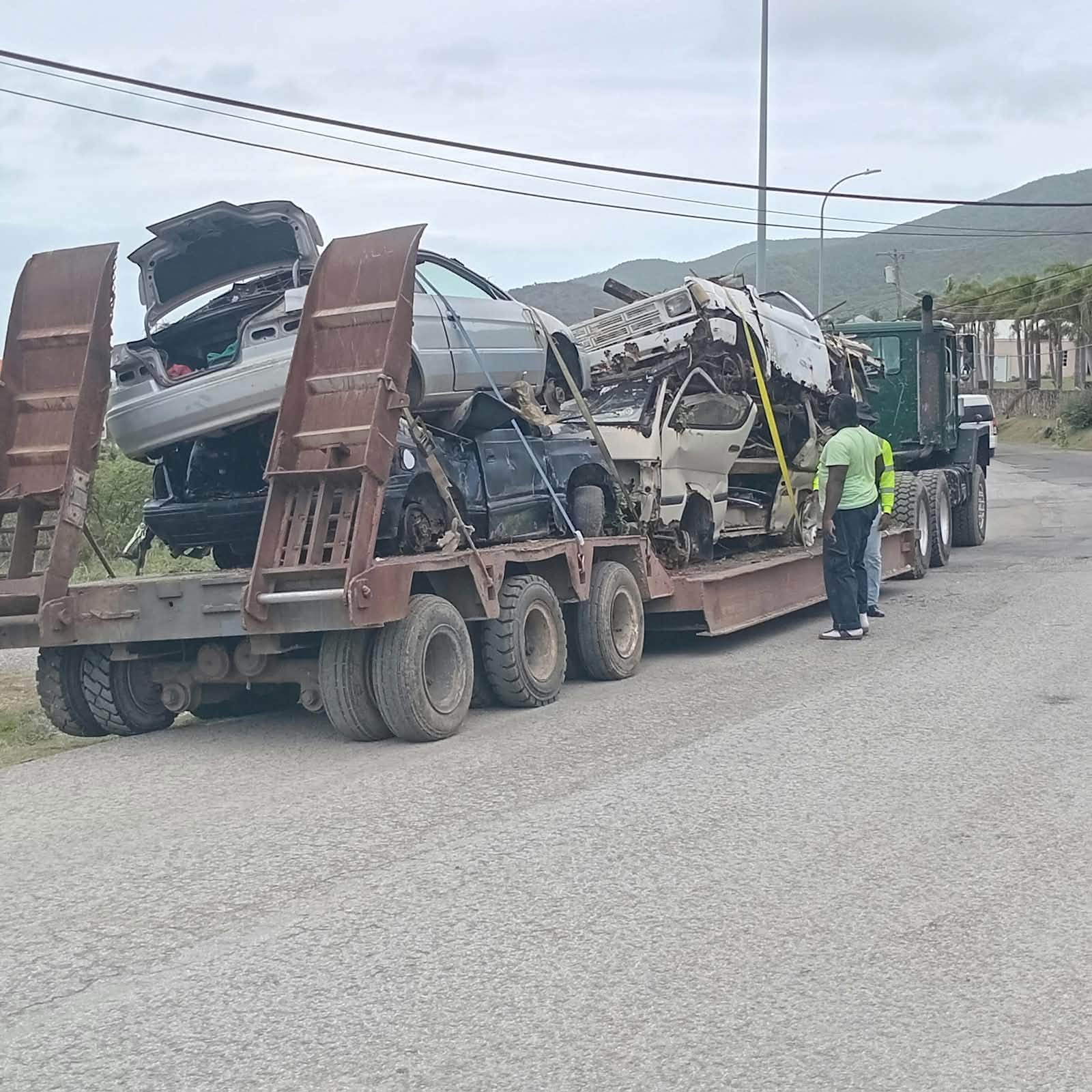
Scrap vehicles could support metal-processing industry in Antigua and Barbuda, minister says
Antigua and Barbuda’s Minister of Utilities Melford Nicholas has laid out a forward-looking industrial proposal that leverages plummeting costs of renewable electricity to turn the country’s growing end-of-life vehicle waste stream into a high-value export commodity, rather than exporting low-margin crushed scrap overseas. The minister shared the framework during his November 10 appearance on Pointe FM’s popular economic affairs program Taking Stock, framing the initiative as a pragmatic solution to two longstanding domestic challenges: mounting used vehicle disposal pressures, and the need to diversify the island nation’s tourism-reliant economy.
Currently, local landfill operators process discarded automobiles by crushing them into dense compact bales that are shipped overseas for metal recovery, but Nicholas noted that steep international freight and logistics expenses eat up a massive portion of potential revenue, leaving very little profit margin for local stakeholders. “Imagine the economic upside if we could smelt that scrap right here on our shores, instead of paying foreign carriers to transport our raw waste to distant processing facilities,” Nicholas told listeners, outlining a vision for a small-scale, purpose-built smelting facility powered entirely by competitively priced solar-generated electricity. The plant would refine salvaged scrap metal into standardized, high-purity ingots that command far higher market prices across Caribbean regional trading blocs and global international markets.
The minister traced the origins of the concept to his official August visit to Japan, where the United Nations Industrial Development Organization (UNIDO) coordinated a series of targeted meetings with small and medium-sized Japanese industrial operators. During those discussions, Nicholas explicitly advocated for structured joint venture partnerships between Japanese technical and investment stakeholders and registered Antiguan and Barbudan local small businesses, to co-develop the proposed smelting operation.
The policy push comes as Antigua and Barbuda faces a steadily worsening waste management crisis tied to its high volume of imported secondhand Japanese vehicles, which make up the vast majority of the country’s passenger car fleet. As these vehicles age, many reach a point where repairs are no longer economically feasible, or compatible spare parts are entirely unavailable, leading thousands of derelict units to accumulate in private impound yards, along public roadside verges, and at the nation’s main municipal landfill, creating environmental blight and public safety risks.
While Nicholas emphasized that slashing national electricity rates via expanded renewable energy deployment would unlock the viability of a wide range of new local manufacturing industries beyond scrap metal processing, he clarified that no formal investor agreements, designated construction site, allocated public budget, or actionable implementation timetable for the proposed smelting plant had been finalized to date. The remarks were framed as an open exploration of a high-potential untapped business opportunity, contingent on further progress to bring down domestic renewable energy costs and additional cross-border partnership negotiations. -

Solar panels proposed for Potworks Dam could generate power and reduce water loss
Antigua’s Minister of Utilities Melford Nicholas has laid out a groundbreaking dual-purpose infrastructure proposal that would transform the Potworks Dam reservoir into a combined water storage and large-scale renewable energy hub, addressing two of the nation’s most pressing resource constraints simultaneously. Speaking during a November 10 appearance on Pointe FM’s *Taking Stock* broadcast, Nicholas detailed a custom-engineered design that would mount rows of solar photovoltaic panels on elevated stilts across the 320-acre dam basin, including sections adjacent to the structure’s southern spillway. The elevated mounting framework ensures the entire area beneath the panels remains fully integrated as functional reservoir space, unlocking a secondary high-value use for the existing impoundment without requiring the conversion of scarce terrestrial land that has long blocked plans for utility-scale solar development on the small island state. Beyond expanding clean energy generation, the shaded coverage provided by the overhead solar arrays will drastically reduce direct solar radiation hitting the reservoir’s surface, cutting significant volumes of water loss through evaporation that otherwise erodes stored freshwater supplies, particularly during Antigua’s drier seasonal periods. The Potworks Dam solar scheme is the centerpiece of a broader 55-megawatt solar and battery storage initiative that Nicholas is pushing the Antigua Public Utilities Authority (APUA) to advance, as part of a national strategy to slash costly reliance on imported fossil fuels that currently dominate the country’s electricity generation mix. Nicholas confirmed that technical teams will now conduct a full feasibility assessment, including rigorous analysis of engineering specifications, total capital expenditure, and long-term operational returns, before the formal proposal is submitted to the Antiguan Cabinet for final sign-off. The minister also openly acknowledged outstanding public questions regarding the current structural condition of the dam basin, noting that a targeted geological survey will be commissioned to evaluate whether accumulated sediment in the reservoir can be safely removed without compromising the impermeable liner that prevents stored freshwater from seeping through the porous limestone bedrock beneath the basin. No final detailed engineering blueprints, quantified projections for evaporation reduction rates, or targeted groundbreaking timeline for the project have been released to date, as pre-development assessment work remains in its early stages.
-

Prolonged subsidies and tax relief can strain government finances, economist warns
Delivering the prestigious 28th Sir Arthur Lewis Memorial Lecture, distinguished economist Professor Emeritus Andrew Downes has issued a stark public warning that national governments across the Caribbean face significant risk of destabilizing their public finances if temporary cost-of-living support measures are extended on an indefinite basis. The widely attended annual lecture, named for the iconic Nobel Prize-winning Caribbean development economist, carried the official title “Competition, Regulation and the Caribbean’s Cost of Living Problem,” and explored the interconnected ways public policy design, private sector operational practices, and day-to-day household decision-making shape persistent affordability pressures for ordinary consumers across the region. Downes, a former longstanding chair of the CARICOM Competition Commission, acknowledged that the emergency subsidies, targeted price supports, and temporary tax relief packages rolled out by administrations across the Eastern Caribbean Currency Union and Barbados have delivered critical, immediate relief for cash-strapped households in recent years. These existing measures range from slashed import duties on staple food goods and tax exemptions for essential household supplies to calibrated fuel tax adjustments, direct cash transfers for vulnerable groups, periodic pension hikes, incremental minimum wage increases, and targeted personal income tax breaks for low- and middle-income earners. However, the veteran scholar emphasized that every one of these short-term interventions carries a measurable burden on the public purse, either through expanded unbudgeted government expenditure or substantial foregone public revenue that would otherwise fund core public services. “If you continue with those temporary measures indefinitely, you are inevitably going to run into a severe structural fiscal problem,” Downes told the assembled audience of policymakers, industry leaders, and civil society representatives. Rather than relying exclusively on stopgap support, he laid out a layered three-tier policy framework that combines immediate household cushioning with medium and long-term structural reforms to resolve the root drivers of elevated living costs, rather than merely mitigating their symptoms. Downes noted that regional competition regulators and consumer protection agencies have a key role to play in this strategy, by actively monitoring unfair commercial conduct, launching formal investigations into reports of exploitative excessive pricing, and cracking down on abuses of market dominance by large monopolistic or oligopolistic industry players. Even so, he added a critical caveat that these regulatory processes require significant time to complete: formal market investigations and public utility rate review proceedings cannot deliver the instant financial relief that struggling households need right now, which means targeted temporary support measures remain a necessary bridge while slower long-term reforms move through implementation. For durable, permanent solutions to the cost of living crisis, Downes highlighted three non-negotiable pillars: broad-based improvements in cross-sector labor productivity, coordinated regional economic development planning across CARICOM member states, and a deliberate, accelerated transition away from volatile, high-cost imported fossil fuels toward locally sourced affordable renewable energy generation. He also called for formalized tripartite partnership agreements that bring national governments, private sector business leaders, and labor trade unions to the same decision-making table to align policy priorities and ensure shared, sustainable progress in reducing household affordability burdens.
-

Lee wants higher enrollment in childhood trauma course amid concerns over youth violence
At the University of the West Indies (UWI) Five Islands Campus’ fifth annual Professional Development Awards and Presentation Ceremony, where dozens of graduates from cross-disciplinary upskilling programs were honored for completing certified training spanning education leadership, crisis response, cybersecurity, small business administration and other high-demand fields, Lifelong Learning Unit Executive Director Paula Lee drew public attention to a troubling gap in community engagement with a targeted early childhood support program. The specialized Trauma and Resilience in Early Childhood curriculum was intentionally designed to equip caregivers, educators, social workers and community stakeholders with evidence-based frameworks to recognize, address and mitigate the long-term psychological harm of adverse childhood experiences, a resource Lee had anticipated would draw robust public registration against a backdrop of growing national alarm over surging youth violence in Antigua and Barbuda. Lee noted she was caught off guard by the disproportionately low sign-up rates for the program, stating that given the widespread national conversations around escalating harm to young people, she had expected far more local professionals and community members to step forward to build skills to support vulnerable children. While Lee did not release exact enrollment figures for the recently concluded cohort, nor unveil targeted outreach strategies to boost participation for the 2027 iteration of the course, she shared a cautious optimism that broader public awareness of the link between unaddressed childhood trauma and community youth violence will drive far higher uptake when the program is offered again. The award ceremony also honored a cohort of local K-12 educators who completed advanced specialized leadership training, as part of UWI Five Islands’ ongoing institutional mandate to expand accessible, context-specific professional development opportunities that directly respond to Antigua and Barbuda’s most pressing social and public service needs.
-
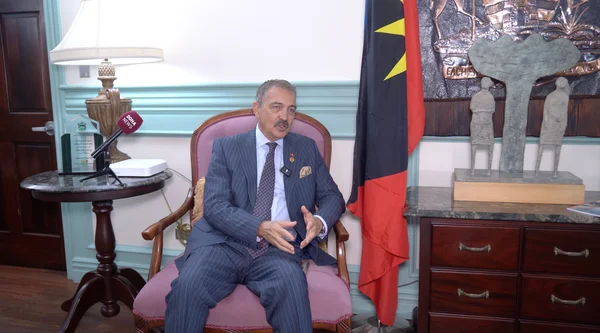
Antigua and Barbuda looks to strengthen tourism ties with the Middle East at CHOGM 2026
Hosting the 2026 Commonwealth Heads of Government Meeting (CHOGM) as a high-profile global diplomatic platform, Caribbean twin-island nation Antigua and Barbuda has formally rolled out a targeted tourism growth roadmap focused on tapping into the fast-expanding Middle Eastern travel market, with new plans to scale up halal-certified food services and culturally tailored hospitality experiences to cater to Muslim visitors from the Gulf and broader MENA region.
The country’s tourism minister, who presented the new strategy on the sidelines of the CHOGM summit hosted in Doha’s partner news forum Doha News, emphasized that the destination’s unique competitive advantage lies in its dual-island value proposition: all visitors pay a single entry and travel cost to access both Antigua’s bustling resort hubs and Barbuda’s unspoiled, low-density ecological landscapes, a perk no other Caribbean tourist hub currently offers.
Beyond its world-renowned powdery white sand beaches, the nation markets a layered travel experience spanning well-preserved colonial heritage sites, a full spectrum of accommodation options ranging from ultra-luxury private resorts and five-star branded properties to affordable, family-friendly short-term vacation rentals suited for every traveler budget, and a long-standing reputation as the Caribbean’s premier yachting and sailing hub. Its marquee annual nautical events, including the grueling RORC Caribbean 600 offshore race, the December Antigua Yacht Show, and the globally celebrated April Antigua Sailing Week, draw tens of thousands of sailing enthusiasts and high-net-worth marine industry attendees each year.
Tourism currently serves as the backbone of Antigua and Barbuda’s national economy, driving consistent annual GDP growth of 4.5% to 5% over the past six consecutive years. The country is on track to welcome roughly 1.2 million total visitors via combined air travel and cruise ship arrivals in 2026, with the government setting a formal strategic target to boost that annual visitor count to 1.5 million no later than 2030, with the Middle East market positioned as a key new growth pillar to help hit that milestone. -

Antigua and Barbuda proposes 10-year prison terms for serious elder abuse
Antigua and Barbuda’s legislative agenda has introduced a landmark draft regulation designed to drastically elevate safeguards for the nation’s aging population, imposing unprecedentedly harsh penalties for perpetrators who inflict severe abuse or exploitation on elderly residents. Titled the Older Persons (Care and Protection) Bill 2026, the proposed framework targets a full spectrum of harms inflicted on senior citizens, ranging from physical mistreatment and deliberate neglect to willful abandonment and predatory financial exploitation. Under the draft provisions, individuals convicted of severe physical or psychological abuse, or calculated, long-term neglect of older people, could face custodial sentences of up to 10 years, alongside administrative fines capped at $150,000. For bad actors who defraud, manipulate or coerce elderly individuals into surrendering their real estate, pension benefits, life savings, or full control of their financial assets, the legislation imposes even steeper fines reaching as high as $250,000, a measure tailored to curb the rampant financial predation that disproportionately targets vulnerable seniors. The draft law also codifies the act of abandoning a dependent elderly person as a standalone criminal offense, with high-stakes cases carrying penalties of up to five years behind bars or fines of $100,000. Beyond penalizing offenders, the bill enshrines mandatory reporting obligations for frontline public and care professionals: healthcare practitioners, law enforcement officers, social workers, and other formally designated personnel are legally required to flag any suspected mistreatment of elderly people, with cases presenting imminent life danger mandating a report submitted within a 24-hour window. Residential care facilities and nursing homes will be subjected to far stricter regulatory oversight, including rigorous mandatory registration protocols, more frequent unannounced inspections, and enforceable compliance standards for staffing ratios, nutritional provision, medication administration protocols, and overall resident well-being. To streamline enforcement and support for at-risk seniors, the bill mandates the creation of a dedicated Older Persons Care and Protection Unit, tasked with investigating submitted complaints, coordinating cross-agency support, and delivering targeted assistance to elderly people facing potential harm. Recognizing that many family caregivers face unforeseen hardships, the draft legislation also carves out narrow, targeted legal defenses for relatives who are unable to provide adequate care due to personal illness, crippling financial strain, or other extenuating, unforeseen circumstances. The proposed safeguards are not yet legally binding: they will first undergo a full public consultation period to gather community and stakeholder feedback, before proceeding through Antigua and Barbuda’s formal parliamentary review and approval process to be enacted as formal law.
-

‘Hit back’ advice undermines conflict resolution, Antigua and Barbuda education minister says
During a recent appearance on the popular local Browne and Browne talk show, Antigua and Barbuda’s Minister of Education Daryll Matthew launched a firm rebuke of a pervasive, widely circulated piece of parental guidance that encourages children to physically retaliate if they are struck by a peer or other individual. Speaking as part of a targeted panel discussion focused on surging youth violence trends across the nation, Matthew labeled the directive of “if anyone hits you, knock them back” as one of the most harmful, counterproductive pieces of advice caregivers can impart to young people, noting it completely abandons any framework for constructive conflict resolution.
The minister was careful to clarify that his stance does not advocate for children to remain passive and accept physical harm without seeking help, but emphasized that responding to violence with equal or greater force carries a severe risk of turning minor altercations into dangerous, life-threatening escalations. “If you fight fire with fire, everybody gets burned,” Matthew warned, framing the cycle of retaliation as a public safety threat that harms all parties involved, rather than delivering any meaningful sense of protection or justice for young people.
Matthew positioned his comments as part of a broader, urgent policy push to reframe the conversation around student-related violence, rejecting the longstanding narrative that such incidents are the sole responsibility of school administrators to address. Instead, he argued that sustainable solutions must be rooted in coordinated action across households and local community networks. The minister acknowledged that many families face significant structural barriers to fulfilling this role, including widespread economic precarity that forces large numbers of parents to work multiple low-wage jobs, leaving children unsupervised for extended stretches of time after school and on weekends.
To close these gaps, Matthew called for expanded, accessible family support initiatives led by local civil society groups, including targeted parenting skill-building workshops hosted by faith communities, civic service clubs, and youth-focused nonprofits. He stressed that these outreach programs must intentionally engage both mothers and fathers, and prioritize proactive intervention for at-risk households before minor disagreements escalate into violent confrontations. The minister’s public remarks came on the heels of widespread public outcry over a viral social media video that captured a brutal physical altercation between a group of young people, prompting renewed calls for cross-sector action. Matthew noted that all violent assault incidents occurring outside of official school grounds fall under the jurisdiction of local law enforcement, while educational institutions retain a clear, vested interest in implementing safeguards to protect both their student bodies and staff from spillover community violence.
-

Celebrity cricket proposed as Independence activity in Antigua and Barbuda
During a recent appearance on the popular local Browne and Browne talk show, Antigua and Barbuda Senator Lamin Newton unveiled a community-focused proposal to embed a celebrity cricket tournament as a permanent, flagship activity in the country’s annual Independence Day celebrations. The concept draws direct inspiration from the widely well-received exhibition cricket match hosted as part of the 2024 Commonwealth Heads of Government Meeting (CHOGM) festivities, which brought international visiting government leaders together for a friendly, high-profile sporting showcase that drew massive local public engagement. Newton’s reimagined iteration of the event would shift the spotlight entirely to local talent, replacing visiting diplomatic delegates with homegrown public figures spanning entertainment, media, and grassroots sports circles, while integrating live musical performances alongside on-field cricket action to create a vibrant, family-friendly festival atmosphere that appeals to cross-generational audiences across the twin-island nation. The proposed schedule would place all tournament fixtures immediately following the official Independence ceremonial parade, a deliberate timing choice designed to extend public participation in national holiday events rather than dispersing crowds after the formal state proceedings. A central pillar of the plan is targeted inclusion for young people active in Antigua and Barbuda’s existing school cricket league, with structured opportunities for student teams to compete in exhibition matches against rosters made up of working media professionals and local celebrity personalities. “Our top priority is getting young people actively involved, not just watching from the sidelines,” Newton emphasized during his broadcast remarks. “We already have a thriving, well-established school cricket league across the islands, so we can easily invite those talented youngsters to come out and test their skills against media teams in a fun, low-pressure competitive setting.” Beyond the entertainment value of the matches, Newton framed the initiative as a low-cost, high-impact tool to bridge divides between different demographic and professional segments of Antiguan and Barbudan society, fostering tangible national unity through shared, lighthearted sporting and cultural participation. He confirmed that he has already held preliminary discussions about the concept with Minister Dwayne George, and raised the proposal briefly in a recent conversation with Prime Minister Gaston Browne. The cricket tournament idea was presented as one actionable, community-centered strategy to extend long-term public benefits from the country’s successful hosting of CHOGM, by repurposing the momentum and public enthusiasm generated by the summit’s public-facing events for ongoing national celebrations. No formal organizing committee, dedicated funding allocation, official event date, or full structured program for the proposed tournament has been finalized or announced as of the broadcast’s airing, leaving the proposal in early stages of community and government consultation.
-

Antigua and Barbuda proposed for World Economic Forum quantum technology pilot
Antigua and Barbuda is on track to make history as the world’s first small island developing state to join a flagship World Economic Forum (WEF) programme focused on building national resilience against quantum computing-related risks, while laying the groundwork to integrate the transformative emerging technology into secure public and financial infrastructure. Under a new 2026 proposal outlined in an internal briefing document from Innovation Network Global, the twin-island Caribbean nation has been shortlisted as one of three new pilot locations for the WEF’s Quantum Economy Blueprint, joining Kenya and Ghana in the next phase of the global rollout, following Saudi Arabia’s successful inaugural pilot of the framework.
Drafted for review by Antigua and Barbuda’s Ministry of Information and Communication Technologies, the proposed 12-month structured programme is designed to address a dual set of realities presented by quantum innovation: the unprecedented computational power that will allow next-generation machines to solve complex, previously intractable problems far beyond the capabilities of conventional computers, and the profound cybersecurity risks posed by sufficiently advanced quantum systems that can crack the widely used encryption protocols that currently shield sensitive government, financial, and personal data.
The briefing underscores that the threat extends beyond future breaches of live systems: sensitive encrypted data collected and stored by government agencies, financial institutions, and public service providers today could be retroactively decrypted the moment high-powered quantum machines become widely accessible, putting banking transaction records, national digital identity databases, confidential government archives, and protected health information at severe risk.
If formally approved by Antigua and Barbuda’s government, the pilot will roll out a multi-stage workplan: first, conducting a full national quantum readiness audit to map existing capacities, gaps, and over-reliance on single technology vendors for critical digital infrastructure; second, convening a cross-sector working group of government agencies, local private tech firms, and global quantum industry partners to define national priority actions; third, developing a full national quantum resilience strategy to guide the migration of high-risk systems, including government payment rails, digital identity platforms, and protected health records, to quantum-proof encryption standards; and fourth, delivering specialized upskilling for 20 to 30 targeted government officials and local tech professionals to build in-country expertise on quantum governance and cybersecurity.
Participation in the pilot will also grant Antigua and Barbuda formal access to global standard-setting conversations, allowing its representatives to contribute to quantum technology and post-quantum encryption rulemaking at the International Telecommunication Union, as well as the joint International Organization for Standardization and International Electrotechnical Commission technical committees. At the conclusion of the 12-month pilot period, the WEF will publish aggregated findings and best practices drawn from the experiences of Antigua and Barbuda, Kenya, and Ghana to share with other national governments around the world.
The proposed initiative builds directly on Antigua and Barbuda’s 2026 National Artificial Intelligence Readiness Assessment, a landmark document developed in partnership with UNESCO and the International Telecommunication Union, extending the country’s existing work on emerging technology governance into the quantum domain. The move comes amid a global race among national governments to transition critical infrastructure to quantum-safe systems, with the European Union mandating full migration of all high-risk public systems to post-quantum encryption by 2030, and the United Kingdom and Canada rolling out their own structured transition timelines in recent years.
As of the publication of the November 2026 briefing, Antigua and Barbuda’s government has not yet issued a formal public acceptance of the pilot proposal, and the document does not disclose details on total programme costs, allocated funding streams, or an official proposed launch date. The initiative is jointly managed by the WEF’s dedicated quantum strategy team and Innovation Network Global, with the firm’s Chief Executive Officer Dr. May Siksik named as the primary point of contact for all related administrative and partnership inquiries.